

Where Robotic Retrofits Fit Into Existing Lines
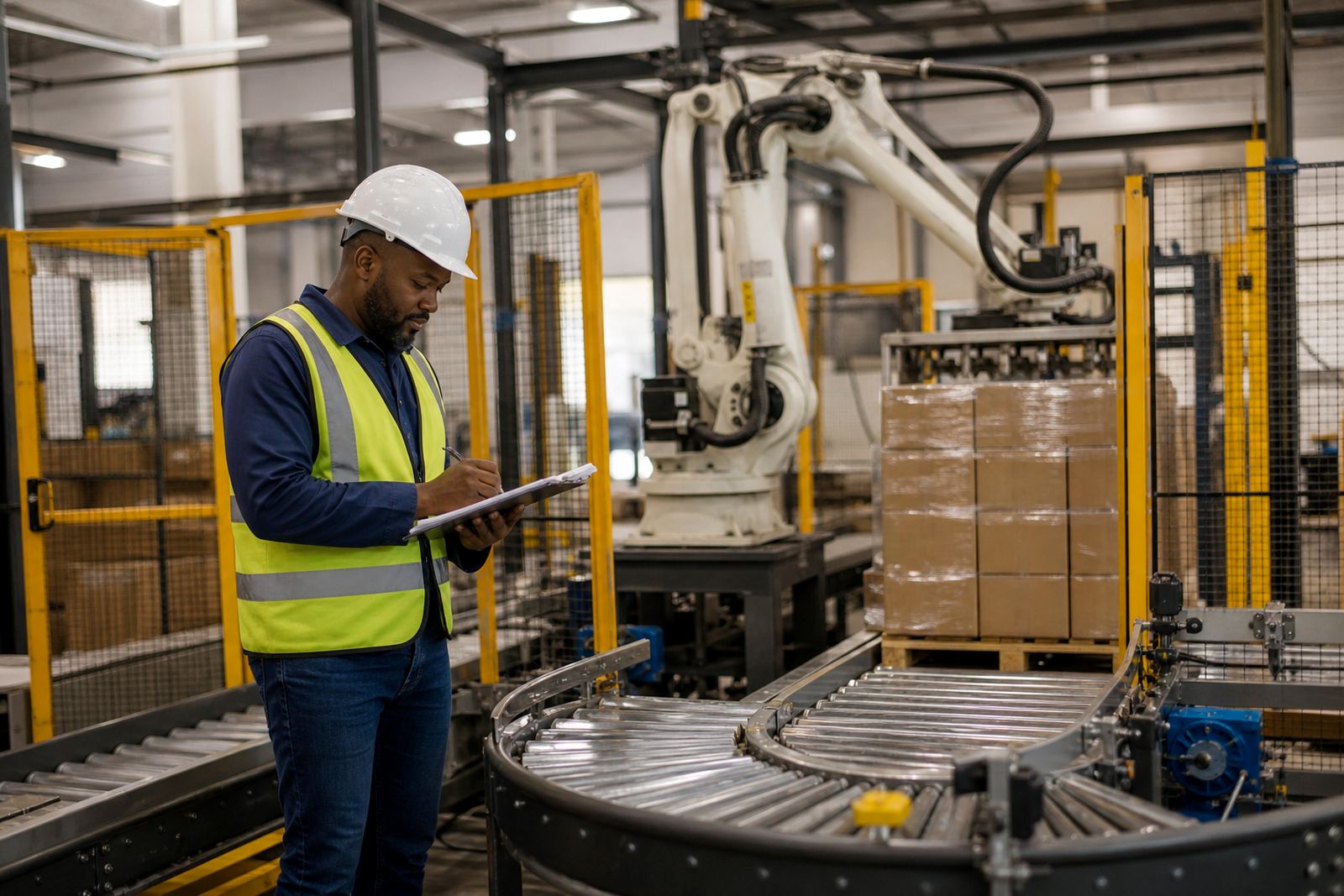
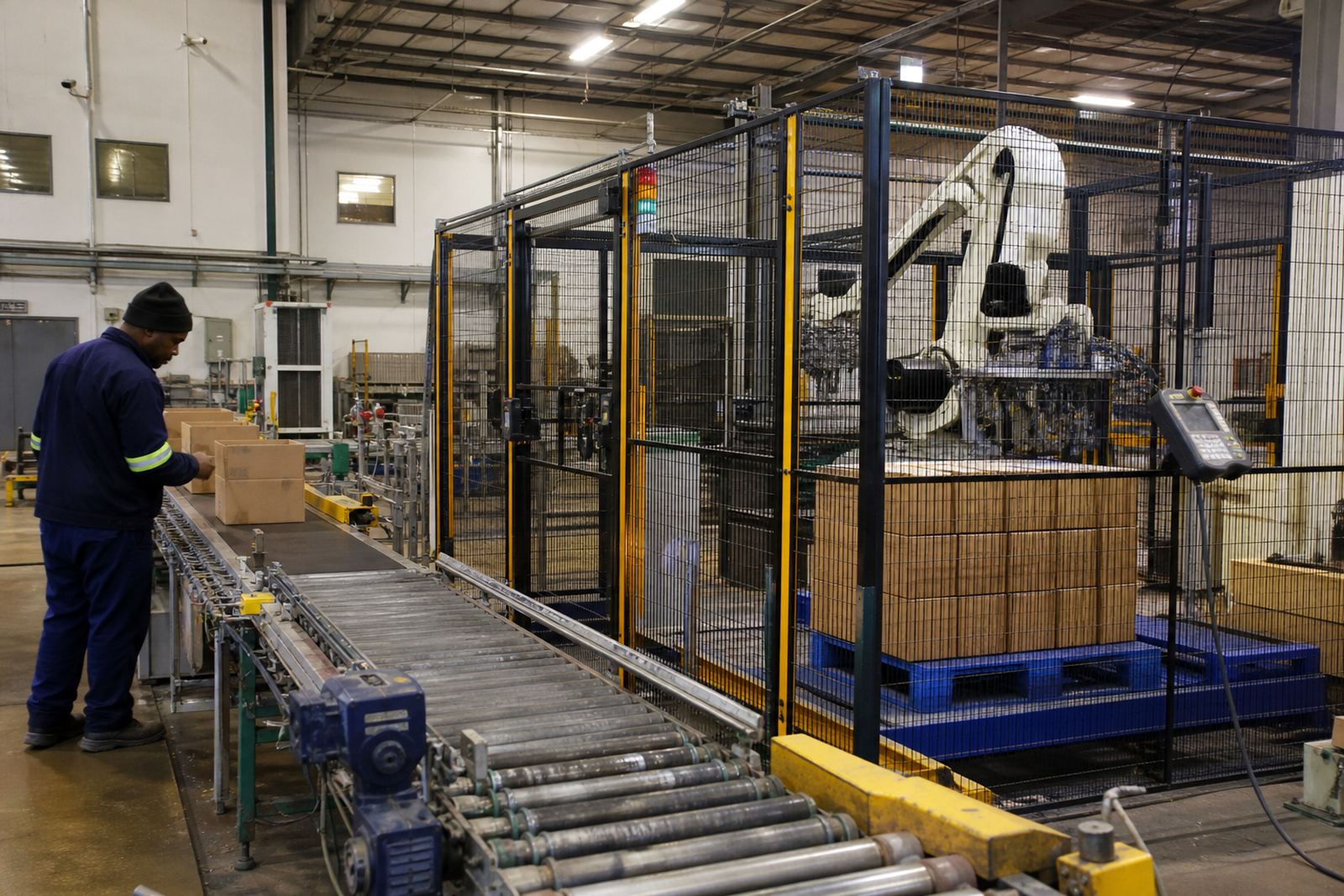
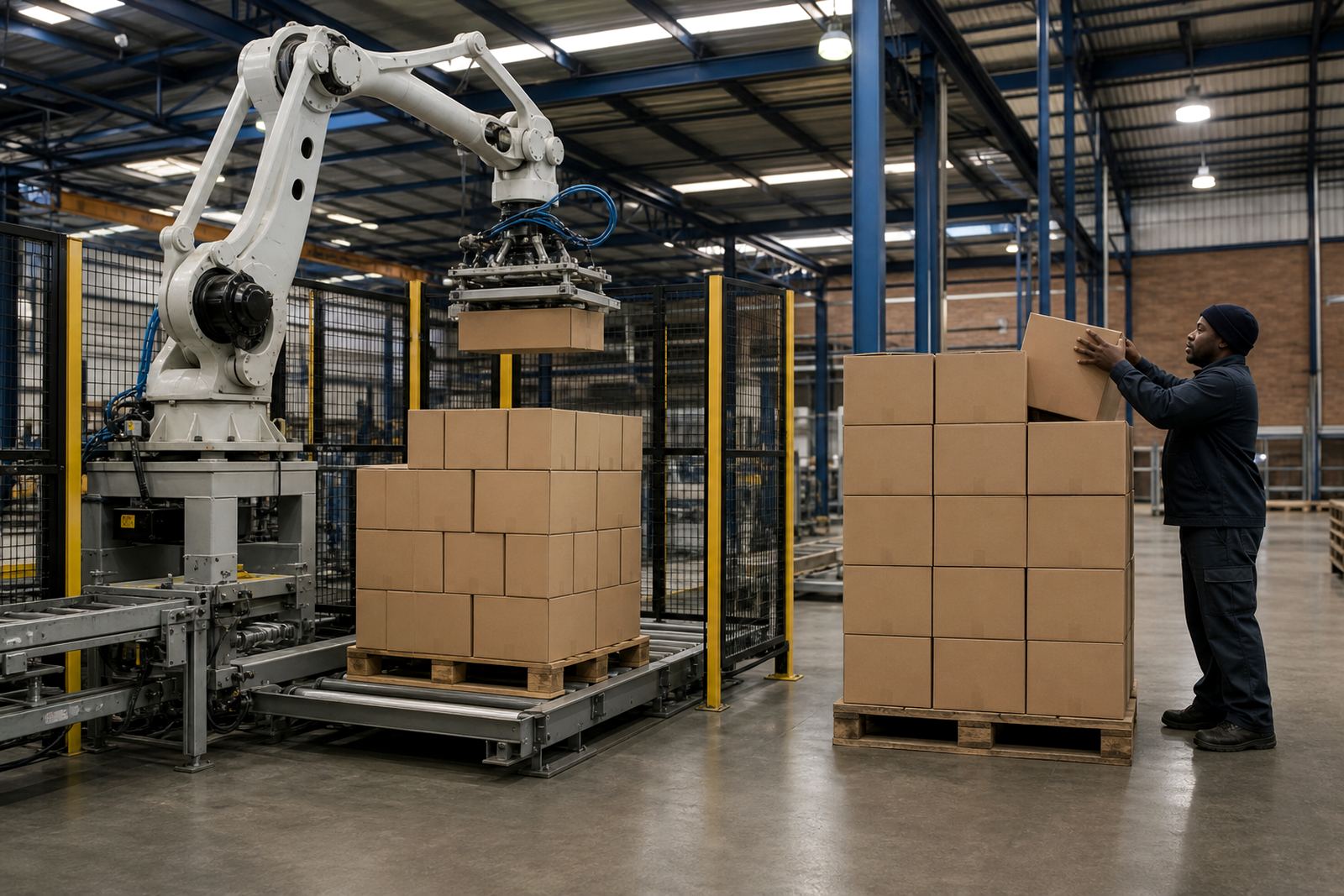
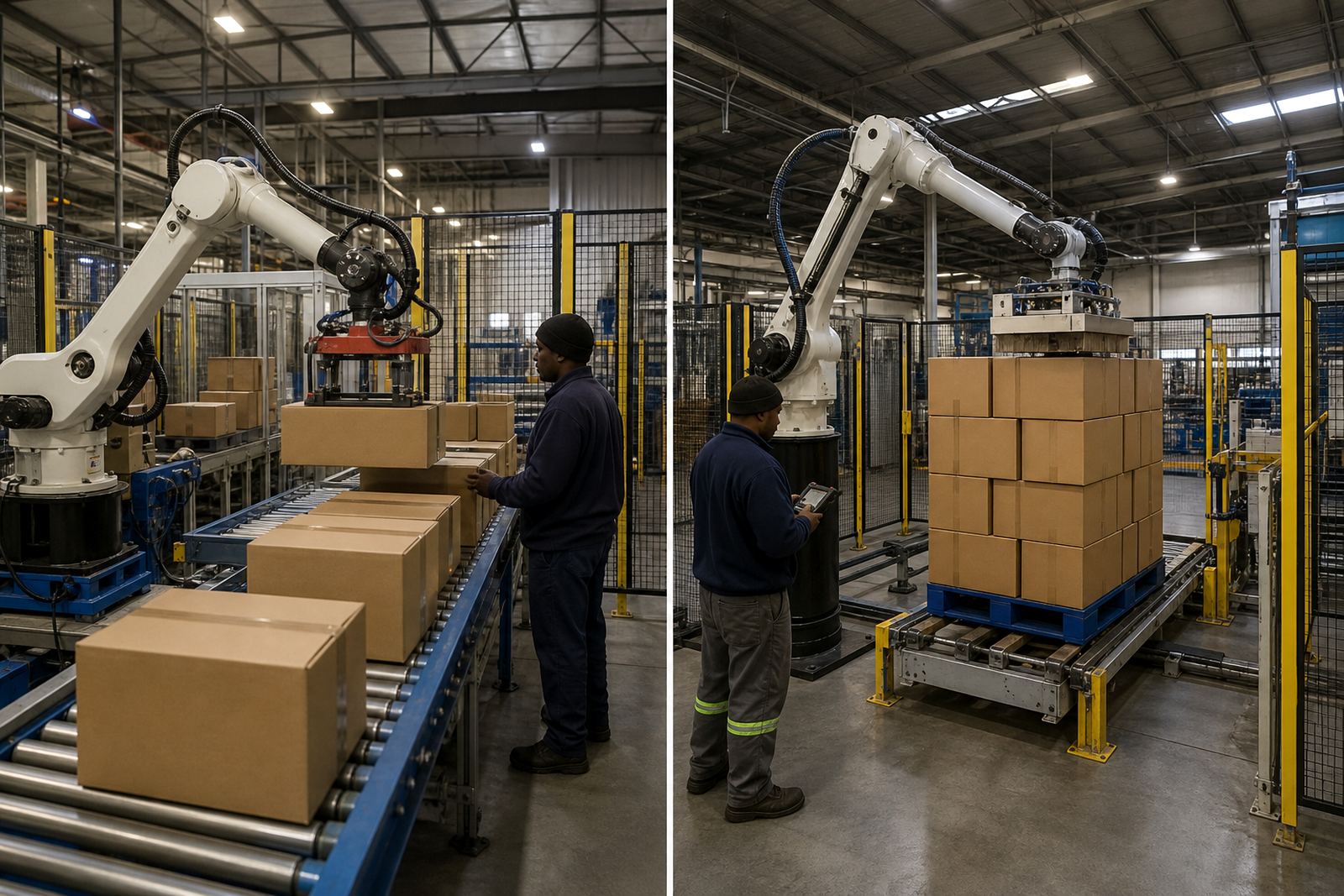
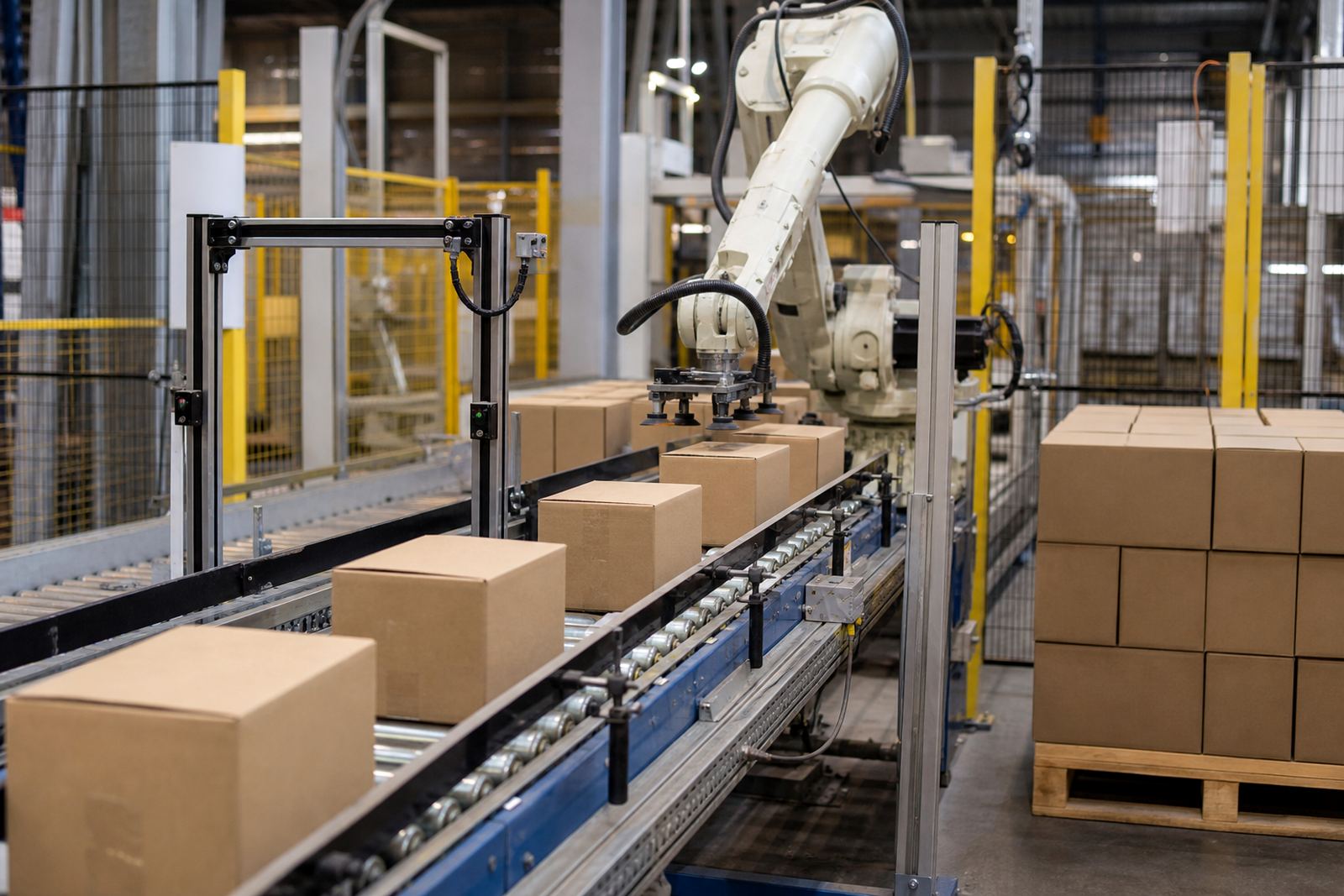
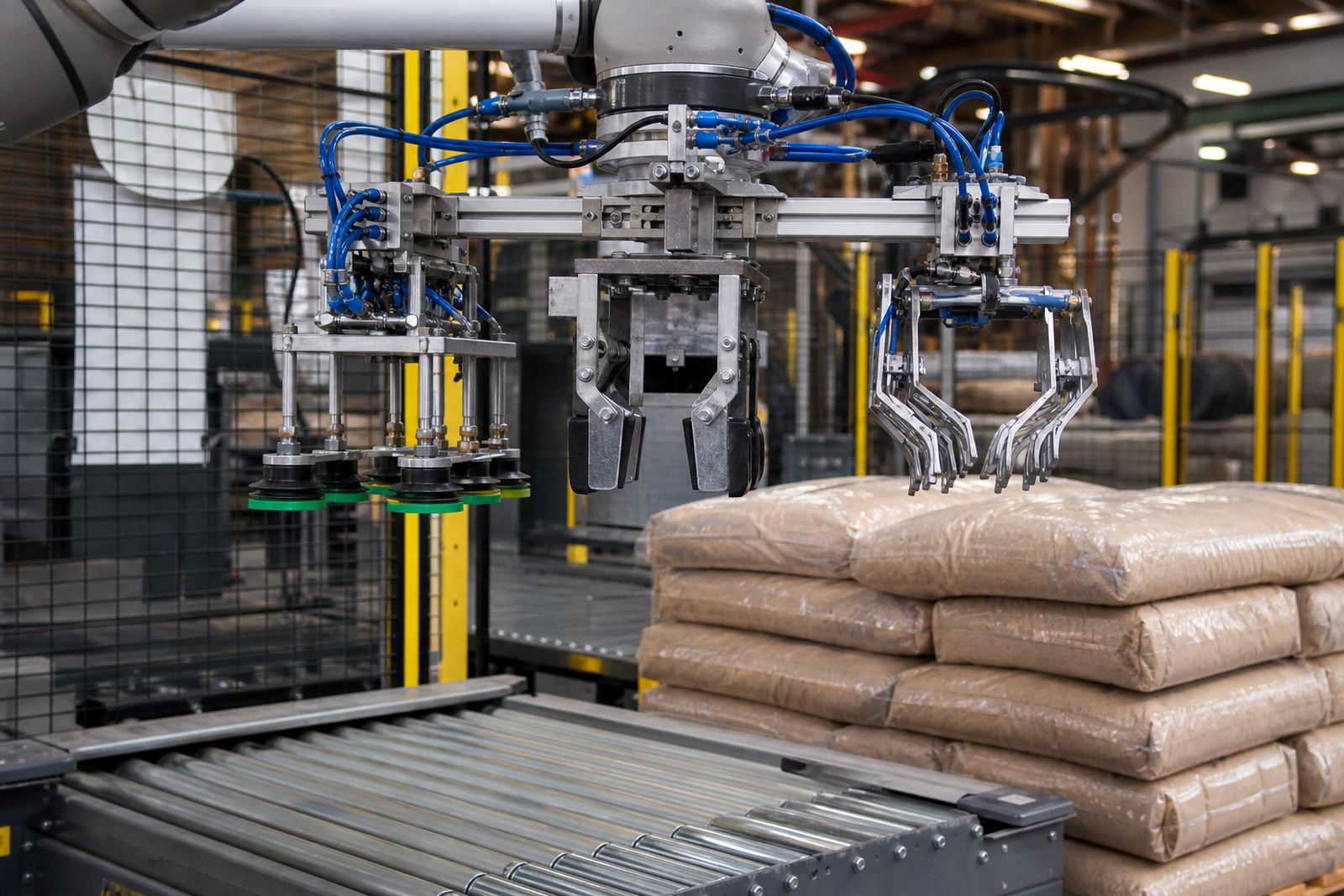
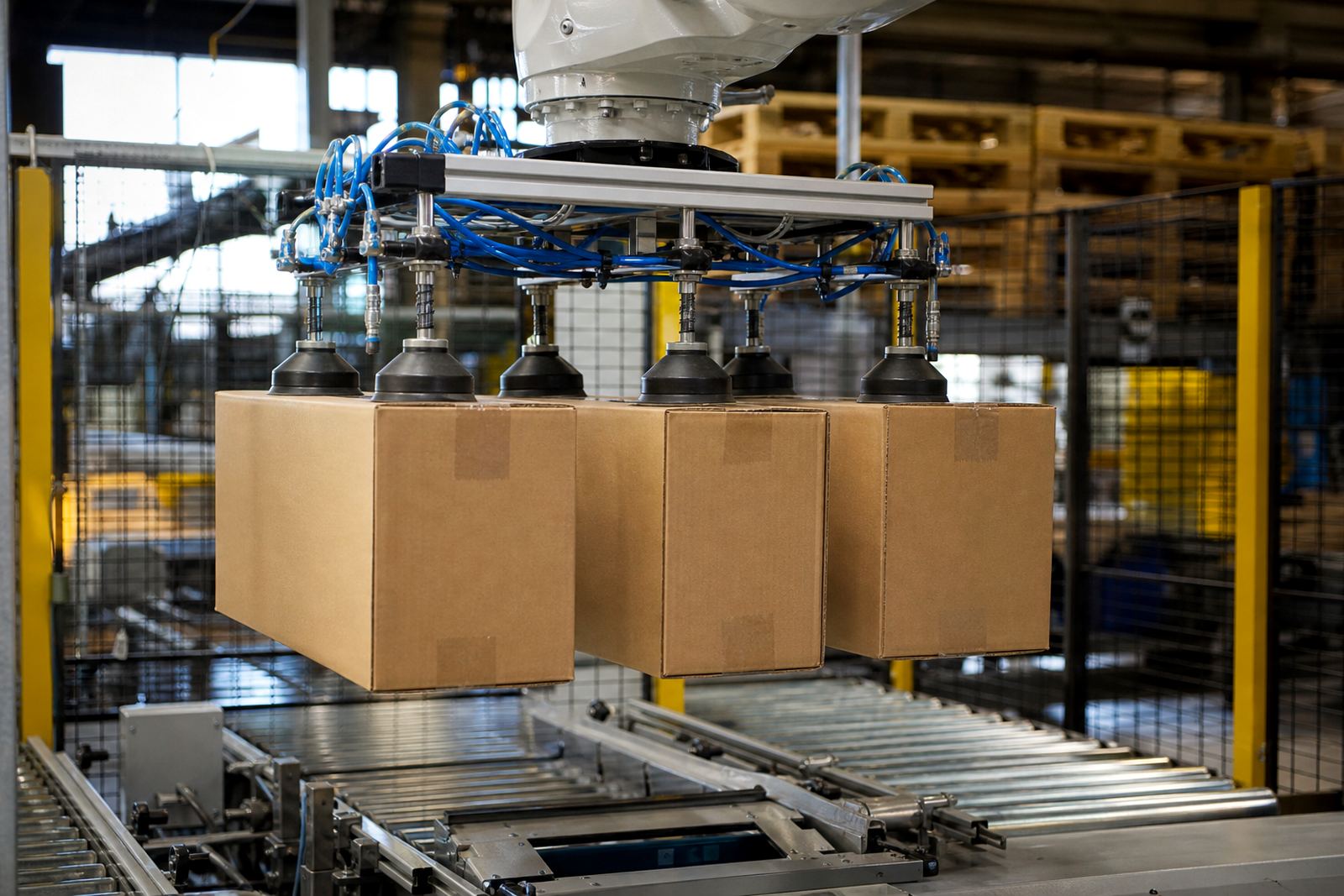
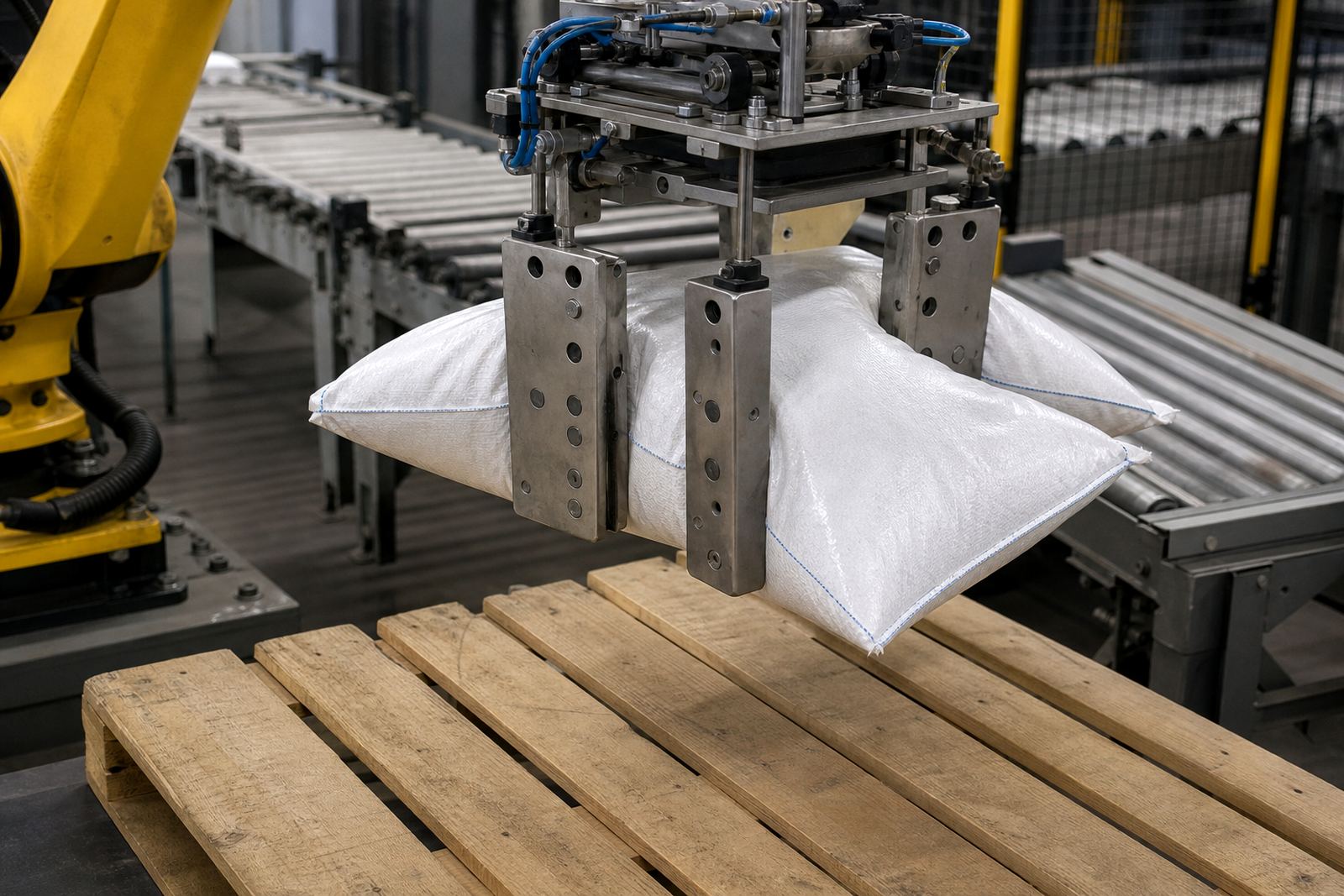
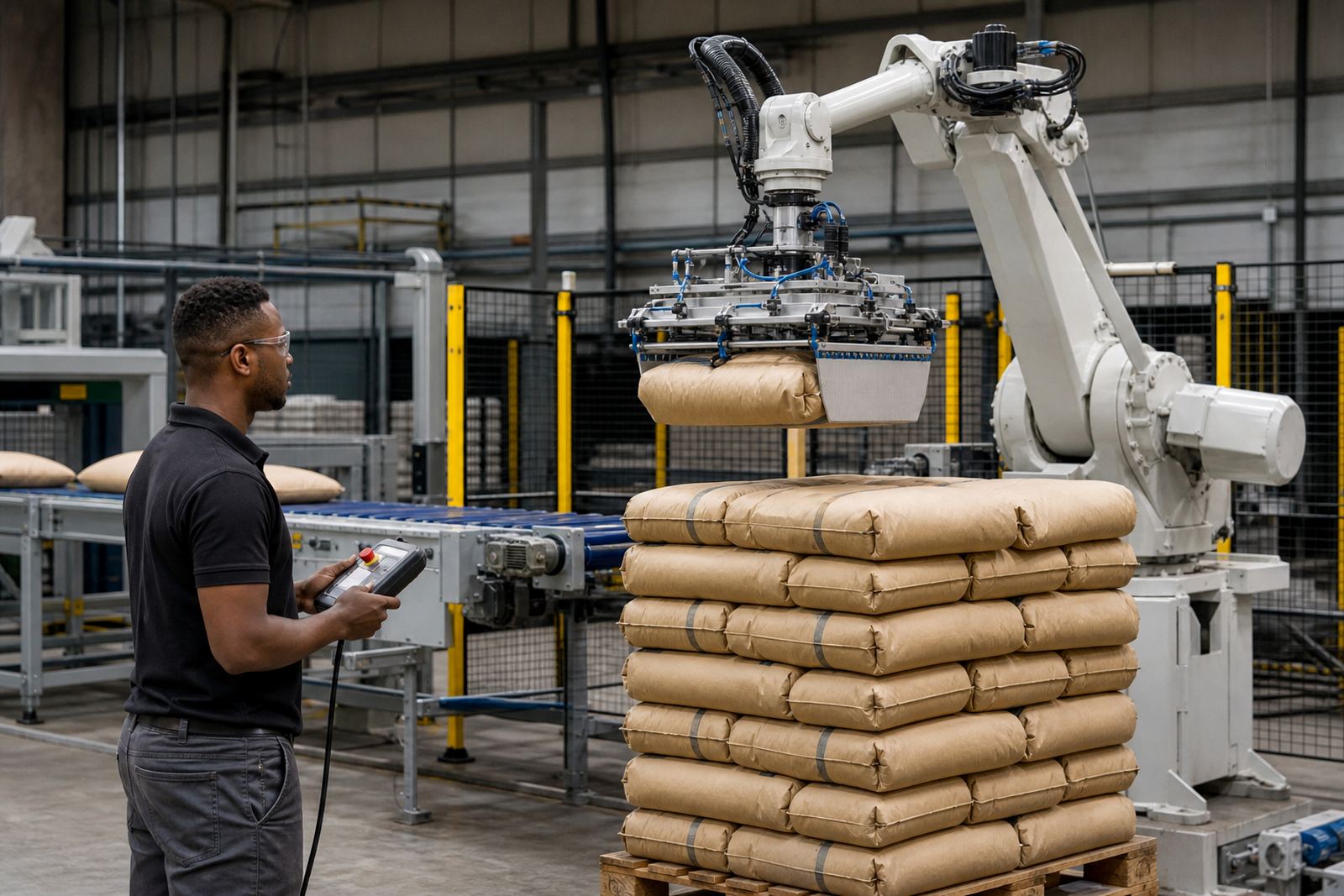
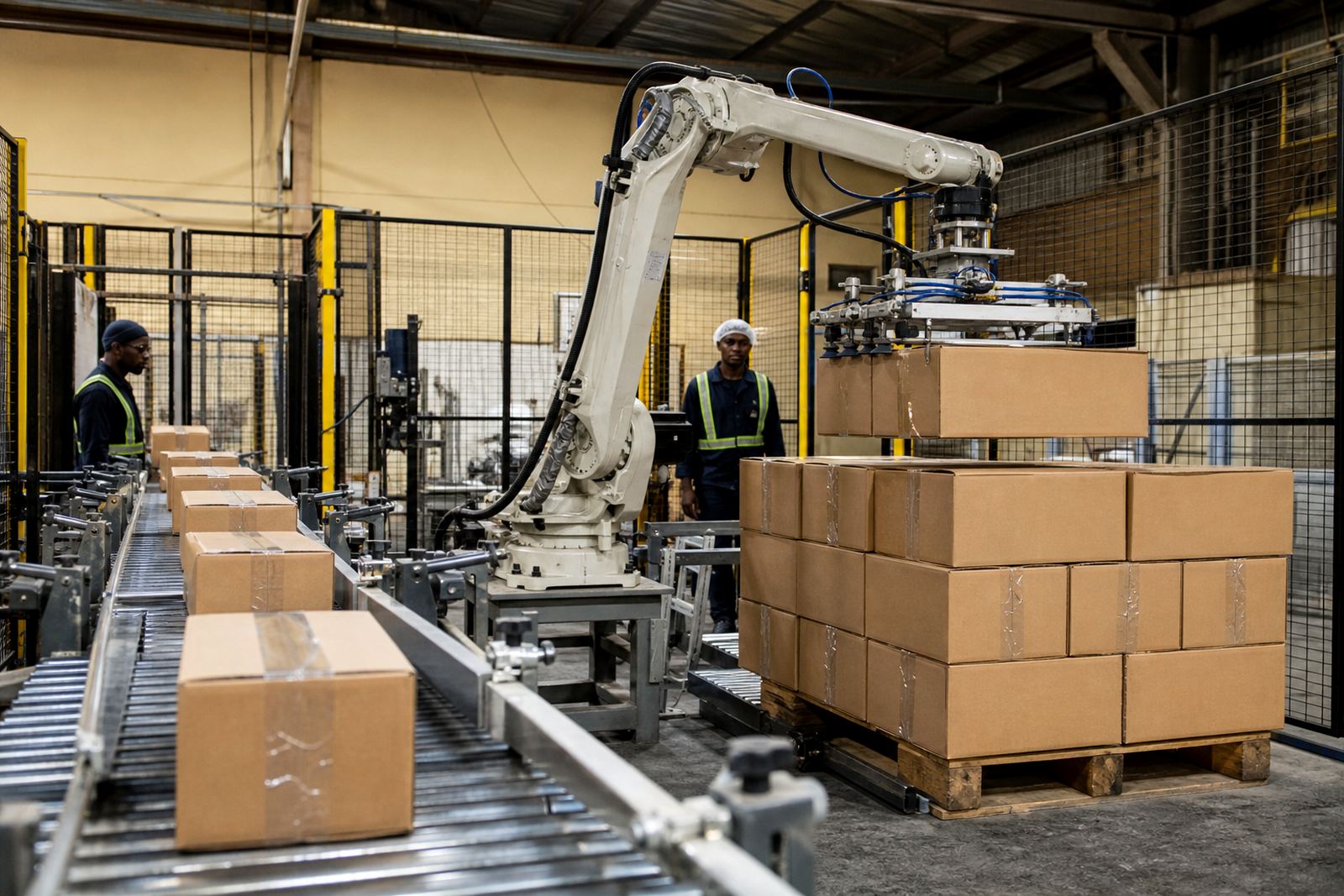
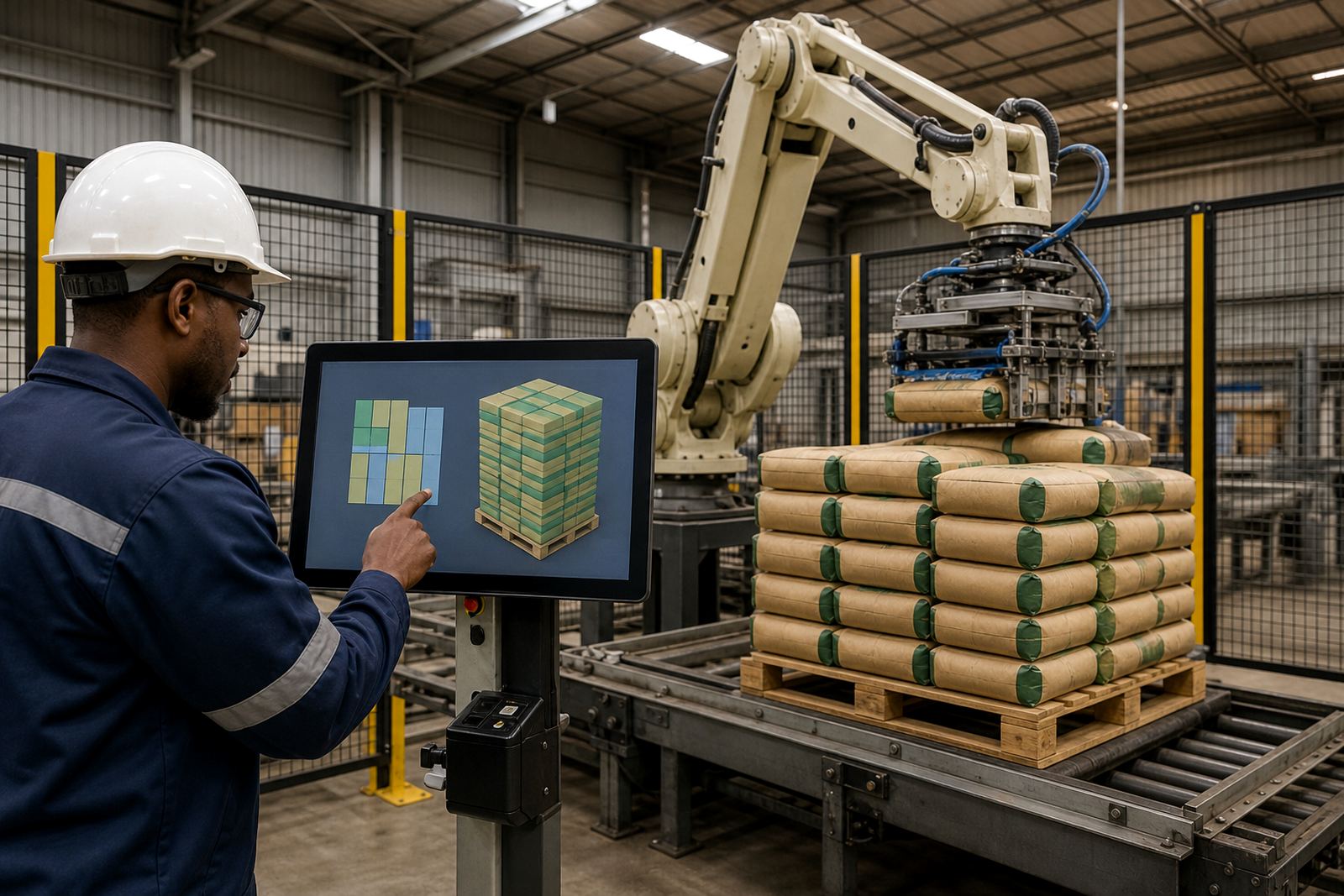
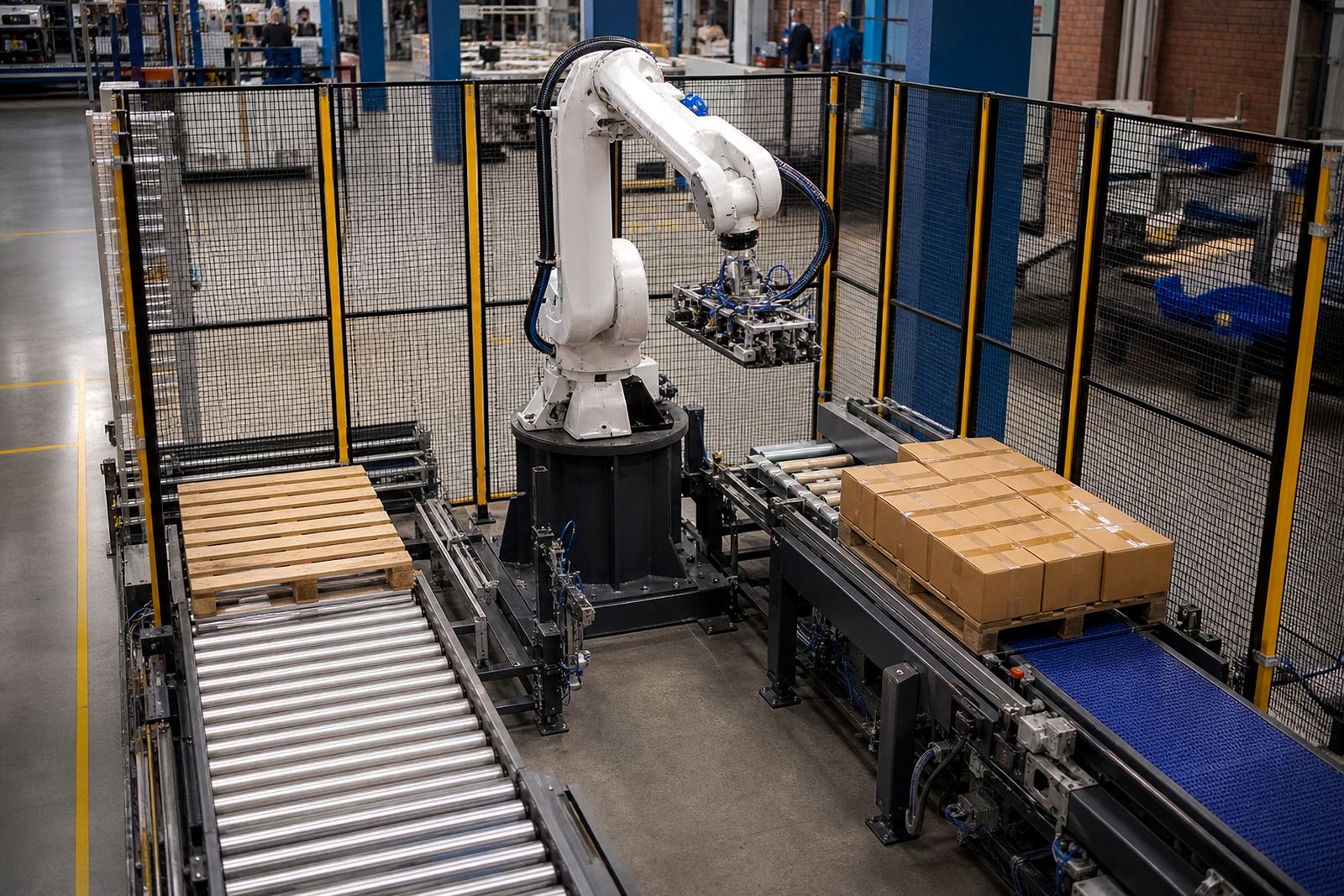
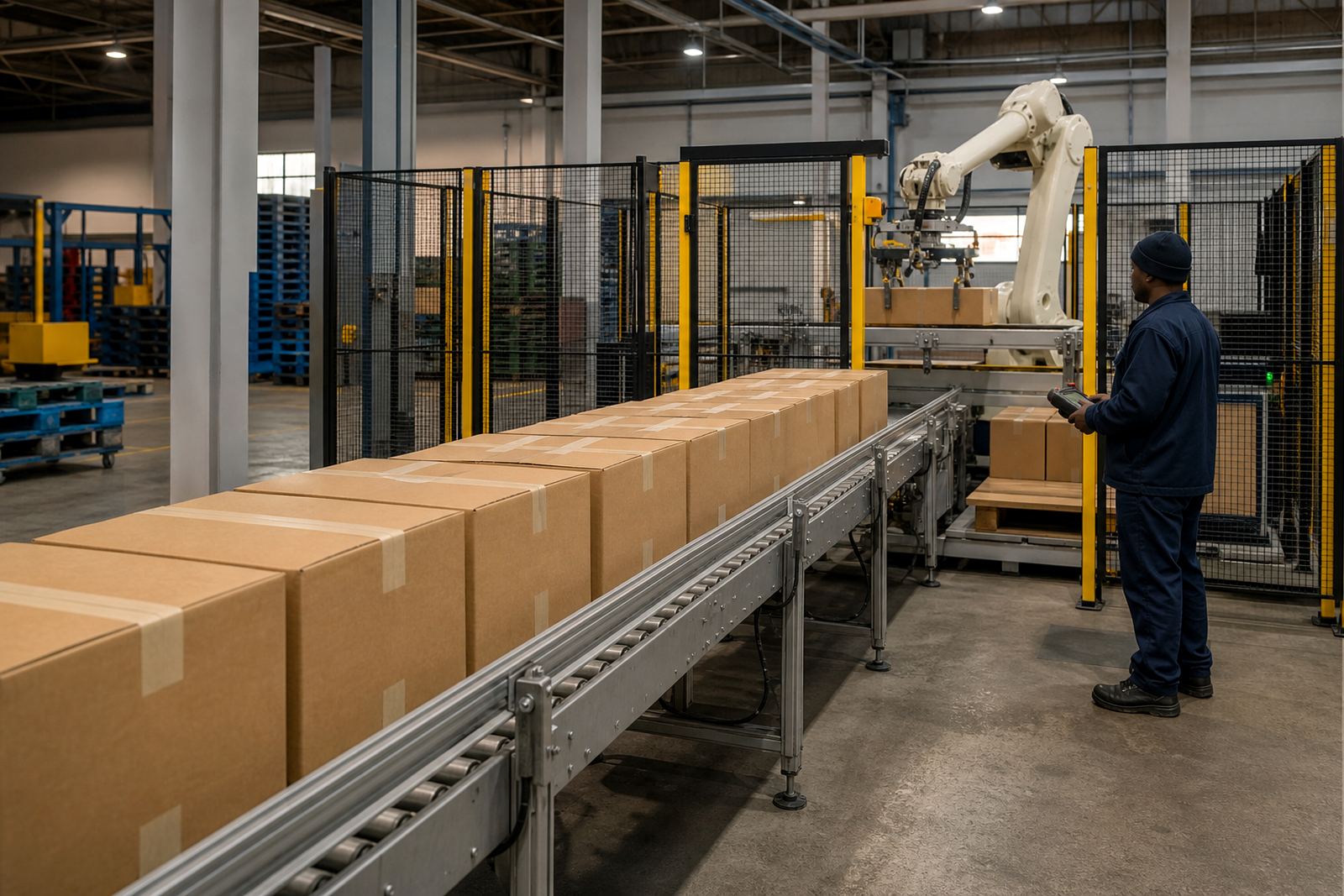
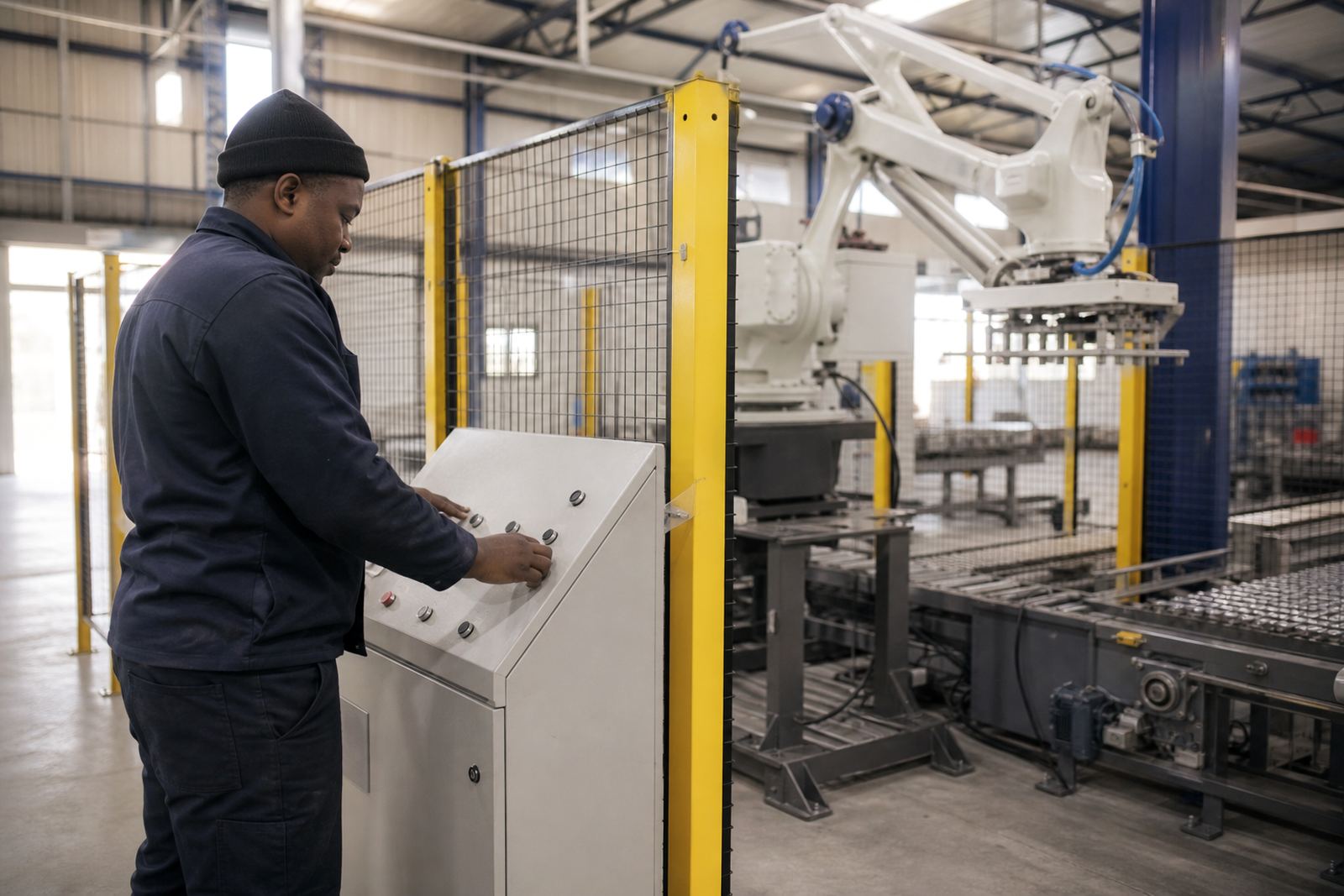
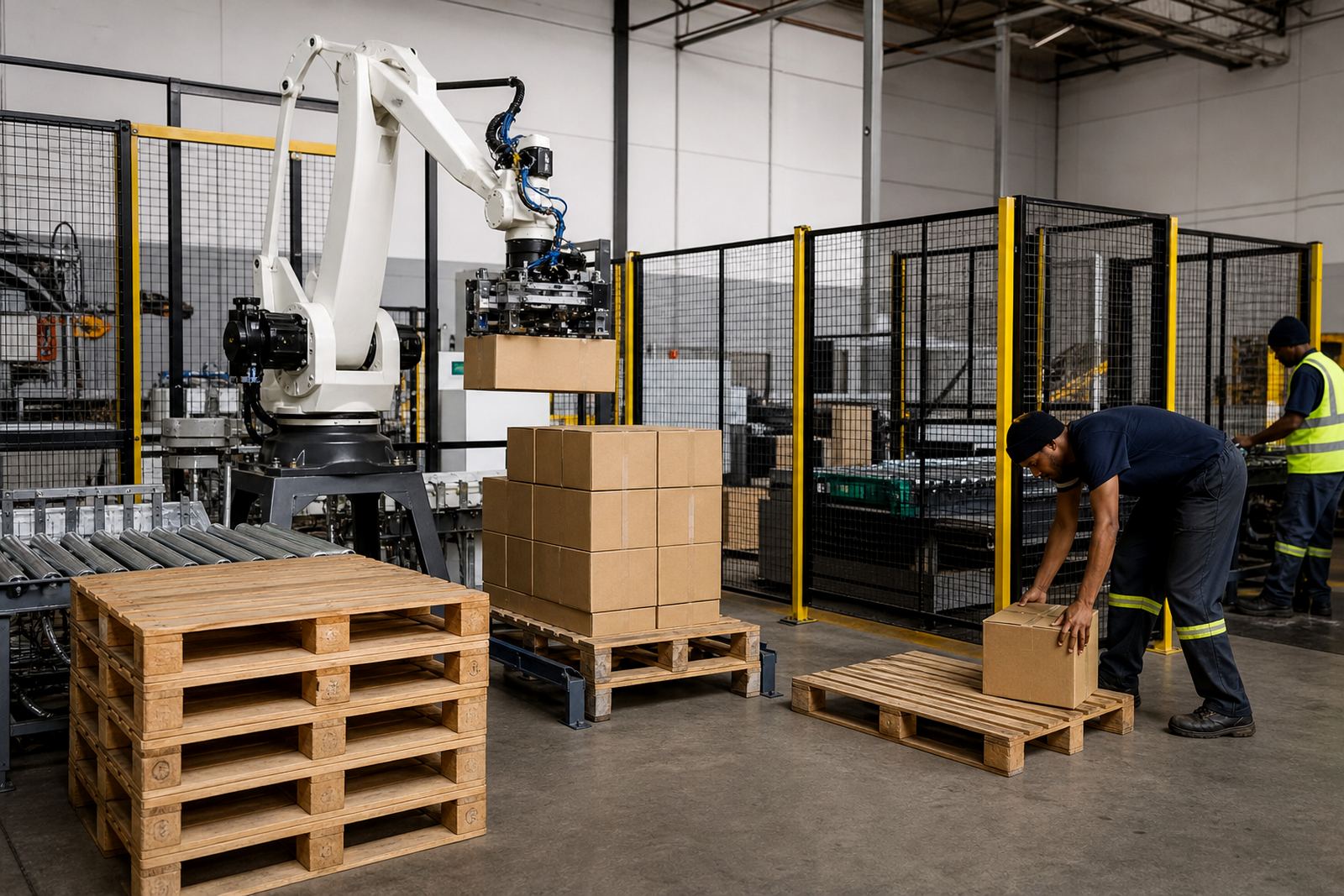
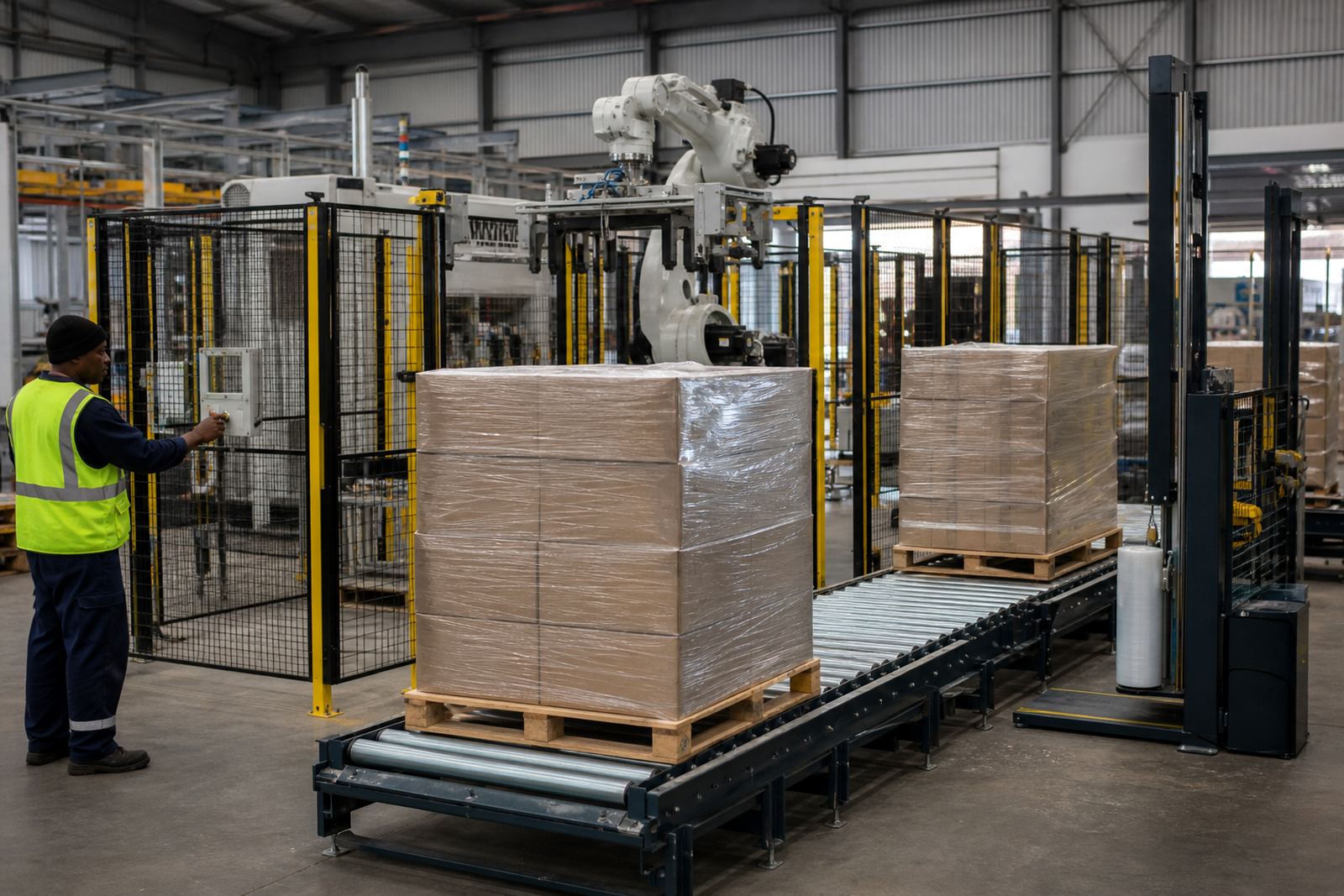
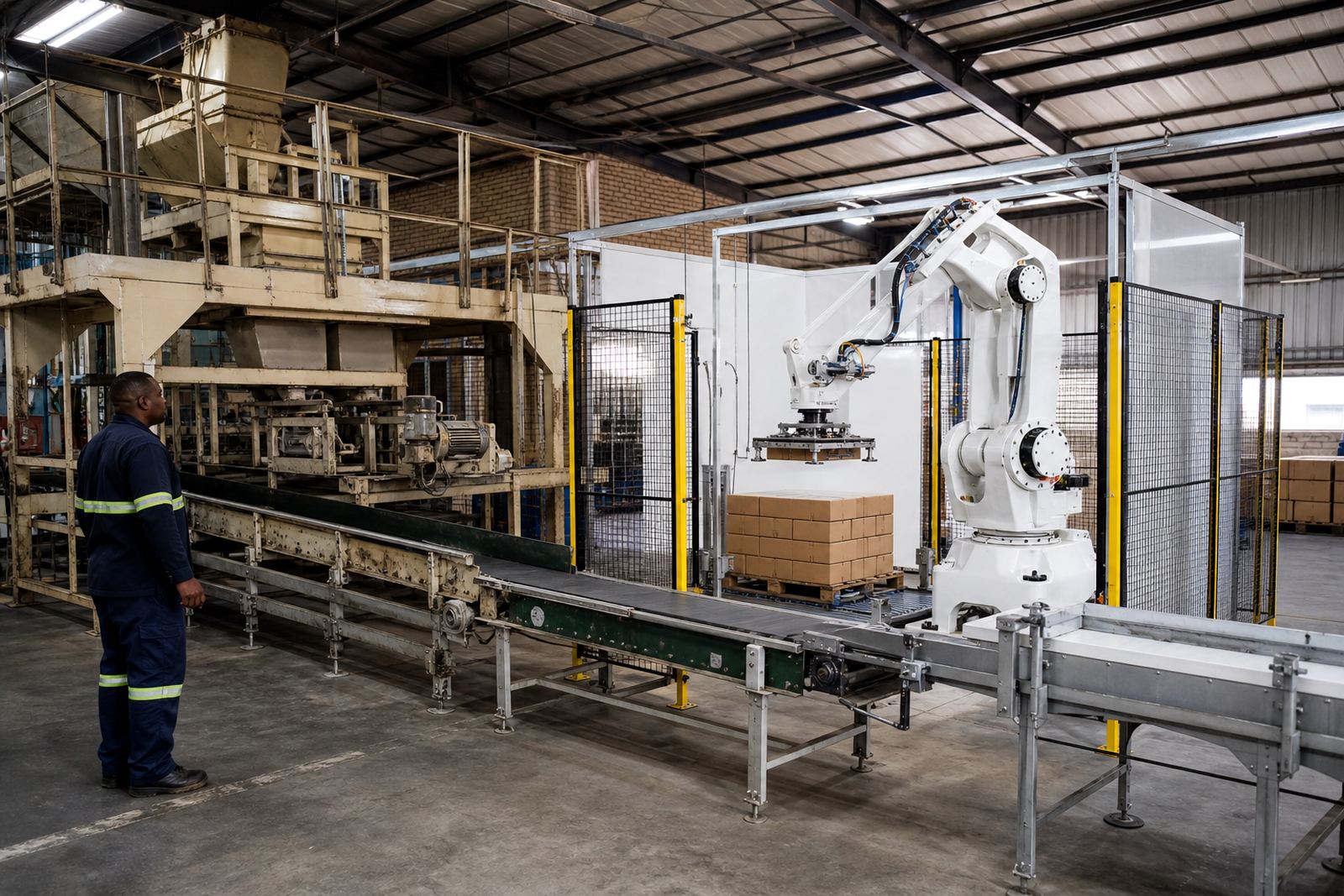
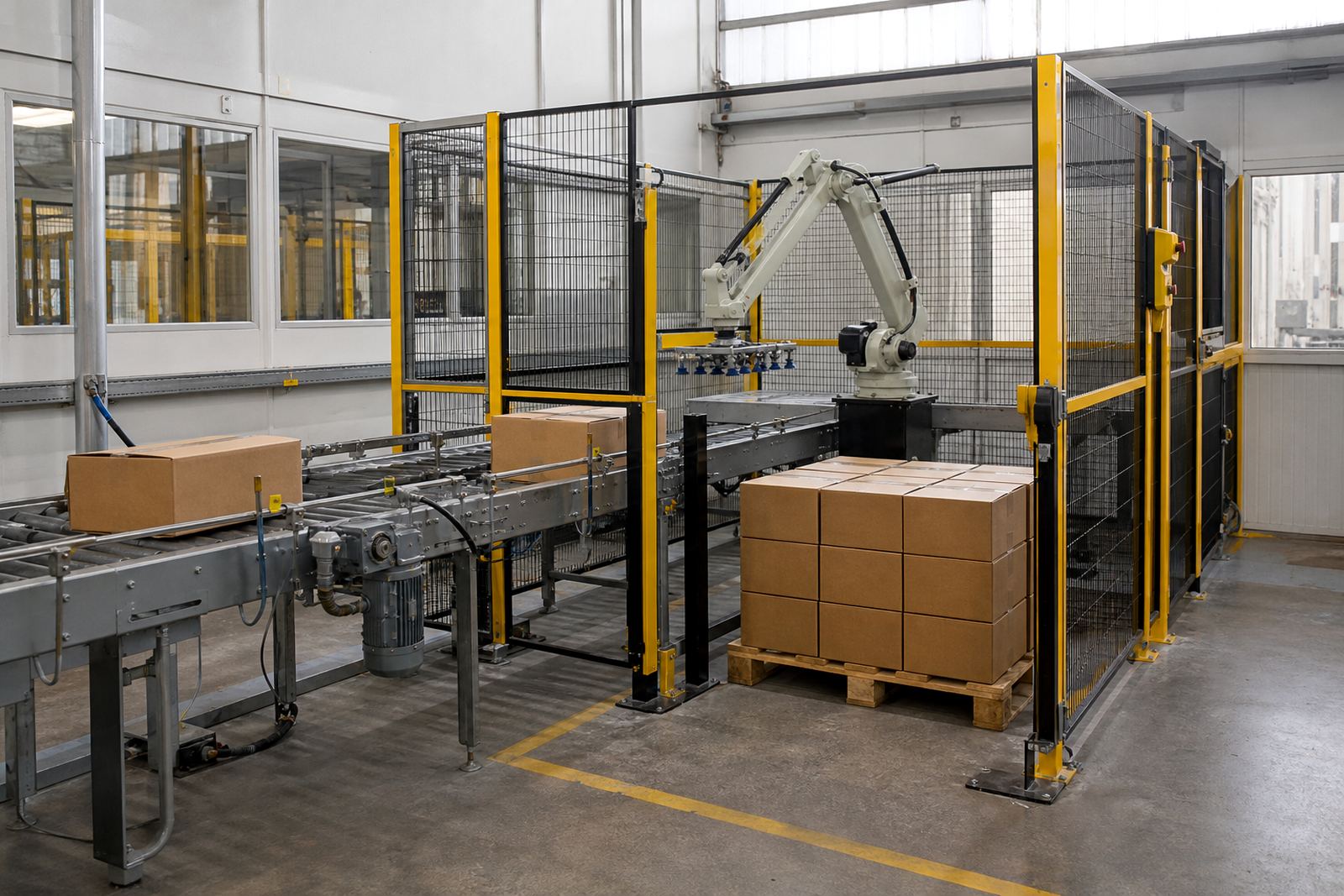
Many plants in Gauteng, KwaZulu-Natal and the Western Cape already have conveyors, pack stations and end-of-line palletising in place. A retrofit adds automation to what is already there, rather than forcing a full line replacement. That can mean a robot loading cases onto pallets, a cobot assisting with repetitive packing tasks, or controls updates that let old and new equipment work together properly.
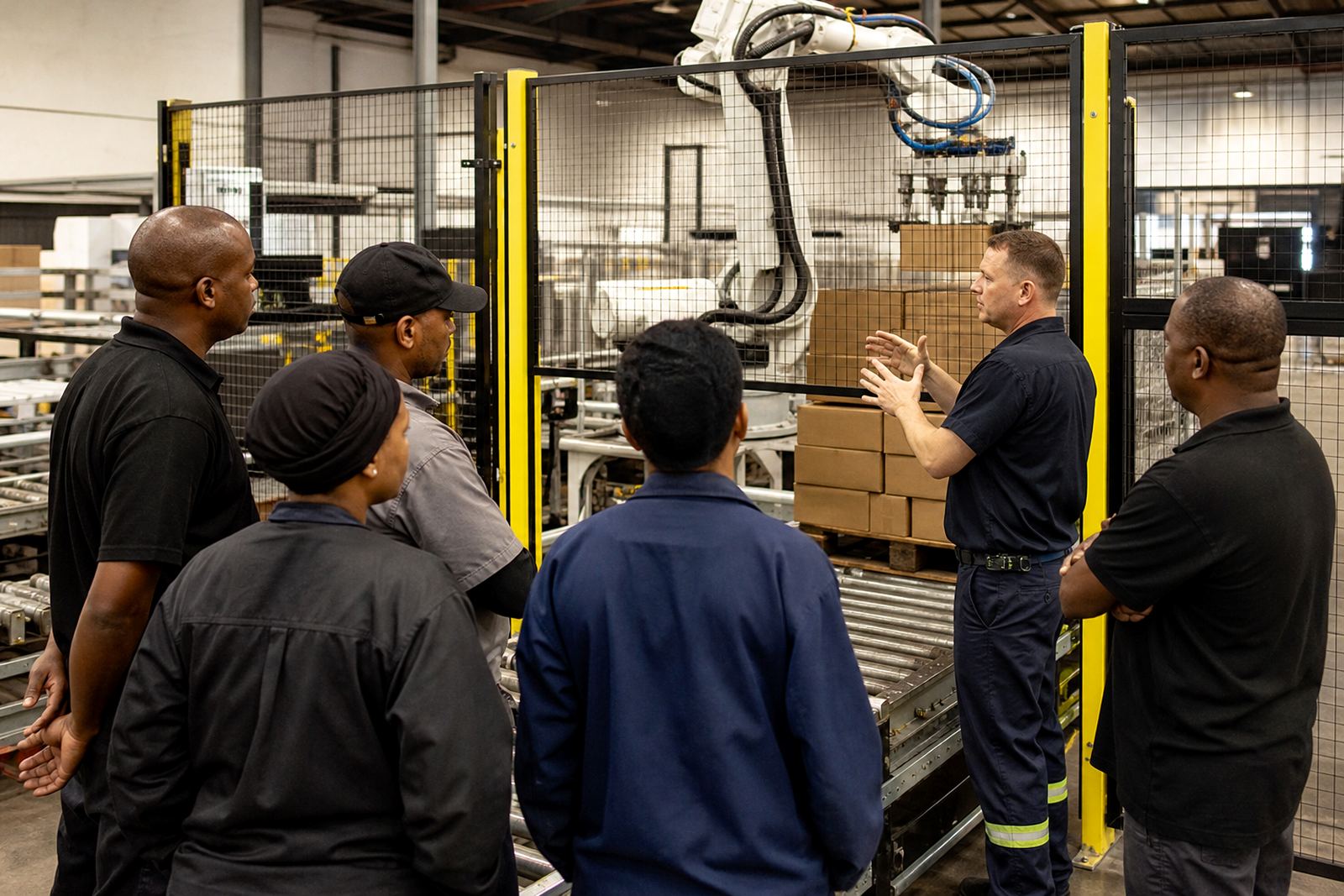
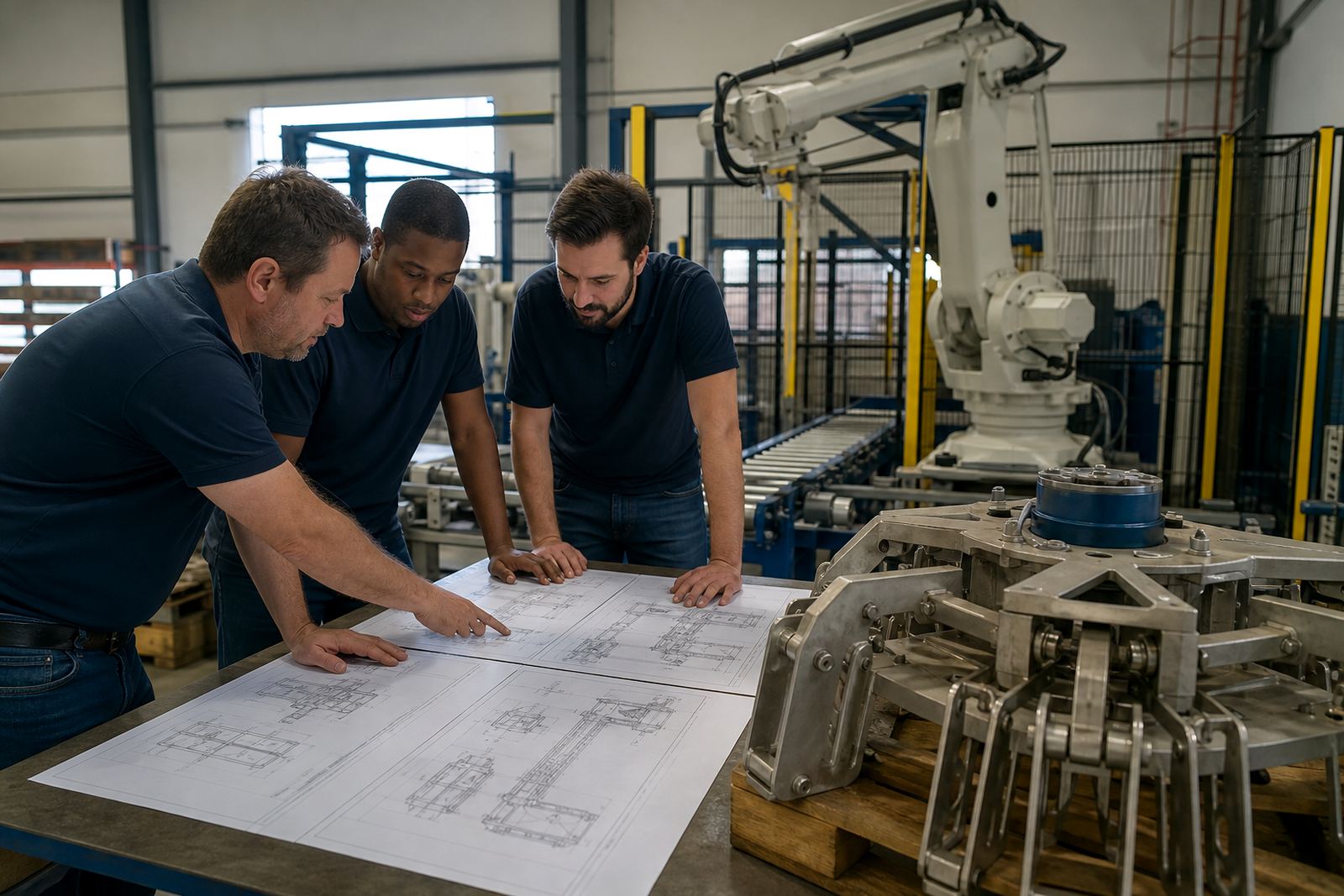
The first step is always to understand the current product flow, carton sizes, pallet patterns and available floor space before any design is proposed.
- Suitable for packing, case handling and palletising lines
- Can use existing conveyors where they are still in good condition
- Needs a proper layout check for access, guarding and maintenance
What a Site Survey Should Cover
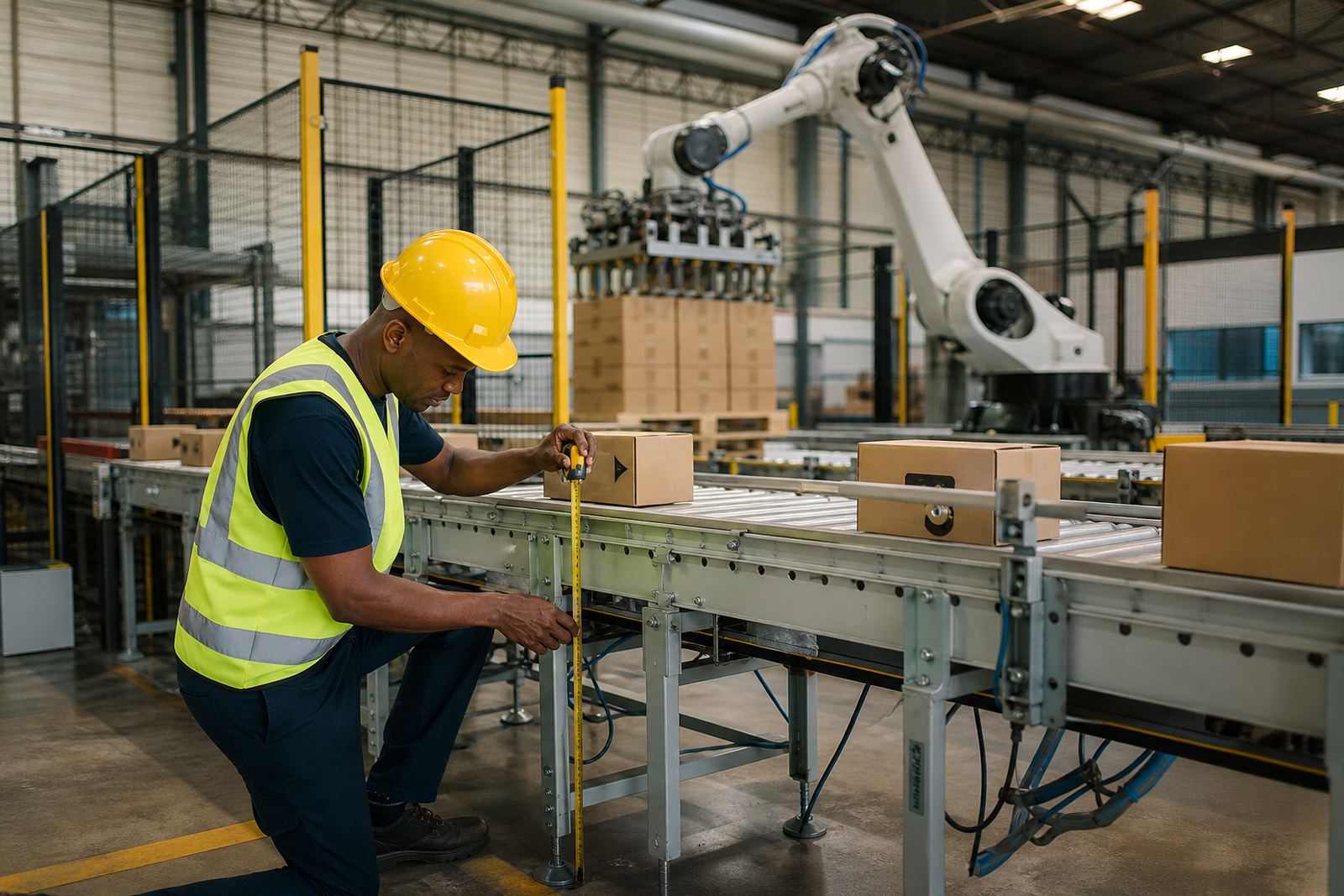
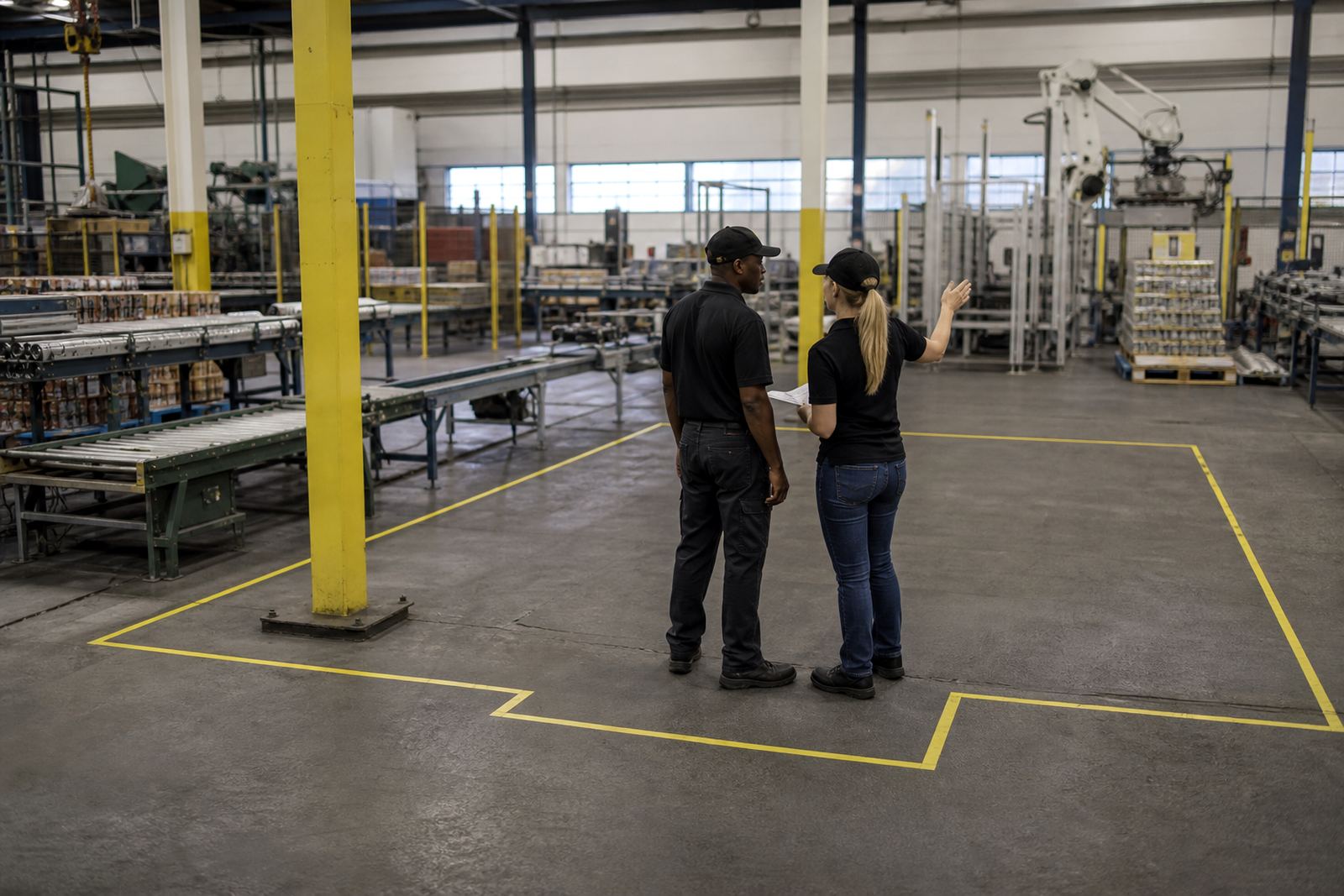
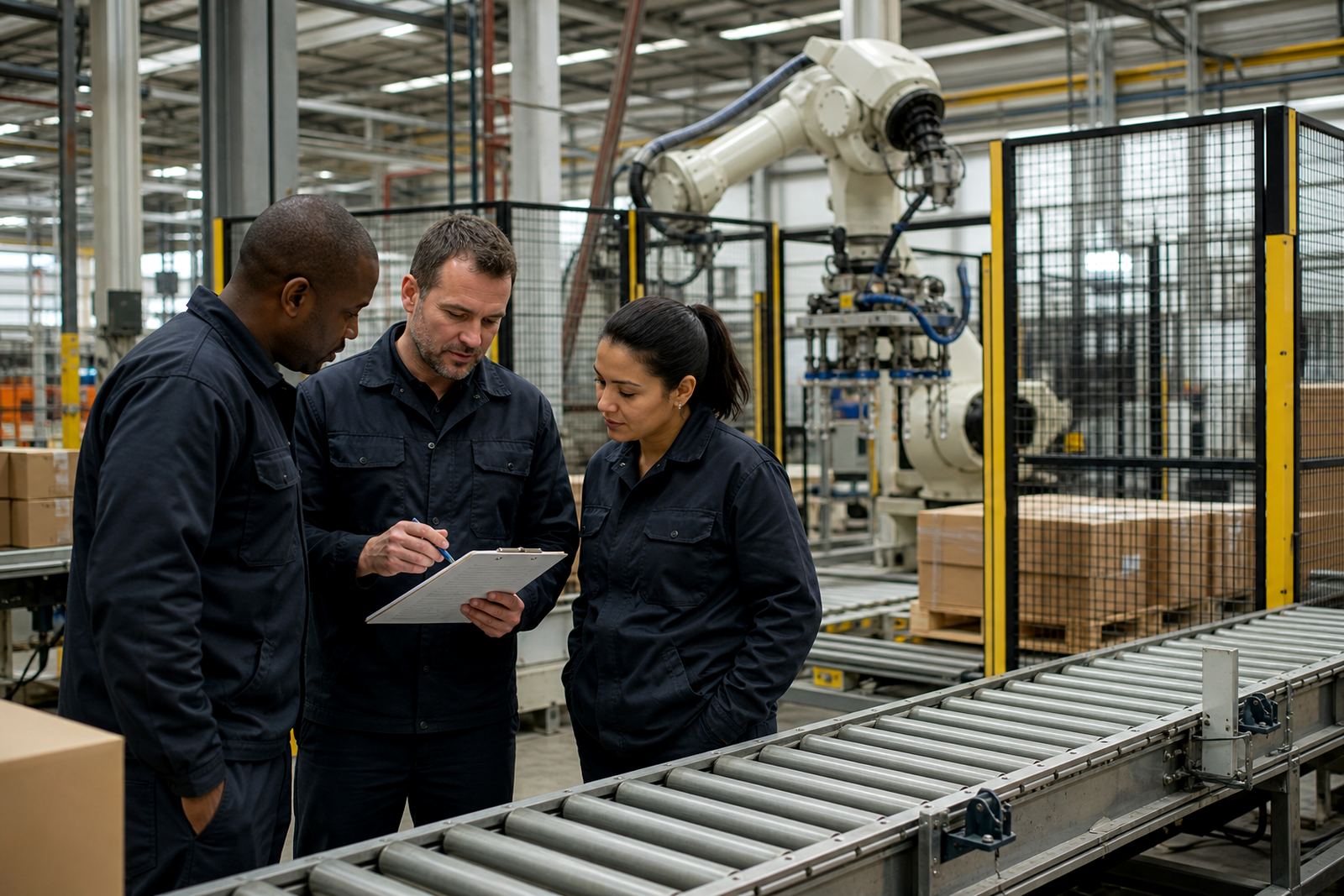
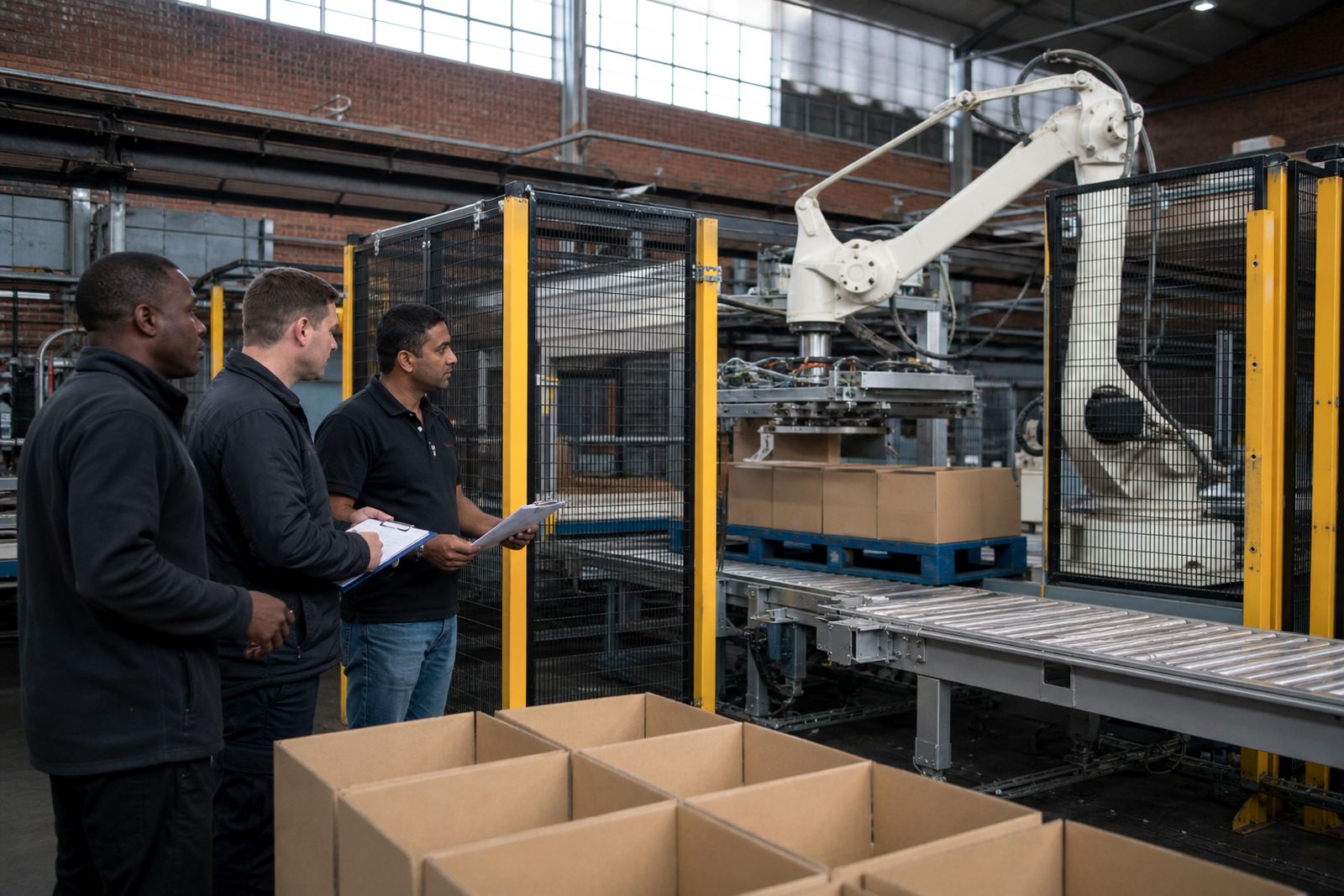
A site line survey is not just a quick look at the floor. It checks the path of product from infeed to pallet release, the condition of conveyors, the available headroom, and where people need access for cleaning, changeovers or clearing faults. In older factories this often reveals bottlenecks that are simple to miss during normal production.
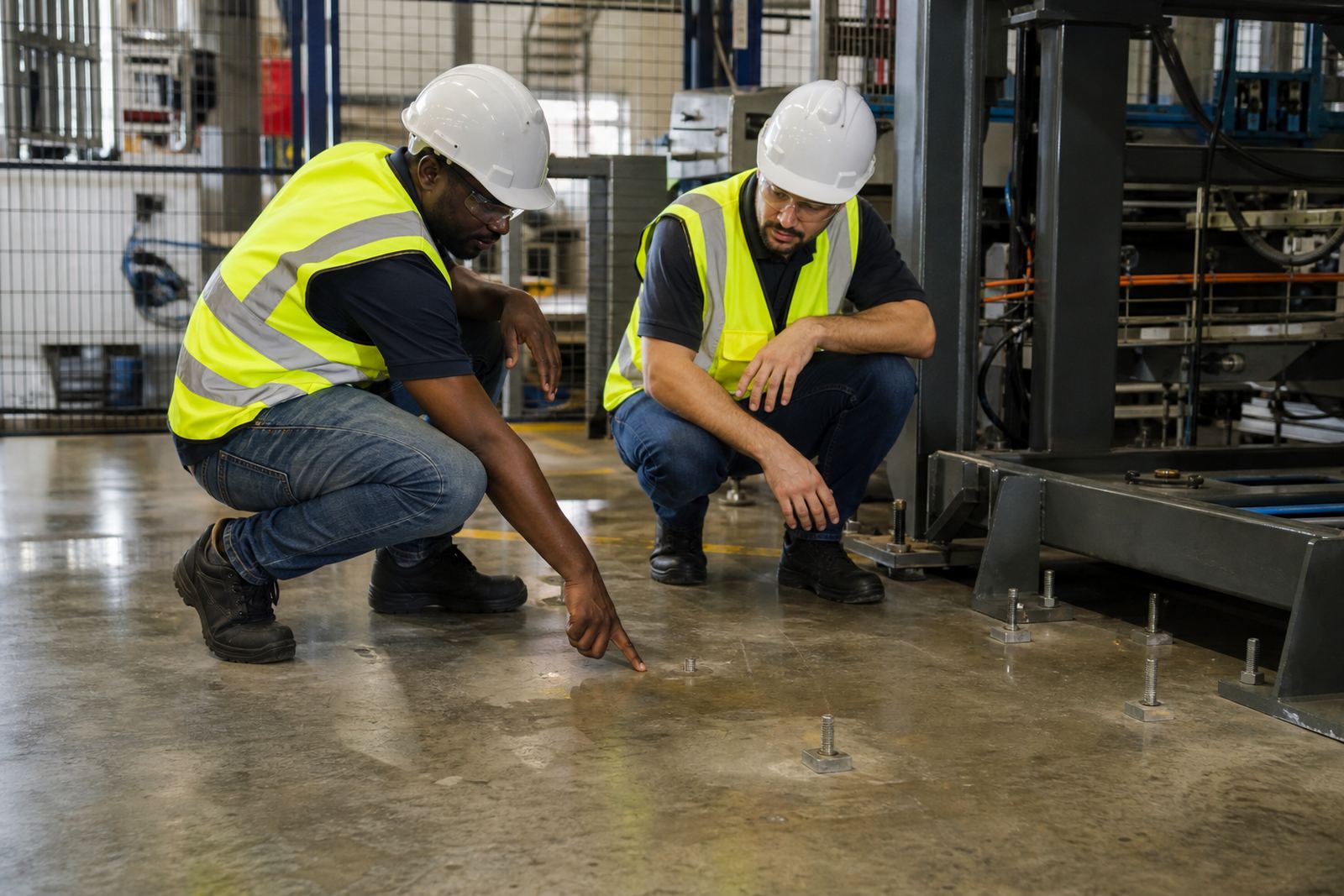
For sites in Johannesburg, Pretoria, Durban, Cape Town or Gqeberha, the survey should also take the local environment into account. Coastal humidity can affect panels and sensors, while dust and temperature swings can influence cabinet placement and cable routing. If there are municipal or landlord rules about floor fixing, noise or fire exits, those need to be noted before the retrofit layout is finalised.
- Product size, weight and pack pattern
- Existing conveyor speeds and handover points
- Operator access, guarding gaps and emergency stops
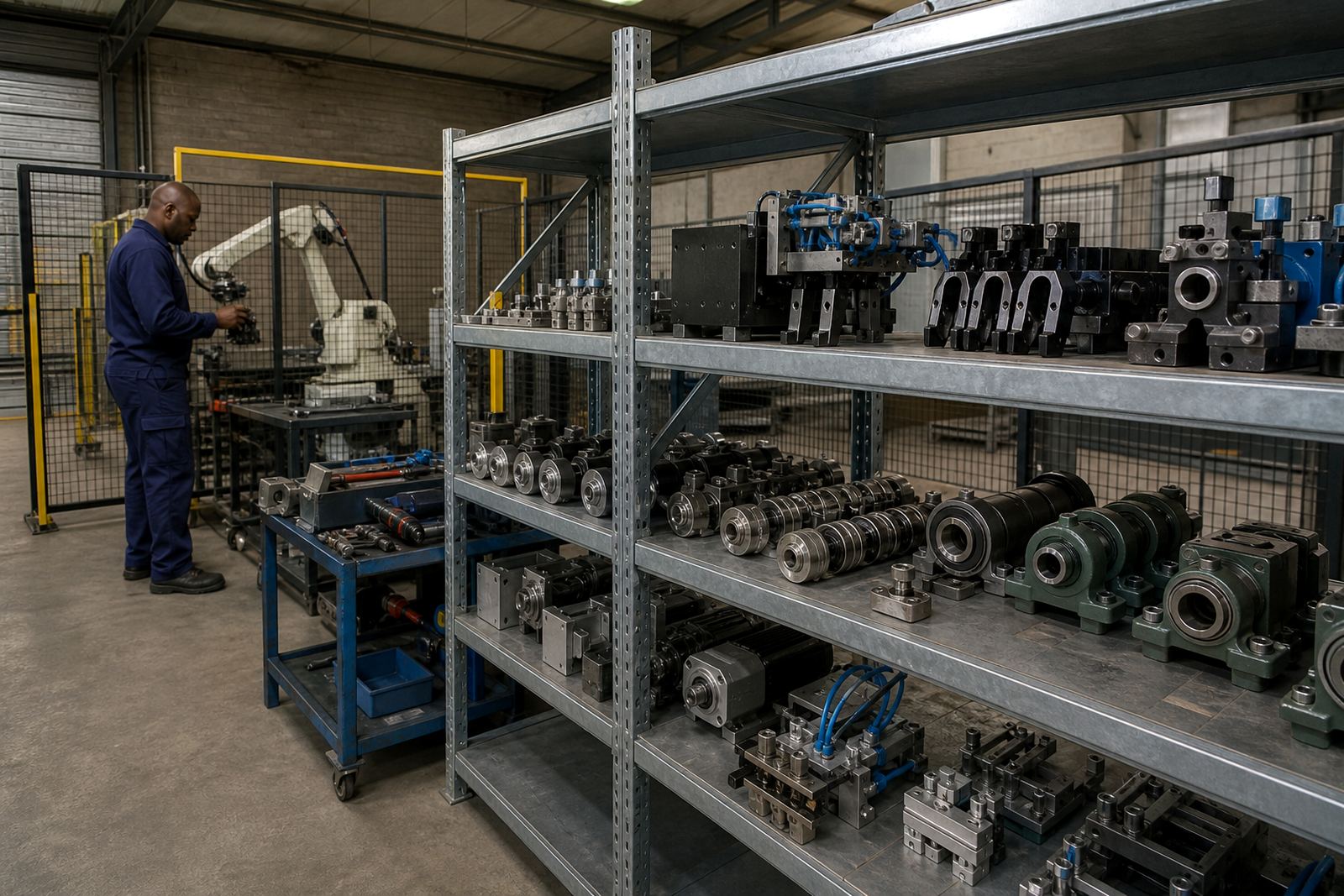
- Space for maintenance, spares and future expansion
Safety Guarding and Risk Assessment Support
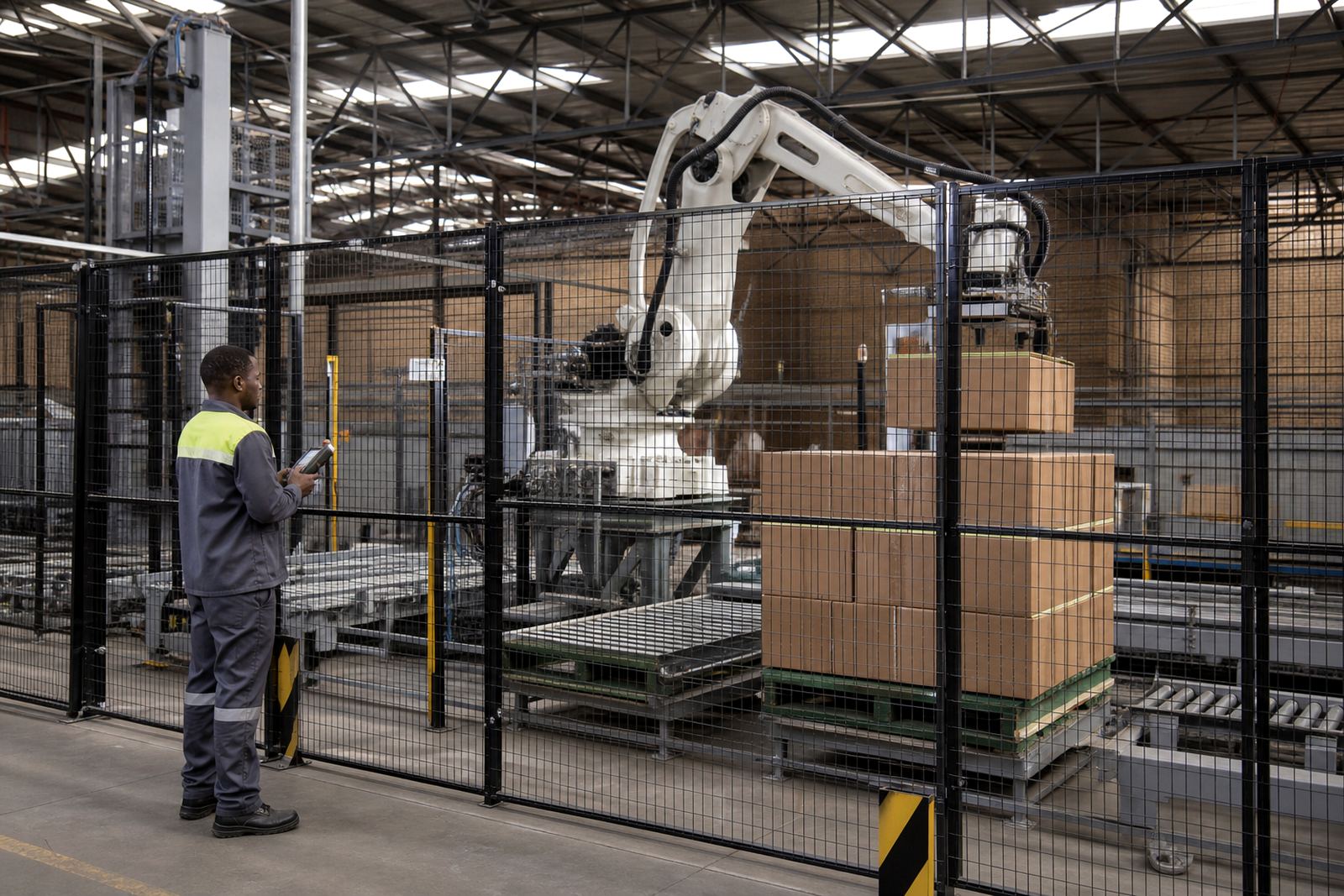
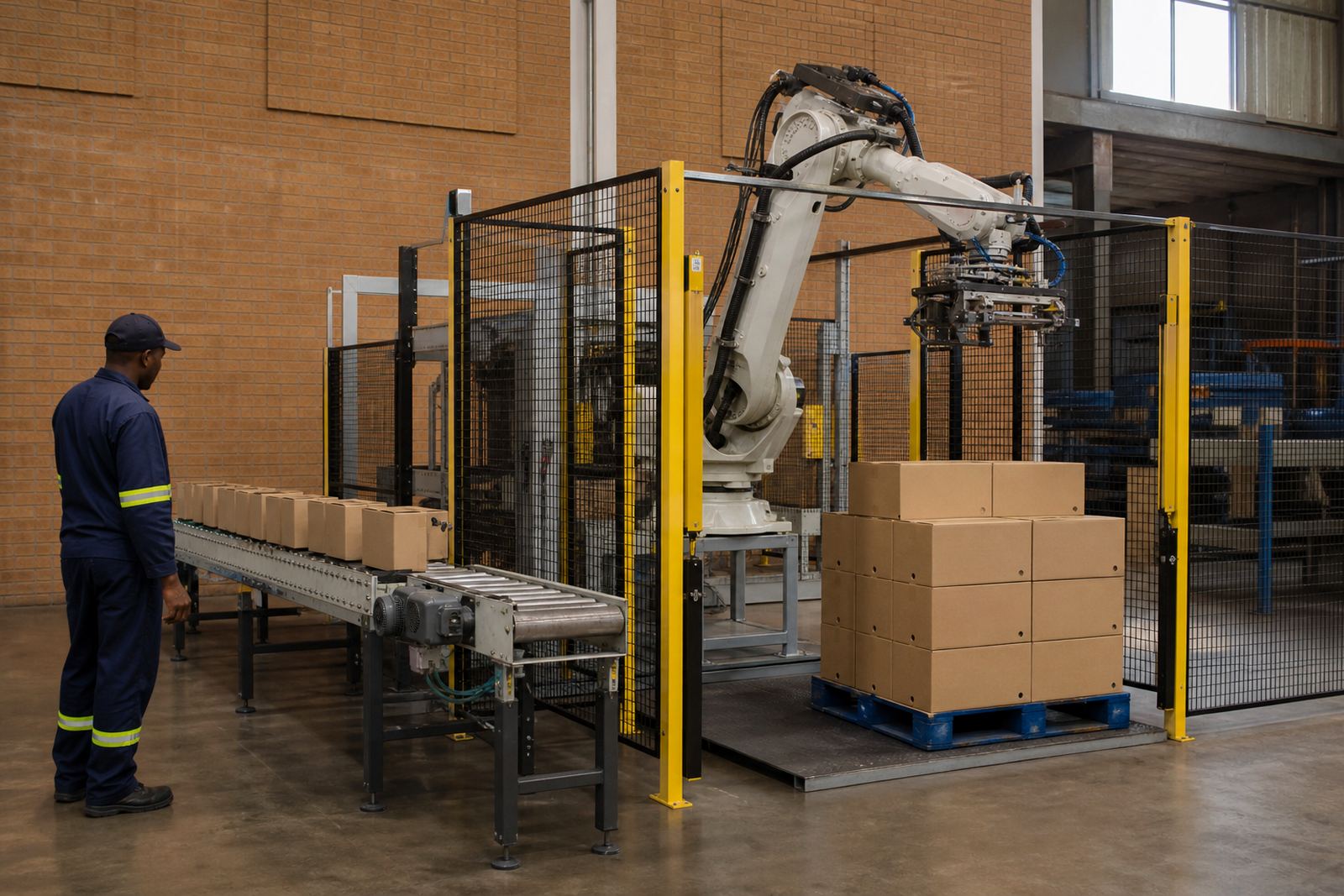
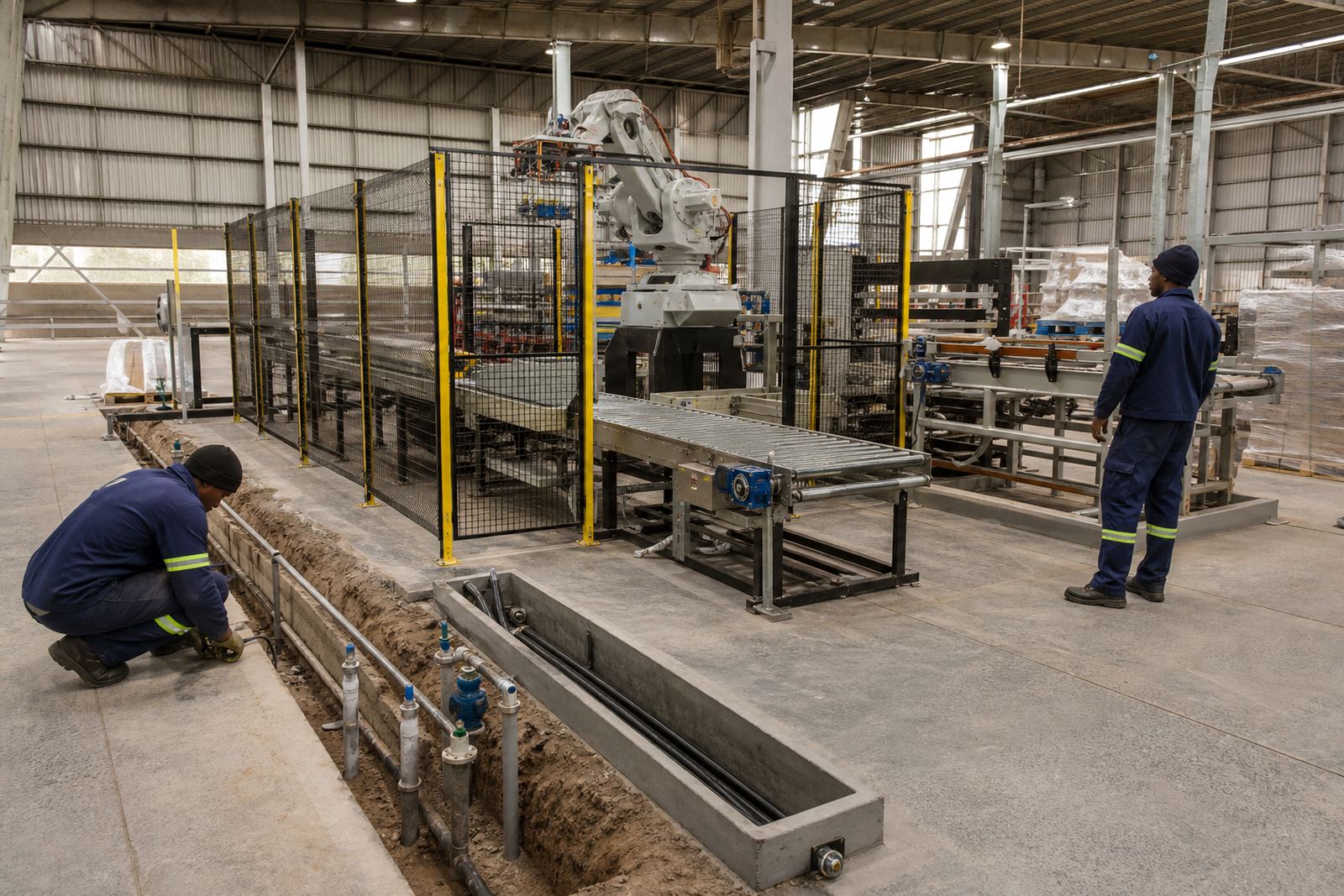
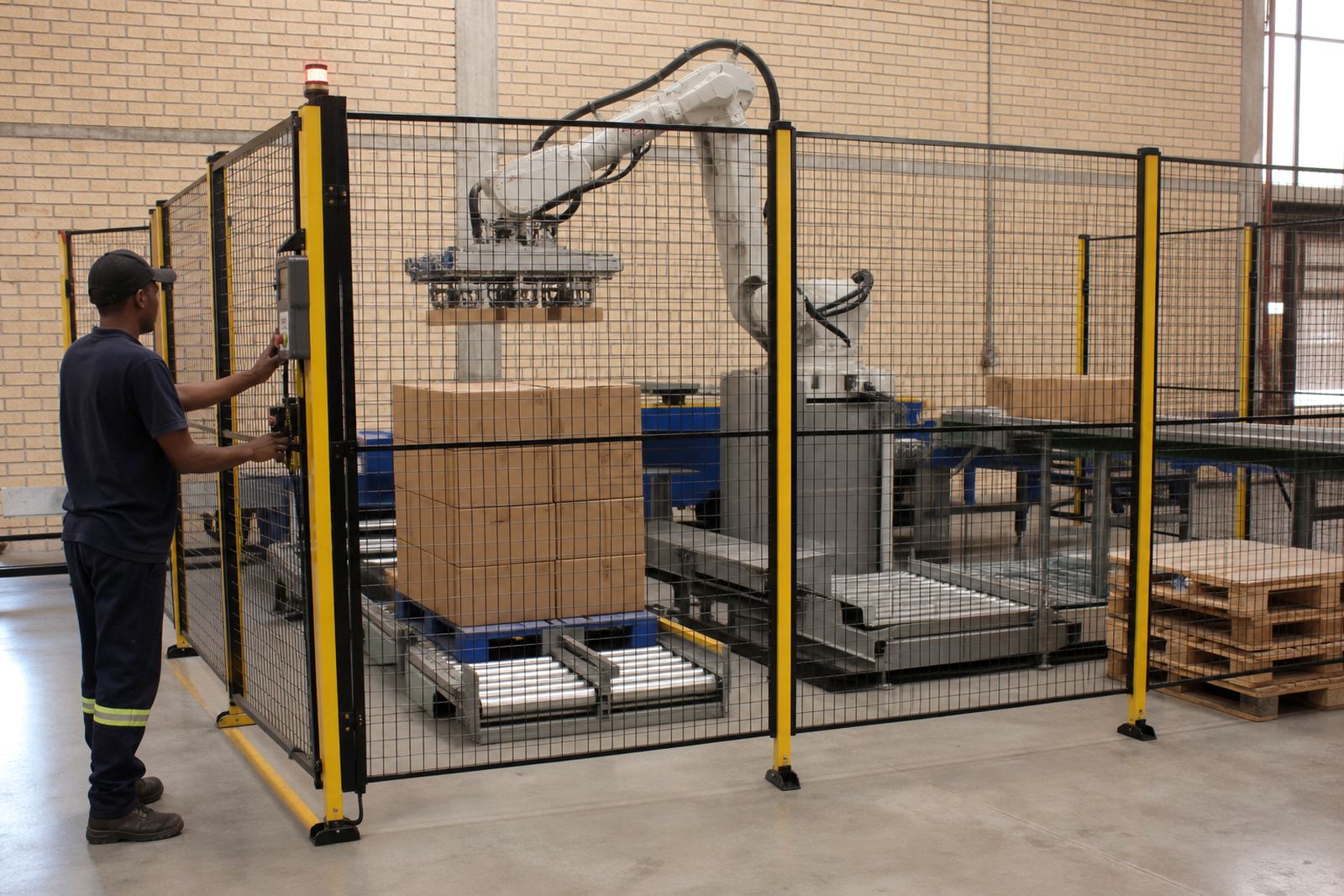
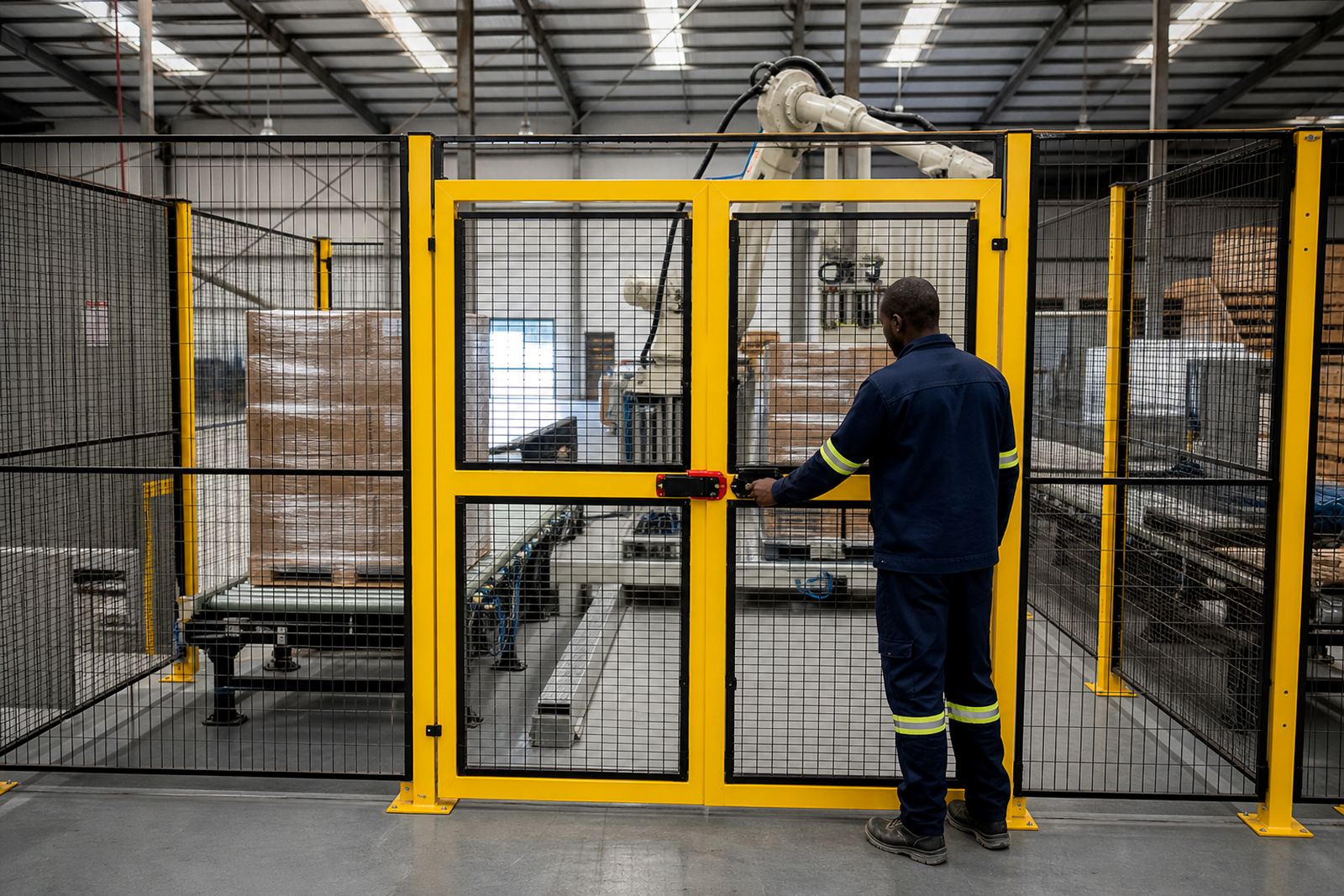
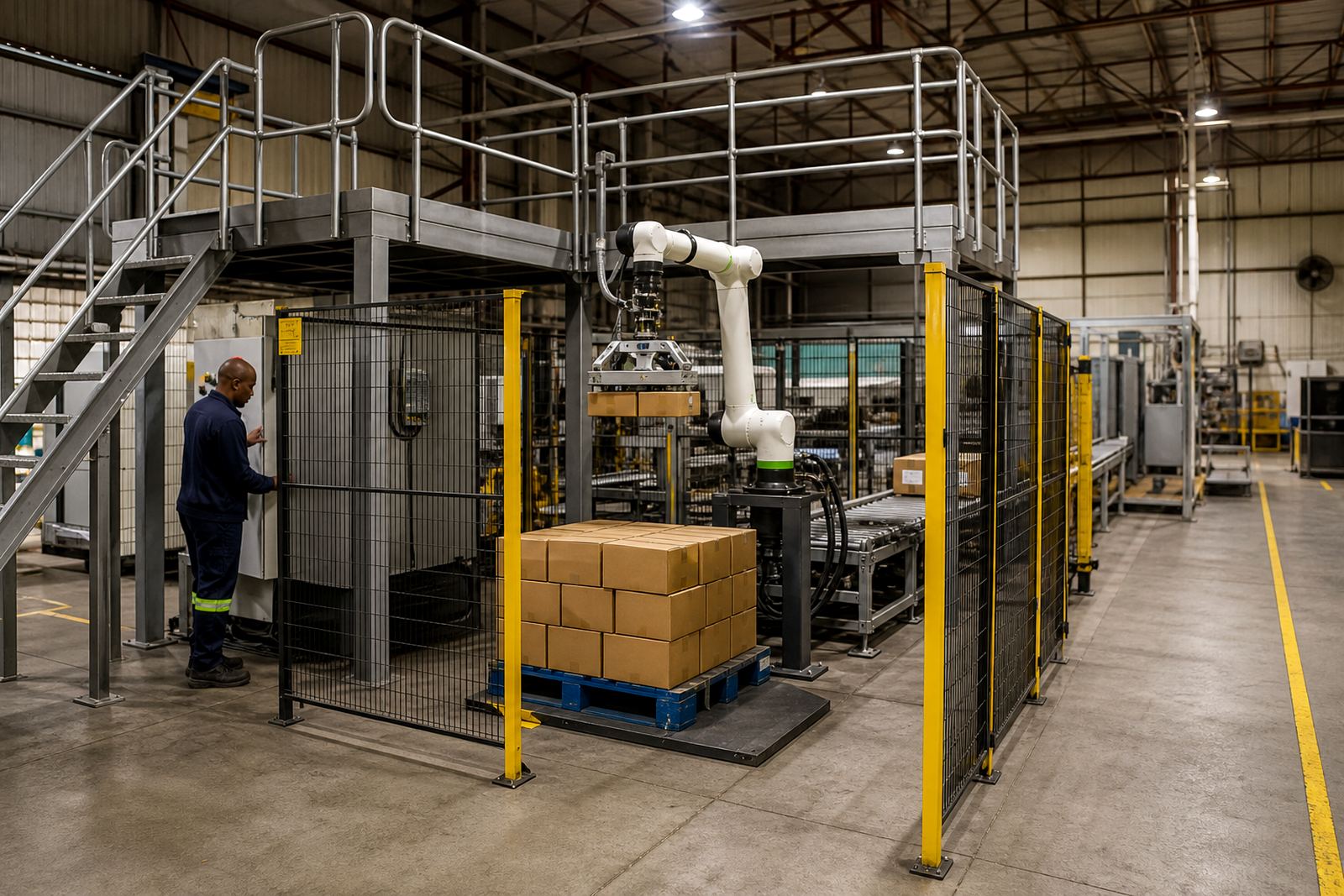
Any robot or cobot added to a live line needs the correct guarding, access control and warning devices for the task at hand. Each guarding layout is worked out for the cell in front of it. Each site needs its own risk assessment based on the product, the speed of the line, the number of operators nearby and how often the area is entered for setup or cleaning.
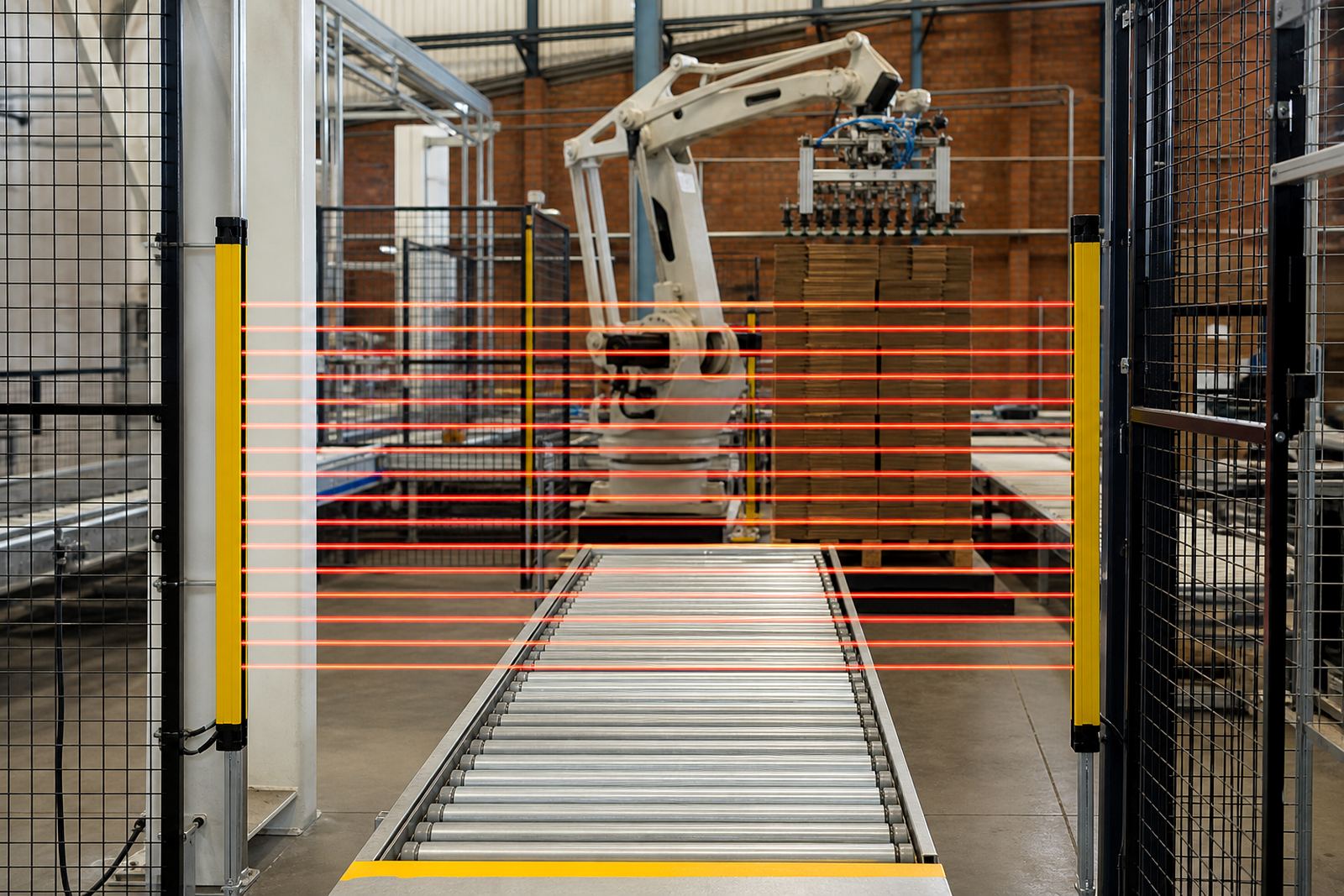
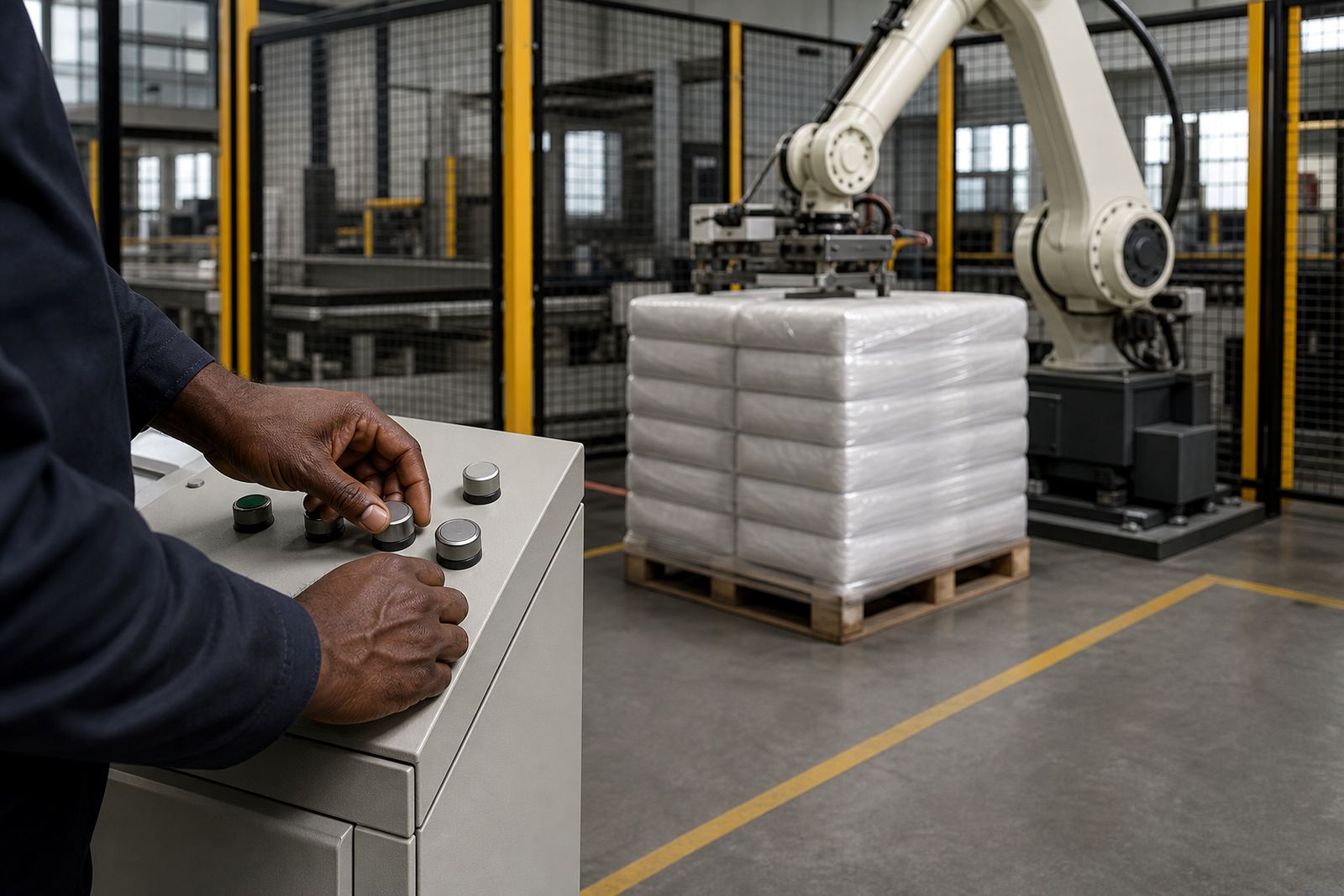
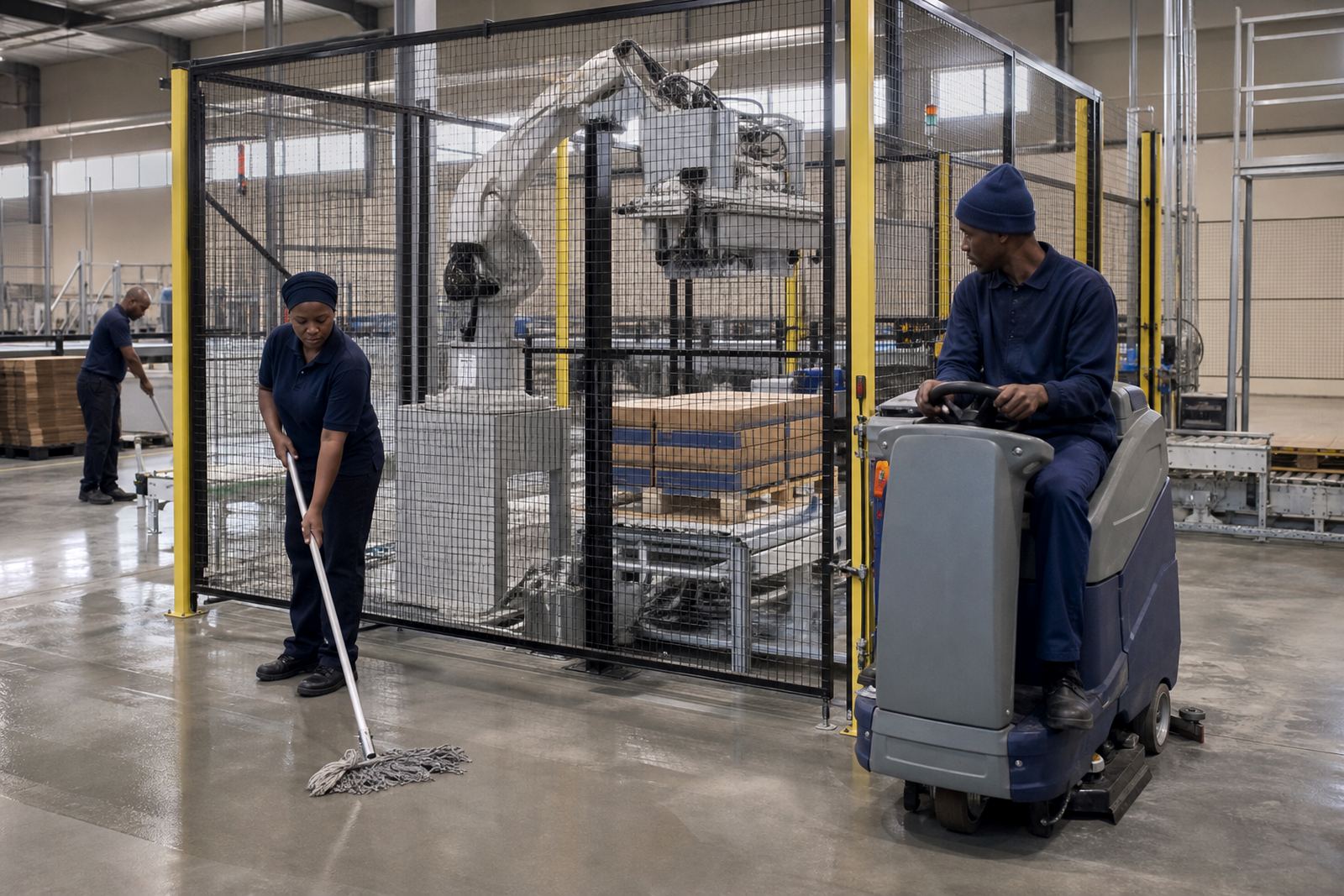
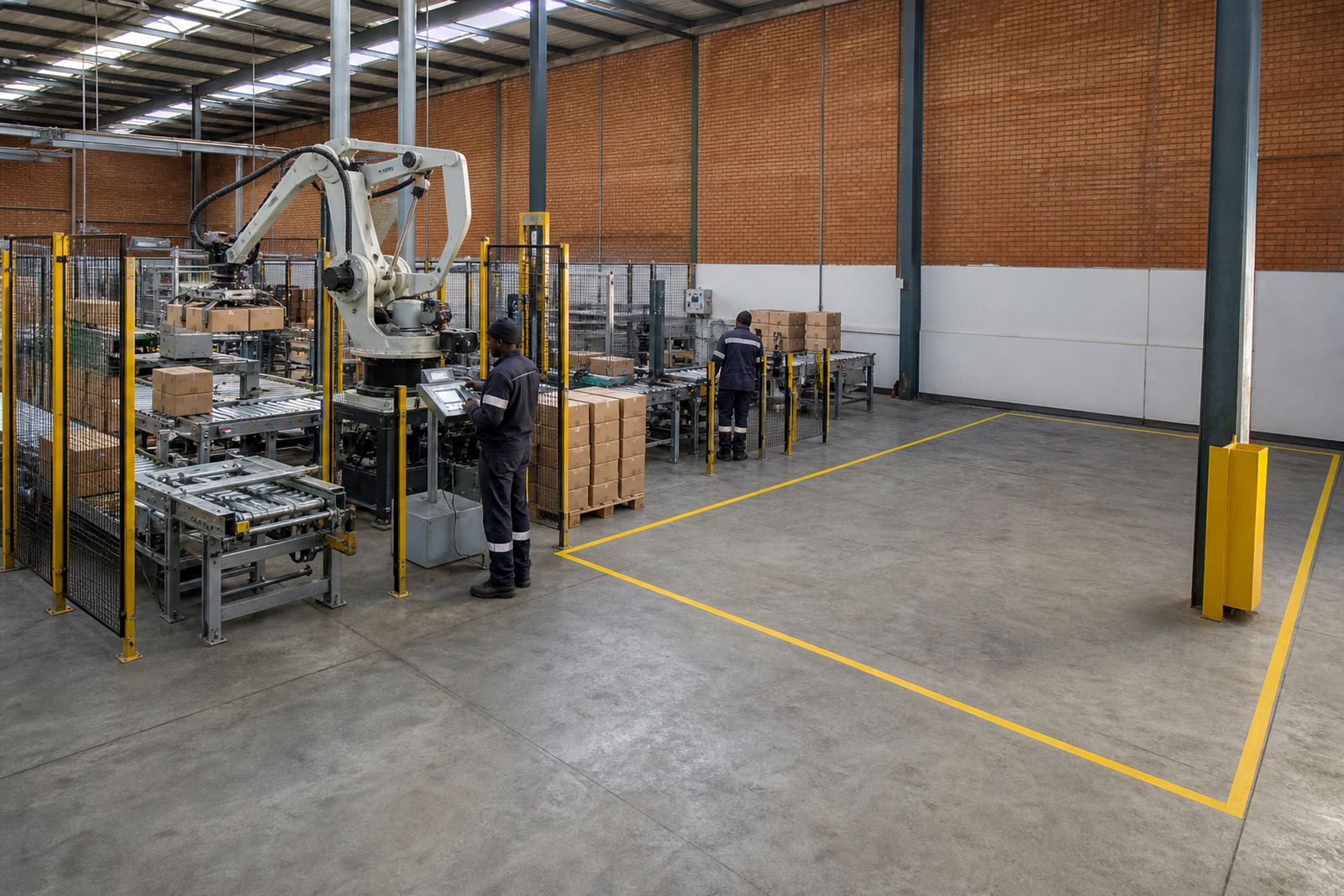
Common measures include fixed guarding, interlocked doors, light curtains, safety mats and clear floor marking. The aim is to prevent unintended access while still allowing practical operation and maintenance. Good guarding design should support production rather than creating awkward workarounds that staff will bypass later.
- Risk assessment support for each specific installation
- Guarding design matched to the actual workcell
- Access planning for changeovers, fault clearing and cleaning
Controls Integration and Conveyor Handshakes
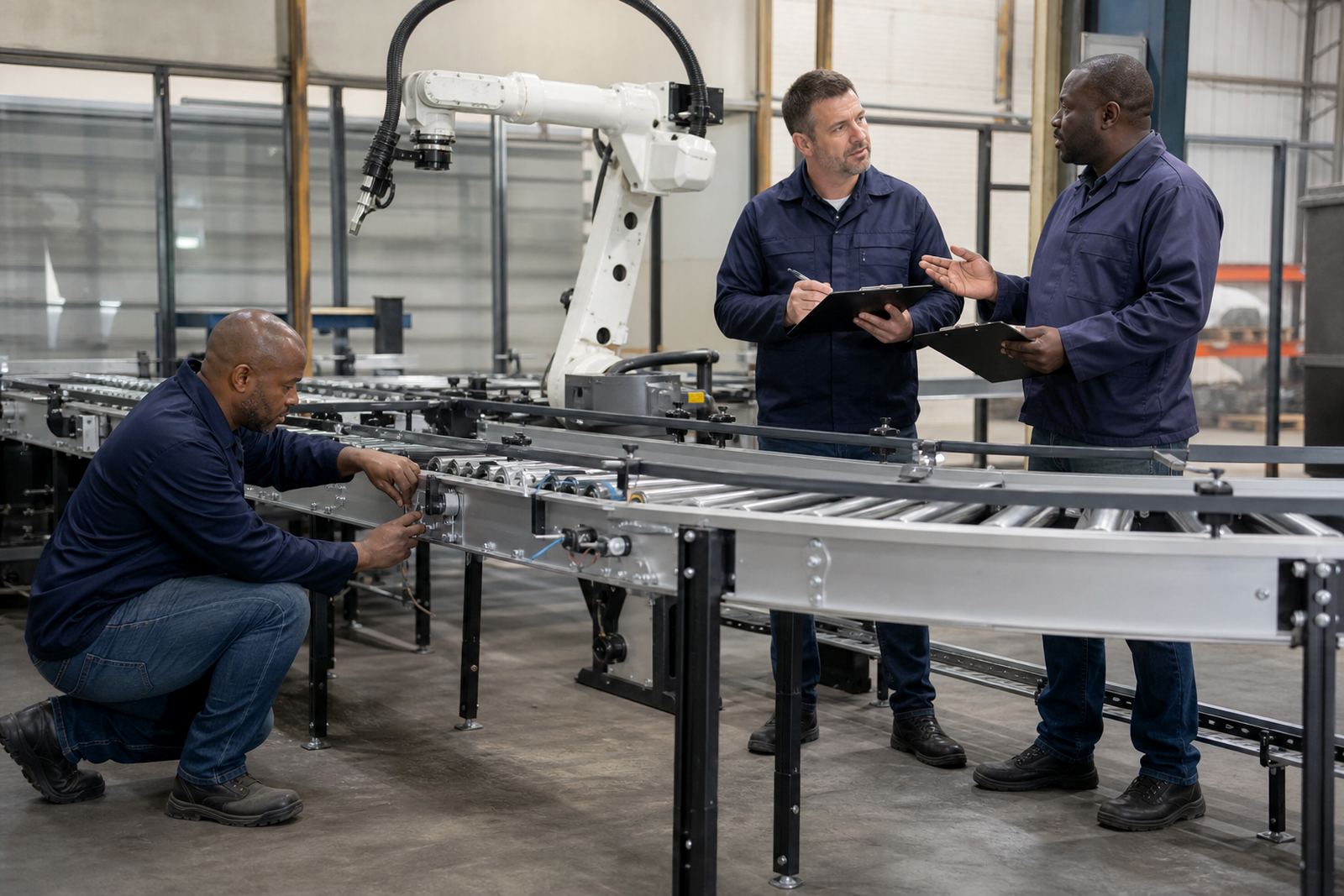
Retrofitting automation usually means linking new controls with existing conveyors, sensors and plant signals. That can include start and stop handshakes, pallet present signals, carton spacing checks and alarms for jams or missed picks. If the control logic is not planned properly, the line may run but still struggle with rejects, misfeeds or poor pallet stability.
Controls integration should be tested in stages so each section behaves as expected before full commissioning. On some sites the work is straightforward, on others it involves older panels, mixed wiring standards and limited downtime windows. Practical planning matters because many manufacturers can only spare short shutdown periods over weekends or after hours.
- Signal matching between old and new equipment
- Start-up and stop logic for line sequencing
- Fault handling, alarms and operator prompts
- Commissioning support with controlled testing
When a Cobot Makes Sense and When It Does Not
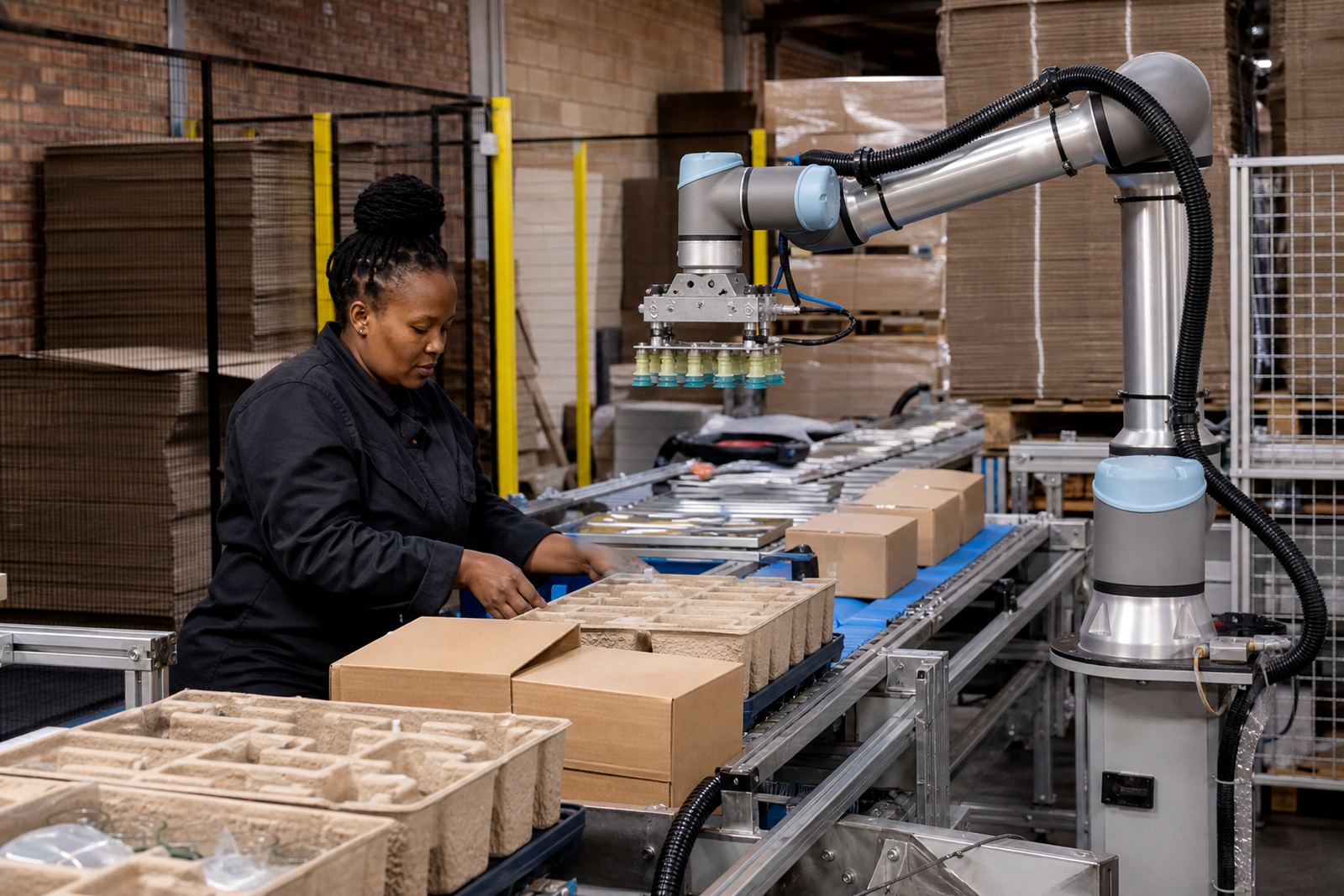
Cobots are useful where a task is repetitive, light to moderate in payload, and close interaction with people is unavoidable. They can help with case packing, tray placement or simple pallet layer building in smaller operations. For higher speeds, heavier loads or longer pallet patterns, a conventional robot with full guarding may be more suitable.
The right choice depends on output rate, payload, reach, floor space and how often the pack format changes. A cobot is not automatically easier just because it is smaller, and it still needs proper risk controls. That is why the process should start with the work to be done, not the machine type.
How to Choose an Automation Note That Applies to Your Plant
These notes are meant to help managers, production teams and maintenance staff understand the main decisions before a retrofit. If your line runs with frequent changeovers, limited maintenance cover or a mixed range of carton sizes, some notes will be more relevant than others. Look for the article that matches your main problem first, then read the related topics around conveyors, safety and commissioning.
Where a plant is spread across Kempton Park, the East Rand or other industrial areas, it also helps to separate the immediate issue from the longer-term plan. Sometimes the first step is just to stabilise one palletising point, with later upgrades to packing, controls or spares planning as the budget allows.
- Start with the task you need to solve
- Check whether the line needs packing help, palletising help, or both
- Use the notes as a guide, then confirm details with a site review