Start With the Parts That Stop the Line
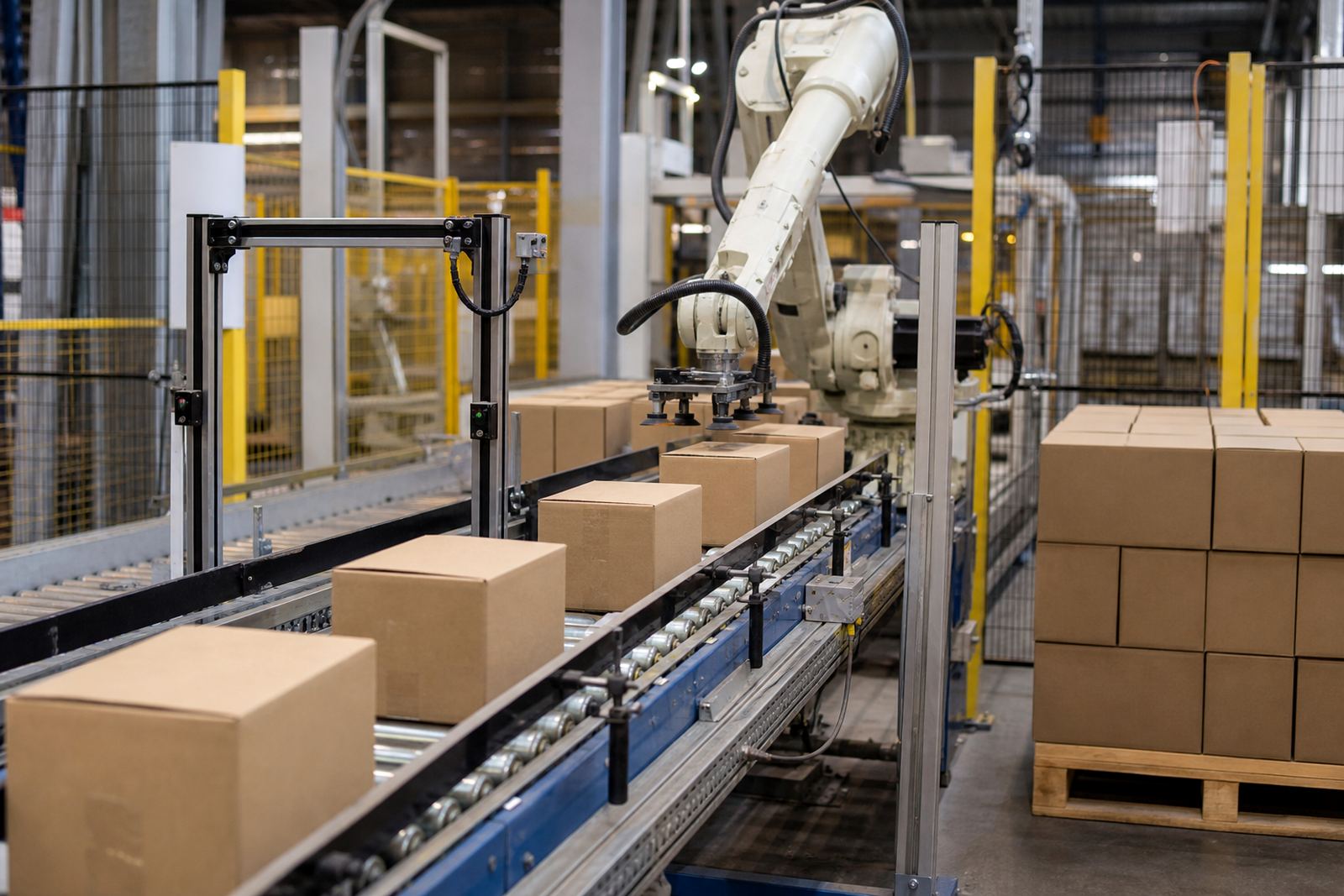
For most retrofit projects, the first spares to consider are the parts most likely to cause an immediate stop. That usually means sensors, prox switches, limit switches, cables, relays, solenoids and a few key pneumatic items. If one of those fails on a conveyor feeding a robot or cobot, the whole packing run can back up very quickly.
In Kempton Park and other industrial areas around Johannesburg, we often see lines that are mechanically sound but slowed down by small electrical faults or worn air components. A simple sensor failure can hold up a palletising cell for hours if there is no spare on site. The same applies to a valve island, a damaged cable run or a broken connector at a critical point in the line.
- Photoelectric and inductive sensors used for product detection
- Proximity switches and end-of-stroke devices
- Solenoid valves and basic pneumatic fittings
- Control relays, fuses and contactors
- Spare cables, plugs and terminal blocks
Wear Parts That Need Regular Replacement
Wear parts are easy to overlook because they do not always fail suddenly, but they affect line speed and product handling day after day. Belts, rollers, chains, bearings, grippers, suction cups, guides and rollers all wear at different rates depending on the product, runtime and cleaning routine. On a packaging line running cartons or shrink wrapped bundles, a worn belt can cause slip, poor spacing and inconsistent transfer into the palletising area.
For coastal sites in Durban or Gqeberha, corrosion and humidity can shorten the life of some components, especially where washdown or open airflow is involved. Inland, dust and fine paper fibre can work their way into bearings and guides. That is why spare planning should not only look at what fails but also what wears down slowly, then starts affecting product quality before anyone notices.
- Timing belts and drive belts
- Conveyor rollers and bearings
- Chains, sprockets and chain guides
- Gripper pads, suction cups and seals
- Guide rails and product stop components
Pneumatic and Vacuum Spares for Handling Systems
Many retrofitted packing and palletising systems use pneumatic cylinders, air preparation units and vacuum handling on pick heads or transfer devices. These systems are reliable when maintained, but they depend on clean air and parts that match the duty cycle. If the air quality is poor, or the line is left idling and restarted often, seals and regulators can wear sooner than expected.
A sensible spares list should include the items that are small enough to store easily but important enough to shut down a machine when they fail. A missing seal or regulator may seem minor, yet it can stop carton forming, case closing or the transfer of product to the robot cell. In a busy plant outside Pretoria, one small leak can also push up compressor load and add extra strain during power interruptions, which is something many sites are already managing.
- Cylinder seals and rebuild kits
- Vacuum cups and vacuum filters
- Pressure regulators and gauge units
- Air line fittings and quick couplers
- FRL elements and drainage accessories
Tooling Components Should Match the Product Mix
Robotic palletising and packing retrofits are rarely static. Product sizes change, case weights change and pack patterns may need updating for different customers or distribution centres. That means tooling should be treated as part of the spare strategy, not as a once-off install item. End effectors, product guides, clamps and change parts can all need replacement or adjustment over time.
For example, a manufacturer in the East Rand may run several carton formats on the same line, with some products suitable for a cobot and others needing a faster industrial robot cell. If the tooling is designed for only one format, a small change in box height or wrap tension can create delays. Keeping the right replacement jaws, inserts and mounting plates on hand helps the line adapt without waiting for custom parts.
- Gripper fingers and insert pads
- Mounting plates and spacer sets
- Change parts for carton guides
- Clamp pads and wear inserts
- Fasteners matched to the tooling design
Controls Spares and the Risk of a Small Fault Becoming a Long Delay
On a retrofit line, controls spares matter just as much as mechanical parts. A failed safety relay, power supply, HMI component or network device can take the whole system out of service even when the robot itself is fine. This is where a clear spares plan saves time: not every item needs to be stocked, but the items tied to the control loop and safety chain deserve special attention.
We always recommend that each site carries out its own risk assessment before deciding what to keep on hand. The right list depends on the line layout, shift patterns, cleaning method and how many hours the system runs each week. A packaging plant in Midvaal may need a different spares mix from a high-volume food or beverage plant in Cape Town, and a warehouse loading mixed cartons will have different priorities again.
- 24V power supplies and related fuses
- Safety relays and interface modules
- Selected I/O modules and network parts
- HMI backup media or replacement interfaces
- Encoder components and feedback devices
How to Build a Practical Spares List for South African Plants
The best spares list is not the longest one. It is the list that reflects real downtime risk, local supply times and the way the line is actually used. A plant in Gauteng may get parts faster than a coastal site, but delays still happen if the item is special order or imported. On the other hand, keeping too many parts on the shelf ties up cash and can lead to obsolete stock when the line changes.
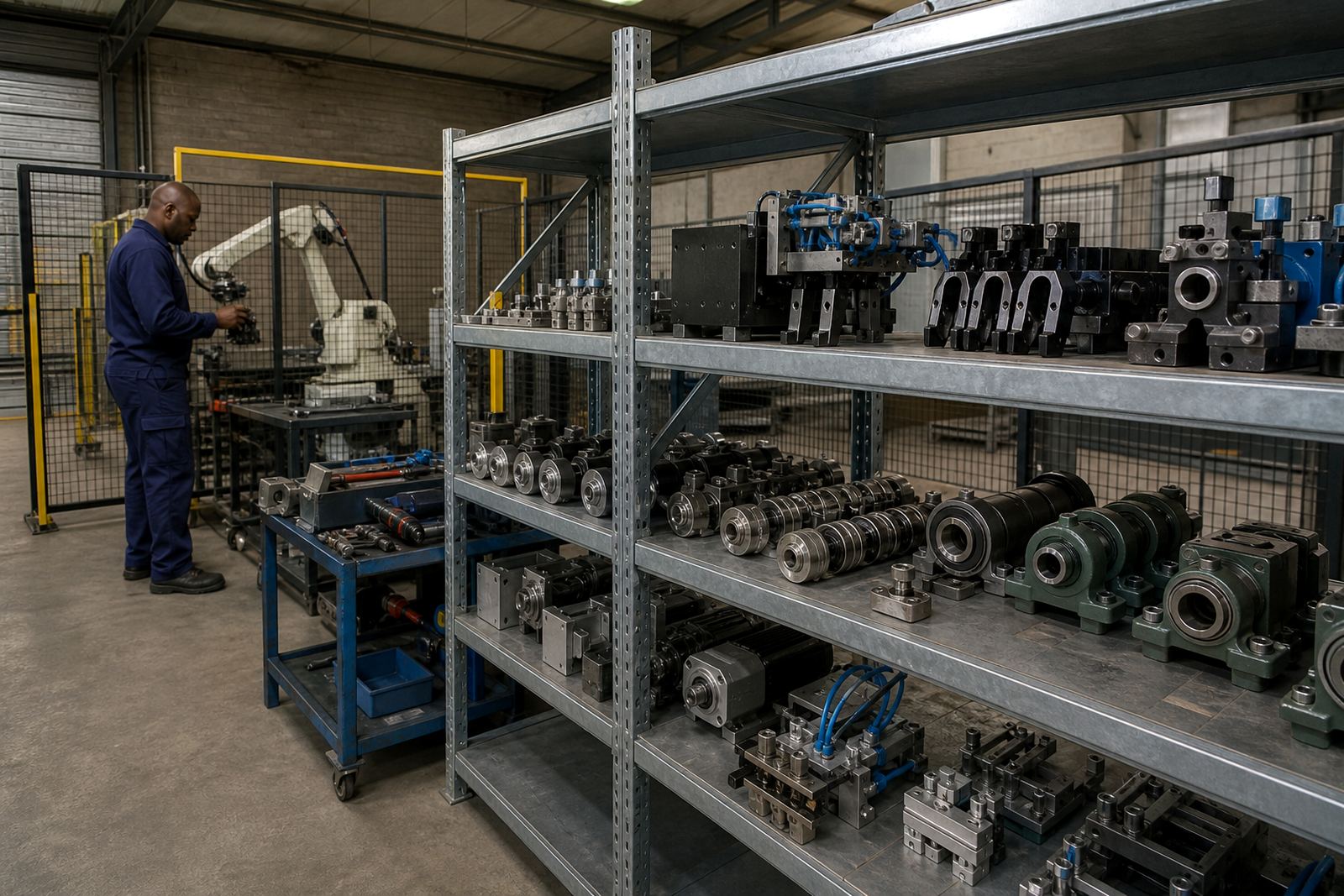
A good starting point is to split spares into three groups: fast movers, critical stop items and low-use specials. From there, add notes on part numbers, fitment points and the equipment each item supports. That way the service team does not have to guess during a breakdown. It also helps with maintenance planning, especially when the site is balancing production, operator training and weekend support. A tidy store room with labelled bins saves more time than people expect.
- Fast movers for regular replacement
- Critical items that stop the line if they fail
- Special tooling parts kept only where needed
- Clear labelling linked to machine location
- Records for fitment, run hours and replacement dates
In practical terms, a packer in Johannesburg might only need a small set of sensor and belt spares, while a full palletising line in Durban could justify extra vacuum parts, safety devices and change parts. The decision should be based on usage, not guesswork and that is where proper site line surveys and maintenance support pay off.