Why one good retrofit plan should still change from site to site
Multi-site manufacturers often want the same outcome in every plant: steadier output, fewer manual lifts, cleaner stacking and easier shift handovers. That part can be standardised. The physical reality, though, is never identical from Johannesburg to Durban or from Pretoria to Gqeberha. One site may have a short infeed, another may be working around an older conveyor frame, and a third may need to keep an emergency aisle open for forklift traffic. A practical national rollout starts by accepting those differences early.
At ReAutomated, the aim is not to force a one-size-fits-all arrangement onto every line. It is to create a repeatable concept for packing and palletising retrofits, then adapt the final layout to each plant’s space, power supply, product flow and safety requirements. That keeps the line familiar for operators while still respecting what the building can actually support.
Start with the line, not the robot
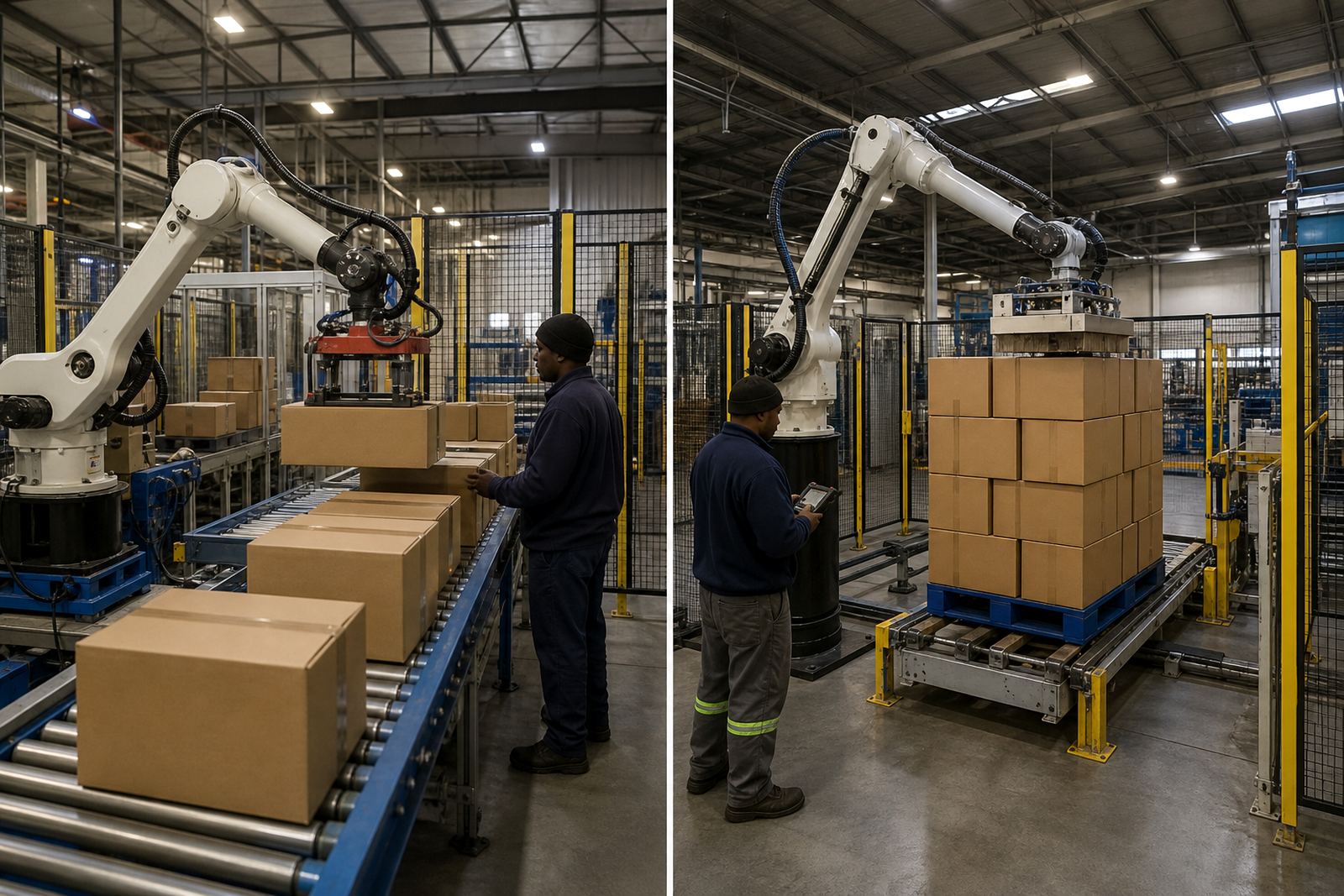
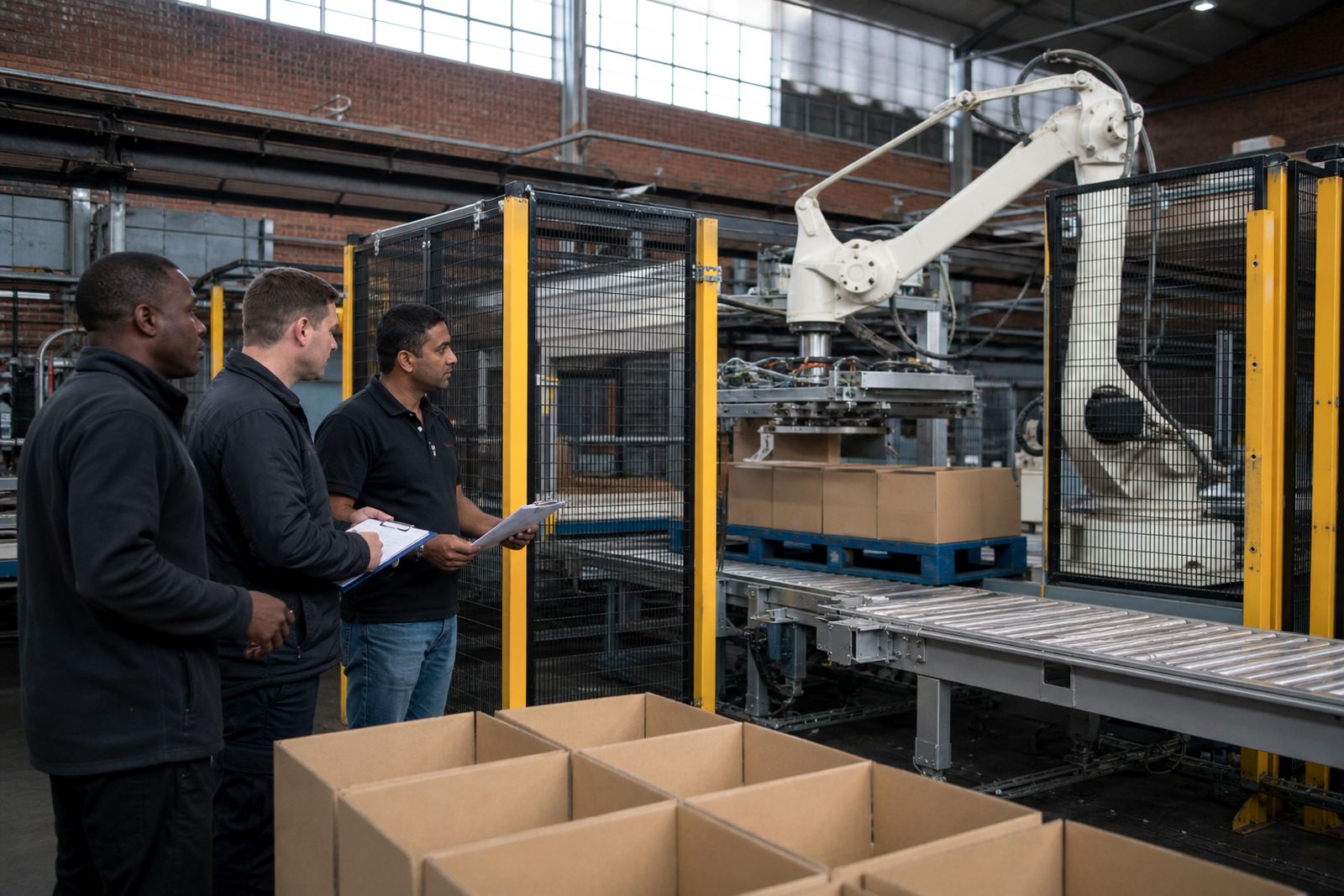
Good retrofit work begins with a site line survey. The real questions are usually about cartons, trays, bags or bundles, how they arrive, how they are counted or grouped, and what happens before and after palletising. A robot or cobot is only one part of the answer. If the conveyor feed is unstable, the gripper will be working harder than it should. If the pallet changeover area is too tight, the whole line slows down. If the packing section still relies on manual rework, the new system may simply move the bottleneck one step down the line.
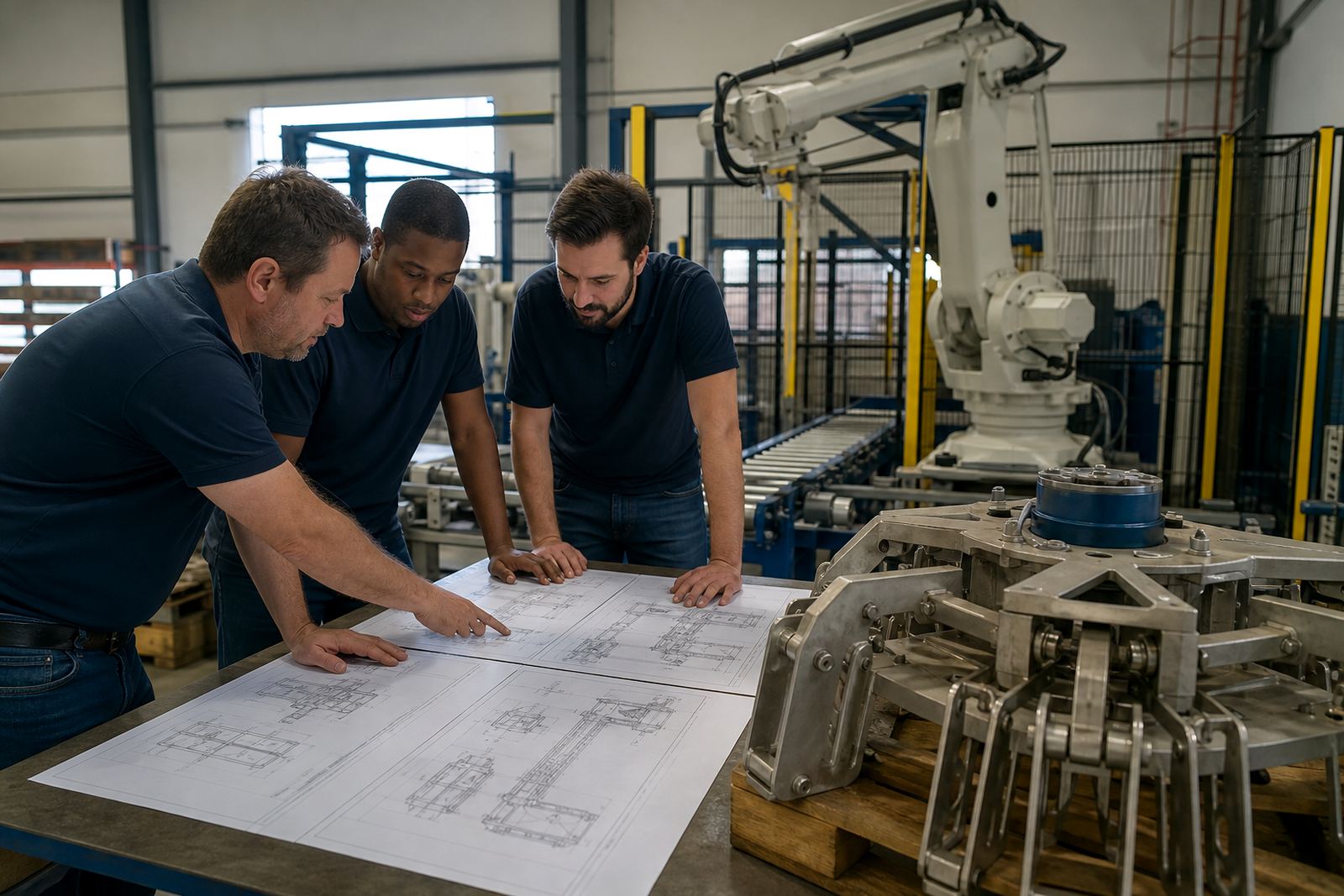
For this reason, retrofit design should always include the existing conveyors, the control panel arrangement, access for maintenance and the exact floor conditions around the line. In older plants, especially where additions have happened over many years, there is often a mix of structures and cable runs that need to be planned around carefully.
- Measure usable floor space, not just the room size
- Check conveyor heights, transfer points and orientation
- Confirm product type, pack size and pallet pattern
- Allow for forklift routes and operator access
Standardise the concept, customise the installation
A national rollout becomes easier when the business agrees on a common operating concept. That could include the same pallet pattern logic, the same safety approach, similar HMI prompts, and a shared spares plan. Once that framework is set, each site can still receive a layout that suits its own constraints.
Standardisation should help maintenance teams, not confuse them. If the same sensor style, guarding logic and alarm structure is used across sites, technicians can support multiple plants more easily. But final mounting positions, conveyor tie-ins and access gates often need local adjustment. That is normal, not a compromise.
- Keep the same control philosophy across plants where possible
- Adapt frames, guarding and infeed routes to the local layout
- Use identical operator prompts and reset steps where practical
- Plan for backup power or safe stop behaviour during outages
Safety guarding and risk assessment cannot be copied and pasted
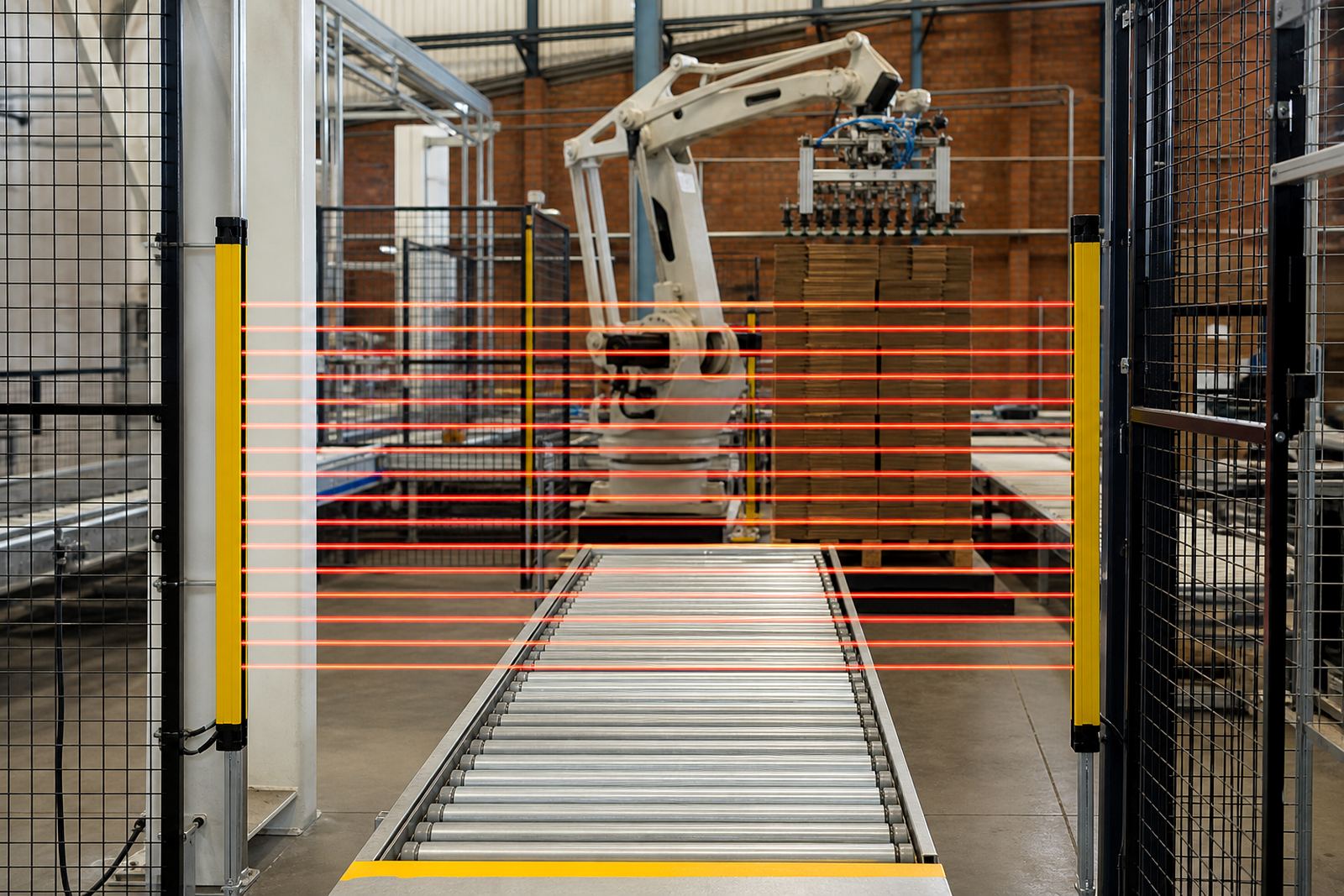
Safety is one of the clearest reasons each plant needs its own risk assessment. A generic concept can guide the discussion, but the final guarding layout must suit the actual machine positions, human access points and traffic patterns on site. This includes entry gates, interlocks, light curtains where suitable, emergency stops and clear segregation between people and moving equipment. The same machine can present different risks in a narrow pack hall than it would on a wide, open line.
For South African manufacturing sites, this also means looking at who will interact with the system each day. Operators, cleaners, maintenance staff and forklift drivers all experience the line differently. A good retrofit makes their tasks simpler and safer, not just faster. It also means documenting the safe operating steps clearly so that shift changes do not become guesswork.
The aim is not to overbuild the guarding, but to design it properly. A site in Pretoria with a steady production schedule may need a different access pattern from a plant in Cape Town that changes products more often. The risk assessment should reflect the real use of the line, not a theoretical one.
Integration with existing conveyors is often the make-or-break detail
Many retrofits succeed or fail on the conveyors. If the infeed is too fast, the robot cannot keep up. If the discharge conveyor is not synchronised, pallets or cartons can bunch up. If the product orientation is inconsistent, the gripper design becomes more complex than it should be. This is why controls integration matters just as much as the mechanical side. The robot, conveyor and line controls need to speak the same language.
On older lines, the original control philosophy may not have been designed for automated palletising. That is where a careful retrofit helps. Signals can be added, sequence logic can be updated, and stop-start behaviour can be made more predictable. The goal is to protect throughput without making the line harder to operate or maintain.
For some products, cobots are a useful choice where space is limited or throughput is moderate. For heavier loads or faster lines, a conventional robot cell may be the better fit. The right answer depends on the pack format, cycle time, pallet height and the site’s physical constraints, not on a generic sales pitch.
A local rollout example from Spartan to the rest of the country
Consider a manufacturer based in Spartan, Kempton Park, with one packing line feeding two palletising points and another plant in Durban running the same product range. The business may want the same pallet pattern, the same training notes and the same maintenance spares across both sites. That is sensible. But the Cape Town plant might have a different incoming conveyor angle, while the Pretoria site might be working in a tighter building with less room for service access. Each location still needs its own line survey and installation plan.
That is where a coordinated national rollout works best. One team can develop the core retrofit concept, then adapt the drawings, guarding and commissioning sequence for each factory. The operator training remains familiar, but the layout respects the site. It saves time in the long run and avoids forcing every plant to live with the mistakes of the first one.
- Use one standard process template across all sites
- Allow each plant to keep its own access and traffic rules
- Check serviceability before finalising the frame positions
- Plan installation windows around production and maintenance shutdowns
What multi-site managers should ask before approving a rollout
Before approving a rollout, managers should ask a few plain questions. Can the line run safely during installation, or will it need a shutdown? What changes are needed to the conveyor feed? Which parts of the system will be common across sites, and which parts must vary? Who will handle operator training, spare parts planning and breakdown support after commissioning? These are the questions that decide whether a retrofit becomes a useful standard or a costly headache.
National rollout thinking is not about making every plant identical. It is about building one dependable operating model and then fitting it properly into each factory. When that is done well, the business gets consistency where it matters and flexibility where it counts.