

Lines That Keep Running While You Retrofit
Most factories cannot shut a line down for long just to add automation. That is why retrofit work starts with the existing flow, not with a blank sheet. ReAutomated looks at how packs leave the machine, where product accumulates, what the conveyor can handle, and how pallets, slip sheets or trays move through the area. The aim is to fit the robot into the line with as little disruption as possible, while still meeting the safety and operating needs of the site.
In Kempton Park and across Gauteng, many plants run mixed shifts, limited floor space and tight maintenance windows. In Durban or Gqeberha, humidity and salt air can affect sensors and electrical enclosures, so the layout and protection of equipment matter too. A good retrofit plan takes all of that into account before any installation starts.
- Packaging that arrives in cartons, bags, shrink wrapped bundles or crates
- Lines with fixed conveyors that cannot be moved far
- Plants needing short changeovers between pack sizes or pallet patterns
- Sites with limited floor space or overhead restrictions
When a Conveyor Feed Needs Robotic Packing
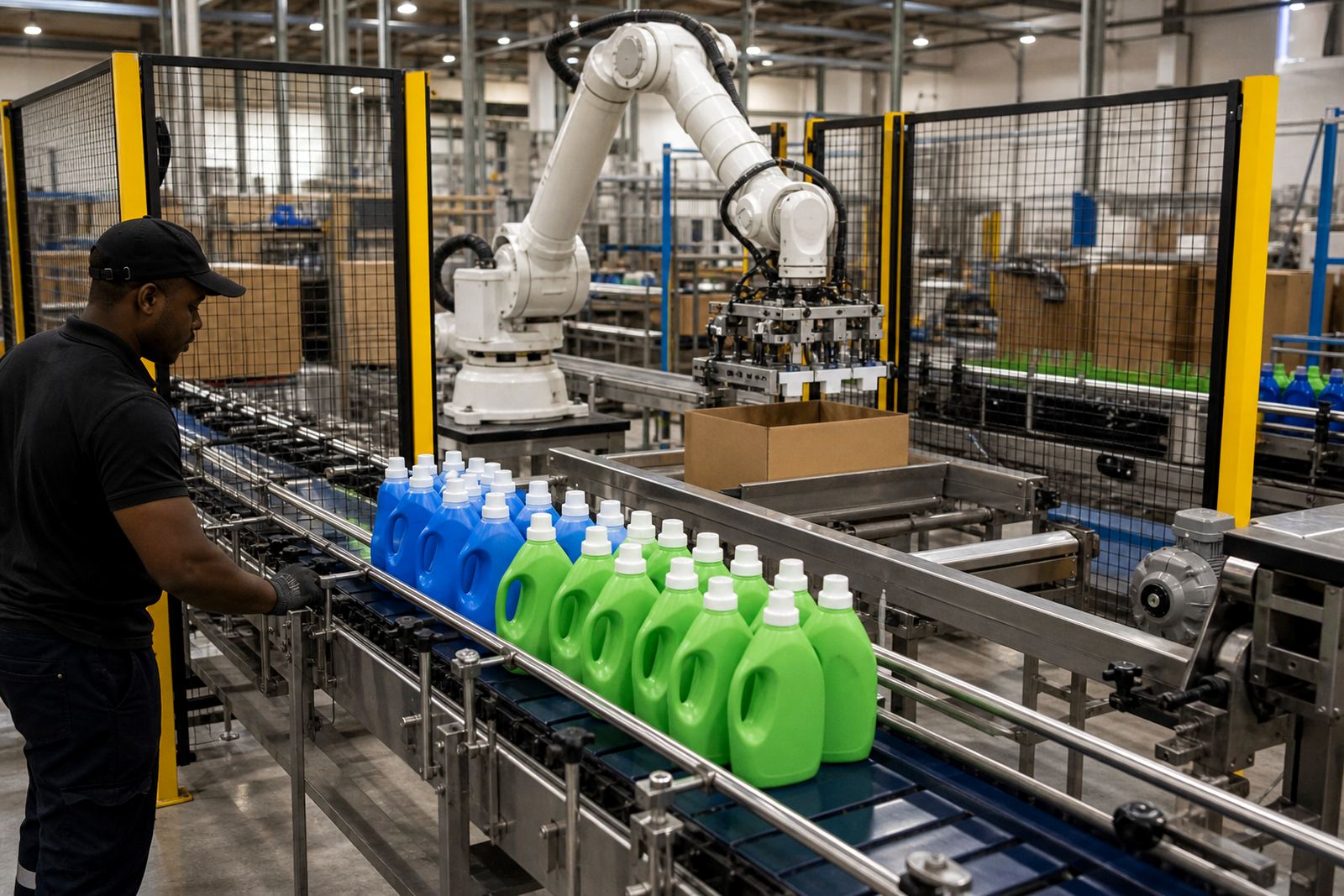
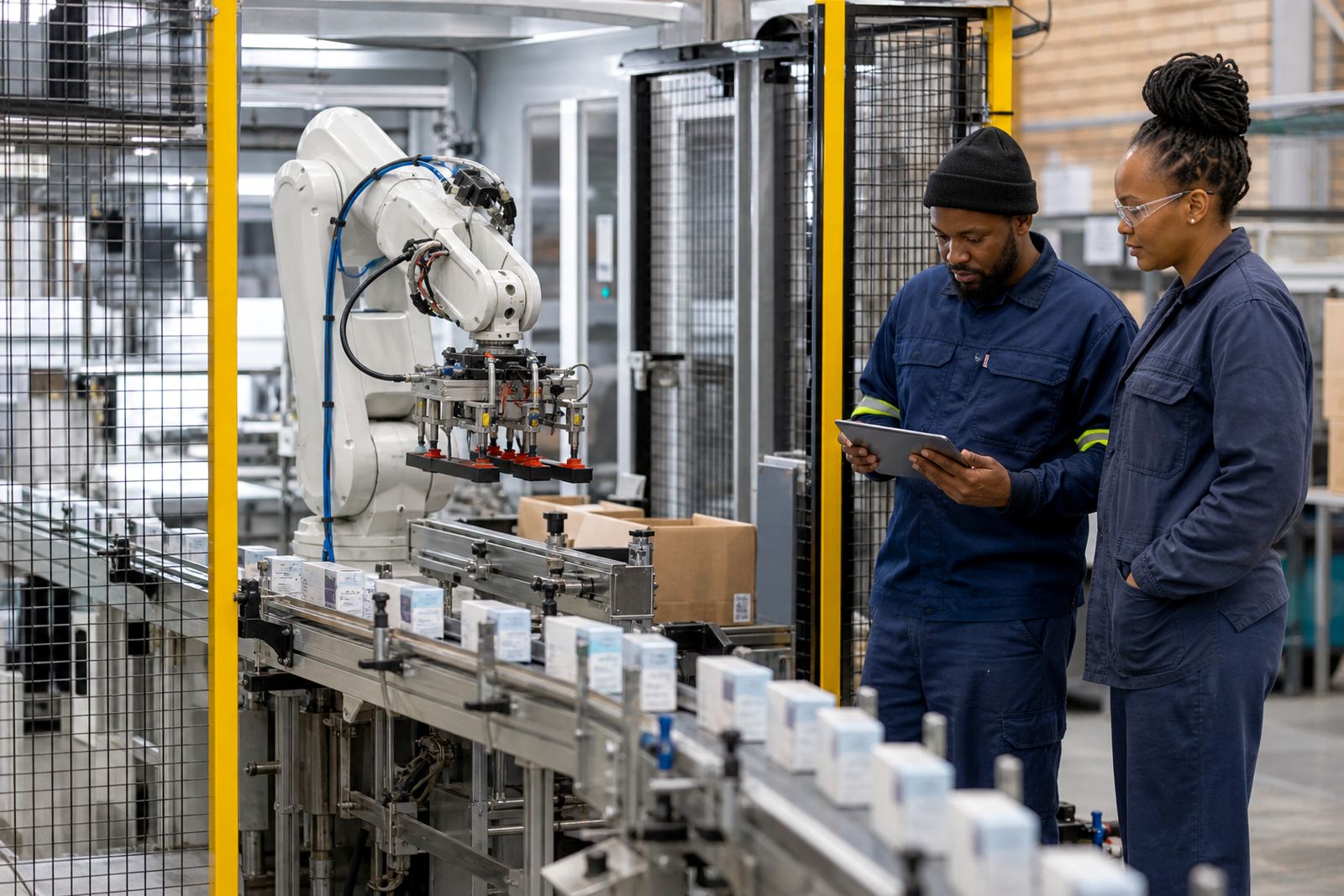
Some lines need robotic packing before palletising, especially where products are collated, counted or grouped into cases. The robot may pick from a conveyor, place into a carton, or build groups for the next stage. This can suit food, beverages, household goods, building materials and other factory products where manual packing is repetitive or inconsistent.
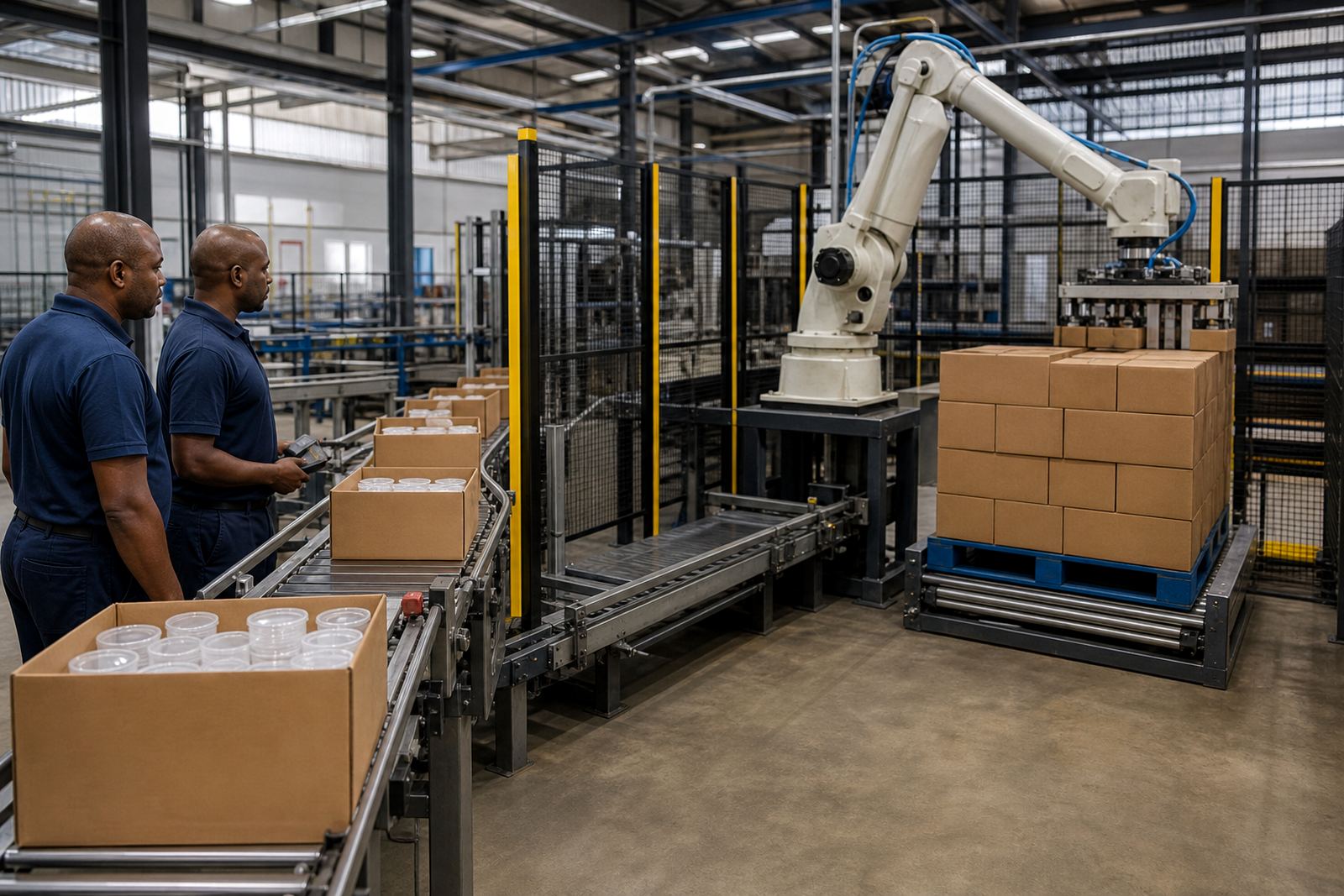
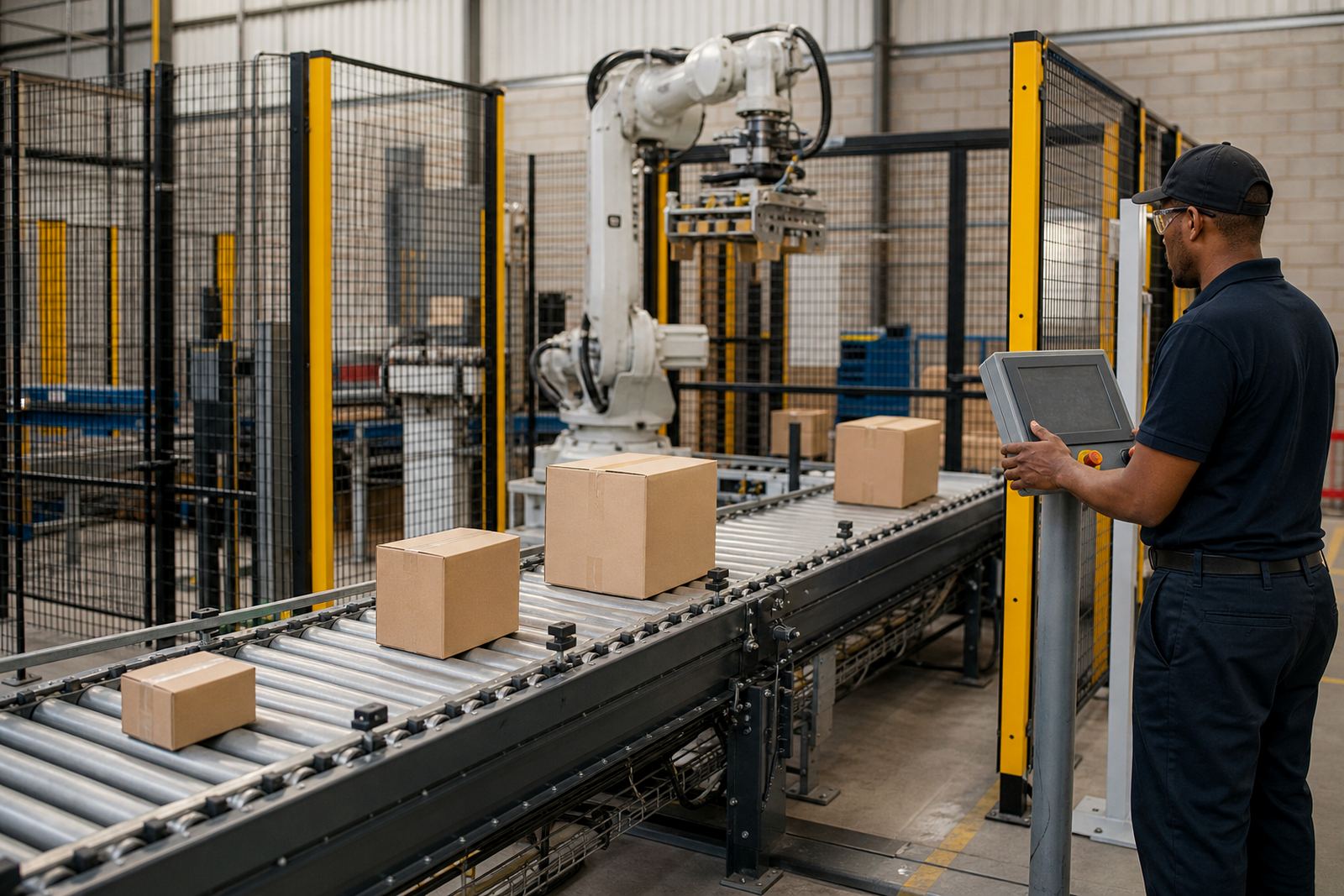
Conveyor integration is usually the first technical question. The infeed speed, spacing, product orientation and discharge point all affect how the robot is integrated. If the product arrives too close together or too far apart, the system may need timing changes, sensors or simple conveyor adjustments. That is why site line surveys and controls integration are part of the process, not an afterthought.
- Carton packing from a continuous infeed
- Case grouping before palletising
- Pick and place from moving or indexed conveyors
- Gentle handling for products that crush, mark or tip easily
Palletising Retrofits for End of Line Automation
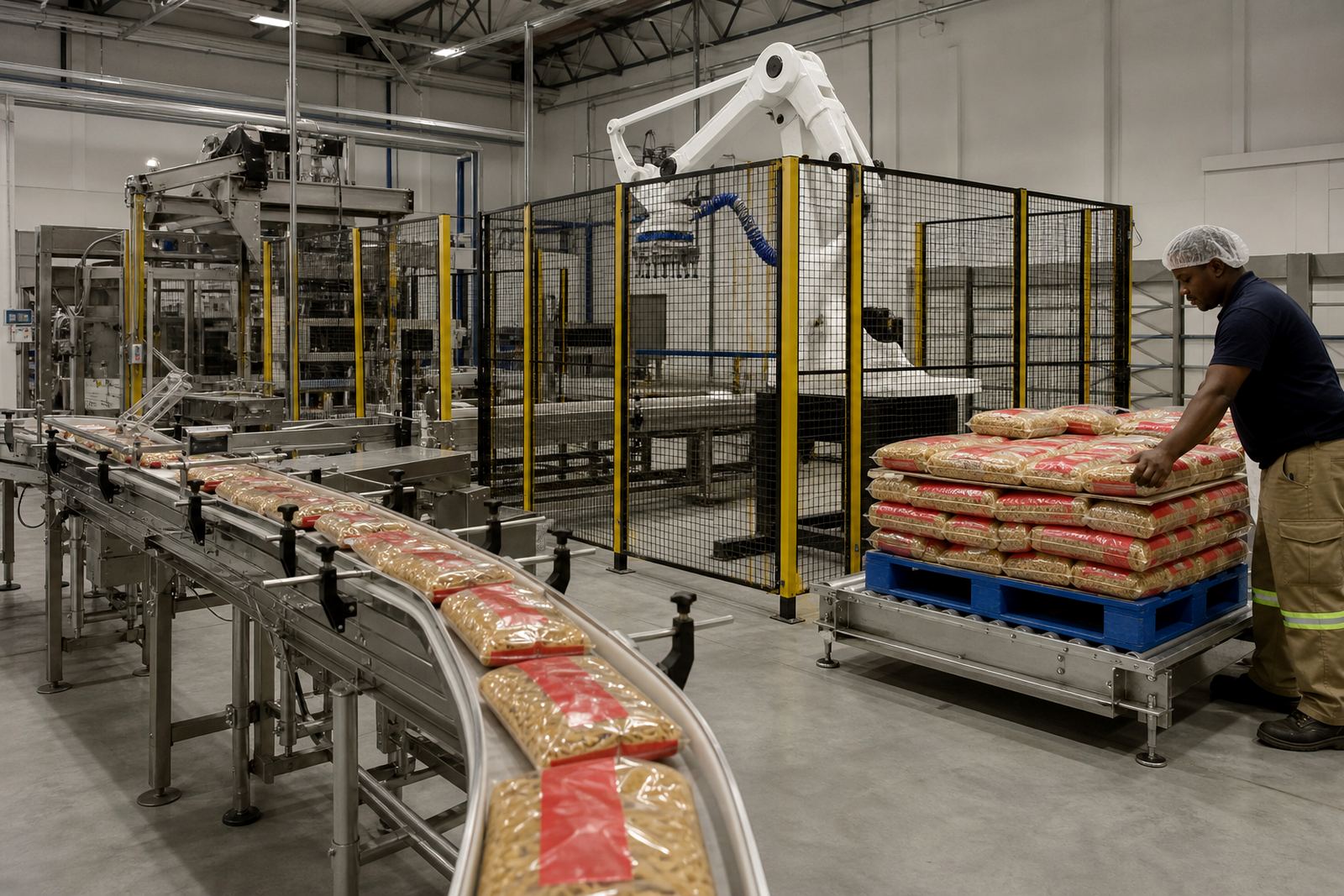
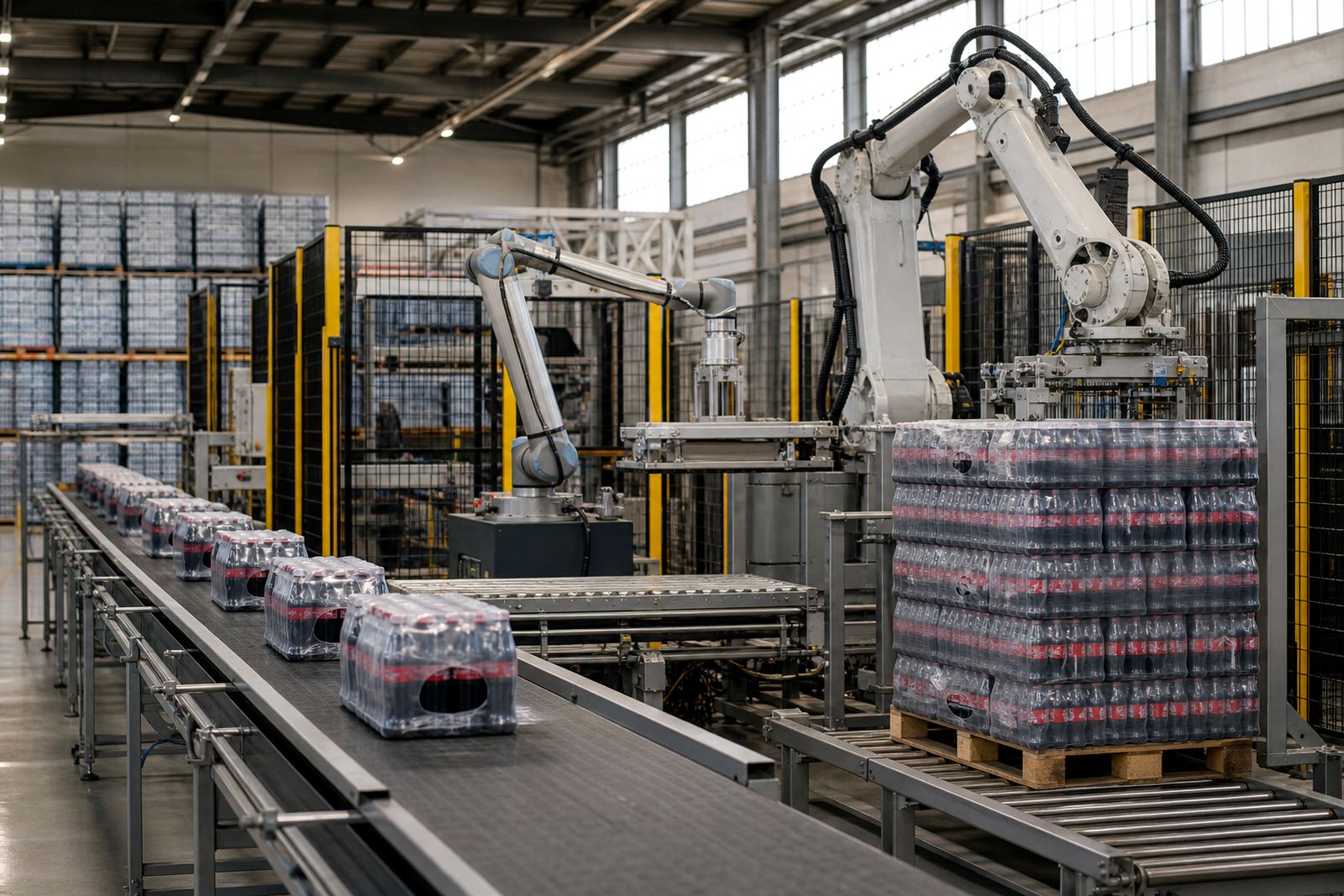
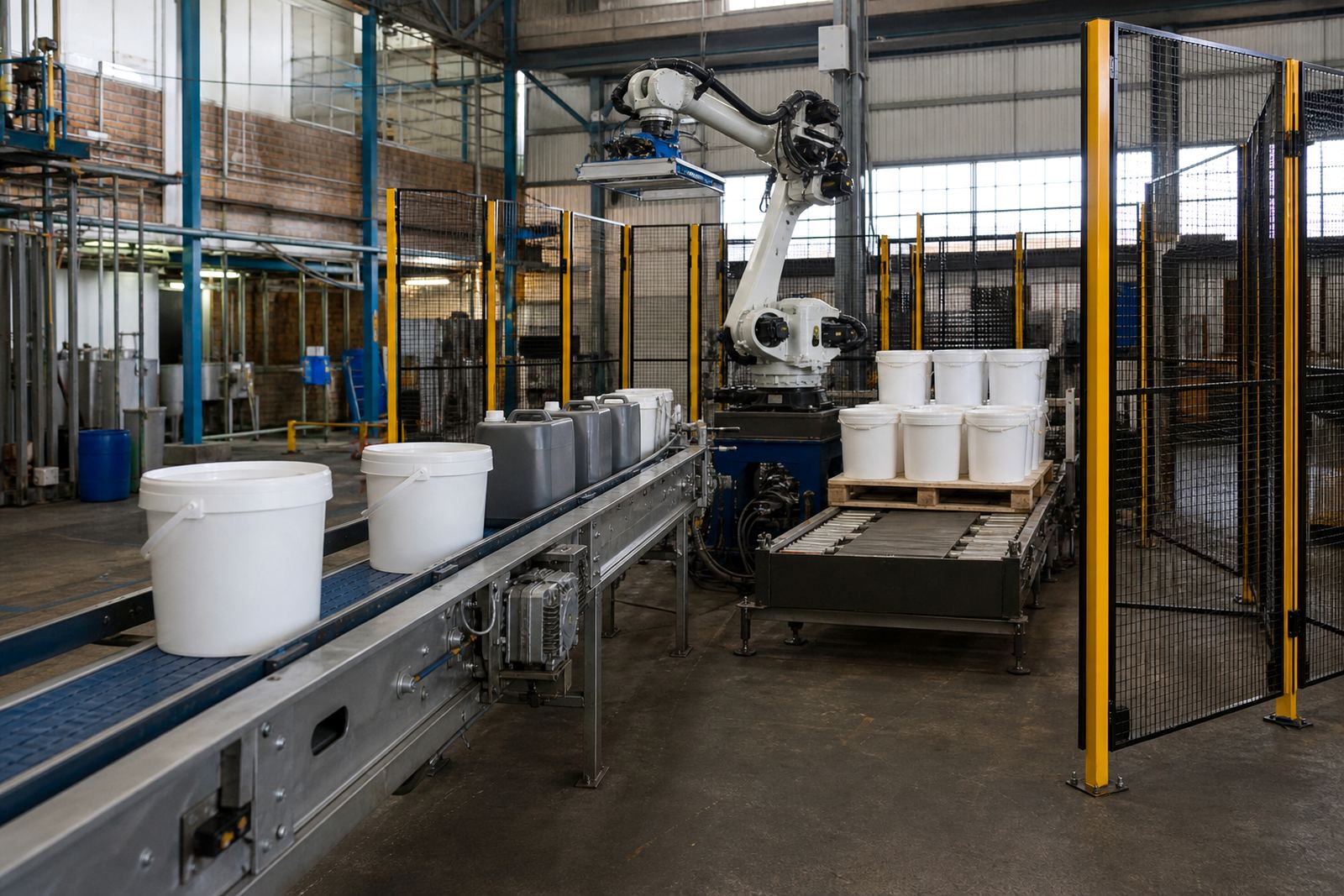
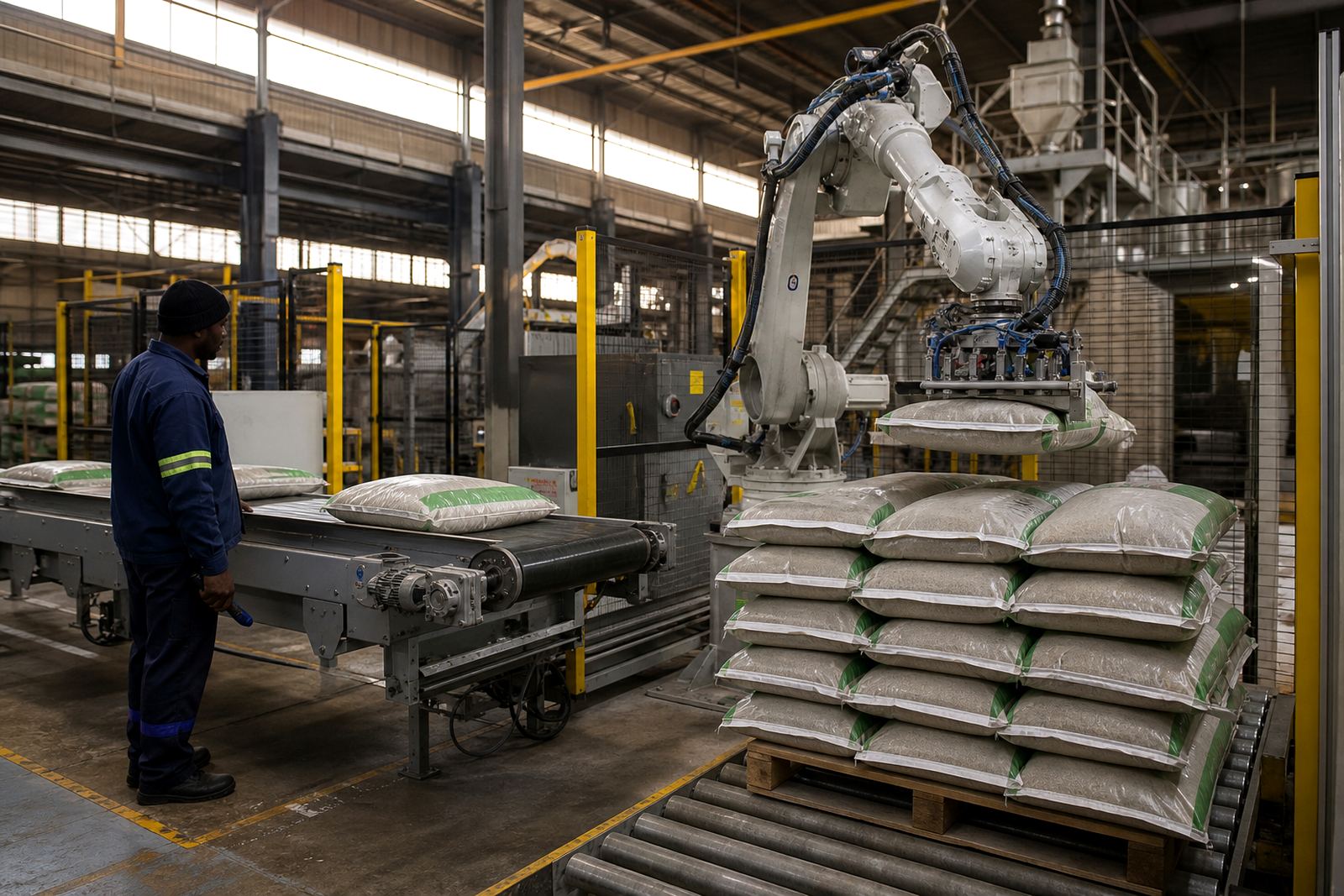
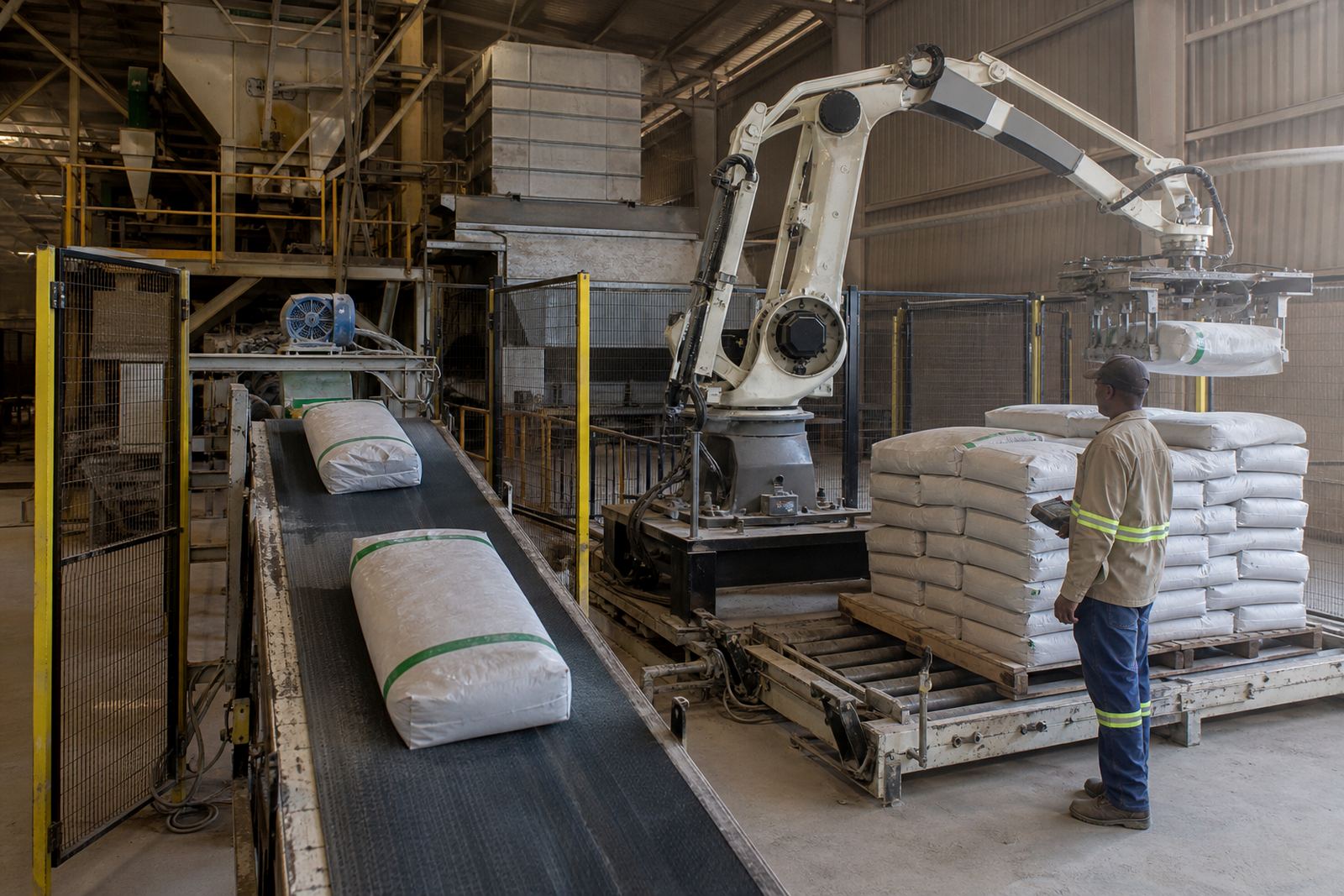
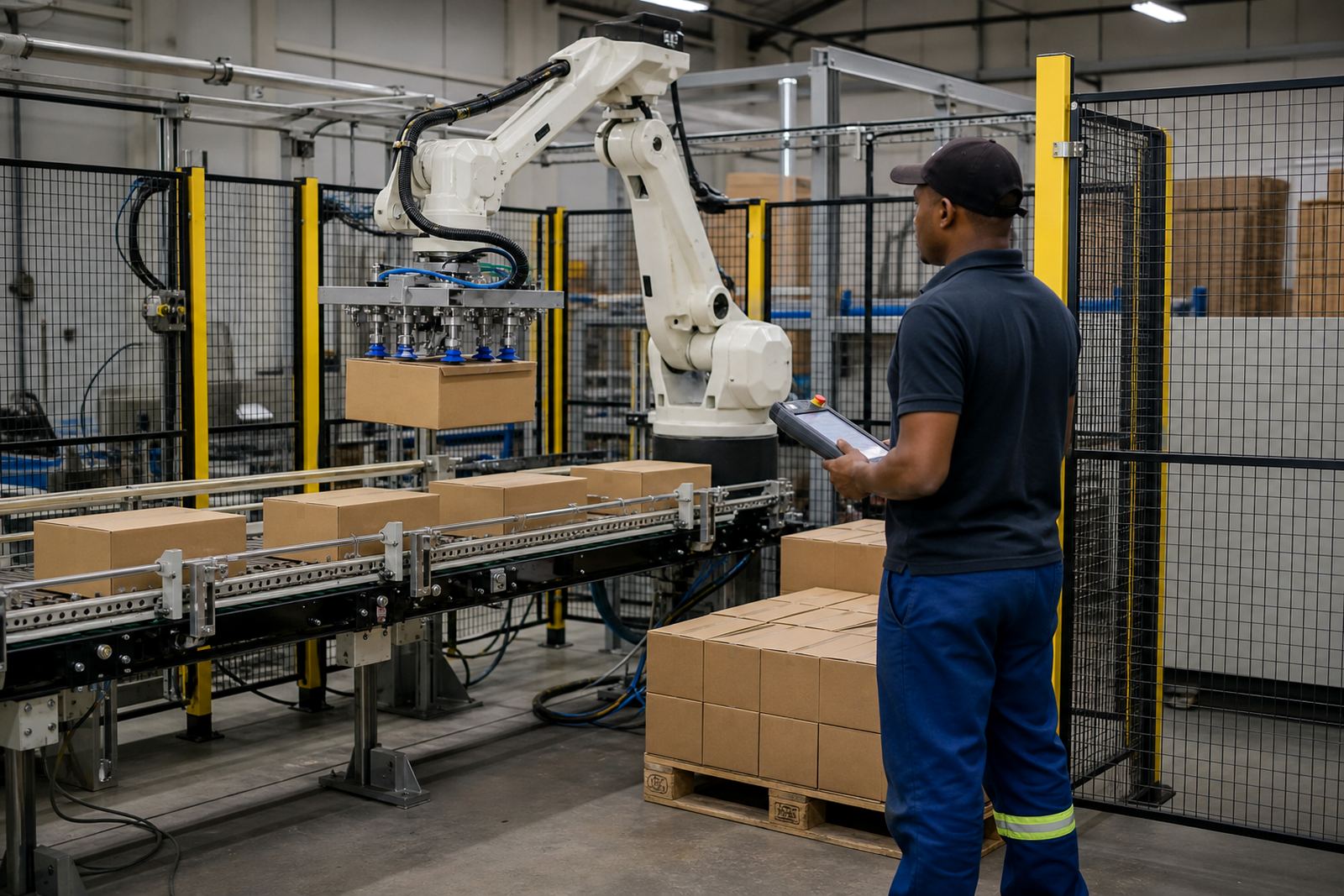
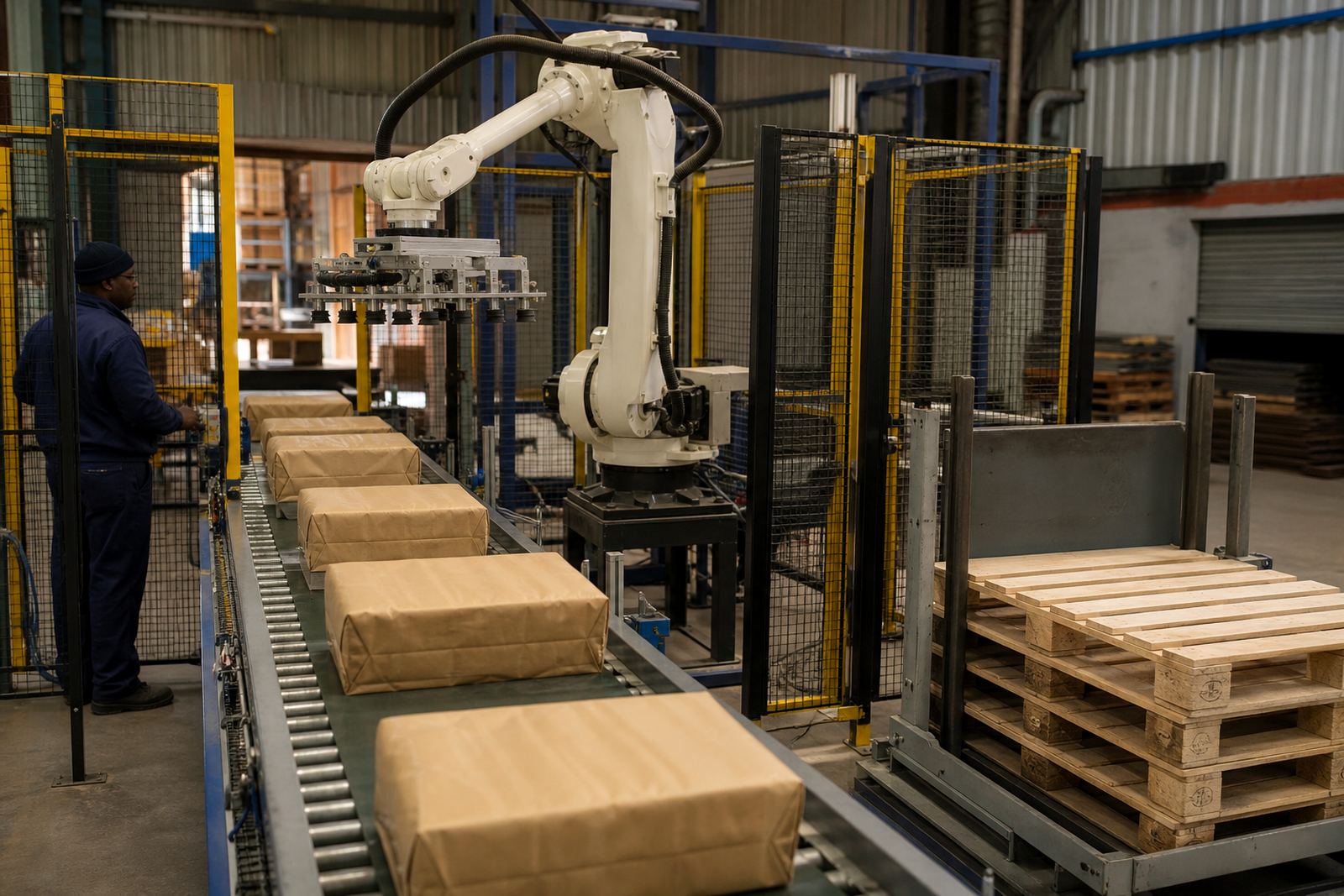
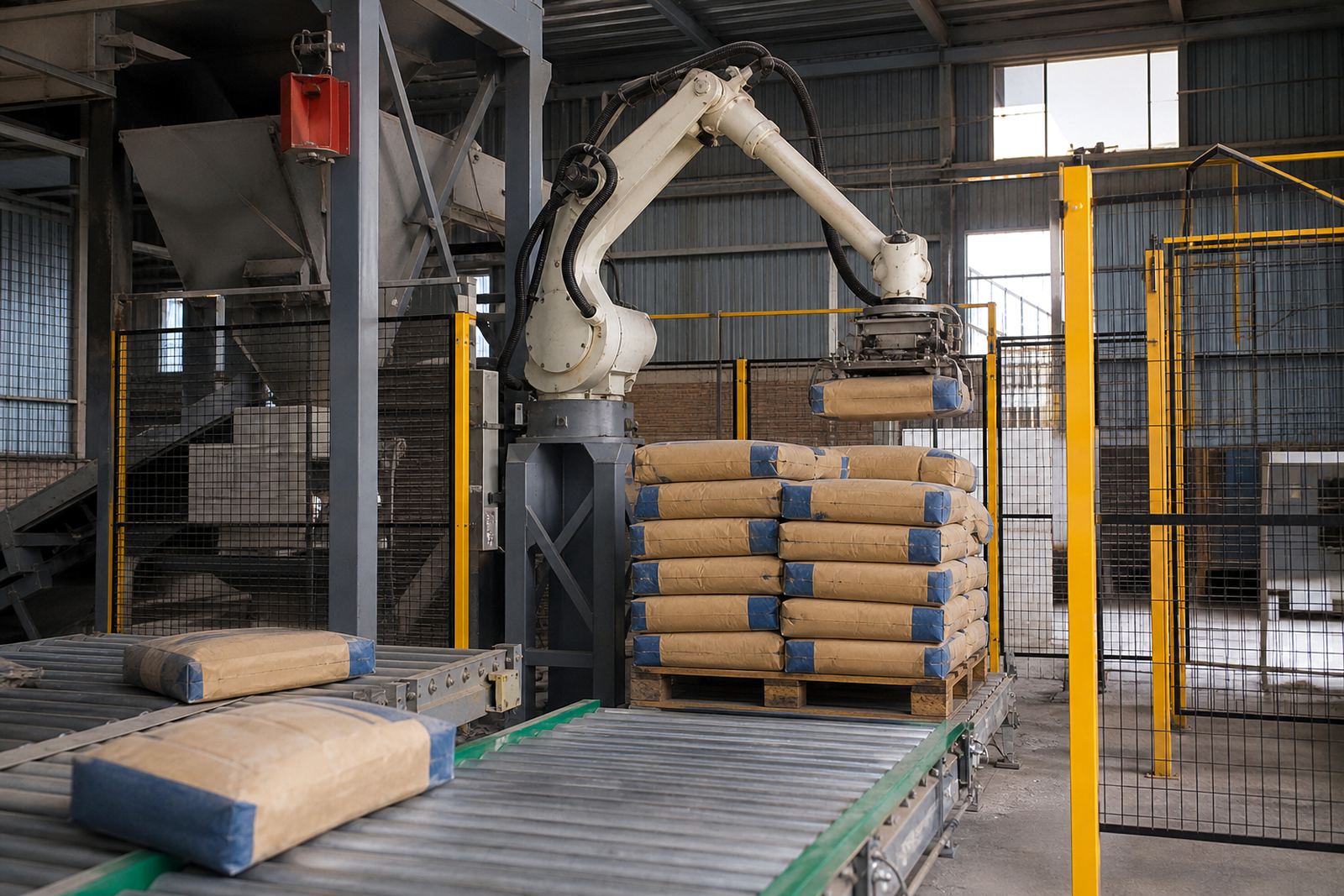
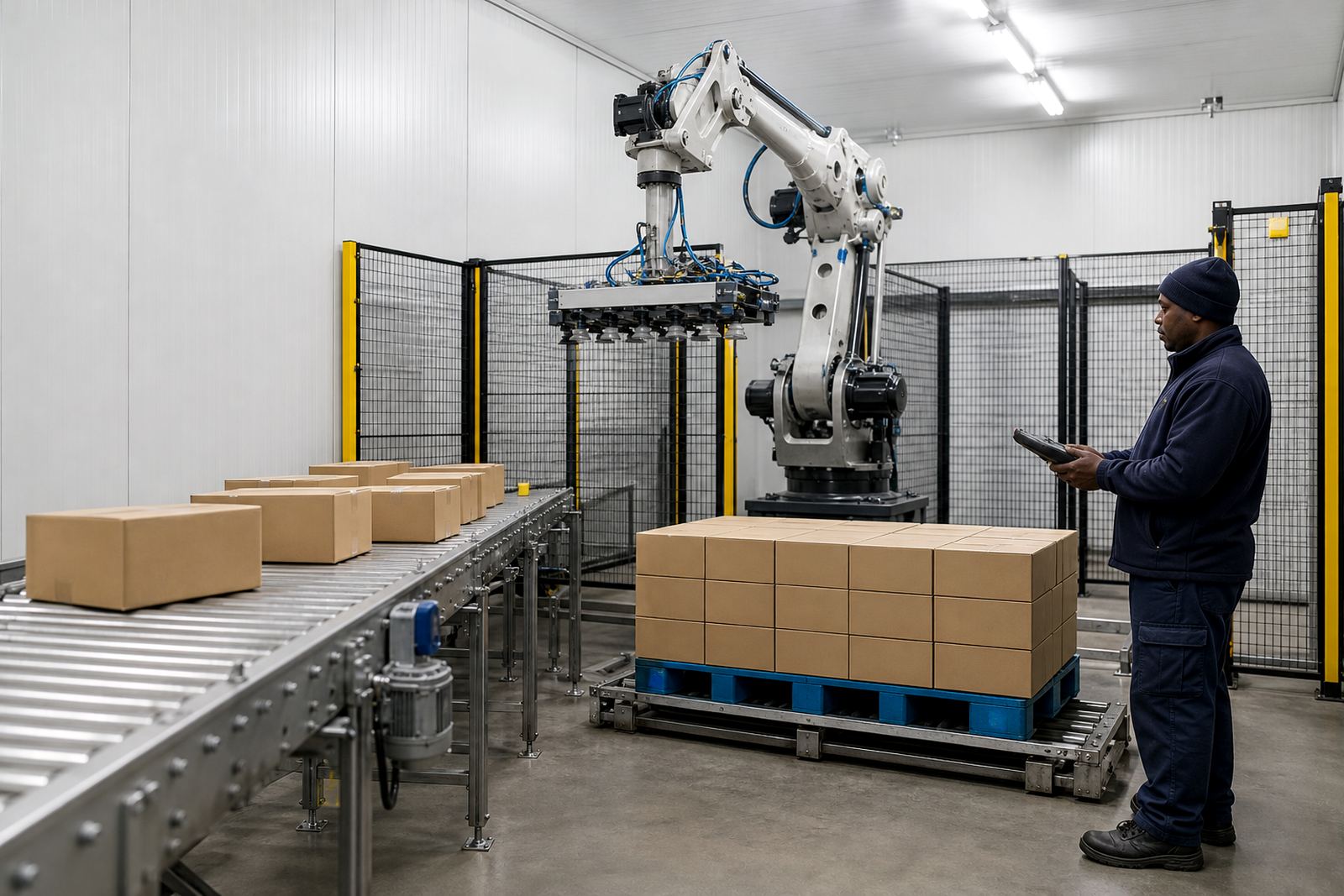
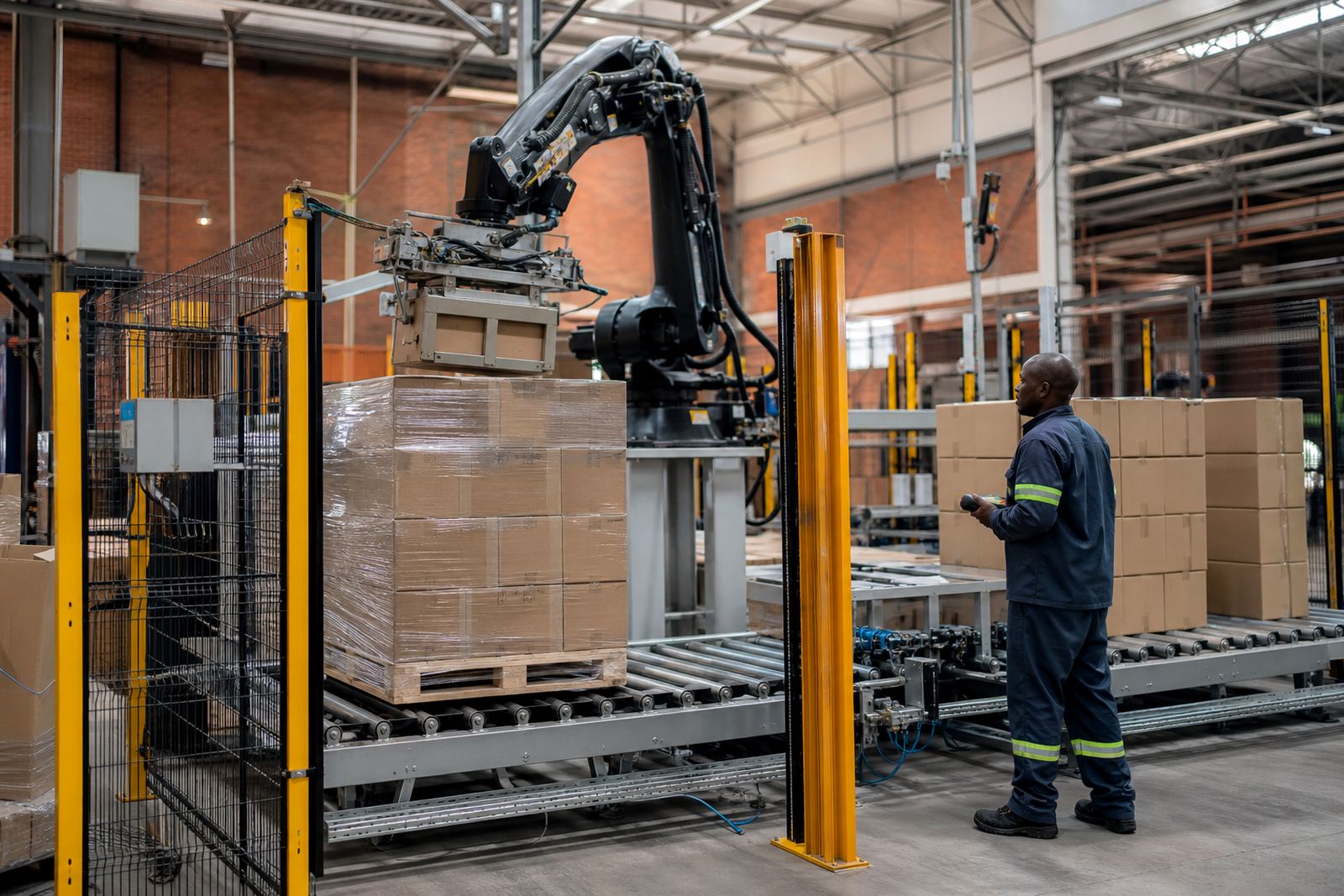
End of line palletising is often the easiest place to start when a factory wants immediate labour relief. A robot can stack cases, bags, tubs or crates onto pallets in a repeatable pattern, with layer formation based on product size and pallet height. In many plants, the existing conveyor already brings finished product to the palletising point, so the retrofit focuses on robot reach, pallet access and the stacking pattern.
Some lines need one pallet pattern for a standard product and another for a promotional pack or export order. Others need changeover support for different case sizes on the same shift. ReAutomated plans for these changes so the line can keep moving without unnecessary manual rework or stoppages. A well planned palletising cell also helps protect staff from lifting injuries and repeated twisting, which is a common issue on busy lines.
- Single line or multi line palletising points
- Layer building for stable stacks
- Mixed product changeovers with simple pattern selection
- Integration with pallet conveyors, turntables or wrap stations
Cobots and Conventional Robots: Choosing the Right Fit
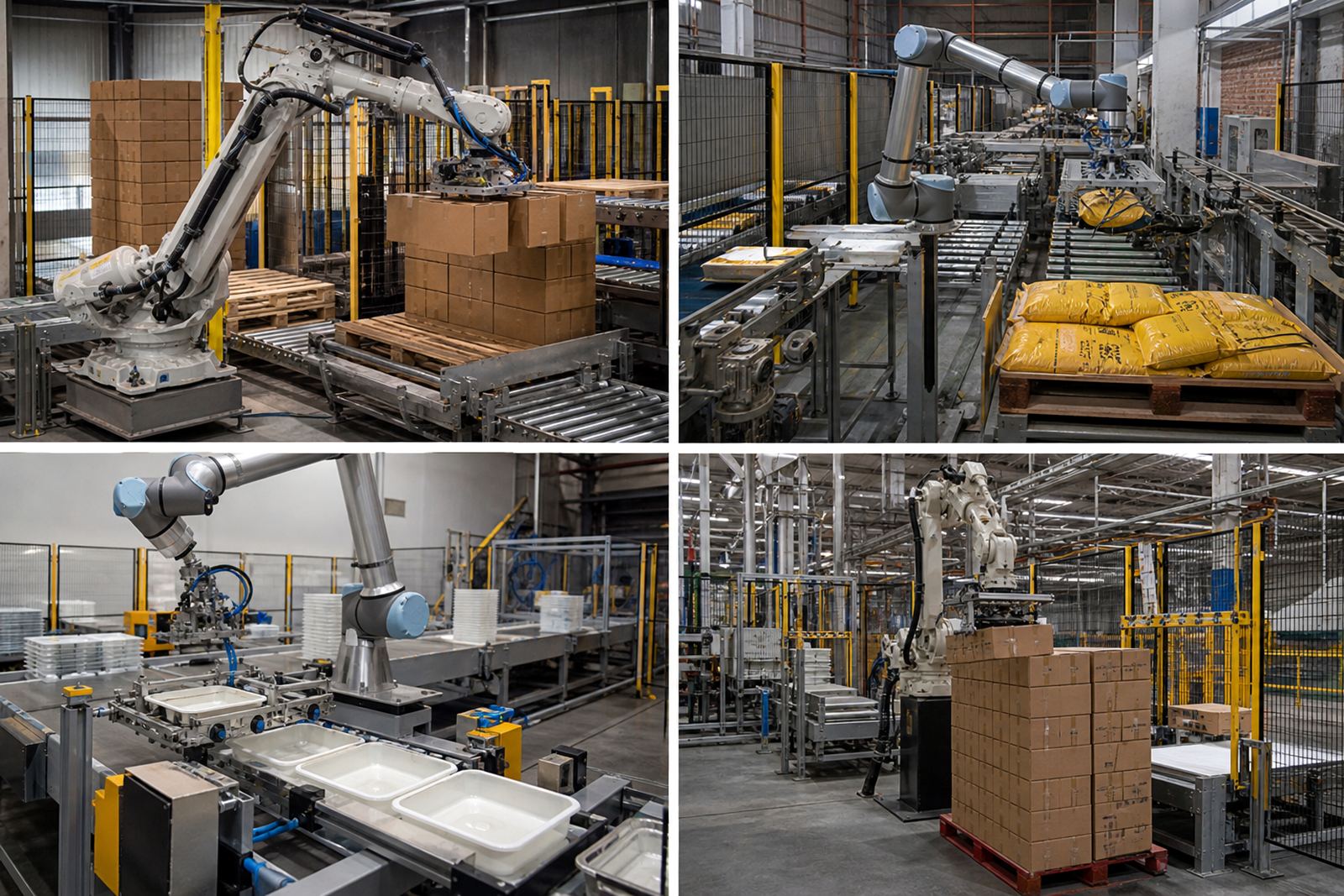
Not every factory needs the same type of robot. Cobots can suit lighter duties, tighter spaces or smaller production runs where operators and robots work in the same area under controlled conditions. Conventional industrial robots are often better for heavier loads, faster cycle times or longer reach. The right choice depends on the pack weight, pallet height, line speed and the amount of guarding needed around the cell.
For some sites, a cobot is useful for a phased start while the process is still being refined. For others, a fixed industrial robot and full guarding make more sense from day one. Either way, the line must be designed around the product and the people who work there, not just the machine itself.
- Light to medium loads where flexibility matters
- Heavier loads and high throughput lines
- Shared work areas with careful safety controls
- Dedicated cells where speed and reach are the priority
Safety Guarding and Risk Assessment for Each Site
Safety guarding needs to match the actual risks on each site. Layout, access points, traffic flow and product handling differ, so each installation needs its own risk assessment. A retrofit may need perimeter fencing, interlocked gates, area scanners, light curtains or other controls, depending on how people move around the line and how the robot works with the conveyor.
ReAutomated supports risk assessment work and safety guarding design as part of the retrofit plan. This matters in plants with fork trucks, pallet jacks, narrow aisles or shared maintenance access. General safety rules apply, but the final setup must suit the site, the local rules and the actual process. No two lines are quite the same, and that is exactly why the review has to be done properly. A rushed fit can create delays, so this step saves trouble later.
From Kempton Park to Durban, Cape Town and Gqeberha
Different regions bring different operating conditions. In Gauteng, many factories want fast installation windows and support for older conveyor systems. In coastal areas, salt air and moisture can affect electrical components, so enclosure selection and maintenance access need attention.The retrofit approach should fit the real conditions on site, not an idealised factory floor.
Based in Spartan, Kempton Park, ReAutomated supports manufacturers across South Africa, including Johannesburg, Pretoria, Durban, Cape Town, Gqeberha, the East Rand and Midvaal. The team handles surveys, design, installation management, commissioning support, operator training, maintenance support and breakdown assistance. If you are planning a packing or palletising retrofit, the first step is to match the line type to the way your factory actually runs.