Why Cold Store Lines Need Less Manual Handling
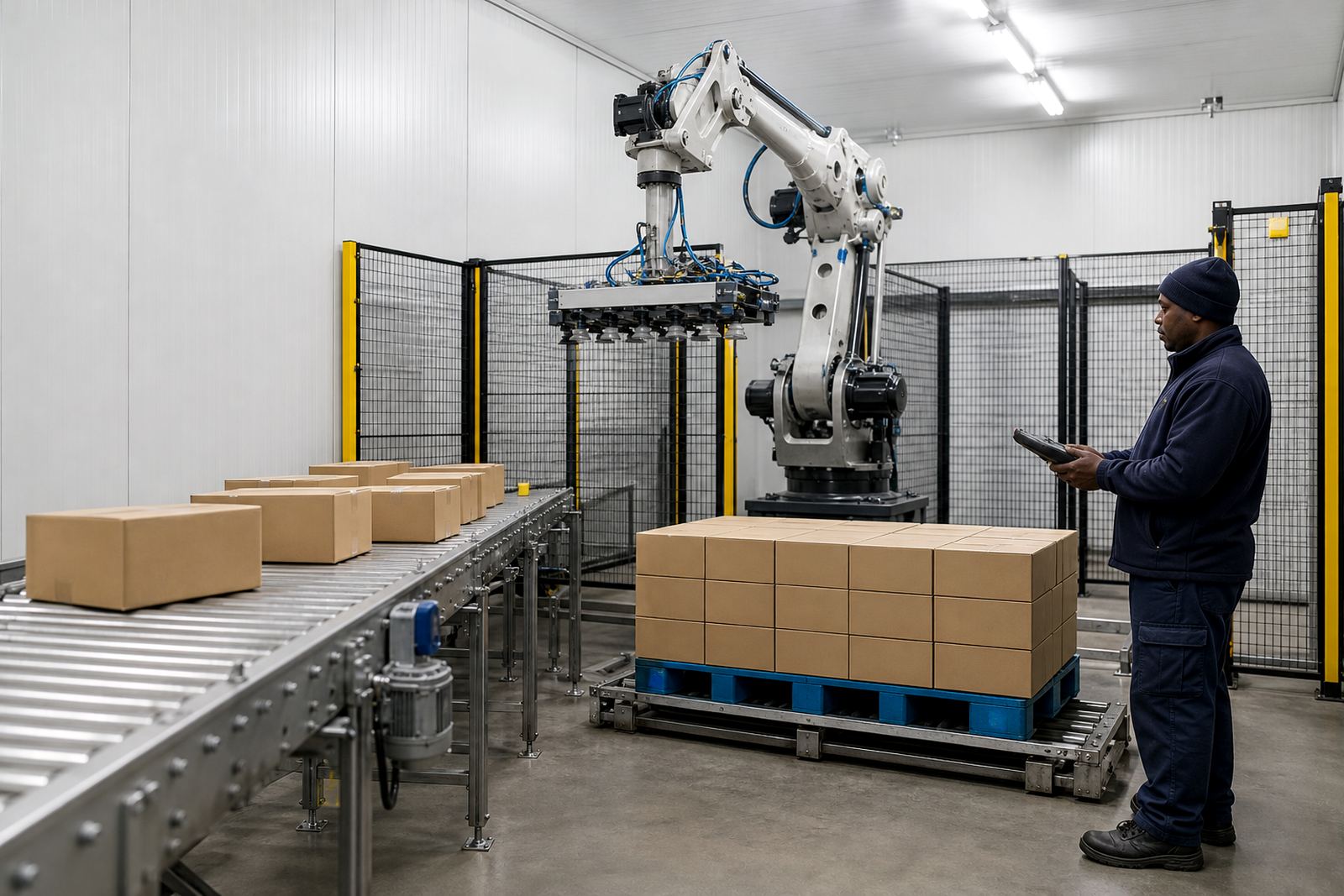
Cold rooms and chilled packing areas place extra pressure on people and equipment. Gloves reduce grip, condensation affects cartons, and teams often work faster to stay warm which can lead to handling mistakes. A retrofit can shift repetitive lifting, layer building and carton movement to automated equipment while keeping the existing line in service for as long as possible during installation.
In many South African facilities the challenge is not starting from scratch, but adapting an older packing line to suit current volumes, colder storage conditions and tighter labour availability. A good retrofit needs to suit the product weight, carton size, line speed and the way the cold store actually operates on site. That is why each job starts with a site line survey and a practical look at the conveyor route, floor space, access points and maintenance clearances.
- Reduced manual lifting in chilled areas
- More consistent pallet build quality
- Better use of existing conveyors and space
- Less strain on staff during long cold-room shifts
Typical Equipment Used in Cold Store Retrofits
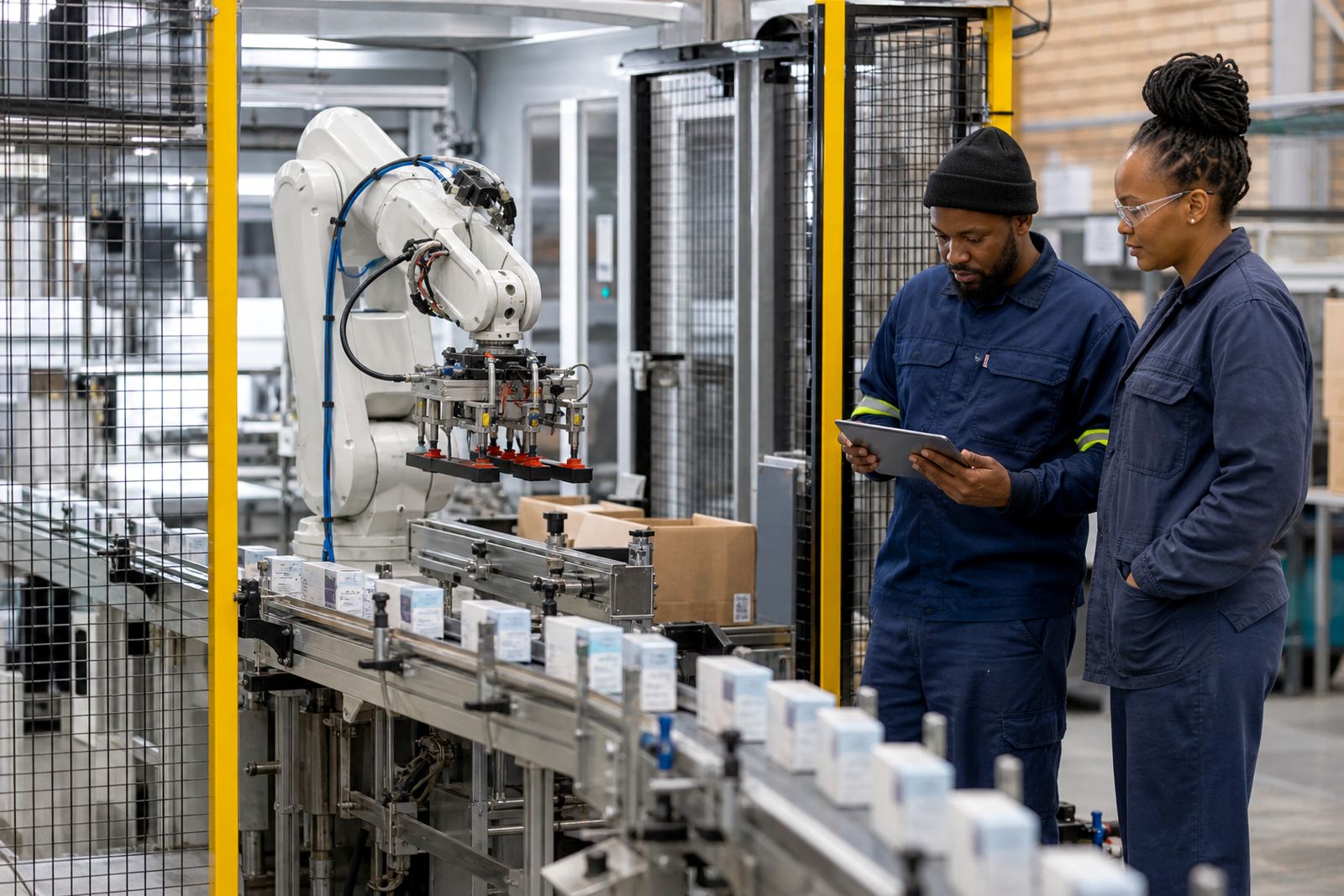
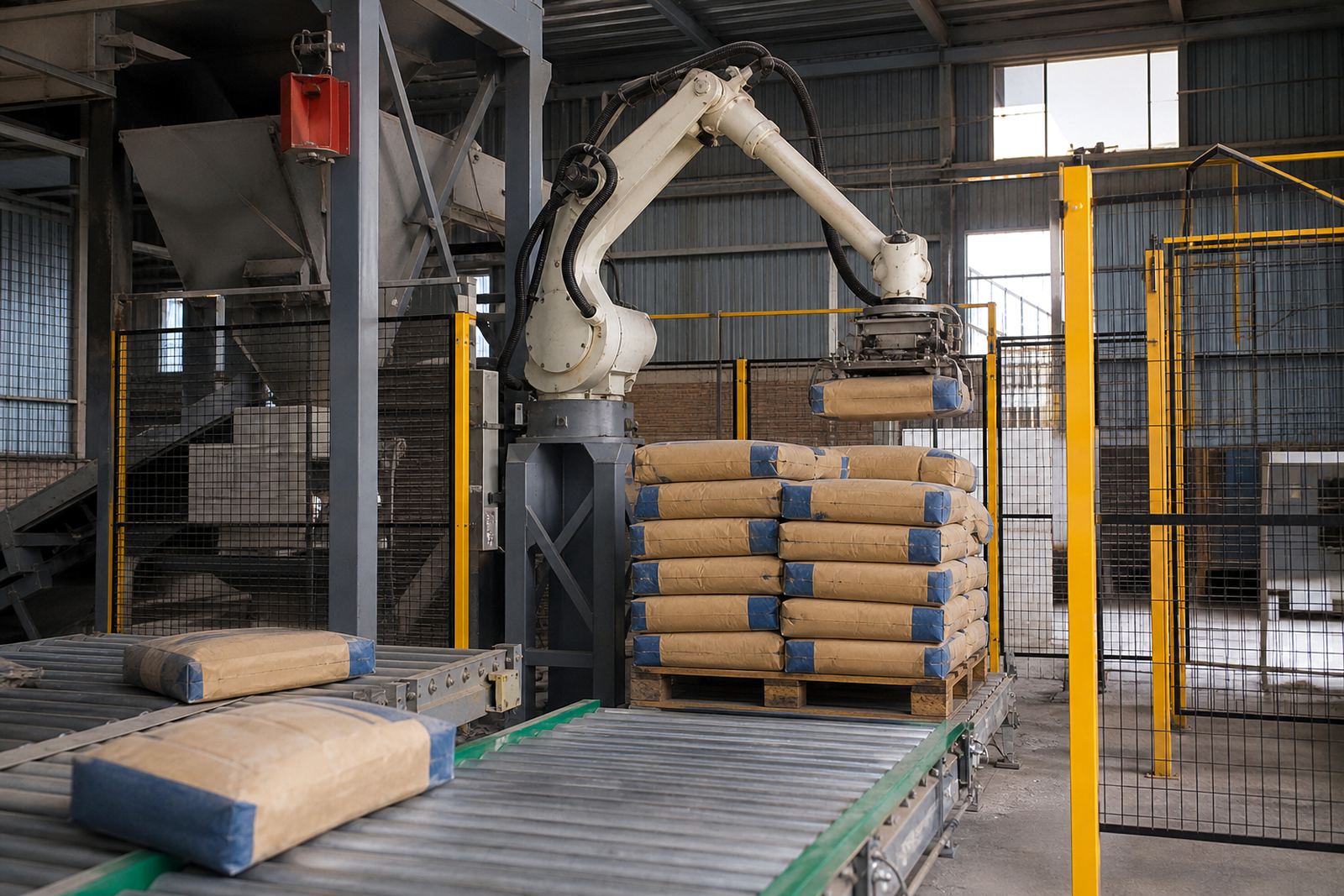
Cold store retrofits usually combine packing automation, palletising equipment and control upgrades rather than replacing every machine. The exact mix depends on the product and the building. Some sites only need a cobot palletising cell at the end of the line, while others benefit from a full conveyor transfer, carton orientation and stretch wrapping section. The aim is to improve flow without creating a layout that is hard to clean, inspect or service.
Common equipment includes conveyor integration, carton handling transfers, palletisers, cobots for lower speed lines, safety guarding, pallet dispense points and control panels adapted to the existing process. In chilled environments, the design also needs to consider fogging, moisture and the way operators move through the space in PPE. Simple choices like where the pallet enters and leaves the cell can make a big difference to daily running.
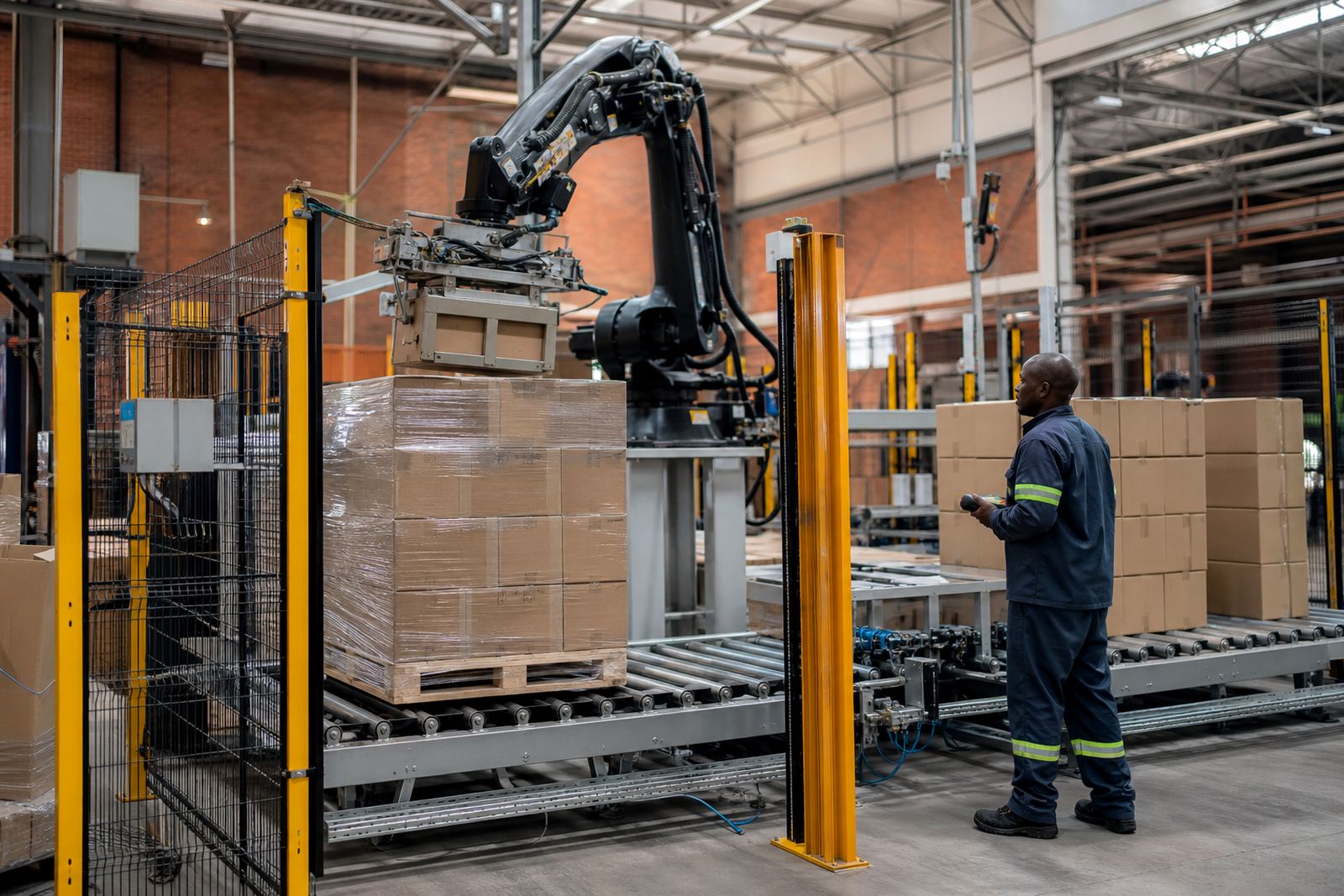
- Cobot or robotic palletising for end-of-line handling
- Carton conveyors and accumulation zones
- Safety fencing, interlocks and access gates
- PLC and controls integration with existing equipment
- Pallet transfer and wrap-ready discharge points
Planning the Layout Around the Cold Room
Cold room retrofits often fail when the new system is drawn without enough attention to the building. Ceiling height, doorway width, freezer curtain positions, dock access and floor loading all matter. In a warehouse in Johannesburg or Pretoria, there may be more space for a side feed. In older coastal facilities in Durban or Gqeberha the line may need a tighter footprint and better moisture protection. A layout should allow operators, cleaners and maintenance staff to move safely without crossing the robot path.
ReAutomated usually works through line surveys, retrofit design and installation management so the equipment fits the real site constraints. If a conveyor has to pass through a chilled entry point or a temperature zone change, the transfer method needs to be planned early. Planning should also include where empty pallets are stored, where finished loads wait for collection and how forklifts enter the area without interrupting the cell.
- Measure doorways, aisle widths and ceiling height before design starts
- Confirm floor condition and load points for robot base plates
- Keep service access clear for motors, sensors and panels
- Allow safe forklift routes away from guarding and pedestrian paths
Safety Guarding and Risk Assessment for Chilled Sites
Safety in a cold store is not only about the robot, it is about the whole working area. Slip risk, limited visibility from condensation and busy forklift traffic all need attention. Every site needs its own risk assessment because product type, staffing, traffic flow and cleaning routines differ. General safety rules can guide the design, but they do not replace a proper site review.
Safety guarding may include fencing, light curtains, interlocked gates, emergency stops and marked pedestrian routes. On some lines a collaborative robot may be suitable, but only if the task, speed and people movement allow it. Even then the final arrangement needs to be checked against the actual process. In cold stores, guards and sensors must also be positioned so that frost, water and cleaning chemicals do not create extra maintenance problems.
- Carry out a site specific risk assessment before installation
- Separate forklift routes from operator access wherever possible
- Use interlocks and emergency stops that are easy to reach with gloves on
- Check sensor positions for moisture, frost and cleaning impact
Common Mistakes When Automating a Cold Store Line
One common mistake is choosing equipment only for speed, not for the actual product flow. Another is underestimating the effect of chilled conditions on cartons, labels and grip. Sites also sometimes forget to plan for breakdown access, which matters a lot when staff are working in low temperatures and every minute out of the line is felt. A retrofit should be designed for day to day operation, not only for the first week after commissioning.
Other issues include putting the palletising cell too close to a dock door, leaving no room for maintenance, or assuming existing conveyors can be reused without checking belt condition, transfer heights and control compatibility. It also helps to think about training early. Operators need to know how to clear stops, handle faults and work around the cell safely. In a cold store, this training must be practical and short, because people do not want long classroom sessions in a chilled area.
- Designing for speed without checking product stability
- Ignoring condensation, slip risk and glove handling
- Leaving no maintenance space around the cell
- Failing to match conveyor heights and transfer points
- Skipping operator training for fault handling
Budget Ranges for Retrofit Projects in Rand
Budget depends on the size of the line, the number of cartons handled per hour, the amount of conveyor work needed and the level of guarding and controls integration. A smaller cobot assisted palletising retrofit may sit in a lower budget range, while a full packing and palletising upgrade with conveyor changes, guarding and commissioning support will be higher. Cold store projects can also cost more when access is tight, work must be staged around production, or additional moisture protection is needed.
As a practical guide, many retrofit projects start with a focused scope and then expand only where the site needs it. That could mean a survey, design and controls review first, followed by phased installation. ReAutomated can also support spares planning, maintenance support and breakdown assistance after commissioning, which helps reduce the risk of a line sitting idle while a small part is sourced. Budget should always be tied to the real layout and production requirement, not a guess based on another facility.
- Smaller retrofit scope: from around R350 000 to R900 000
- Mid-size packing and palletising upgrade: around R900 000 to R2 500 000
- Larger multi-stage line retrofit: from about R2 500 000 upwards