

Spartan Origins
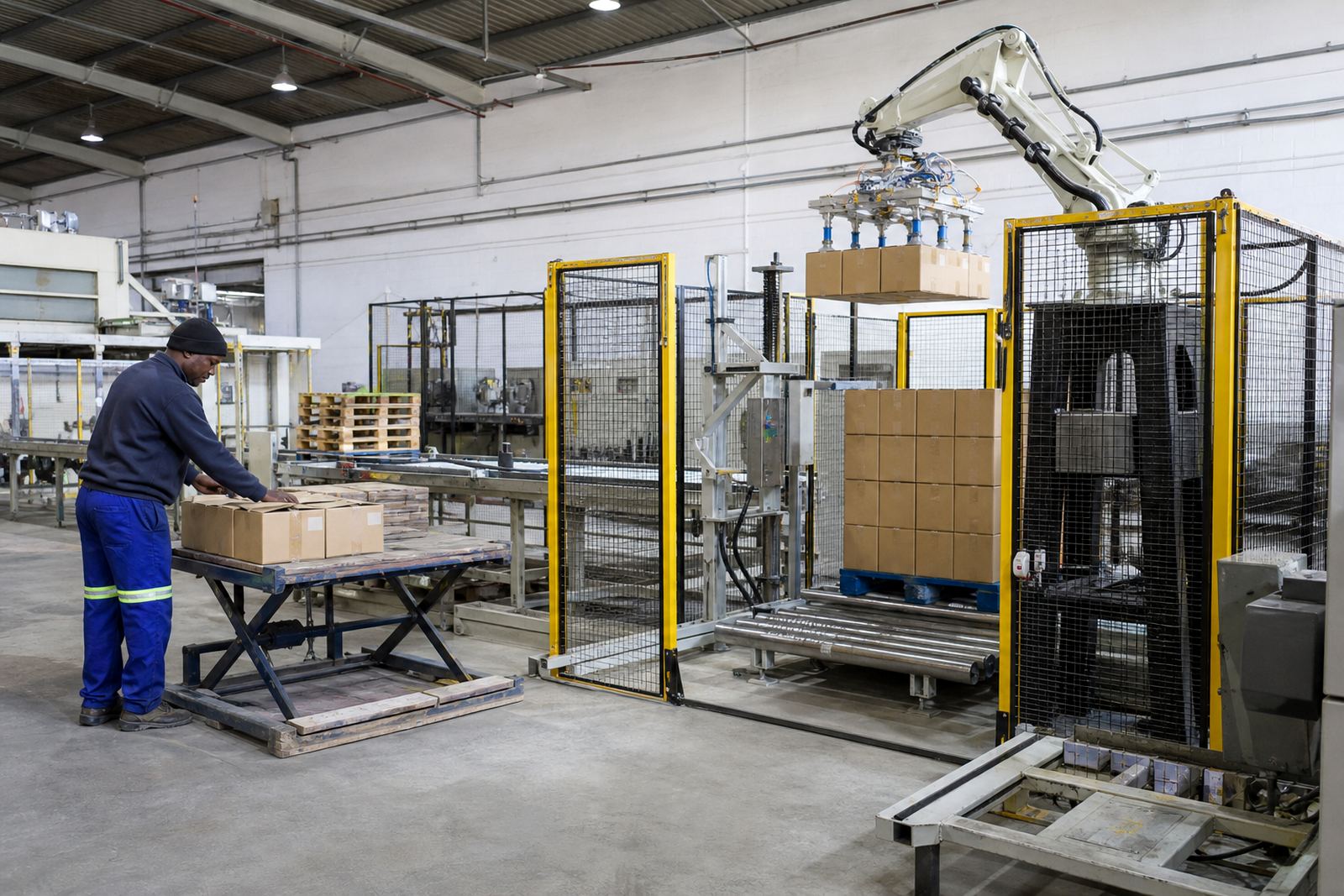
Palletising by hand is slow, tiring and hard on the back, and it caps what a good line can produce. Based in Spartan, Kempton Park, ReAutomated has been helping South African manufacturers improve existing lines without unnecessary disruption. In 2000, the business took shape around site visits, close observation and practical problem-solving, with attention on how product moved, where manual handling slowed output and how to make better use of what was already in place.
Those first projects taught the team to read a factory floor properly. Conveyor runs, transfer points, guarding space and operator access all had to be understood before any automation was proposed. That habit remains part of the company’s identity today, because every site has its own constraints and every line needs a solution that fits the plant, the people and the production demands around it.
Retrofit First
As the work matured, ReAutomated developed a strong retrofit craft around robotic packing and palletising. Many customers wanted better consistency, less manual lifting and a more reliable flow through existing production lines. The challenge was rarely about starting from scratch. It was about adding automation to older equipment in a way that respected the space available, the line speed and the realities of an operating factory.
That approach required more than equipment supply. It brought together design thinking, controls integration, safety guarding and installation planning so changeovers could happen with care. The team learned to treat each conveyor, panel and handover point as part of one system. Small adjustments could affect the whole line, which is why the company built its method around detailed assessment before any physical work begins.
Built Around Factories
The customers ReAutomated serves are manufacturers who need dependable automation in busy production environments. Some are looking to reduce repetitive manual work, while others want more consistent packing, neater pallet patterns or better use of floor space. The business works with facilities that often already have equipment in place, so the task is to improve output without disrupting the broader operation more than necessary.
That means the team spends time on the floor, studying stoppages, product handling and the interaction between people and machines. The work is practical and site-led. Each project is shaped by the products being handled, the conveyor arrangement and the production rhythm of the plant. The result is a partnership style built on careful planning, clear communication and solutions that make sense in real factory conditions.
How The Team Works
The company operates with a small and experienced team from its Spartan base, where engineering, controls, site coordination and service work are managed in close collaboration. Different roles contribute to the same outcome: practical robotic automation that fits the site and supports the production team. Decisions are made with the full line in mind, not only the equipment being added.
That working style matters in live plants where a conveyor adjustment, guarding detail or commissioning sequence may need to change on the spot. The team values orderly installation, careful handover and support that does not leave operators guessing. Because the work is technical and site-specific, communication between disciplines is part of the craft, not an extra.
Safety Above Convenience
ReAutomated does not compromise on safety, especially in factories where automation must work alongside existing machinery and people. Risk awareness is built into the process from the first site visit. Guarding, access control and safe operating space are considered alongside throughput and layout, because a line that is efficient but unsafe is not a workable result for anyone involved.
The company also avoids assumptions. Each site is treated as distinct, with its own layout, hazards and production pressures. That means the team plans for real conditions rather than ideal ones. Installation in live production areas demands patience, discipline and respect for the environment, and those standards remain central to the business’s work.
Practical Growth Ahead
The story of ReAutomated is one of steady growth through problem solving, not through grand promises. From its base in Spartan, the business has built a reputation for helping South African manufacturers make better use of the lines they already own. Packing and palletising remain the core focus, supported by retrofit design, controls integration, maintenance support and spares planning.
What will not change is the company’s method. It will continue to begin with a site survey, study the existing equipment closely and design around the realities of the plant. That discipline reflects what the business learned early on: good automation must suit the factory floor, the people who work there and the production goals that matter every day.