

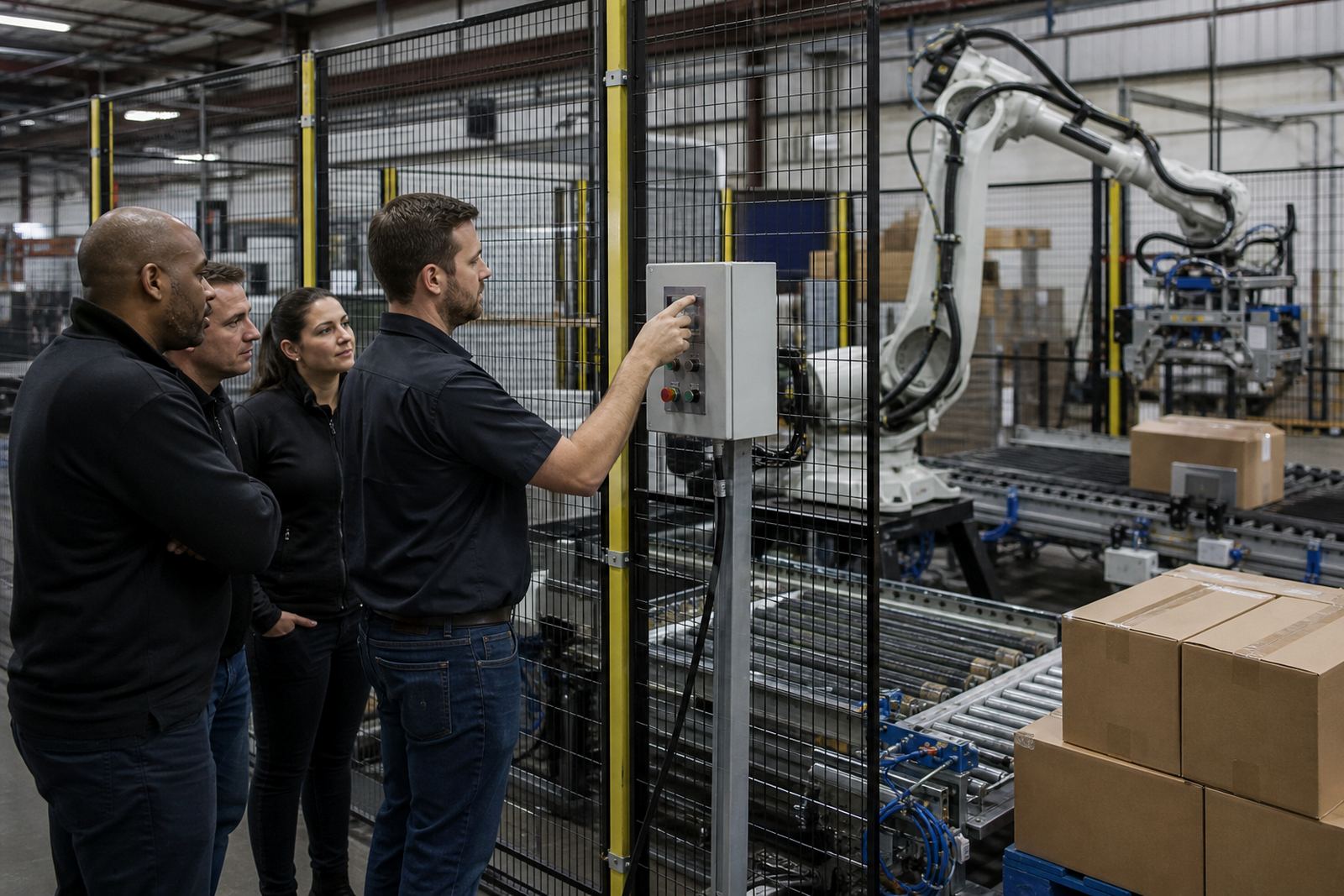
How to use these palletising guides
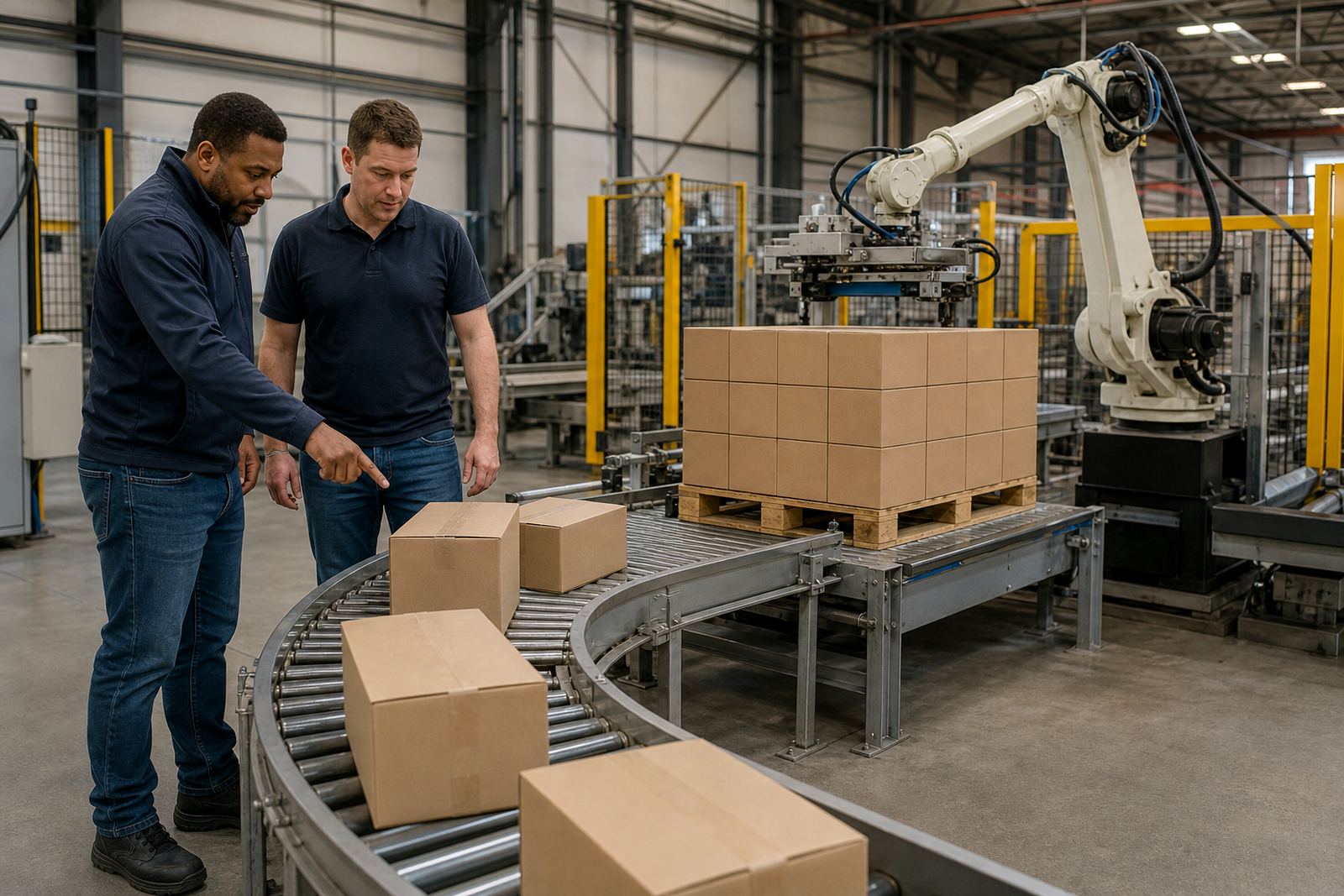
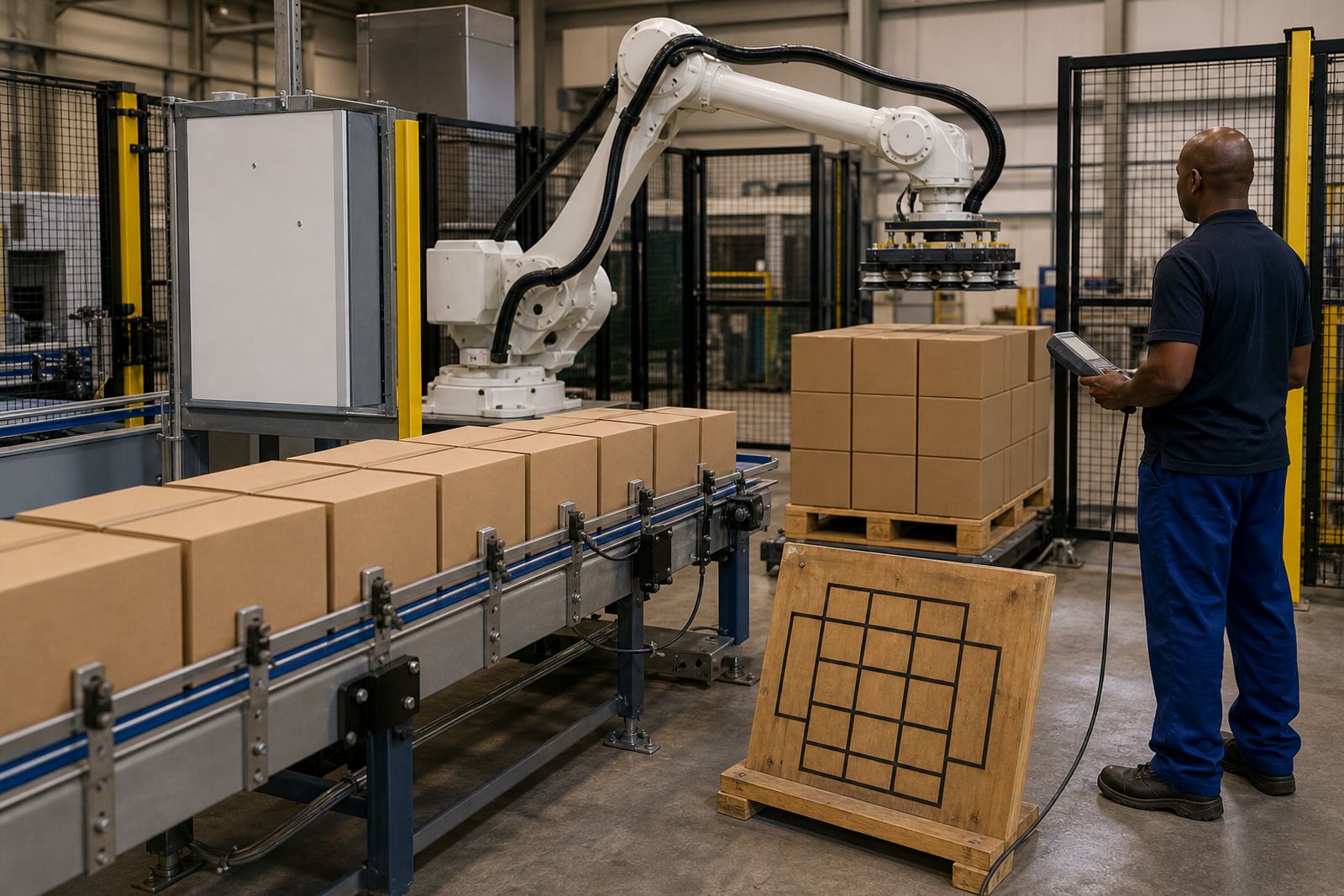
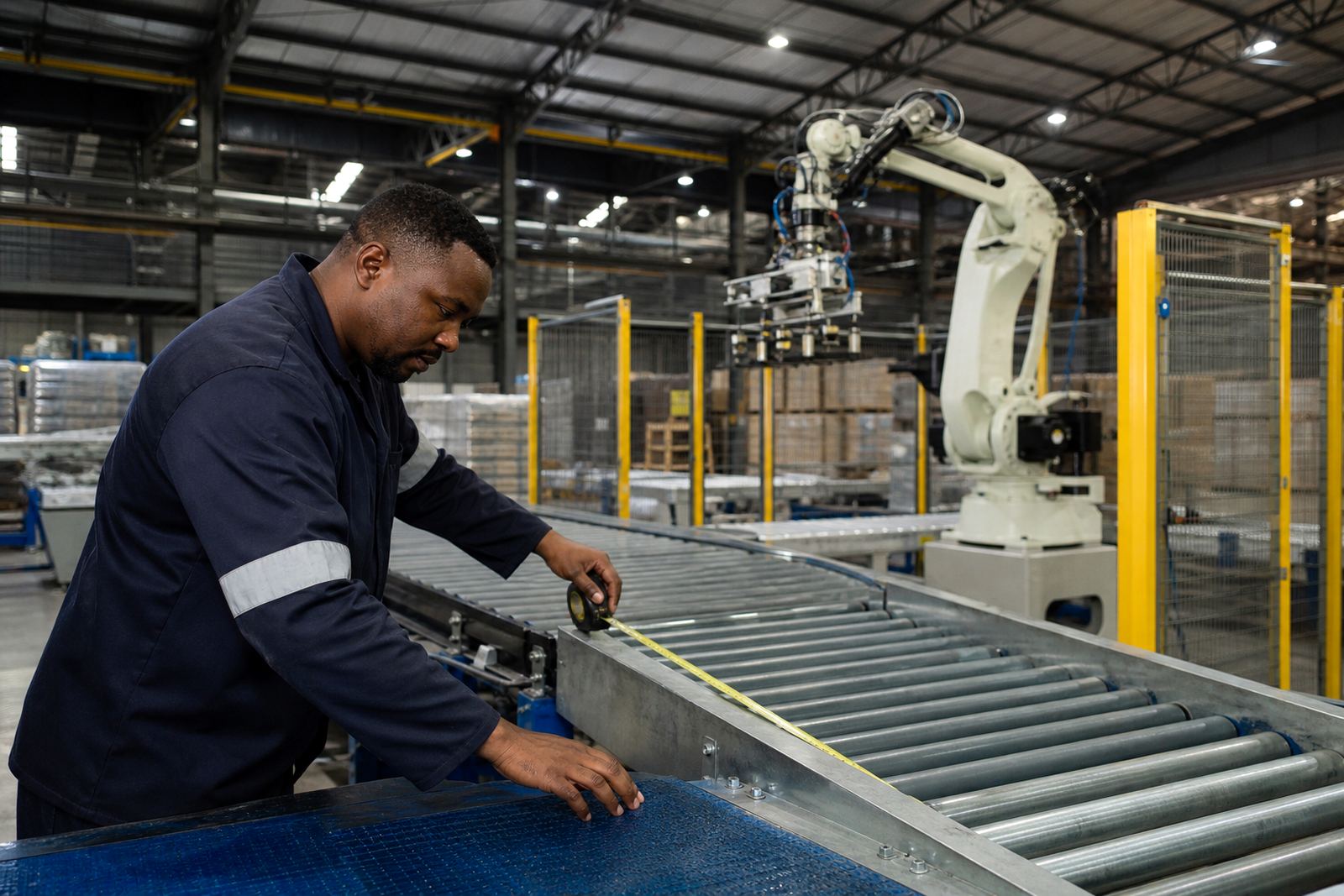
If you are planning a retrofit for a packing or palletising line, start with the process you already have on site. Look at carton size, bag weight, pallet pattern, conveyor height, available floor space and how product moves from the end of line to the pallet. A good retrofit works with the plant that is there already, instead of forcing a full rebuild.
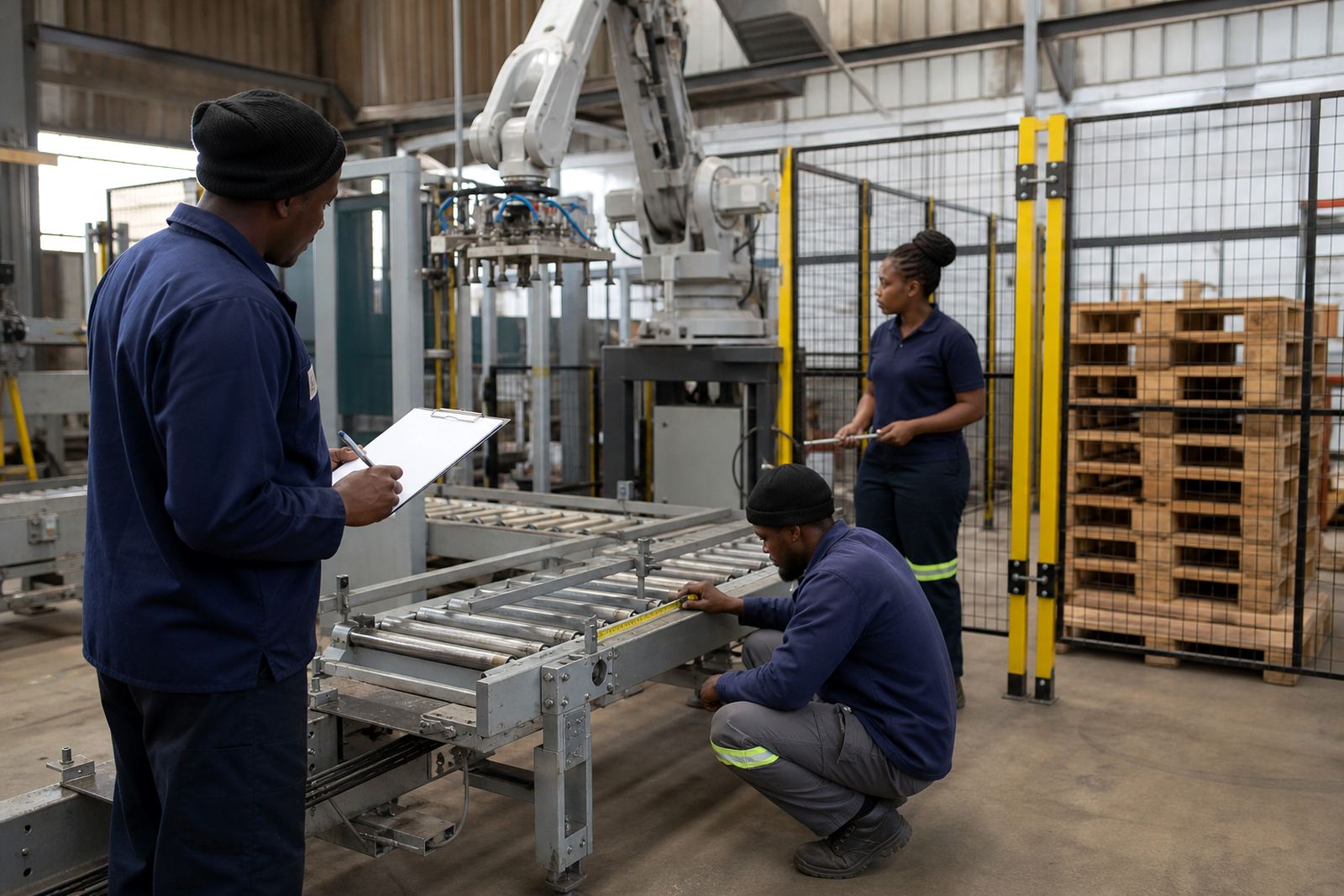
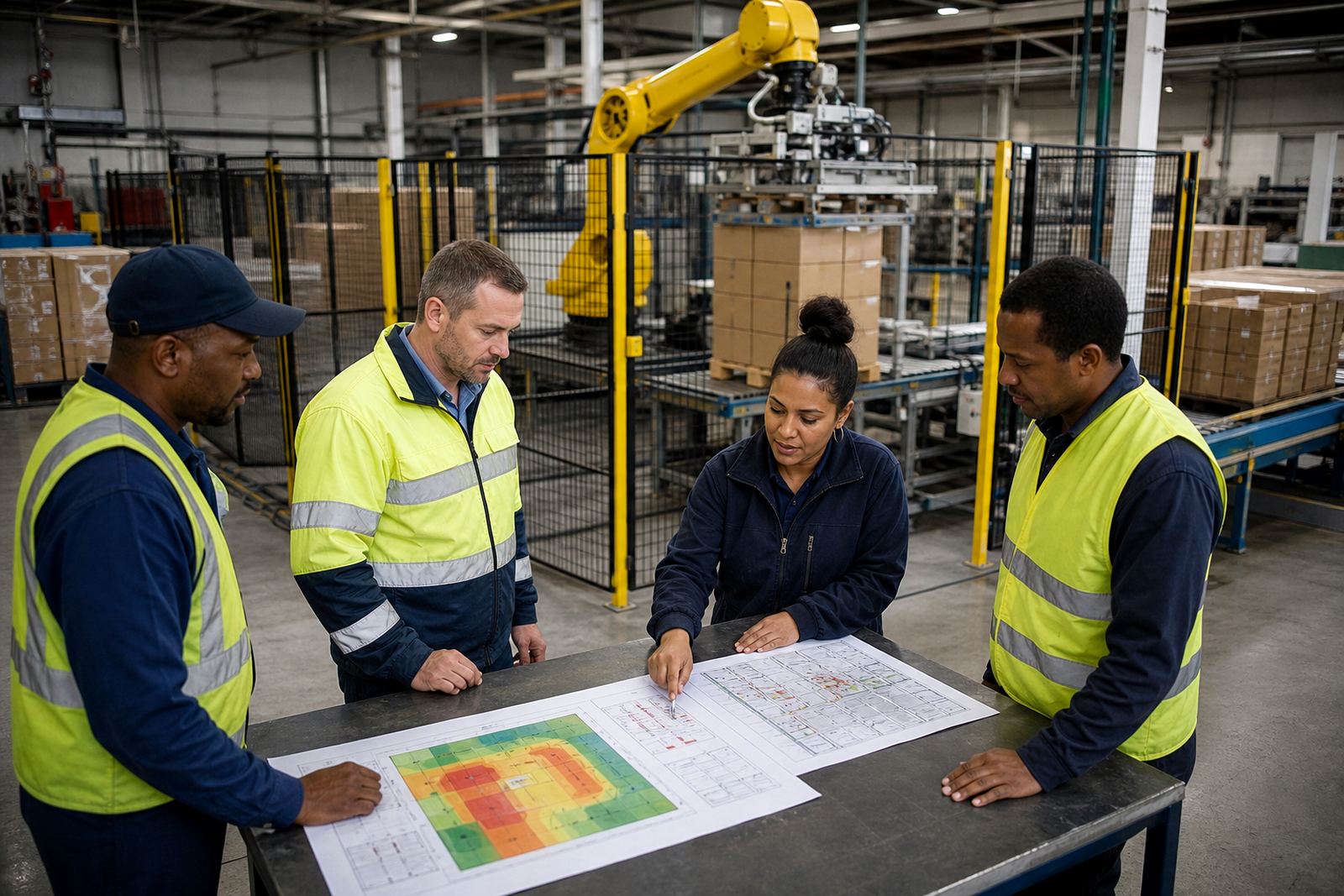
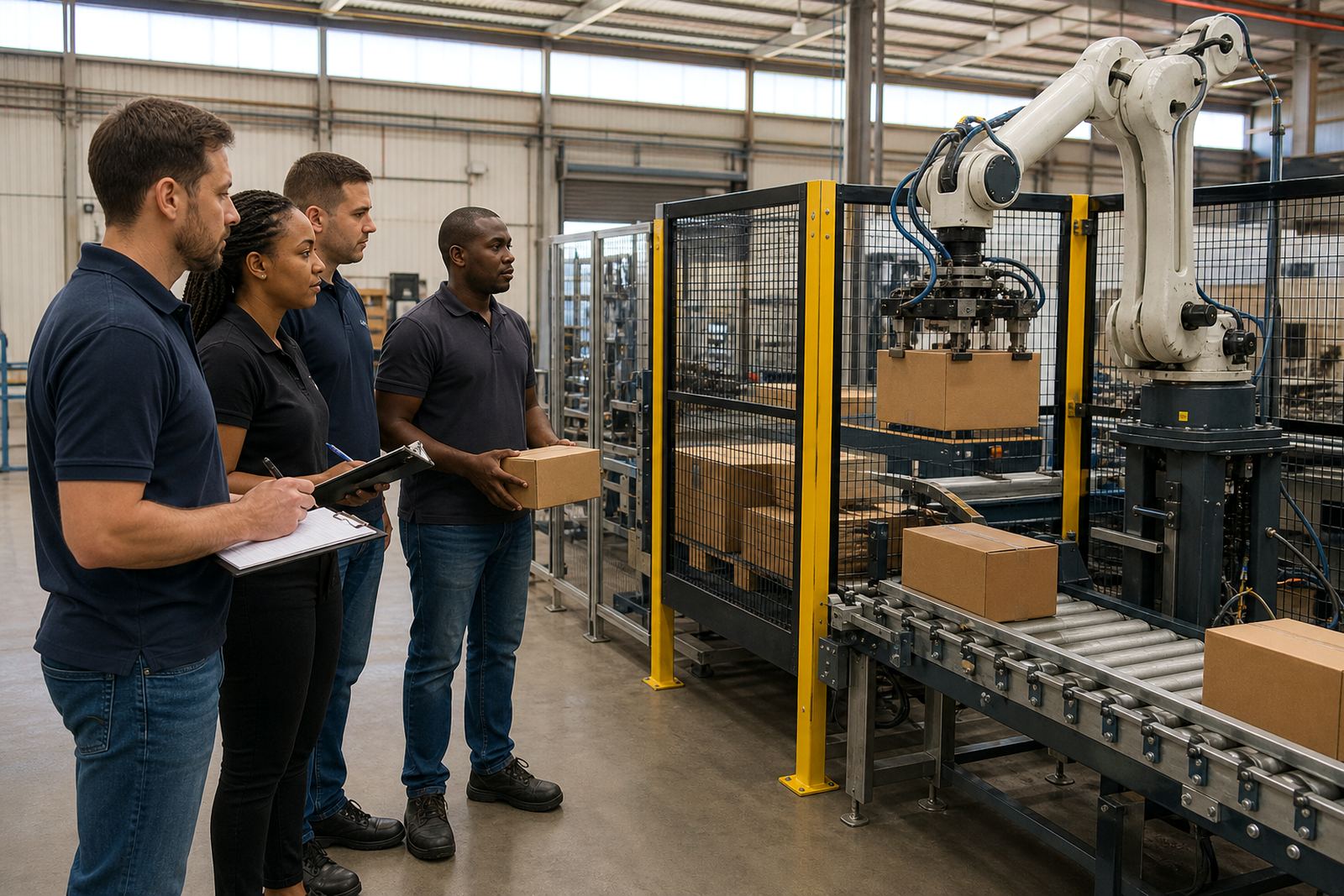
These guides are useful for production managers, maintenance teams and engineers who need a clear way to compare options. They cover practical points such as line speed, changeover time, guarding, operator access and the way a robot cell fits around existing conveyors. Every site is different, so the final design should follow a proper survey and site-specific risk assessment.
- Use them to shortlist the right palletising approach for your line.
- Check whether your conveyor layout needs simple changes or a full rework.
- Identify where operators need access for clearing, stacking and inspection.
- Plan for power, compressed air, floor loading and maintenance space.
What to compare before choosing a retrofit
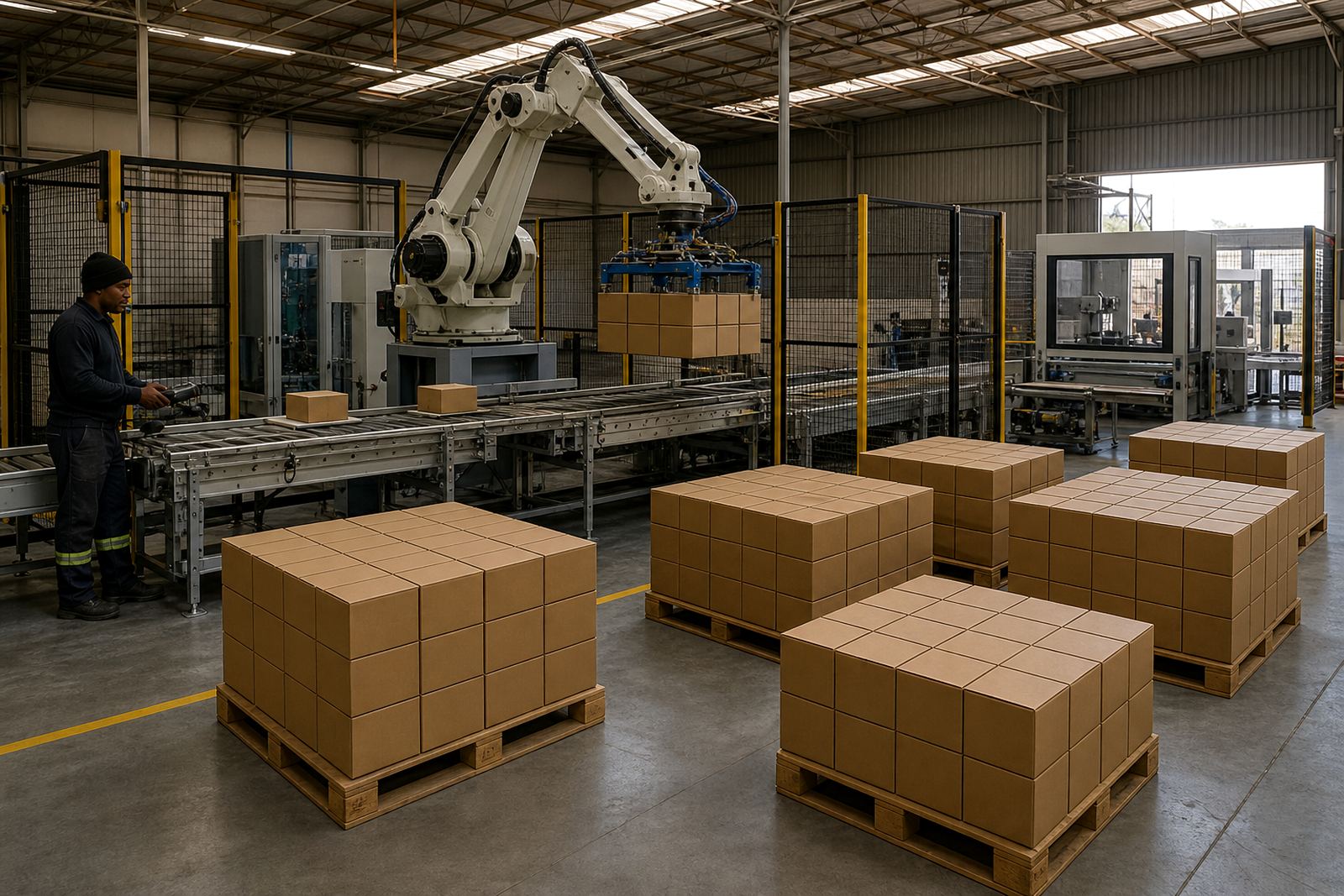
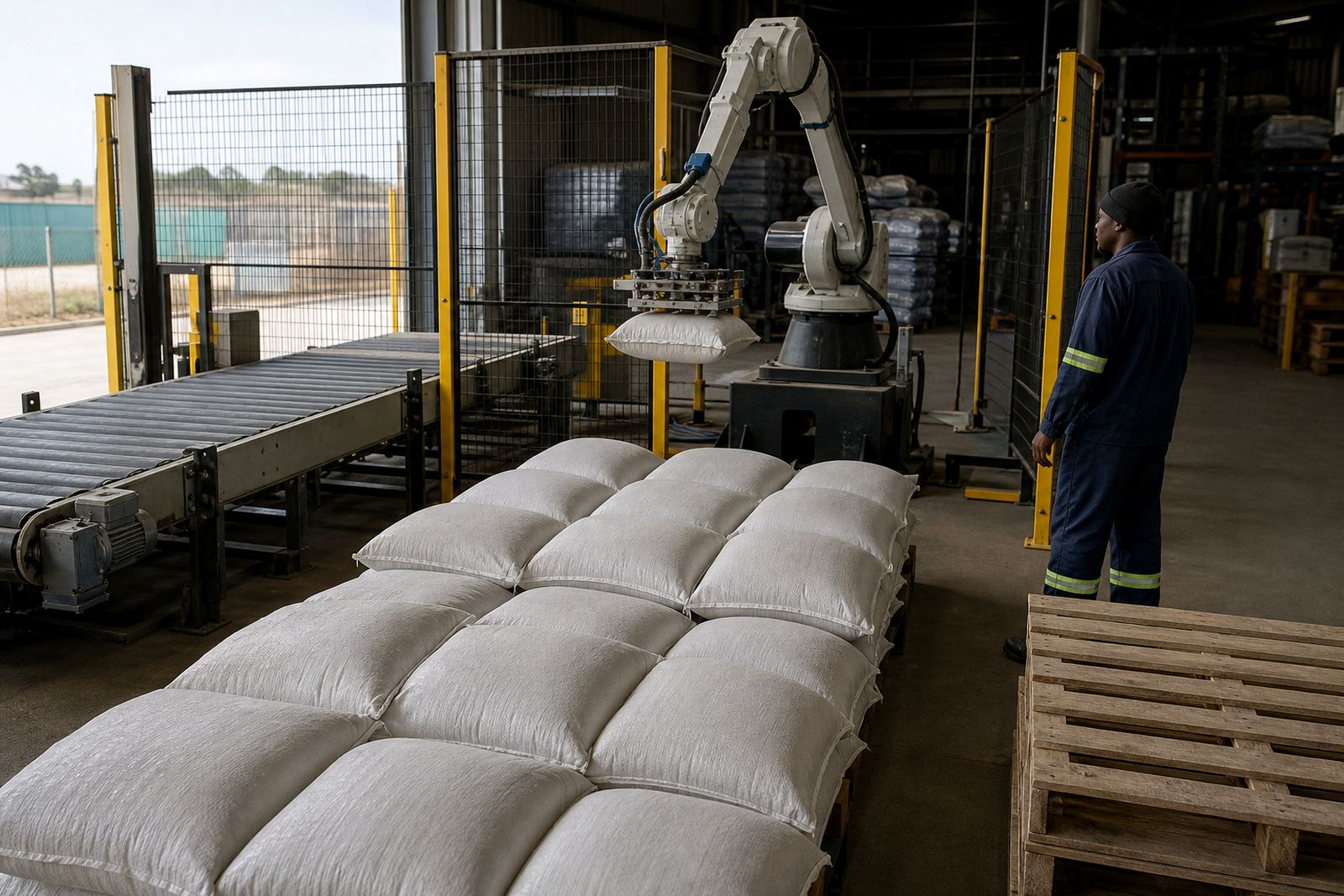
Not every line needs the same level of automation. Some sites only need a cobot taking over repetitive stacking at the end of line, while others need a full robot cell with infeed control, case orientation and pallet handling. The right choice depends on product fragility, pallet height, shift pattern and whether the line runs in dusty, warm or coastal conditions.
When comparing options, it helps to look beyond speed alone. A slightly slower cell may be the better fit if it gives cleaner product handling, fewer manual lifts and easier maintenance.
- Product type: cases, sacks, trays or mixed packs.
- Target throughput: cartons per minute or pallets per shift.
- Space: floor area, ceiling height and service clearance.
- Environment: dust, humidity, washdown and temperature.
- Operations: shift pattern, changeovers and operator training needs.
Packing line retrofits that work with existing conveyors
A strong retrofit usually starts with the conveyor system already in place. The aim is to control product flow so the robot or cobot receives items in a repeatable position and the palletising area stays predictable. That may mean adding sensors, stop gates, accumulation sections or transfer points, not replacing every conveyor on site.
Controls integration is just as important as the mechanical layout. The line needs clear signals between the infeed, the robot cell and any downstream wrapping or pallet dispatch equipment. If the controls are not matched properly, the line can back up, stop too often or leave operators waiting at the wrong point in the process. Small issues in timing can cause bigger problems later on, especially on busy sites with limited floor space.
Safety guarding and risk assessment basics
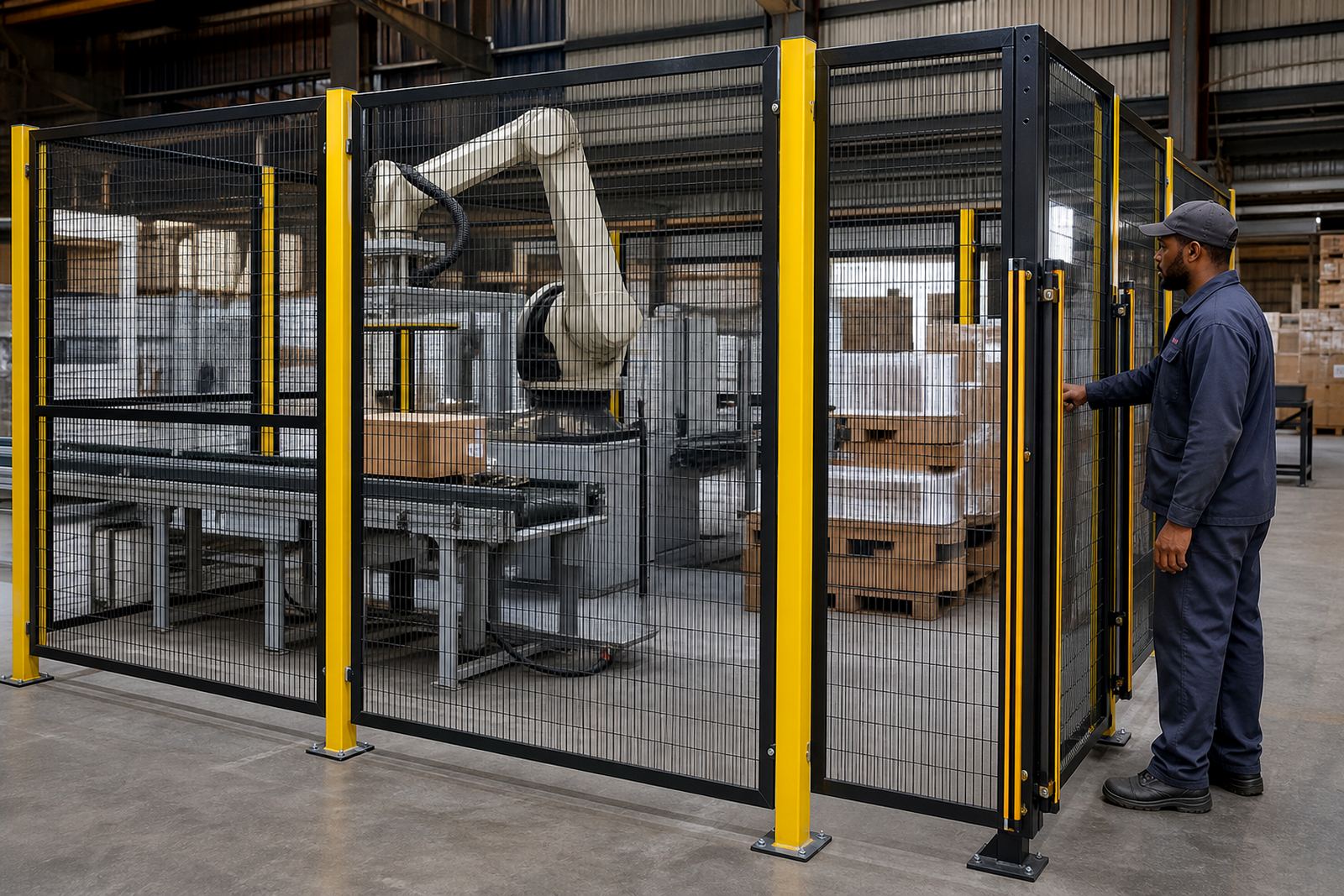
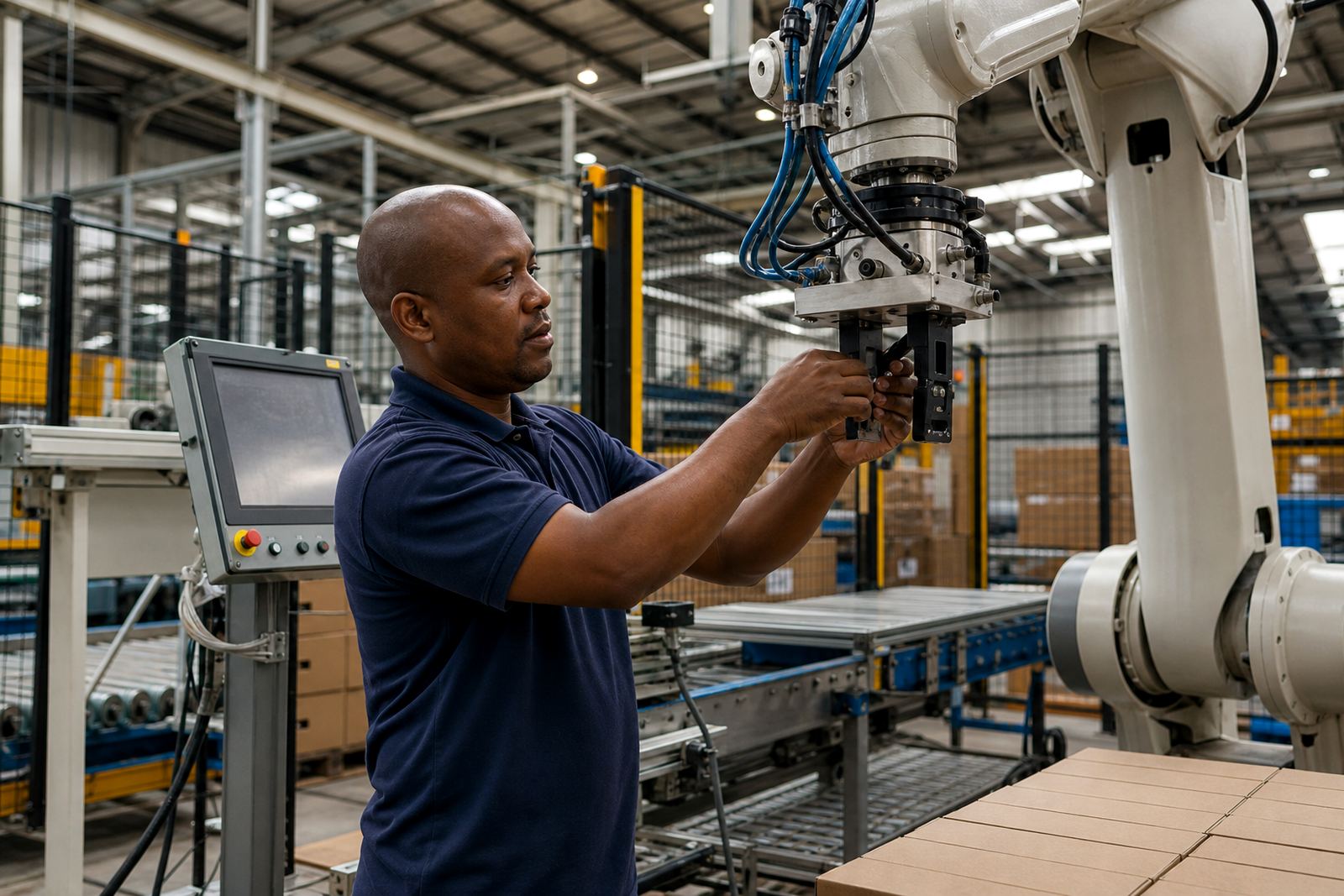
Robot safety is never one-size-fits-all. A palletising cell needs the right guarding, access control, warning devices and emergency stops for the actual layout on site. The guarding must suit how people enter the area for clearing faults, changing consumables or doing maintenance. In some cases a cobot with force limits may reduce exposure, but it still needs a proper assessment and the correct working method.
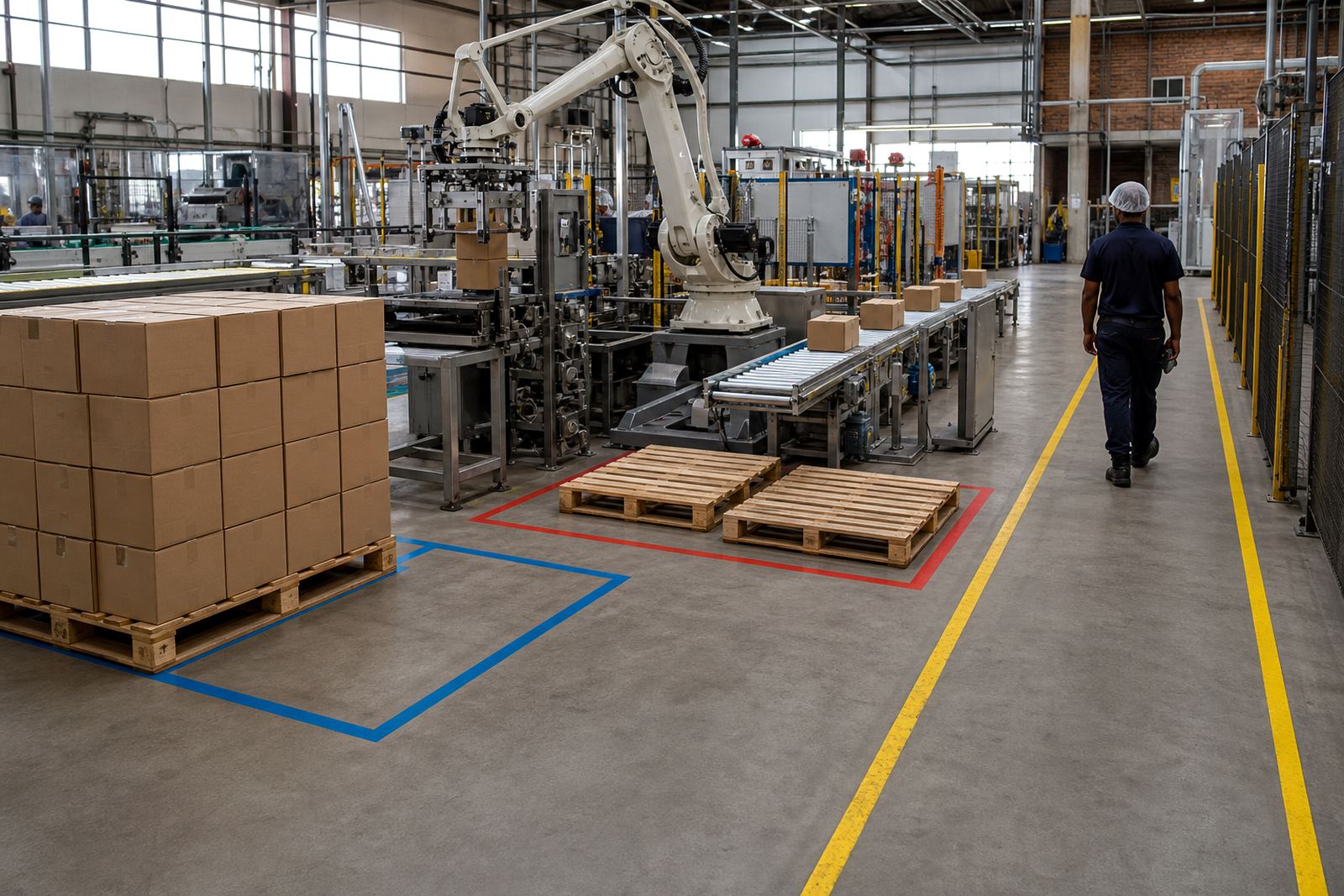
General safety planning normally includes a review of pinch points, trapped-product risks, forklift routes, pallet handling and operator access. The final setup should be checked against the plant conditions on the day, not only from a drawing. A local risk assessment is essential before installation, and it should be updated if the conveyor route, product or operating hours change.
- Emergency stops must be reachable and clearly marked.
- Access doors and interlocks need to suit maintenance routines.
- Forklift movement and pallet pickup points must be separated where possible.
- Any shared work area needs a clear method statement for operators and supervisors.
When a cobot makes sense
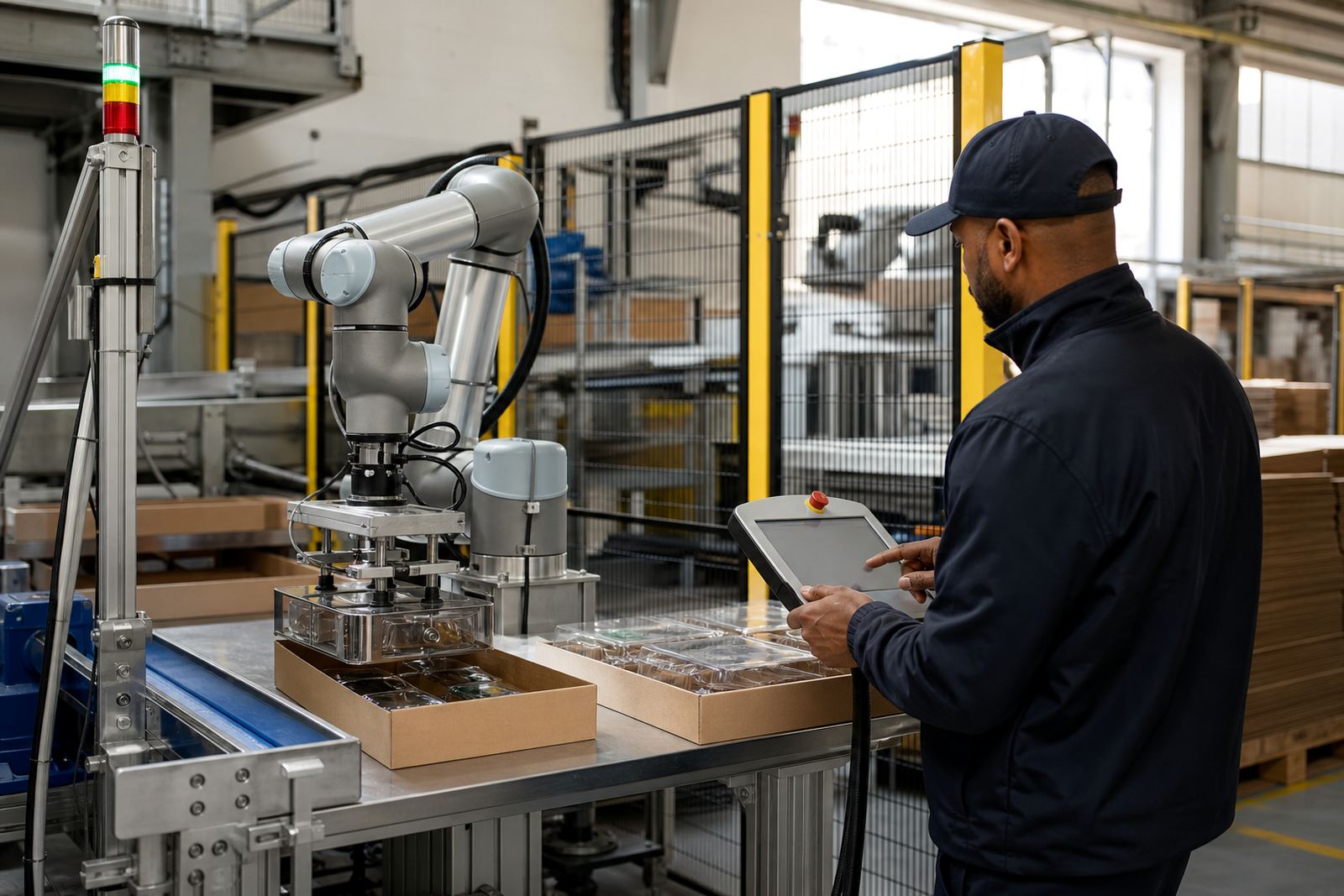
Cobots are often considered where space is tight or the production team wants a smaller retrofit with simpler guarding. They can be a practical option for lower to medium throughput lines, short pallet builds and sites that need frequent product changes. That said, a cobot is not the answer for every line, and it should be selected only after checking payload, reach, cycle time and stability of the pack pattern.
In a retrofit context, a cobot may work well where manual stacking is repetitive and the cartons are manageable in weight and size. It can also suit plants that want to phase automation in stages, starting with one line before extending to others. The key is to match the tool to the actual job, not the other way round.
Planning support for South African sites
Sites in Kempton Park, Johannesburg, Pretoria, Durban, Cape Town and Gqeberha each bring different conditions. Inland plants may deal with dust and heat, while coastal sites often need extra care around corrosion and moisture. In busy industrial areas like Spartan, the retrofit also has to fit around deliveries, maintenance windows and municipal or landlord requirements.
ReAutomated supports palletising and packing line retrofits from initial surveys through to installation management, commissioning support, operator training and spares planning. The useful starting point is always the same: understand the present line, define the goal, then design the change around the plant that exists now. That approach saves time, reduces downtime and keeps the work practical for the people who run the line every day.
- Site Line Surveys
- Retrofit Design
- Conveyor Integration
- Controls Integration
- Safety Guarding Design
- Risk Assessment Support
- Installation Management
- Commissioning Support