What guarding is doing on a retrofit line
When a robot is added to an existing packing or palletising line, the guarding is there to separate people from moving parts, define safe access points and keep the line practical to run day after day. In Kempton Park and other busy manufacturing areas, that usually means finding the balance between safety, uptime and easy maintenance access.
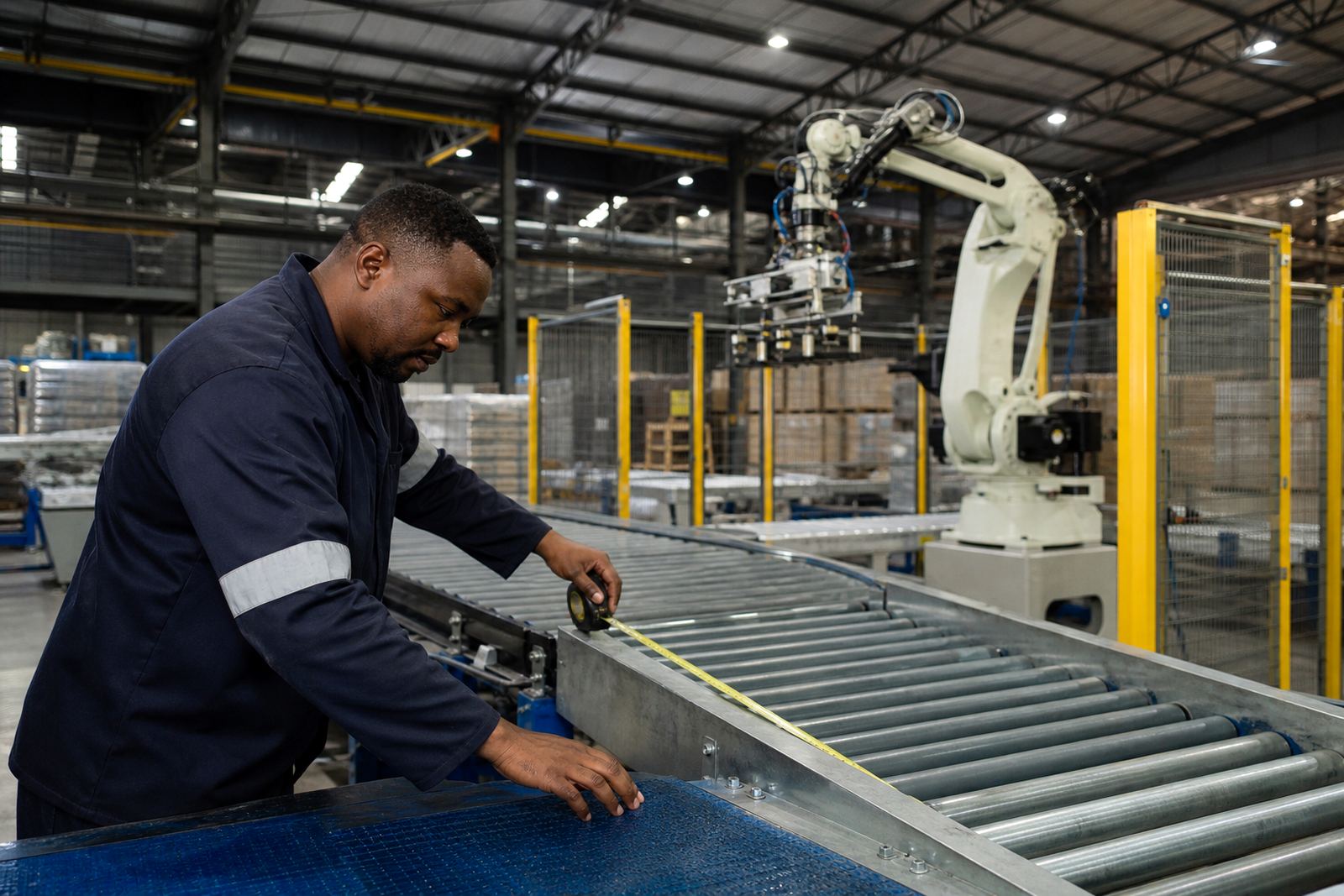
A good retrofit starts with the existing conveyor path, the infeed and outfeed positions, the pallet changeover point and any manual intervention that still has to happen. Guarding should match the real movement of the line, not just the drawing. On older sites the available floor space may be tight, so the guarding needs to suit the plant layout without blocking forklifts, wrap stations or service routes.
Typical guarding elements you may see
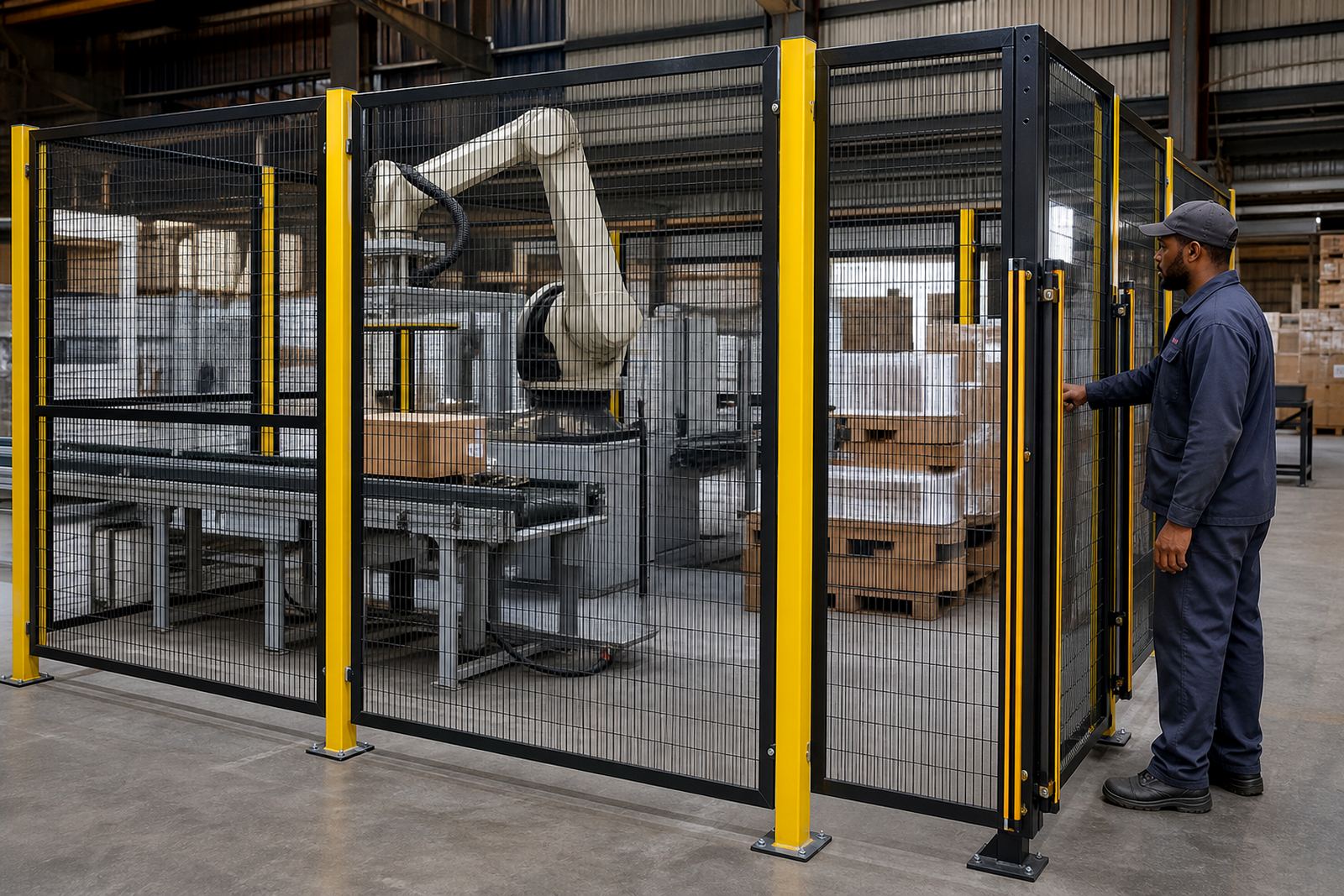
Every site differs, but most robotic cells use a mix of physical barriers and controlled access points. The exact combination depends on reach, speed, product type and how often operators need to enter the area. A line handling bags, cartons or crates may need different barrier heights and access arrangements, especially if the product flow changes during the shift.
- Fixed mesh or panel fencing around the robot working envelope
- Interlocked access gates for maintenance and fault recovery
- Light curtains or presence sensing at selected loading points
- Safety mats or pressure-sensitive devices where appropriate
- Emergency stop stations at practical positions around the cell
- Lockable isolators for maintenance, cleaning and breakdown work
- Clear floor marking for pedestrian routes, pallet movement and restricted zones
In coastal areas like Durban or Cape Town, guarding materials and fixings should also suit humidity and corrosion exposure. A bit of extra attention here can save trouble later, especially where washdown, dust or salty air is part of the normal plant environment.
How a guarding review is normally done
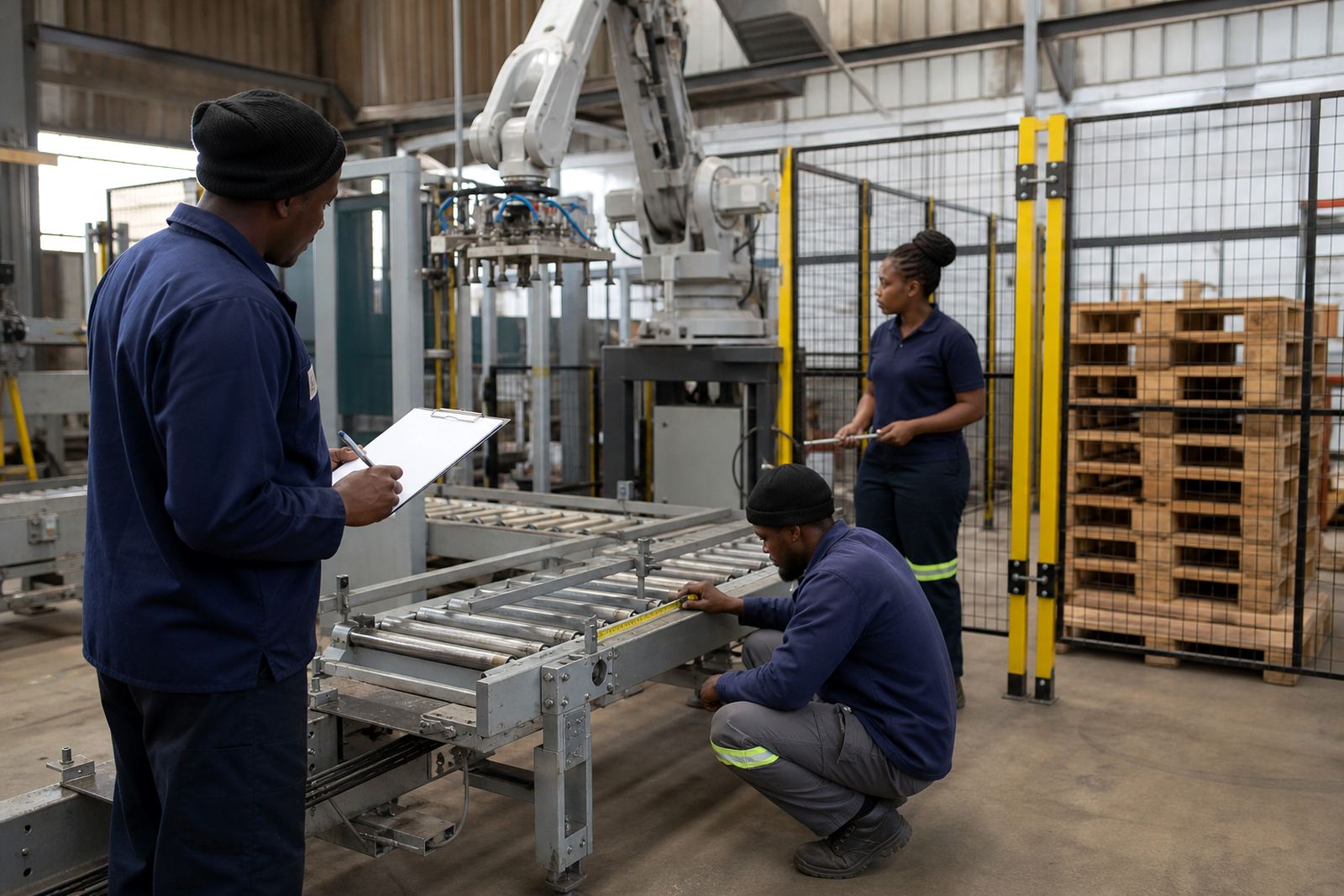
A guarding review begins with a site walk-through. The team looks at how people currently move around the line, where operators load or clear product, how pallets are taken away and what happens when there is a jam. That review should also include the conveyors, because a robot is only one part of the system and moving product on a live line can create pinch points in unexpected places.
The next step is to map the hazards and agree where access is needed for setup, cleaning, maintenance and faults. At this stage, the guard design should support the process rather than forcing staff to work around it. For a plant in Johannesburg, Pretoria or Gqeberha, the practical details matter: gate swing direction, aisle widths, forklift turning space and whether the line must keep running while nearby equipment is serviced.
Checklist before a robot is put into service
Before commissioning, the guarding package should be checked as part of the broader installation and control setup. The aim is to confirm that the cell behaves as intended when it starts, stops and recovers from a fault.
- All fixed panels are secure and correctly anchored
- Access gates are interlocked and tested
- Emergency stops are placed where operators can reach them fast
- Hazard zones are clearly marked and visible from normal working positions
- Operator paths do not pass through unsafe areas
- Maintenance access is possible without bypassing safeguards
- Conveyor starts, stops and resets are linked into the safety logic as required
- Any temporary commissioning changes are removed before handover
If a system restarts in an awkward sequence, the guarding and controls need another look, because no one wants to discover a fault while a pallet is half formed and the line is already under pressure.
Risk assessment support and the site specific view
There is no generic guarding certificate that suits every factory. Each site needs its own risk assessment, based on the actual robot reach, conveyor speeds, access patterns and the way the team works. A small packing line in Midvaal will not need the same arrangement as a high throughput palletising cell in Spartan or a multi shift site in Durban.
Risk assessment support usually focuses on the practical questions: who enters the cell, when they enter, what happens during a fault, how cleaning is done and what the control system should do if a gate opens. The answer may lead to a simpler guard plan, or it may show that extra barriers and access controls are needed. The point is to make the line safe without making it awkward to operate.
Installation and handover checks for operators
Once the guarding is installed, the handover should include a proper walk-through with the operators, supervisors and maintenance staff. People need to know which gate to use, how to isolate the cell, what happens if a sensor is blocked and who can reset a fault. Clear training reduces shortcuts, and shortcuts are where most guarding problems begin.
- Show the normal start-up and stop sequence
- Explain the lockout point for maintenance
- Point out safe cleaning positions and restricted zones
- Confirm who may enter the cell and under what conditions
- Record any temporary limits, for example reduced access during commissioning
Good guarding is not only about the steel around the robot. It also depends on the people using it. When operators understand the line, they are more likely to report damage early, keep gates closed and flag changes before they become a safety issue.
Keeping guarding in good order after start-up
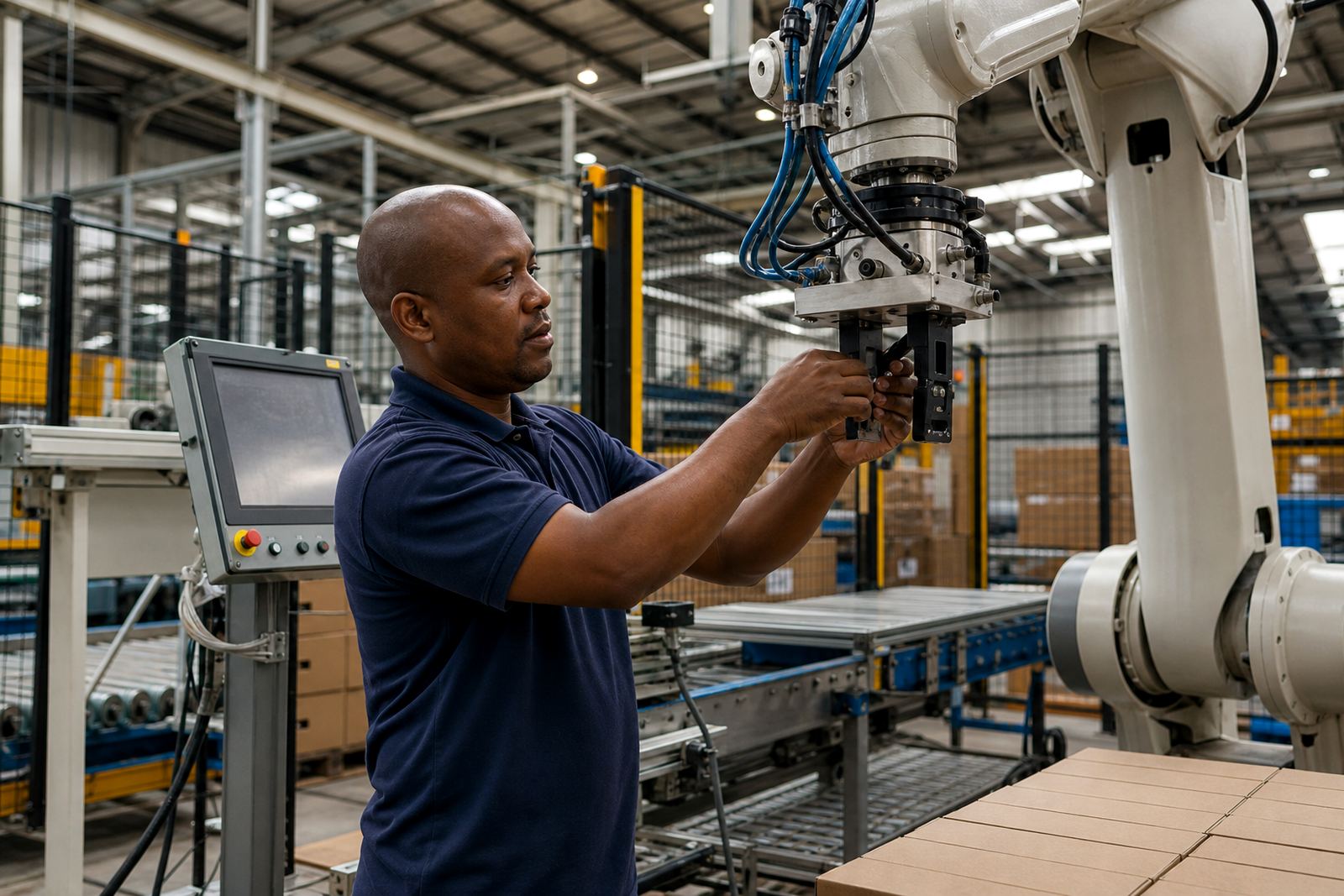
After commissioning, the guarding should be included in routine maintenance checks. Hinges, latches, interlocks, panel fixings and floor anchors can loosen over time, especially on lines with frequent changeovers or pallet impact. If a site runs multiple shifts, small issues can get missed until they turn into a stoppage.
A simple checklist helps. Look for bent mesh, damaged posts, worn gate hardware and any signs that staff have bypassed a safeguard to keep production moving. If the line changes, the guarding may need to change too. New cartons, new pallet sizes or a different conveyor route can all affect the safe working envelope. That is why each retrofit needs a review rather than a copy-and-paste solution.
For manufacturers across South Africa, from the East Rand to Cape Town, the right guarding keeps the cell practical, safer and easier to live with. The goal is not just to pass a check on day one, but to keep the line working properly for the long run.