Start With The Line You Already Have
Before any retrofit proposal, map the full process from product infeed to finished pallet or packed case leaving the line. Note what is running now, where operators intervene, and where stoppages happen most often. A good starting point is a simple line sketch with each conveyor, transfer point, buffer area, turntable, stretch wrapper, and manual handling point marked in order.
For manufacturers in Kempton Park, Johannesburg, Pretoria, Durban, Cape Town and Gqeberha, the practical question is not whether automation is possible, but where it can fit without causing unnecessary rework. Existing conveyors, low headroom, roof beams, columns, access doors and forklift routes all matter. If the line sits in a warm, dusty or coastal area, that also affects guarding, cable routing and enclosure choices.
- Product type, pack size and case format
- Current line speed and shift pattern
- Manual tasks still done by hand
- Available floor space around the line
- Overhead clearance and access for maintenance
Measure The Details That Affect Robot Reach
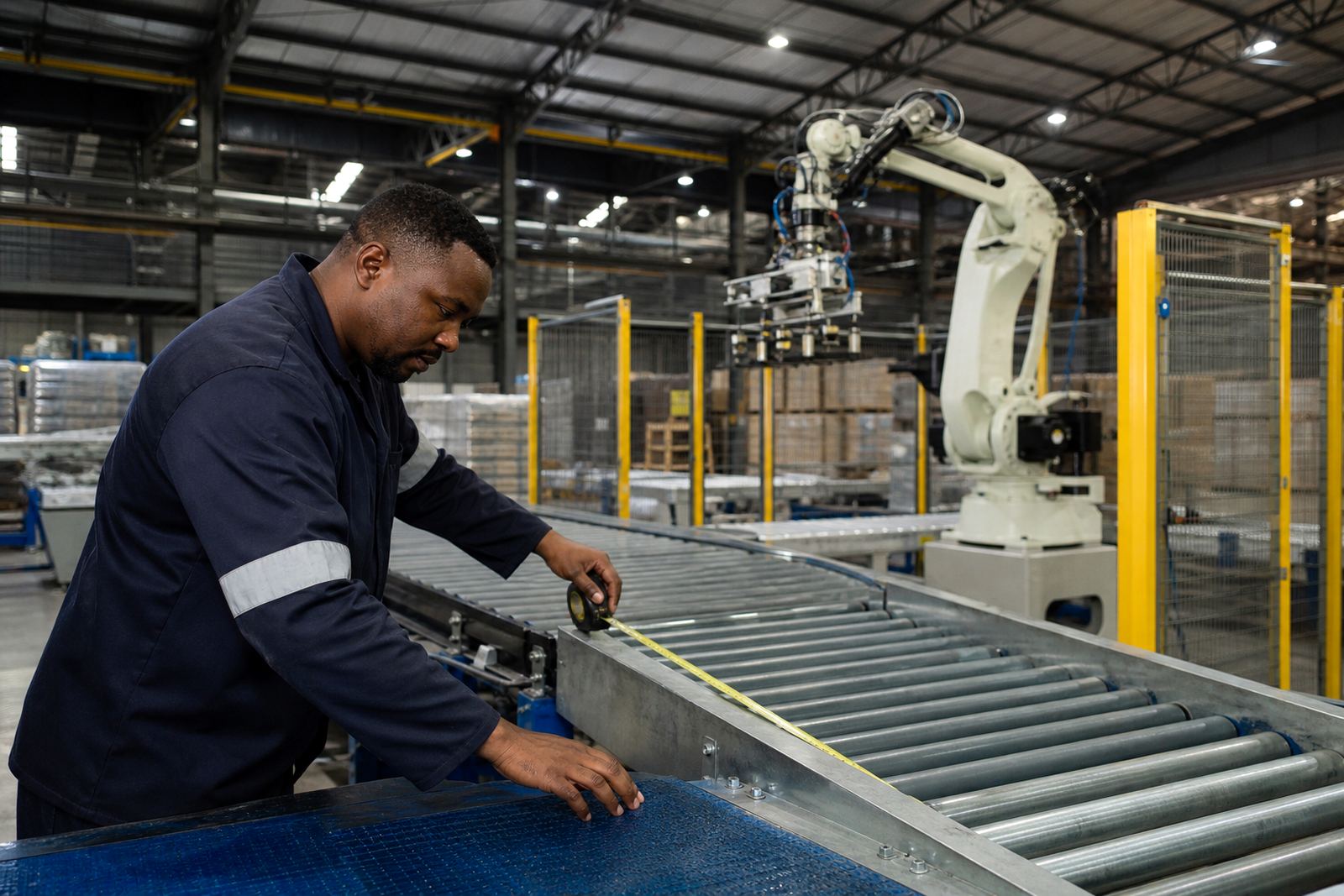
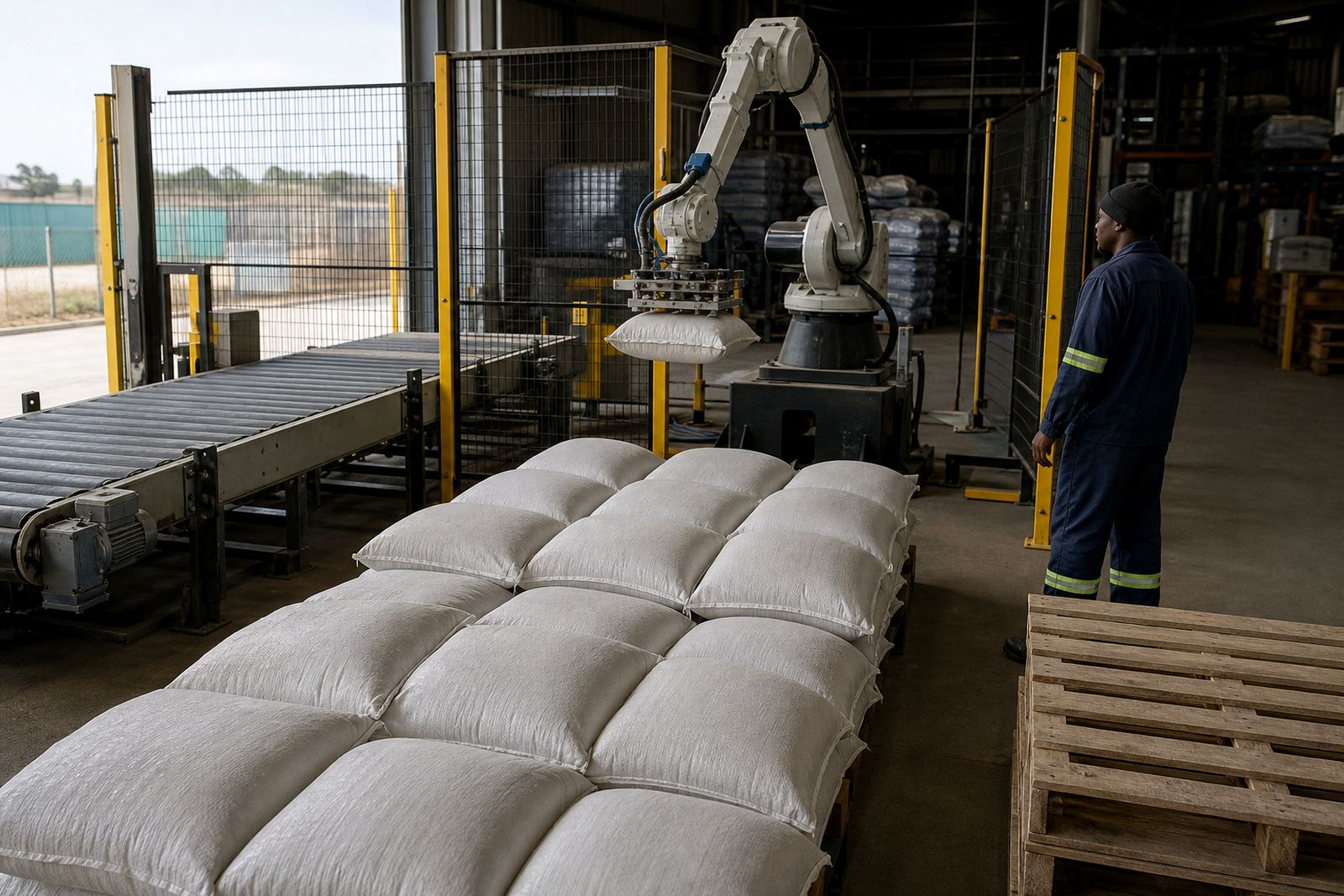
Dimensions drive the layout. Measure the length, width and height of the products, cases or bags being packed, as well as the pallet pattern you want to build. Also note the weight range, stack stability, the condition of the base layer and whether the top layer needs sheet placement or corner support. If products vary by season or order, list the full range not just the common size.
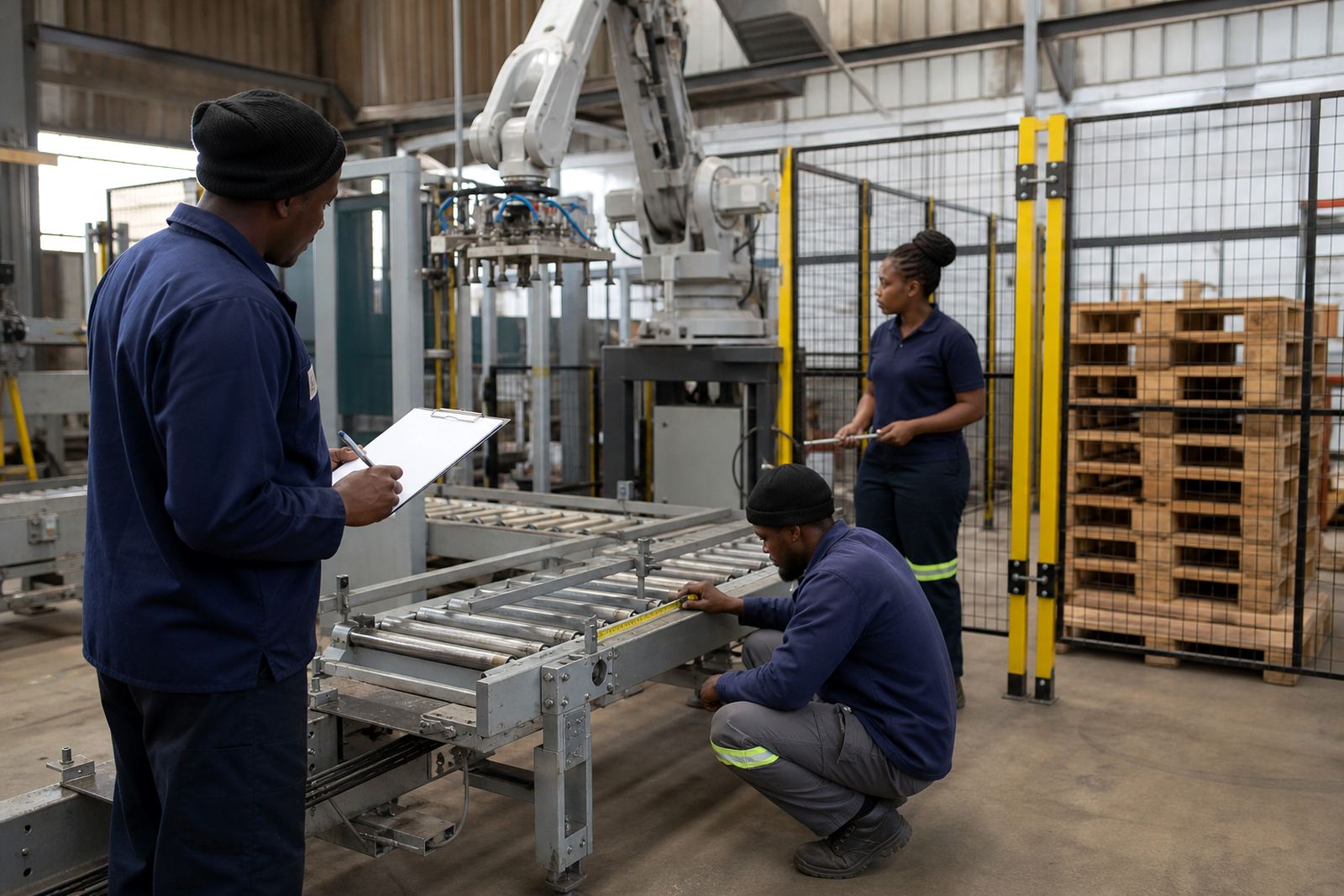
It helps to record the exact height of conveyor tops, transfer points and pallet build height, plus any dips, slopes or steps in the existing floor. A retrofit that looks simple on paper can become awkward if a robot has to reach over a guardrail or work around a beam. Leave enough detail for an installer to work from without having to guess. One missing measurement can change the whole layout and cause extra site work later.
- Infeed and discharge conveyor heights in millimetres
- Pallet size and maximum loaded pallet height
- Product weight, carton strength and slip characteristics
- Clearance to walls, pillars, doors and fire equipment
- Space for maintenance access and pallet movement
Check Throughput, Changeovers And Labour
A retrofit must suit the way the line really runs, not just the best case. Record how many units or cases move per minute, how long changeovers take, and whether the line runs one shift, two shifts or extended hours. If the product mix changes often, say so upfront because that affects gripping, patterning and controls logic. Manual labour is another major factor, especially where staff are lifting heavy cartons, stacking pallets by hand or repeating the same motions for long periods.
Ask where stoppages happen and what usually causes them. Is the issue inconsistent case presentation, poor pallet quality, product jams, or waiting for material supply? These details help define whether the retrofit needs a pick-and-place system, a palletising cell, a packing assist, or a combination of each. In many plants the best solution is not the biggest one, but the one that keeps the line moving without overcomplicating operator tasks.
- Target output per hour and per shift
- Product mix and expected future ranges
- Typical changeover time and who does it
- Manual handling steps that should be reduced
- Main causes of downtime on the existing line
Plan Conveyor Integration Before The Robot Arrives
Robotic palletising and packing retrofits usually depend on how well the new equipment ties into existing conveyors. That means checking conveyor direction, accumulation space, product spacing, photoelectric sensing points and the timing between upstream and downstream machines. If a carton arrives too fast, skewed, or without consistent gap, the robot cell will struggle no matter how good the equipment is. Good integration starts with stable product flow.
Controls integration should also be planned early. Define where the start, stop, pause, fault and reset signals come from, and how the line should behave after a stop. On some sites, the conveyor logic is straightforward, while on others there are older panels, mixed controls or manual bypasses that need careful review. A clean interface helps operators understand what the line is doing, which cuts down on confusion during busy shifts.
It is also wise to think about spares planning at this stage. Sensors, belts, bearings, pneumatic components and cable protection are small items, but when one fails the whole line can sit idle. For coastal sites, moisture and corrosion protection may matter more than people expect. For Gauteng plants, dust and heat are often the bigger concern.
Safety Guarding And Risk Assessment Start On Paper
Every site needs its own risk assessment. General rules apply, but the final guarding arrangement depends on the layout, access points, emergency stops, maintenance routines and how staff move around the line. A robotic retrofit may use fixed guarding, interlocked gates, light curtains, scanners or a cobot arrangement, depending on the task and the site conditions. The aim is to protect people while still keeping the line practical to run and maintain.
Before installation, list who will enter the cell, for what reason, and how often. Think about cleaning, jam clearing, pallet loading, film changes and maintenance access. Guarding should support those tasks rather than block them. If the line is inside a busy factory with forklifts moving nearby, the risk picture changes again. Safety is not only about the robot arm, it is about the entire zone around it.
- Who enters the cell and why
- Where emergency stops and isolation points are needed
- How operators clear jams and perform routine checks
- Whether a cobot or fully guarded cell suits the task
- How forklifts, trolleys and pedestrians move around the area
Prepare The Site For Installation And Commissioning
Once the concept is agreed, the site still needs practical preparation. Check power supply, compressed air availability, cable routes, mounting points, pallet staging and the condition of the floor. If the floor is uneven or cracked, that can affect installation alignment. If the building has limited overhead access, lifting plans may need to be worked out in advance. Small details like these can save a lot of time once work starts.
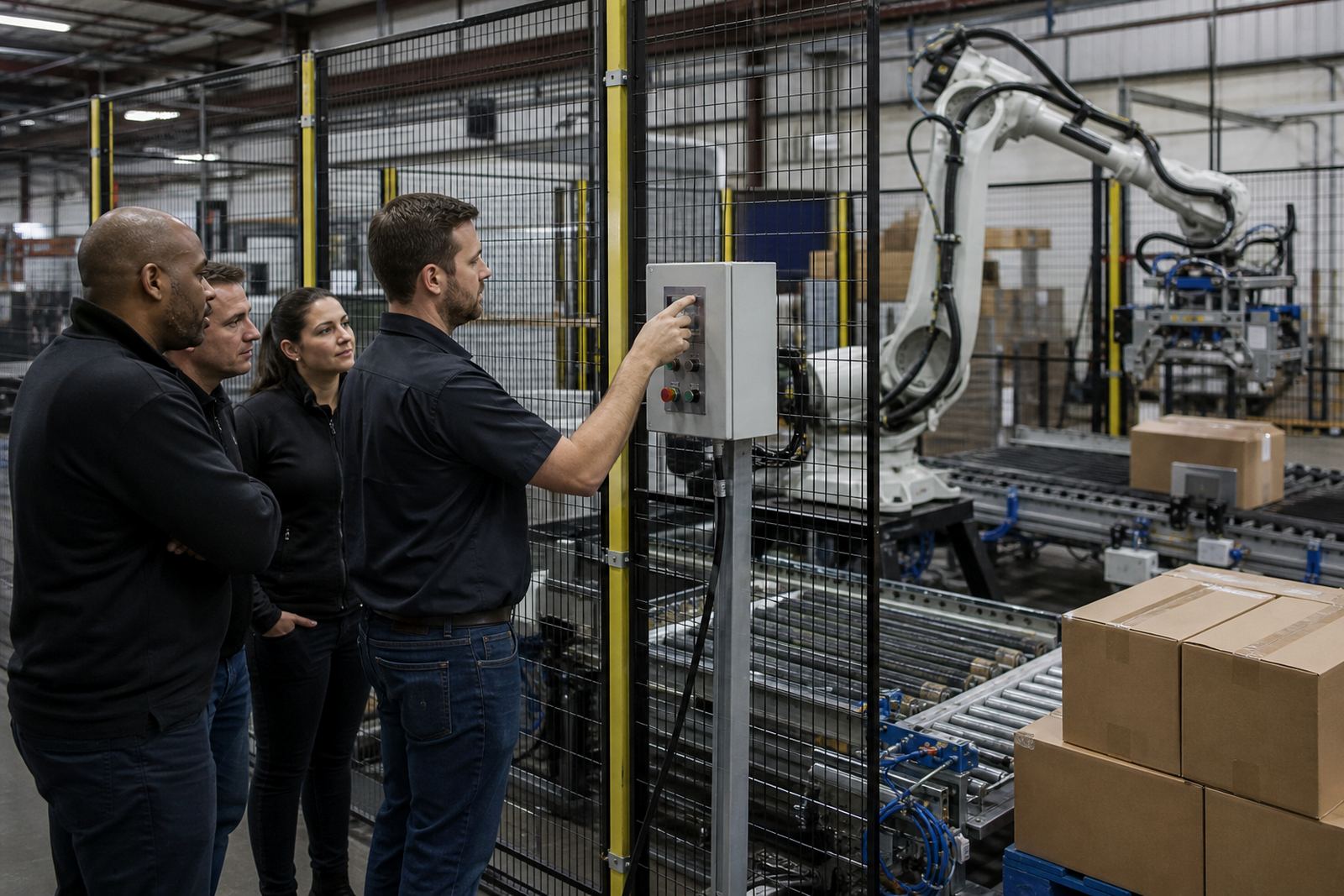
Commissioning should include operator training, maintenance handover and a trial period with real product. That is the stage where small adjustments are usually made to the grips, timings or conveyor setpoints. Staff should know the normal running sequence, fault messages and basic restart steps. If the line depends on one person who knows everything, that is a weak point. The goal is a system that the team can run confidently day to day, with support available when needed.
For plants across South Africa, this final stage also needs to fit production pressure. A retrofit has to be introduced with as little disruption as possible, because many sites cannot afford long stoppages. Good planning, clear site information and honest expectations make the whole job easier to manage.
What To Have Ready Before Requesting A Proposal
If you are preparing to request a retrofit proposal, gather the basics in one file or folder. Even rough sketches and phone photos are useful if they show the line clearly. Include product details, layout information and the main pain points. The more complete the information, the easier it is to compare options fairly and avoid back-and-forth later.
- Photos of the line from several angles
- Simple layout sketch with dimensions
- Product and pallet specifications
- Current output targets and shift pattern
- List of problem areas, stoppages or safety concerns
- Any constraints from the building, site rules or municipal access
A well planned retrofit starts with facts, not assumptions. If you know the measurements, the process flow and the safety needs, the proposal can focus on what will actually work on your line.