Start With The Line, Not Just The Robot
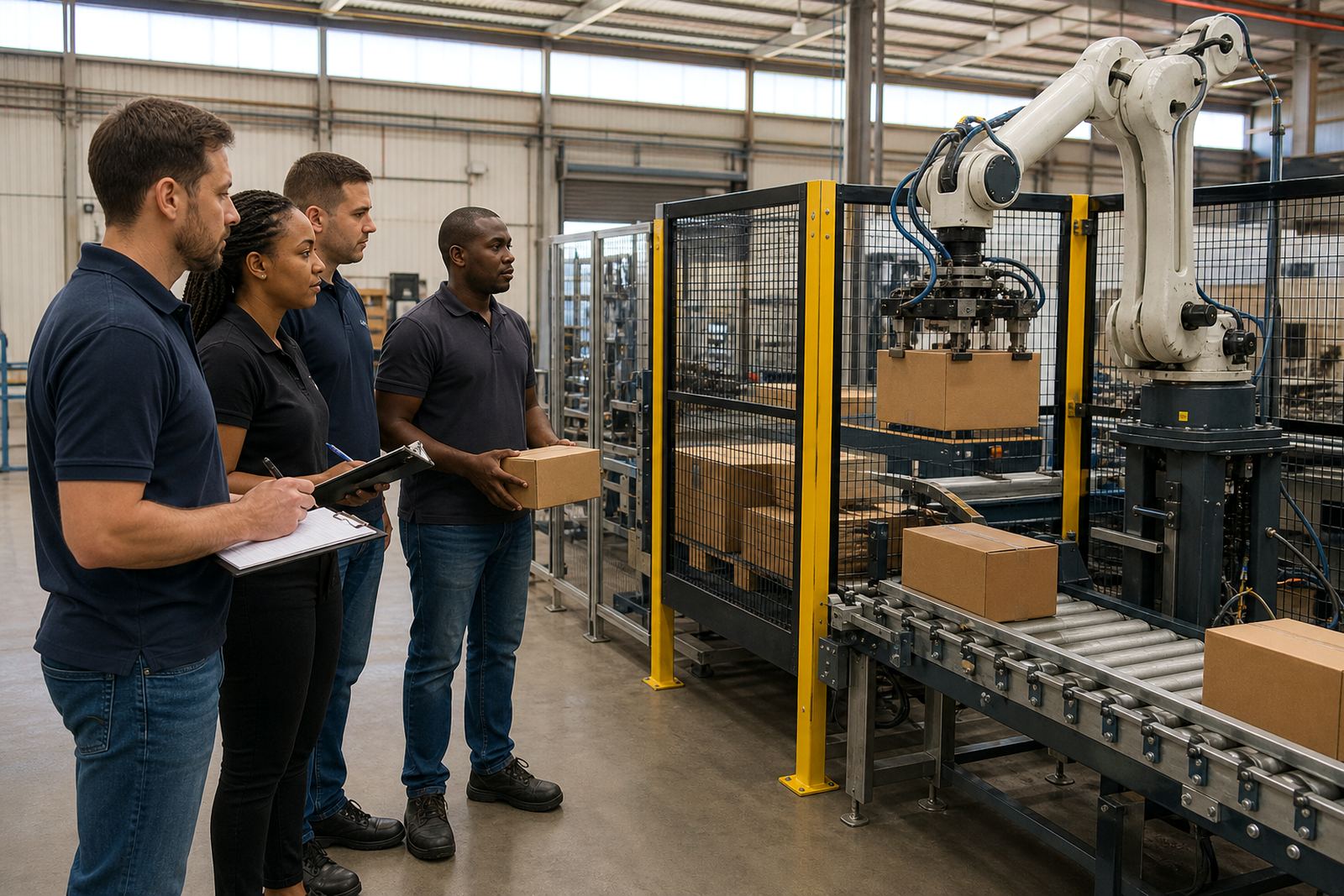
Training should begin with the full packing or palletising line, because the robot is only one part of the system. Operators need to understand how the infeed conveyor, accumulation points, sensors, stops, guards and pallet transfer areas work together.
The first session should cover the normal operating cycle, the product flow and the handover points between people and machine. If the retrofit includes a cobot or an industrial robot with guarding, staff must know where the safe working zones are, which doors or interlocks must remain closed and when access is allowed for clearing faults. Every site needs its own risk assessment, so the training must match the actual layout and the actual task list.
- Identify each machine in the line and its function
- Show the start-up, run, pause and stop sequence
- Explain all guarding, light devices and interlocks on site
- Mark safe access points for cleaning and inspection
- Confirm who may reset faults and who may not
Operator Training For Safe Daily Running
Operator training should be practical and repeatable. The team must be able to run the line, spot warning signs and respond calmly when product feed is irregular or a carton is out of position. Staff also need to know what a normal cycle sounds and looks like, because many issues are picked up before the machine stops. A short, clear routine is better than a long manual that nobody uses.
Good operator training covers product change-over, emergency stops, basic fault messages, cleaning limits and what to do when a pallet pattern changes. On sites with fluctuating supply, the team should also practise restart steps after a power dip or municipal interruption. If a line uses compressed air, vacuum or grippers, the operator must know how pressure loss affects the process and when to call maintenance.
- Pre-start checks for air, power and product feed
- Safe clearing of minor jams without entering restricted zones
- How to stop the line for quality issues or unsafe conditions
- Cleaning methods that protect sensors, cables and panels
- Reporting rules for repeated faults and unusual movement
Maintenance Training That Protects Uptime
Maintenance staff need a deeper understanding of the retrofit so they can keep the line running between planned service visits. This includes the mechanical side, the controls side and the day to day care of the conveyor and end of arm tooling. Training should be structured around inspection, adjustment, lubrication where applicable, and safe lock-off before any work begins. A small missed step can lead to a fault that shuts down the whole line.
For sites in coastal areas such as Cape Town or Gqeberha, training should include corrosion checks, cable routing inspections and moisture awareness. In hotter inland plants, dust and vibration may be the main concerns. Maintenance teams should know which parts are wear items, which faults can be fixed on shift and which issues need specialist support. That keeps the line safe and avoids unnecessary downtime.
- Daily, weekly and monthly inspection points
- Checking cables, sensors, belts, chains and fasteners
- Panel housekeeping and ventilation checks
- Spare parts identification and stock control
- Record keeping for repeated alarms or mechanical wear
Controls Handover And Fault Response
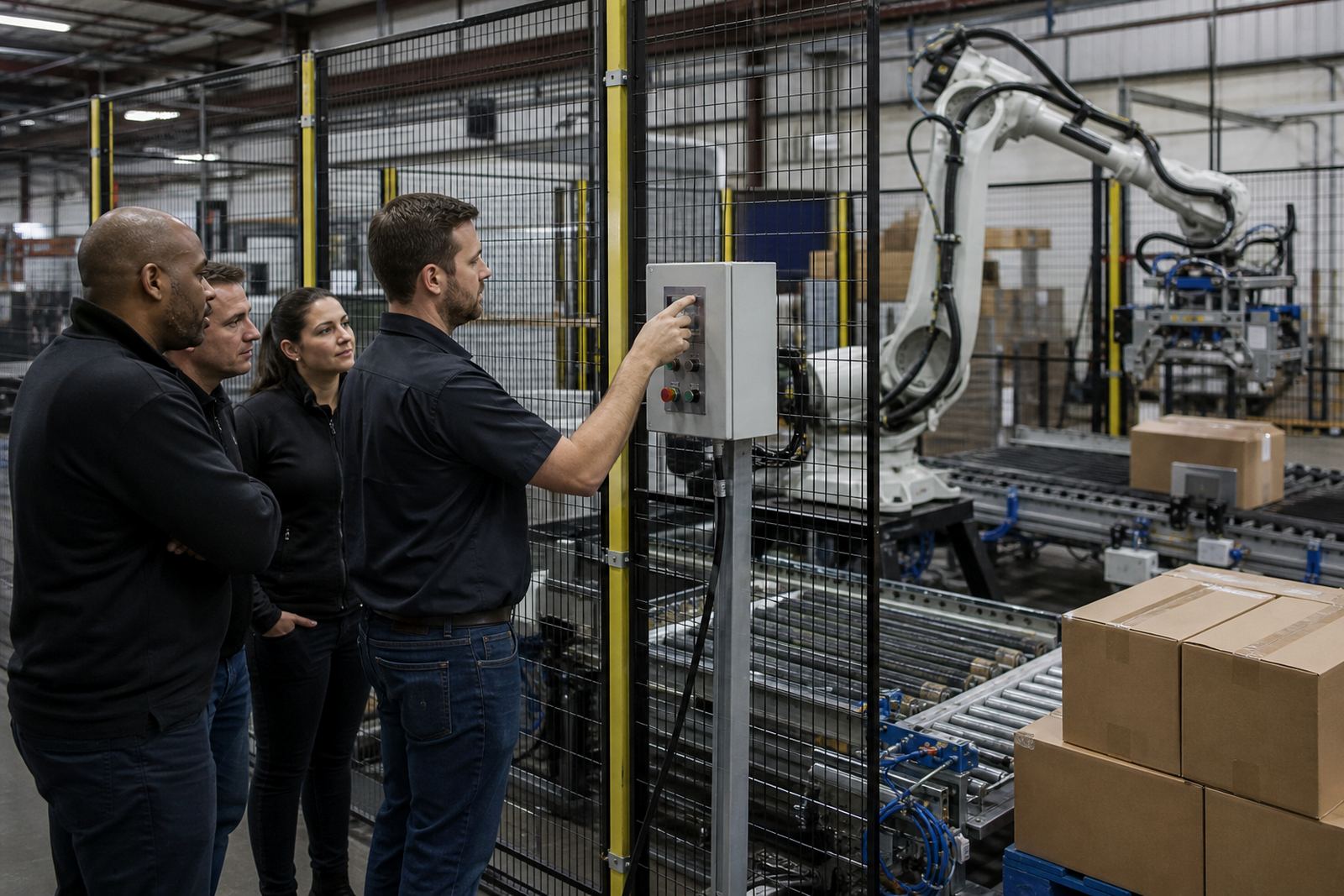
Controls training must be simple enough for operators and detailed enough for technical staff. The aim is not to turn everyone into a programmer, but to make sure alarms, interlocks and reset steps are understood. Staff should know how to read the HMI or control screen, what each message means in plain language and when a fault can be cleared locally. If the line links to existing conveyors, upstream and downstream signals must also be explained so there is no confusion during production.
A good fault response process starts with observation, then isolation, then correction. People should not keep pressing reset when the cause is unknown. Training should also include how to save fault notes, who to call and what information to give before support is requested. That saves time on the phone and reduces unnecessary site visits.
- Recognise stop codes and warning messages
- Check product position, sensors and air supply before reset
- Escalate electrical or control faults immediately
- Log the time, fault code and action taken
- Confirm the line is safe before re starting
Safety Guarding, Access Control And Risk Review
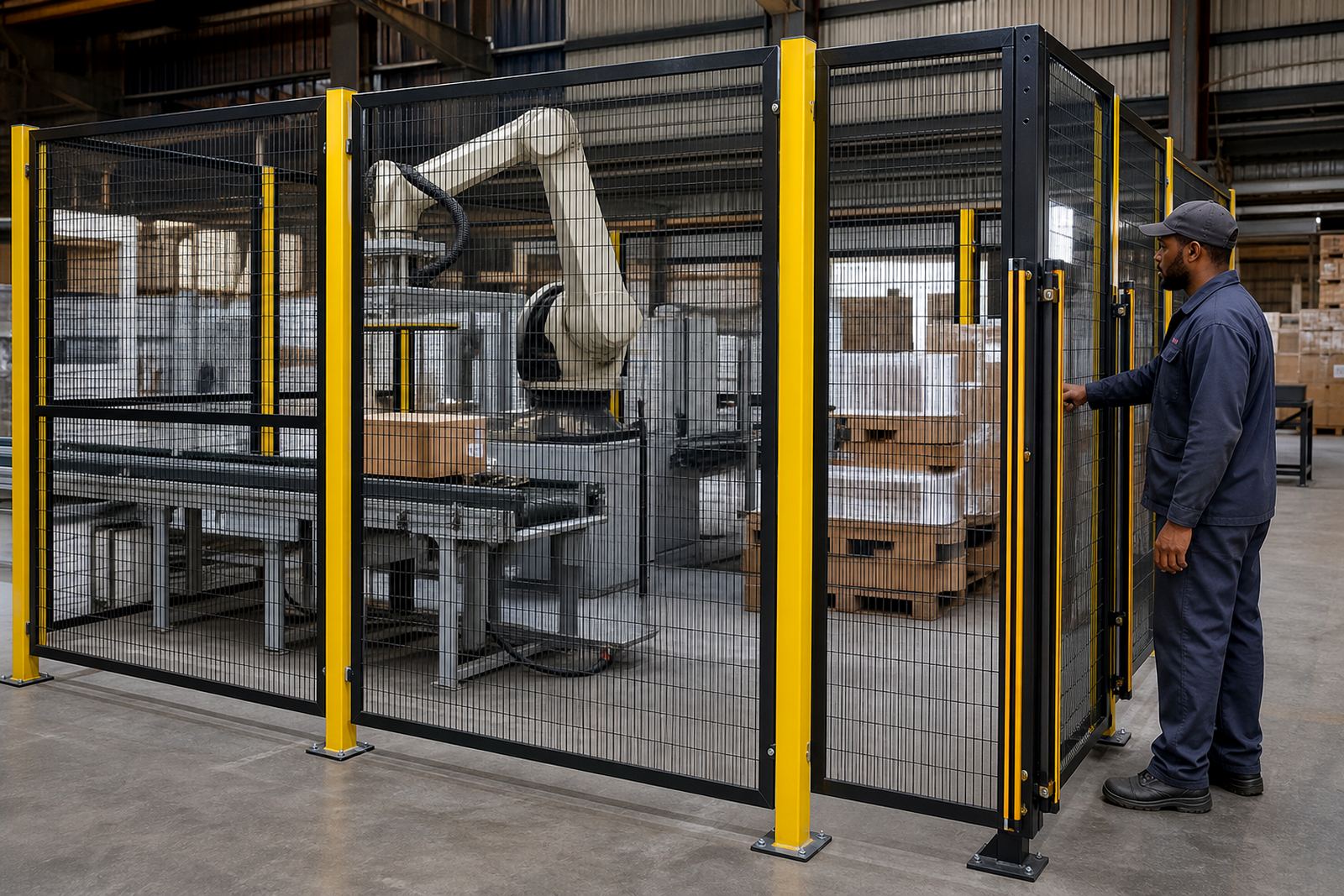
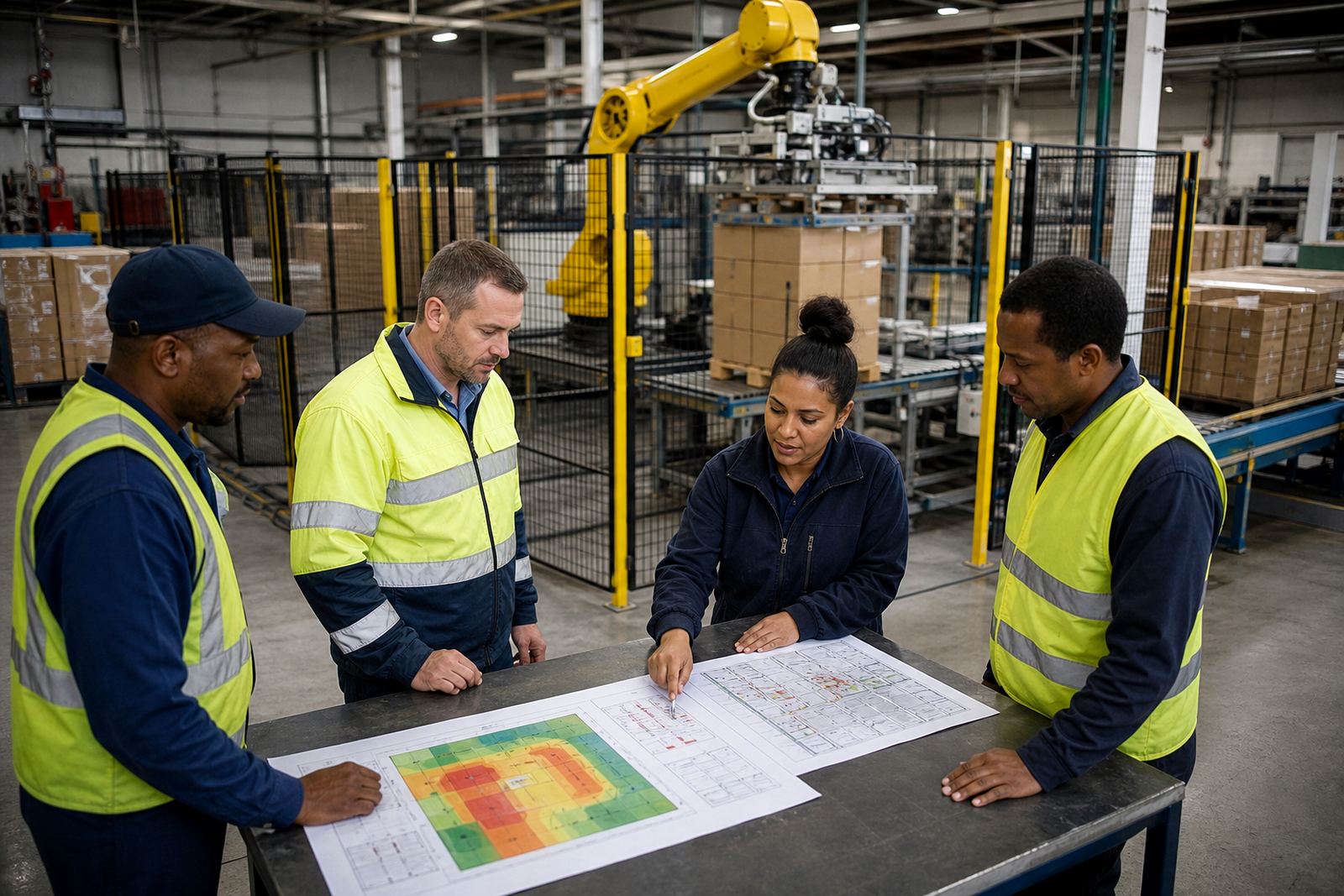
Safety training must match the guarding design on the retrofit. Some sites use fixed guarding around the full cell, while others use guarded access points, monitored doors or collaborative operation with defined limits. The team must understand that safety features are there for a reason, and that bypassing them is not acceptable. Any change to the line, the pallet size, the product or the work method should trigger a fresh review of the risk controls.
Site teams should also be trained to recognise unsafe practices such as reaching into a moving conveyor, walking through an active cell or using the wrong access point for cleaning. Forklift traffic, pallet storage and pedestrian routes matter too, especially in busy plants in the East Rand or Midvaal. The training checklist should be reviewed with supervisors so it stays practical and relevant.
- Never bypass guards, interlocks or emergency stops
- Keep walkways, pallet stacks and forklift routes clear
- Use lock-off procedures before maintenance entry
- Review the risk assessment when the line layout changes
- Report damaged guards, missing fixings or loose panels at once
Handover Records, Refresher Training And On Site Support
The best training is not a once off event. It should end with signed handover records, a clear training register and simple reference sheets stored near the line. These records help when new operators join, when shifts change or when there is a breakdown after hours. Short refresher sessions are useful after the first few weeks, because real production often exposes small habits that were not visible during commissioning.
For manufacturers across Johannesburg, Pretoria, Durban, Cape Town and Gqeberha, support should be planned around production demands and site access rules. Some plants need early morning sessions, others need weekend training to avoid interrupting output. The goal is to make operators confident, keep maintenance effective and protect the equipment investment long term. Good training reduces mistakes, but it also builds ownership on site.
- Keep a training register for operators and maintenance staff
- Store fault guides, reset steps and emergency contacts on site
- Schedule refresher training after changes or repeated faults
- Review spare parts levels and service intervals regularly