Why a site-specific assessment matters before any retrofit
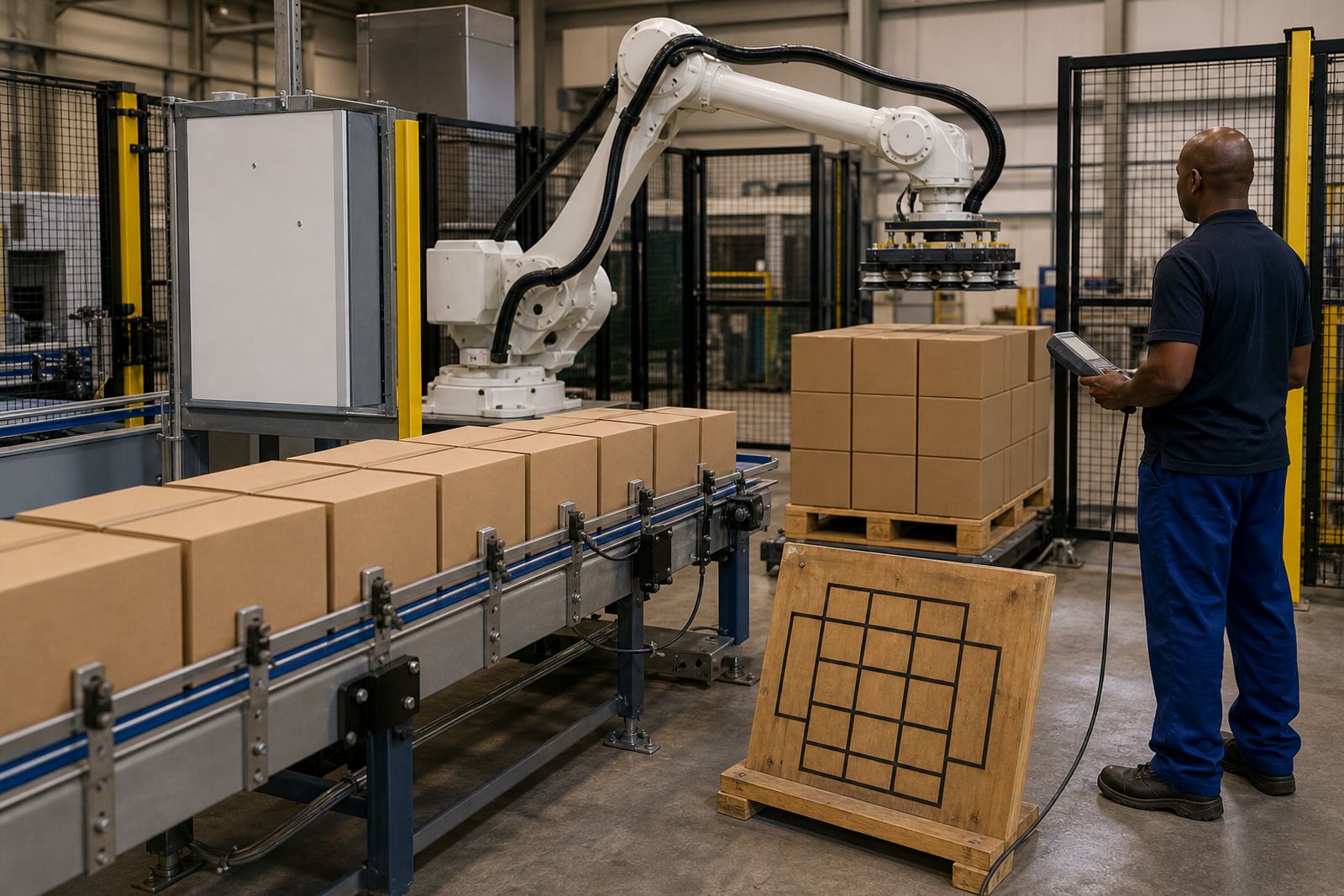
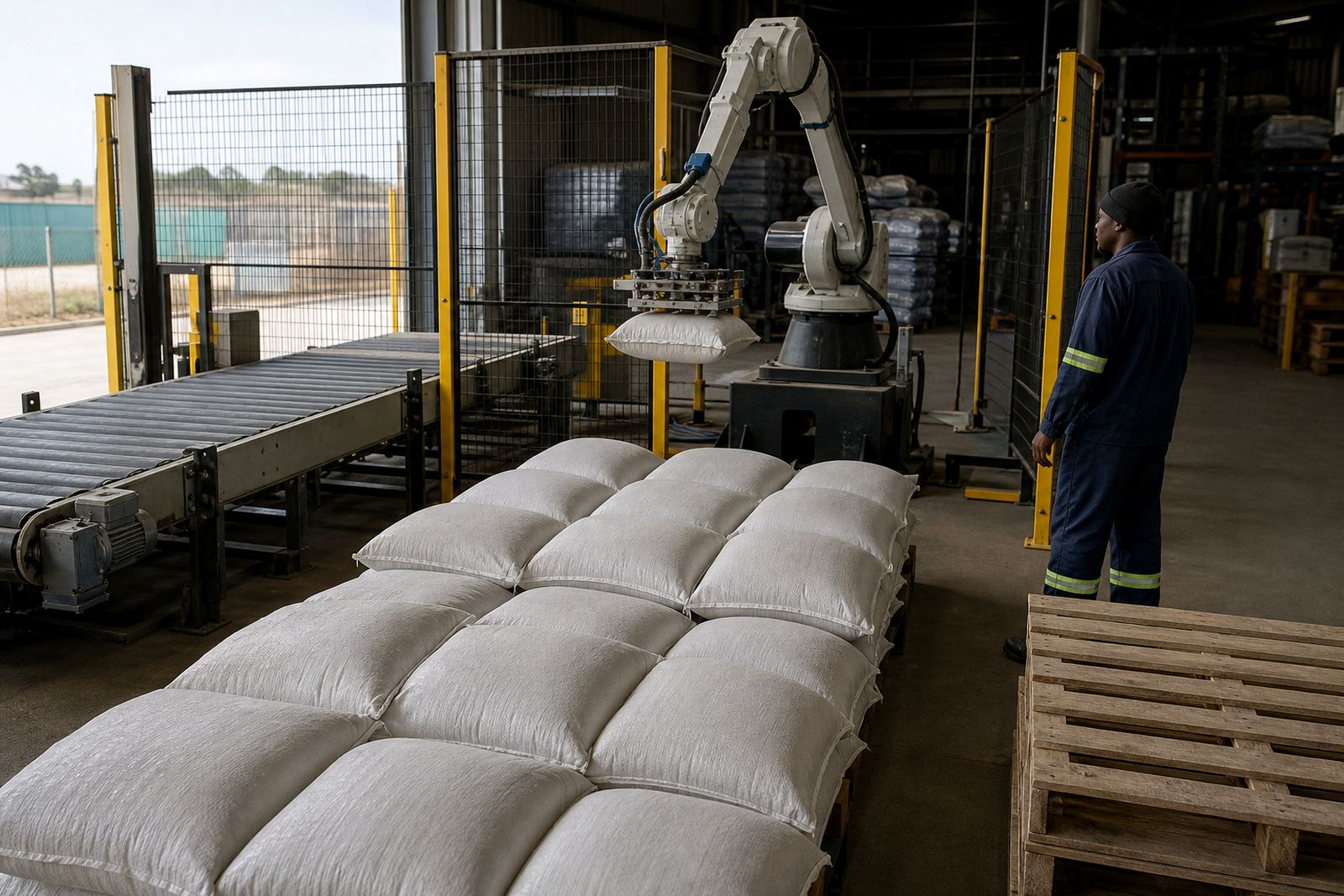
Every packing or palletising line has its own layout, traffic flow, product mix and operator routines. A risk assessment looks at the real conditions on site in Kempton Park, Johannesburg, Pretoria, Durban, Cape Town, Gqeberha and other manufacturing areas, then identifies where a robot, cobot, conveyor or operator interaction could create a hazard.
General safety rules are not enough on their own. The same line may behave differently once a new palletiser is added, a conveyor is extended, or a manual packing point is moved.A proper assessment helps the retrofit fit the plant instead of forcing the plant to fit the retrofit.
- Check the current line flow from infeed to finished pallet
- Identify pinch points, crush points and reach zones
- Review access for operators, cleaners and maintenance staff
- Confirm where isolation, guarding and emergency stops will sit
What should be included in the first line walkabout
The first walkabout should be practical and detailed. Walk the line while it is running, then again during changeover and cleaning. Look at how cartons, bags, crates or trays move through the process, where people load or remove product, and where the line stops when there is a jam or product fault.
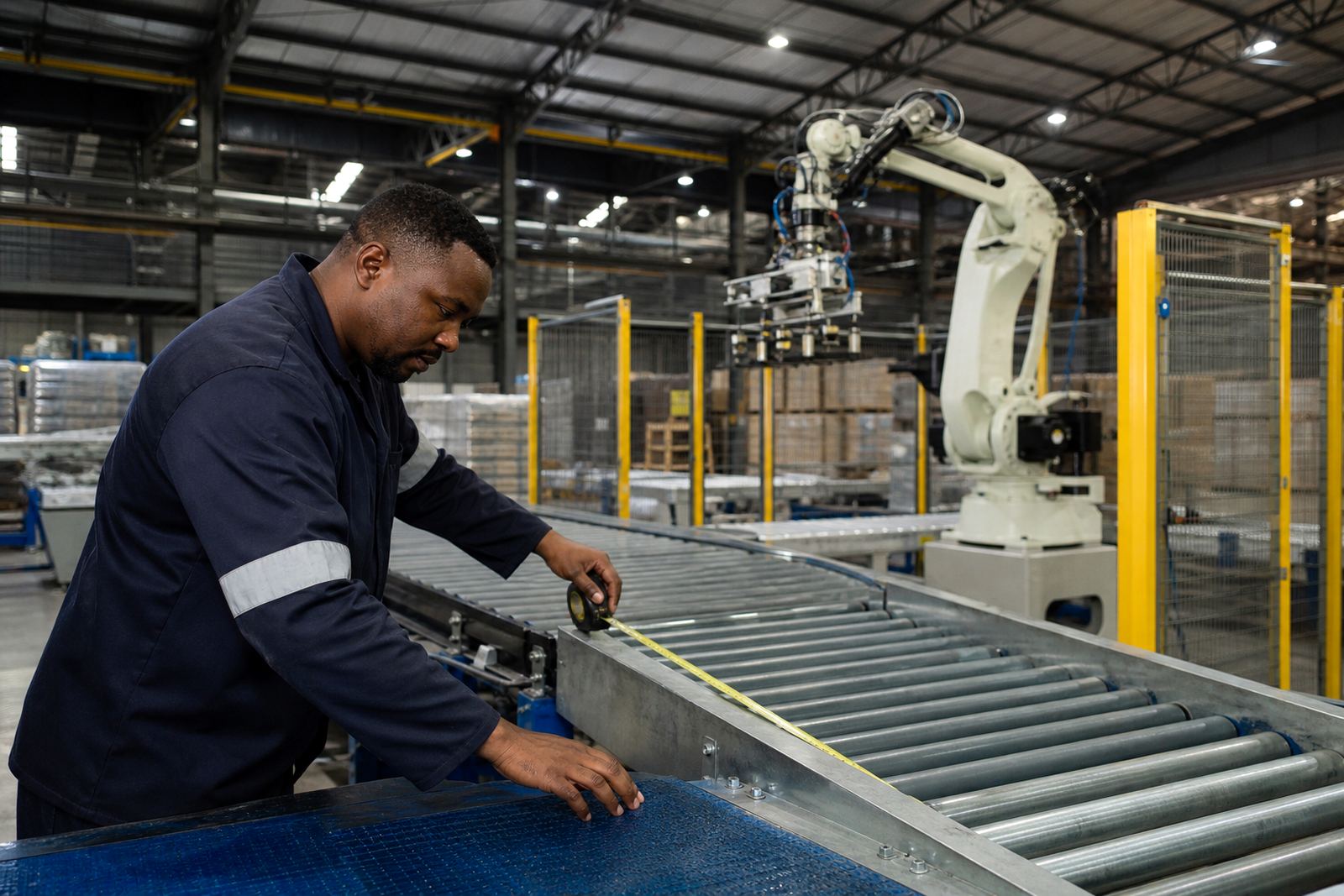
Take measurements of the available floor space, conveyor heights, pallet build zone and service clearances. Note ceiling height, column positions, doorways and any route that fork lifts use nearby. In coastal areas such as Durban and Cape Town, humidity and salt air may affect guarding, fixings and electrical enclosures over time, so those conditions should be included in the assessment as well.
- Machine speeds and product size range
- Operator reach distances and lifting points
- Access for cleaning, inspection and repairs
- Traffic separation between people and mobile equipment
- Noise, dust, moisture and temperature conditions
Typical hazards found on retrofit projects
Most retrofit projects bring a familiar set of hazards, but the detail changes from one factory to the next. A robot cell may introduce new movement paths, while a cobot installation can still create pinch and crush points if the application is not planned properly. Existing conveyors can also create entanglement risks where product backs up or where guards are incomplete.
Power isolation is another common focus. When a line is modified, the team must know exactly what needs to be isolated, locked off and tested before any person enters the work area. If there are pneumtic devices, heated sealing units or lifting mechanisms, those energy sources must be included too. The assessment should also consider how staff will clear faults without reaching into moving parts.
For many sites the issue is not only the machine itself, but the way people have learned to work around it. Shortcuts happen when production pressure is high. A good assessment spots these habits early and turns them into controls, procedures and training before the retrofit goes live.
Step by step process for a safer retrofit
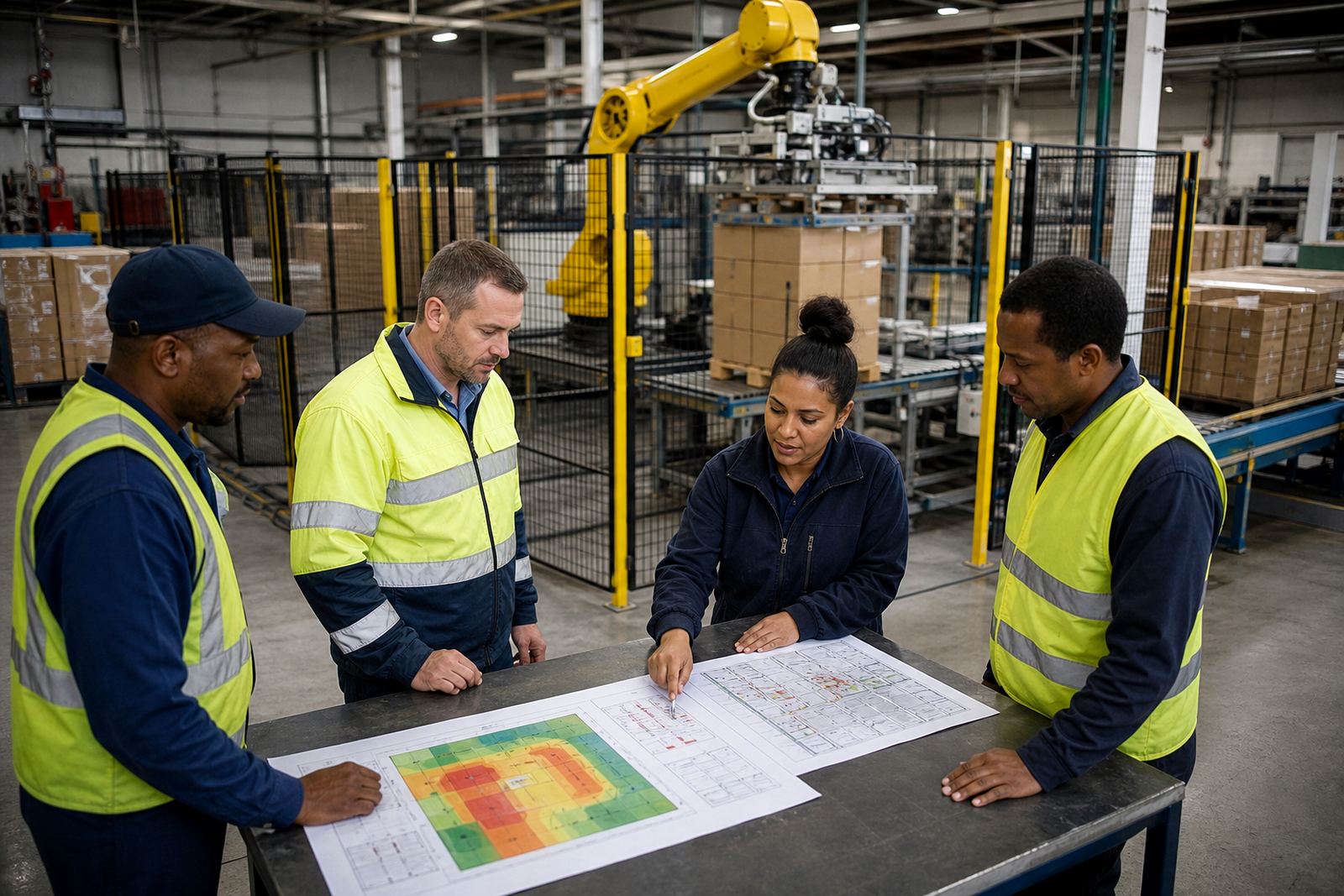
A practical assessment follows a simple sequence. Start with the current line, define the proposed change, then examine each stage from loading to pallet removal. This gives the team a clear record of what is changing and what must be controlled.
After the hazards are identified, decide on the controls in order of priority: remove the hazard where possible, then guard it, then add procedures, signs and training. A risk assessment should not be treated as a paperwork exercise only. It should guide the layout, the guarding and the way the line is commissioned.
- Record the existing process and equipment list
- Map the new robot, conveyor and operator interaction points
- Identify hazards for normal running, fault clearing and maintenance
- Set out the controls for guarding, access and isolation
- Confirm who signs off each action before start-up
Guarding, access control and emergency stops
Safety guarding design must suit the exact line and the exact task. Fixed guards, interlocked gates, light curtains and safe access points all have a place, but they must be arranged so operators can do their work without bypassing the system. If a palletising cell is too open, people may enter too close to moving parts. If it is too closed, maintenance becomes difficult and shortcuts follow.
Emergency stops need to be easy to reach, clearly marked and tested after installation. The location should make sense for operators standing at infeed, discharge and pallet removal points. Where there are several access points, the stop arrangement must match the layout. This is where site planning matters, because one door too many or one gate in the wrong place can create new risks. It is worth checking the layout twice, then checking it again.
For South African plants working under time pressure, a practical balance is needed: strong guarding, clear routes and simple procedures that the team will actually follow.
What operators and maintenance teams need to know
Training should cover the normal operating sequence, fault handling, cleaning, basic checks and the exact limits of safe access. Operators should know when to stop the line, who to call, and what they may or may not touch. Maintenance teams need the isolation points, reset method and the rules for entering the guarded area.
Keep the instructions short and visible at the point of use. A good handover includes line drawings, access notes and a checklist for shift start. Training works best when it is tied to the actual machine positions on site, not a generic document. When staff can see where the hazard is, they remember the control.
- Who is allowed to enter the cell
- How to isolate and test before intervention
- What to do during a jam or product spill
- How to report wear, noise, unusual movement or damaged guards
Keeping the assessment current after commissioning
A retrofit does not stay static forever. Product size changes, pallet patterns change, staff change and line speeds change. For that reason the risk assessment should be reviewed after commissioning, after any layout change and after any serious fault or near miss. If a new carton size or pallet pattern is introduced, the reach zones and product flow should be checked again.
It also helps to keep a simple review record with dates, actions and responsible people. That record makes it easier to manage future upgrades and support maintenance planning. In many plants, the biggest gains come from small follow-up changes rather than a single big fix, so the assessment should stay alive and not sit in a file.
For manufacturers in Gauteng, KZN and the Cape, the safest retrofit is the one that fits the line, the staff and the real working conditions on site.