Start With the Carton, Not the Robot
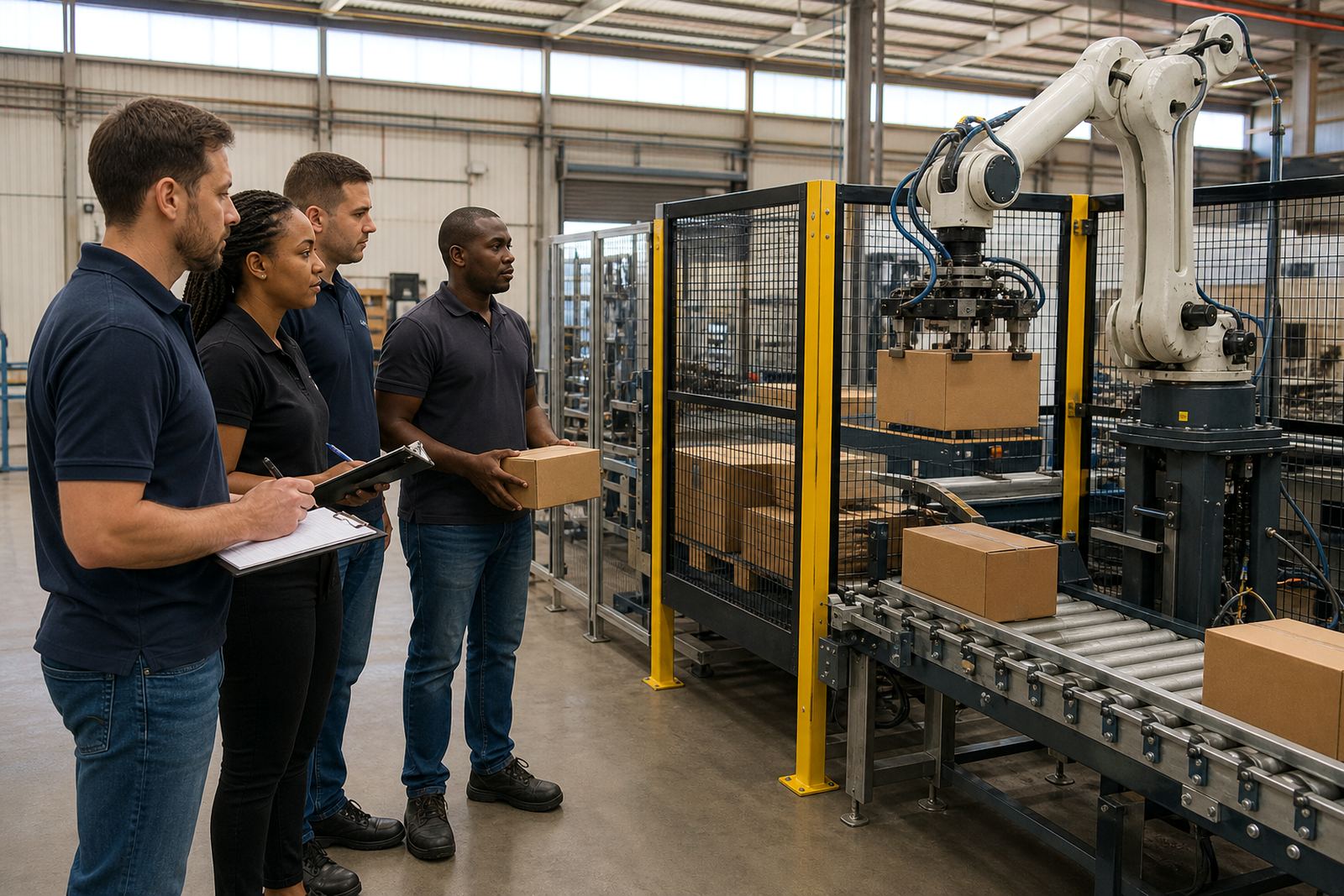
Before any robot or cobot is selected, the carton itself must be checked. Carton size, board quality, glue closure, print orientation and top flap consistency all affect how well a case can be picked, oriented and placed on a pallet. If cartons are soft, damp or crushed by upstream handling, the best automation in the world will still struggle.
In Gauteng, coastal humidity in Durban and warehouse heat in Cape Town, board performance can change through the year. That is why a retrofit project should begin with samples from the actual line, not just a drawing. We look for carton squareness, weight variation, label position and whether the pack holds its shape when lifted from the conveyor.
- Check carton dimensions across a full production run
- Inspect top flaps, glue joints and corner strength
- Confirm the pack can survive transfers and line stops
- Note any carton damage from upstream packing or compression
Get Alignment Right on the Existing Conveyor
Most retrofit projects need the current conveyor line to feed cartons in a repeatable way. The robot or palletiser can only place what it receives, so the infeed must present cartons in the same orientation, with enough gap and a stable surface. If cartons skew, overtake each other or arrive in a random pattern, the control logic gets more complicated and the line slows down.
During a site line survey we check transfer points, side guides, accumulation, sensors and merge sections.A carton palletising line must recover cleanly after a stop, otherwise operators spend too much time clearing jams and re-setting the infeed.
- Confirm the carton arrives square to the conveyor
- Measure gaps between cartons at normal line speed
- Check side guides, stop gates and transfer points
- Test recovery after short stops and restarts
Choose a Stack Pattern That Matches the Load
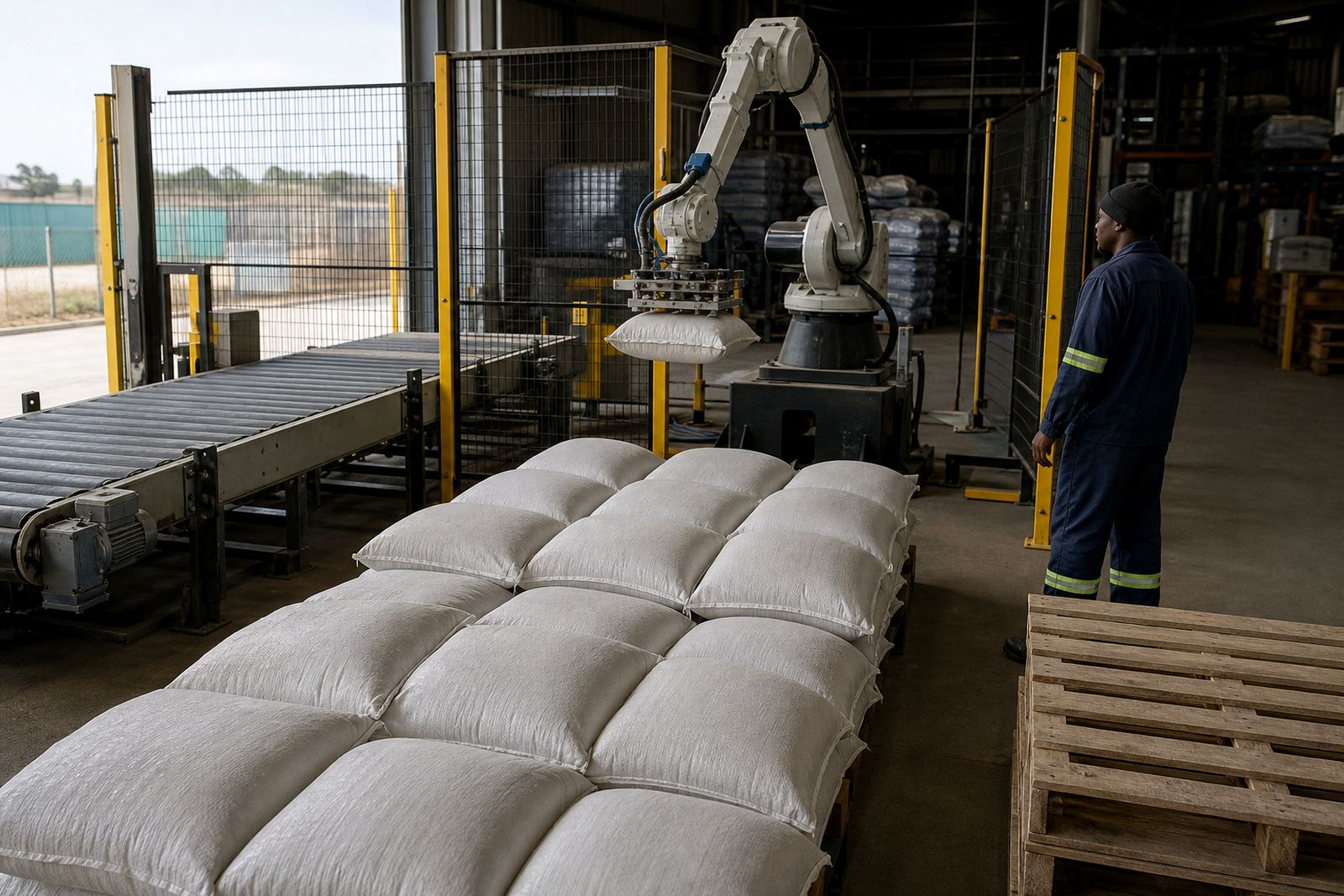
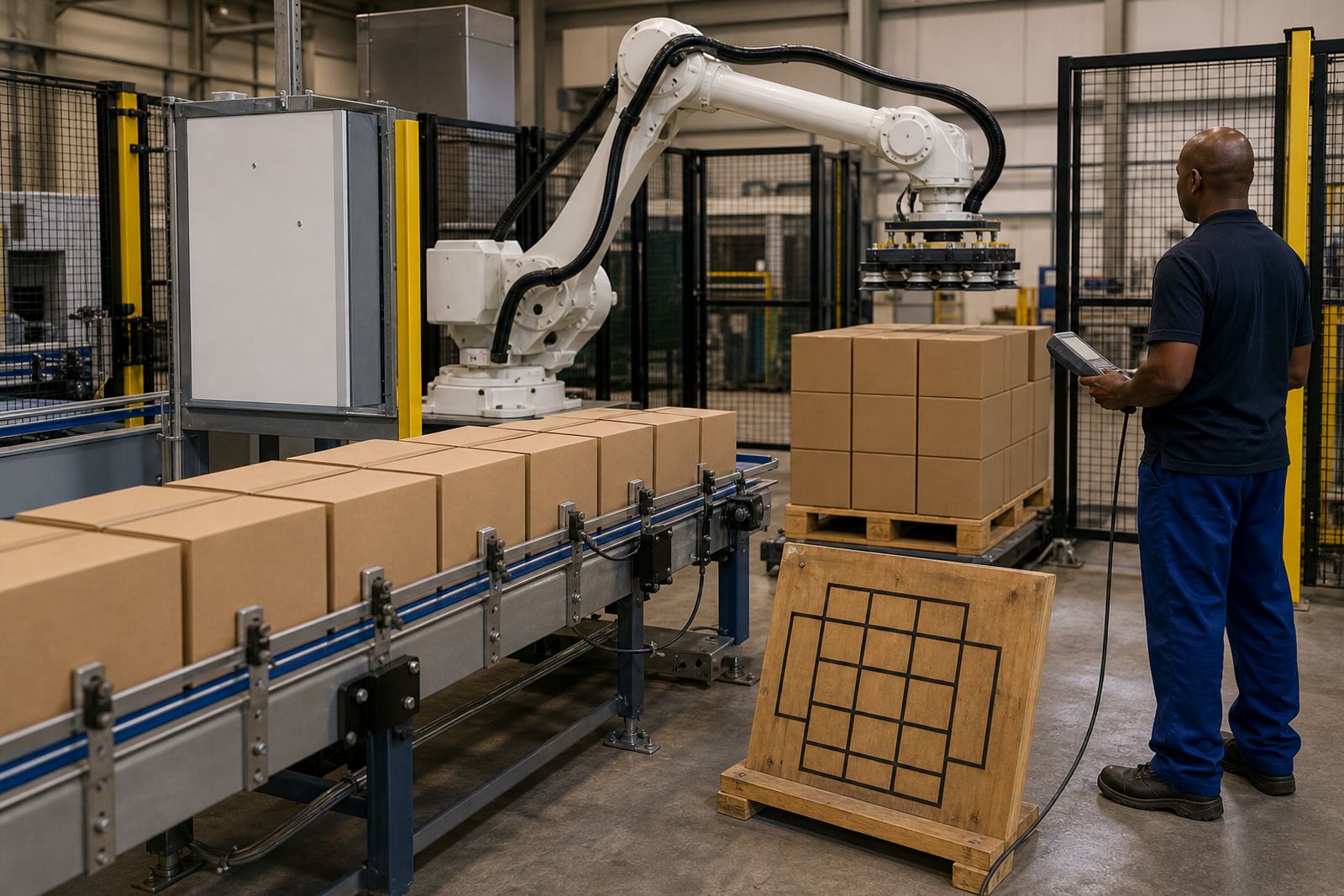
A good pallet pattern is not only about neat rows. It must suit the carton size, the pallet size and the product weight. Some cases can bridge gaps and carry load well, while others need tighter interlock patterns or layer pads to keep the stack stable. The wrong pattern can cause leaning, crushing or pallet wrap issues further down the line.
For manufacturers in Johannesburg, Pretoria, Durban, Cape Town and Gqeberha, stack stability matters because pallets may travel long distances or sit in dispatch yards before collection. The layout should also suit forklift handling and any customer rules for pallet height, overhang and label visibility. Where cartons are prone to deformation, we may recommend slower placement, reduced stack height or extra layer support.
- Match the pattern to carton strength and weight
- Keep within pallet footprint and height limits
- Allow for fork access and stable wrap application
- Check whether layer pads or slip sheets are needed
Plan the Safety Guarding Around the Cell
Every retrofit needs its own risk assessment and guarding plan. The right arrangement depends on whether the line uses a robot, a cobot, a traditional palletiser or a mixed manual station. Access doors, light curtains, fixed fencing, interlocked gates and safe stop circuits all need to fit the way operators actually load, clear and maintain the equipment.
We never treat guarding as an afterthought. If a line must keep running beside existing packing equipment, the guarding layout has to protect staff without making the area hard to service. On some sites, especially where floor space is tight in Kempton Park or the East Rand, the safest answer is a compact cell with controlled access from one side only. Each site calls for its own assessment, there is no single answer for all plants.
- Identify all access points for loading and maintenance
- Confirm stop functions and emergency stops are reachable
- Check sightlines for operators and supervisors
- Review how guards affect cleaning and jam clearing
Integrate the Retrofit With Packing and Controls
A carton palletising retrofit has to work with the packing line already on site. That means the controls logic, sensors, reject points and conveyor drives must speak the same language. If a carton is missing, damaged or out of position, the system should stop cleanly or divert the load before it reaches the robot cell.
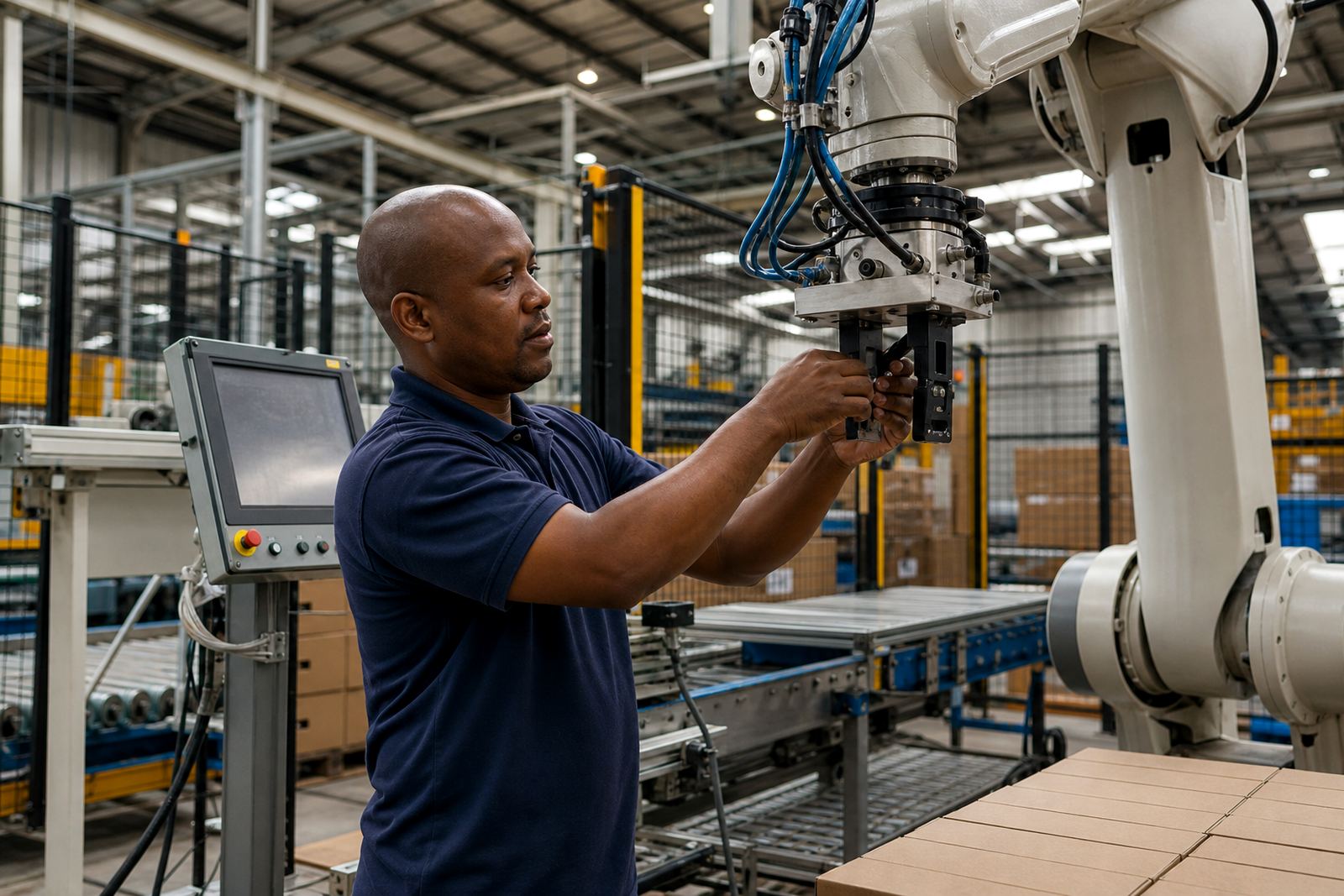
Good integration also makes maintenance easier. We map the existing conveyors, control panels and signal points, then design the new sequence around the site conditions. That can include operator stations, fault resets, stack pattern selection and line ready signals. Where the line is sensitive to power interruptions, the restart sequence should be simple and safe, not complicated by extra manual steps.
For many South African plants, the practical question is not just can it be automated, but can it be kept running with the staff available on shift. That is where clear controls, sensible alarms and proper training make a real difference.
Commissioning Checks Before You Go Live
Once the retrofit is installed, the line needs a full commissioning check before production starts in earnest. This includes dry runs, carton trials, stack verification and operator familiarisation. We also check how the system behaves with full pallets, empty pallet replenishment and any manual intervention points.
Commissioning should never be rushed. A carton palletising line that looks fine at low speed may show issues at normal throughput. The final checks should confirm that the cartons remain square, the pallet stays stable and the operators know how to clear faults. Maintenance support and spares planning should be in place from day one, especially where the site runs across multiple shifts or through busy seasonal peaks.
- Run sample cartons through the full cycle
- Confirm layer count, height and pallet wrap space
- Train operators on reset and fault response
- Record spare parts and wear items for future support