Start With the Product and Recipe Information
Every changeover should begin before the line stops. Confirm the new pack format, carton size, pallet pattern, bag count, date code, label position and any special handling such as fragile packs or moisture sensitive product. On lines running in Gauteng or at the coast, this is also the point to check whether humidity, dust or temperature will affect seals, glue or carton squareness.
Keep the recipe or set-up sheet close to the machine, not in a drawer or office. Operators should be able to see the target format, the tooling list and the last approved settings at the line. If the line runs several pack sizes, keep the differences written in plain language so the team does not rely on memory alone.
- Confirm product dimensions and pack count
- Check carton, tray, bag or case specification
- Verify label, code and print position
- Record any special handling or sanitation needs
- Identify which tools, guides or grippers must change
Make the Mechanical Swap Easy to Repeat
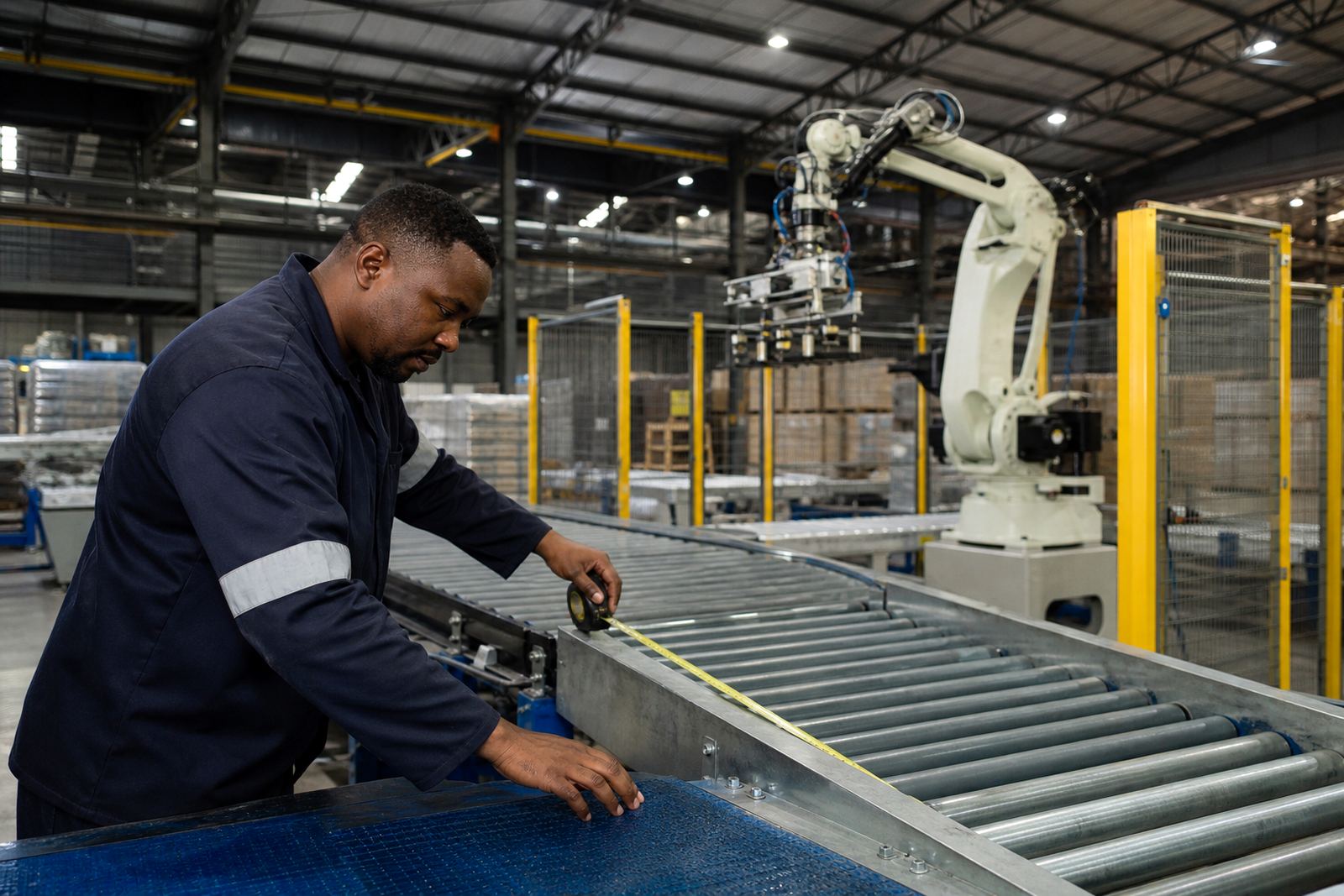
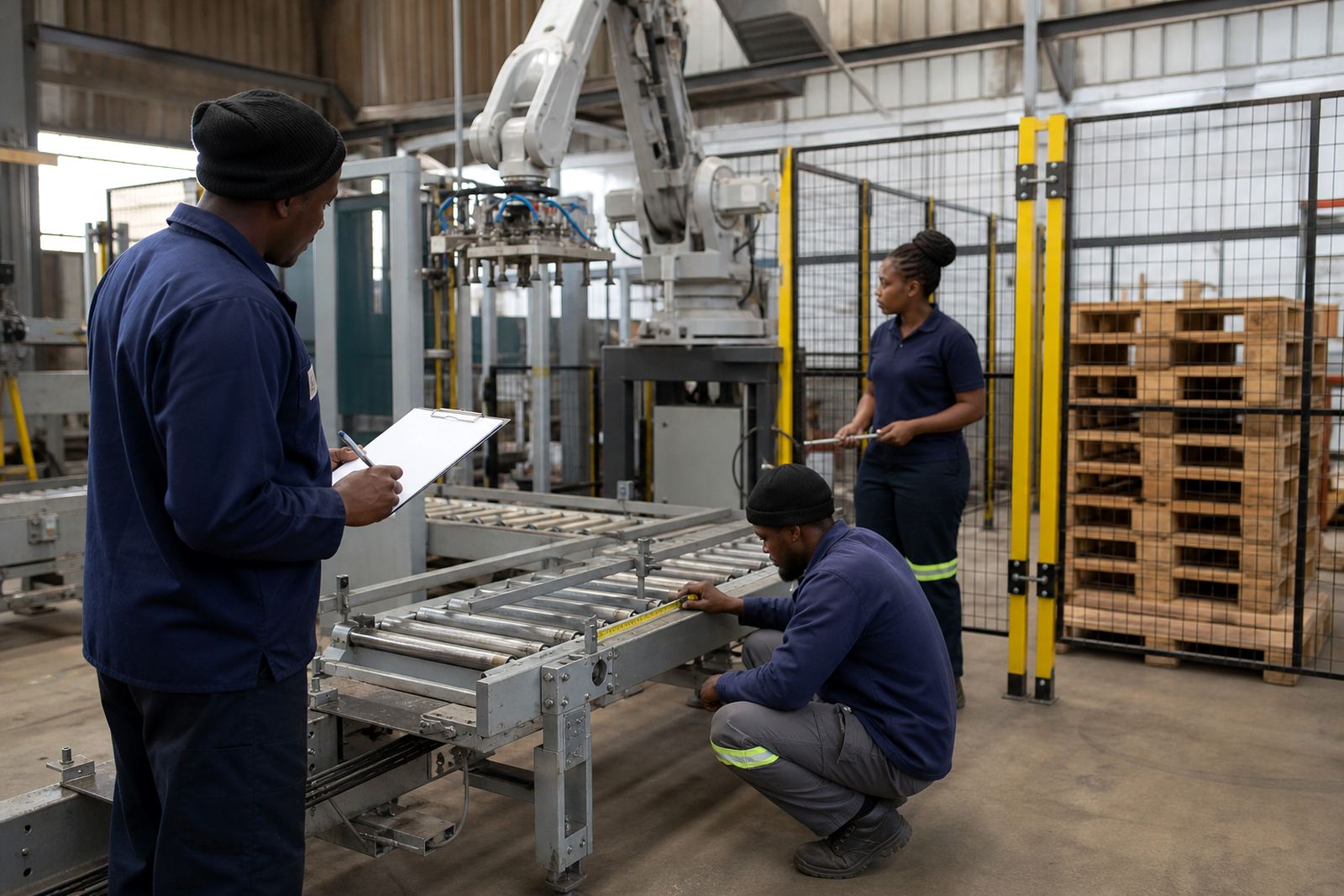
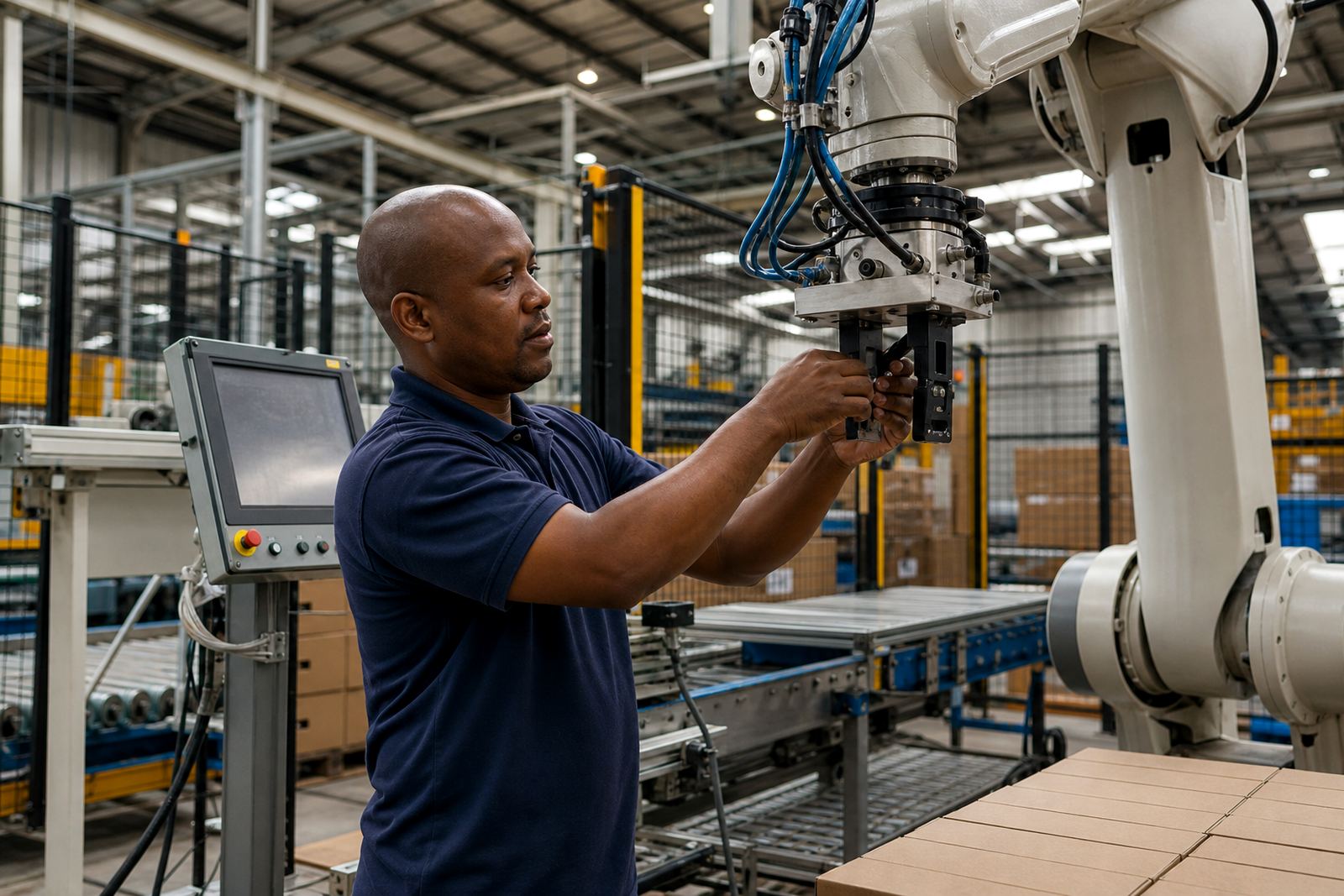
Tooling swaps should be quick, safe and repeatable. That means change parts that can be adjusted without force, mark common reference points and make sure spare parts are stored where the team can reach them quickly. If a palletising cell uses a different layer pattern, the gripper, product guides and pallet stop positions must match the new layout before restart.
On packing lines, small changes in guide rails, lane widths and flap folders can create delays if they are not set correctly the first time. A well planned retrofit will use clear settings, scales or position marks so the same result can be repeated across shifts. One missed stop or guide can cause misfeeds, so it pays to slow down and check each point.
- Isolate energy sources before any mechanical work
- Check that guards and interlocks are in place
- Set lane widths, stops and guides to the new format
- Fit the correct grippers, suction parts or pushers
- Inspect wear parts, chains, belts and bearings while open
Line Up Controls, Sensors and Conveyor Timing
Most changeover delays come from timing, not the product itself. Sensors, photoeyes, pushers, reject points and conveyor speeds must all suit the new pack size and flow rate. If a case is shorter or taller than the previous one, the timing window may need to change so the line does not back up or pass product too early.
For robotic packing and palletising retrofits, the control system should match the actual line flow. Check that infeed conveyors present product consistently, and that the robot receives clean signals for start, stop and fault conditions. Good controls integration keeps the line moving without constant manual intervention, but each site still needs its own test run and risk review. Do not assume settings from one plant will work unchanged in another.
- Test photoeyes, sensors and safety devices after the swap
- Check conveyor accumulation and release timing
- Confirm robot pick positions and drop points
- Review fault resets and recovery steps with operators
- Run a slow speed trial before full production
Train Operators on the Exact Restart Sequence
Operators should know who does what, in what order, before the first pack enters the line. A clean restart usually needs one person to confirm tooling, one to watch product flow and one to handle quality checks. If the line has cobots or robot arms near people, the start sequence must include clear boundaries, warning devices and restart permission from the person in charge.
Training should be practical. Show the team where to stand, which buttons to use and what a normal pack looks like after the changeover. This is also the time to remind staff about lockout, pinch points and the difference between a minor adjustment and a stop for maintenance. A short briefing before each format change saves far more time than a long correction after a jam.
- Nominate the person responsible for final sign-off
- Explain the start, stop and reset steps in order
- Show the new product flow path from infeed to pallet
- Agree on hand signals or call-outs where noise is high
- Keep one trained person available for the first batch
Use Safety Guarding and Risk Checks as Part of the Changeover
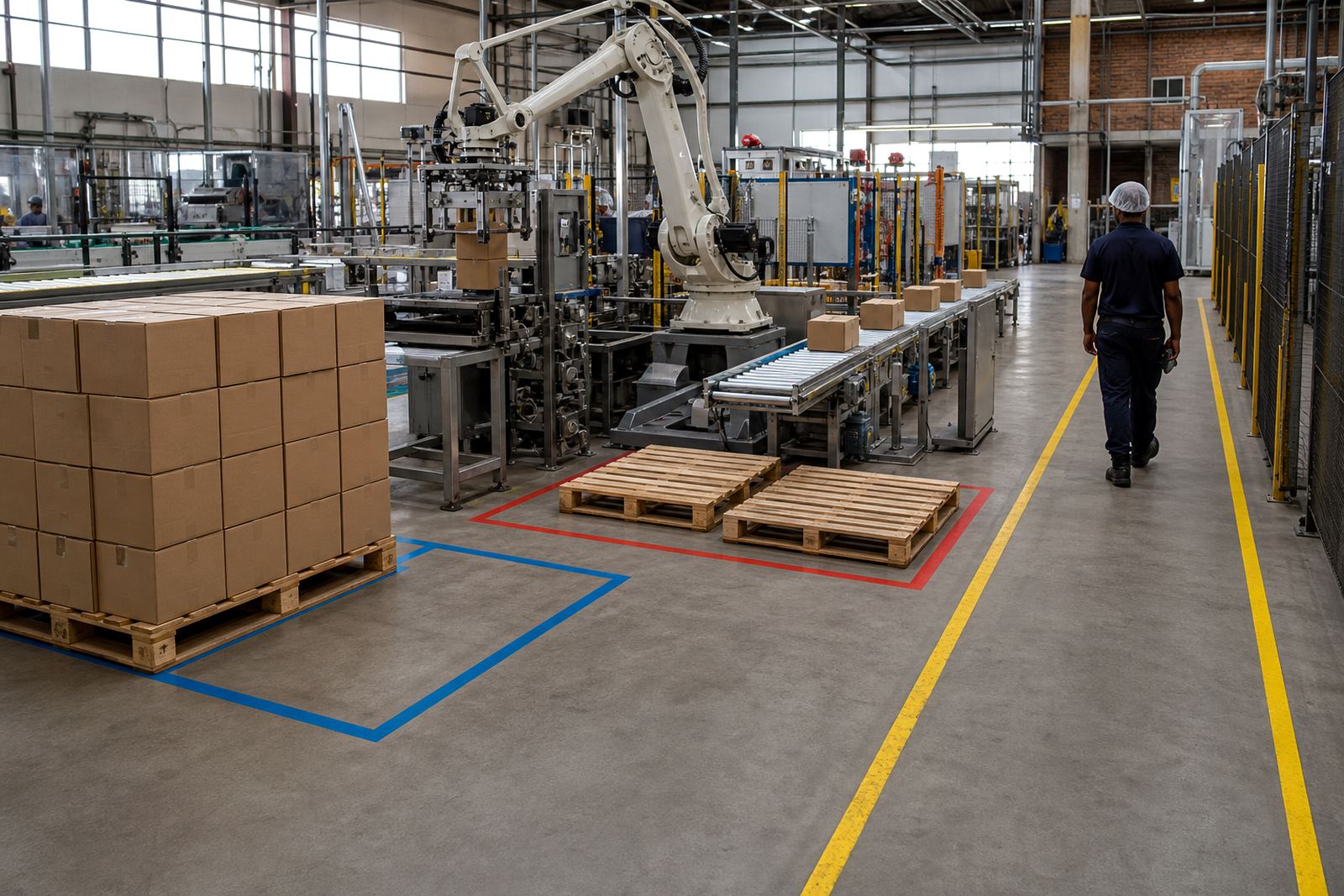
Safety guarding is not separate from changeover, it is part of it. Any retrofit that adds a robot, cobot, palletising cell or powered conveyor transfer point must include guarding that suits the layout and the movement of people around it. Depending on the site, this may include perimeter fencing, gates, light curtains, interlocks or warning devices, but the final arrangement must come from a proper site risk assessment.
General rules are simple. Keep access controlled, make emergency stops easy to reach and never bypass a guard to speed up a run. If a plant changes product often, the safest solution is one that allows the team to work efficiently without exposing hands or body to moving parts.
- Check that all guards are closed before restart
- Review the risk assessment after any layout change
- Test emergency stops and reset points
- Allow safe access for cleaning and maintenance
- Confirm what happens during a power interruption
Keep a Short Record After Every Change
A good changeover record helps the next shift start faster. Note the product code, recipe used, tooling swapped, faults seen and any adjustments that improved the run. If the line struggled with label placement, carton squareness or pallet stability, write it down while it is fresh. The best records are short and clear, not a long report that nobody reads.
Over time, these notes help with spares planning, maintenance support and future retrofit decisions. They also make it easier to spot repeated problems such as worn guides, slow sensors or a recurring jam point on a specific conveyor. When a line is set up properly, the team spends less time correcting issues and more time packing product.
- Record the format, time and shift
- Log faults, manual interventions and adjustments
- Note worn parts that should be replaced
- Capture operator feedback while the change is fresh
- Update the set-up sheet for next time
When to Bring in Retrofit Support
If changeovers are taking too long, causing damage or needing too much manual handling, it may be time to review the line design. A site line survey can show where conveyors, controls, safety guarding and product handling need improvement. For manufacturers in Kempton Park, Johannesburg, Pretoria, Durban, Cape Town, Gqeberha, the East Rand or Midvaal, the aim is the same: make the line easier to change without losing safety or output.
ReAutomated supports packing and palletising retrofits with design, installation management, commissioning support, operator training and maintenance follow-up. That includes checking how a new robot or cobot fits into the existing conveyor flow, and how the site should handle future recipe changes, spares and breakdown response. A practical changeover guide only works when the machine layout, controls and people all follow the same plan.