

Packing Line Retrofits Built Around Existing Equipment
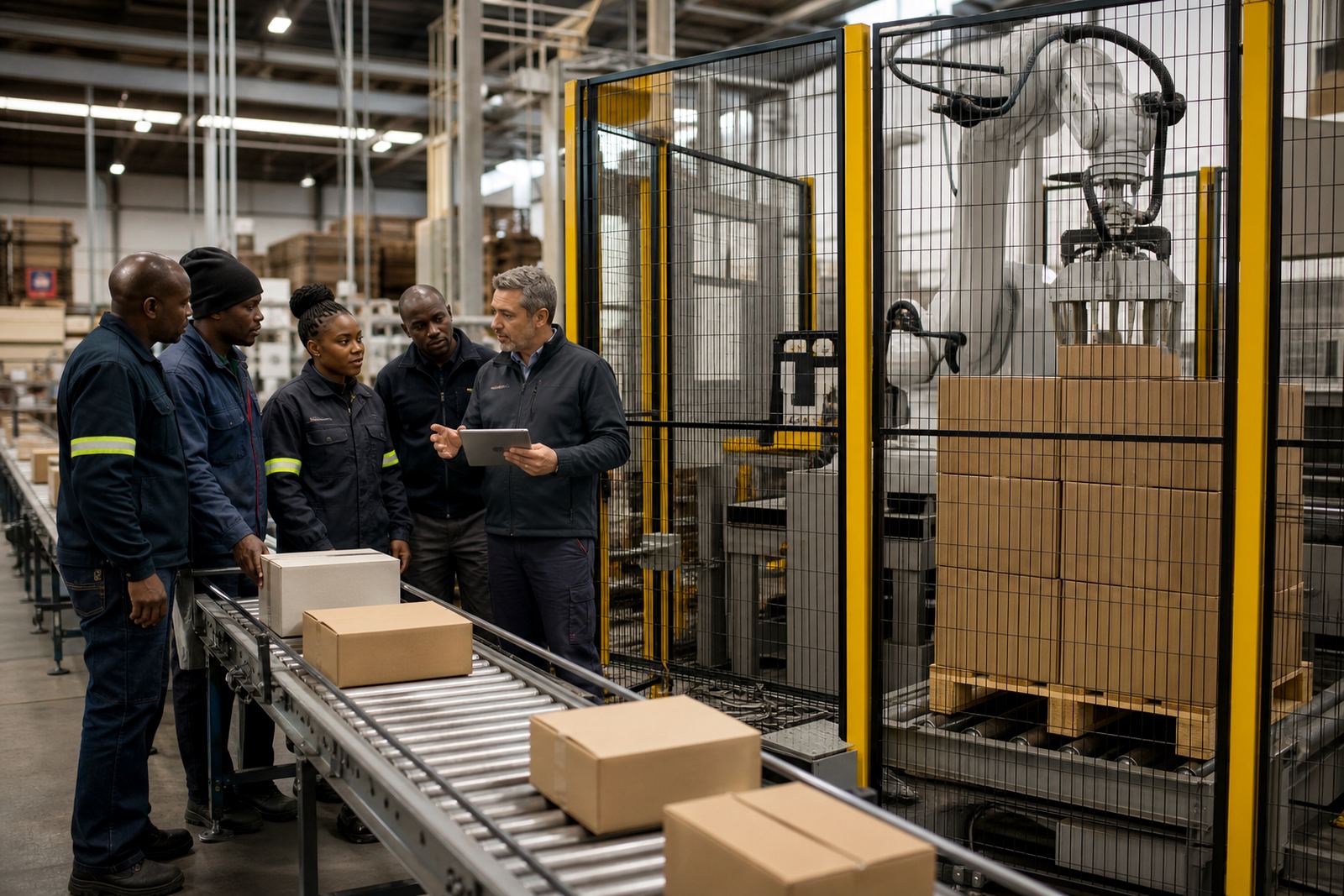
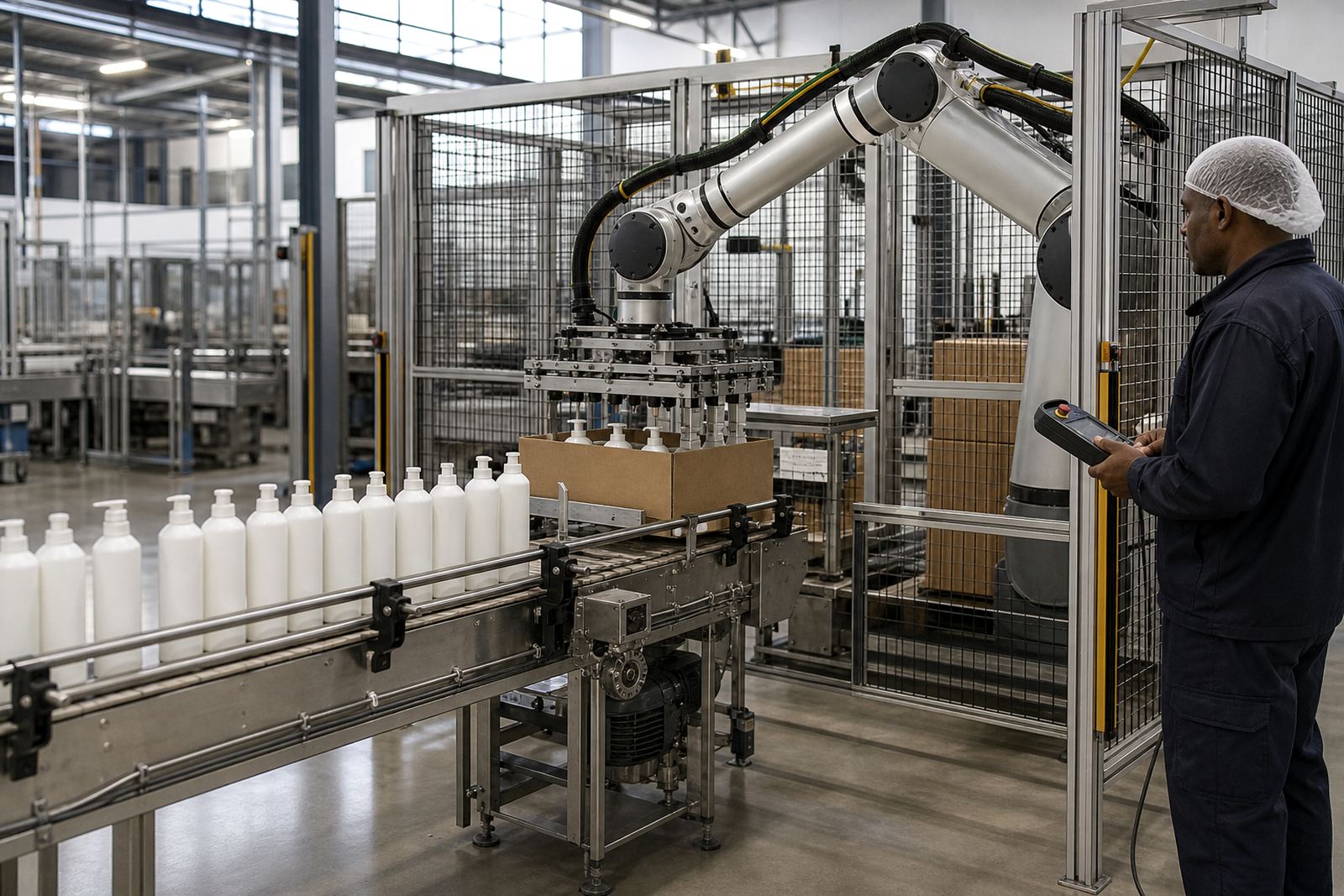
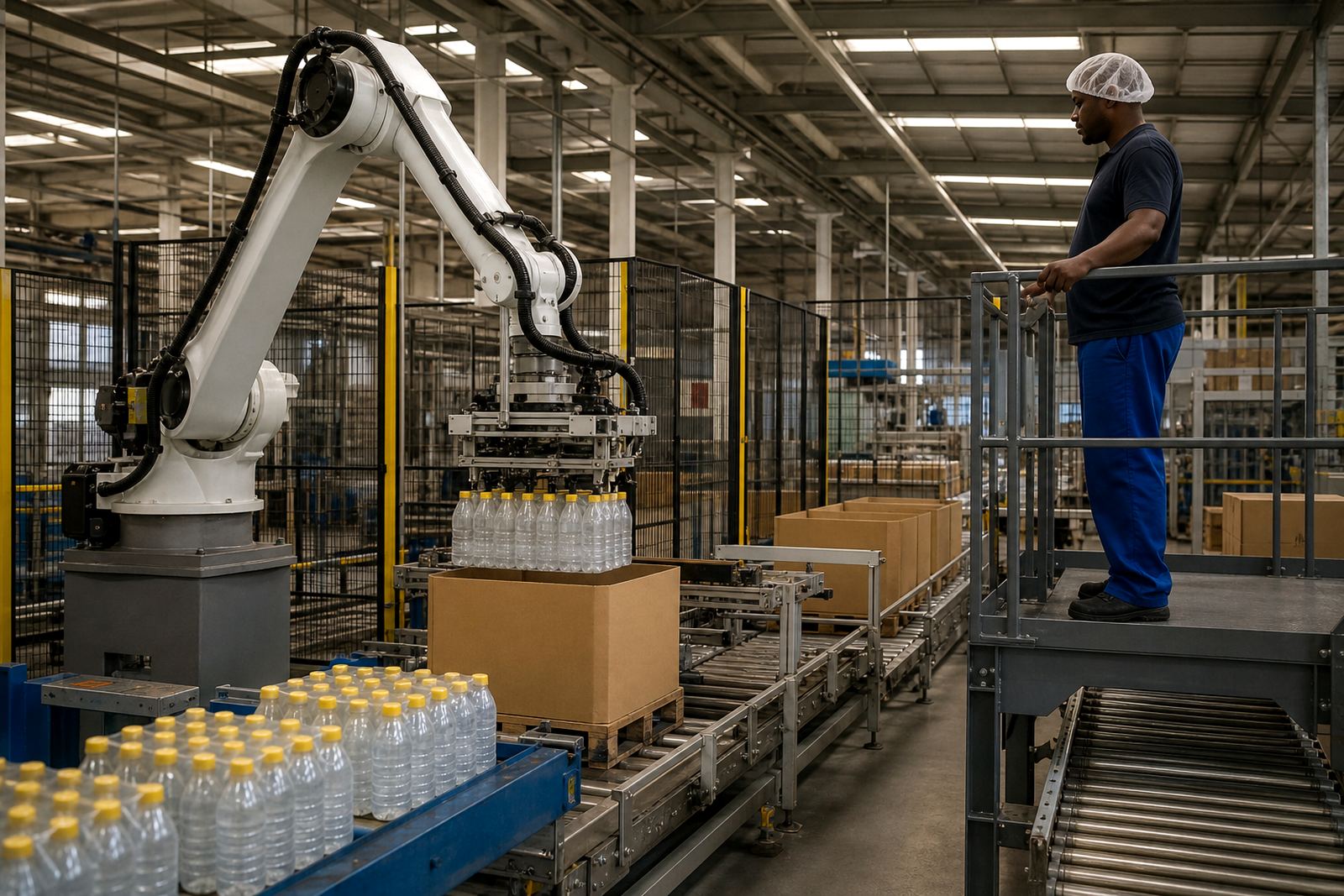
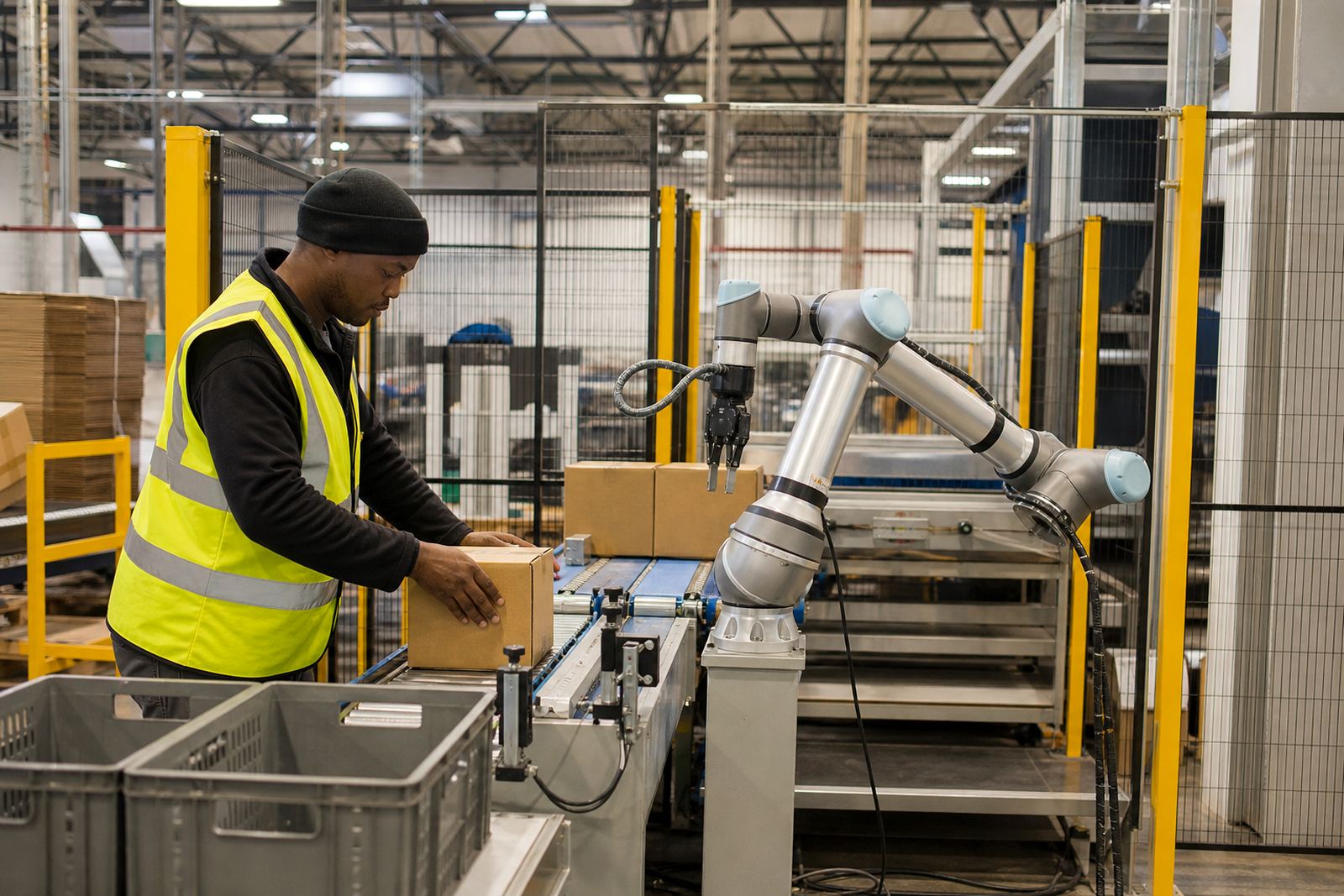
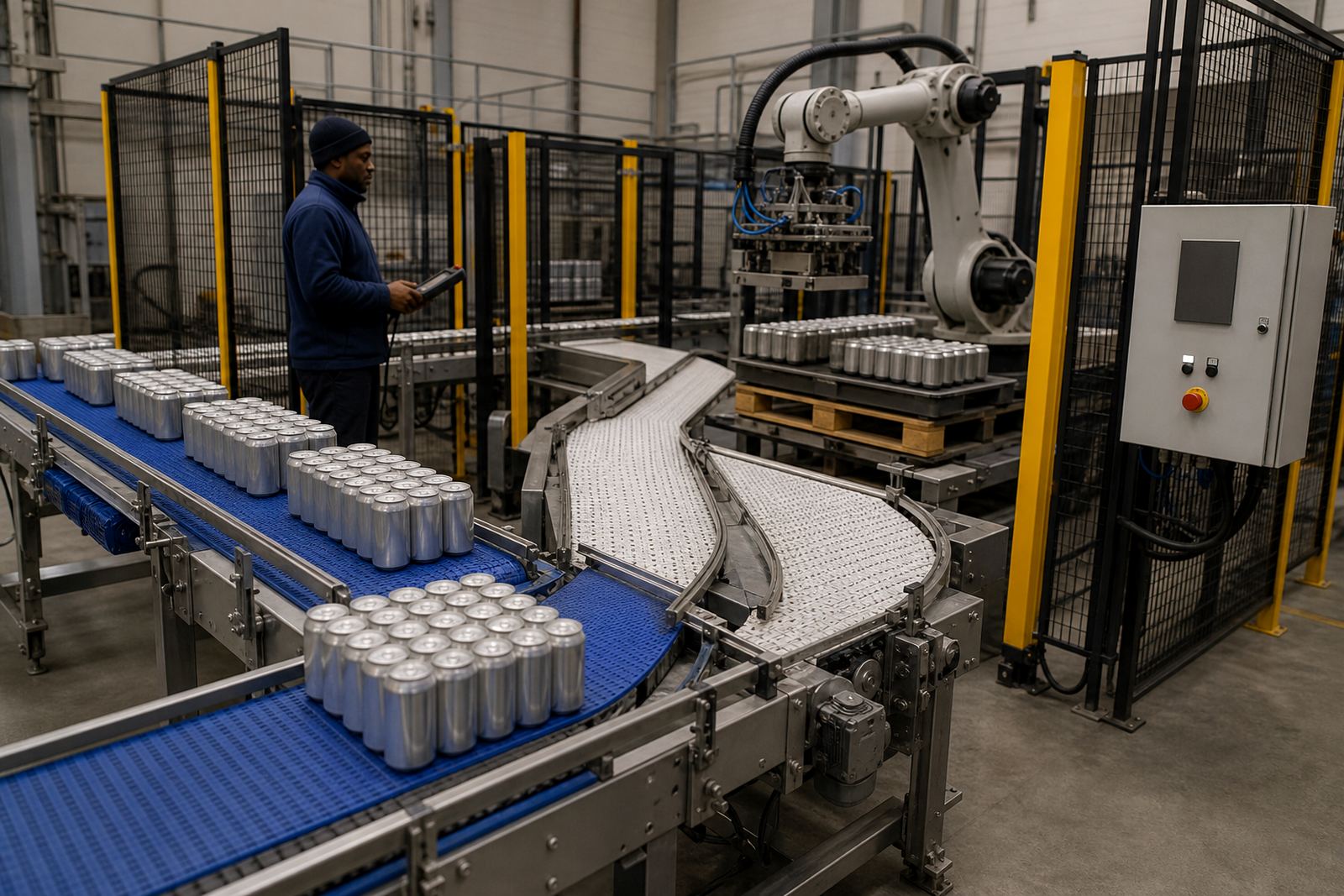
Many manufacturers do not need a full line replacement. A packing line can often be improved by adding a robot cell, a cobot station, better product transfer points, or controls that let old and new equipment work together. The focus is to keep useful conveyors, infeed tables and accumulation sections in service where possible, while reducing hand stacking and repetitive lifting.
For plants in Spartan, Kempton Park, Johannesburg and Pretoria, this often means working within tight floor space and keeping production running in stages. In coastal areas such as Durban, humidity and salt air also need to be considered when selecting enclosures, cable routing and maintenance access.
- Site line survey and process review
- Retrofit design for existing packing lines
- Conveyor timing and product handover checks
- Controls integration with current equipment
Palletising Cells For Mixed Product and Bag Handling
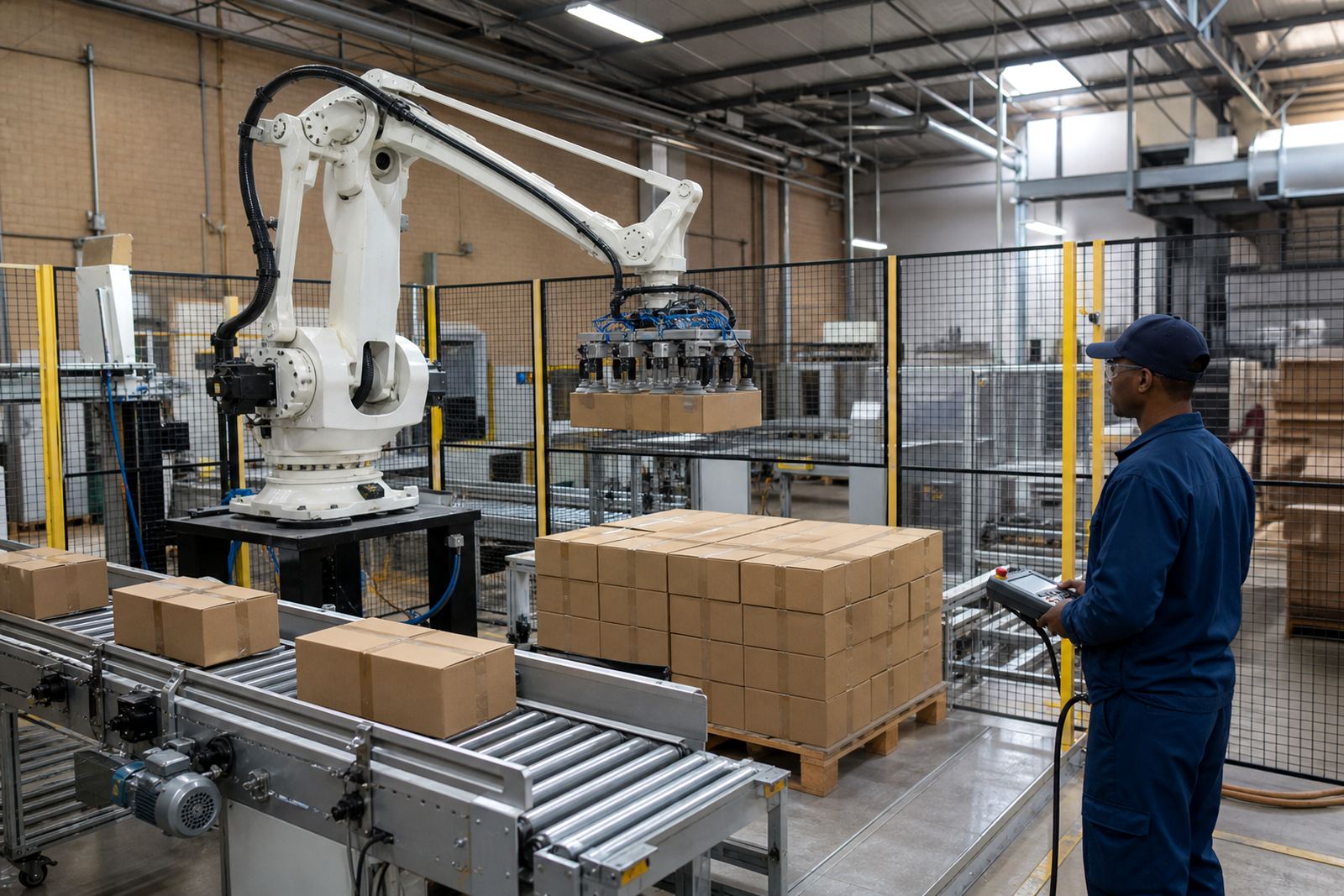
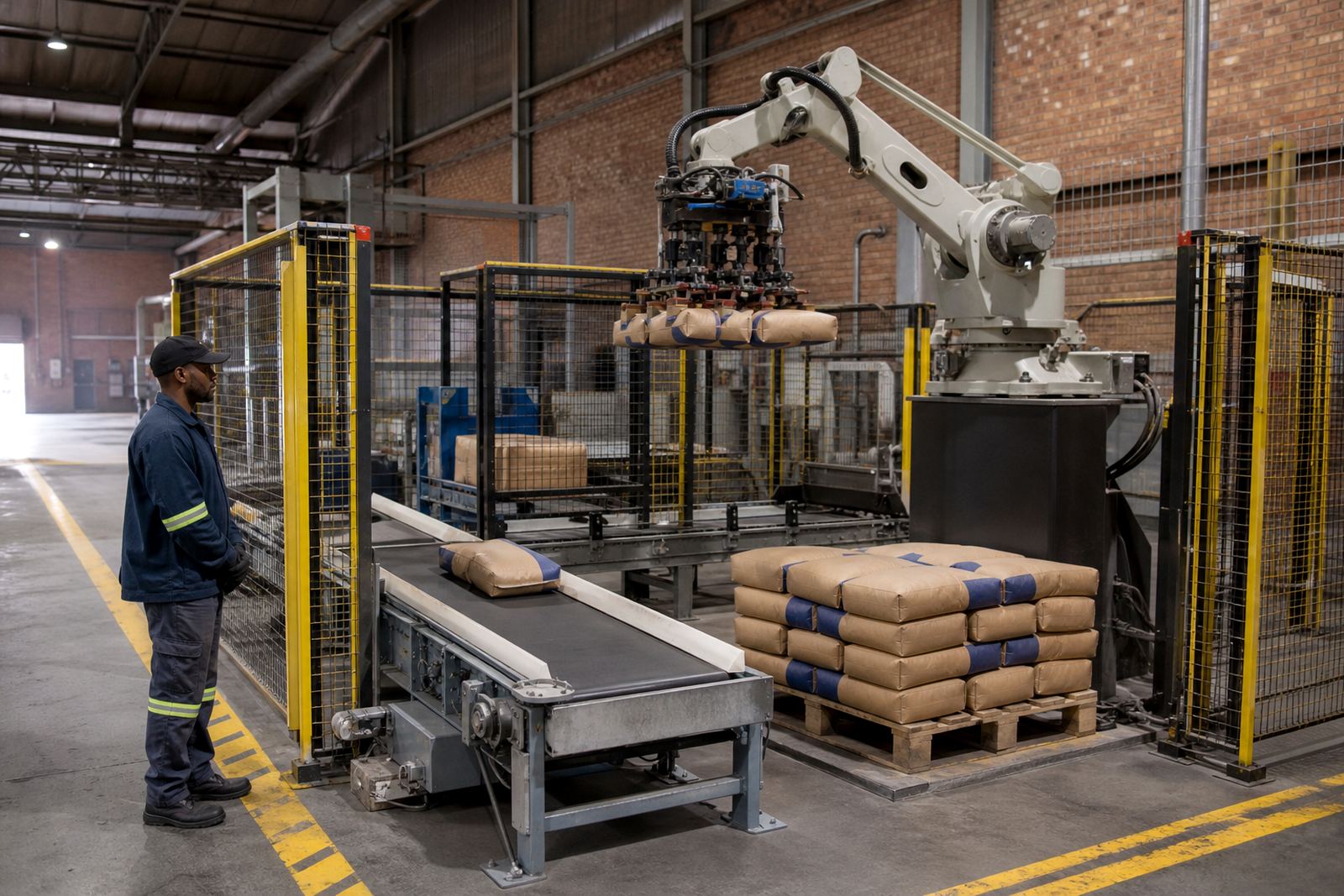
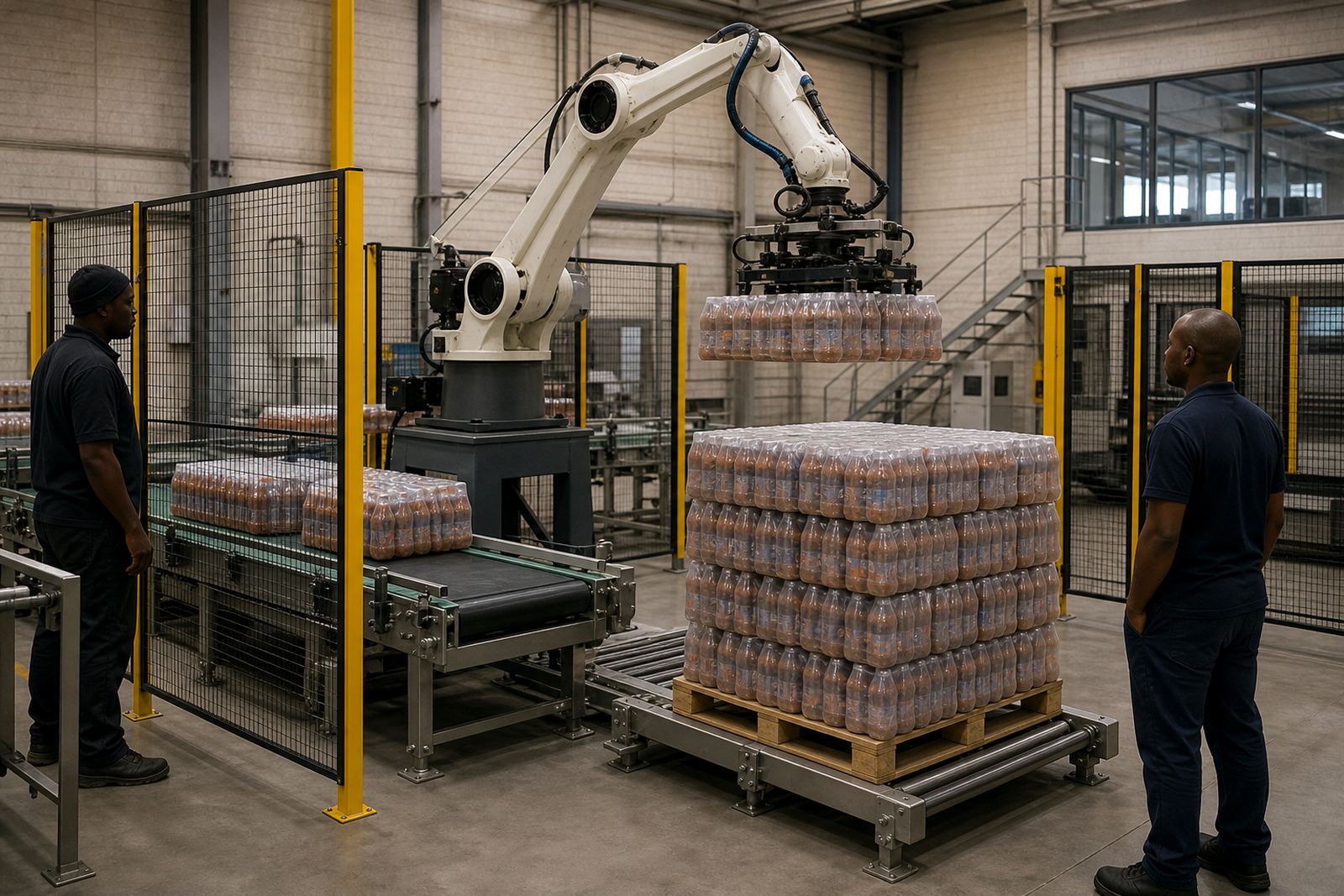
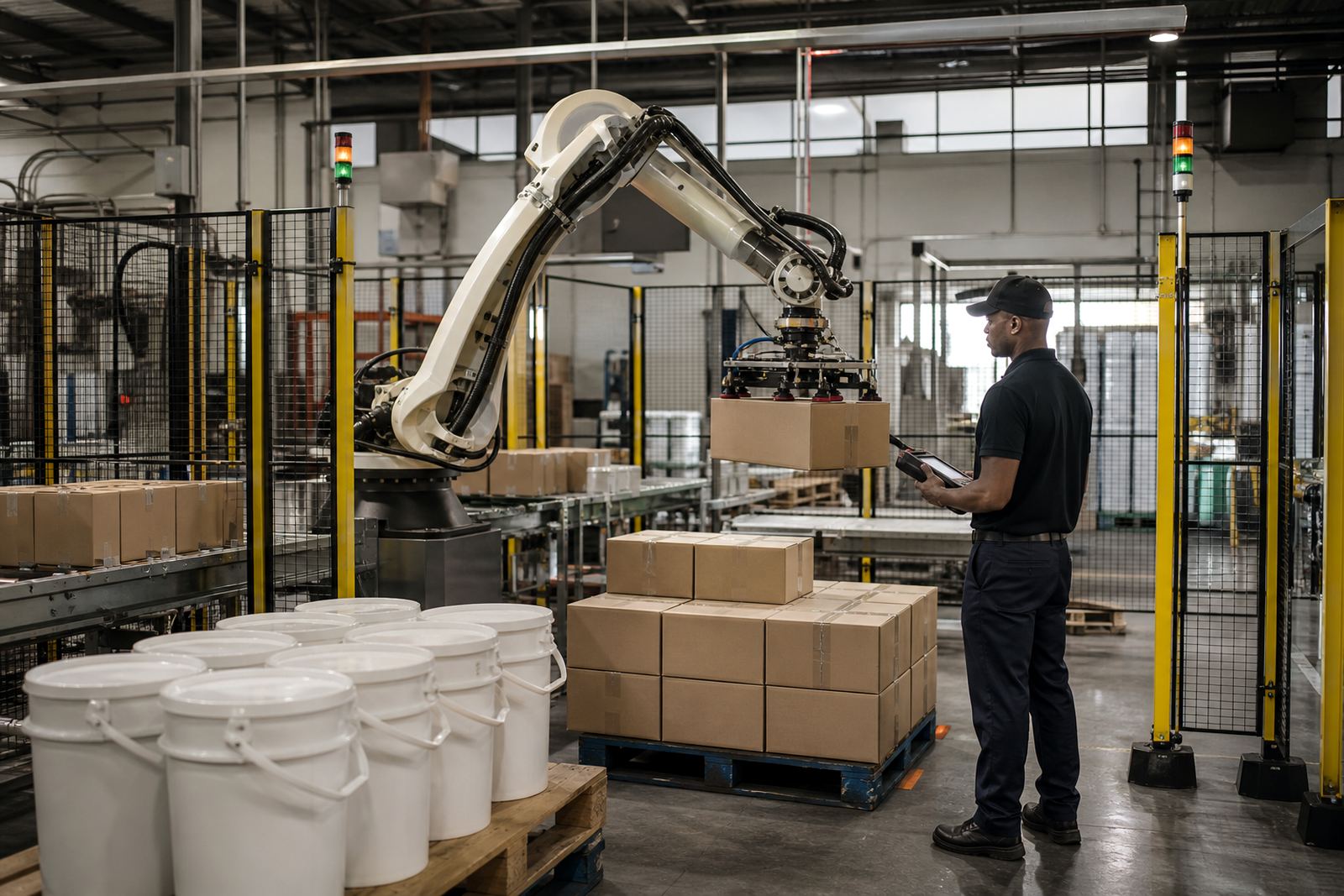
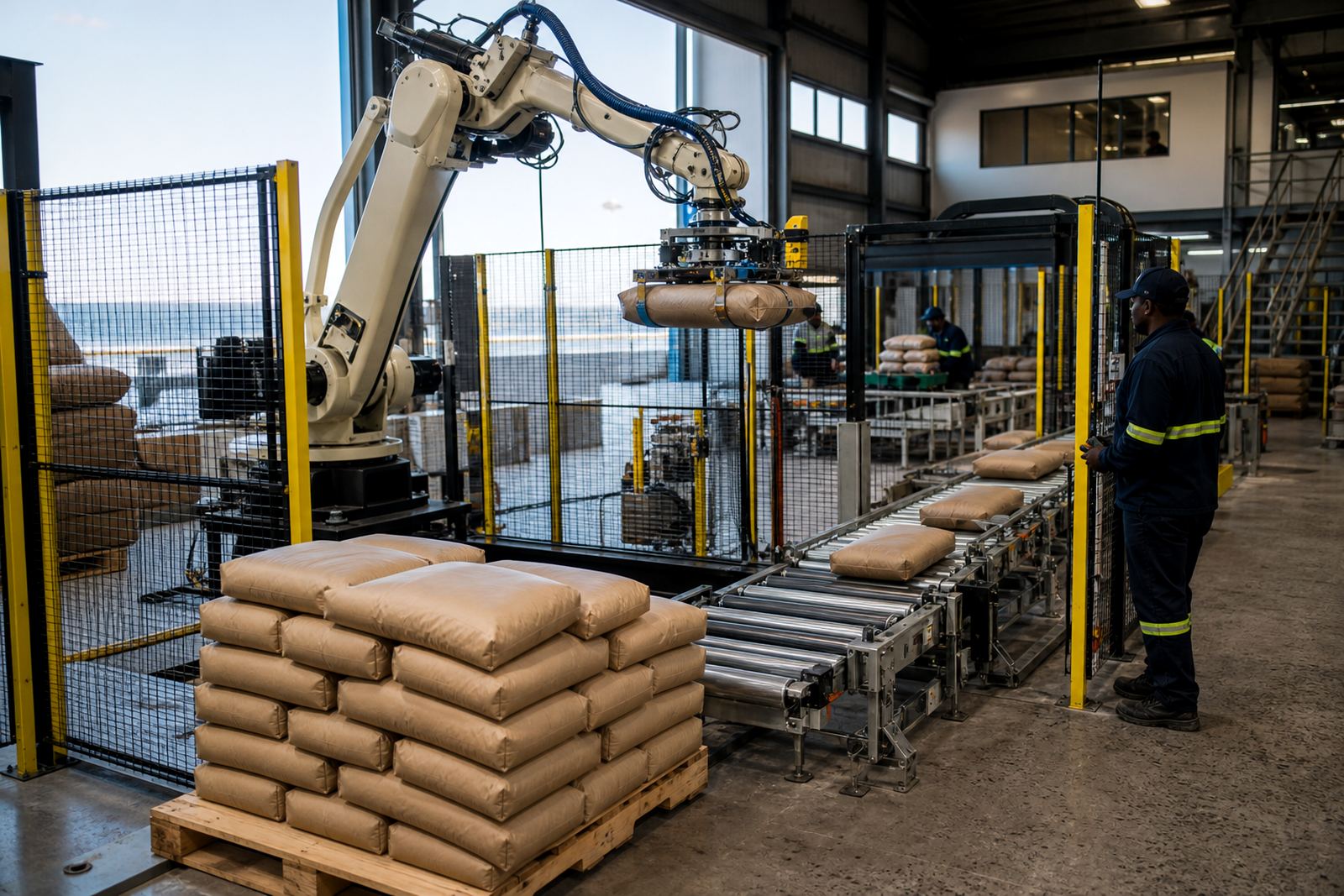
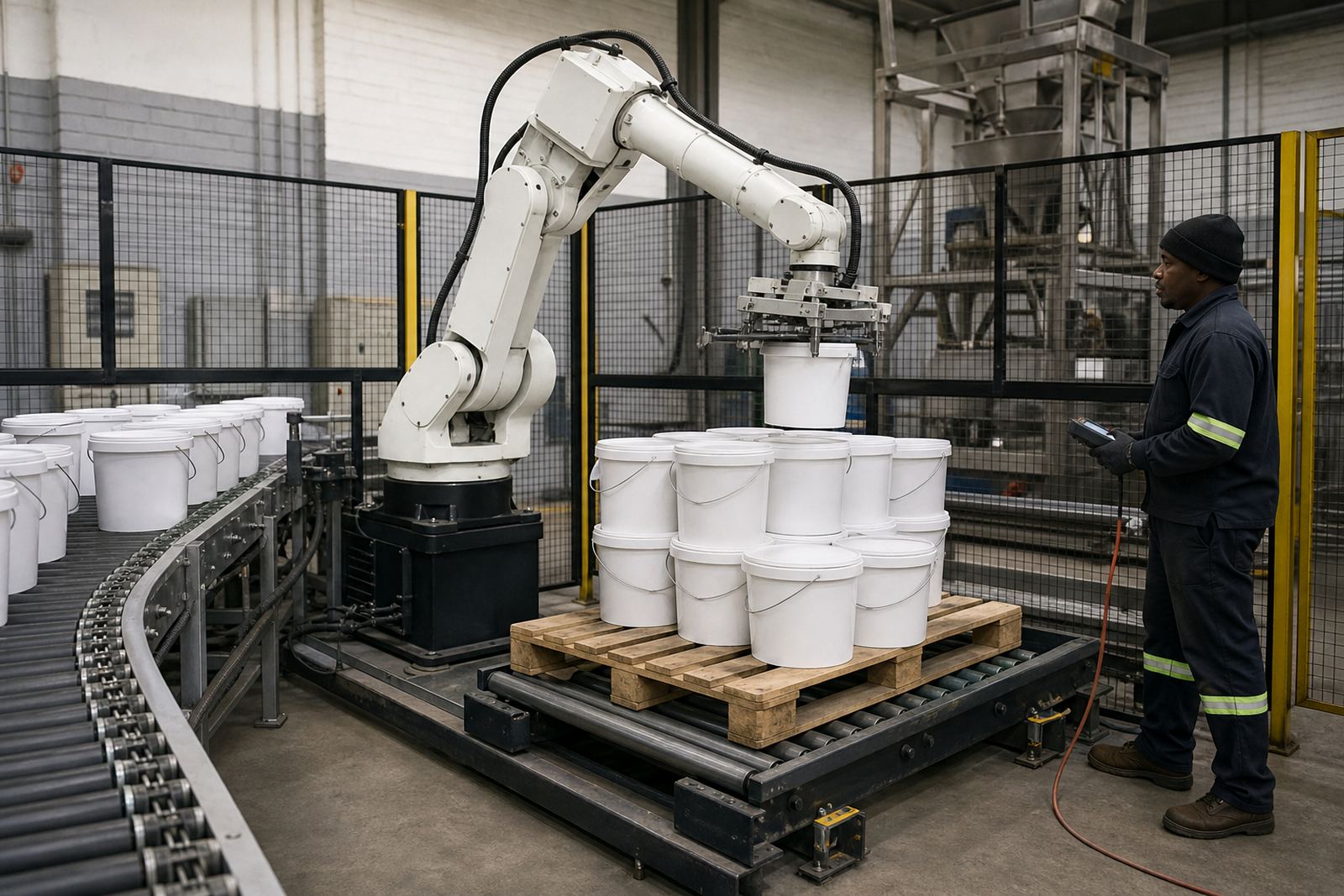
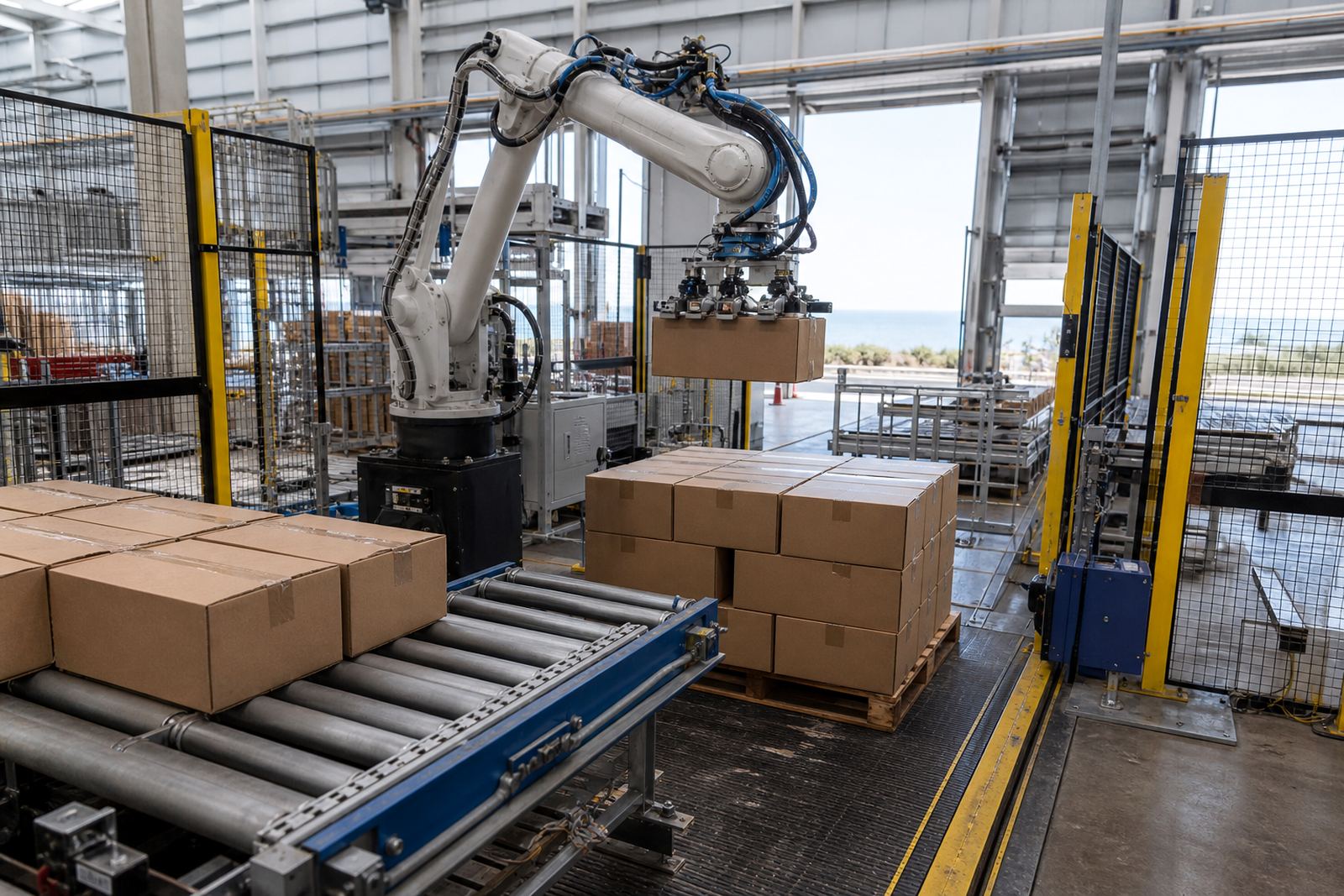
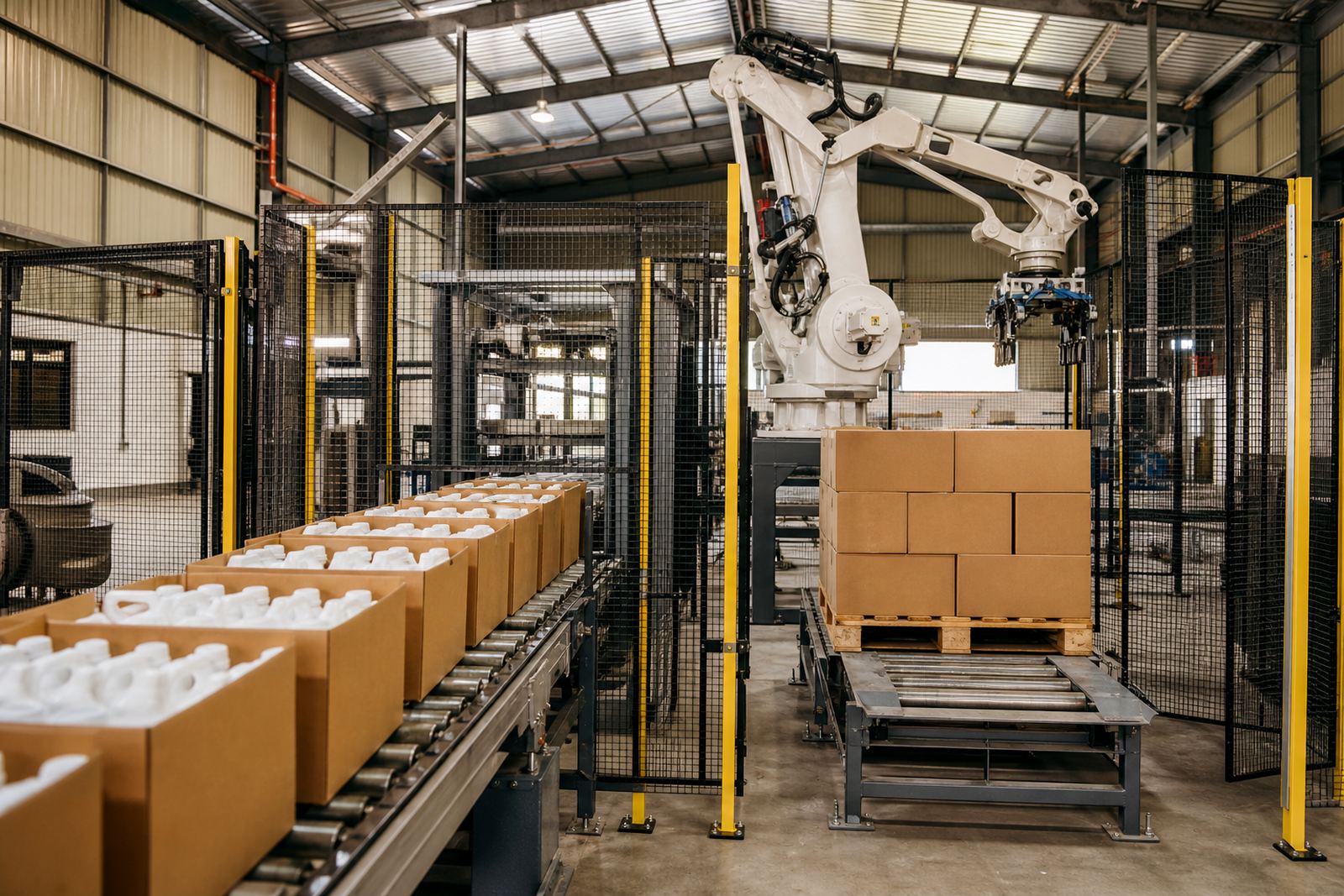
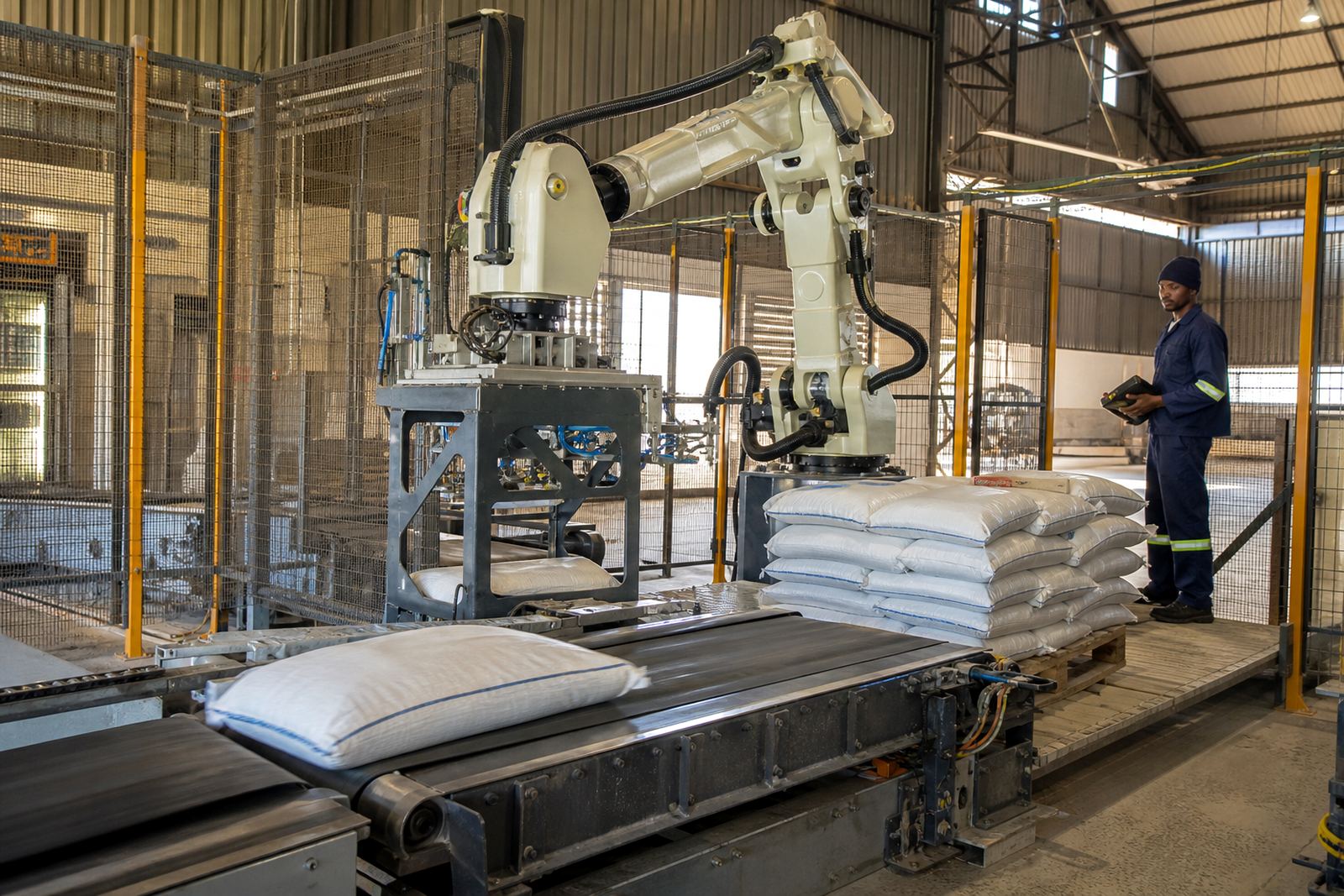
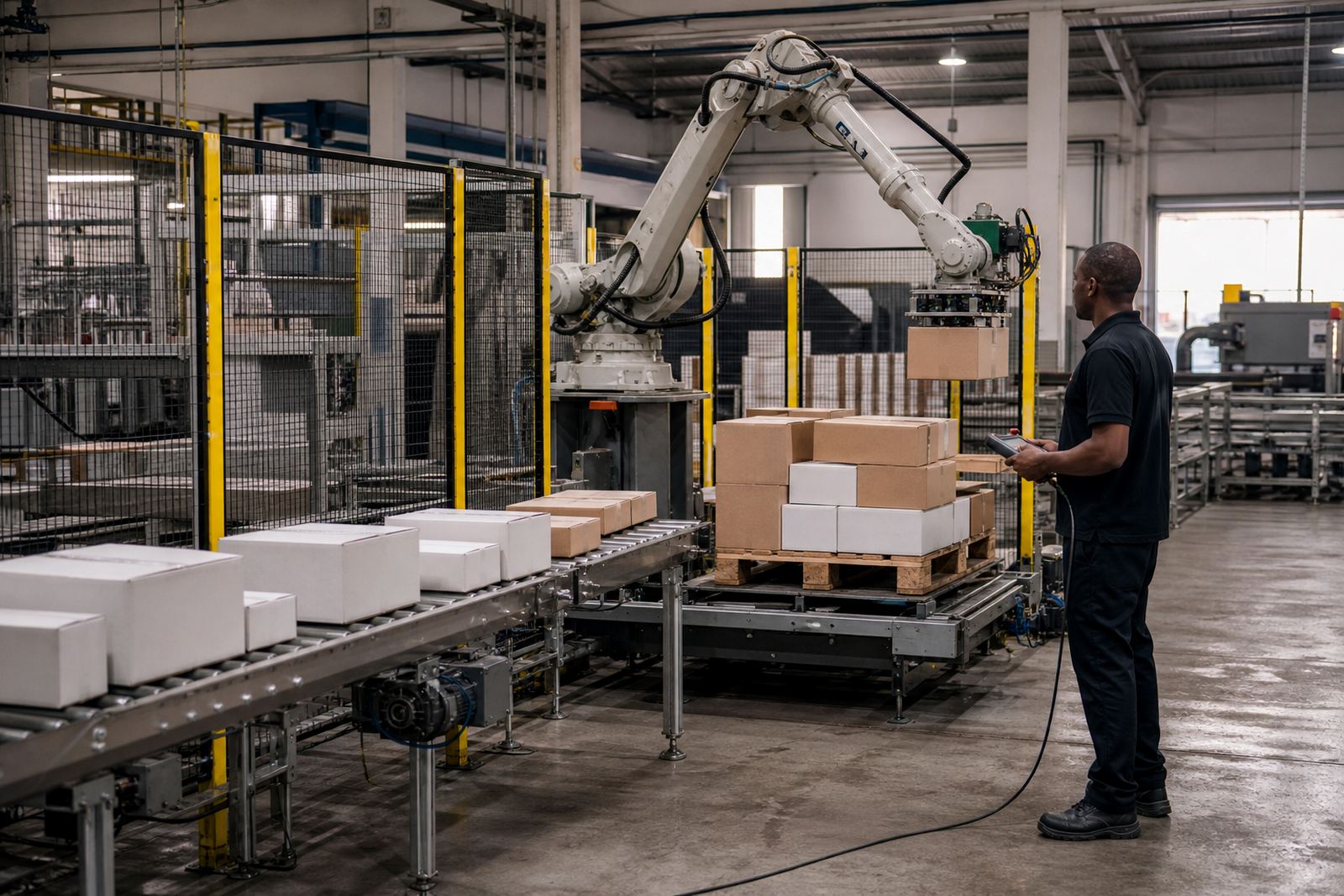
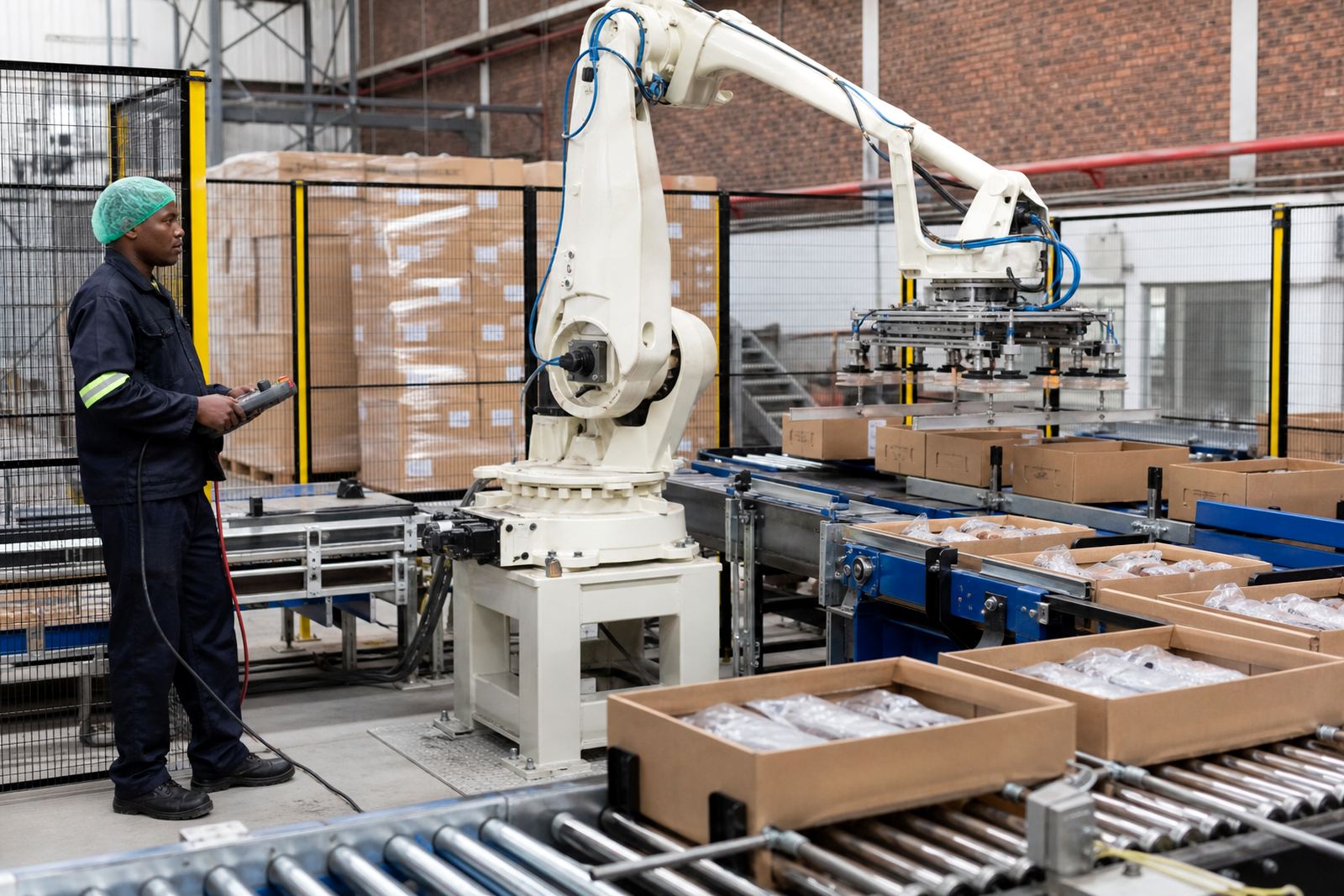
Palletising retrofits are usually driven by repetitive lifting, uneven pallet quality, or slow end-of-line throughput. ReAutomated works on solutions for cartons, bags, crates and wrapped packs, with attention to pallet pattern logic, layer forming and safe operator access. The aim is to fit the cell to the plant, not force the plant around the cell.
Every layout needs to suit the actual product size, pallet height, available clearances and fork truck movement. In busy facilities around Midvaal, the East Rand and Gqeberha, the loading bay, floor markings and exit routes may also affect where the cell can go and how it should be guarded.
- End-of-line palletising reviews
- Robot or cobot selection to suit the task
- Pallet infeed and outfeed coordination
- Installation management and commissioning support
Safety Guarding and Risk Assessment Support
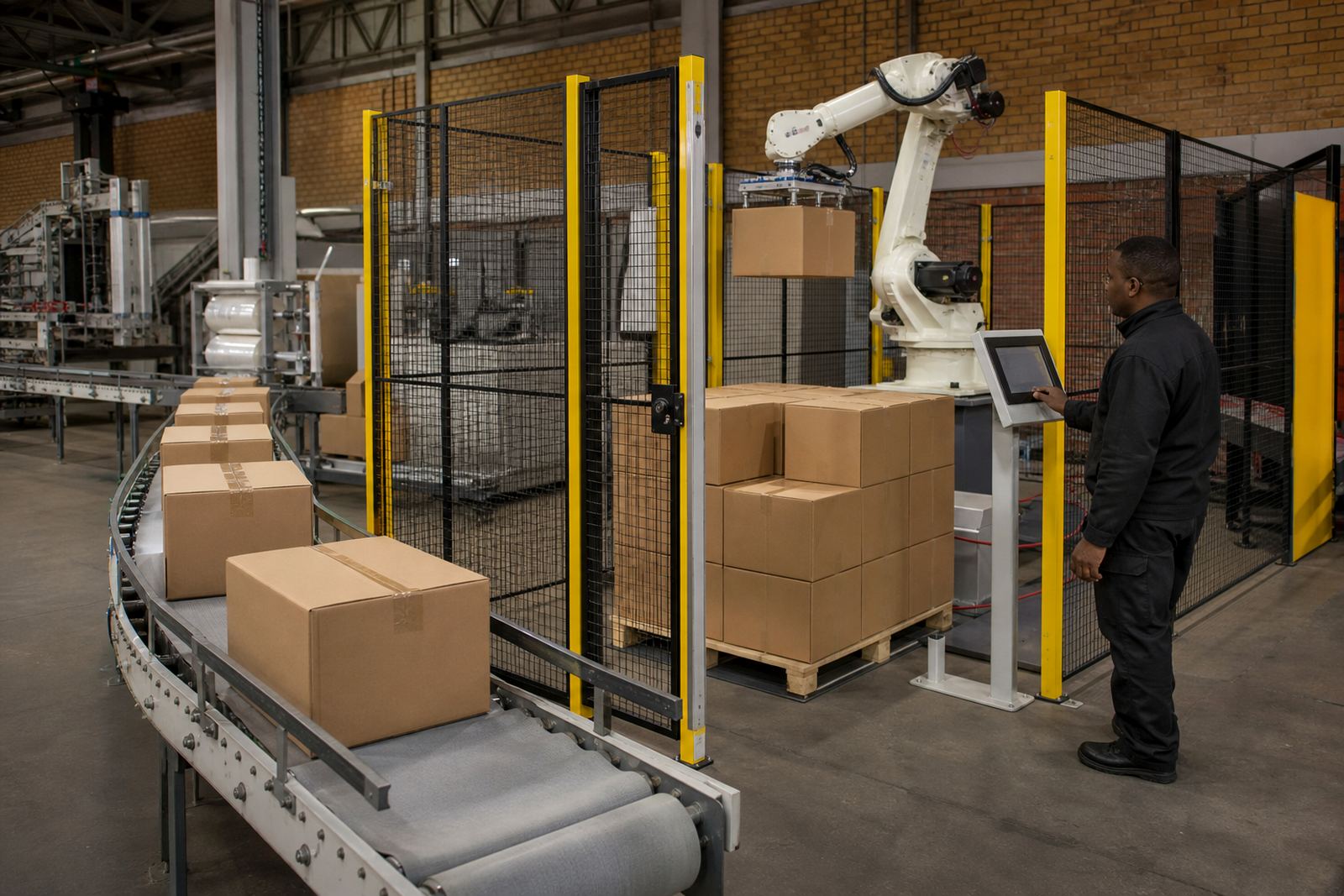
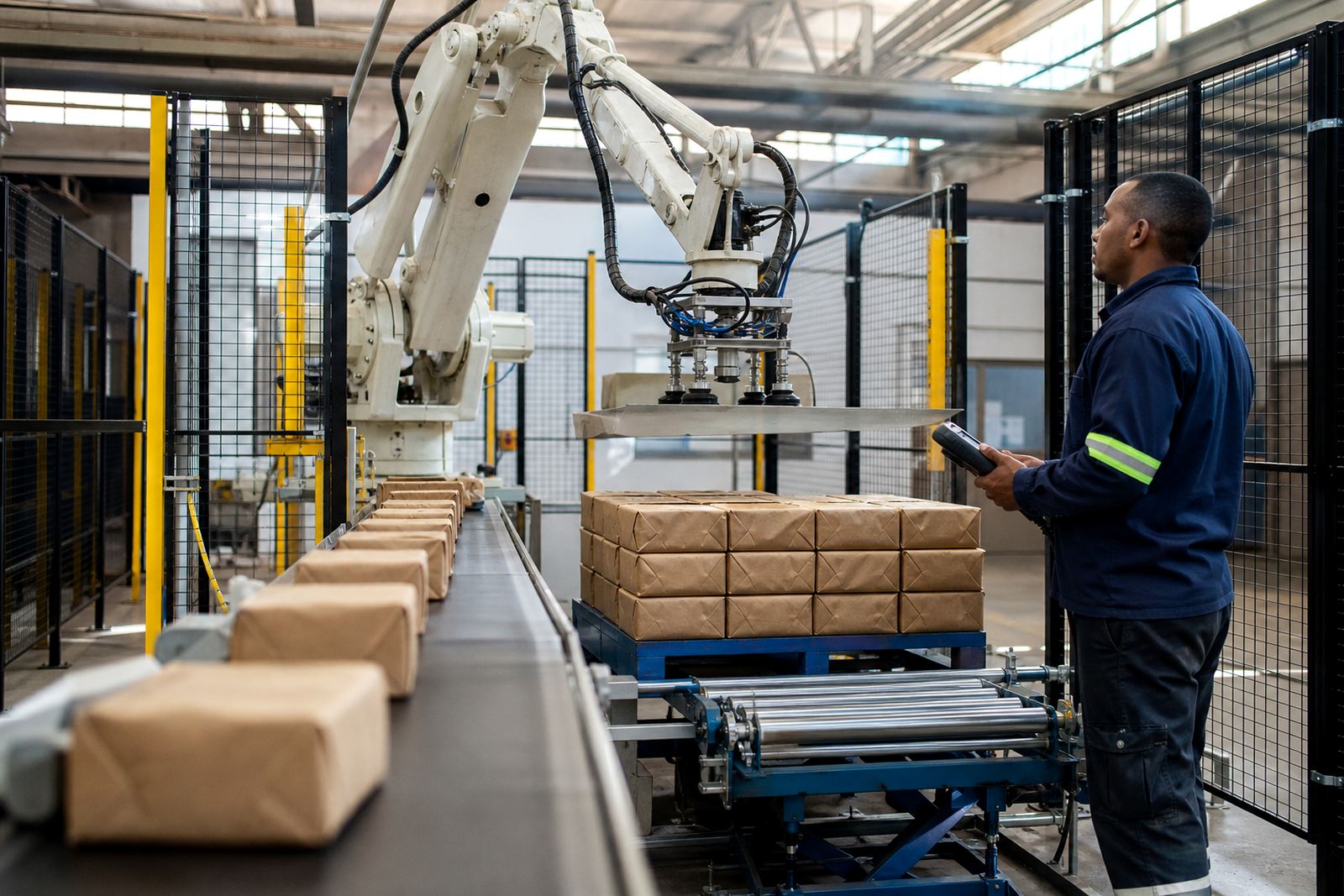
Any robotic retrofit must be matched with proper guarding and a site-specific risk assessment. That includes access gates, interlocks, fencing, light curtains where suitable, emergency stops and safe maintenance positions. Safety rules are general, but the final arrangement always depends on the machine layout, the motion paths and the way operators interact with the line.
ReAutomated supports the process by reviewing the existing line, identifying pinch points and planning how people will load, clear faults and carry out routine checks. A plant in Cape Town may need different guarding clearances from one in Johannesburg, because space, traffic flow and building restrictions are rarely the same.
- Risk assessment support for each site
- Safety guarding design for retrofit cells
- Operator access and maintenance planning
- Emergency stop placement and interlock logic
Controls Integration and Conveyor Coordination
Retrofit success depends on controls that make the new robot or cobot work properly with the existing conveyors, sensors and production signals. That can include stop start logic, product detection, transfer timing, pallet calls, fault handling and line handshaking. If the controls are not matched properly, the cell may run well on its own but struggle in a live plant.
Our controls work is practical and site led. We look at what can be kept, what needs upgrading and how the operator interface should work in the real world.
- Conveyor integration and line balancing
- Controls integration with existing equipment
- Fault recovery and restart sequence planning
- Commissioning support and operator handover
Support From Survey to Breakdown Response
A retrofit project does not end when the robot is commissioned. Plants still need maintenance support, spares planning and a clear response when a line stops. ReAutomated supports manufacturers with practical follow-through so the system can be kept running after handover, rather than treated as a once-off install.
This includes operator training, routine checks, planned maintenance advice and breakdown assistance where needed. For sites across Johannesburg, Durban, Cape Town, Pretoria, Gqeberha and the wider East Rand, the goal is to keep the retrofit workable in the day to day conditions of a South African factory.
- Operator training for production teams
- Maintenance support for retrofit systems
- Breakdown assistance when faults arise
- Spares planning for wear parts and consumables