What the Gqeberha line needed
The site was handling plastic container packs and finished shipping cases on a busy end-of-line section, with operators doing repeated lifting, case stacking and pallet build-up across shifts. The brief was to reduce manual handling, keep the existing conveyors in place where possible, and make the change fit into the factory without disrupting the rest of production.
Like many packaging areas in coastal towns, the site had to deal with humidity and dust control around moving equipment, so the retrofit needed sensible guarding and easy access for cleaning and inspection.
- Client type: plastics manufacturer
- Location: Gqeberha
- Application: end-of-line handling for container packs and shipping cases
- Scope: robotic packing and palletising retrofit
How we approached the retrofit
We started with a site line survey and a process review to check product flow, conveyor heights, case presentation and the space available around the existing line. From there we mapped the best point for robot access, infeed timing and pallet discharge so the retrofit would work with the current line speed rather than fight against it.
The project was planned as a retrofit, not a full line replacement. That meant keeping the usable parts of the original conveyor system, adding the right interfaces, and designing the new cell around the actual site conditions. A proper risk assessment support process was built in from the start, because each site needs its own checks for access, pinch points, guarding and operator movement.
- Site line survey and layout review
- Retrofit design for existing conveyors
- Controls integration for infeed and discharge signals
- Risk assessment support and safety guarding design
Equipment and integration details
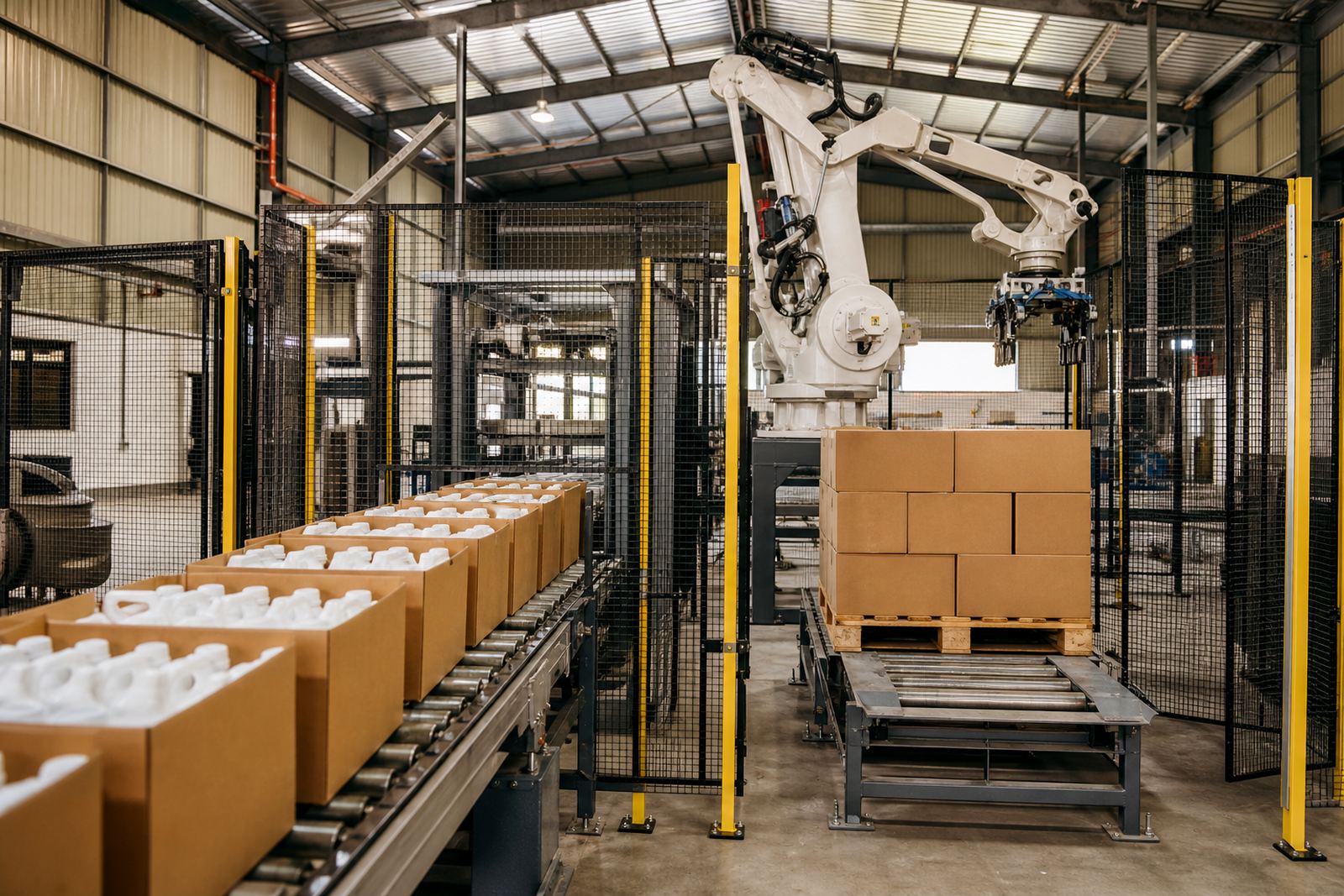
The retrofit used robotic end-of-line handling suited to the product sizes and pallet patterns on the line. The system was set up to pick container packs and shipper cases from the conveyor and place them into defined pallet patterns, with the option to handle different pack sizes through recipe based control. Where required, cobot-style operation was considered for selected tasks, but the final arrangement was chosen around the site duty, reach and cycle time needs.
We integrated the robot cell with the existing conveyors, stop gates, sensors and control signals so the line could present product in a controlled way. Safety guarding was designed around the working envelope, with fixed guarding, access doors and interlocks where needed. Operators needed clear access for normal changeovers and cleaning, but the risk of reaching into moving equipment had to be reduced.
Our team also handled installation management, commissioning support and operator training so the site could take ownership of the line after start-up. The electrical and controls work was planned to fit the plant's shutdown window, which kept downtime manageable and gave maintenance time to check the interfaces before production resumed.
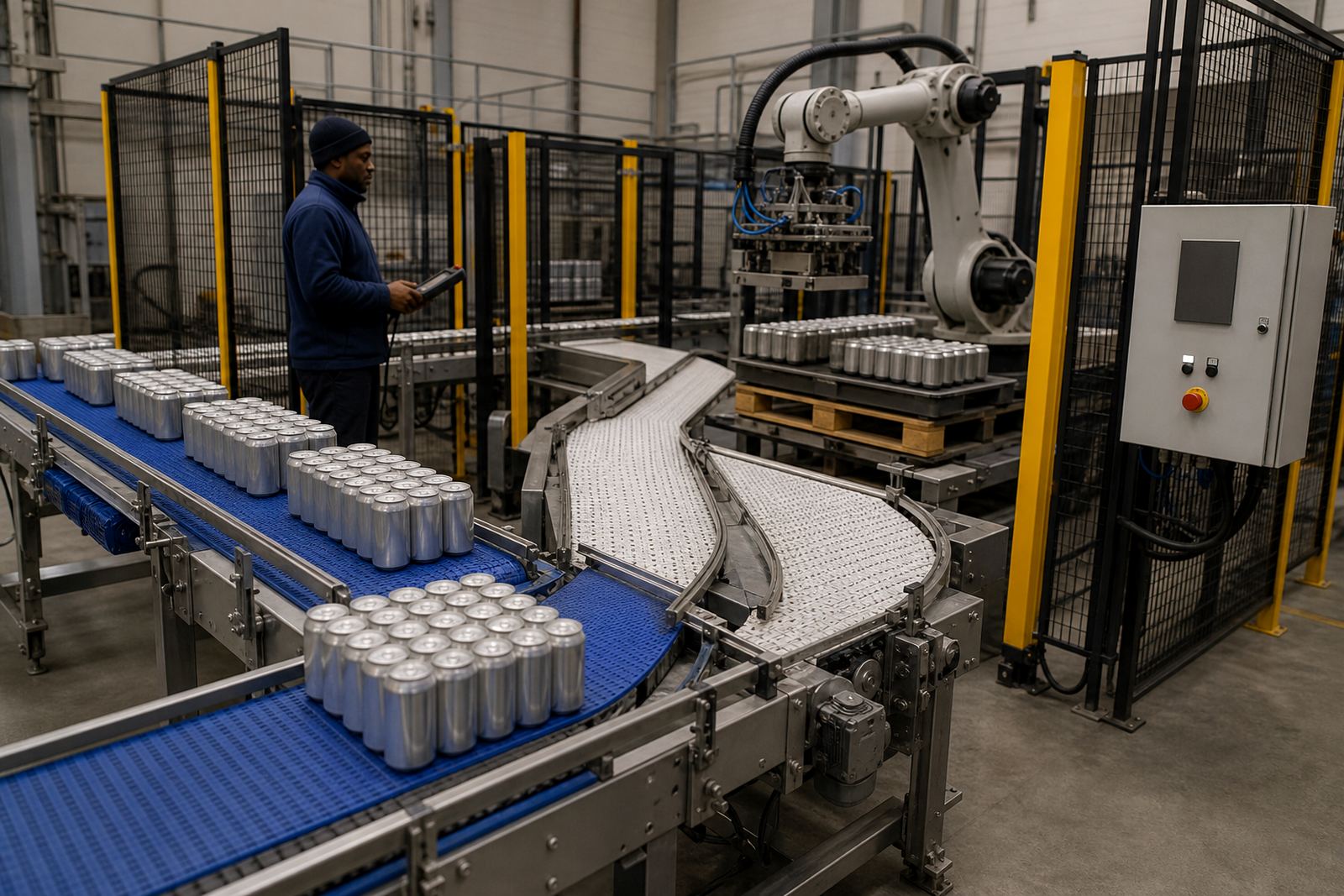
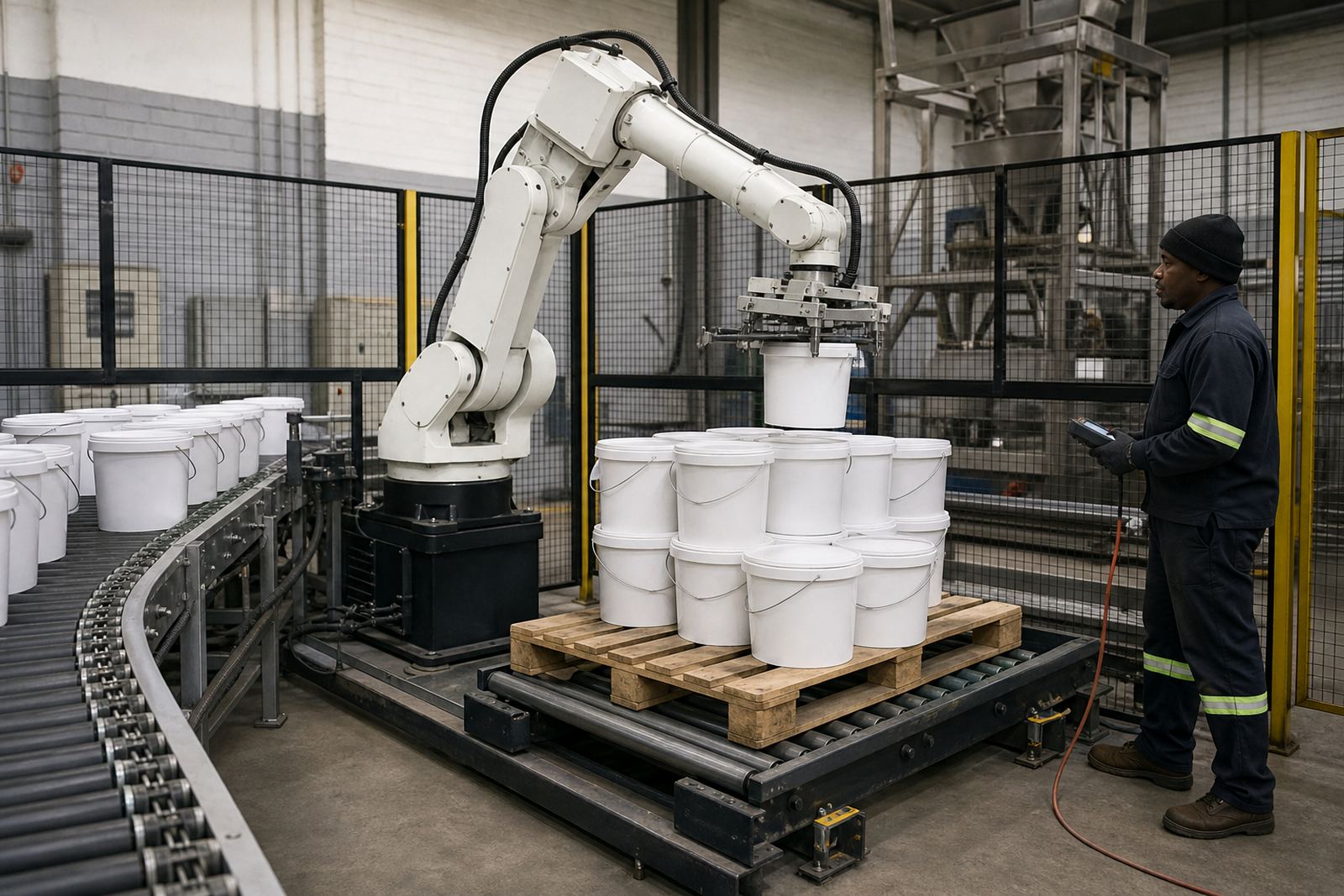
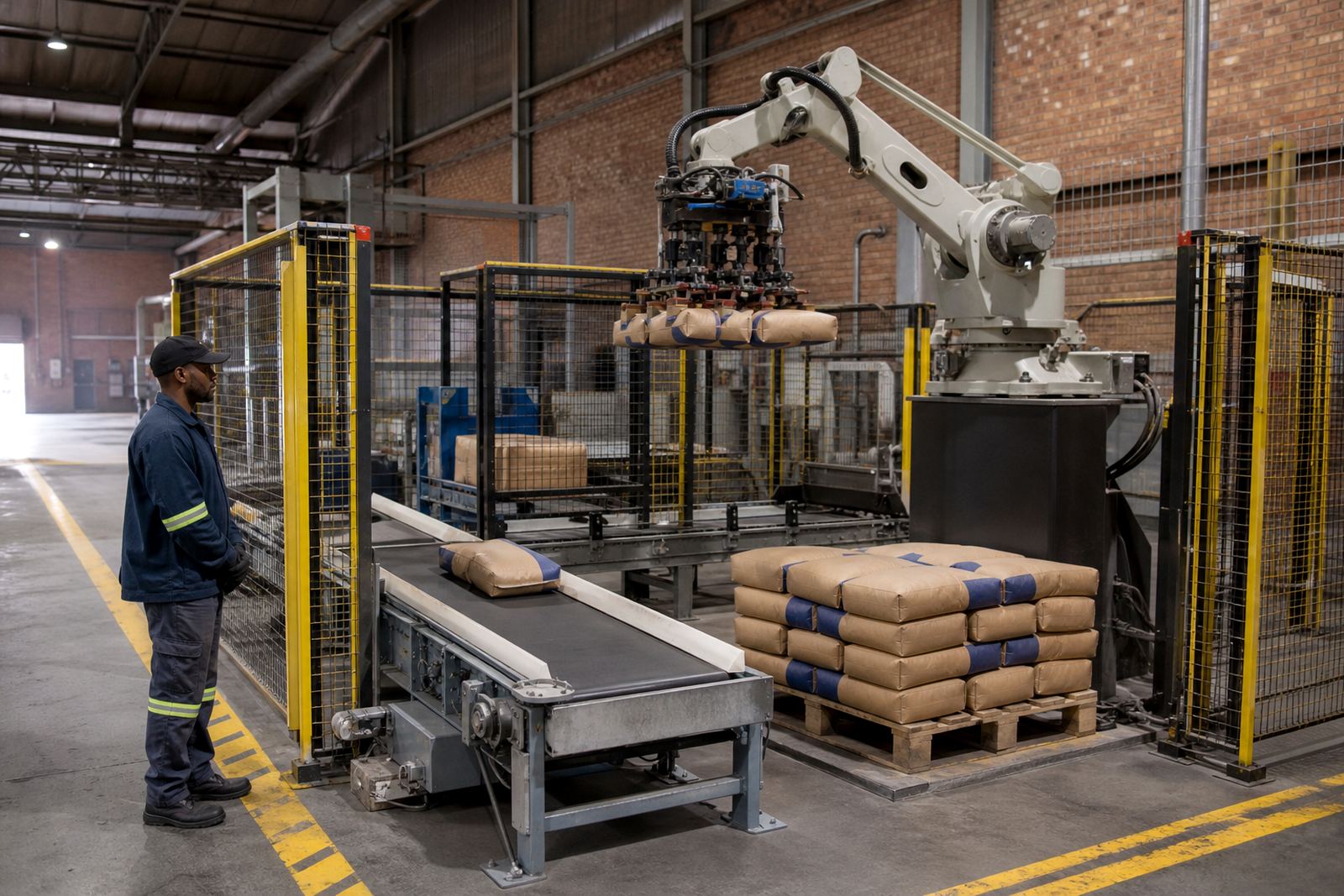
- Robot cell for end-of-line case handling
- Pattern control for pallet build-up
- Conveyor interface for product transfer
- Guarding with interlocks and safe access points
Project timing and on-site execution
The retrofit was delivered over 8 weeks from survey to handover. The first weeks covered line review, layout confirmation and detailed retrofit design, followed by off-site preparation of the control logic, guarding layout and installation plan. On-site work then focused on fitting the cell, connecting the conveyor interfaces and completing the commissioning sequence.
Because this was a working manufacturing site, the schedule had to fit around stock movement and normal production commitments. The team coordinated with operations and maintenance so the installation could move through each stage in order, without crowding the floor or creating unnecessary interference with other areas. A bit of careful planning saved plenty of time later, which is often the difference between a tidy changeover and a messy one.
- Week 1 to 2: survey, brief and layout confirmation
- Week 3 to 4: retrofit design and controls preparation
- Week 5 to 6: guarding, installation and conveyor integration
- Week 7 to 8: commissioning, training and handover
Results at the end of line
Once commissioned, the line moved from manual end-of-line handling to a more controlled robotic process. That gave the site more consistent packing and pallet build-up, less physical strain on operators, and a cleaner flow between the final packaging stage and the dispatch area. The retrofit also helped the plant standardise how cases were presented and stacked, which matters when you are trying to keep pallets neat and stable for transport.
For a plastics operation, the practical benefit is not just speed. It is also about keeping product handling consistent, reducing avoidable damage and making the line easier to manage across shifts. The new arrangement gave the team a clearer operating routine and made maintenance access simpler, which helps when a site is working under pressure and cannot afford frequent stoppages.
- Less manual lifting at the end of line
- More consistent pallet patterns and case handling
- Better control of product flow from conveyor to pallet
- Improved operator safety around moving equipment
What we repeat for a similar plant
If we were doing the same sort of project again, we would still begin with a line survey and a straightforward discussion with the production and maintenance teams. On a retrofit job, the real answers are usually found on the floor, not on paper. The best outcome comes from matching the robot cell to the actual conveyor heights, available space and product mix, then setting the guarding and controls around that reality.
We would also keep the commissioning window realistic and make sure spare parts planning is part of the handover from day one. That way the site is not left guessing about wear items, sensors or service intervals. For a manufacturing plant in Gqeberha or anywhere else in South Africa, a well planned retrofit should make the line easier to run, not harder.
- Start with the existing line, not a blank sheet
- Build guarding and access into the layout early
- Keep maintenance and spares planning in scope
- Train operators on the actual changeover routine
Key facts
| Project type | Robotic retrofit for end-of-line packing and palletising |
|---|---|
| Client location | Gqeberha, Eastern Cape |
| Application | Container packs and shipping cases |
| Timeline | 8 weeks from survey to handover |
| Scope | Site line surveys, conveyor integration, safety guarding, commissioning support |
| Base of operations | Spartan, Kempton Park |