What the Mobeni Line Needed to Fix
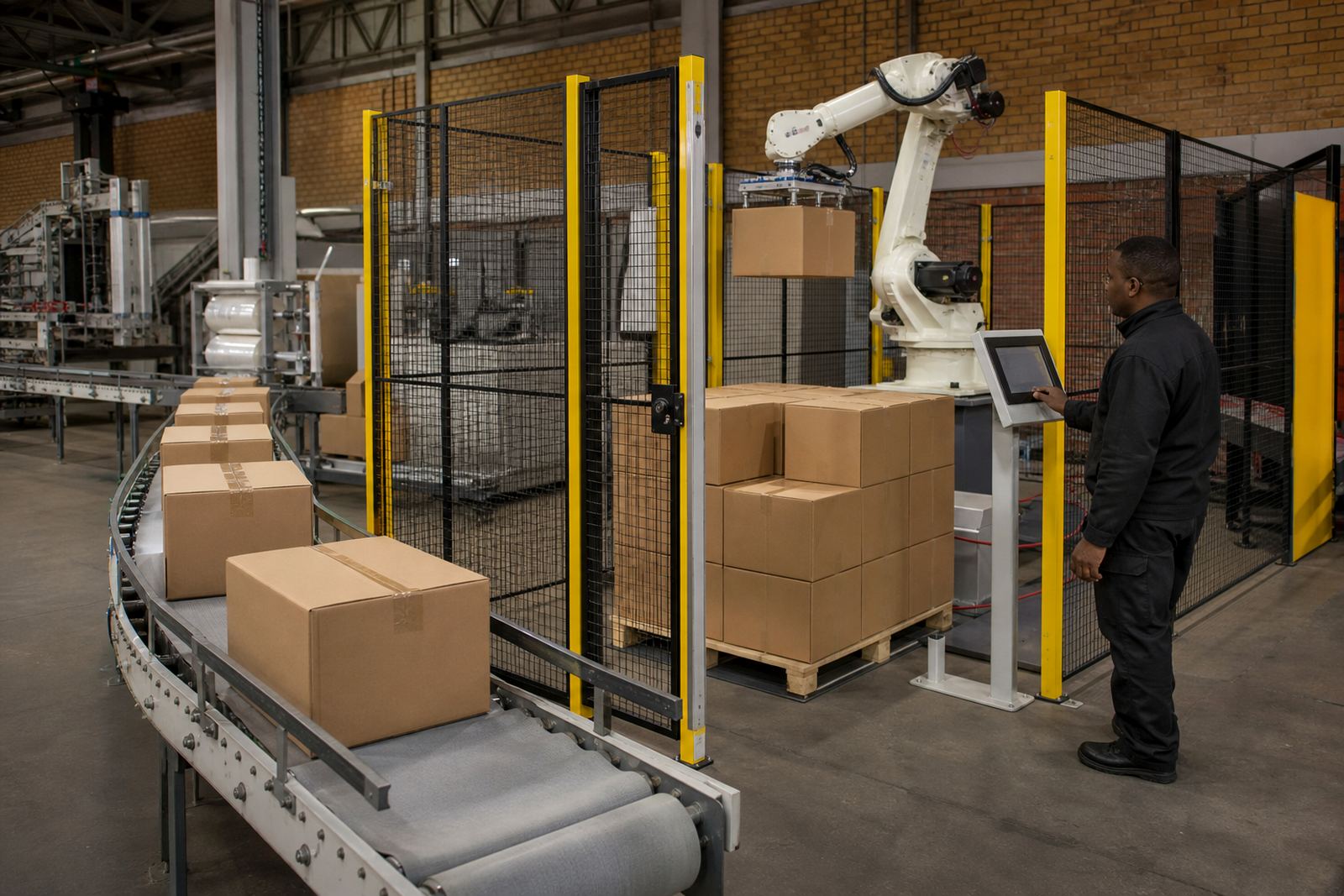
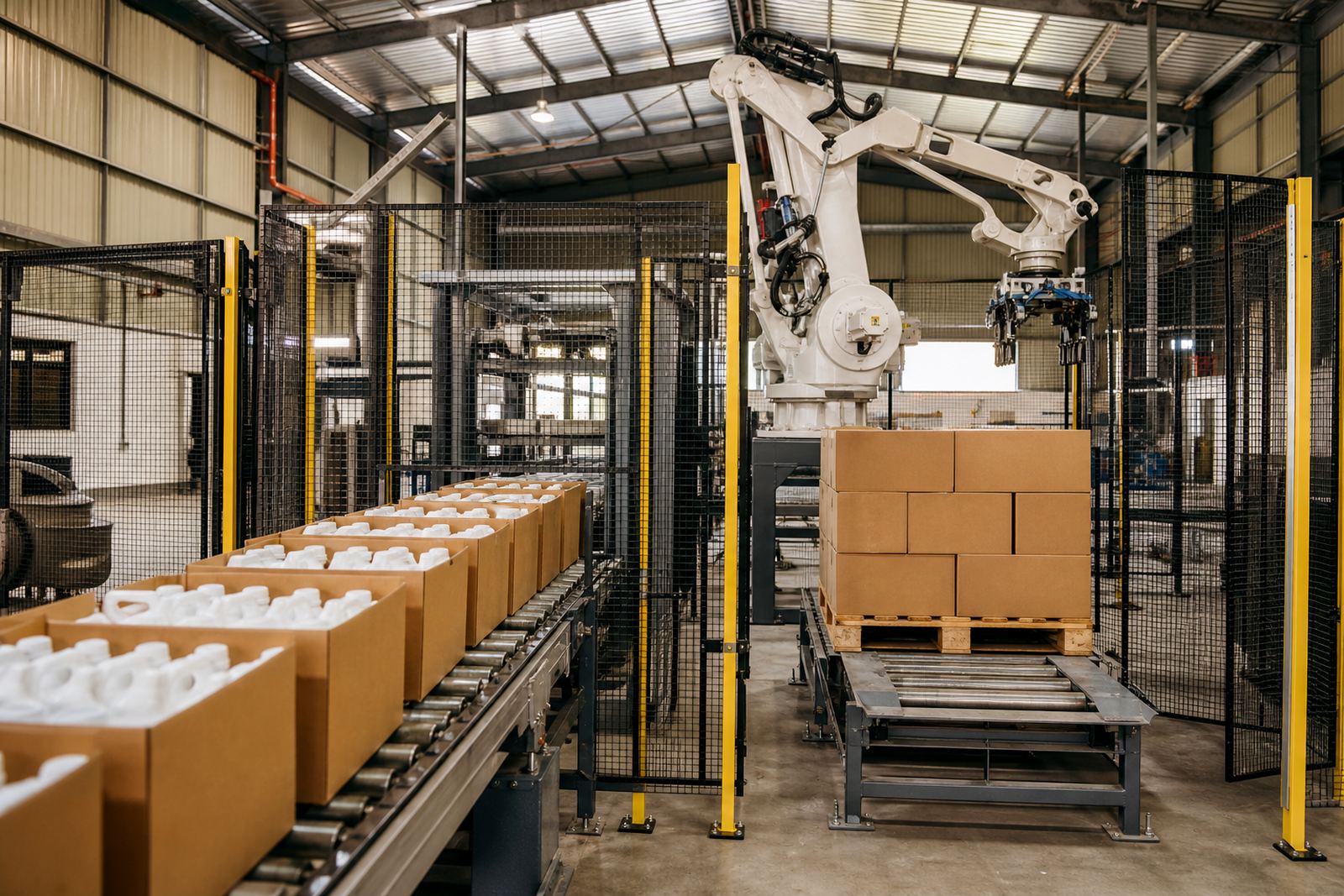
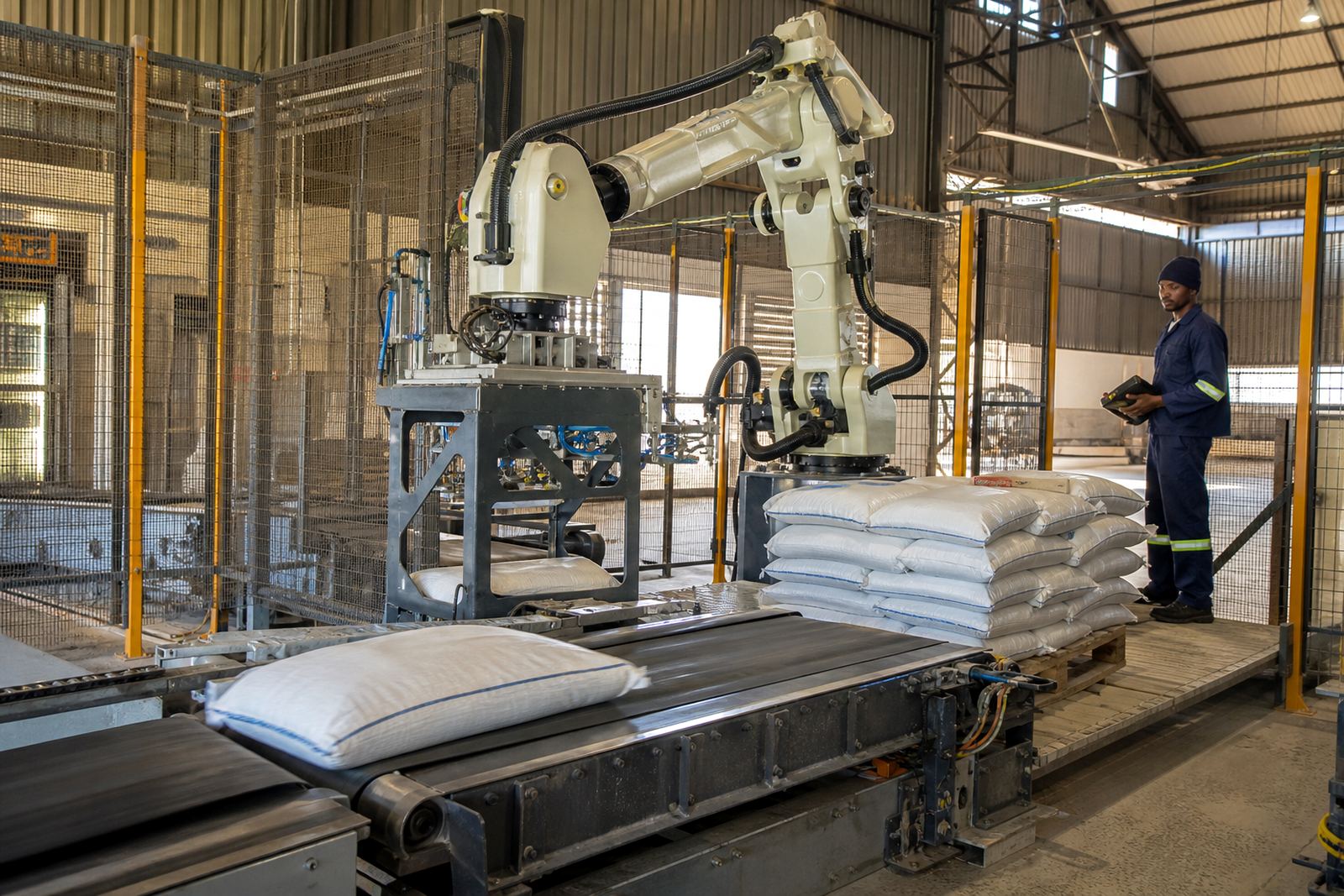
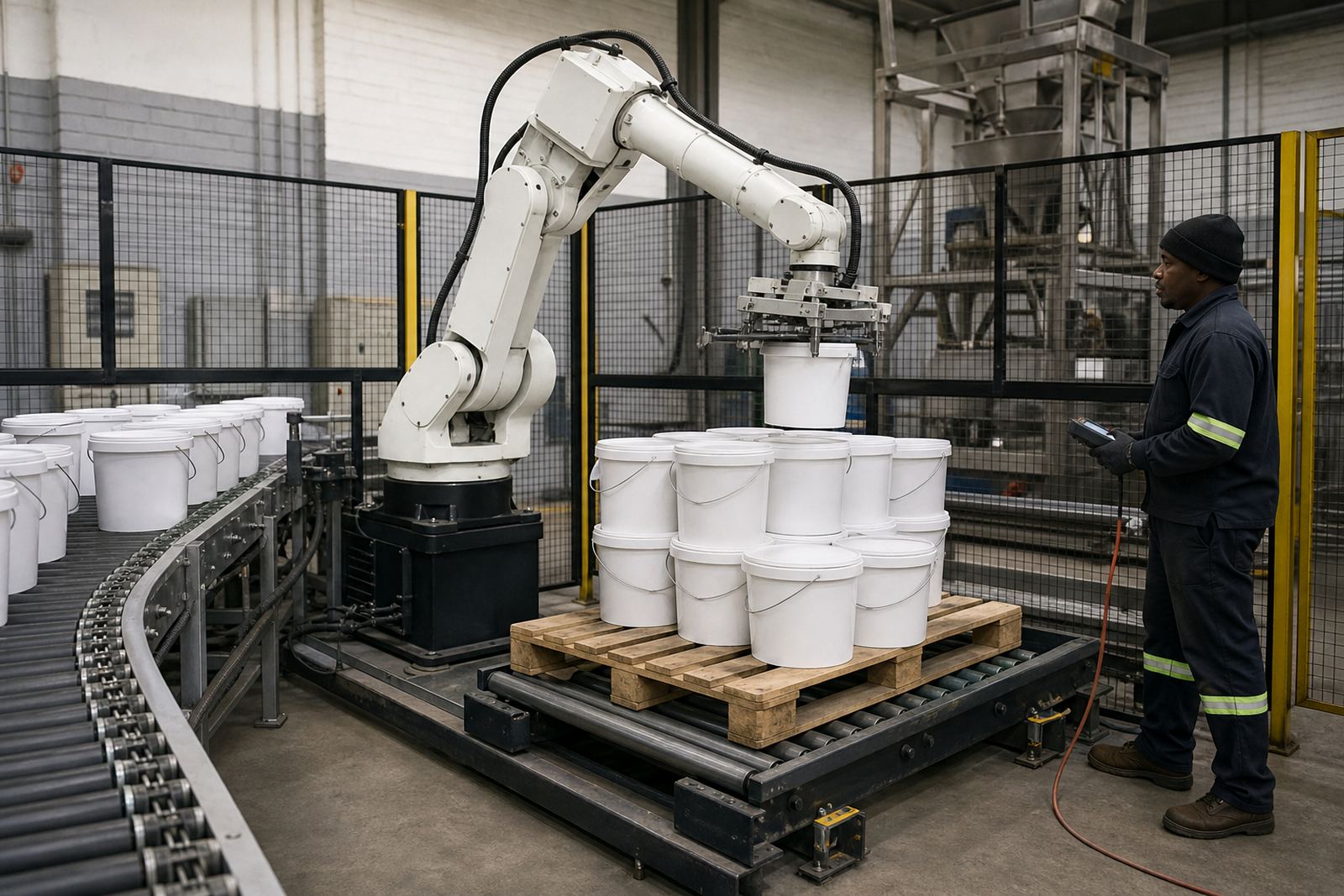
The site was a bucket packing and palletising line serving a manufacturing operation in Mobeni, Durban. The line had to deal with mixed shift patterns, changing pallet heights, and the usual pressures that come with coastal humidity, regular cleaning, and a floor team that cannot afford slowdowns during peak dispatch periods.
The brief was straightforward: improve safe handling at the end of line, reduce manual intervention, and make the pallet build more repeatable. The customer did not want a complete replacement. They wanted a retrofit that could slot into the existing setup, work with the current conveyors and keep the production team familiar with the line layout. That meant careful planning from the start, because every change had to fit into available floor space and existing product flow.
- Site: Mobeni, Durban
- Line type: Bucket packing and palletising
- Focus: Safer handling and steadier pallet builds
- Approach: Retrofit onto existing line equipment
Constraints on a Busy Durban Factory Floor
The biggest constraint was space. The end of line area was already crowded with conveyors, pallet staging, wrap access and operator walkways. There was no room to simply add equipment and hope for the best. We had to map the line carefully, measure transfer points and allow for maintenance access, emergency stops and safe pedestrian routes.
Another issue was line continuity. The operation could not afford a long shutdown, so the retrofit had to be staged. We also needed to account for bucket handling consistency, because the product was not always presented in exactly the same way and that can affect pick positions and pallet pattern accuracy. The site team also wanted a safer method of access for operators and maintenance staff, with proper guarding around movement zones and clear controls for intervention. On lines like this, small errors quickly turn into waste or rework, so details matter.
- Limited floor space at end of line
- Need to retain existing conveyor paths
- Minimal production interruption
- Access and guarding for operators, maintenance and cleaning teams
What We Supplied and Integrated
We supplied a retrofit package centred on robotic palletising support, conveyor integration, safety guarding and controls integration. The arrangement was designed to work with the existing bucket feed and pallet outfeed sequence, so the line did not need to be rebuilt from scratch. Our focus was on the points where the line was losing consistency, then tightening those up with better control and safer movement management.
The work included line surveying, retrofit design, guarding layout, control philosophy and installation management. We also assisted with risk assessment support, because each site needs its own assessment based on the actual machine layout, traffic patterns and operator tasks. For Mobeni, the guarding needed to keep access practical while still isolating moving parts and robot working zones. We planned the controls around clear stop, reset and recovery steps, which helps when a line needs to restart after an interruption.
- Site line survey and retrofit design
- Conveyor handover points reviewed and adjusted
- Controls integration for line start, stop and recovery
- Safety guarding design around motion areas
- Risk assessment support for the site layout
How the Retrofit Was Installed
The retrofit ran over a planned 4 week period, with the work split into survey, installation preparation, physical integration and commissioning support. We first confirmed the conveyor heights, pallet positions and the space needed for guarding and service access. After that, the installation was sequenced so the line could be isolated in sections rather than all at once, which kept the shutdown window manageable.
During installation, the automation and controls work was tied into the existing line signals so the bucket flow, pallet presentation and stop conditions all spoke to one another. We also set up the safety measures around the cell and transfer zones. Once the hardware was in place, the line was tested with operators and maintenance staff so they could see the normal cycle, the interruption response and the safe recovery steps. That training stage is important, because a retrofit only works properly when the team on site understands it. It sounds simple, but a line can look fine on paper and still cause headaches if the handover is rushed.
- Timeline: 4 weeks from survey to commissioning support
- Installation staged to reduce downtime
- Operator handover completed on site
- Maintenance recovery steps confirmed before close-out
What Changed After Commissioning
After commissioning, the main change was steadier pallet build quality. The line was handling buckets more consistently, and the palletising sequence became more predictable across shifts. The customer also gained a safer operating area, with better separation between people and moving equipment. For a Durban site that runs under pressure and deals with humidity, cleaning routines and shift changes, that matters day to day.
The retrofit also reduced the amount of manual correction needed at the end of line. Instead of workers constantly intervening to fix positioning or tidy pallet formation, the system could keep a more regular pattern. That does not remove the need for people, but it does free them up for supervision, quality checks and other duties. The customer said the line felt easier to manage and more orderly, especially when the pace picked up. A small improvement in line control can have a surprisingly big effect on the shift as a whole.
- More consistent pallet builds
- Safer end of line handling
- Less manual correction during operation
- Improved line control for multi shift running
What We’d Reuse On A Similar Line
If we were doing a similar bucket line again, we would follow the same approach: survey first, then design around the real floor layout, not a neat drawing that ignores maintenance space and operator movement. The key is to respect the existing plant and only change what needs changing. That keeps cost and disruption under control while still improving the result.
We would also repeat the practice of involving the site team early. Operators often know where the line hesitates, where product drifts and which points create unnecessary handling. Their input helps shape the retrofit into something practical, not just technically tidy. For bucket packing and palletising lines, that practical detail is what protects uptime. If the guarding is awkward, people will bypass it. If the controls are confusing, they will slow things down. The best retrofit is the one the site can actually live with every day.
- Start with a full site survey
- Design around the existing conveyor footprint
- Involve operators and maintenance staff early
- Keep safety and recovery steps simple to use
Key facts
| Project location | Mobeni, Durban, KwaZulu-Natal |
|---|---|
| Line type | Packing and palletising line for buckets |
| Retrofit scope | Robotic palletising support, conveyor integration and safety guarding |
| Project duration | 4 weeks |
| Base of operations | Spartan, Kempton Park |
| Service coverage | Johannesburg, Pretoria, Durban, Cape Town, Gqeberha, East Rand and Midvaal |