Dispatch Line Conditions In Alrode
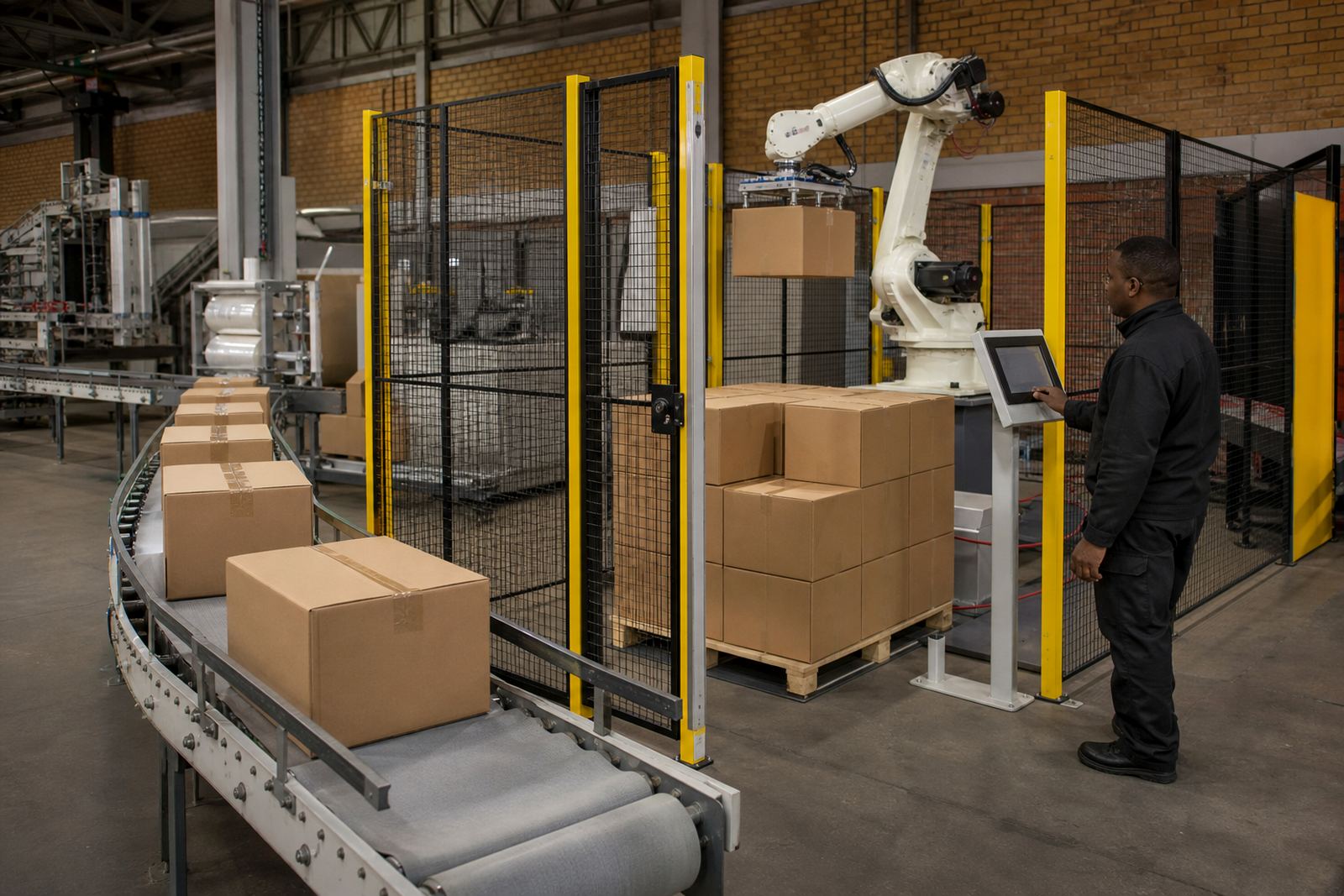
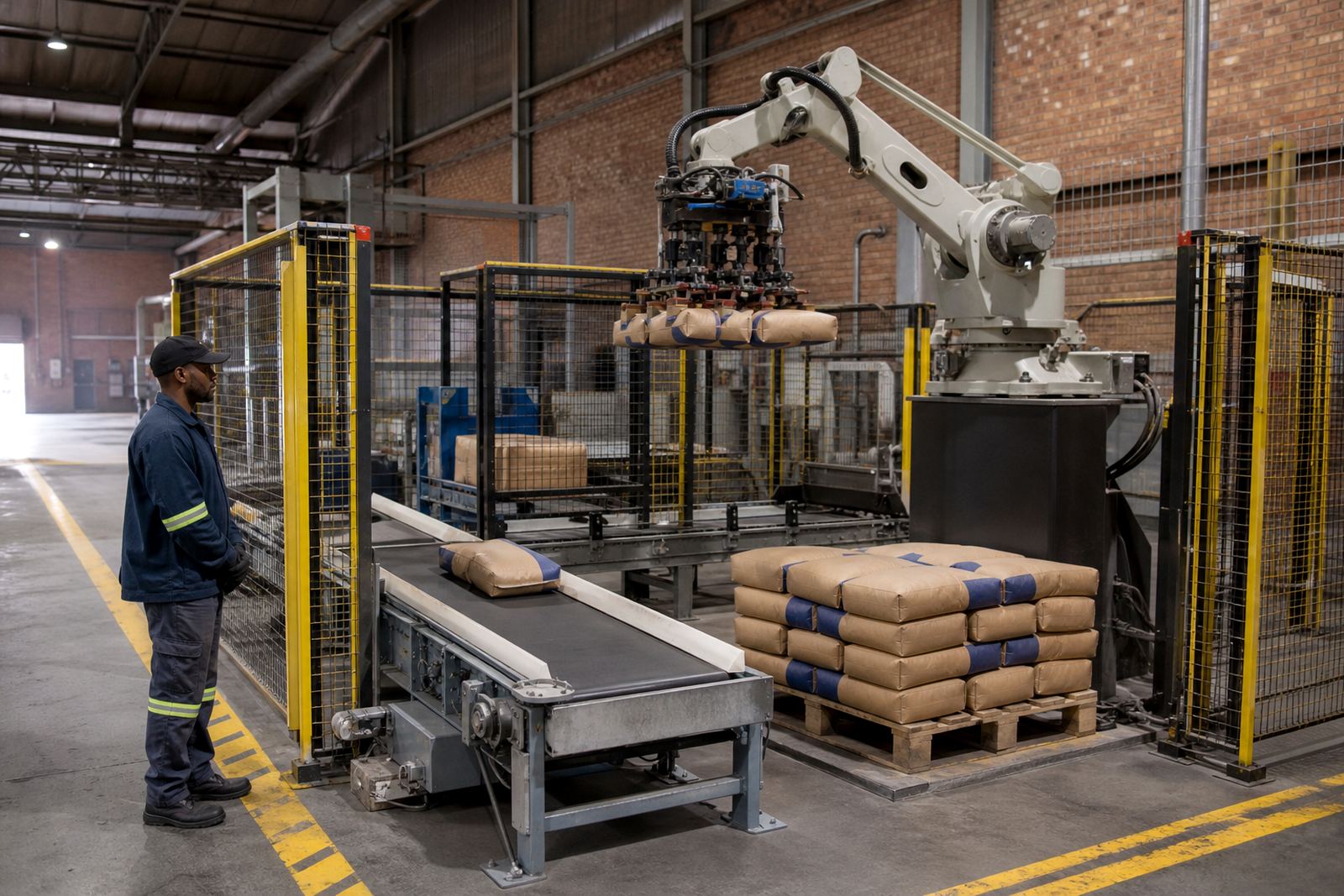
The site was a packaging and dispatch operation in Alrode, serving regional distribution with mixed pallet movements every day. Bags were arriving from the packing side and had to be stacked neatly, with stable pallet layers that could travel through handling, wrapping and loading without leaning or collapsing.
The client brief was practical: reduce manual stacking, keep the line footprint tight, and fit the new system around existing conveyors and a busy bay with limited spare space.The area was active, with pedestrians, forklift traffic and a small clearance between the conveyor end and the dispatch lane.
- Site type: bag packing and dispatch area
- Location: Alrode, Gauteng
- Application: robotic bag palletising retrofit
- Primary aim: lower manual handling at the end of line
What The Brief Required
The existing line was already moving product at a useful rate, so the main challenge was not starting from scratch. Instead, the retrofitting work had to capture bags from the current transfer point, present them consistently to the robot, and form a stable pallet pattern without disrupting upstream packing or downstream wrapping. The bag sizes varied slightly between production runs, which meant the solution had to allow for tolerance in bag shape and settle without needing constant operator correction.
We also had to factor in dust, floor traffic, and the realities of a dispatch area where people are moving pallets, checking labels, and preparing loads for collection. Safety guarding had to fit the work flow, not block it. That meant a proper risk assessment, access points for maintenance, and controls that would let the team clear faults quickly without bypassing safety devices.
Retrofit Scope And Key Components
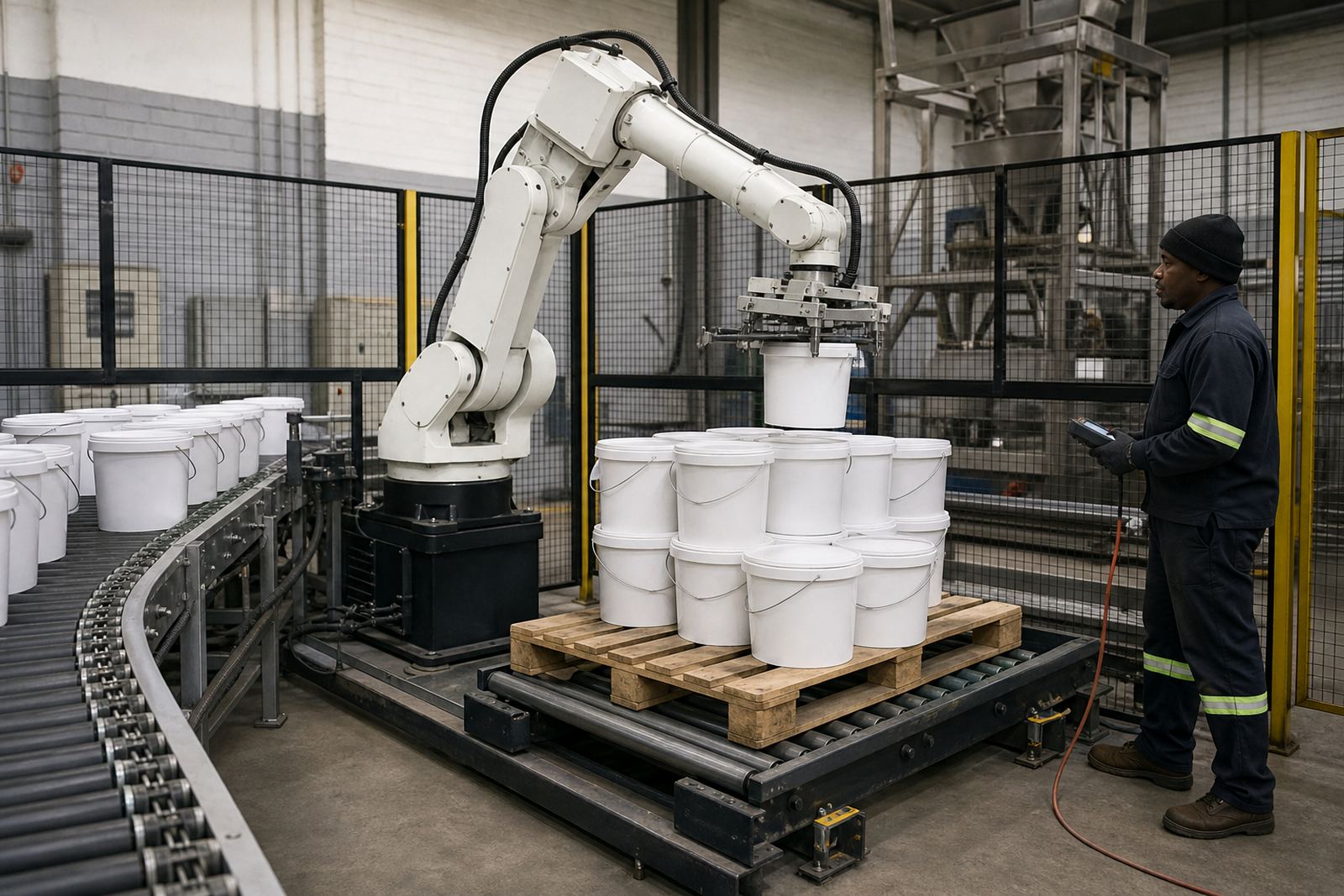
We supplied the retrofit package around a robotic bag palletiser, a conveyor interface, guarding, controls work and commissioning support. The bag handling sequence was designed to receive product from the existing conveyor, orient the bags where needed, and place them onto the pallet in defined layers. A pallet dispenser and transfer position were included so the line could work with standard pallet sizes used on site.
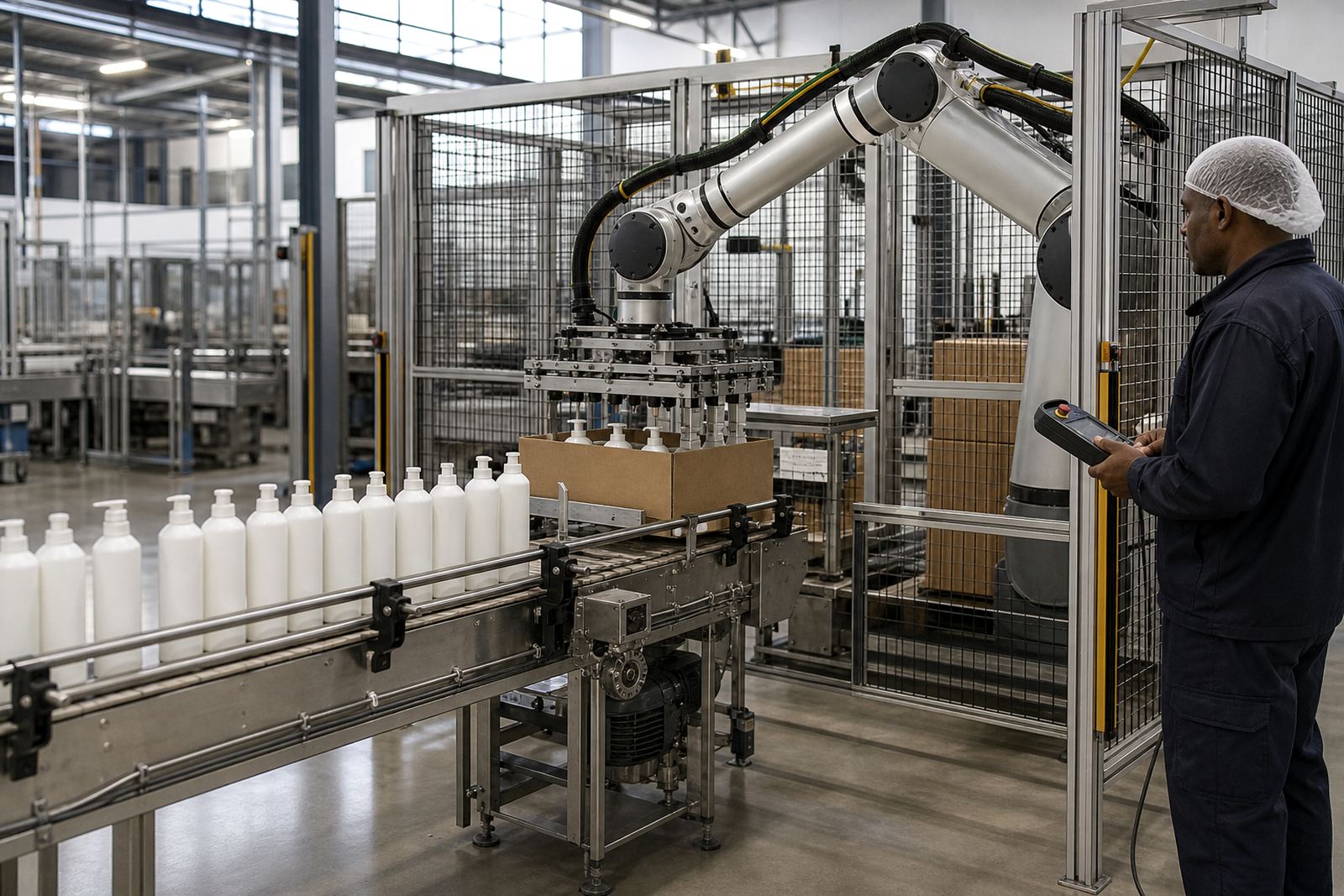
The controls work was set up to integrate with the existing line stops, sensors and operator push-buttons. We also planned for faults and changeovers, because a dispatch line needs simple resets rather than complicated routines. The guarding design created a controlled palletising cell with access gates, interlocks and clear viewing points. In a retrofit like this, the guarding must be strong enough for daily use yet practical for maintenance and cleaning.
- Robotic palletising cell for bag handling
- Conveyor integration with existing end-of-line transfer
- Safety guarding with interlocked access points
- Controls integration for start, stop and fault reset
- Operator training for normal running and changeover
Survey, Risk Review And Layout Decisions
Before any installation work, we completed a site line survey and supported the risk assessment process for the specific area. That review covered reach zones, pallet movement, access for maintenance, and the routes people use when loading or clearing the dispatch floor. General safety rules apply, but every site needs its own assessment because line speed, bag weight, floor marking and traffic patterns all change the risk picture.
The layout had to preserve forklift access and allow enough room for pallet staging without congesting the bay. We positioned the cell so the robot could stack at a comfortable reach while keeping the operator side clear and visible. Where the floor surface and anchoring points needed attention, we planned around the actual condition on site rather than assuming a perfect slab. That saved time later and reduced the chance of rework.
- Risk assessment support was completed for the installed area
- Floor space was planned around existing dispatch traffic
- Access gates and service clearance were built into the layout
- Existing conveyors were retained where they were still suitable
Installation And Commissioning In Weeks
The project was completed in a staged timeline over 8 weeks. The first week covered site verification and final layout marking. Weeks 2 and 3 focused on fabrication, guarding preparation and controls detailing. Mechanical installation and conveyor tie-ins followed, with electrical wiring and panel work completed alongside the physical build. Once the cell was in place, we moved into commissioning support, dry runs, and bag pattern checks.
During commissioning, we tested the sequence across a range of bag conditions to confirm stable placement and reliable layer formation. We also checked emergency stops, gate interlocks and fault recovery so the team could return the line to service quickly after a stop. The handover included operator training, basic troubleshooting steps and maintenance guidance for the end users on shift. One small issue was the natural variation in bag settle, which we adjusted for in the place points and layer settings.
Results On The Dispatch Floor
The immediate gain was a cleaner handover from packing to palletising, with less repetitive lifting at the dispatch end. Pallets left the cell with more consistent layer quality and better load stability, which reduced rework before wrapping and loading. The client also gained a more predictable workflow, because the robot kept a repeatable cycle instead of relying on operator pace through the shift.
For the team on site, the change meant less physical strain and fewer interruptions caused by inconsistent stacking. It also gave maintenance staff a clearer control structure and a safer working envelope around the palletising zone. The line now suits higher routine demand without needing extra hands at the manual stacking point, and it can run through normal production changes with basic settings adjustments.
What We Repeat On Another Alrode Line
If we were doing a similar retrofit again, we would keep the same discipline: survey the line first, respect the available footprint, and design the cell around the conveyor rather than forcing the conveyor to fit the robot. That approach works well in busy Gauteng dispatch areas where speed matters but so does access, safety and day-to-day maintenance.
We would also repeat the same focus on simple controls, clear operator routines, and a risk assessment tied to the real site conditions. A retrofit is only useful if the team can run it confidently after handover. In Alrode, that meant a system built for practical use, not just for the drawing office.
Key facts
| Project | Robotic bag palletiser retrofit |
|---|---|
| Location | Alrode, Gauteng |
| Timeline | 8 weeks from survey to handover |
| Integration | Existing conveyors and end-of-line controls |
| Safety | Guarding, interlocks and site-specific risk assessment support |
| Team | Sibusiso Hlongwane, Annelise Abrahams, Thabo Malherbe, Farah Khoza, Johan Booysen, Lerato Khanye |