What the Cape Town export line needed
The site was a busy export packing operation in Cape Town with a mixed palletising area, existing conveyors and a constant push to keep outbound loads tidy for collection and shipping. The packers were working with changing carton sizes, regular shift handovers and enough variation in product flow to make manual palletising difficult to keep consistent. The brief was simple: stabilise the outbound pallets, reduce strain on the team and improve flow without rebuilding the full line.
Because the line was already running, the retrofit had to fit around existing equipment and the available floor space.We planned the work around those realities, not an ideal world layout.
Site constraints and operating conditions
This was not a greenfield installation. The packing room already had conveyor runs, a case erector area and a pallet staging zone that could not be moved far without disrupting the whole operation. The palletiser had to work with existing line heights, turning points and transfer positions, while still leaving safe access for operators and maintenance staff.
- Limited floor space beside the outbound conveyor
- Existing carton flow that could not be stopped for long periods
- Variable carton weights and changing pallet patterns
- Coastal humidity and salt air exposure in Cape Town
- Need for safe restart after or short power interruptions
We also had to keep the risk profile practical. Safety guarding, access points and emergency stops were designed around the real movement of people and product on site, with a site specific risk assessment supporting the final layout.
Retrofit scope and equipment interface
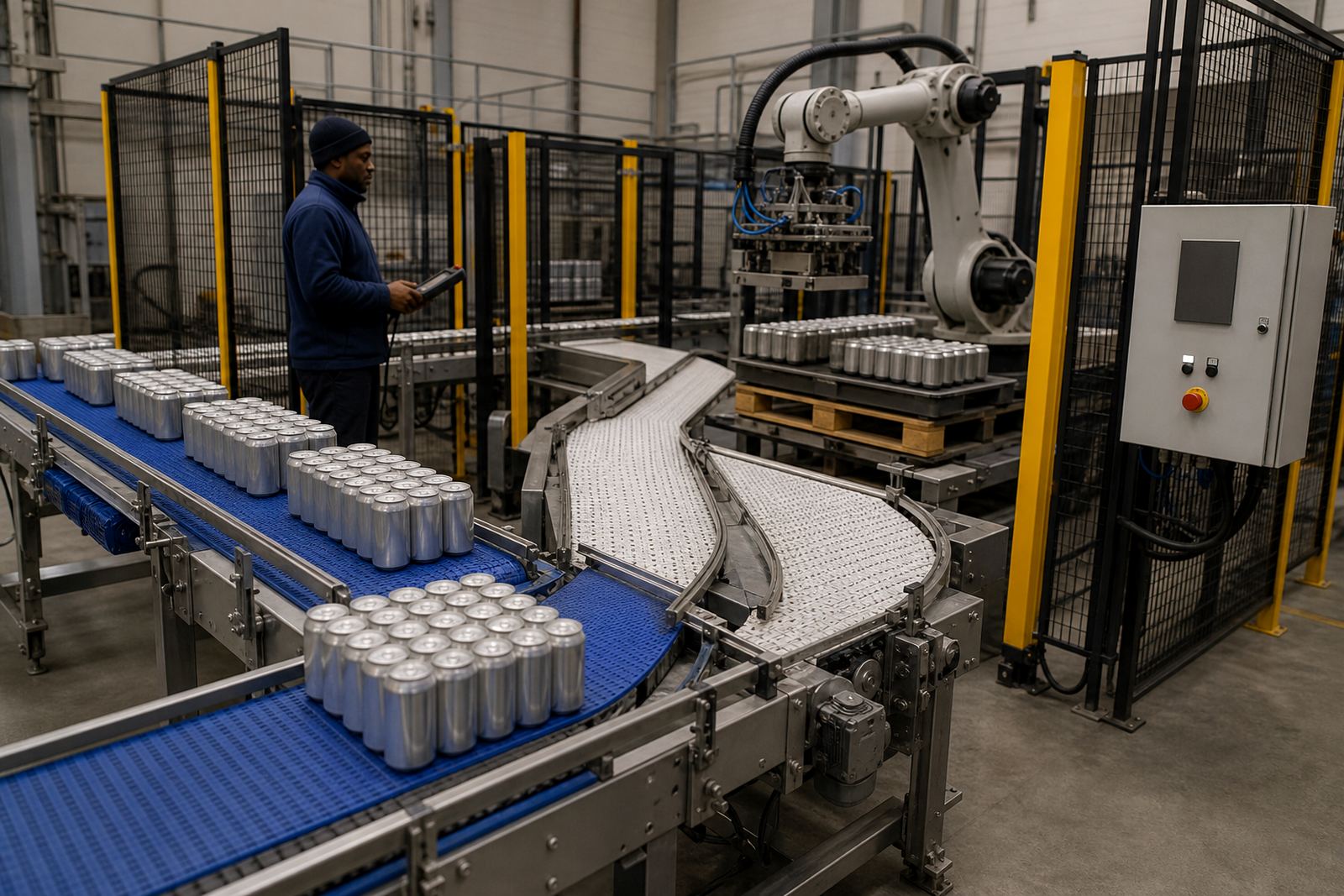
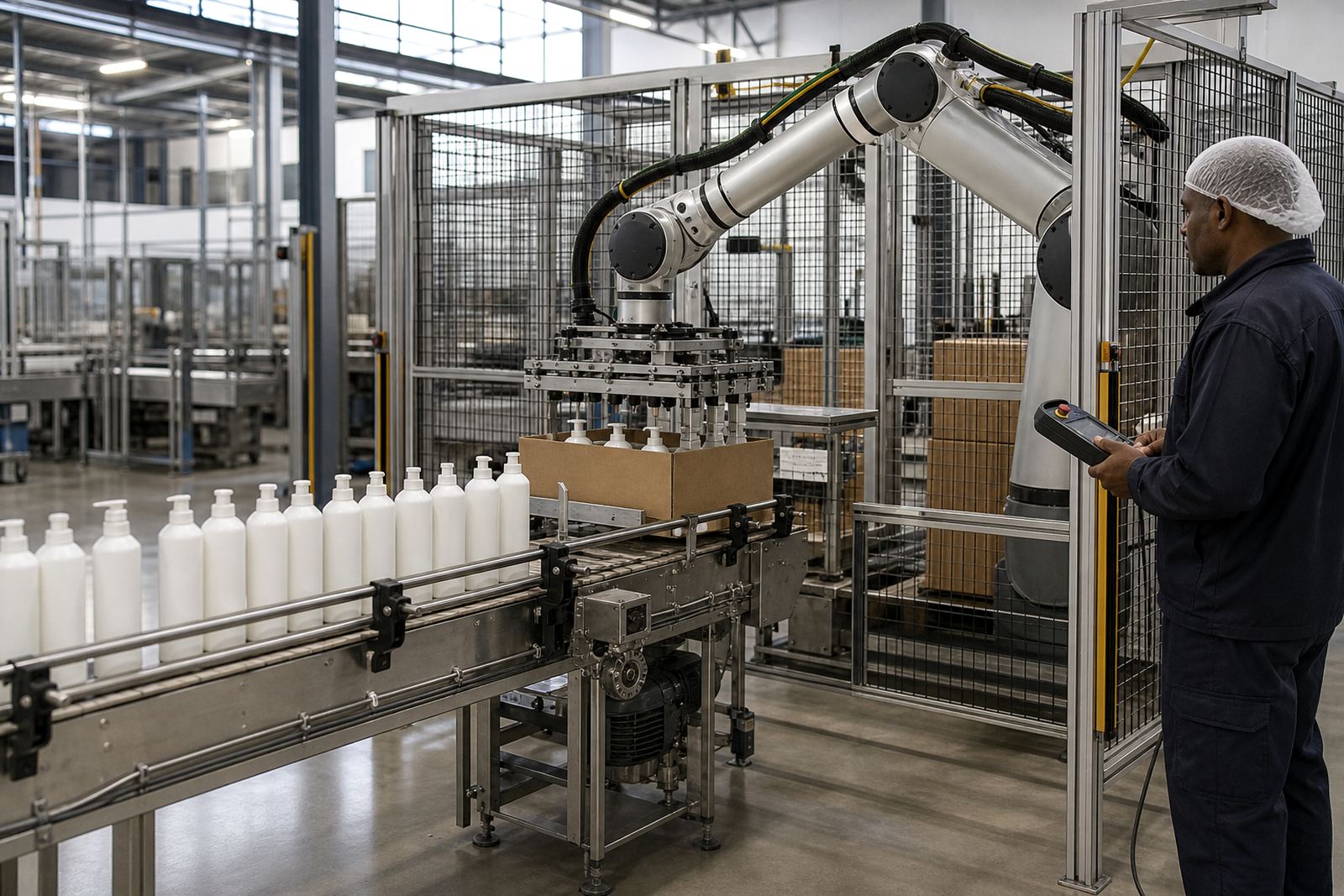
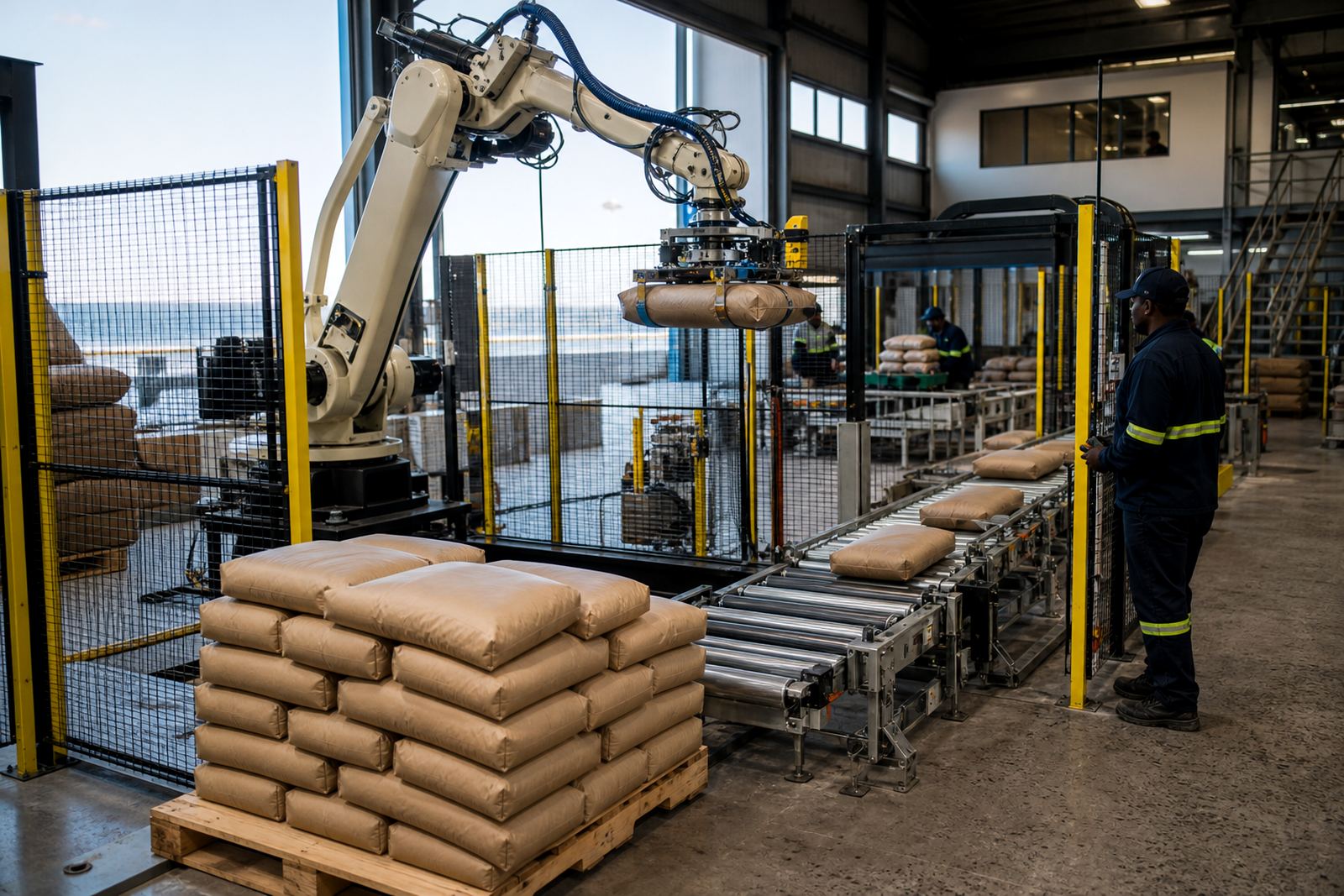
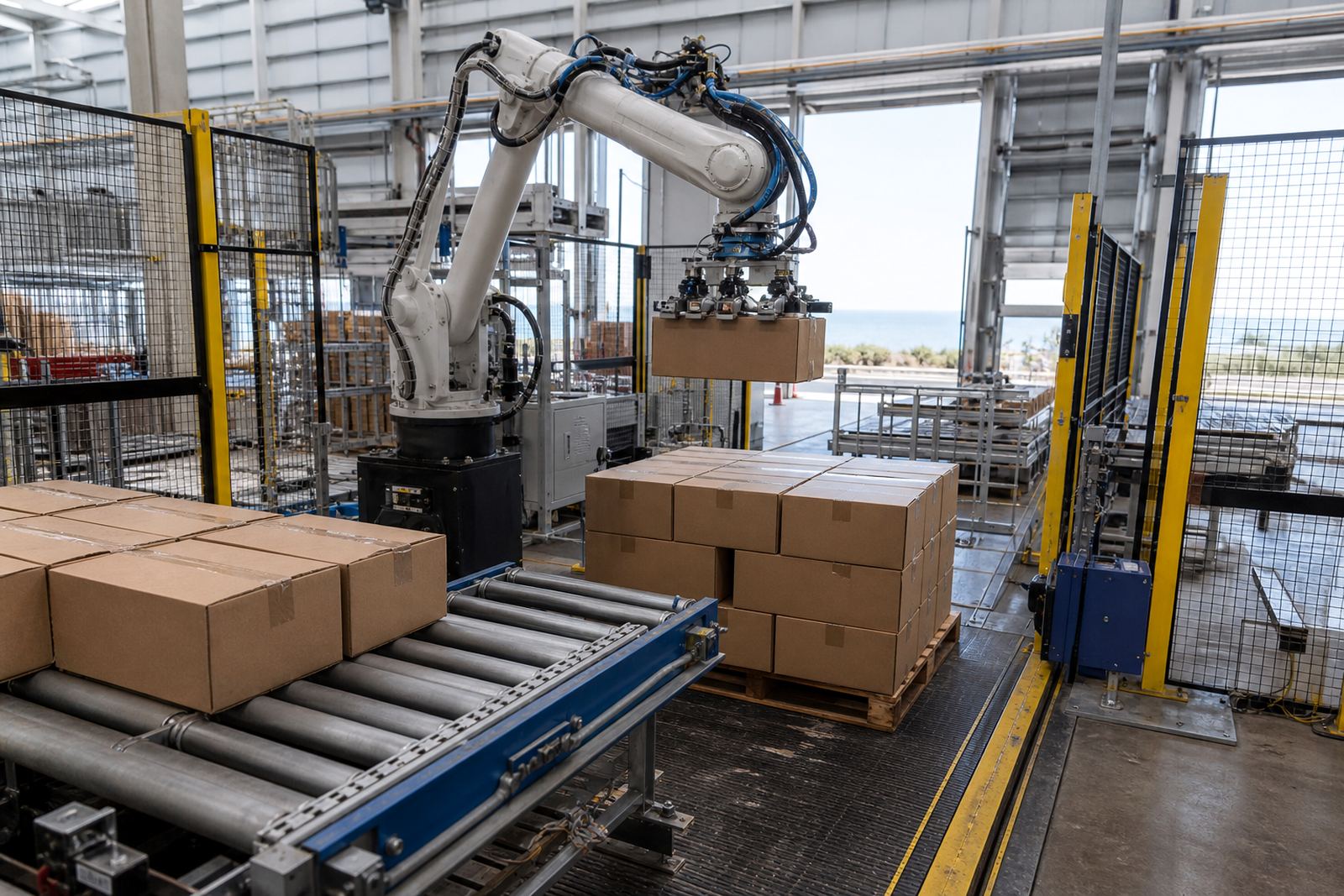
We supplied and managed the retrofit for a robotic palletising cell tied into the existing packing and conveyor line. The system was designed to receive cartons from the line, build stable pallet patterns and place loads consistently for export dispatch. The cell included conveyor interface work, control integration, safety guarding design and operator facing controls that made the process easier to run on shift.
The palletising concept was kept practical. Rather than forcing the site to change its whole process, we adapted the robot workcell to the current carton transfer points and outbound pallet position. That helped keep the packing room flow familiar for the team while removing a large part of the manual stacking work.
- Robotic palletising cell integrated to existing conveyors
- Safety guarding with access control and operator safe zones
- Controls integration for line handshakes and fault signalling
- Support for carton infeed timing and pallet changeover
- Training for operators and supervisors on daily use
How the installation was managed
The project ran over 6 weeks from survey to commissioning support. We started with a site line survey in Cape Town, checked carton flow, measured transfer heights and mapped the available footprint. From there, the team completed the retrofit design and control sequence, then scheduled the installation around production windows so the plant could keep operating for as much of the programme as possible.
During installation, our site supervision team managed the practical details on the floor, including guarding placement, conveyor tie-ins, cable routing and test cycles. Thabo handled automation and controls work, while Johan coordinated site activities and Farah supported the controls side. The result was a cell that could be commissioned in stages, with line checks completed before full handover.
Results on the outbound line
Once the retrofit was complete, the export packer had a steadier palletising process and a cleaner handoff from packing to dispatch. Pallets were built more consistently, with better pattern control and less last-minute manual correction. That mattered for export loads, where unstable stacking can create problems during storage, transport and container handling.
The line also became easier to manage at shift level. Operators were no longer spending as much time lifting, twisting and reworking pallets, which helped reduce fatigue over a busy run. Line flow improved because the palletising area stopped acting like a bottleneck when volumes picked up.
- More consistent pallet build quality
- Less manual handling at the end of line
- Improved outbound flow and fewer interruptions
- Cleaner handover to dispatch and staging
What we repeat for a similar plant
For a similar export packing line, we would take the same approach again: start with a proper site survey, design around the existing conveyors, and confirm the pallet patterns before hardware is placed. That avoids costly changes later and keeps the retrofit aligned to the real production pace on site. We would also keep safety guarding and risk assessment work in step with the physical layout, not as an afterthought.
At coastal sites in particular, we would continue to specify practical access for maintenance, clear guarding around moving parts and a simple operating sequence for the team.That is the difference between a system that looks good on paper and one that works day after day.
Key facts
| Project type | Robotic palletising retrofit for an export packing line |
|---|---|
| Location | Cape Town, Western Cape |
| Implementation time | 6 weeks from survey to commissioning support |
| Line interface | Existing conveyors and outbound carton flow |
| Safety scope | Guarding design, access control and site specific risk assessment support |
| Outcome | More stable pallets and smoother line flow |