Project Brief: Bag Handling on an Existing Durban South Line
The client was a Durban South manufacturer running a busy bagging line with manual end of line palletising. Bags were stacking inconsistently, product handling was hard on the team, and the line was vulnerable to downtime when the pallet build shifted or a pallet was changed over. The brief was simple enough to say but not simple to execute: automate the palletising stage without rebuilding the whole line.
We were asked to design a retrofit that would fit into the space available, work with the existing conveyor route, and suit a coastal site where humidity, dust and regular washdown all need to be considered.We kept the scope focused on the palletising end and the transfer section, rather than disturbing the rest of the packing process.
- Site type: established bag packing and palletising line
- Location: Durban South, KwaZulu-Natal
- Challenge: manual palletising, uneven stacks, limited floor space
- Approach: retrofit automation onto the existing line layout
What We Added to the Line
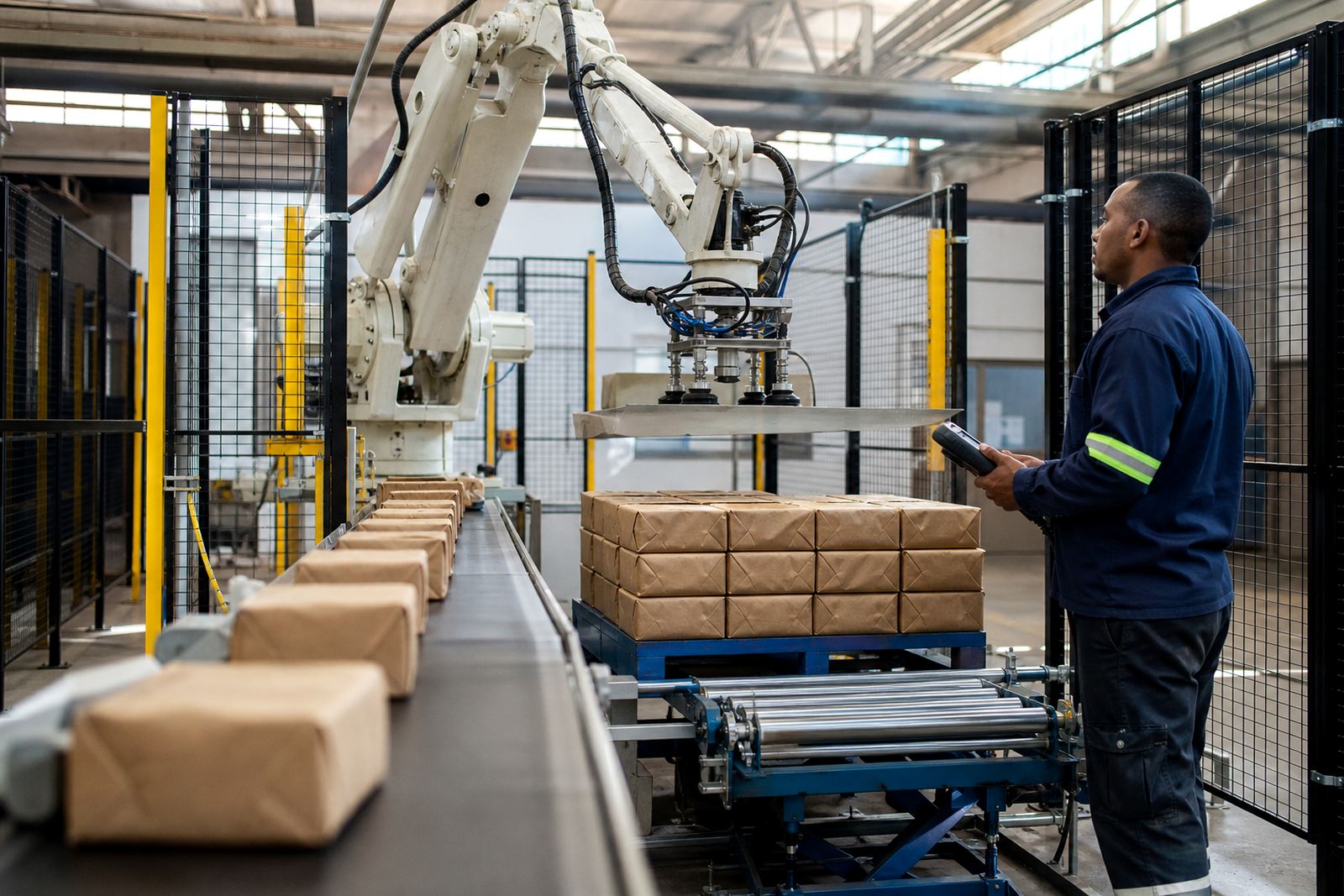
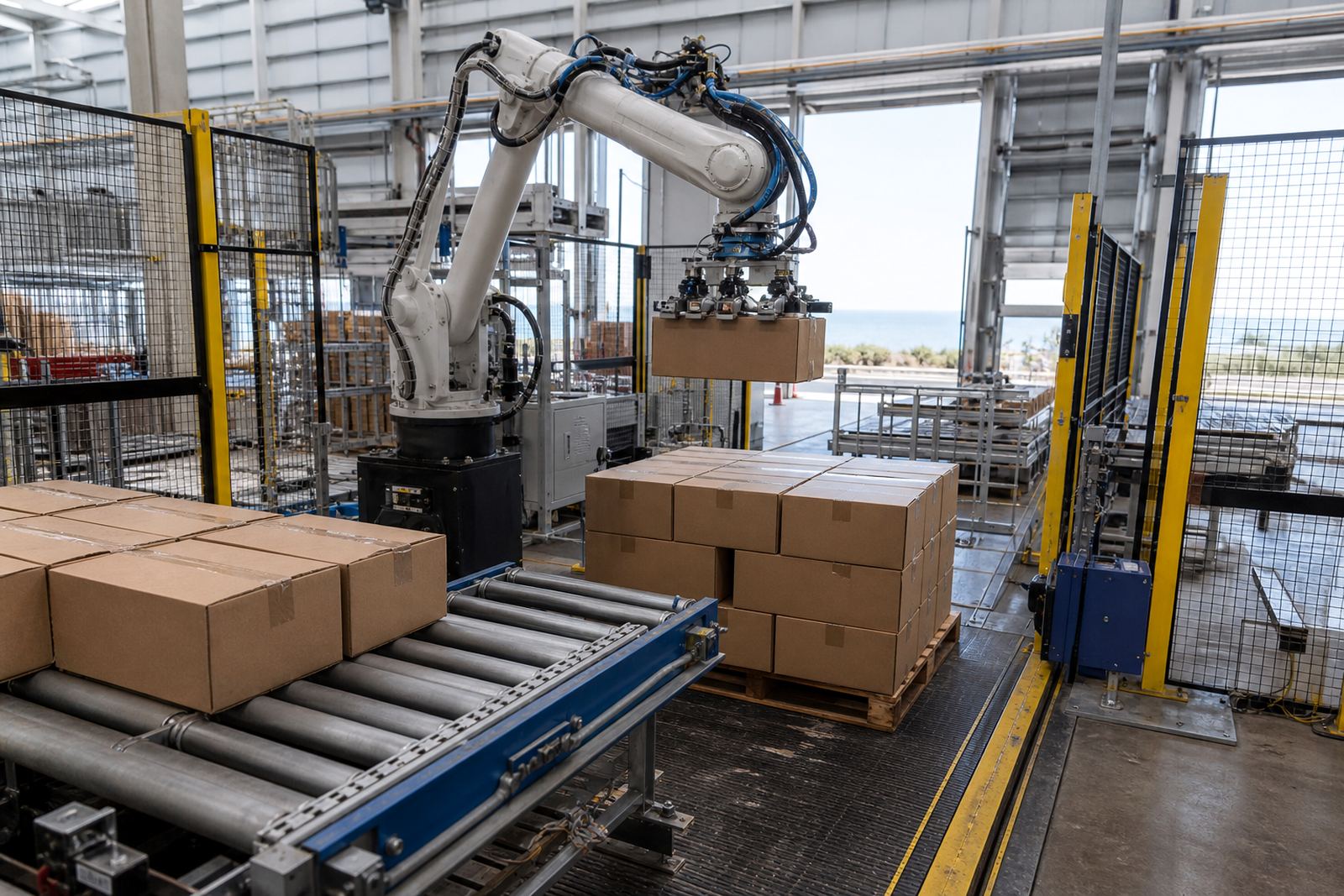
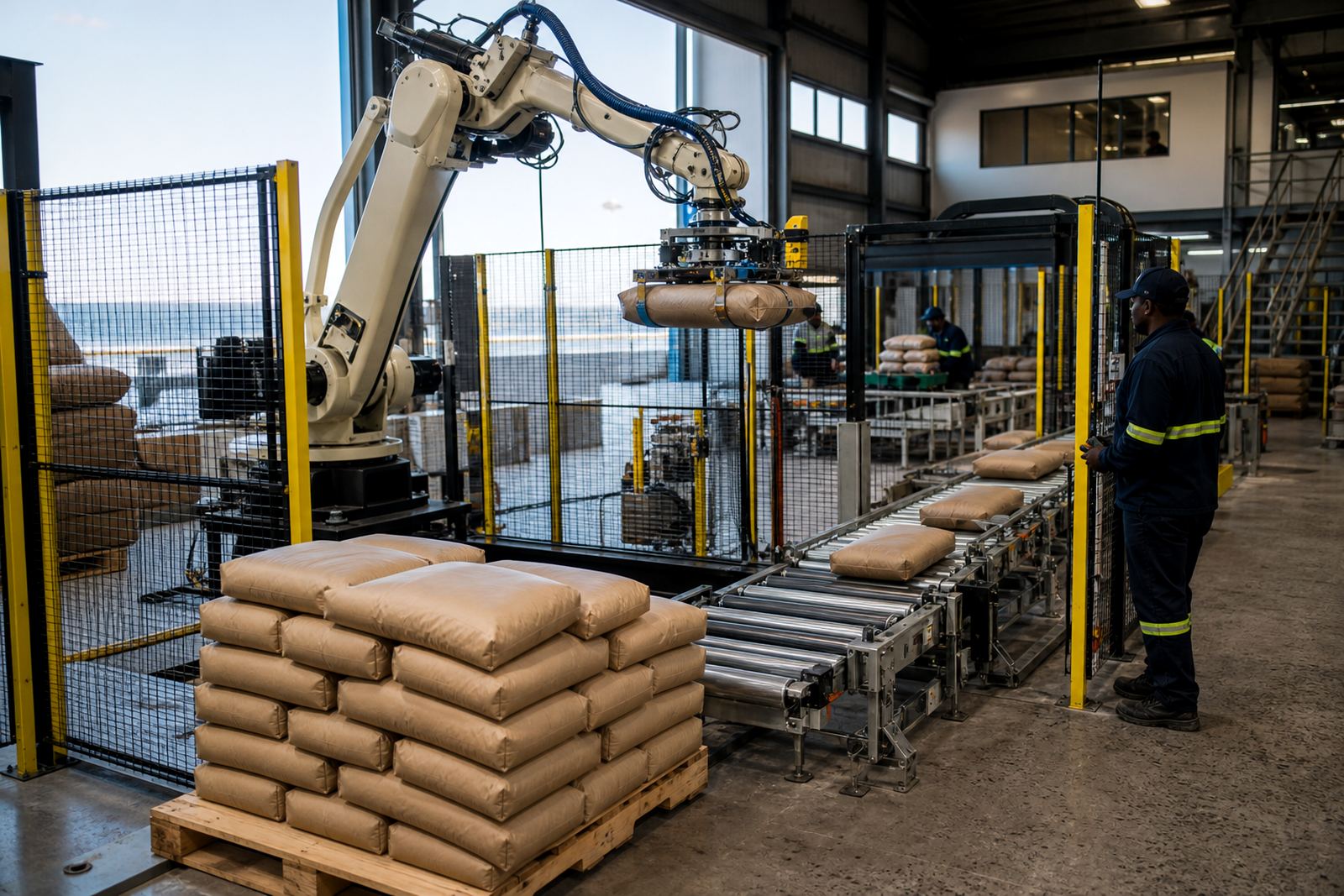
We supplied and integrated a robotic bag palletising cell with a pallet transfer conveyor so finished pallets could move through the end of line in a controlled way. The retrofit was designed around the existing pack-out flow, with product arriving from the conveyor, being presented consistently to the robot and then built into stable pallet patterns suited to the bag sizes in use. Bag transfer between the conveyor and the gripper had to be predictable, because soft-pack products can shift easily if the infeed is untidy.
The robot cell was paired with safety guarding, interlocked access points and clear operator controls. We also included controls integration so the new equipment could communicate with the line, pause when needed and restart without confusion after a stoppage. The intent was not to overcomplicate the site. It was to give the team a system they could run with confidence, even during a busy shift or after a power interruption.
- Robotic bag palletiser for end of line stacking
- Pallet transfer conveyor for finished pallet movement
- Safety guarding and access control points
- Controls integration with existing conveyors and signals
- Operator interface for routine start, stop and fault reset
Survey, Layout and Risk Review
Before any fabrication or installation work started, we completed a site line survey and a risk assessment support process focused on the actual conditions on site. That included available floor space, pallet entry and exit routes, headroom, operator walkways, line speeds, and the position of existing conveyors and electrical services. On a retrofit like this, the wrong layout can create more problems than it solves, so we checked the full handling path from bag discharge to pallet collection.
The safety review considered guarding zones, access for maintenance, stop positions, pallet movement, and how operators would interact with the system during normal running and fault recovery. Each site needs its own risk assessment and the final guarding arrangement needs to suit that site, not just a drawing. In Durban humidity and dust also matter, so enclosure positioning and practical access for cleaning were part of the discussion from the start.
- Floor space mapping and equipment clearances
- Conveyor tie-in points and transfer heights
- Guarding zones and access control planning
- Maintenance access and cleaning considerations
Installation and Commissioning in Stages
We managed the installation in stages over five weeks so the client could keep core production moving while the retrofit was put in place. First came the mechanical set-out and conveyor positioning, then the guarding and pallet transfer section, followed by controls wiring and system testing. We used the existing line structure where suitable, which helped keep the work practical and reduced unnecessary alteration to the site.
Commissioning was done with live checks on bag flow, pallet pattern formation and stop-start behaviour. Once the line was running, we worked through the small adjustments that always come with a retrofit: timing, bag presentation, pallet positioning and fault recovery. The site team was also shown the routine checks needed for shift start-up, changeover and basic maintenance. A few minor tweaks were needed on the first run, which is normal on an older line that has been handling bags the same way for years.
- Timeline: 5 weeks from survey to commissioning support
- Staged install to limit disruption to production
- Testing on live bag flow and pallet build patterns
- Operator handover and basic maintenance guidance
What Changed After Go-Live
After commissioning, the biggest change was consistency. Pallet stacks became more uniform, handling dropped away from the manual end of line task and the conveyor transfer gave the site a neater flow into dispatch. The team no longer had to lift and stack bags all shift, which reduced strain and made it easier to keep pace during busy periods. It also gave the operation a clearer pallet handover point for wrap and collection.
From a production point of view, the retrofit made the line easier to manage. The packing area became less dependent on labour availability, and the end of line process had fewer interruptions caused by uneven stacks or pallet changeovers. For a coastal site, less manual handling also means less confusion around wet floors, packaging dust and tired operators at the end of a long run. The system now supports a steadier flow from pack to pallet without asking the rest of the line to be rebuilt.
- More consistent pallet builds
- Reduced manual lifting at end of line
- Cleaner transfer into wrap and dispatch
- Better control during shift changes and busy runs
What We Repeat On The Next Plant
On another bag palletising retrofit like this Durban South project, we would follow the same route: survey the line properly, protect the existing production flow, and design the palletising cell around the real bag sizes and pallet patterns being used. That is the part that usually makes or breaks a retrofit. It is tempting to focus only on the robot, but the conveyor handoff, guarding and controls integration matter just as much.
We would also keep the operator training practical and site-specific. In a retrofit environment, the people running the line need clear steps for normal running, fault recovery and maintenance checks. For this Durban South project, that meant a system that matched the plant and the team, not a one-size-fits-all setup. That is how a retrofit stays useful long after handover.
- Start with the line survey, not the equipment order
- Match the pallet pattern to the bag product and pallet size
- Restart routines after unplanned stops
- Keep training short, clear and specific to the site
Key facts
| Client type | Durban South manufacturer |
|---|---|
| Project scope | Robotic bag palletiser and pallet transfer conveyor retrofit |
| Location | Durban South, KwaZulu-Natal |
| Timeline | 5 weeks |
| Integration | Existing conveyors, controls and end of line flow |
| Key disciplines | Survey, design, guarding, installation management, commissioning support |