What the Paarl bottle line needed
The site was a beverage packing operation in Paarl serving regional distribution and seasonal order spikes. The brief was to introduce robotic case loading for grouped bottles without ripping out the full line, because the existing conveyors, packing tables and end of line space still had useful life left in them. The client wanted better consistency at the case pack stage, less reliance on manual handling and a layout that could still be maintained locally.
From the outset, a few practical limits shaped the project. Floor space was tight, the line had to keep feeding into the existing palletising area, and the site could not lose production for long. We also had to work around normal operating windows, older machine interfaces and the everyday realities of a live plant in the Western Cape, including dust control, washdown zones and disciplined changeovers.
How we approached the retrofit
We started with a site line survey and a full review of the product flow from infeed to final case discharge. That let us map bottle grouping, case presentation, transfer heights and the available stopping points for the robot cell. The design kept the original line direction where possible, so operators did not have to relearn the whole process.
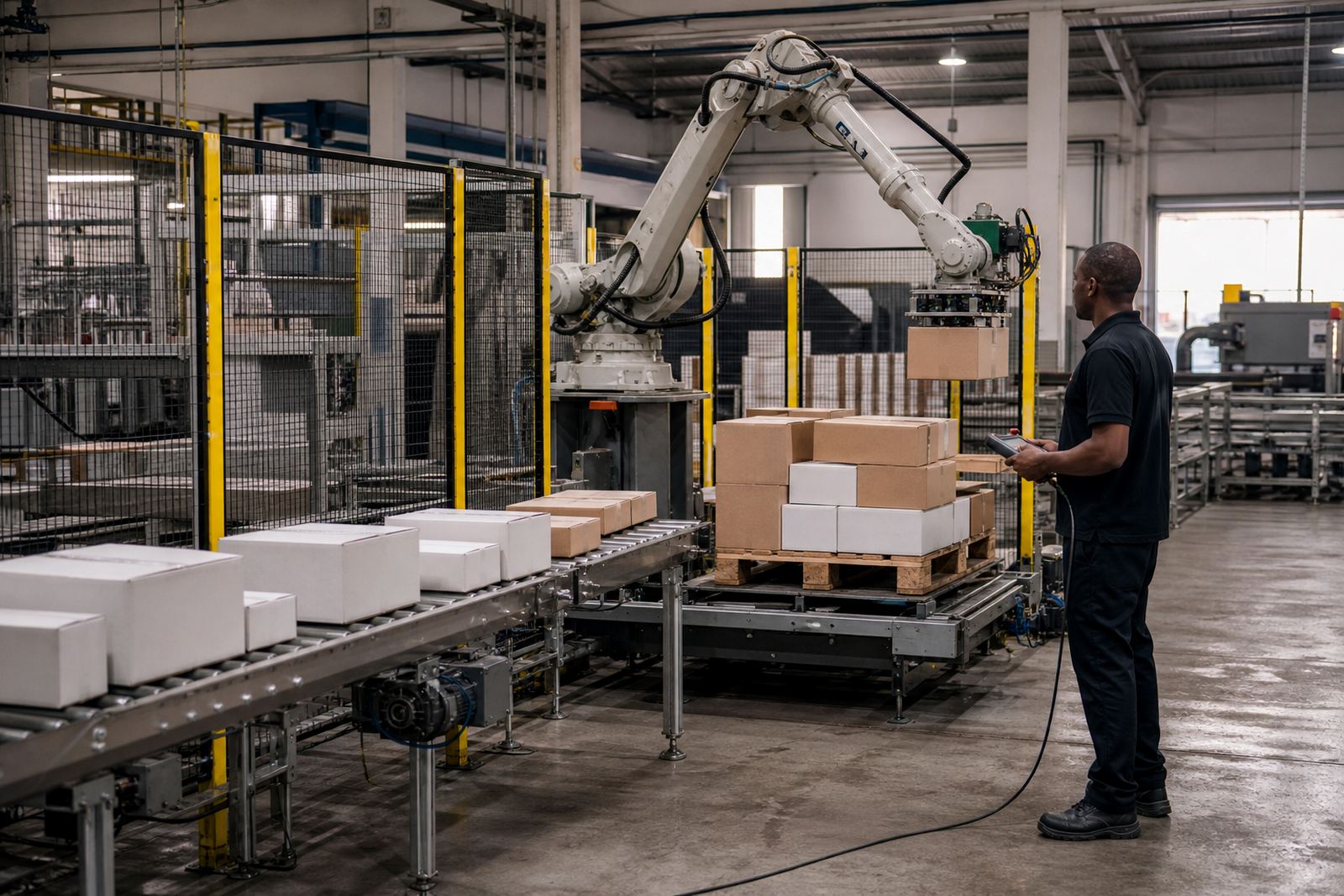
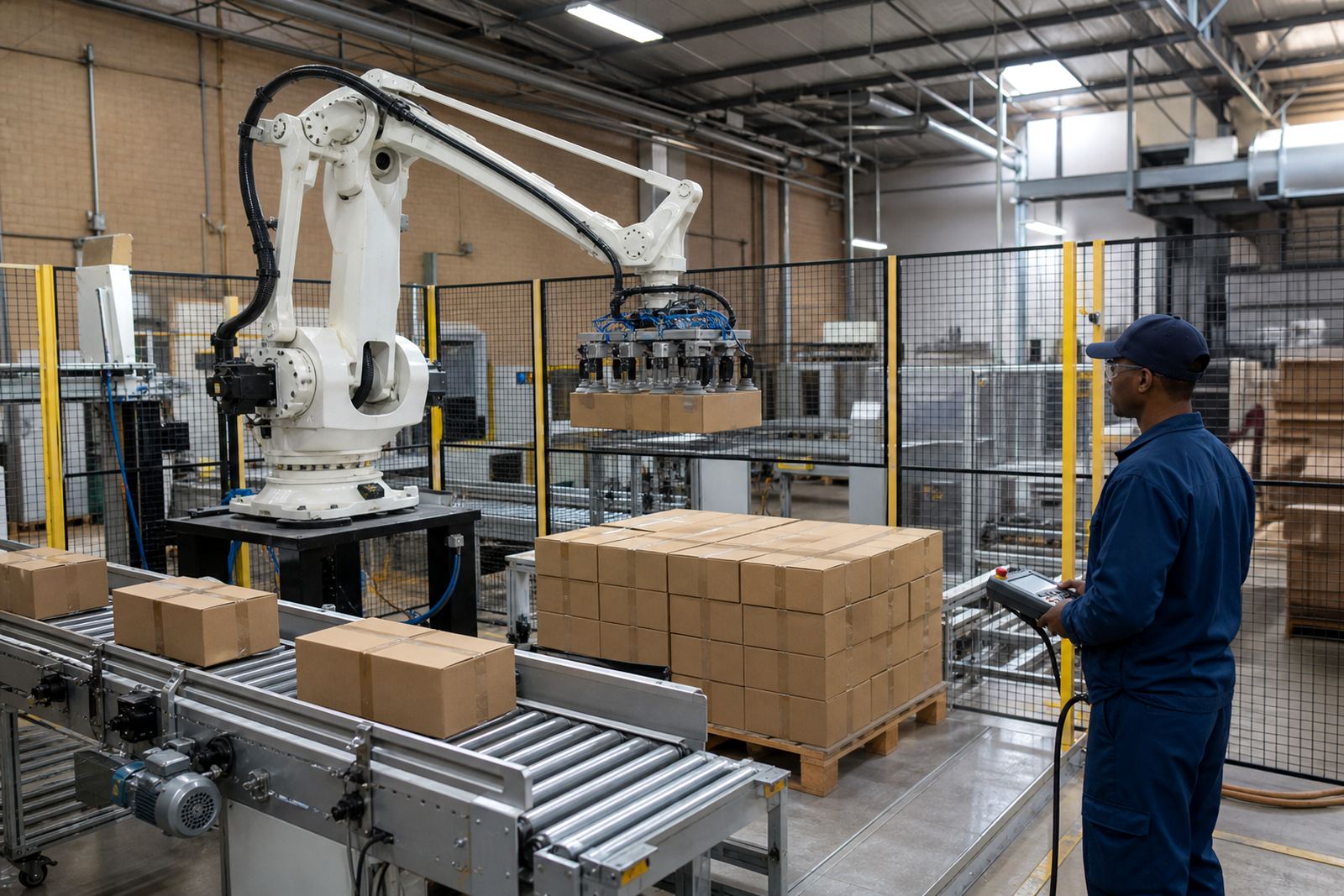
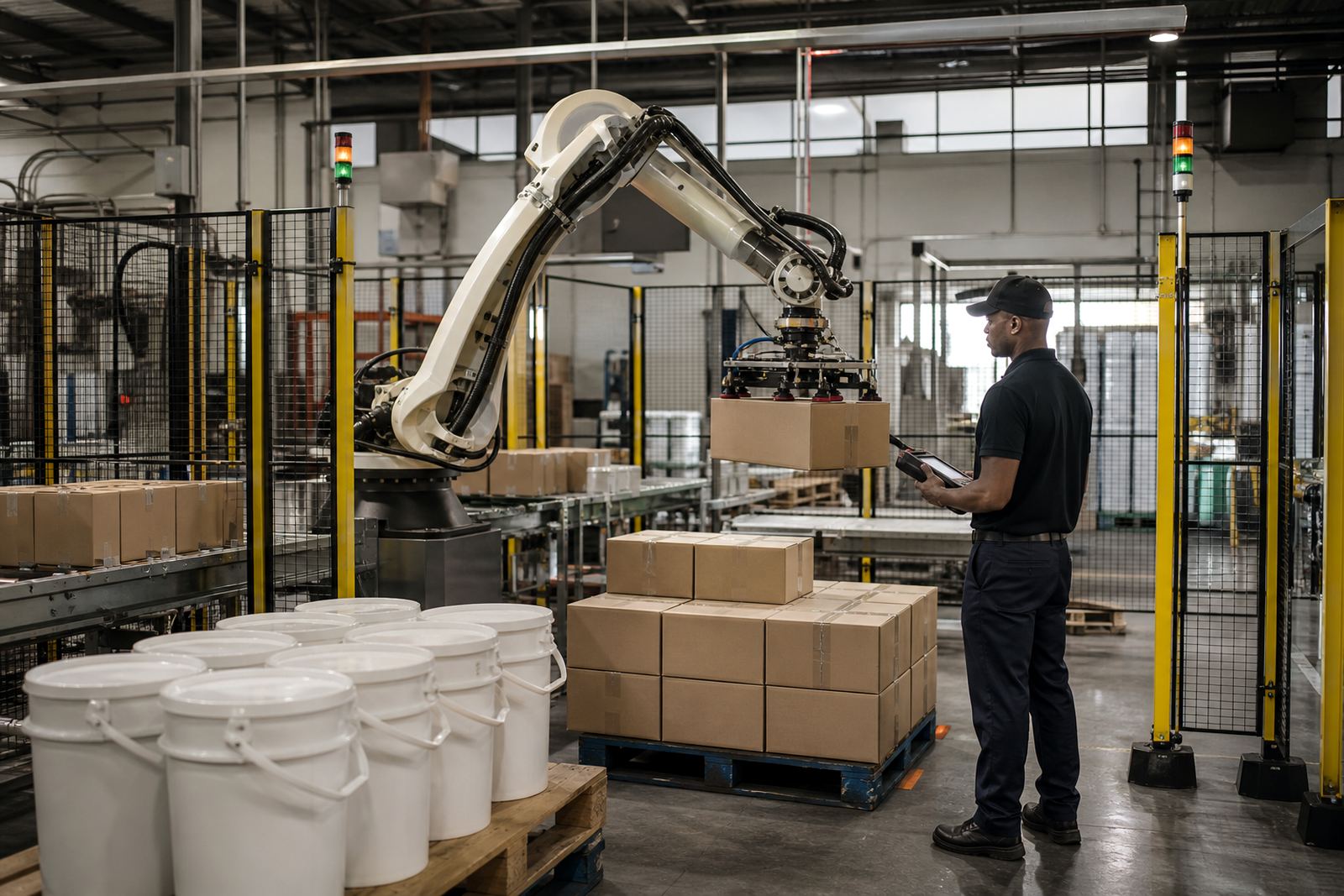
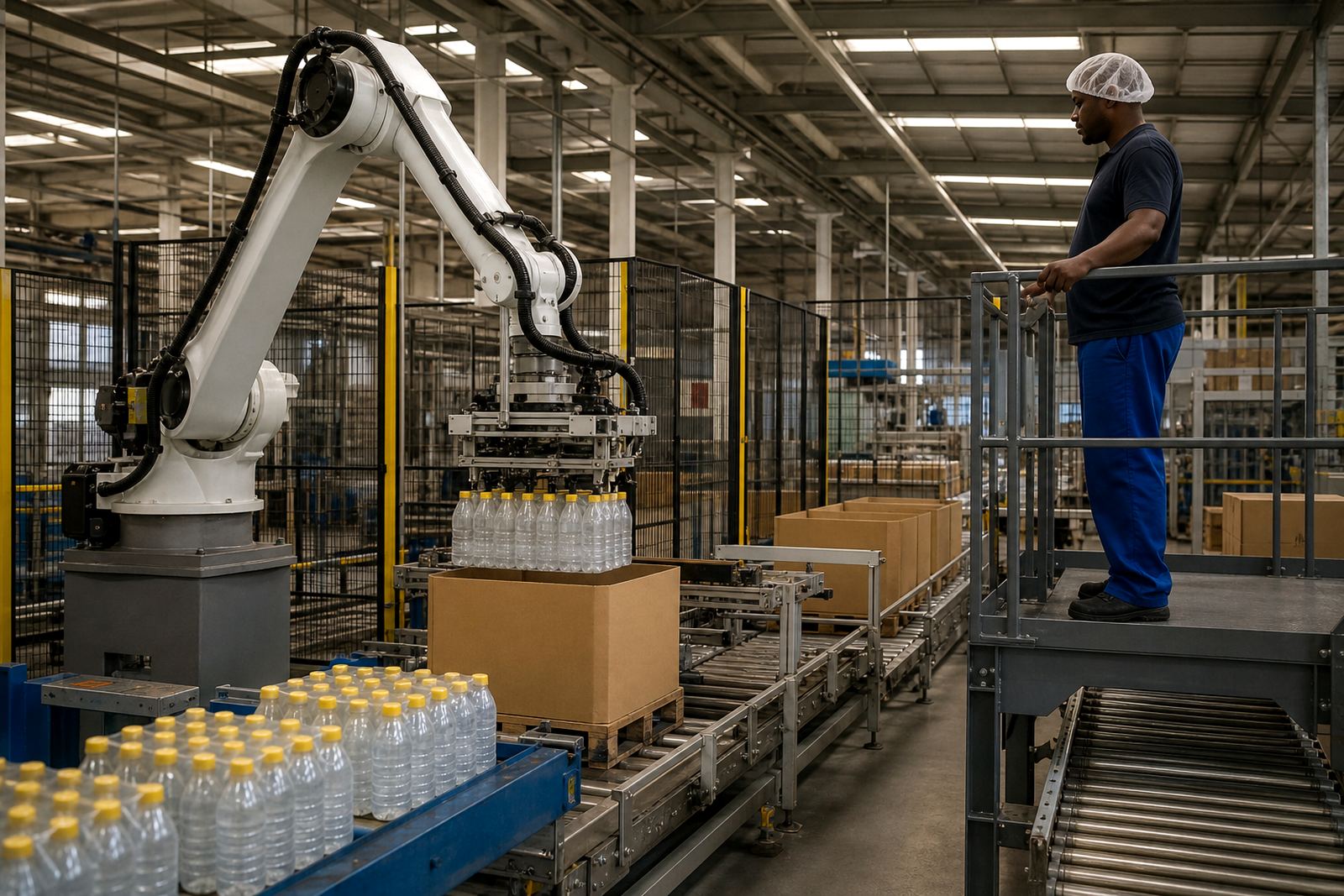
The solution used a robotic case loading cell positioned alongside the existing conveyor run, with product accumulation upstream and case discharge downstream. In practical terms, that meant grouped bottles arrived in a controlled pattern, were picked and placed into cases, then the filled cases moved on to the palletising section. Controls integration tied the new equipment into the existing line so stop and start logic, fault signals and jam conditions could be managed from one point.
Safety guarding and risk review
Any retrofit like this needs a proper site specific risk assessment. We supported the process by looking at access points, safeguarding distances, operator movement, maintenance access and isolation procedures. The guarding had to suit the actual use of the line, not just the drawing on paper, because the way a crew loads, cleans and services a line can change the risk picture quite a bit.
We supplied and managed the installation of physical safety guarding, access doors where needed, interlocks and warning devices around the cell. The final arrangement kept routine clearing and maintenance practical while still separating people from moving equipment. The layout also had to work for shift handovers and for supervisors checking the line without stepping into the operating area.
- Fixed guarding around the robot working envelope
- Interlocked access points for controlled entry
- Emergency stop placement at key operator positions
- Clear access for cleaning and planned maintenance
What was supplied on site
We handled retrofit design, conveyor integration, controls integration, installation management and commissioning support. The mechanical work covered brackets, frames, transfer points and the physical tie in to the existing conveyors. The controls work covered signals, sensors, fault handling and line status. We also coordinated the installation sequence so the plant could keep moving through the project in stages.
Operator training formed part of the handover. That covered normal running, fault recovery, product changeovers, safe access and daily checks. Maintenance support was included after commissioning, along with breakdown assistance and spares planning so the site could keep the line running without waiting on guesswork or last minute sourcing.
- Robotic case loading retrofit
- Conveyor and controls integration
- Safety guarding design and installation management
- Operator training and maintenance support
Programme and installation sequence
The project ran over 8 weeks from survey to handover. The first phase covered the site line survey, layout confirmation and risk review support. The second phase was detailed retrofit design and component selection. After that we moved into fabrication, site preparation and staged installation, followed by controls checkout and dry testing before product trials.
Because the original line had to remain largely intact, sequencing mattered. We planned the tie ins so the existing conveyors could stay in place as long as possible, then brought the new cell in during the agreed downtime window. That reduced disruption and helped the site keep production planning under control. It also meant the team did not have to keep reworking the same area twice, which always saves time.
What changed after commissioning
Once the line was commissioned, the client had a more repeatable case loading process for grouped bottles and a better handoff into the palletising section. Manual lifting at the pack point was reduced, the flow became easier to manage during busy shifts and the line was less sensitive to inconsistent handling between operators. The crew also found changeovers more predictable because the new controls logic gave clearer fault information.
For a site like this, the gain is not only speed. It is also consistency, safer handling and a layout that can be maintained without shutting down half the plant. The retrofit suited the existing footprint, which is often the difference between a practical upgrade and a project that causes too much disruption. It held up well during normal production and the team could run it with less supervision once the operators were comfortable.
- Cleaner flow from grouped bottles to packed cases
- Less manual handling at the end of line
- Better control over faults and line stops
- Retention of much of the original line layout
What We Repeat On The Next Plant
We would approach the next bottle line the same way: survey first, then design around the plant that is already there, not around a wish list. Retrofitting is usually most effective when the original conveyors, controls and space are assessed honestly from the start. If a section can be reused safely, it should be reused. If it causes delays or creates risk, it should be changed properly.
That is the value of this kind of project for manufacturers in Paarl and across South Africa. It suits sites that need a practical upgrade without a full line rebuild. For packing and palletising lines, the combination of robotic retrofits, sensible guarding and proper integration is often the best way to improve output while keeping the plant workable for the people who run it every day.
Key facts
| Project | Paarl Bottle Line |
|---|---|
| Location | Paarl, Western Cape |
| Application | Robotic case loading for grouped bottles |
| Line approach | Retrofit into existing conveyor layout |
| Programme | 8 weeks |
| Scope | Survey, design, guarding, controls, installation, commissioning and training |