Germiston tray line: the brief and the site conditions
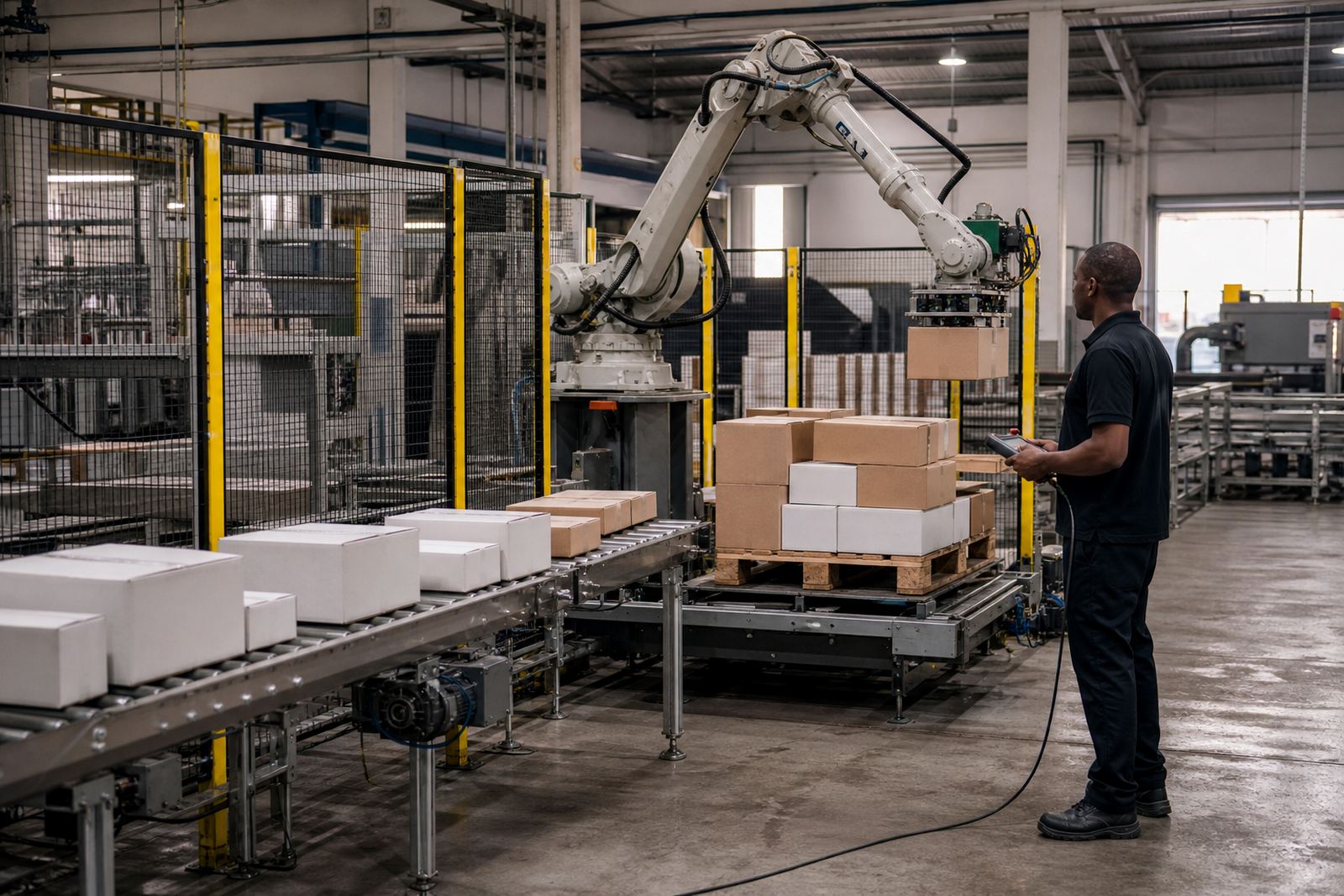
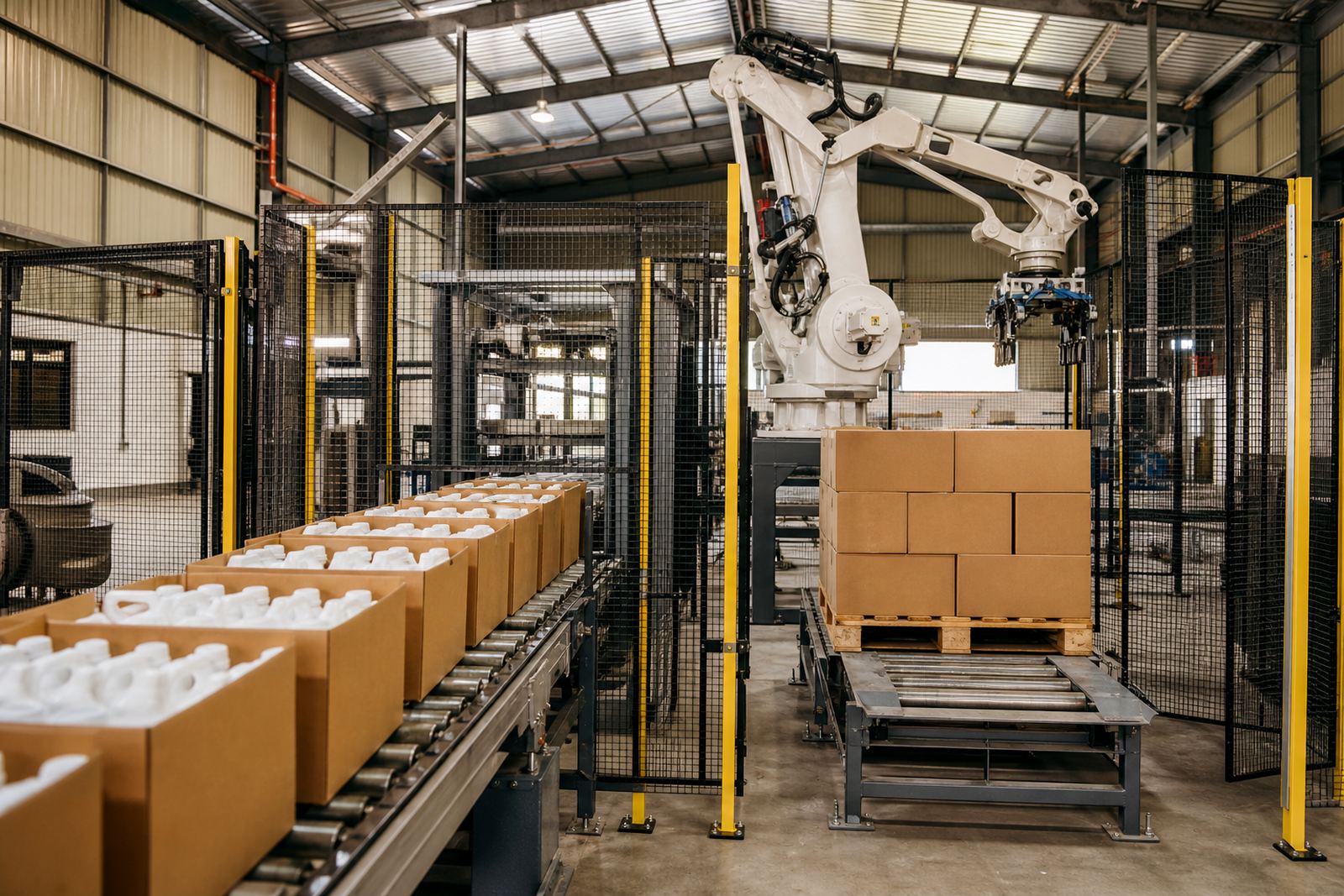
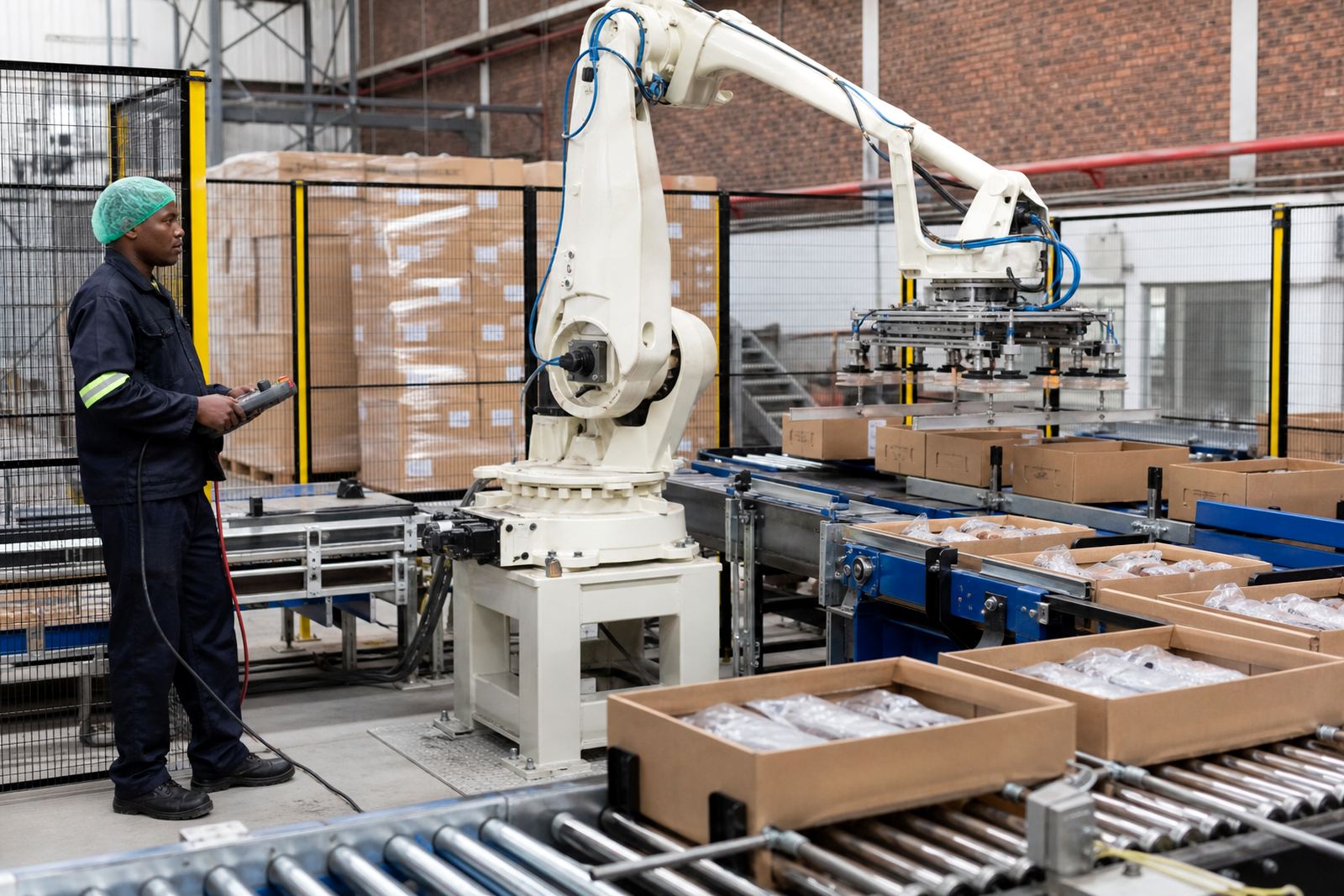
The project came from a food packing operation in Germiston that needed to load trays more consistently and reduce the pressure on manual handling. The line was already in place, with conveyors feeding product into a packing section, but the timing between arrivals and tray presentation was not holding steady enough for reliable robotic pick and place. The client wanted a retrofit approach that would work with the existing line layout, rather than replacing the whole system.
The site had the usual East Rand pressures: limited floor space, production that could not stop for long, and a need to keep the line practical for day-to-day staff. We also had to work around tray variability, product spacing changes and the fact that the conveyor speed had to stay within the limits of the upstream process. The factory runs in an area where dust, vibration and routine maintenance access all matter, so the design needed to be straightforward to service.
- Location: Germiston, Gauteng
- Project type: tray loading retrofit on an existing packing line
- Line condition: existing conveyors and downstream packing equipment retained
- Main challenge: consistent spacing and timing for robotic loading
What we supplied and how it was integrated
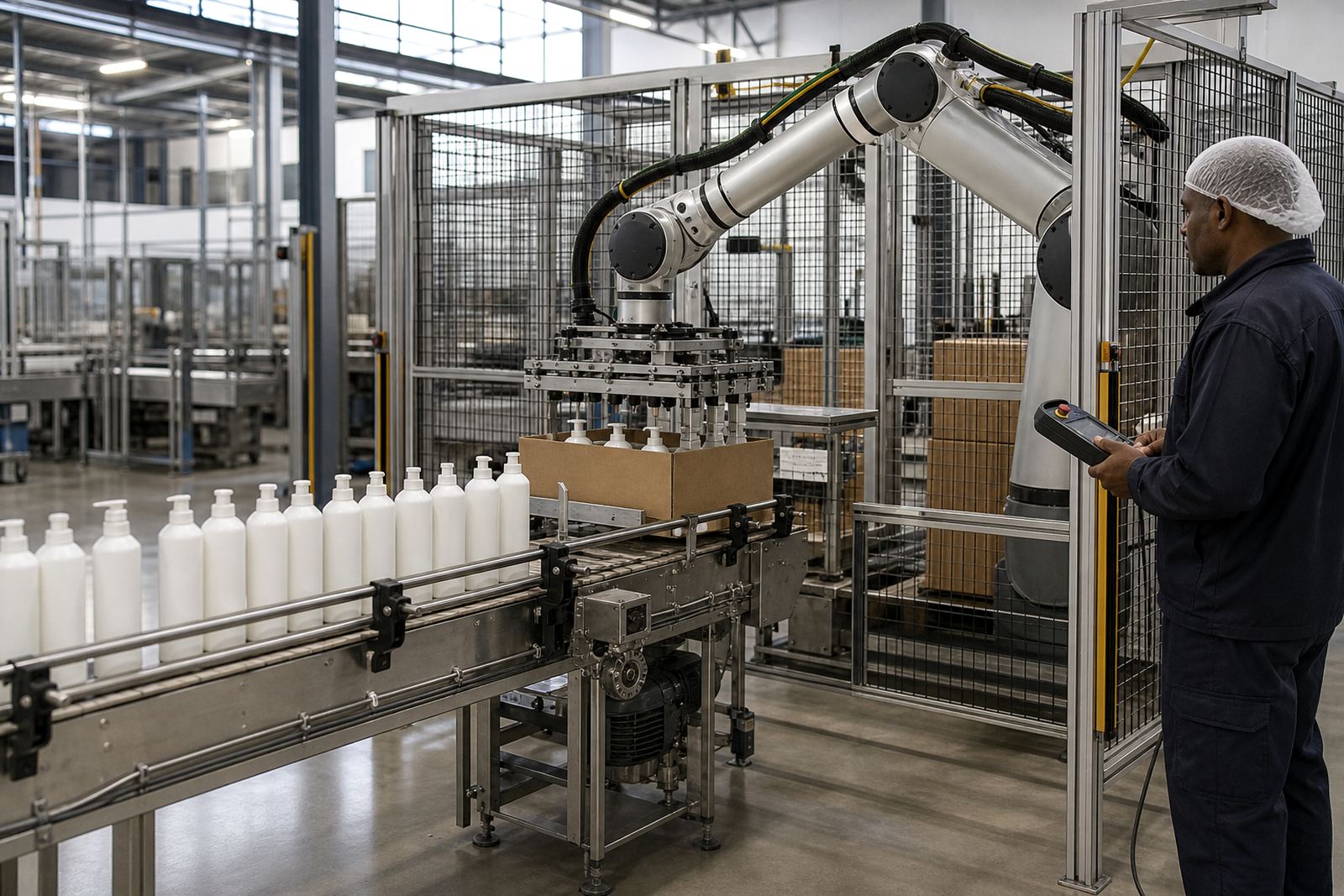
We supplied the retrofit scope around the tray line interface, not a full greenfield system. That included the robotic packing equipment interface, conveyor timing coordination, product sensing points, safety guarding design, and the controls work needed to make the line behave as one system. The aim was to match tray arrival, product spacing and robot movement so the process stayed predictable.
The existing conveyor flow was reviewed first, then the pickup and deposit points were mapped to the real tray positions on line. We added controls logic to manage triggers from the infeed conveyors and the tray-present signals, while keeping the operators able to run and stop the line without confusion. Where product spacing drifted, the system could only perform properly if the upstream timing stayed stable, so we worked carefully on the interface between the conveyors and the robot cell.
- Conveyor integration with existing infeed and discharge sections
- Controls integration for spacing, tray presence and transfer timing
- Safety guarding around the robotic working envelope
- Risk assessment support based on the actual site layout
Safety guarding and risk assessment for a live production area
Because the line sat inside an active production area, the guarding could not be treated as an afterthought. We designed the guarding to separate operators from moving equipment while still allowing clearing, cleaning and normal maintenance access. The layout was arranged so the robot cell had clear entry points for service, but no easy access to the moving zone during operation.
As with every retrofit, the safety package was based on a site-specific risk assessment. General safety rules are not enough on a live plant floor. The actual guarding height, interlocks, stop positions, access points and emergency stops had to suit this Germiston line and the way the staff used it each shift. That included considering cleaning routines, lockout practices and how the team would respond during a jam or product changeover.
- Guarding designed around the actual line footprint
- Interlocks included for access doors and service points
- Emergency stop placement matched operator movement paths
- Risk assessment support focused on the site layout and operating method
Installation, testing and commissioning over four weeks
The project ran over four weeks from survey to handover. Week one focused on the site line survey, measurements, conveyor timing checks and final design alignment. Week two covered fabrication coordination, controls preparation and the guarding layout. Week three was the installation phase, with the retrofit fitted into the existing line during a planned outage. Week four was reserved for commissioning support, operator training and final adjustments to the spacing logic.
During commissioning, we checked how the line behaved at start-up, during stop-start conditions and under continuous running. Small conveyor variations can change how trays arrive at the loading point, so we tuned the timing until the transfer sequence settled. The line also had to remain practical for maintenance staff who would work on it after handover, so we paid attention to access, cable routing and the position of service points. No site run ever ends up perfect on the first pass, but the final setup was stable and easy to understand.
- Week 1: survey, measurements and timing checks
- Week 2: retrofit design, controls prep and guarding layout
- Week 3: installation during planned downtime
- Week 4: commissioning, training and final tuning
What changed on the line after the retrofit
Once the tray loading sequence was tied into the existing conveyor timing, the line became easier to run with less manual intervention at the loading point. The main benefit was consistency. Trays arrived with better spacing control, the robot interface had a clearer rhythm and the packing section no longer depended as heavily on constant manual correction. That made the operation more predictable for the production team.
For the client, the value was not just in added automation but in keeping the existing line useful. Instead of stripping out conveyors and starting over, the retrofit made the current equipment work harder and with less stop-start trouble. Maintenance staff also had a cleaner layout to work with, and operators had clearer visual control points for normal running. In a plant like this, that usually matters more than flashy equipment does.
- More consistent tray loading sequence
- Less manual correction at the loading point
- Better matching between conveyor flow and robot movement
- Existing equipment retained and used more effectively
What we repeat on a similar Germiston line
If we were doing the same kind of project again on a similar tray line, we would begin with the conveyor timing and product spacing, then design the robot interface around those facts rather than forcing the line to fit the machine. That approach saves time later because the controls, guarding and operator training all follow the actual process, not an idealised drawing. It also helps when the site has limited downtime or a tight footprint.
We would also keep the risk assessment close to the installation team from the start. On a packing line retrofit, the practical issues show up quickly: where to place the stops, how to isolate safely, how to keep cleaning access, and how to avoid bottlenecks at the discharge end. That is the kind of work ReAutomated does across Germiston, Johannesburg, Pretoria, Durban, Cape Town, Gqeberha and the East Rand, always by adapting to the site rather than pushing a one-size-fits-all setup.
- Start with timing, spacing and conveyor flow
- Design guarding around maintenance and cleaning needs
- Keep the controls logic simple for operators and technicians
- Plan the outage window around real production constraints
Key facts
| Project location | Germiston, Gauteng |
|---|---|
| Site type | Tray loading and packing line retrofit |
| Integration scope | Existing conveyors, robotic packing interface and controls |
| Safety scope | Guarding design and site-specific risk assessment support |
| Timeline | 4 weeks from survey to commissioning |
| Service areas | Kempton Park, Johannesburg, Pretoria, Durban, Cape Town, Gqeberha, East Rand, Midvaal |