A Centurion Packing Line That Needed More Consistency
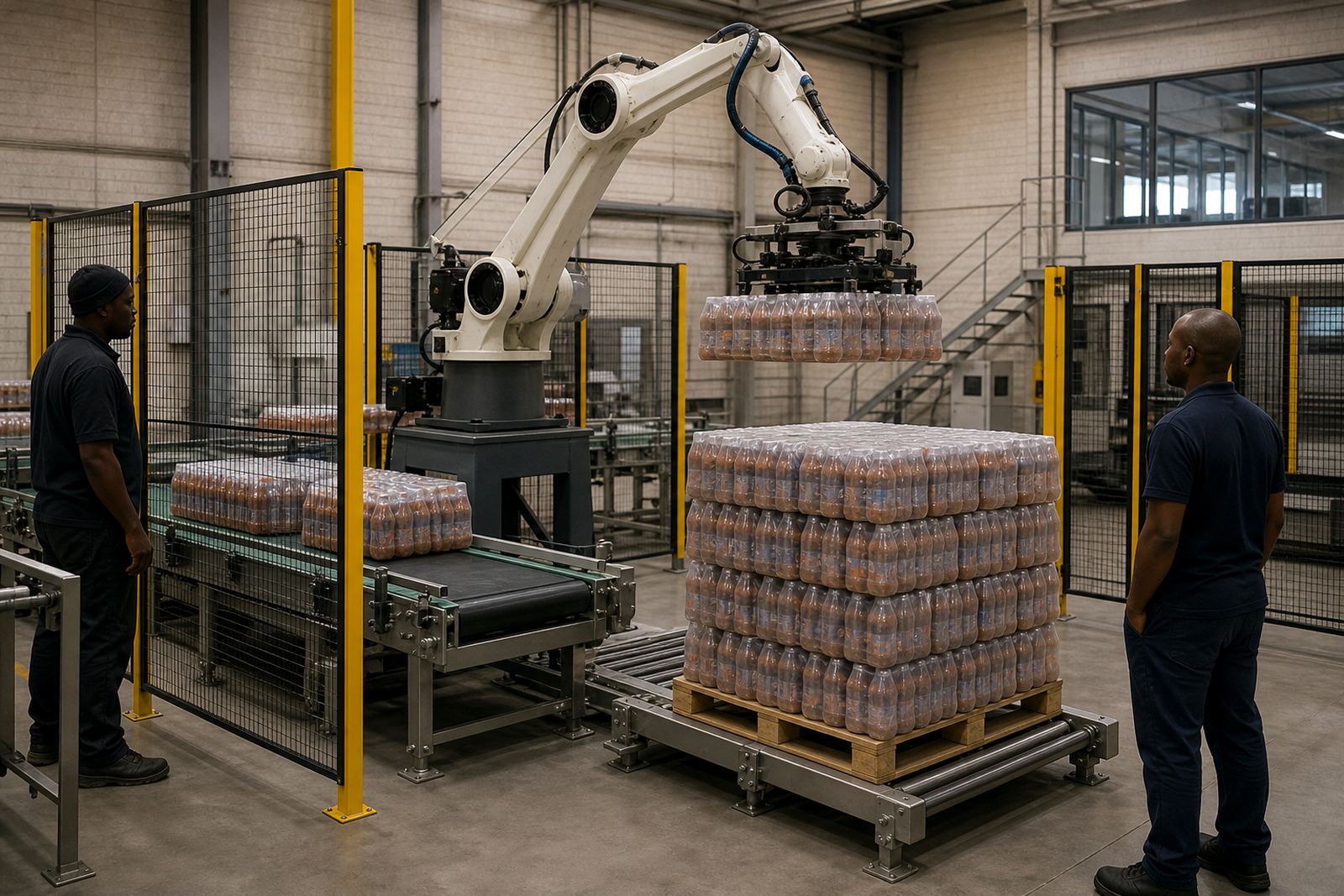
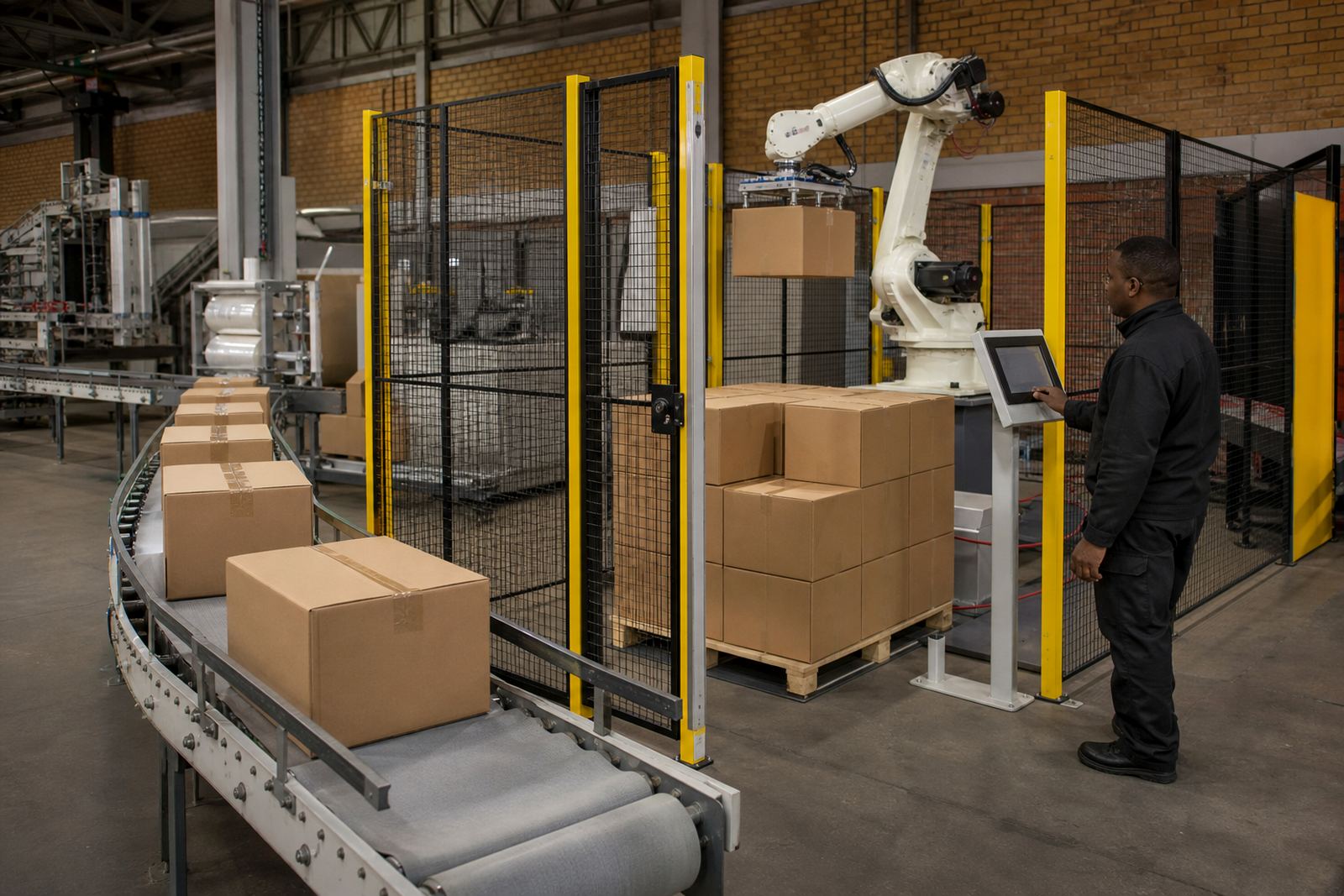
The client was a mid-sized manufacturer in Centurion with a packing area that had grown around existing conveyors, manual stations and shifting production demands. The brief was straightforward: reduce repetitive hand packing, improve consistency at the end of line, and keep the cell compact enough to fit into an already busy production area.
The work was for light pick and place packing, not heavy palletising. Operators still needed to work near the process, so the cell had to be practical for a mixed manual and automated environment.
- Location: Centurion, Gauteng
- Application: light pick and place packing alongside operators
- Environment: existing conveyor line with limited spare floor space
- Goal: improve repeatability without removing people from the process
Site Constraints We Planned Around
The biggest constraint was making the new cell sit comfortably around the existing packing flow. The conveyors were already in place, so the new station had to accept product from the current line height, transfer items cleanly, and return packed packs to the next stage without creating bottlenecks. The team also had to keep access for operators, supervisors and maintenance staff.
We carried out a site line survey first, then mapped the infeed, discharge, operator access points and cable routes. Safety was built into the layout from the start, but the final safety package was based on the actual risks at the site and not on a generic drawing. Each installation needs its own risk assessment because guarding, access points, product type and movement patterns are never identical.
- Measured conveyor entry and exit points before final design
- Checked operator access for loading, clearing and changeovers
- Allowed space for safe servicing and cleaning
- Planned for controlled restart after outages and stoppages
The Retrofit Scope And Cell Layout
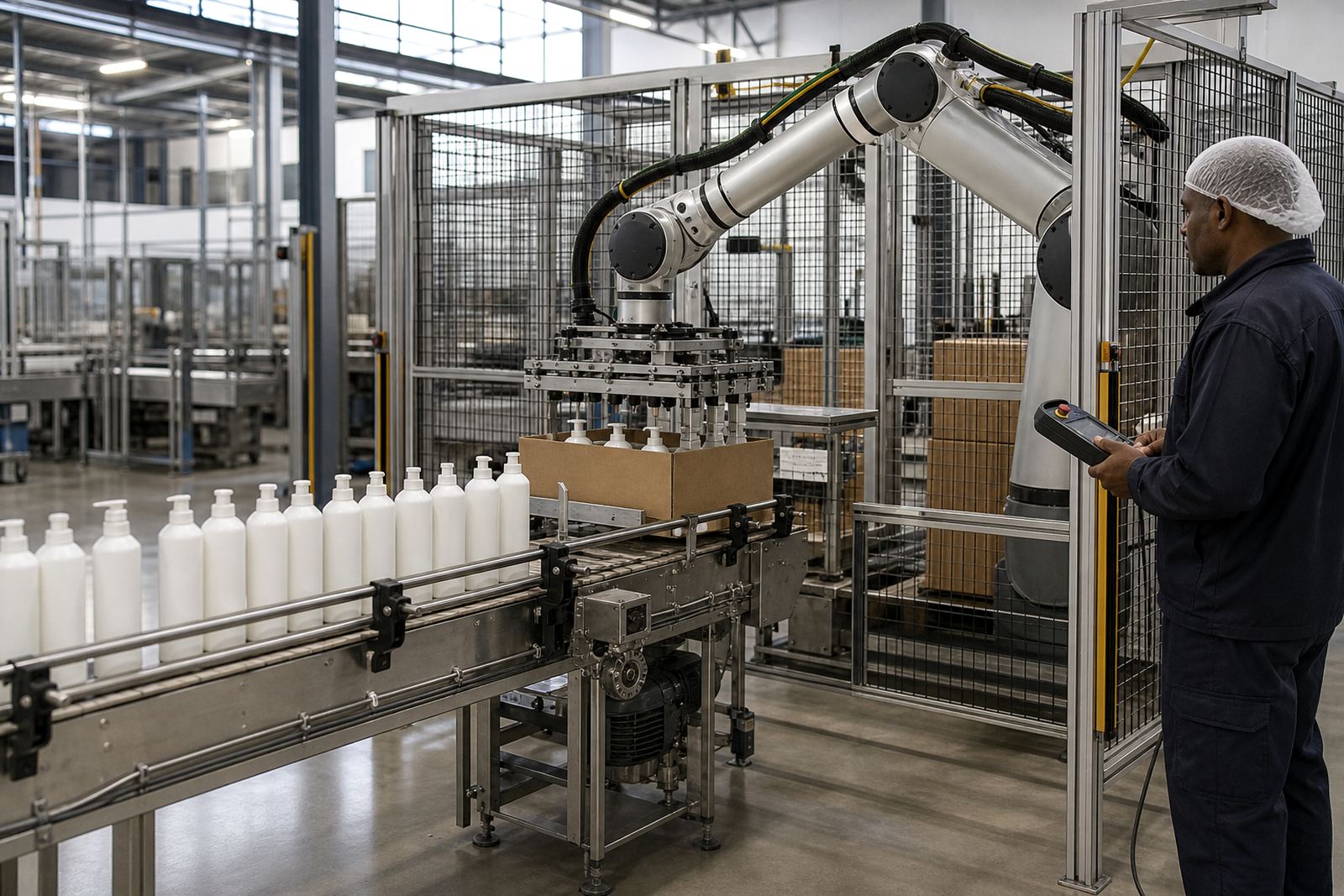
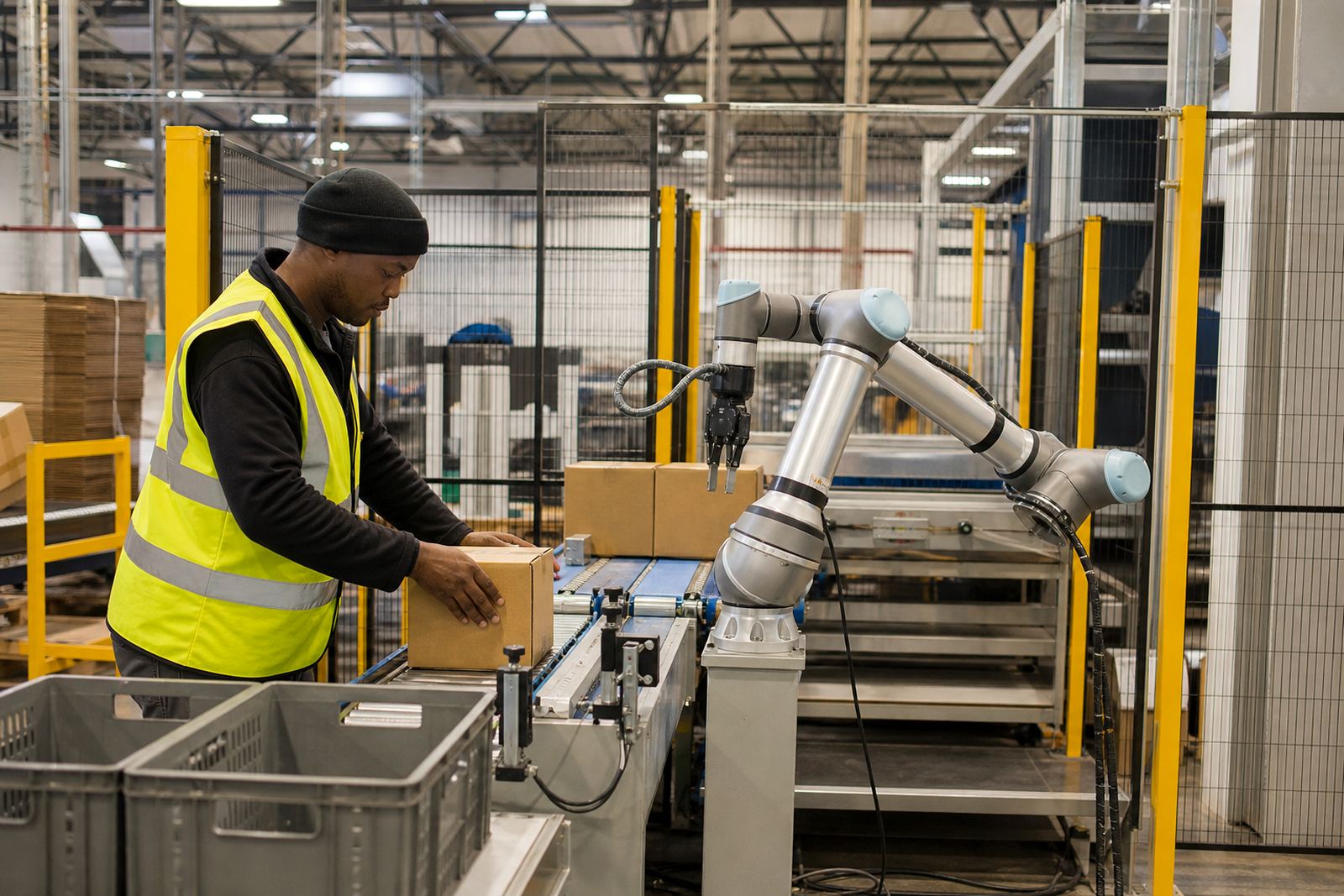
We supplied and managed the retrofit as a complete integration task, from design through to commissioning support. The cell used a collaborative robot for light handling tasks, fitted with a suitable end effector for the product format, and a control package that linked into the existing conveyor signals. The objective was to keep the line simple for operators while giving the packing station a more repeatable rhythm.
The guarding strategy was designed around the moving parts, the operator positions and the handover points. Where needed, we added physical guarding and controlled access points, with stop and reset functions placed in practical locations. The controls were arranged to work with the customer’s existing plant logic as far as possible, so the new station did not become a separate island that was awkward to run.
- Cobot cell for repetitive light pick and place work
- Custom end effector matched to the pack format
- Conveyor integration for infeed and discharge control
- Safety guarding and interlocked access points
- Local control stations for start, stop and reset
How The Installation Was Managed
We managed the project in stages so the client could keep production moving. After the survey and design review, we completed the layout checks, control philosophy and safety review support before installation. Mechanical positioning, electrical connections and controls work were then sequenced to reduce disruption to the packing area. The site supervisor coordinated the physical installation while the automation and controls team handled the integration and testing.
Once the cell was in place, we completed commissioning support and practical operator training. The training covered normal running, changeover steps, basic fault finding and safe recovery after a stoppage.
- Project duration: 5 weeks from survey to handover support
- Installation approach: staged work to minimise line interruption
- Commissioning: signal checks, cycle testing and operator familiarisation
- Training: day-to-day use, changeovers, fault response and safety steps
Results At The End Of The First Run
After handover, the client had a packing station that was easier to run consistently and simpler to staff around. The cobot took over the repetitive light handling work, which reduced strain on operators and gave the line a steadier pace. Because the cell sat inside the existing flow, the plant did not need a major layout change to get the benefit.
The team reported better repeatability on the packing task, improved line control during busy periods, and a cleaner handover between manual and automated work. Just as important, the operators could still interact with the process without having to fight the machine layout. That balance matters on South African factory floors where one line often has to serve a few different product runs and shift patterns.
- Less repetitive manual handling at the packing point
- More consistent cycle timing and product presentation
- Operators retained for supervision, loading and checks
- Cleaner integration into the existing conveyor flow
What We Repeat For A Similar Plant
If we were doing a similar Centurion retrofit again, we would keep the same approach: survey first, fit the cell to the real conveyor heights, and settle the safety and controls decisions before any steel goes in. That keeps surprises down on installation day and helps the site team understand how the cell will work in practice.
We would also keep the operator involvement early in the process. People who work the line every day know where jams happen, where product tends to skew and which changeovers are awkward. Bringing that knowledge into the design makes the retrofit more usable and easier to maintain. A good cobot cell is not just about automation, it is about matching the machine to the way the plant already runs.
- Start with the real process flow, not a generic layout
- Keep maintenance access and cleaning access in the design
- Use practical guarding and clear reset points
- Train operators on normal use and safe recovery
Key facts
| Project location | Centurion, Gauteng |
|---|---|
| Application | Light pick and place packing |
| Cell type | Collaborative robot retrofit cell |
| Timeline | 5 weeks |
| Integration | Existing conveyors and line controls |
| Services used | Site Line Survey, Retrofit Design, Safety Guarding Design, Controls Integration, Commissioning Support, Operator Training |