Start With The Bag And Pallet Details
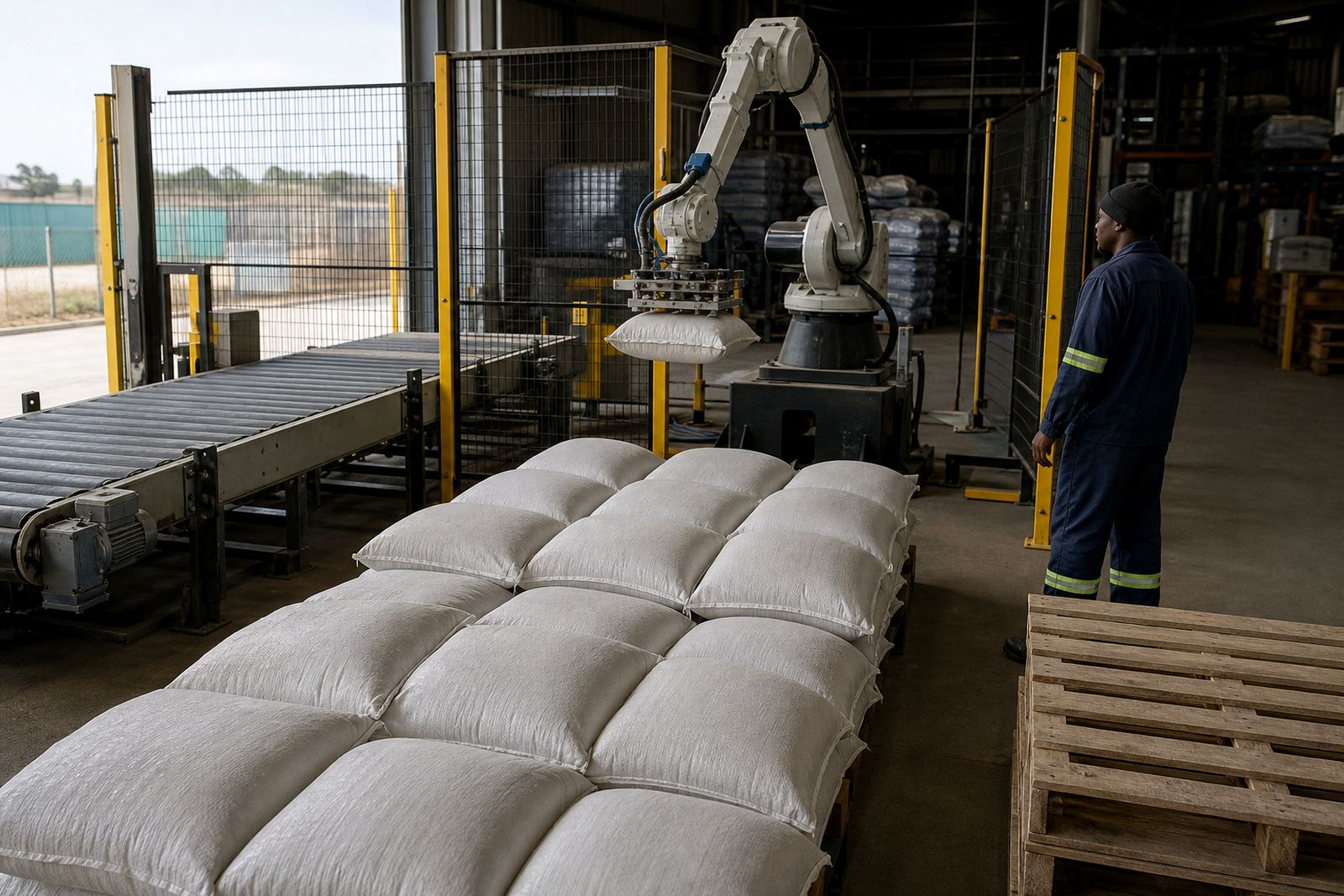
Before any robot is selected, the bag itself must be checked properly. Weight, fill consistency, bag dimensions, grip surface and seam strength all affect whether the bag can be picked safely and placed in a stable pattern. A 25 kg cement bag behaves very differently from a 10 kg animal feed bag, and woven polypropylene, paper and laminated bags each need their own handling method.
For South African sites in Kempton Park, Durban or Cape Town, it also helps to consider humidity, dust and forklift traffic. Coastal moisture can change grip and bag stiffness, while fine powder around filling points can build up on rollers and sensors. That is why a line survey should cover the product, the pallet format and the route from conveyor to finished load.
- Measure bag length, width, thickness and filled weight variation
- Confirm pallet size, height limit and wrap method
- Check whether the bags need top sheet, slip sheet or corner support
- Note any weak seams, unstable fills or damaged packaging on the current line
Choose A Pallet Pattern That Holds Its Shape
The best stack is not always the fastest one. A good palletising pattern spreads weight evenly, locks layers together and keeps the load square for transport. If bags are rounded, soft or unevenly filled, the pattern needs enough interlock to stop shifting during lifting, wrapping and delivery. This matters even more when loads move through Johannesburg traffic or long-haul routes to the coast.
Product presentation also matters to customers receiving the load. If the stack leans, has open corners or shows crushed bags, it can create disputes at despatch and on site. A practical pattern should allow clean rows, repeatable layer counts and enough face control for wrap film to hold the load without cutting into the bags.
- Use a pattern that keeps the load centre of gravity low
- Allow for bag slip, rounded corners and small fill differences
- Check if each layer needs rotation or interlocking
- Test the pattern with a full pallet before final sign-off
How A Retrofit Fits Into An Existing Conveyor Line
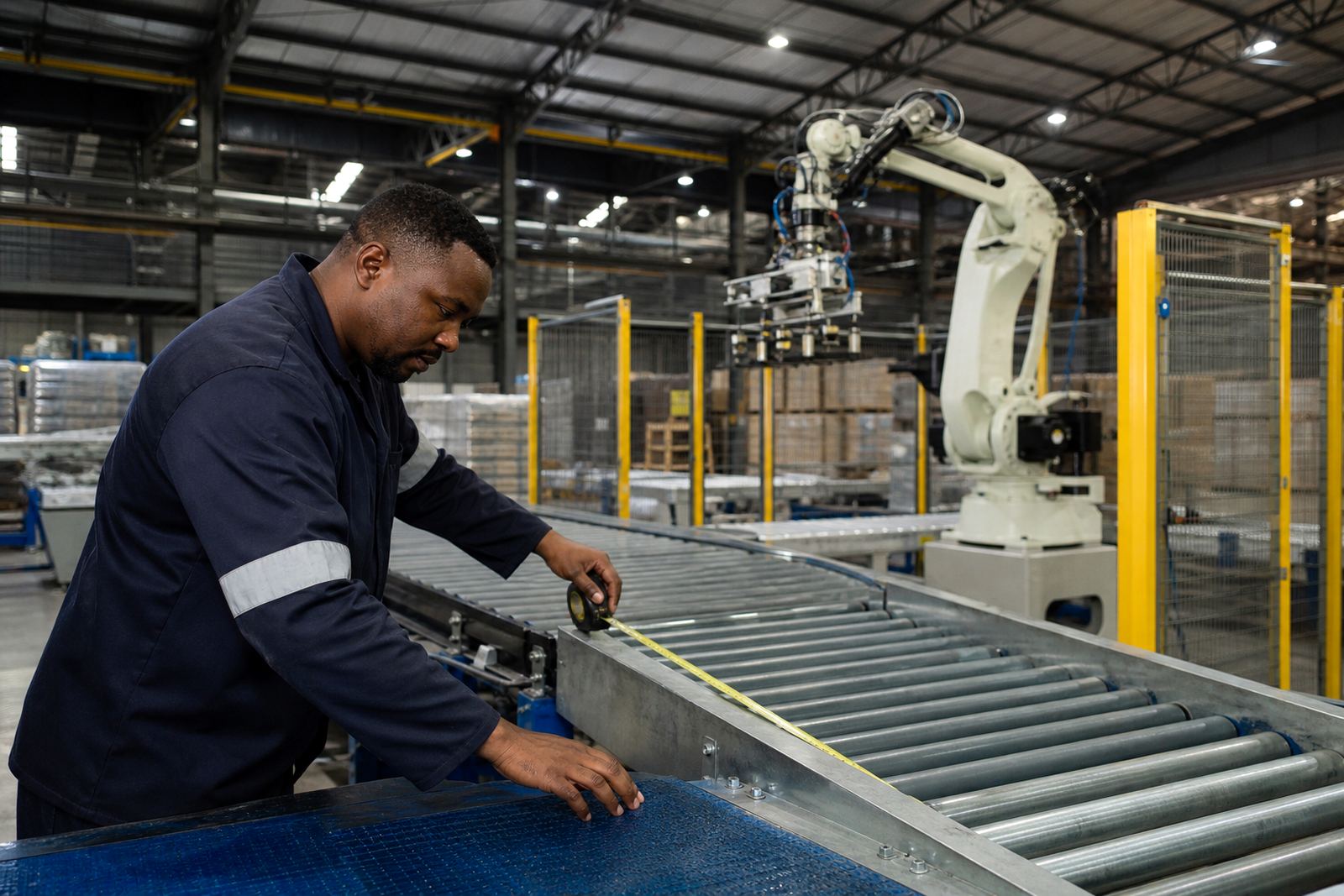
Most bag palletising retrofits must work around conveyors already in place. The challenge is not only getting the robot to reach the pallet, but also making sure bags arrive in the right orientation and spacing. In some plants, a singulation conveyor is needed so the robot receives one bag at a time. In others, a transfer conveyor, bag turner or accumulation section helps steady the flow.
Controls integration is just as important as mechanical fit. Sensors, stops, diversion points and pallet presence signals need to speak the same language, otherwise the line becomes stop-start and difficult to manage. A proper retrofit should also leave enough access for cleaners and maintenance teams, especially where municipal by-laws or site rules restrict blocked walkways and emergency exits.
- Check conveyor height, width and transfer points
- Plan infeed spacing so the robot can pick consistently
- Confirm PLC and signal handshakes with the current line
- Keep service access open for cleaning and breakdown response
Safety Guarding And Risk Assessment For Each Site
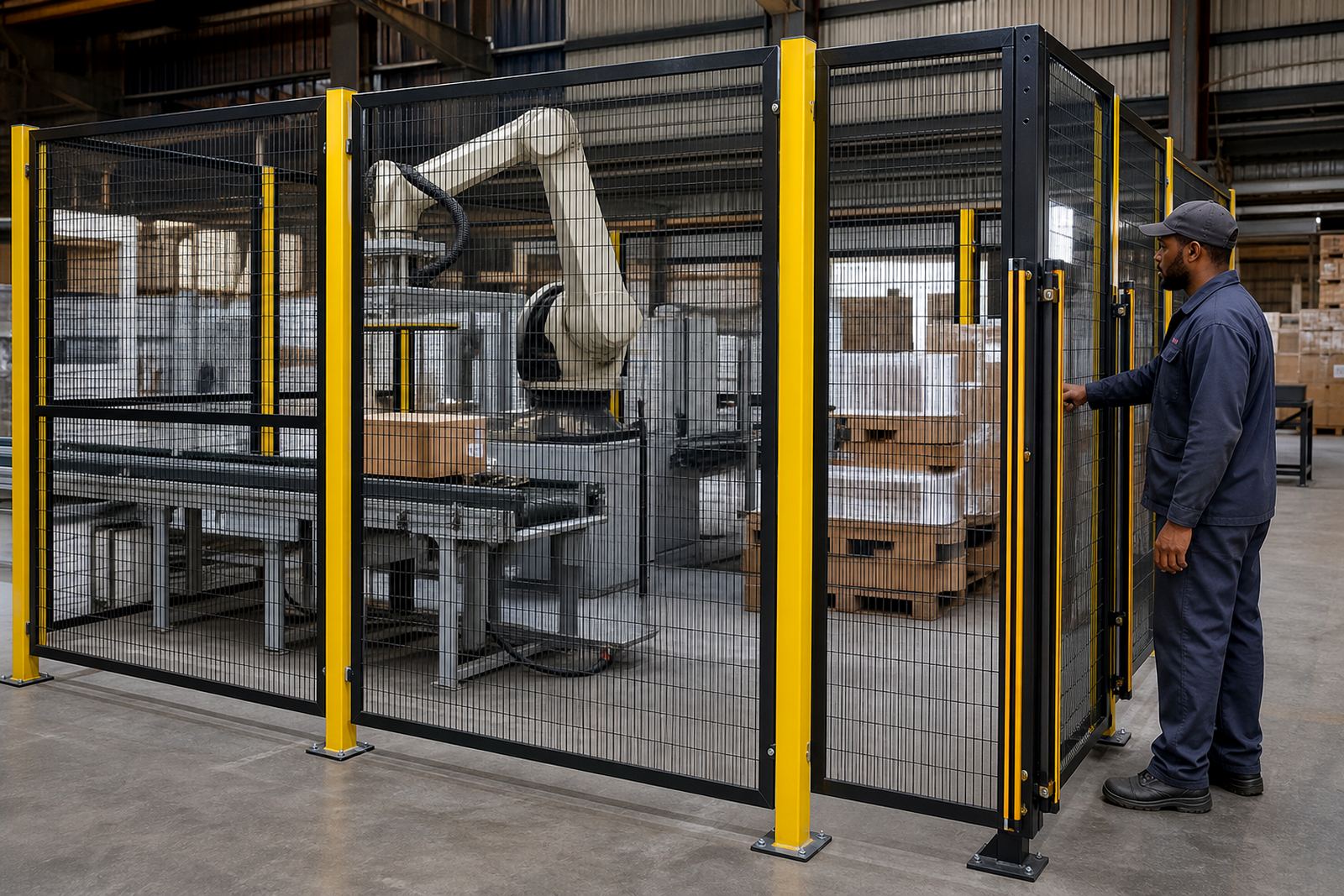
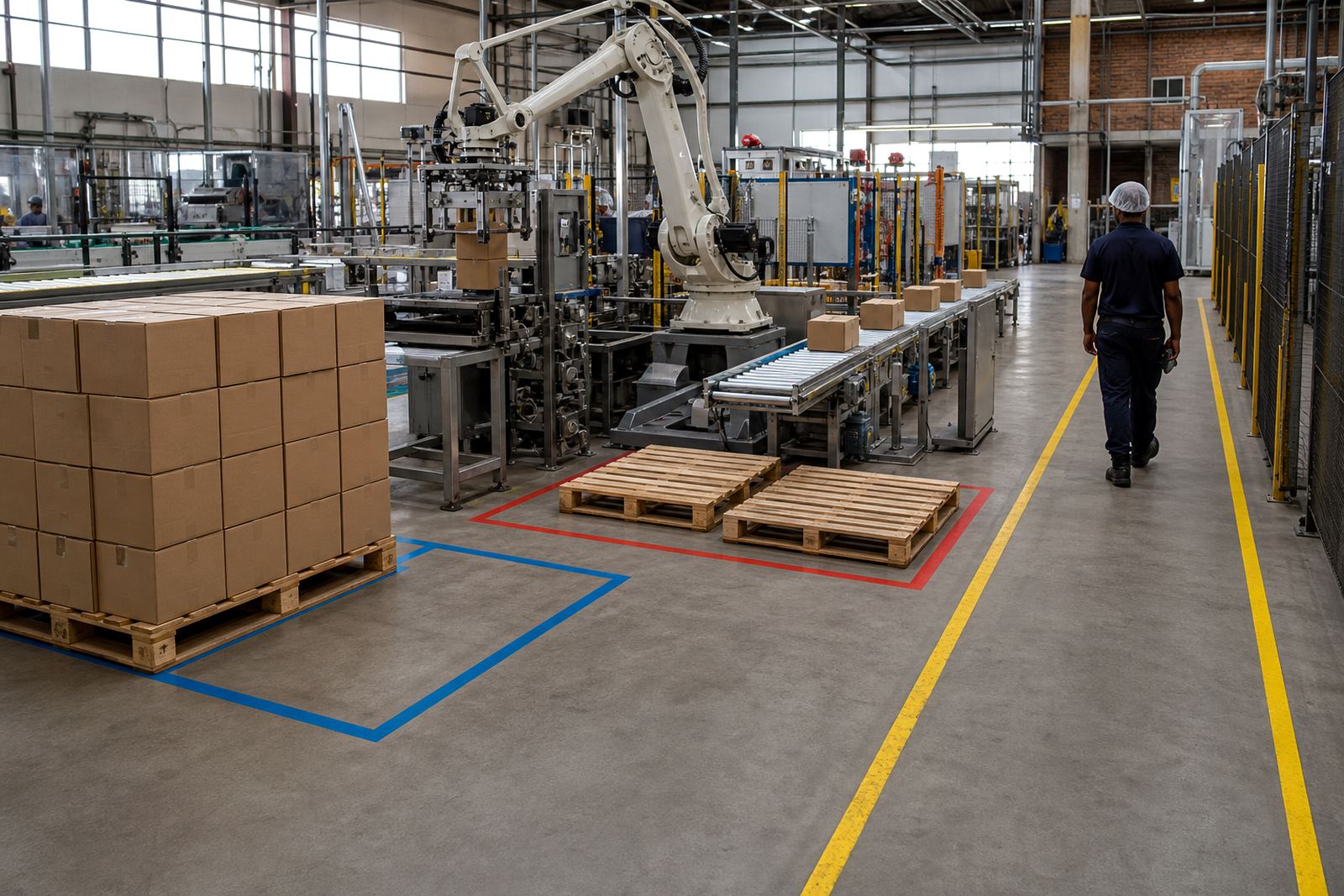
Every palletising cell needs its own risk assessment. General rules help, but the final layout depends on the building, pedestrian routes, forklift paths, access doors and the speed of the line. Safety guarding may include fixed fencing, gated access, light curtains, scanners, interlocks and controlled restart logic, but the exact mix must match the site layout and operating conditions.
Where cobots are used, they still need a proper risk review. A cobot can assist with lighter loads or limited spaces, but it is not a free pass to skip guarding or supervision. The safe arrangement depends on reach, speed, end effector design, pinch points and whether people need to enter the area for faults or pallet changeover. Do not rely on guesswork, each site needs a fresh assessment.
- Map all access points, pedestrian routes and forklift movement
- Assess pinch points, trapped areas and restart risks
- Decide who may enter the cell and under what controls
- Verify emergency stops, isolation and lockout procedure
Commissioning Steps That Save Time On The Floor
Good commissioning is about proving the system in small steps before full running starts. First the mechanical movement is checked, then the controls, then the pick and place cycle, and finally the full stack pattern. Bags should be tested across a range of normal fill conditions, because a line that only works with perfect product will give trouble on shift two or three.
During this stage, operators need clear instructions on pallet changeover, fault recovery and when to call maintenance.If spares are planned correctly from the start, downtime is easier to contain.
- Test dry cycle, pick cycle and pallet release separately
- Check layer alignment and stack squareness after every change
- Train operators on normal stoppages and alarm response
- Confirm spare parts, wear items and service checks
Daily Checks To Keep Bags Stacking Cleanly
Once the system is running, the best results come from simple daily checks. Bags should arrive clean, evenly filled and properly spaced. Vacuum cups, grippers or clamps need to be kept in good condition, because wear on the end effector quickly shows up as crooked placement or dropped bags. On dusty sites around the East Rand, cleaning frequency may need to be higher than expected.
Stack quality should be checked at the start of each shift and after any product change. If the bags begin to bulge, slide or twist, the issue is usually upstream at the filler, conveyor or bag presentation point. Catching it early prevents unstable pallets and reduces handling by hand. A small fault ignored in the morning can become a full line stoppage by afternoon, and that costs time.
- Inspect grippers, hoses, sensors and cable runs daily
- Check bag quality before the first pallet of each shift
- Review stack shape, corner condition and wrap hold
- Keep a simple log of faults, stoppages and adjustments