Start With The Job, Not The Robot
Before you compare payloads or reach, define the task in plain terms. Is the cobot picking cartons from a conveyor, stacking cases onto a pallet, loading trays, or assisting with end of line packing? A clear task brief makes it easier to match the arm, gripper, mounting position and control logic to the line you already have in place.
On South African sites, especially in Kempton Park, Johannesburg and Durban, we often see useful retrofits where the plant cannot stop for a full line rebuild. A cobot can be added to an existing conveyor run if the infeed is stable, product orientation is controlled and the discharge point is properly set out. The aim is not to force the process around the machine but to fit the machine into the process with the least disruption.
- List the exact product sizes and weights
- Note how many units per minute the line must handle
- Measure the available floor space and height
- Check whether the product arrives in a consistent position
Match Payload, Reach And Cycle Time
A cobot should be selected for the real working load, not a best case figure. Payload must include the product and the end effector, plus any hose or cable load where relevant. Reach matters just as much, because a cobot that is too short may force awkward pallet positions or extra conveyor changes. If the arm needs to stretch constantly, the cycle will slow and wear points increase.
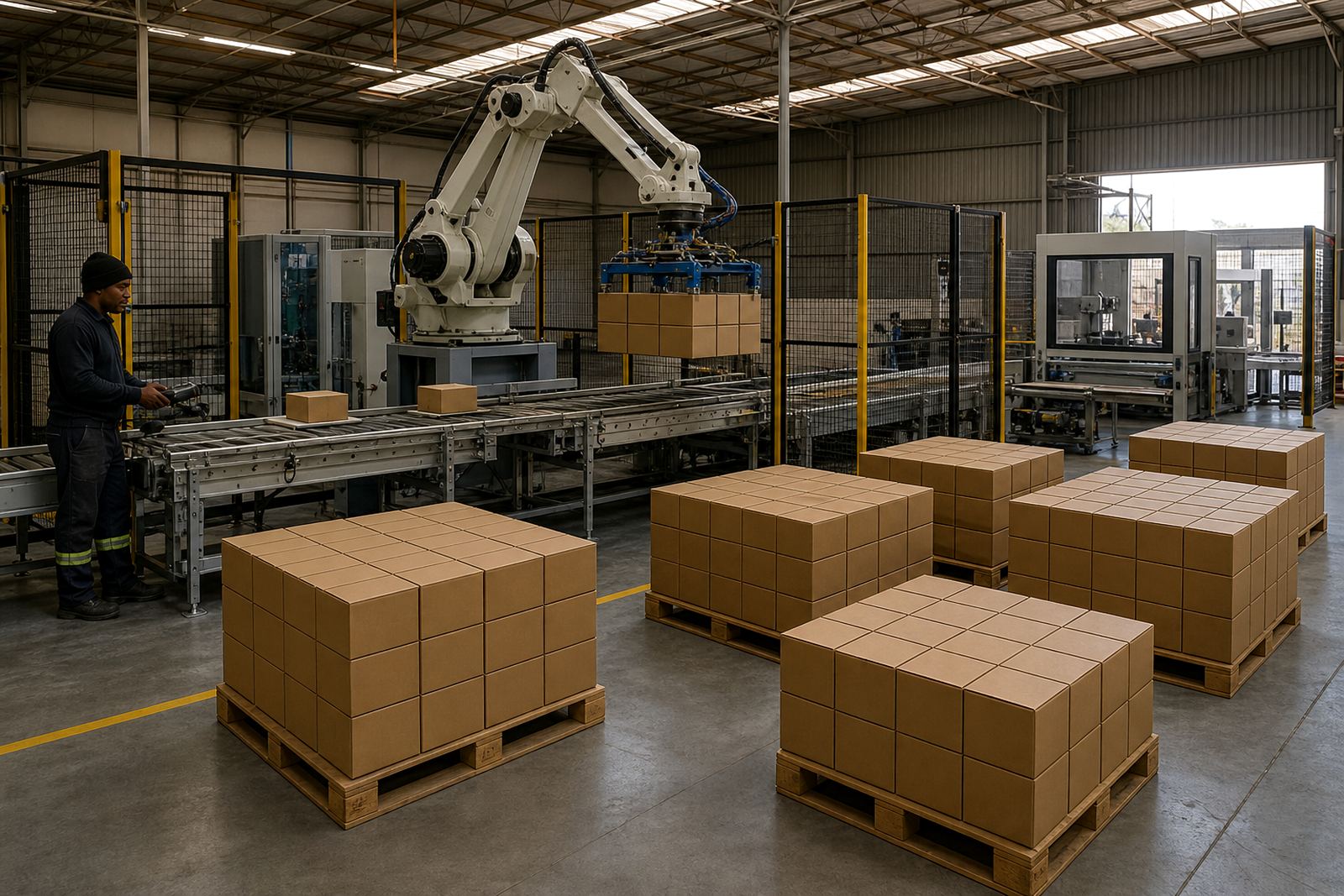
Cycle time should be checked against your packing target and the upstream or downstream process. A slower line in Midvaal may only need simple case packing support, while a higher throughput line in Pretoria may need careful product accumulation and a tidy pick pattern. If there is any doubt, test the pattern with sample product before finalising the design. That step saves a lot of trouble later, and it avoids over sizing a system for work it does not need to do.
- Confirm payload with the gripper fitted
- Check reach at the pallet corners and top layers
- Allow for approach, pick and release time
- Leave room for future product changes if possible
Plan The Retrofit Around Existing Conveyors
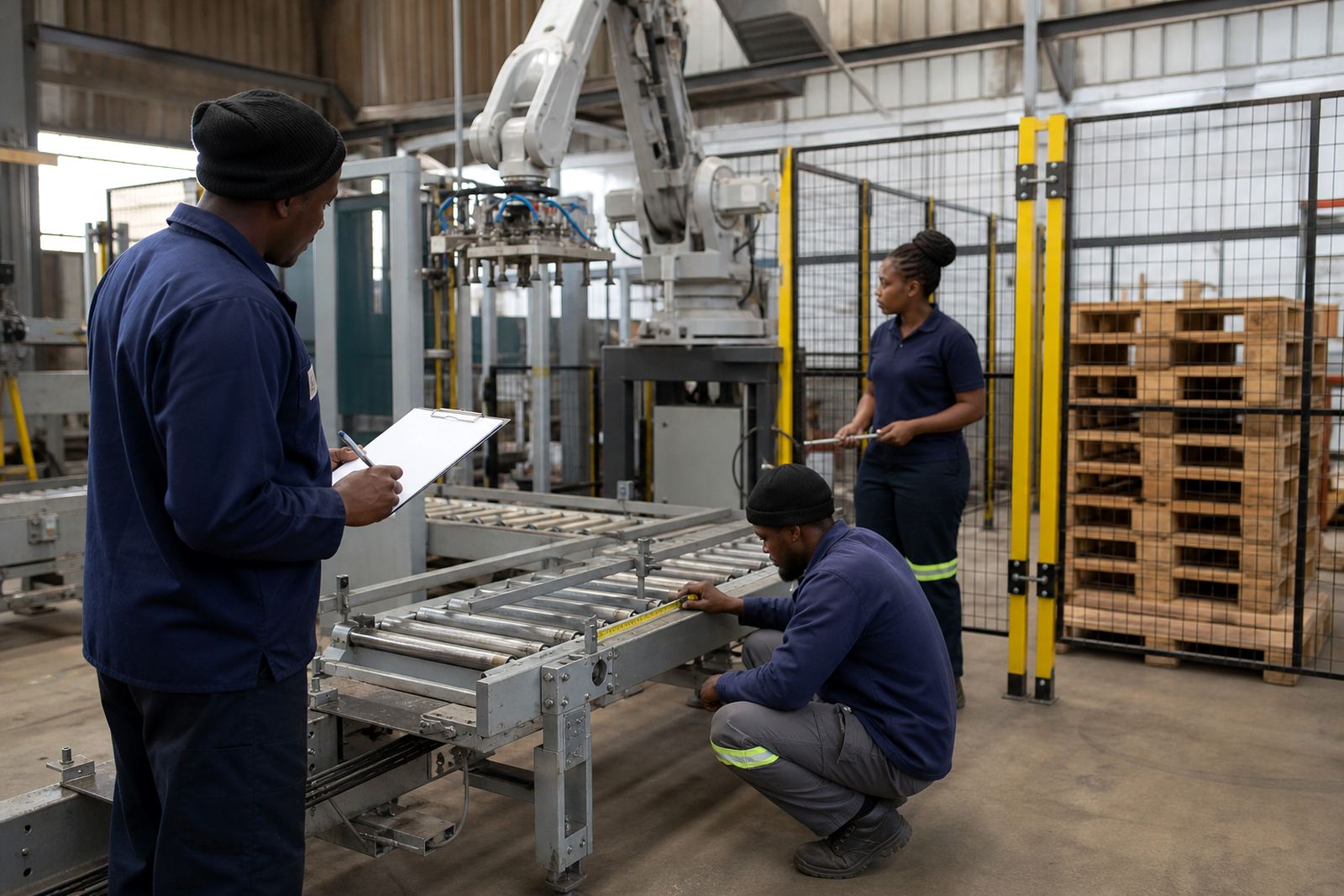
Most buying decisions fail when the cobot is treated as a stand alone item. In practice it has to work with your existing conveyors, sensors, stop gates, conveyors speeds and line control. That means checking infeed height, carton spacing, product accumulation, line stops and how the cobot will signal to the rest of the system. A good retrofit keeps the original flow where it is still useful and only changes what is needed.
For packing and palletising lines in Cape Town, Gqeberha and the East Rand, space can be limited and access for maintenance may be tight. The mounting frame, pallet position, guarding and cable routes need to be laid out so operators can still reach the rest of the line for clearing jams and cleaning. Humidity near the coast also calls for sensible component placement and enclosure choices suited to the environment. If the line is exposed to washdown or dust, that should be discussed early rather than added later as a fix.
- Check conveyor height against the cobot working plane
- Confirm sensor positions and product detection points
- Allow access for cleaning and maintenance
- Plan cable routes away from moving product and walkways
Do Not Skip Safety Guarding And Risk Assessment
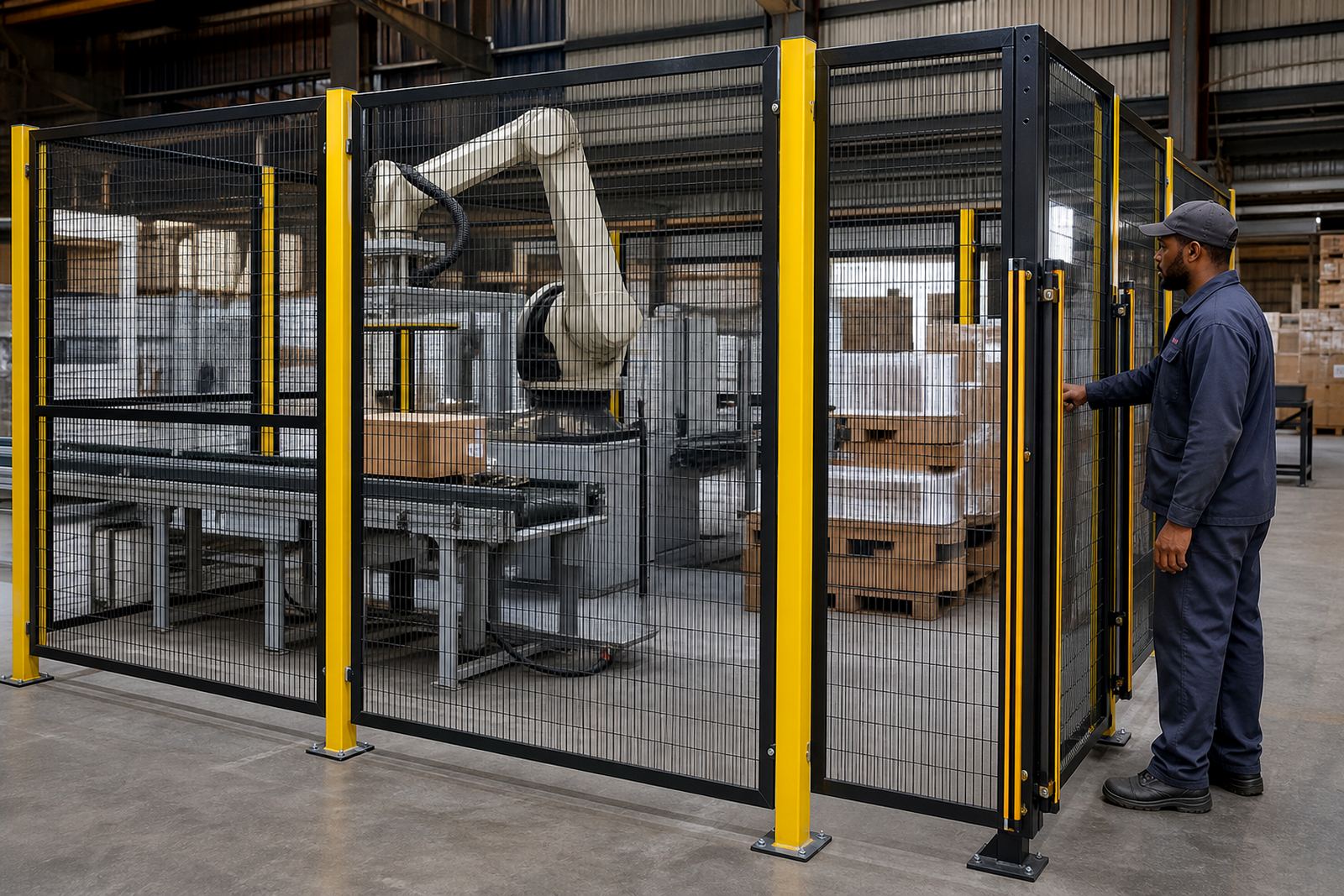
Even where a cobot works close to people, safety is not automatic. Each site needs its own risk assessment based on the actual layout, product type, speed, access points and interaction method. Depending on the application, this may mean guarding, light curtains, scanners, interlocks, marked zones or a mix of measures. The choice is site specific, and the final arrangement should be set after reviewing the real operating conditions.
Safety guarding should also consider forklifts, pallet jacks and pedestrian routes. On a busy plant floor in Gauteng, people often move across shared areas and that can change how the cell should be protected. Emergency stops, restart logic and safe access for maintenance must be set out clearly. If operators need to work inside the area from time to time, the process for isolation and re entry should be simple enough for daily use, not just on paper.
- Identify all access points and operator touch points
- Review nearby pedestrian and vehicle movement
- Set rules for cleaning, fault clearing and maintenance access
- Confirm emergency stop placement and visibility
Ask How The Gripper Will Handle The Product
The gripper is often the difference between a smooth retrofit and a difficult one. Cartons, pouches, shrink wrapped packs and trays all behave differently. Some products can be handled with vacuum, others need mechanical gripping, and some need a custom end effector that suits the pack shape and surface. If the product changes often, the gripper and software must be simple enough for quick changeover.
For lighter handling tasks, flexibility may matter more than brute force. A cobot can be a practical choice where operators still need to load, inspect or pack alongside the machine. That said, the product must be stable enough for repeatable handling. If the pack is soft, uneven or slippery, the pick point and grip method need careful testing. It is better to prove that upfront than to chase faults later during shift handover.
- Test the pack surface, shape and rigidity
- Confirm whether the product can be picked from one side only
- Check if labels, print or seals can be damaged during handling
- Plan for quick changeover if you run more than one SKU
Build In Controls, Training And Support
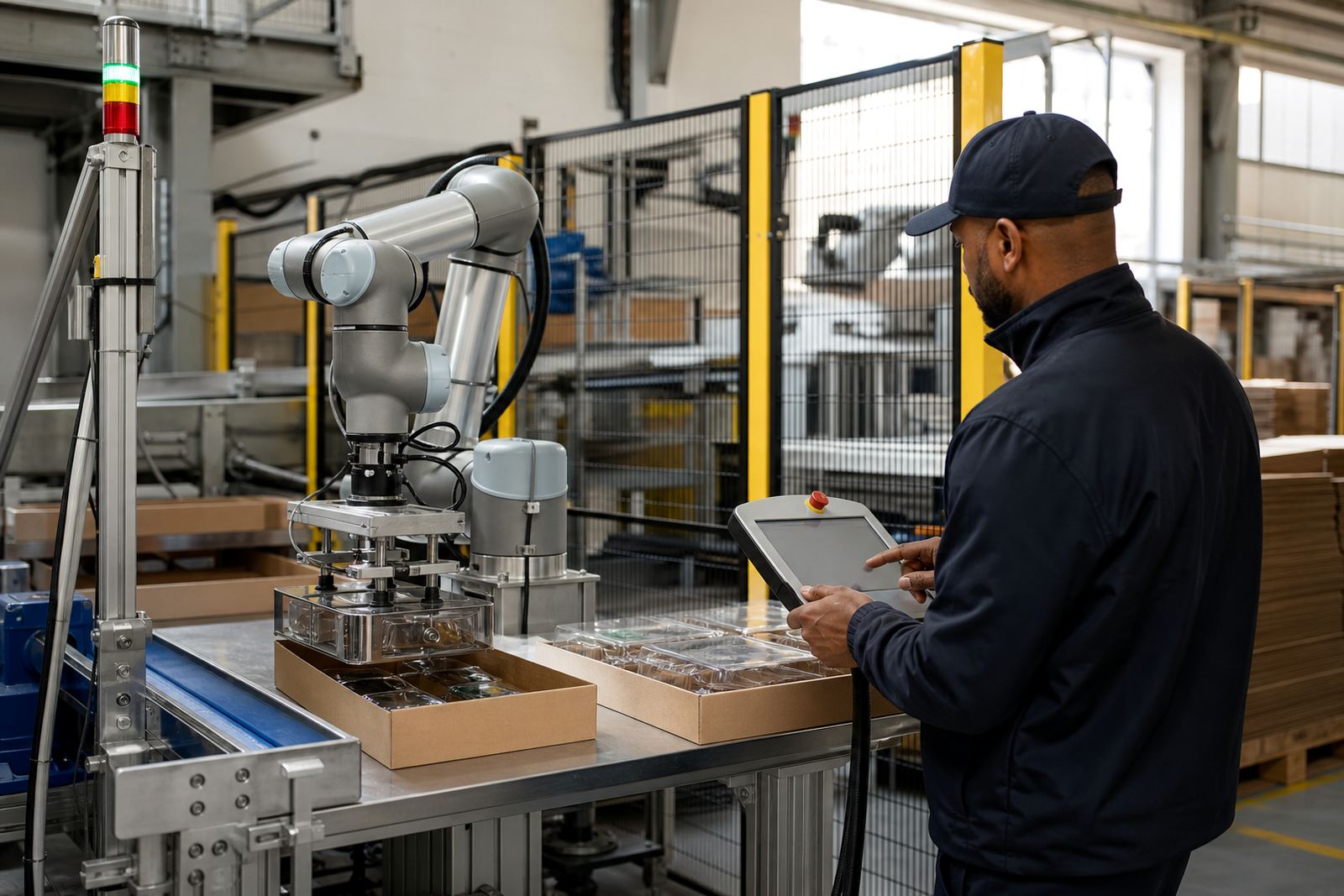
Controls integration should let the cobot run as part of the line, not as an isolated machine that everyone works around. That includes start and stop commands, fault signals, conveyor communication and any stack pattern changes.The less confusion at restart, the better the shift flow.
Operator training should cover normal running, safe clearing of faults, basic checks and when to call for help. Maintenance support is just as important, because spare parts planning and routine inspections keep the retrofit practical over time. If the line is in Kempton Park, Durban or Cape Town, service response and access to critical spares should be considered before the order is signed. A strong support plan usually prevents small issues turning into lost production.
- Train operators on normal running and fault recovery
- Keep a clear spares list for wear items and sensors
- Set a maintenance routine for belts, fixtures and guarding
- Agree who handles breakdowns and who signs off changes
A Simple Buying Checklist For Your Team
If you are comparing options, use a practical checklist and keep everyone on the same page. Production, maintenance, safety and operations should all review the proposal before a retrofit goes ahead. That makes it easier to spot problems early, especially where the line has already been modified over time or where the site has limited floor space.
For manufacturers across South Africa, from the East Rand to Pretoria and on to Gqeberha, the best cobot purchase is the one that matches the product, the plant layout and the people who will run it. If the answer to any key question is unclear, line surveys and retrofit design support should come first. That way the investment is based on the actual site, not on guesswork.
- What task will the cobot do every shift
- What is the true payload including tooling
- How will it connect to existing conveyors and controls
- What safety measures are needed for this exact site
- Who will train operators and support the line after installation