Start With the Load You Are Actually Moving
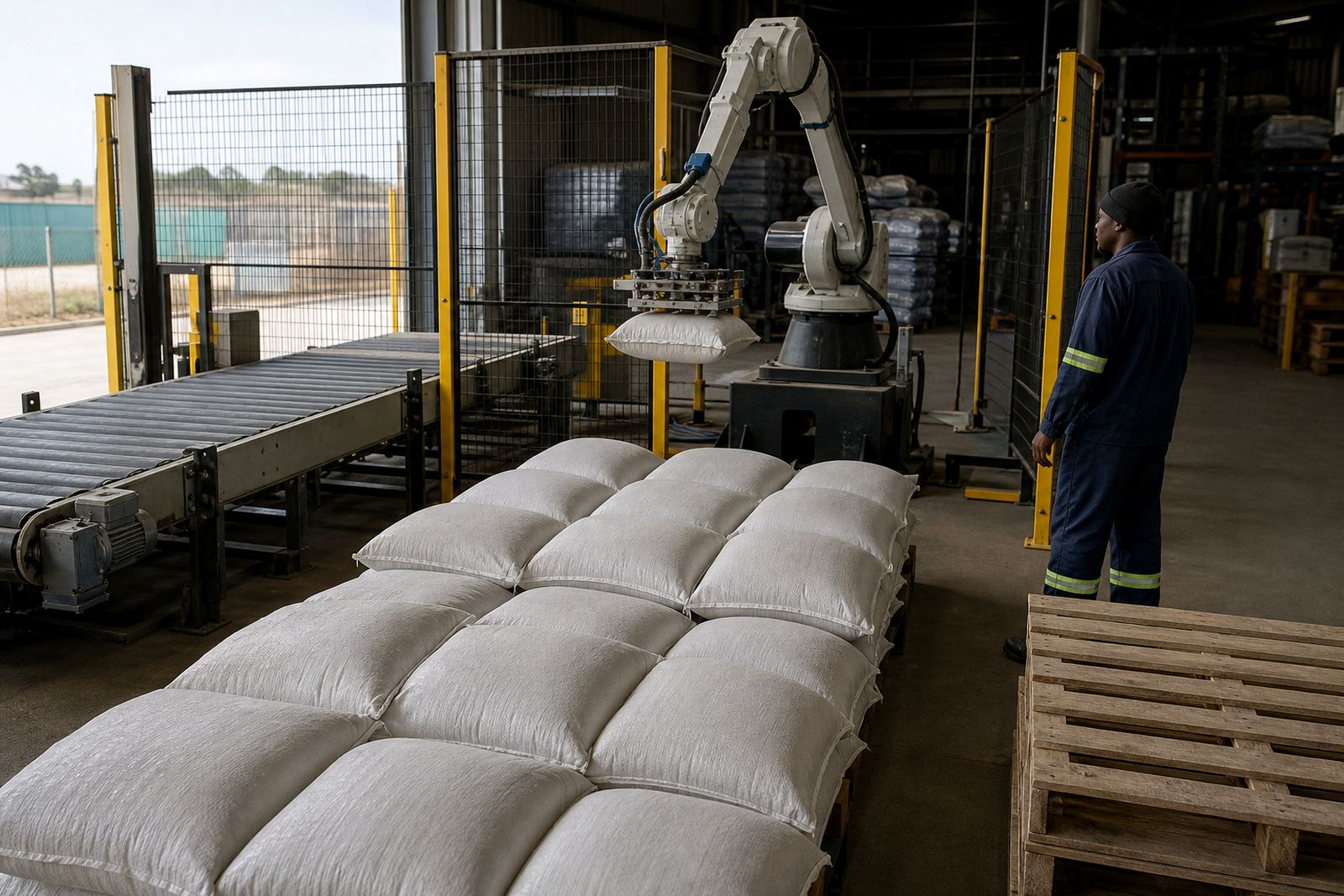
A pallet pattern should suit the product, the case size and the way the load behaves on the line. A mixed case of cartons, shrink wrapped bundles or filled bags will not all sit the same, even if they use the same pallet footprint. Before any pattern is selected, measure the case length, width, height and weight, then check how much overhang you can safely avoid.
On retrofitted lines in Kempton Park, Johannesburg, Pretoria, Durban, Cape Town and Gqeberha, we usually begin with a site survey and a line walk. That shows where the load is being formed, where it transfers, and whether the conveyor height, case presentation and pallet feed are all consistent. If the product changes during the month, the pattern must handle those changes without constant operator adjustment.
- Measure the case in millimetres, not just by description.
- Note the heaviest and lightest pack on the line.
- Check whether the product settles after packing.
- Confirm pallet type, size and condition before pattern selection.
Why Case Dimensions Change the Pattern
Case dimensions determine how many units fit per layer and whether a layer can lock together or only sit in a straight grid. Long narrow cartons may need a different approach from square cartons because edge support changes as the stack grows. A pattern that looks neat on paper can become unstable if the corners do not support the next layer properly.
If the cases are soft sided or the fill level varies, the outer profile may shift during travel. That can lead to bulging, leaning or damage during stretch wrapping and transport. In humid coastal areas like Durban and Gqeberha, carton board can soften a bit more quickly so pattern choice and wrap quality both matter.
- Check whether the case is rigid, flexible or compressible.
- Work out how many cases fit per layer with no overhang.
- Allow for glue lines, handles, vents and printed faces.
- Test the pattern with actual production cartons before final sign-off.
Layer Stability Comes Before Speed
Fast palletising is of little value if the load shifts on the way to the warehouse. Stability comes from how each layer locks into the next, how the weight is spread and whether the centre of gravity stays inside the pallet footprint. When layers are too uniform, they can slide more easily. When they are too interlocked, the pattern may slow the line or cause jam ups at the transfer point.
A good guide is to think in layers, not just in cases. The bottom layers carry the highest compressive load, so they need the best support. The top layers can often be lighter or tighter, but the full stack still needs to remain square after wrapping. If you are packaging heavy goods for export or long road freight, a small adjustment in case placement can make a big difference.
Checklist for Selecting a Practical Pattern
Use a simple process before changing the pallet pattern on an existing line. This keeps the discussion practical and helps maintenance, operations and production work from the same information. We often use this approach when integrating robots or cobots into older packing lines where the conveyor layout was not originally built for automation.
- Confirm product weight, case count and layer count.
- Measure pallet footprint and usable top surface.
- Check for any weak corners or soft packs.
- Decide whether layers need rotation or full interlock.
- Allow for labels, strapping, stretch wrap and corner protection.
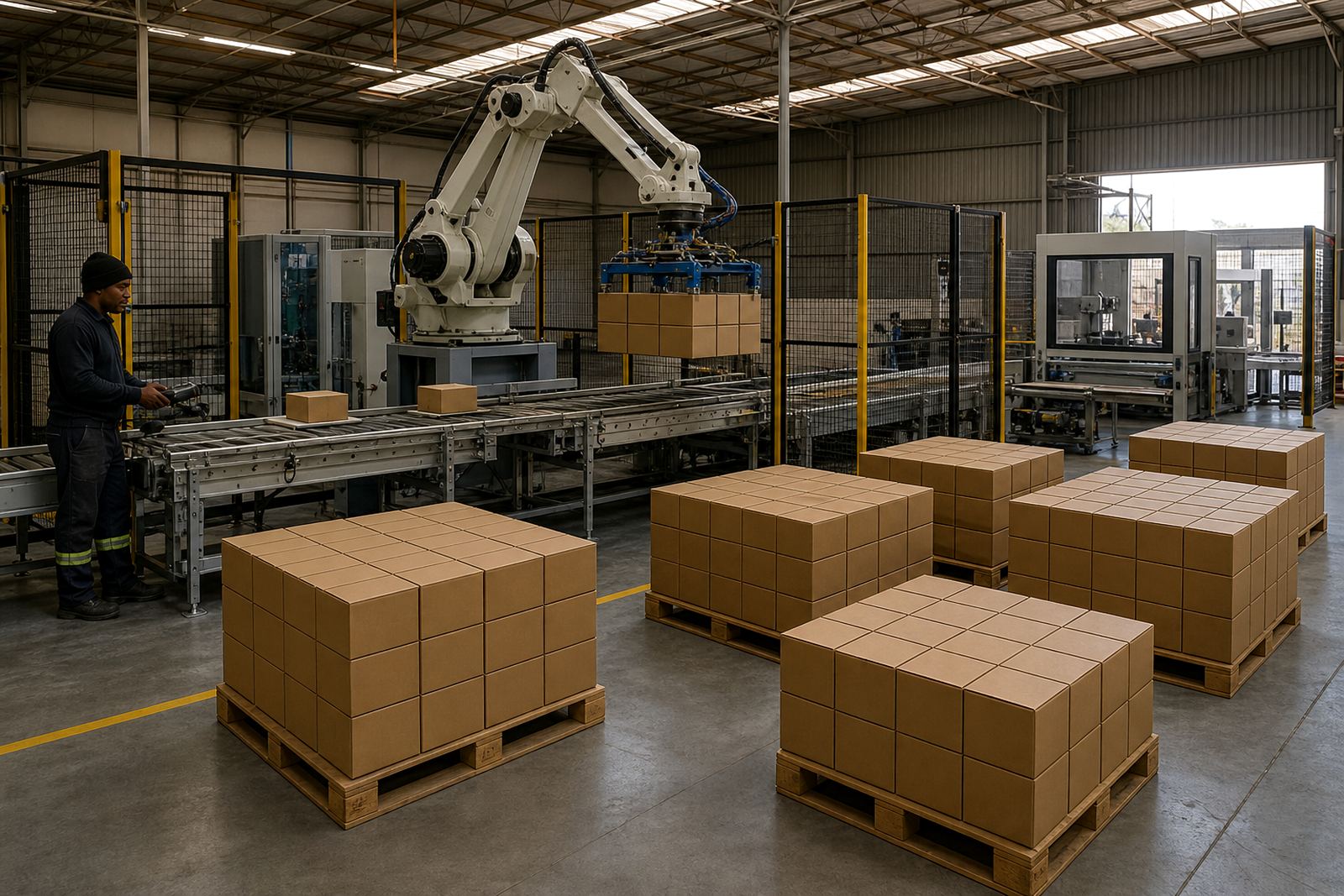
- Verify that the robot reach and end effector can place the cases cleanly.
If any one of these points changes, the pattern may need to change as well. That is why a pattern should be tested on site, not assumed from the drawing alone.
How Robot Retrofits Handle Pattern Changes
When a robot is added to a live packing or palletising line, the pattern must match the controls, conveyor timing and product presentation. A retrofit often means working with the existing infeed conveyor, merging points, discharge height and pallet station rather than replacing the full line. That keeps disruption lower and lets the business keep producing while the upgrade is installed in stages.
If the line restarts with pallets half built or cases queued on the conveyor, the pattern logic must recover safely. Good controls integration and clear operator prompts are essential, especially where one line feeds multiple pack sizes.
Safety Guarding and Risk Assessment Are Not Optional
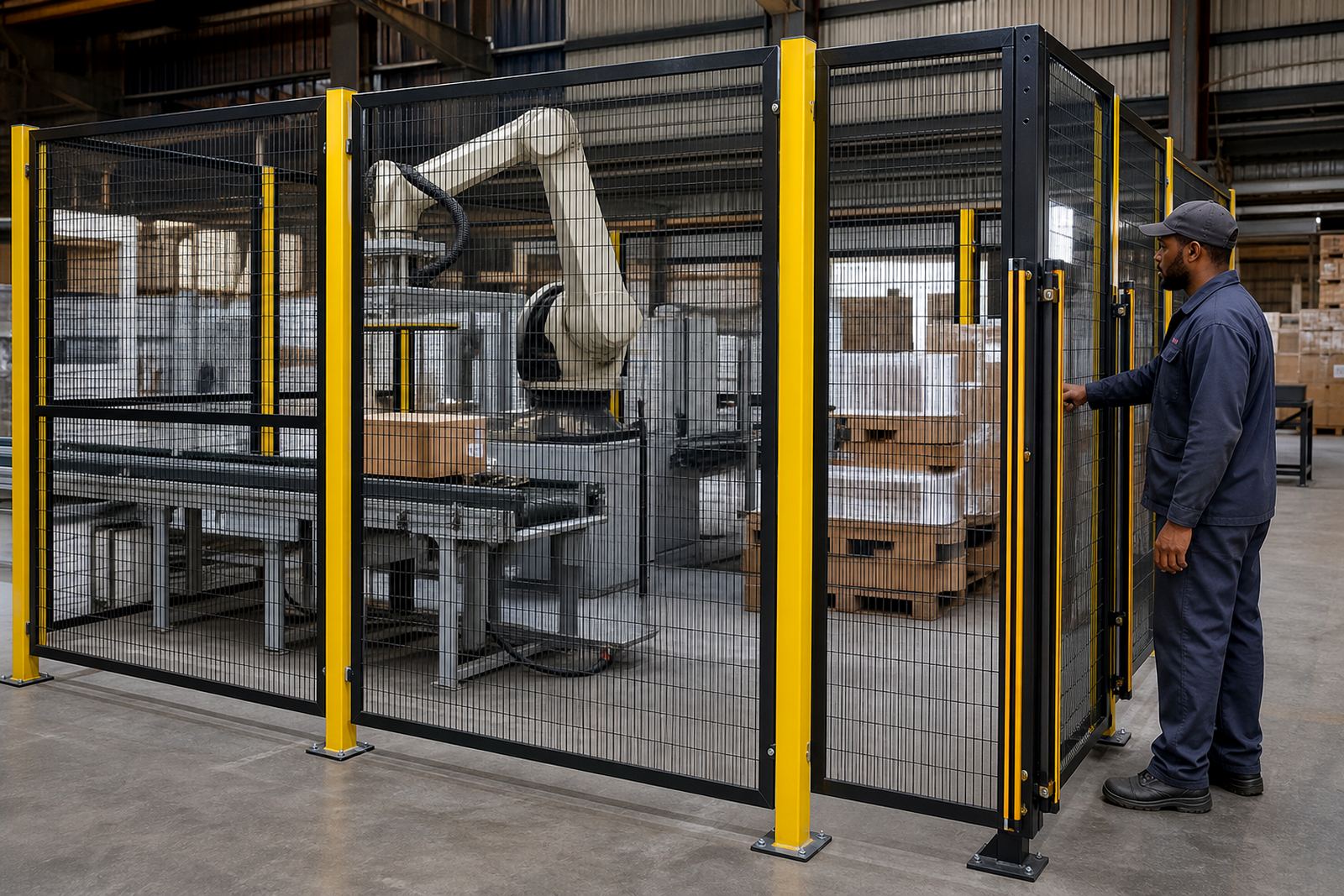
Any pallet pattern used with automated equipment must be supported by proper safety guarding and a site-specific risk assessment. General rules help, but each factory has its own machine layout, traffic flow, pedestrian access and maintenance needs. A pattern that works in one plant may not be suitable in another if the access gate, pallet dispenser or sweep area changes.
Risk assessment support should look at reach zones, access for cleaning, pallet movement, manual intervention points and emergency stops. Guarding must allow safe access for maintenance while preventing contact during automatic operation. If operators need to remove a damaged case or clear a jam, that procedure should be planned from the start, not added later.
- Identify all entry points to the robot workcell.
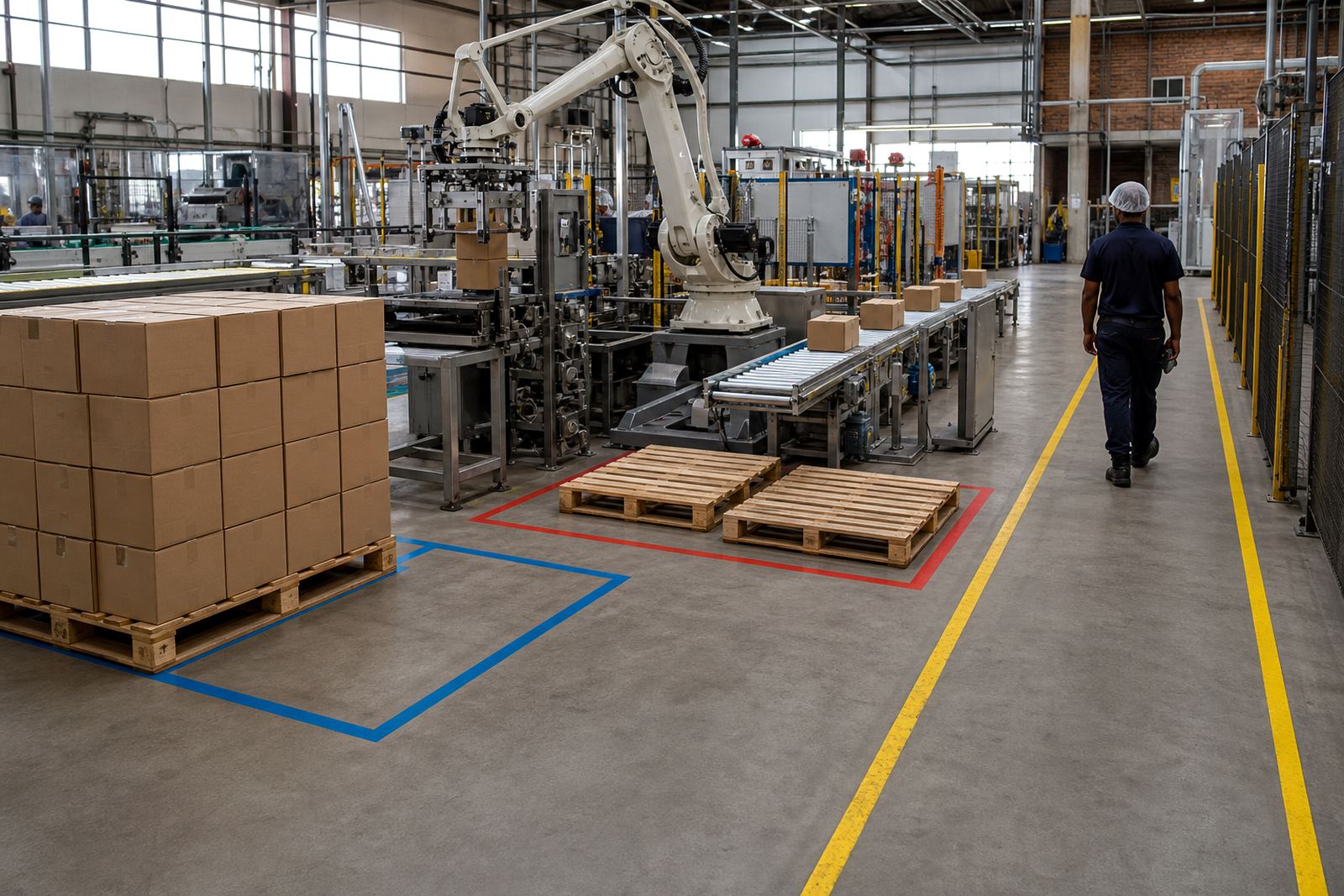
- Check the path of the pallet, conveyor and operator movement.
- Confirm lockout and restart steps for maintenance work.
- Train staff on safe intervention and normal running procedures.
A Simple Review Before You Lock In the Pattern
Before finalising the pallet pattern, ask whether the load will stay stable through wrapping, storage and transport. A neat stack is not enough if it leans after two hours or collapses in the truck yard. The best pattern is the one that suits your product, your pallet, your line speed and your handling conditions from end to end.
For manufacturers in Johannesburg, Pretoria, the East Rand, Midvaal and across South Africa, a practical pattern review can reduce manual correction and improve line flow. If your packing line is changing, or if the current pallet build keeps giving trouble, the next step is to review the line, the load and the pattern together. That way the retrofit is based on real production needs, not guesswork.