When a product line needs more than manual packing
Many factories reach a point where hand packing and manual palletising start slowing the line down. The signs are usually familiar: uneven pallet stacks, strain on operators, breakages on heavy packs, and conveyor areas that back up when a shift gets busy.
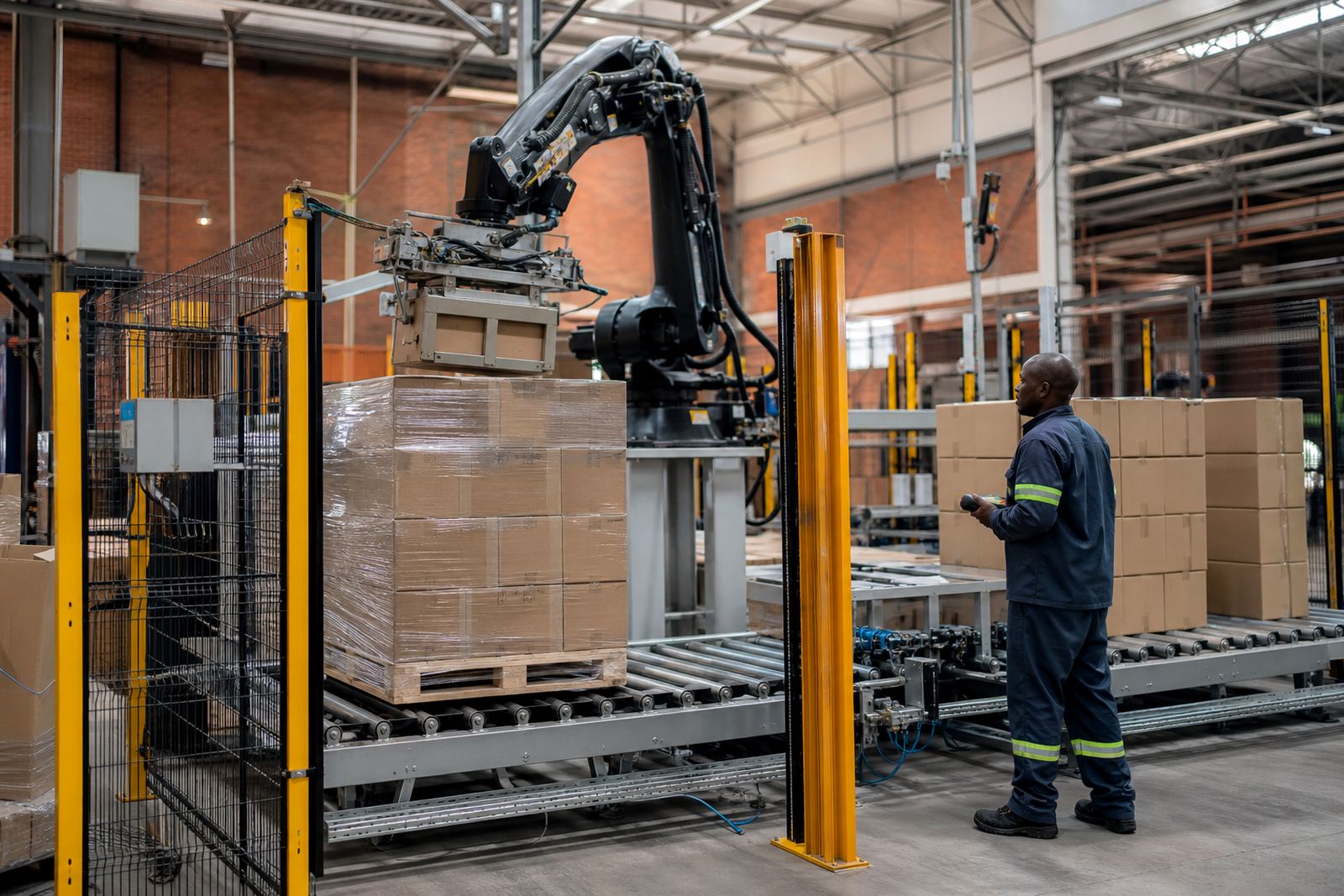
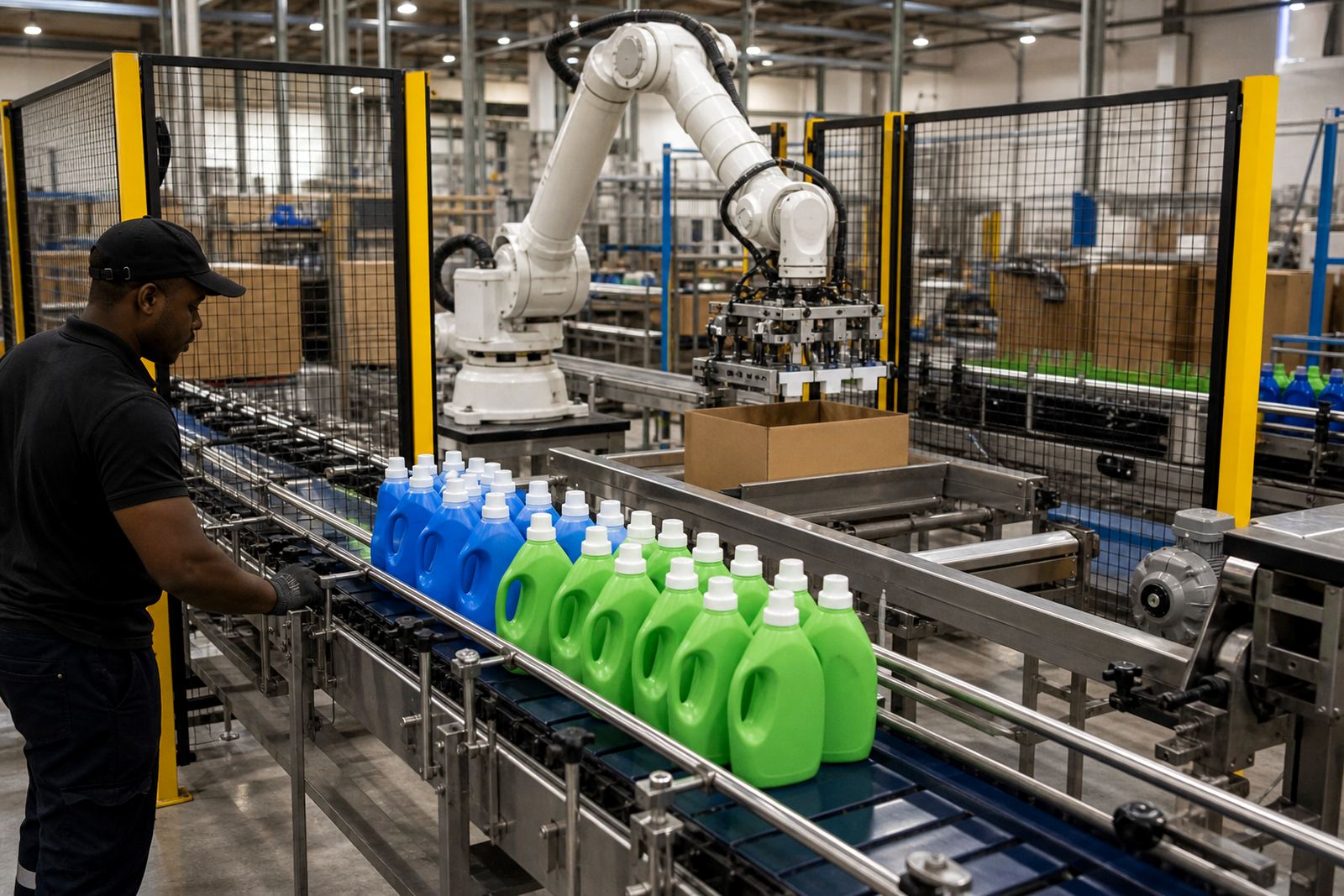
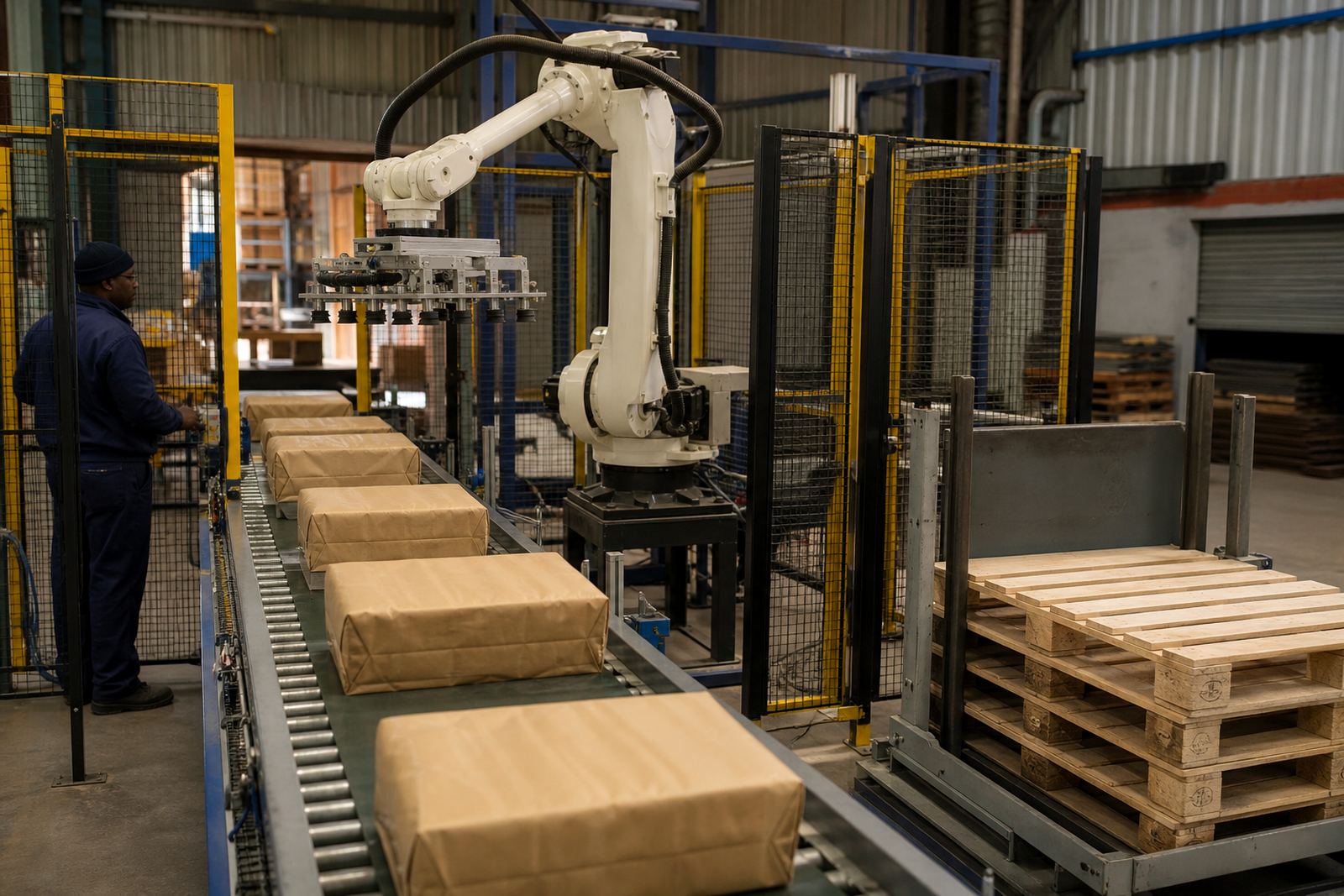
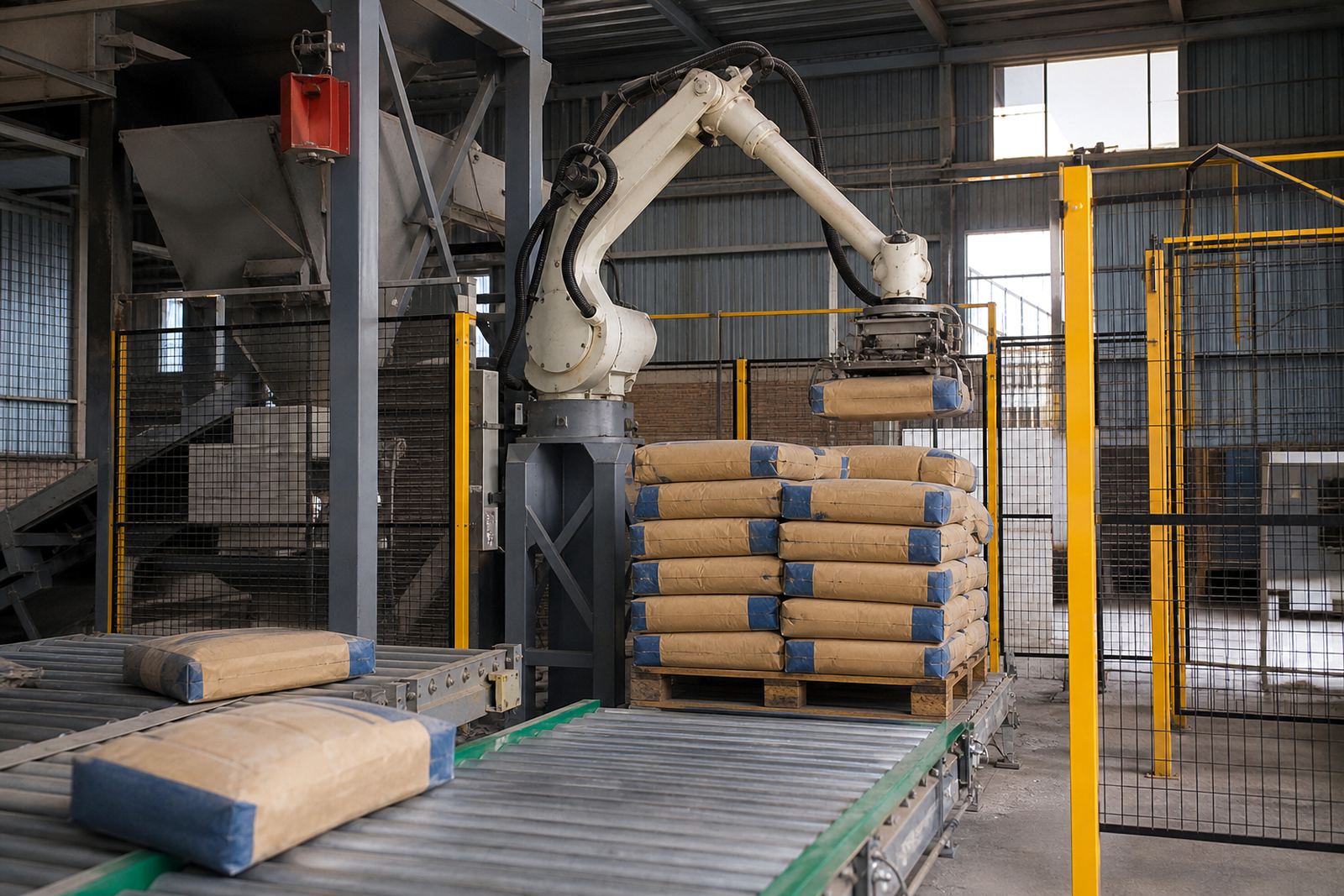
A retrofit is often the practical answer when the line already has conveyors, case erectors, bagging machines or wrapping equipment in place. Instead of stripping out the whole line, the focus is on adding a robot cell, transfer points, guarding and control changes that let the existing process work better. That approach is common for bagged product, cartons, pails, wrapped bundles and mixed packs that must be handled consistently.
The aim is not only speed. It is also cleaner stacking, fewer product damages, less manual lifting and a line that can keep running with fewer people in the palletising end. For many South African manufacturers, that matters just as much as throughput.
Typical retrofit equipment for packing and palletising lines
Every line is different, but most building product applications need a similar set of components. The robot choice, end effector, infeed arrangement and safety layout all depend on pack size, weight, layer pattern and available floor space. Heavy bags and rigid boxes behave very differently, so the cell has to be planned around the actual product, not just the nominal line speed.
- Robot or cobot palletising unit for pick and place duty
- Gripper, vacuum tool or clamp style end effector matched to the pack type
- Infeed conveyors, accumulation tables or lane dividers
- Pallet dispenser or manual pallet staging point
- Stretch wrap area or transfer point to existing wrapping equipment
- Safety fencing, interlocks, light curtains or scanner based protection where needed
- Control panels, sensors and conveyor logic for line coordination
Where product comes off different lines into one palletising point, the layout must allow for clean merging without traffic jams. That is where controls integration matters. If the robot waits on a signal that never comes, or if the conveyor keeps feeding when the pallet is full, the whole line becomes a bottleneck.
Layout planning that keeps the line practical
A good retrofit starts with a site line survey. The floor area, ceiling height, access routes, pallet movement, electrical supply and existing conveyor levels all need to be checked before any equipment is fixed. In older plants, the challenge is often not the robot itself but the surrounding plant layout. A cell that looks simple on paper can become awkward if forklift routes, maintenance access and emergency exits were not accounted for early.
It also helps to plan for growth. A line that runs one bag size today may need a second pack size later, or a different pallet pattern for export work. Leaving space for a future pallet magazine, extended conveyor section or second product lane can save a lot of rework. In coastal areas such as Gqeberha or Cape Town, corrosion resistance and enclosure selection need a proper look aswell because humidity and salt air can shorten the life of poorly specified parts.
For plants in Gauteng, the practical questions are usually power stability, floor loading and available space around the line. For KZN, the focus may be on moisture and washdown conditions. The right answer depends on the product, the building and the production plan, not on a generic template.
Safety guarding and risk assessment for each site
Any robotic retrofit needs site specific safety work. General rules apply, but the risk profile changes with the product, the operators, the forklift traffic and the way the line is used in real life. A proper risk assessment should look at access points, trapped areas, maintenance tasks, restart conditions and how operators interact with the cell during changeovers.
Safety guarding can include fixed fencing, interlocked gates, scanner zones, stop buttons and clear walkways. The right mix depends on whether the robot serves a single pallet position or multiple stations. If a cobot is used near people, that does not remove the need for a risk assessment. The full system still has to be checked carefully so the operating method suits the task and the site.
- Do not place pallet movement across pedestrian routes without control measures
- Allow safe access for maintenance, cleaning and fault finding
- Keep guarding practical so operators can still do their jobs without bypassing it
- Test restart and reset logic after every major change
In South African plants, compliance discussions also tend to include municipal fire rules, emergency egress and the practical realities of shift work. Safety must work on a Monday morning with a full production team, not only in a drawing.
Common mistakes on building product lines
One common mistake is sizing the robot for the nominal weight only, then forgetting about the actual pack condition. A damp bag, damaged carton or uneven wrapped bundle can behave very differently from a perfect sample. Another mistake is expecting one end effector to handle every product without adjustment. That can lead to poor grip, dropped packs or slower cycle times.
Another issue is poor line balancing. If the upstream conveyor feeds too quickly, or the palletising point cannot clear finished pallets fast enough, the line will back up and operators will start improvising. That is usually when damage rises and the automation loses its value. It is better to design the whole flow, including pallet changeover and wrap handoff, before the installation starts.
Budget is also often underestimated. Some projects only need limited controls and guarding changes, while others need new conveyors, transfer tables and a full cell build. For budgeting purposes, many retrofit projects in South Africa can fall anywhere from about R350 000 for a simpler packing or pallet handling upgrade to R2 500 000 or more for a larger multi-line installation with full guarding, controls integration and commissioning support. Final cost depends on reach, payload, floor works and the amount of existing equipment that can be reused.
How ReAutomated approaches a retrofit from enquiry to handover
For manufacturers in Johannesburg, Pretoria, Durban, Cape Town, Gqeberha, East Rand and Midvaal, the process usually starts with a site visit and a line survey. From there, the retrofit can be scoped around the conveyors already in place, the product mix and the level of automation the plant can support. The goal is to keep disruption manageable while improving the end of line process where it matters most.
Installation planning normally covers the mechanical layout, controls integration, guarding design, operator flow, commissioning support and training. If the site needs breakdown assistance or spare part planning after go live, that can be built into the support plan too. Good handover means the shift team understands normal running, fault resets and the limits of the cell, not just where the start button is.
For a building product line, the best retrofit is usually the one that fits the plant as it is today and still leaves room for tomorrow. That is the balance between output, safety and day to day use, and it is where practical automation makes a real difference.