Homecare Lines That Need More Output Without Full Line Replacement
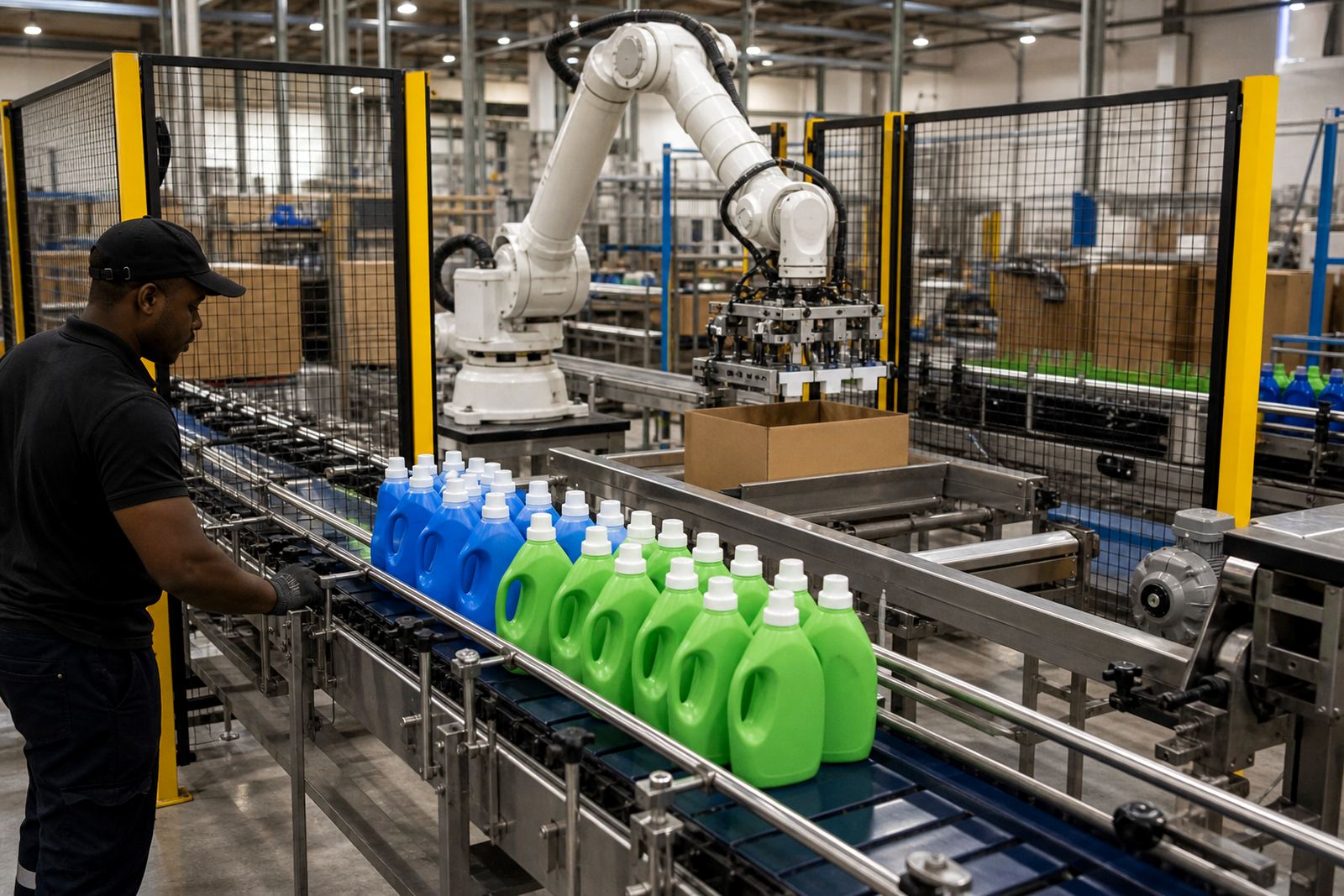
Homecare products usually come in mixed pack formats, and that makes end-of-line handling harder than it first looks. A line may run liquid bottles in one shift, pouches or sachets in another, then cartons or shrink wrapped bundles on the same conveyor system. In Kempton Park, Johannesburg and the East Rand, many factories are looking at robotic packing and palletising retrofits because they need better throughput, steadier stacking and less manual handling, but they cannot afford long shutdowns or a full plant rebuild.
A retrofit works well where the upstream process is still sound. If fillers, labellers and conveyors are in good condition, the packing and palletising section can be upgraded around them. That keeps capital spend focused on the area that creates the bottleneck. It also helps sites in Durban and Cape Town where space, humidity and salt air can affect equipment layout and maintenance access.
- Bottle packs that need case packing before palletising
- Pouches and sachets that must be grouped carefully before cartoning
- Cartons that need consistent layer formation for stable pallets
- Shrink bundles that require accurate handling at higher line speeds
Typical Retrofit Equipment For Bottles, Pouches And Cartons
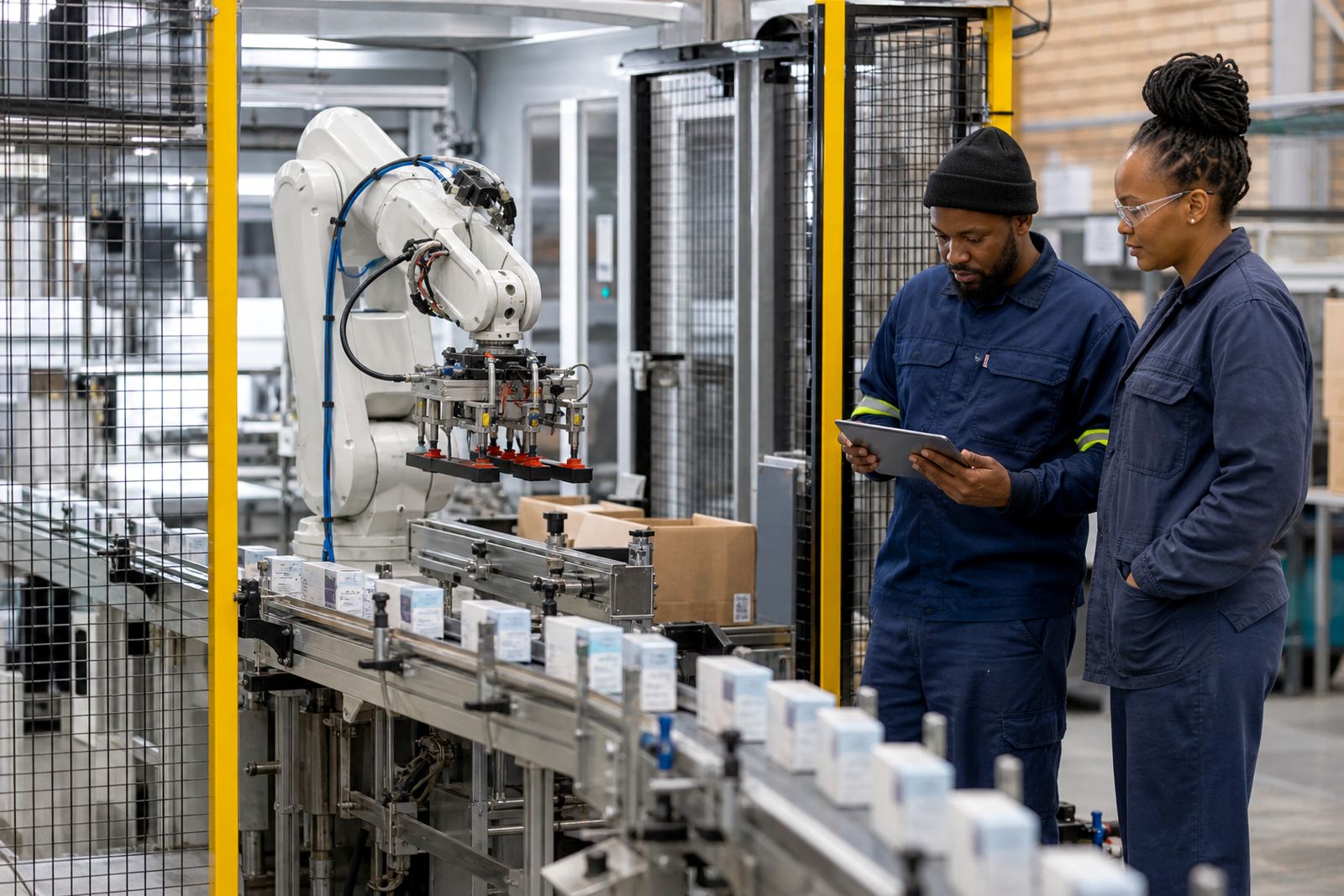
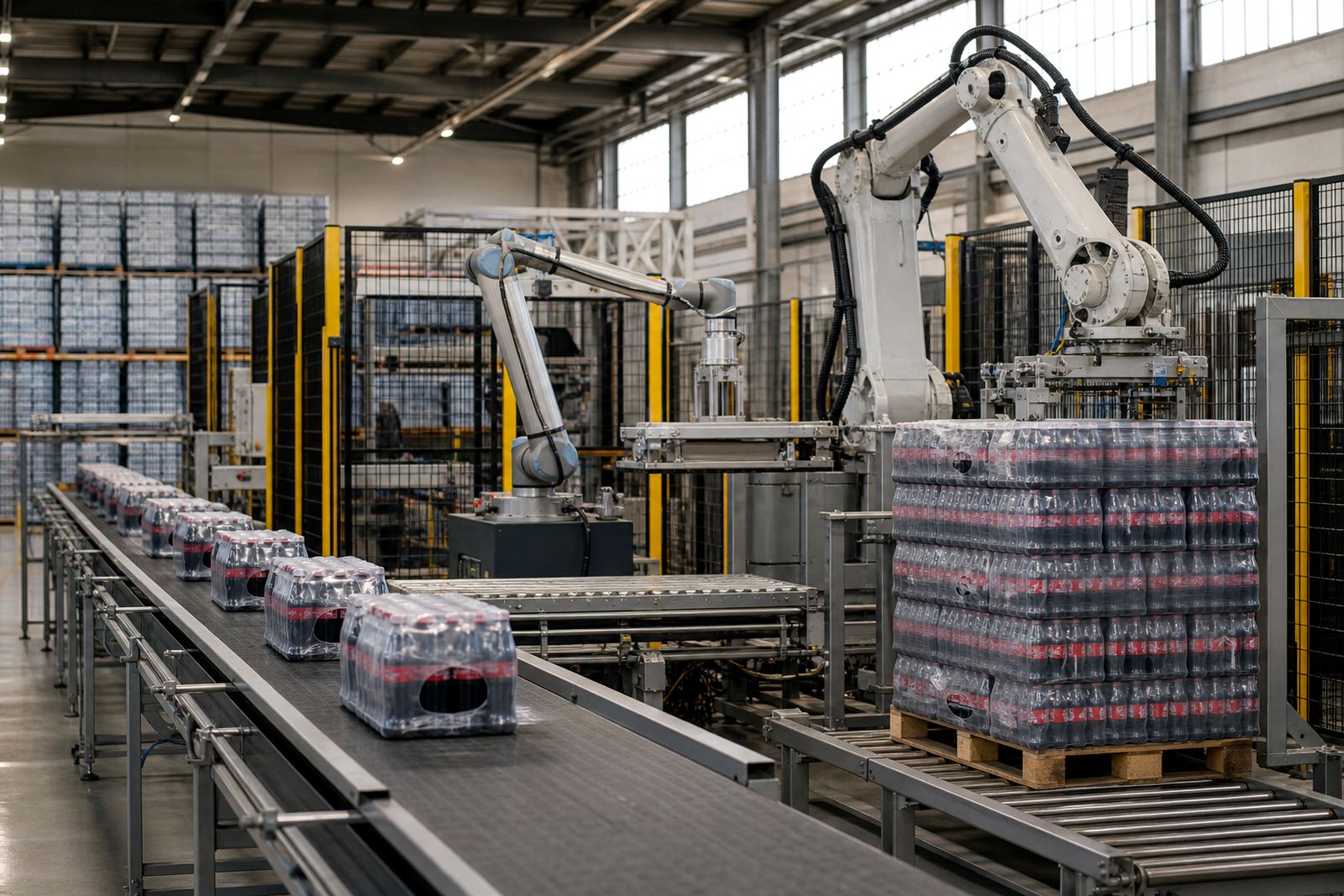
A homecare line retrofit normally starts with a clear view of product flow, case format, pallet pattern and available floor space. The equipment set can include a robotic arm for pick and place, a palletising head or end effector suited to the pack type, infeed conveyors, accumulation tables, case erectors or sealers where needed, and pallet conveyors feeding the stretch wrapper or final dispatch area. For some lines a cobot can work well for lighter duties, but for higher speeds or heavier cases a conventional industrial robot is usually the better fit.
ReAutomated integrates the new cell into the existing conveyor line so the line keeps its original rhythm where possible. That means controls integration, safety interlocks, product sensors and stop logic all need to be matched properly. If the upstream conveyor is too fast, too short or too tightly packed, the robot will not fix the real issue. It just becomes another point of delay. The best result comes from balancing the full line from infeed to pallet exit.
- Robotic case packing for cartons, bottles and mixed packs
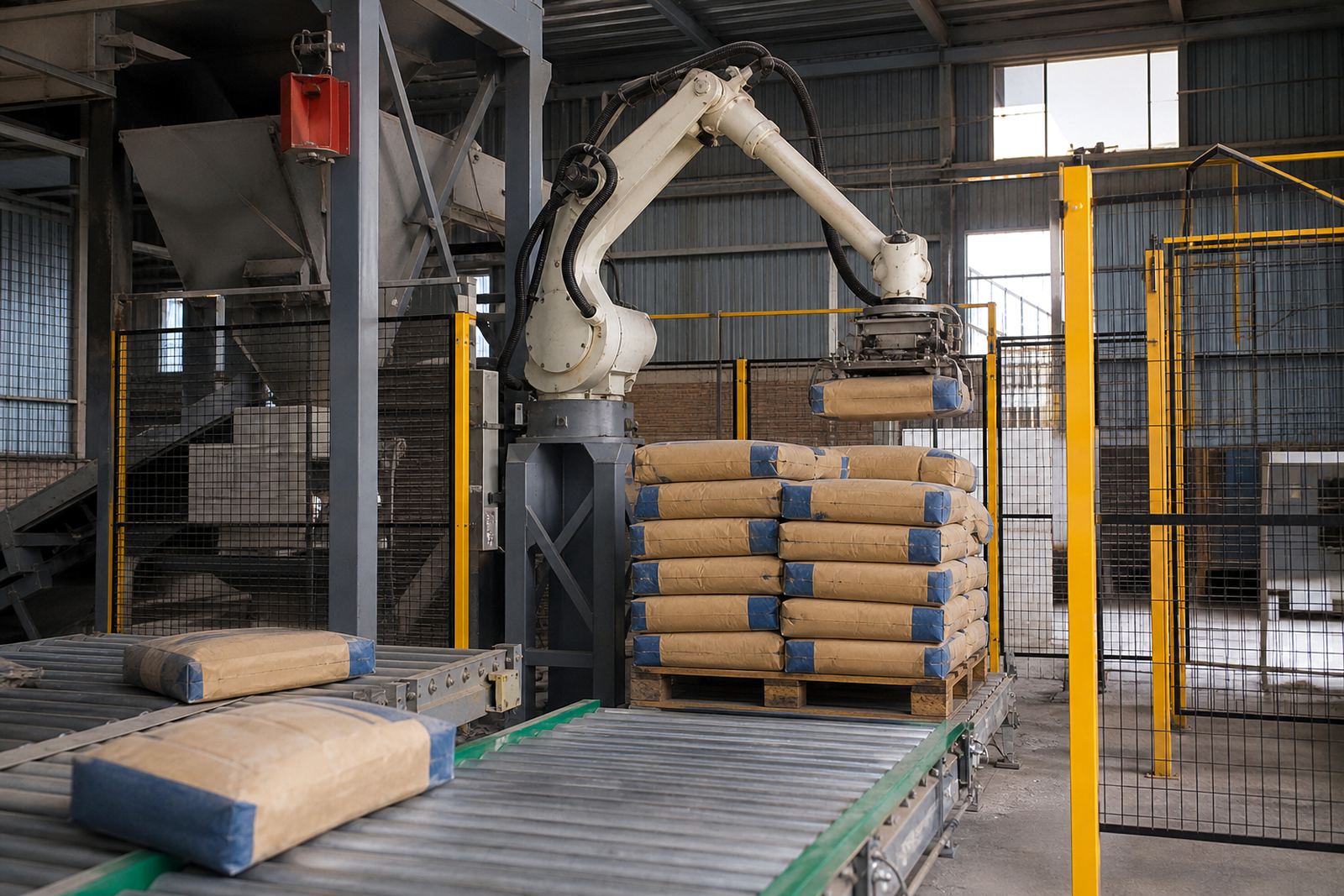
- Layer palletising for standard retail and bulk pallets
- Gripper selection based on carton finish, pack weight and wrap type
- Conveyor handover points that reduce product scuffing and jams
Layout Planning For Tight Sites And Live Production
Many South African factories have to retrofit in a live plant with very limited room. That is common in Spartan, Isando, Pretoria industrial areas and older sites in Durban. Good planning starts with a site line survey, measured walkways, machine heights, door widths and pallet truck routes. If the cell blocks maintenance access or creates a bad turning radius for forklifts, it will cause trouble later. The goal is to keep the line serviceable, safe and easy to clean.
Homecare products often involve plastic containers, labels and shrink film, so dust control and housekeeping matter. Coastal humidity can affect cartons and adhesive performance, while inland sites may need attention to static and heat around packaging film.If the plant already has generator or backup power arrangements, the controls and restart sequence should be checked as part of the retrofit plan so the cell does not restart unpredictably after an outage.
- Allow safe access for maintenance, cleaning and changeovers
- Keep pallet staging outside main pedestrian routes
- Plan for future pack size changes and seasonal volume shifts
- Use clear guarding lines and marked floor zones from day one
Safety Guarding And Risk Assessment Are Site Specific
Any robot on a packing or palletising line needs proper safety guarding and a site specific risk assessment. There is no generic answer that suits every plant. Guarding may include fencing, light curtains, interlocked gates, scanner zones or a combination depending on the access points and the task. If staff need to enter the cell for cleaning, jam clearing or sample checks, that has to be accounted for in the design.
Risk assessment support should cover pinch points, pallet movement, sharp edges, product spill risk and the interaction between operators, maintenance staff and forklifts. It should also consider local compliance rules that apply to the site and its internal safety standards. ReAutomated works with the client team to define the operating method, emergency stops, reset procedure and lockout points before commissioning. That reduces confusion when the line is handed over.
- Interlocked access doors for controlled entry
- Emergency stops placed for both operators and supervisors
- Clear markings for safe loading, unloading and restart zones
- Operator training on normal running, faults and reset steps
Where Homecare Retrofits Pay Off First
Most homecare projects start with a bottleneck. It may be a packing team that cannot keep up with the filler, or a palletising area where bags and cartons are stacked unevenly and pallets collapse in transit. In some plants the issue is product damage from repeated manual lifting. In others it is labour pressure on night shift, absenteeism or the challenge of keeping output steady during peak demand. A retrofit can relieve those pressure points without changing the whole production system.
For manufacturers in Johannesburg, Pretoria, Midvaal and Gqeberha, the strongest gains often come from removing repetitive lifting and standardising the last stage of the line. The same applies in Cape Town and Durban where product flow can be disrupted by space limits or weather related handling issues. When the retrofit is designed properly, the line runs with fewer interruptions and the pallet quality becomes more consistent. It also makes future maintenance planning easier because the process is more repeatable.
Budget Ranges And Project Scope In Rand
Budget for a homecare retrofit depends on speed, pack variety, line condition and how much of the existing conveyor system can be retained. A smaller packing or palletising retrofit that uses much of the current infrastructure may sit in a lower budget band, while a multi-format line with new conveyors, guarding, controls integration and commissioning support will cost more. As a practical guide, many projects fall somewhere between about R750,000 and R6,000,000 plus, depending on scope and complexity. That range is only a starting point and every site needs its own assessment.
It is usually better to spend money where the line is weak rather than chase a full rebuild. Good scope definition helps avoid rework, delayed installation and extra stop-start costs during production. ReAutomated supports site line surveys, retrofit design, conveyor integration, controls integration, safety guarding design, risk assessment support, installation management, commissioning support, operator training, maintenance support, breakdown assistance and spares planning so the project stays practical from first visit to handover.
- Smaller line fixes for a single pack format or one palletising point
- Mid-range retrofits with new guarding, controls and product handling changes
- Larger projects where packing, conveying and palletising are all adjusted together