When a beverage line needs more than manual packing
Beverage plants often reach a point where the filling line is still healthy but the end of line is holding everything back. Cases back up after sleeving, multipacks arrive unevenly spaced, and manual packers can no longer keep pace with shift targets or changeovers. In Gauteng and the coastal cities alike, the real pressure usually shows up at the packing table, tray former, case erector or palletising bay, not at the filler itself.
A retrofit makes sense when you want to keep the existing conveyors, wrappers and pallet truck routes, but remove the heavy lifting and repetitive packing work. That may mean robotic case packing, layer forming, tray loading or palletising, depending on the pack format. The aim is practical: keep the current line where it still works, add automation where labour and consistency are weakest, and avoid a full replacement unless the site truly needs one.
Beverage products can be awkward to handle. Glass bottles, PET packs, slim cans and mixed cartons each behave differently on a conveyor. A good retrofit plan accounts for slip, moisture, pack instability and the risk of label scuffing. On a humid Durban site or a dusty inland plant, these details matter just as much as cycle time.
Typical equipment used on beverage retrofits
The exact package depends on the pack style and output, but beverage lines usually need a combination of mechanical and control changes rather than one machine alone. ReAutomated works with the existing flow and adds the equipment needed to group, transfer and stack product cleanly.
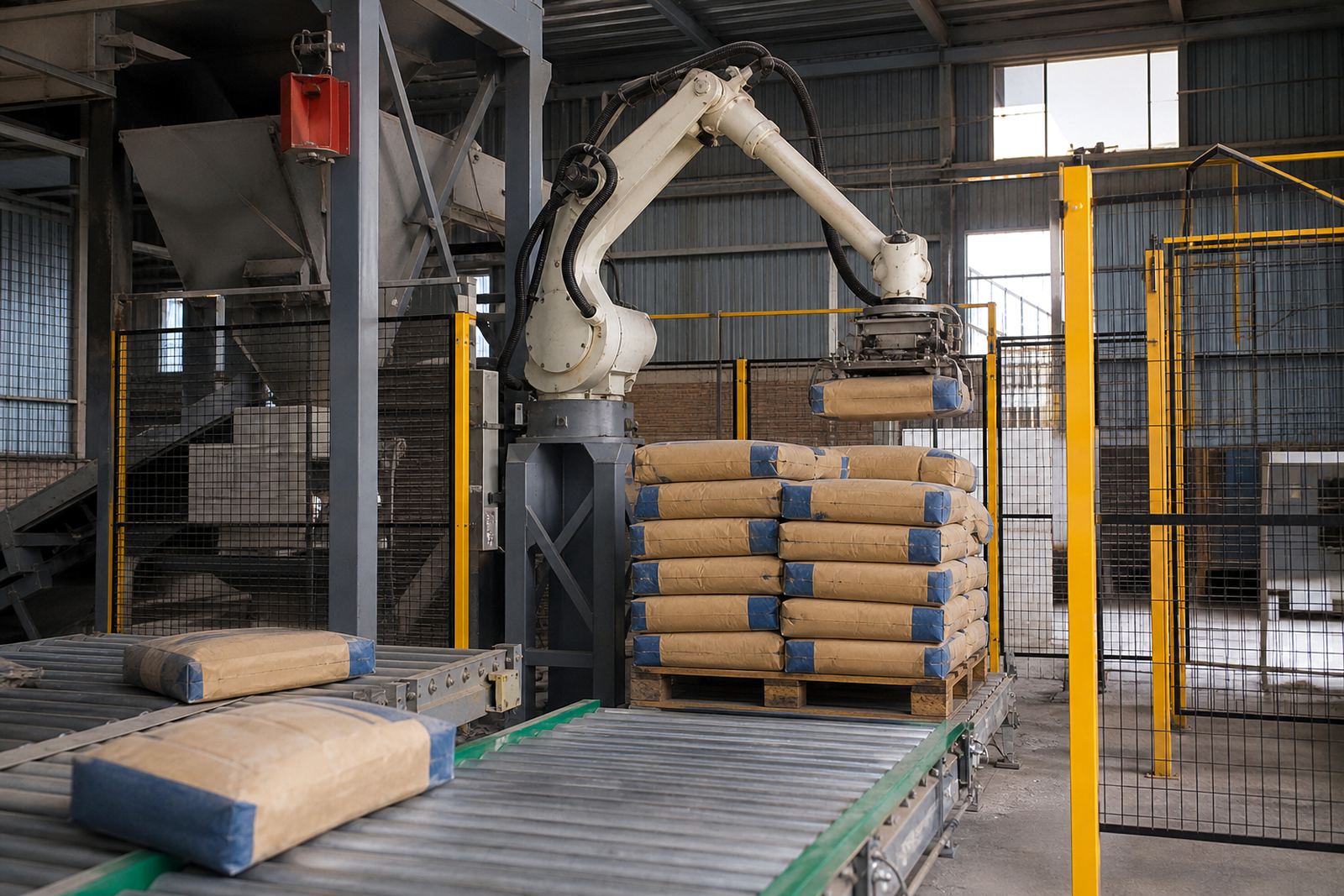
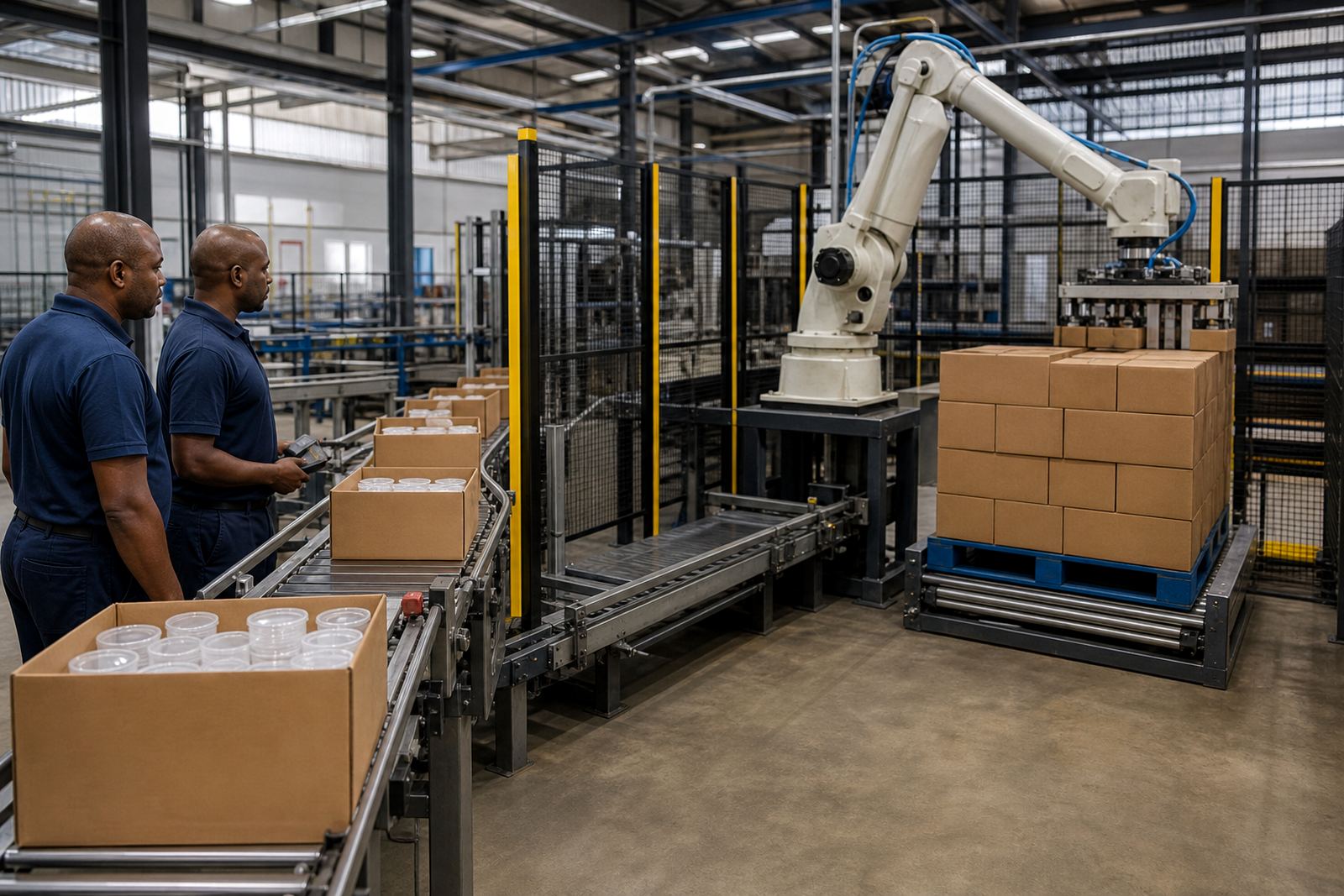
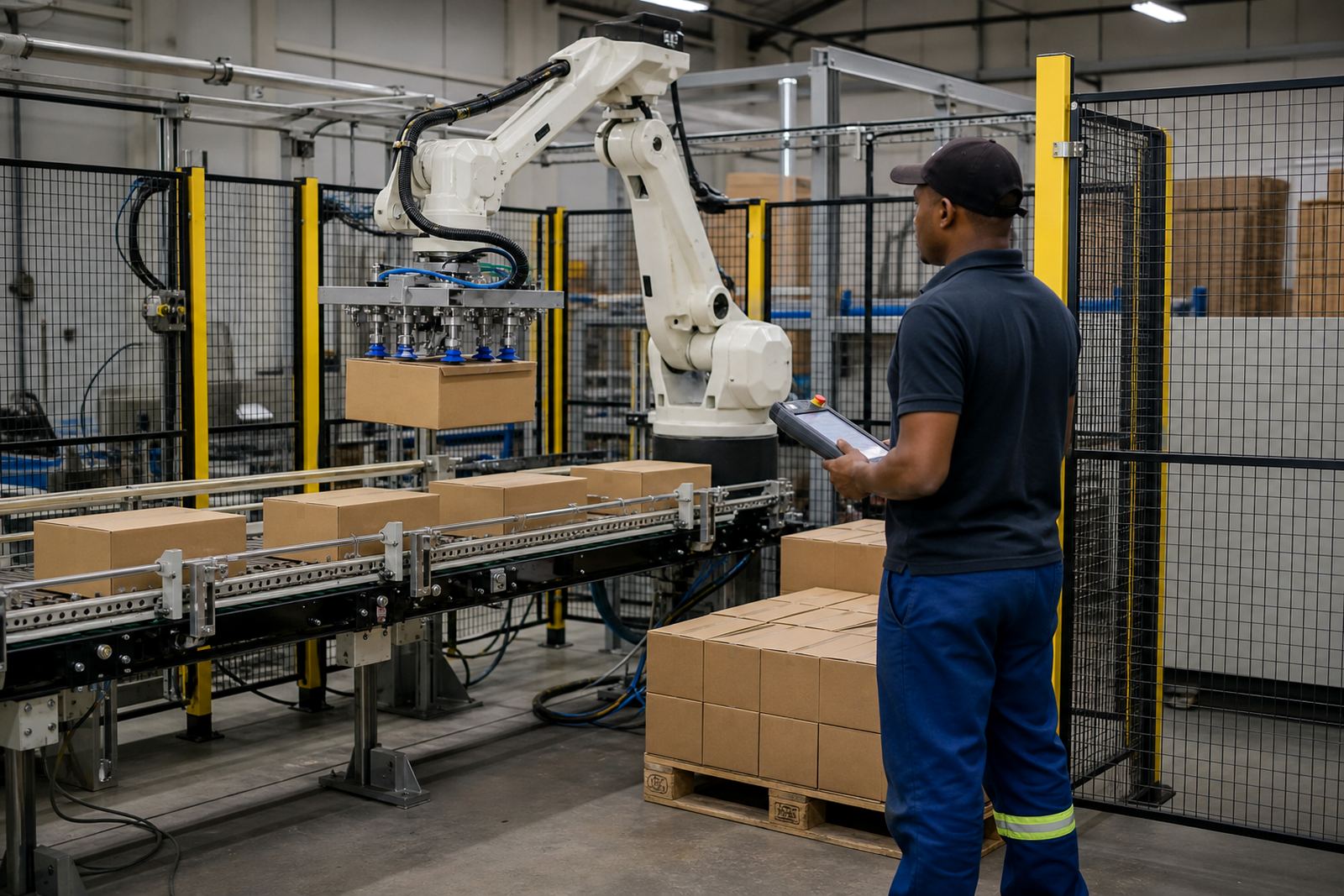
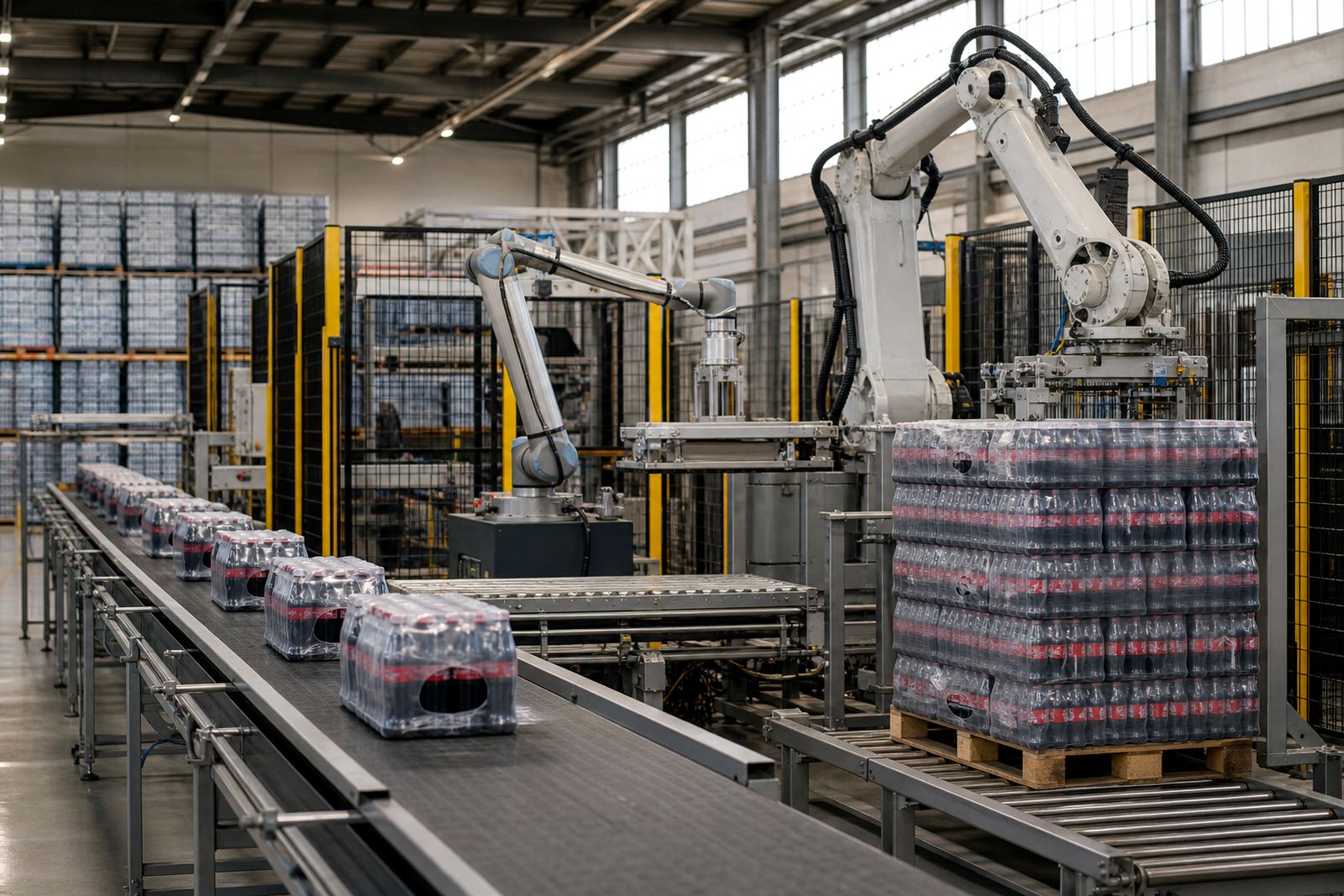
- Robotic palletising cells for cartons, shrink wrapped packs and crates
- Cobots for lighter duty packing tasks where speed and reach suit the application
- Product grouping systems for cans, bottles and multipacks before tray loading
- Tray forming, tray loading or case packing stations
- Infeed and outfeed conveyor changes to stabilise product presentation
- Controls integration for sensors, interlocks, reject points and line signalling
- Safety guarding, light curtains, fenced access and controlled entry points
For many beverage sites, the best solution is a hybrid one. A robot may palletise final cartons while a packing crew still manages upstream case loading, or a cobot may assist at a slower line where floor space is tight. The right mix depends on pack weight, line speed, available headroom and whether the plant handles changeovers several times a day. No two lines are identical and that is why a site survey matters.
Planning the layout around conveyors and pallet movement
A beverage retrofit should fit the plant, not fight it. Before any equipment is specified, the line needs to be surveyed from the infeed to the finished pallet. That includes conveyor heights, transfer points, forklift routes, stacker access, drainage, washdown areas and where staff currently walk. In older plants around the East Rand or Midvaal, this is often where the biggest savings are found, because a small layout change can remove a lot of unnecessary handling.
Good planning also looks at future changeovers. If the site runs 330 ml cans today and larger bottles next quarter, the robot reach, gripper design and conveyor spacing must allow for that. Floor loading, anchor points and electrical supply need checking as well.
On beverage projects, space around the palletising zone is often underestimated. You need room for empty pallet supply, pallet discharge, stretch wrapping or load containment, and safe access for operators and maintenance staff. If the site ships finished goods in high volumes, the pallet lane also has to work with municipal traffic movement and the on-site loading pattern, especially where trucks queue tightly at dispatch.
Common mistakes that slow beverage automation
The biggest mistakes are usually not mechanical, they are planning mistakes. Plants sometimes choose a robot before checking whether the cartons arrive square, stable and consistently spaced. Others assume the existing conveyor speed will suit the new cell, when in fact the infeed needs to be slowed or buffered to protect product quality.
Another common issue is underestimating hygiene, moisture and maintenance access. Beverage sites can be damp, sticky or subject to frequent washdown. A retrofit needs suitable guarding materials, cable routes and access panels that are easy to clean and inspect. If the guarding blocks access for cleaning or product changeover, the line becomes a nuisance instead of a help. That is a costly oversight, not a minor detail.
- Do not ignore product variation between SKUs, especially mixed packs and promotional cartons
- Do not place the robot where forklift traffic crosses the working envelope
- Do not skip a proper risk assessment for each site and each line
- Do not assume manual stacking and robotic stacking need the same pallet pattern
- Do not forget spare parts planning for belts, sensors, grippers and wear items
Risk assessment support is essential, but each site still needs its own review. A line in Pretoria will not face the same traffic, floor layout or operator movement as a coastal site in Cape Town. Safety guarding must suit the actual machine arrangement and the actual operating method, not a generic drawing. That is standard practice and it keeps the line practical to run.
Budget ranges for beverage line retrofits in Rand
Budget depends on output, pack format, floor space and how much of the current line can stay in place. A simple robotic palletising addition will cost less than a full packing and palletising retrofit with conveyor changes, controls integration and guarding. Most beverage projects fall into staged budgets rather than a single fixed figure, because the scope changes once the site survey is complete.
As a broad working range, smaller retrofit projects may start from about R450 000 to R900 000 when the aim is to automate a limited part of the end of line. Mid-sized packing and palletising retrofits often sit between R900 000 and R2 500 000. Larger, multi-SKU beverage lines with grouping, tray loading, safety guarding and line control changes can move above that depending on complexity. These figures are only a guide and every line needs its own assessment.
It is also worth budgeting for the practical items people forget: commissioning support, operator training, maintenance spares and the time needed to get the line stable after installation. A retrofit that is planned well usually costs less in disruption than one that is rushed. The true saving often comes from fewer manual lifts, fewer damaged packs and steadier output over the full shift, not from the machine purchase alone.
How ReAutomated handles beverage projects
ReAutomated works from Spartan in Kempton Park and supports beverage manufacturers across Johannesburg, Pretoria, Durban, Cape Town, Gqeberha and the wider South Africa market. The process starts with a site line survey, then retrofit design, conveyor integration, controls integration and a safety review tied to the actual plant layout. From there, the team manages installation, commissioning support and operator training so the line can be handed over in a controlled way.
The team includes Sibusiso Hlongwane, Annelise Abrahams, Thabo Malherbe, Farah Khoza, Johan Booysen and Lerato Khanye, which means the project has practical oversight from survey through to aftercare. That matters on beverage work because the best solution is rarely just one machine. It is usually a sequence of good decisions about layout, handling, guarding and serviceability.
If your beverage line is struggling with manual packing, unstable trays or palletising bottlenecks, the sensible next step is a site visit and a clear plan. The aim is to keep the line productive, safer to operate and easier to maintain without overcomplicating the plant.