When Plastic Lines Need a Retrofit, Not a Full Rebuild
Plastic product manufacturers in Gauteng, KZN, the Western Cape and the Eastern Cape often run packing lines that still work well mechanically, but the end of line becomes the bottleneck. That usually shows up as hand packing, uneven pallet loads, damaged nested packs or operators struggling to keep up when changeovers come in fast. In many plants the answer is not to rip out the whole line. A focused retrofit can bring robotic handling into the existing process and keep the rest of the line intact.
For tubs, lids, containers and stacked packs, the main challenge is grip, orientation and product stability. Light products can shift, flex or nest too tightly if the handling method is wrong. A good retrofit starts with a site line survey, then looks at throughput, pack style, available floor space, current conveyor heights and the way pallets move in and out of the area. That early planning saves a lot of rework later.
- Typical retrofit targets include end-of-line packing, case loading and palletising
- Common products include tubs, lids, trays, pails, jars and nested packs
- Space, clearances and maintenance access must be checked before equipment is ordered
Typical Equipment for Plastic Product Handling
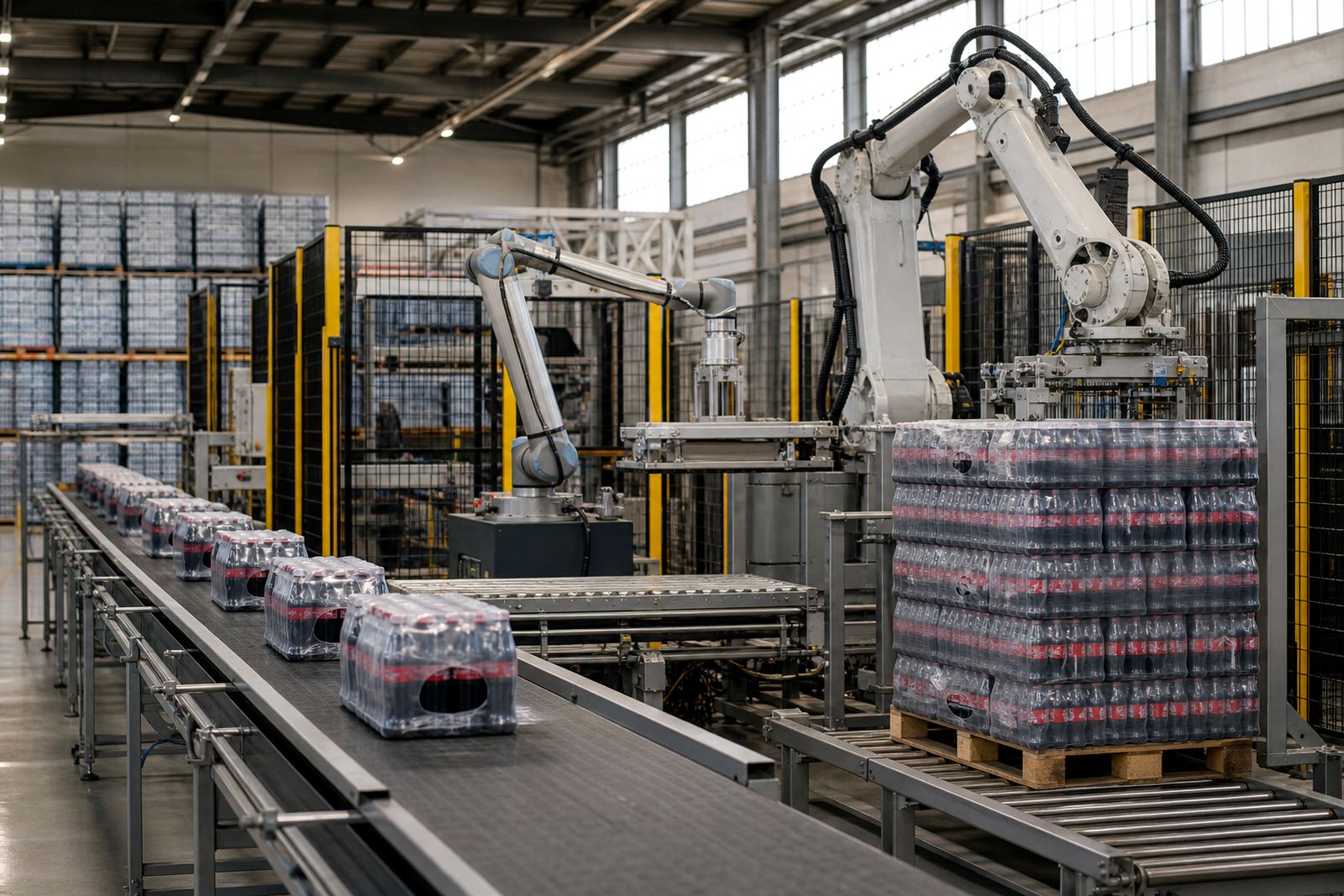
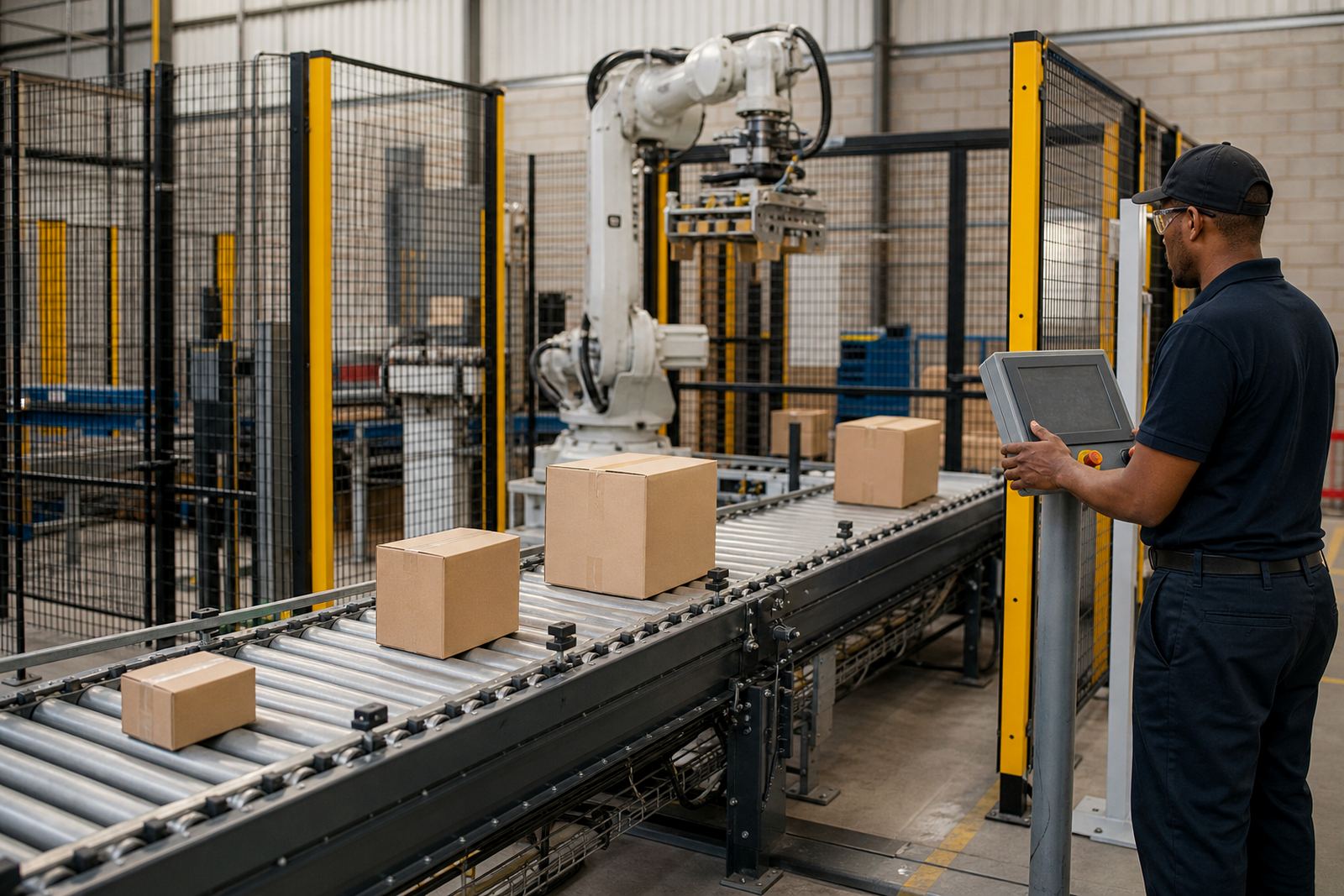
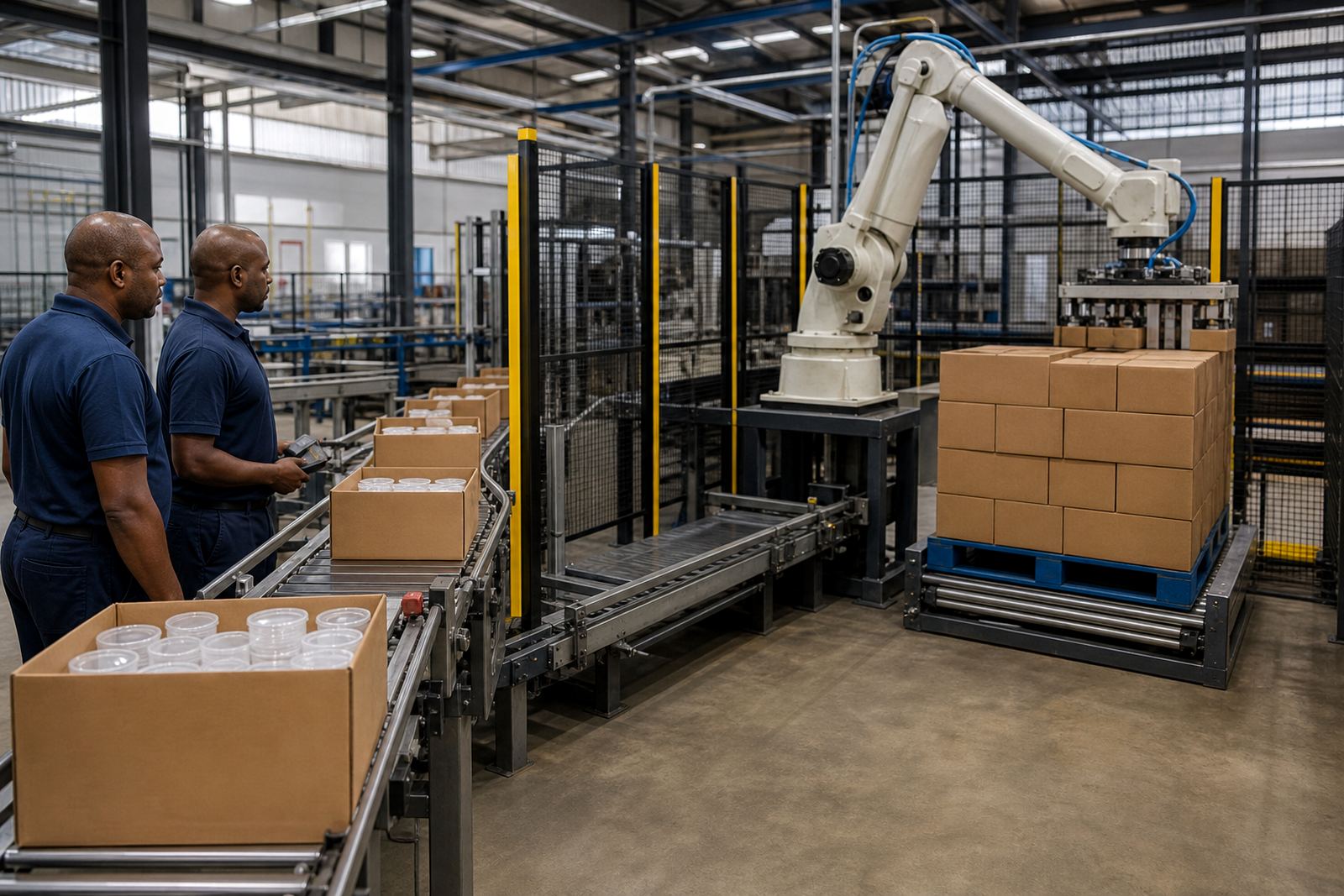
A plastic product line retrofit usually brings together a robot, a conveyor handoff and a protected working area. Depending on the task, a cobot can suit lighter duties and lower speeds, while a standard industrial robot is often the better choice for faster palletising or more demanding pick patterns. The robot is only one part of the installation. The surrounding equipment has to feed it consistently and move finished packs away without shocks or snags.
For nested products, careful design matters. Lids and containers can arrive in stacks, sleeves or cartons, and each format needs a different pick strategy. Vacuum tooling, mechanical grippers or combined end effectors may be used, but the choice depends on the product finish, weight and surface condition. In coastal areas like Durban and Gqeberha, humidity can also affect carton strength and slip risk, so the handling plan needs to account for that too.
- Robotic palletising cell with suitable reach and payload for the pack weight
- Infeed and outfeed conveyor tie-ins to match existing line speeds
- Product guides, accumulation areas and pallet transfer points
- Safety guarding, light curtains, interlocks or fenced access where needed
- Control panels, sensors and fault signals linked into the current line
Layout Planning for Busy Plants in Gauteng and Beyond
Plastic plants in Kempton Park, Pretoria and across the East Rand often have limited floor space because production, warehousing and dispatch all sit close together. That is why layout planning matters so much. The cell should allow for fork truck movement, pallet drop zones, maintenance access and clean operator walkways. If the line is squeezed too tightly, the retrofit can slow the plant instead of helping it.
When we plan a retrofit, we look at the full route from product formation to final pallet load. If cartons or packs need to rotate, stack in layers or change direction, the conveyors and controls must support that movement without causing jams. We also consider washdown needs, dust, floor condition and power stability.
- Allow enough space for full pallets, empty pallet storage and wrap access if used
- Keep sensors and cable routes clear of forklift traffic and washdown areas
- Check whether the existing conveyor frame can carry extra loads and side guides
- Plan for manual override points, simple fault recovery and spare part access
Safety Guarding and Risk Assessment for Each Site
Every site needs its own risk assessment. There is no single guarding solution that suits every plastic product line, because the product size, robot speed, operator access and pallet movement all change the risk profile. General safety rules apply, but the detail must be checked on site and signed off before handover. This includes guarding design, access control, emergency stops, safe restart logic and the way operators clear minor jams.
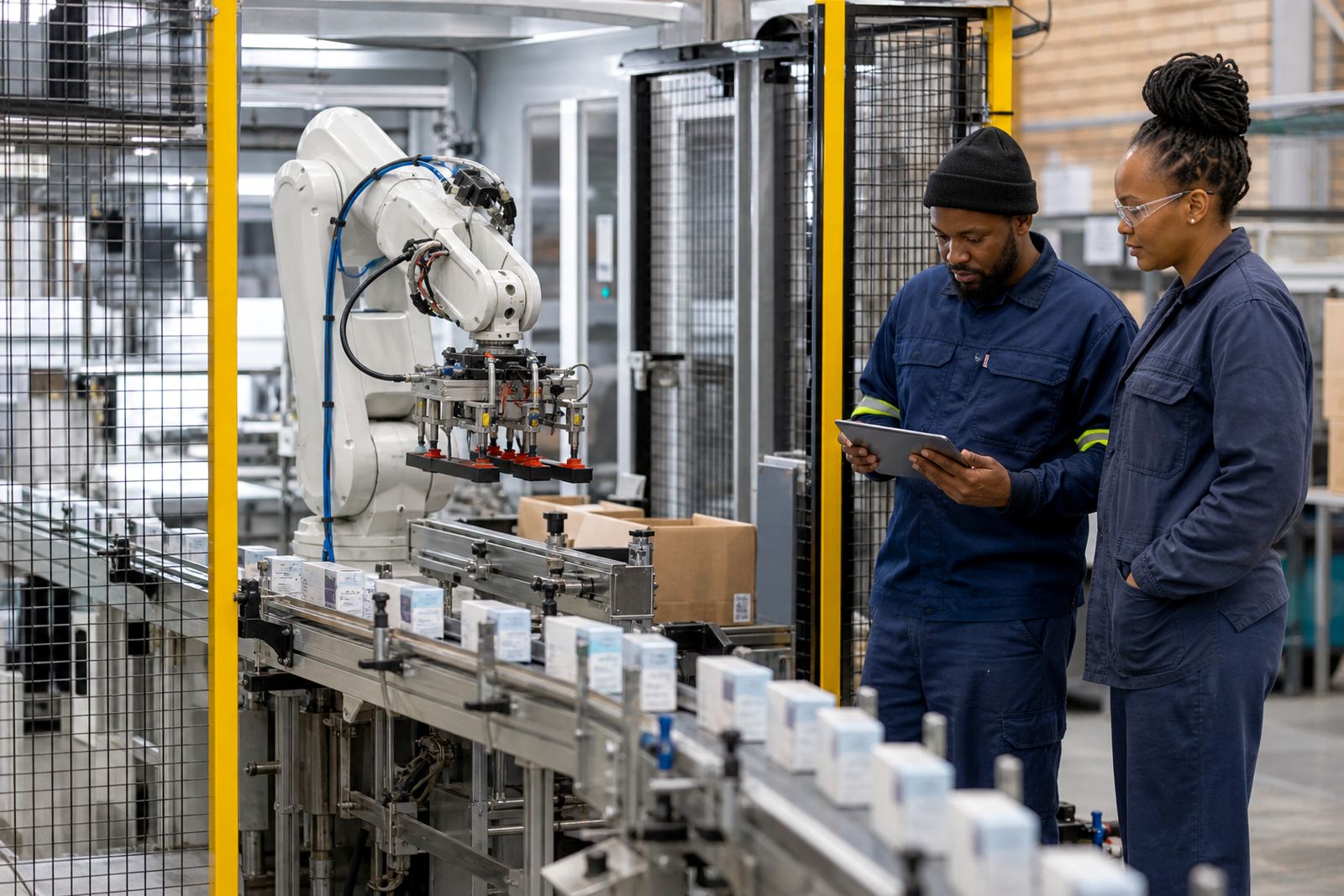
In a retrofit, safety and production must work together. If guarding is too awkward, operators find shortcuts. If it is too open, the cell becomes unsafe. The aim is to protect people while still making routine tasks practical. That can include fenced zones, interlocked doors, safety-rated sensors and clear operating procedures. Training also matters. Operators need to know what the robot is doing, where the safe access points are and when maintenance support is required.
- Risk assessment support should cover normal running, cleaning, changeovers and breakdowns
- Guarding must suit the actual floor layout, not an assumed layout
- Emergency stops and lockout points should be easy to reach and clearly marked
- Operator training should include fault clearing, safe start-up and basic checks
Common Mistakes on Plastic Packing Projects
One common mistake is choosing equipment before measuring the real product behaviour. Plastic tubs, lids and nested packs can shift in the hand, settle unevenly or deform slightly under pressure. If the handling assumptions are wrong, the robot ends up chasing inconsistent product flow. Another mistake is ignoring the line before and after the robot. A fast palletiser is of little value if the case former, conveyor merge or pallet transfer point cannot keep up.
Another issue is leaving maintenance out of the picture. If belts, guides or sensors are hard to reach, small faults turn into long stoppages. Plants in Johannesburg and Durban often feel this quickly because shift production leaves little room for delays. A proper retrofit plan should include maintenance support, spares planning and a clear breakdown response route. It is also worth checking whether the product mix is likely to change in future, because a line built for one pack size only can become restrictive very quickly.
Budget should be discussed early and in realistic bands. For a smaller packing or palletising retrofit on a plastic product line, project costs may start around R450 000 to R900 000 depending on scope. More involved installations with conveyor changes, guarding, controls integration and commissioning support can move into the R1 million to R2.5 million range or higher. Final cost depends on the site, the robot type, the speed required and how much existing equipment can be retained.
What ReAutomated Supports from Survey to Start-Up
ReAutomated works from Spartan, Kempton Park and supports manufacturers across South Africa, including Johannesburg, Pretoria, Durban, Cape Town, Gqeberha, Midvaal and the wider East Rand. For plastic product lines, the process normally starts with a site line survey and retrofit design, then moves through conveyor integration, controls integration, safety guarding design and installation management. The goal is to fit the automation around the production reality on site, not force the plant to adapt in ways that are awkward or wasteful.
We also stay involved after start-up with commissioning support, operator training, maintenance support, breakdown assistance and spares planning. That matters on plastic lines because product changes, carton changes and seasonal demand can all affect performance. A retrofit should keep giving value after handover, not only on the first day. If you need robotic packing or palletising support for tubs, lids, containers or nested packs, the right plan begins with the line you already have and builds from there.
- Enquiries are managed via the contact page form
- Site reviews can cover packing, palletising or both on one line
- Support is available for new projects, upgrades and problem lines that need attention