When One Line Handles Many Product Variations
Mixed SKU operations are common in South African factories where a single line must cope with different pack sizes, tray counts, bag weights or carton formats during the day. One hour the line may be running small cases for retail, and later it may shift to larger master cartons for wholesale or export. That is where a fixed palletising arrangement starts to hold the line back, especially when manual handling becomes the bottleneck.
A retrofit is usually the better option when the conveyor route already exists and the plant wants to keep most of the current equipment in place. The aim is not to rebuild everything from scratch, but to add robotic handling, recipe control and proper guarding so the line can switch over cleanly. For sites in Kempton Park, Johannesburg, Pretoria, Durban, Cape Town, Gqeberha and across the East Rand, this can be a practical way to improve output without a full plant shutdown.
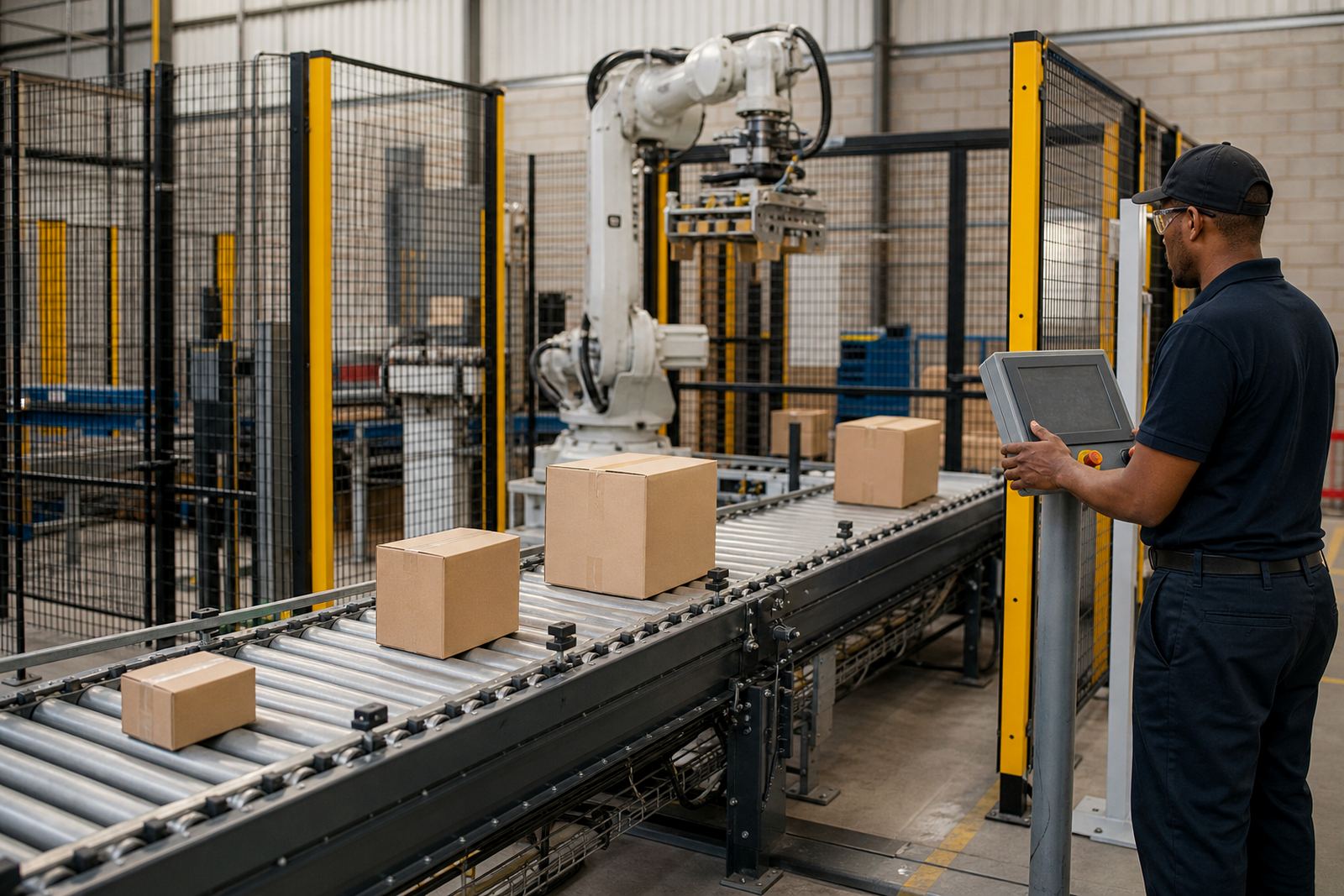
Mixed SKU cells are especially useful where pack sizes change often, or where a customer needs different pallet patterns for different stores, routes or depots. The right layout lets operators choose a stacking recipe from the HMI, then the robot, conveyors and end effector handle the changeover with minimal manual intervention.
Typical Equipment In A Mixed SKU Retrofit
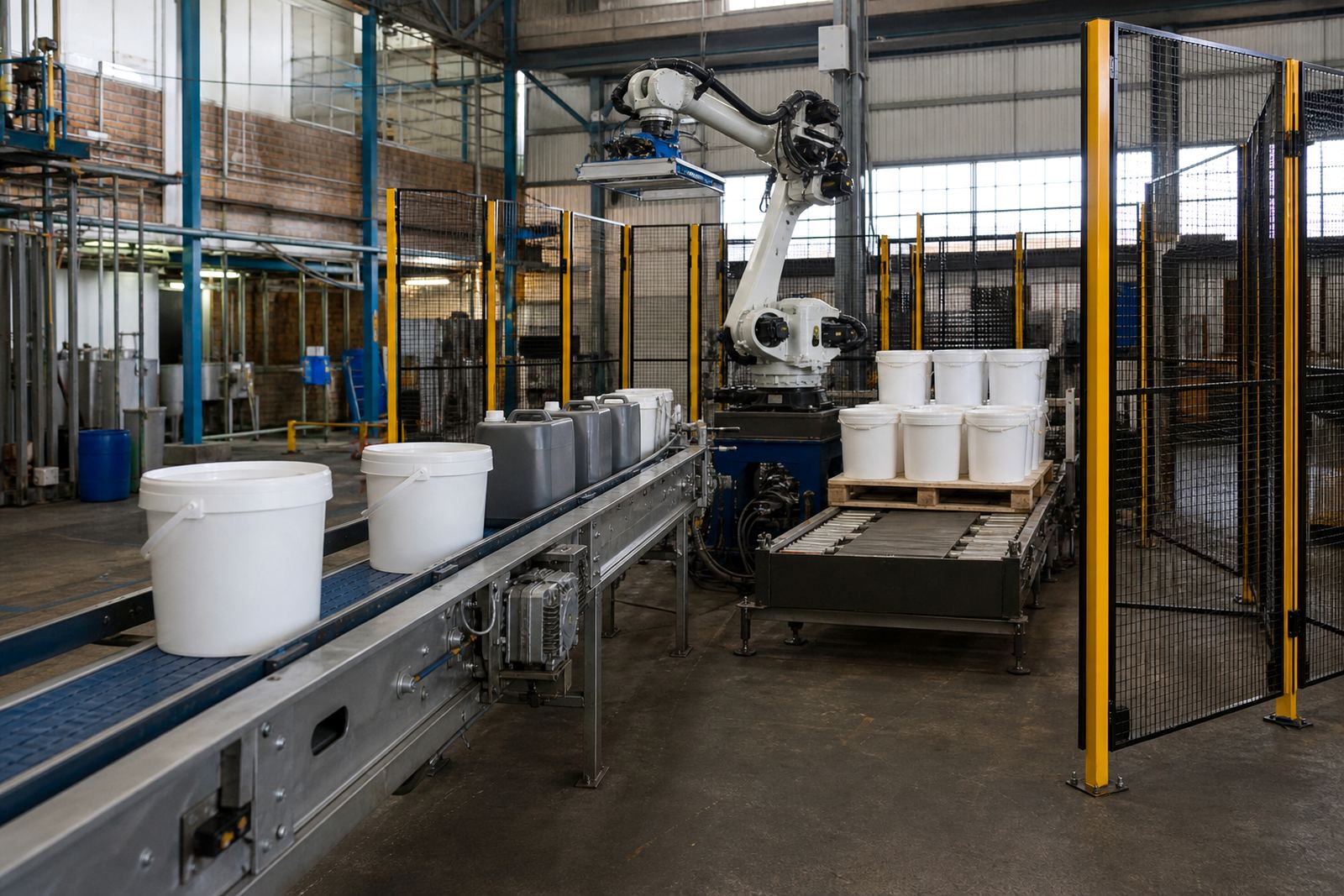
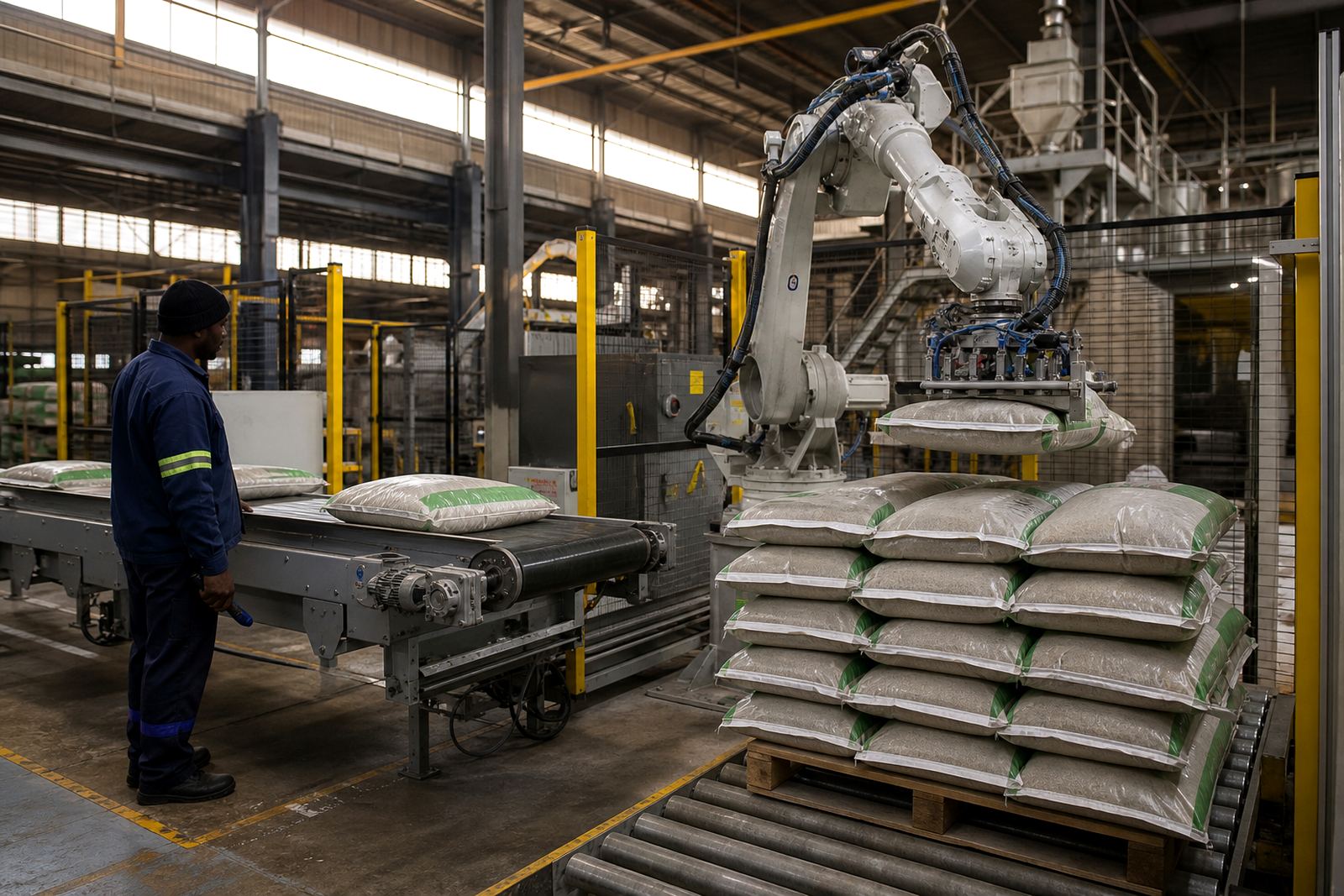
The exact equipment set depends on the products and the space available, but most mixed SKU projects use a combination of conveyors, an industrial robot or cobot suited to the payload, and a gripper designed for the pack type. Some sites need vacuum cups for cartons, while others need mechanical gripping, layer handling or a combination of tools for trays and shrink wrapped bundles.
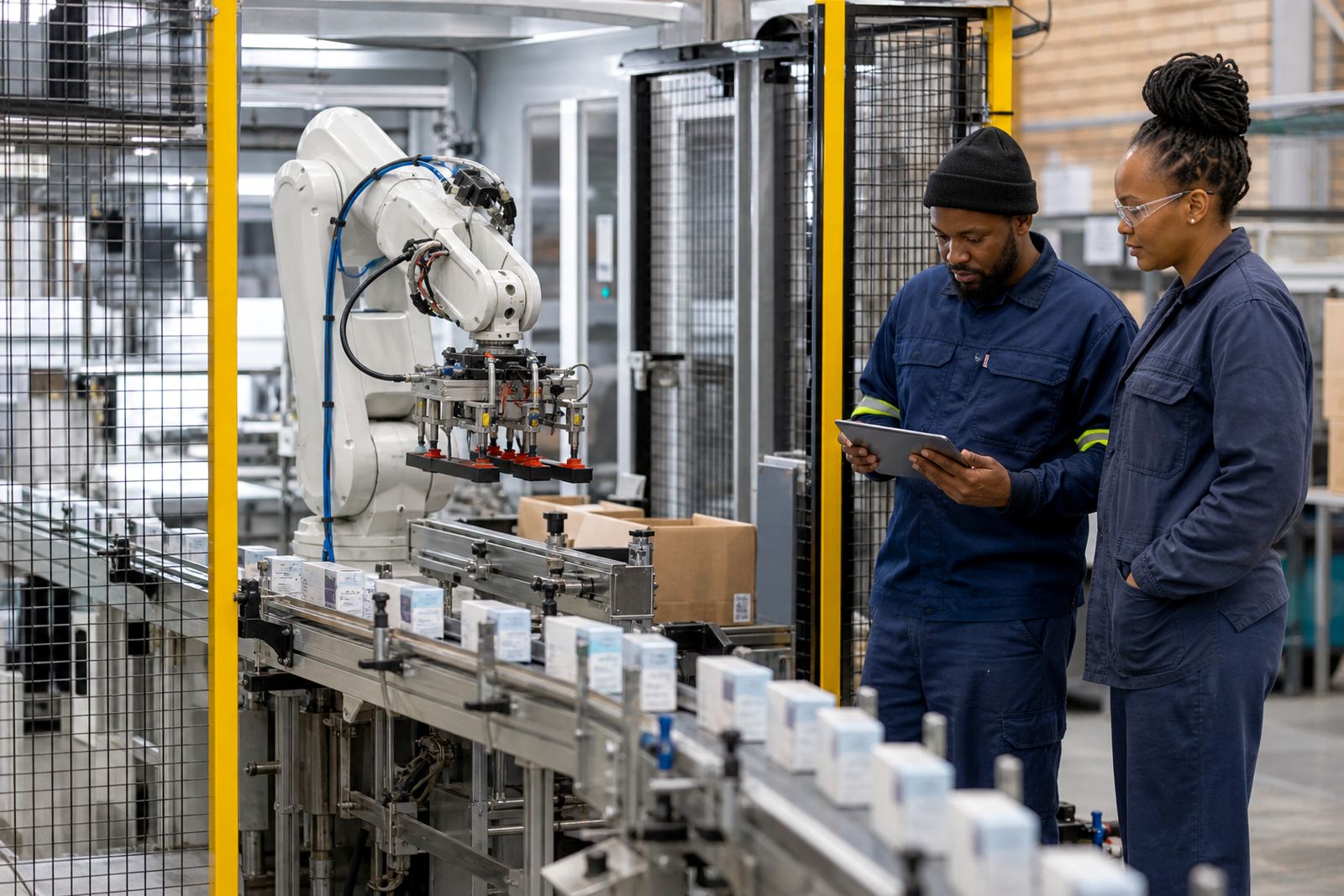
Controls integration is just as important as the robot itself. The system needs to communicate with the existing line so infeed timing, accumulation and pallet placement stay in step. If the line already has a conveyor sorter, label check, case sealer or printer applicator, those devices must be included in the logic and not treated as an afterthought.
- Infeed and outfeed conveyors matched to existing line height and transfer direction
- Robot cell with guarding, access doors and interlocks where required
- Gripper or end effector matched to the carton, tray or bundle type
- Recipe selection for different pack sizes and pallet patterns
- Safety devices, stops and controls linked into the line's operating logic
- Space for pallet changeover, slip sheets or pallet magazine if needed
Layout Planning For Fast Changeovers
Good layout planning starts with the actual movement of product, not with the robot model. The line should be mapped from the last packing point to the pallet dispatch area, with attention to floor slopes, columns, fire exits, and forklift movement. On many sites in Gauteng and KZN, the challenge is tight floor space, so the retrofit has to fit around existing structures and keep access clear for maintenance and cleaning.
For mixed SKU lines, the infeed buffer matters more than people expect. If the upstream machine can feed too fast or too slowly, the robot cell will spend time waiting or recovering. That is why line surveys and timing studies are worth doing before equipment is ordered. A clean layout also helps with municipal safety requirements and internal site audits, especially where forklift traffic and pedestrian routes cross close to the palletising area.
Where several SKUs share one palletiser, the recipe logic should be simple enough for shift staff to use without confusion. Labelling, barcode checks and pallet destination rules should be part of the design from day one, not added later when the first errors show up.
Common Mistakes That Slow Mixed SKU Lines
One common mistake is trying to force one robot cell to handle every package type without checking grip quality, carton strength or product stability. Another is assuming the old conveyor run will work as-is once the robot is added. In practice, mixed SKU lines often need transfer adjustments, better accumulation and sometimes a change in conveyor direction to stop jams.
Safety is another area where corners should never be cut. Each site needs its own risk assessment, guarding plan and operating procedure based on the actual machine layout and people movement on site. A cobot can suit some tasks, but it is not automatically safe on its own. The application, speed, reach and human interaction all need proper review before commissioning.
- Using one gripping method for cartons that vary too much in size or rigidity
- Ignoring product orientation and label position before palletising
- Under-sizing accumulation, which causes line stops during changeovers
- Skipping risk assessment and then trying to fix safety issues later
- Leaving no room for maintenance access or pallet removal
- Overcomplicating the operator screen so changeovers are slow and error-prone
Budget Ranges For Retrofit Projects In Rand
Mixed SKU retrofits can range widely in cost because the scope changes from site to site. A smaller project with a single robot, limited guarding and a straightforward conveyor tie-in will sit at a very different level to a multi-product cell with recipe control, label verification and more complex integration. For planning purposes, many factories start with a budget conversation in the low hundreds of thousands of Rand and move upward depending on payload, automation depth and the amount of existing equipment that can be retained.
It is usually better to budget for the full scope upfront rather than piecemeal add-ons after installation. That should include line survey work, design, guarding, controls integration, installation management, commissioning support and operator training. Spare parts planning and breakdown support are also worth including, because a mixed SKU line with frequent changeovers can be hard on wear parts and sensors.
Retrofits should be planned so the line can resume cleanly after an interruption without damaging product or causing a pallet pattern fault.
How ReAutomated Supports Mixed SKU Sites
ReAutomated works from Spartan, Kempton Park and supports manufacturers across South Africa with site line surveys, retrofit design, conveyor integration, controls integration and safety guarding design. The process starts with the actual line and the actual product mix, then moves through risk assessment support, installation management, commissioning support and operator training. That approach matters on mixed SKU projects because one small layout error can create repeated stoppages later.
Sibusiso Hlongwane leads the business, supported by Annelise Abrahams, Thabo Malherbe, Farah Khoza, Johan Booysen and Lerato Khanye. The team focuses on practical retrofits that fit real factory conditions, including limited floor space, dusty environments, coastal humidity near Durban or Gqeberha, and the need to keep production running while the work is staged. If a site needs maintenance support, breakdown assistance or spares planning after go-live, those services can be built into the plan as well.
Clients usually get in touch through the enquiry form on the contact page, then the next step is a site discussion to understand the pack mix, line speed, pallet types and the amount of existing equipment that can stay in service. From there, the retrofit can be shaped around the line, instead of forcing the line to fit the machine.