When a chemical line needs a retrofit
Chemical plants often keep the filling side in good shape but the end of line becomes the problem area. Manual stacking, inconsistent pack weights, awkward container shapes and repeated lift work can slow everything down, especially when the same line must handle powders, granules, liquids or mixed SKUs in one shift. A retrofit makes sense when the conveyor is still serviceable, but the packing or palletising step is creating bottlenecks, strain injuries or poor pallet quality.
A practical retrofit keeps the existing conveyors where possible and adds the right handling equipment at the point where product leaves the line.
Typical equipment used on chemical packing lines
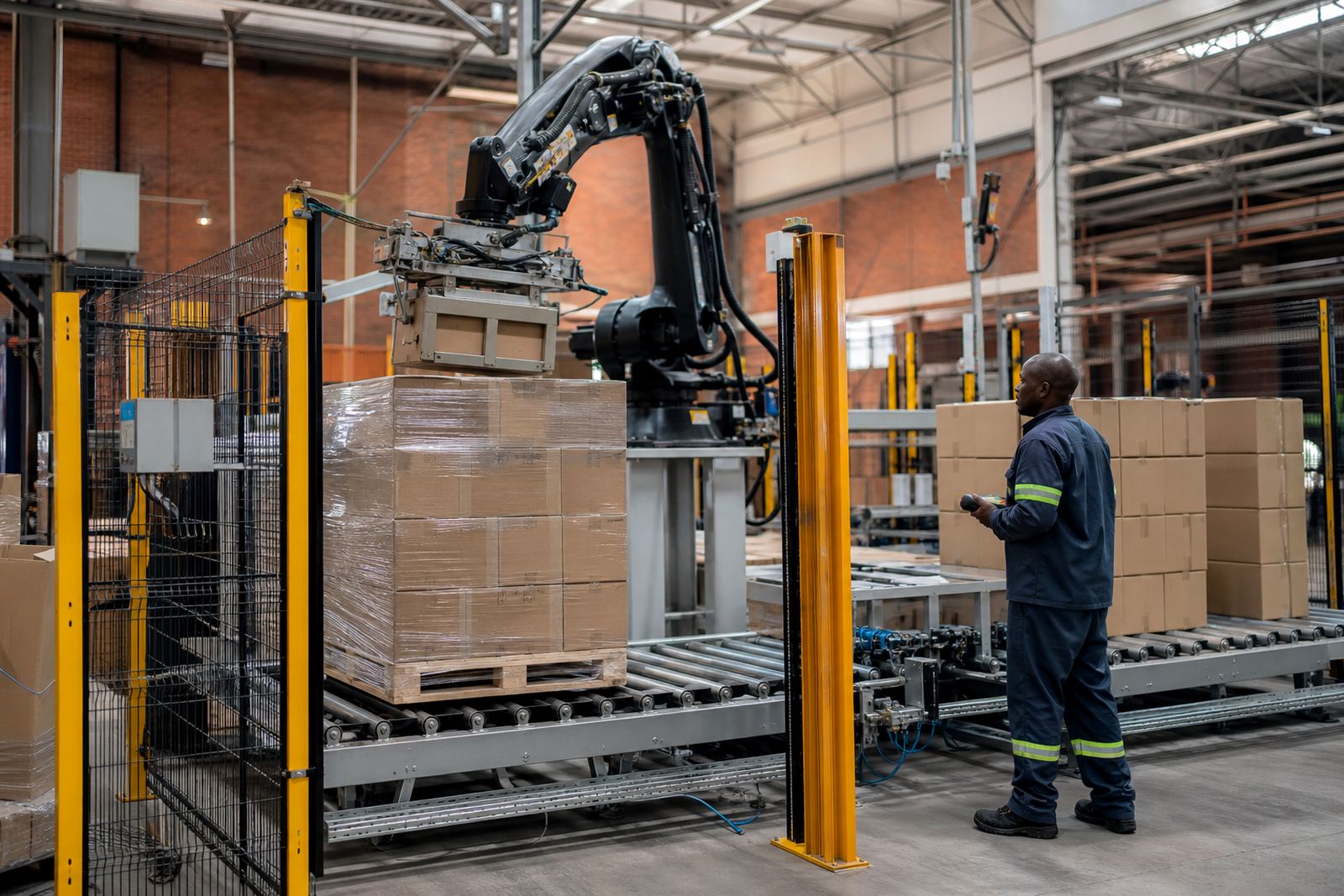
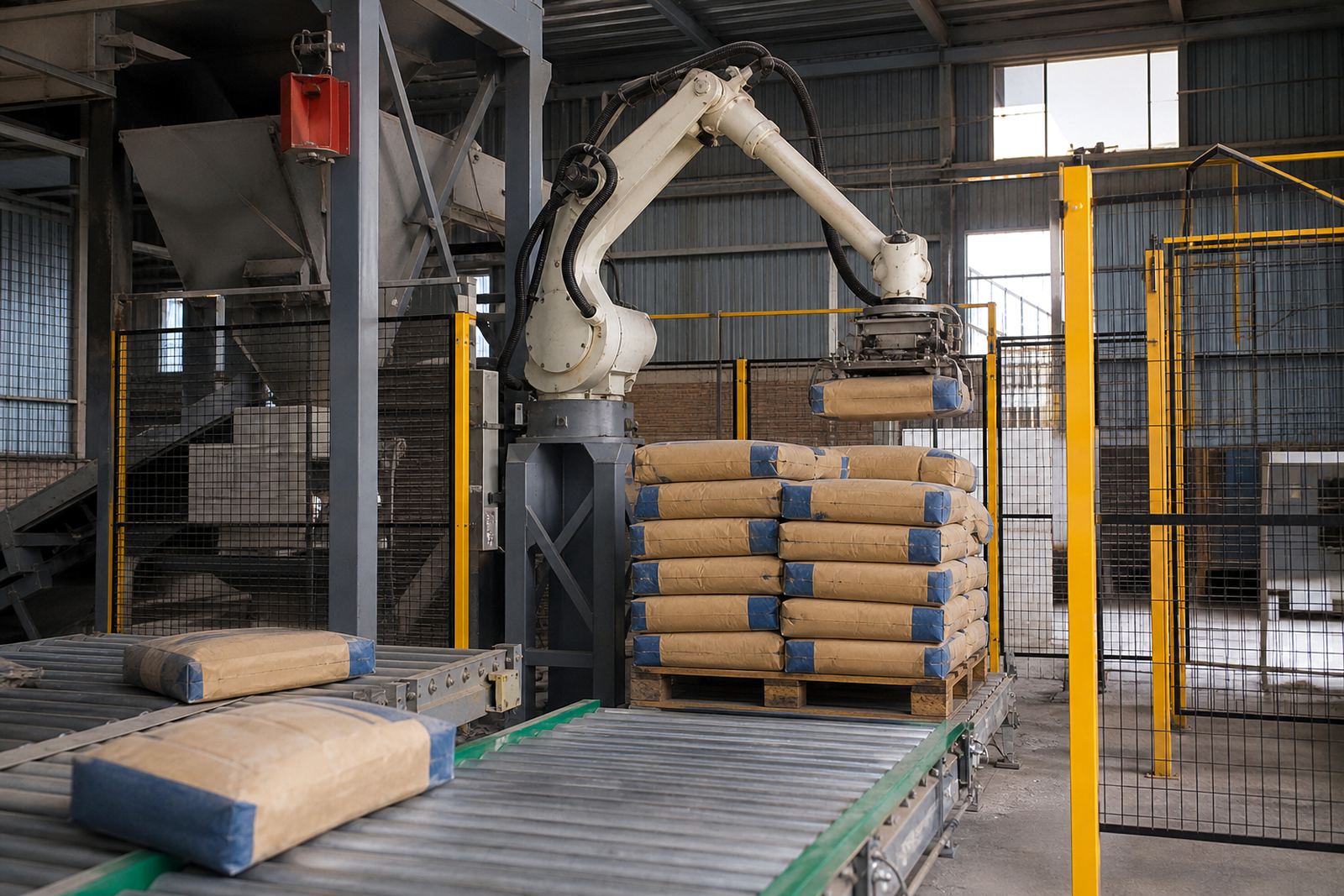
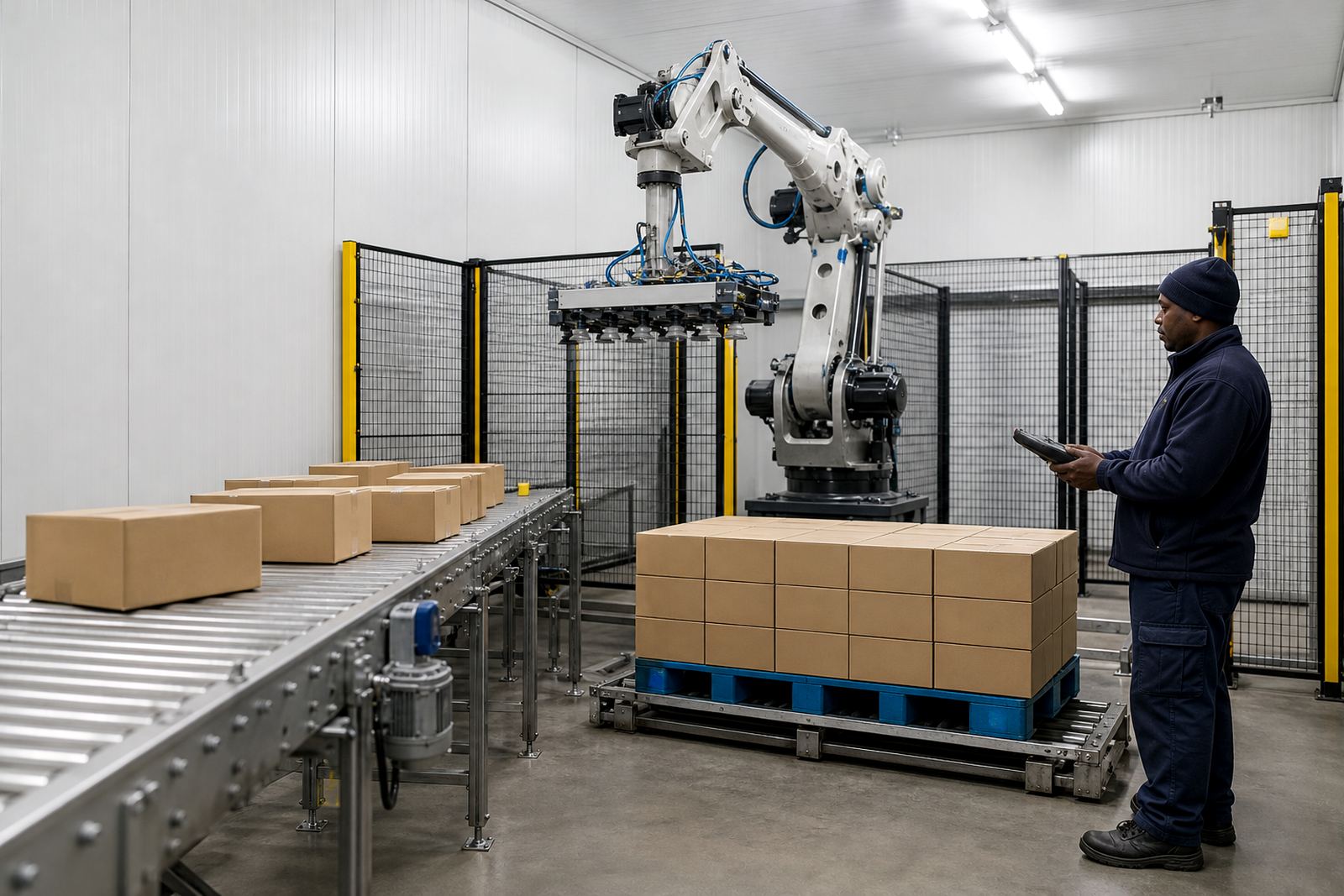
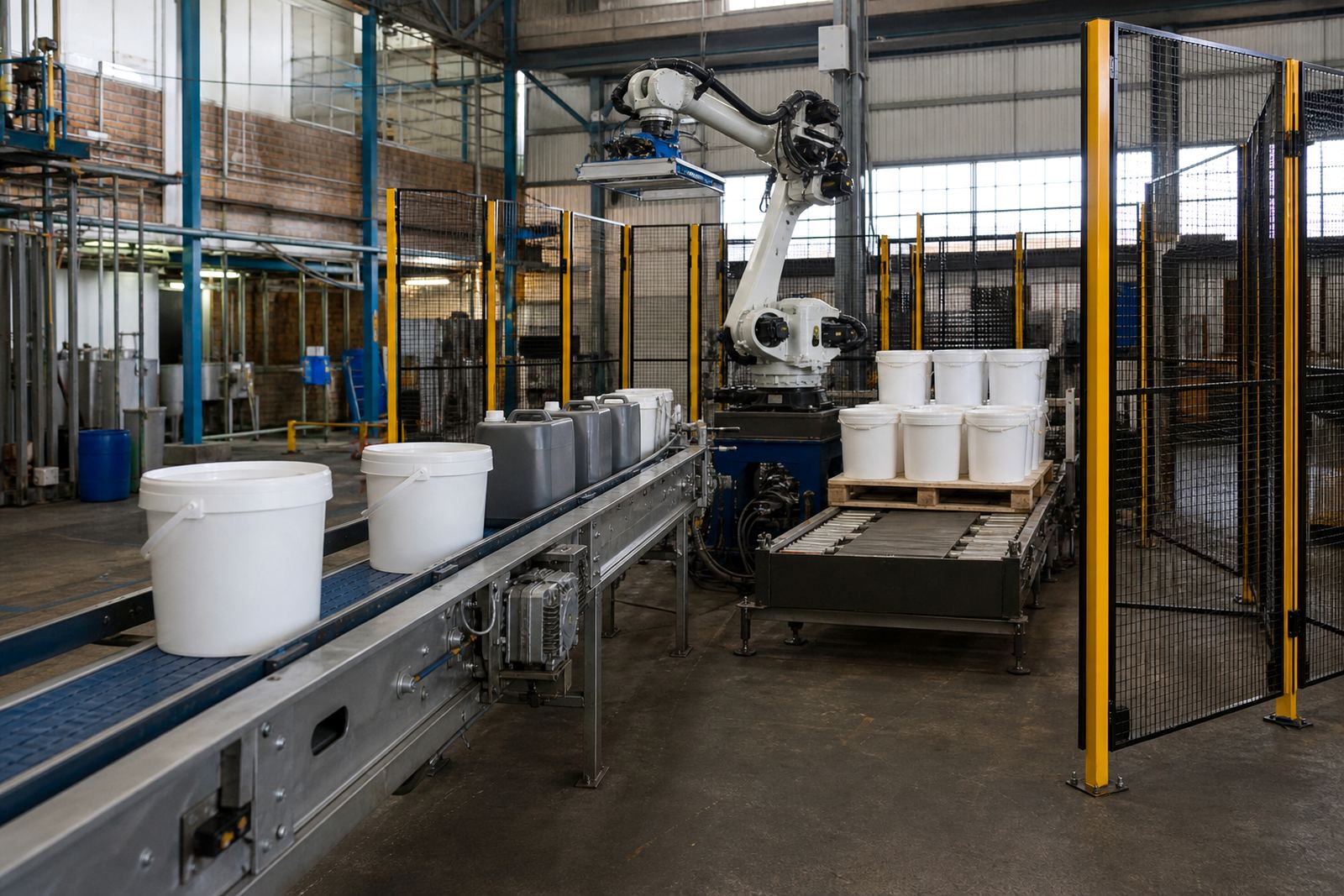
Every site is different, but chemical packing lines commonly need equipment that can manage weight, dust, spill control and repeatable placement. Depending on the pack format, a retrofit may use a robot or cobot, carton handling tooling, grippers for bags or buckets, pallet transfer sections, layer forming, stretch wrapping interfaces and safety guarding around access points. We also look at the flow between the filler, sealer, checkweigher, labelling area and the palletising zone so the line does not queue up in one place.
- Robot or cobot pick and place for cartons, bags or tubs
- Infeed and outfeed conveyors matched to existing line speeds
- Layer forming tables or pallet magazines where required
- Safety fencing, interlocks and access gates
- Control panel changes for start stop logic, fault alarms and line handshakes
For some sites, a compact cell is enough. Others need a more open palletising zone with wider access for forklift movement and pallet staging. The right answer depends on the product, the floor space and how many packs leave the line per hour.
Planning the layout without interrupting production
A chemical retrofit works best when the line is measured properly before any equipment is ordered. We start with a site line survey and review the conveyor heights, available floor space, pallet positions, operator walkways and emergency exits. In many factories, the line was expanded in stages over time so the actual layout is not always neat, which is why a site based review matters.
Good planning also includes maintenance access and cleaning access. Chemical packing areas can need washdown, dust extraction or spill response, and the robot cell should not block access to valves, electrical panels or drain routes. On coastal sites such as Durban or Gqeberha, humidity and corrosion protection matter too, so enclosure choices and cable routing need thought from the start.
- Check the product dimensions, weight range and bag or container stability
- Confirm floor loading, forklift routes and pallet collection points
- Allow space for maintenance, cleaning and emergency access
- Plan for future line changes, not only the current pack size
Where production cannot stop for long, installation can be staged so the existing line keeps running in sections. That reduces risk and helps the plant team stay in control of changeovers.
Safety controls for chemical environments
Safety on a chemical line depends on the site. Each installation needs its own risk assessment because the product, packaging, cleaning method and movement pattern all affect the design. Common measures include guarding around moving equipment, controlled access points, safe stop functions, warning signals and clear operator routes. Dust, fumes and spill risks must also be built into the final layout and operating method.
We also pay attention to manual handling. Even when a robot takes over palletising, operators may still load cases, change stacks or clear minor faults. The line must be arranged so people are not forced into awkward reaches or unsafe lifting positions. That includes proper heights for bag transfer, safe pallet presentation and sensible use of rollers, stops and guides.
A good retrofit should support the site safety file, not complicate it. Our role is to help with risk assessment support, safety guarding design and the integration work needed for a cleaner handover to the site team.
Common retrofit mistakes to avoid
The most common mistake is trying to force a robot into a line that was never measured properly. The second is underestimating how much conveyor integration is needed to keep packs flowing evenly. If the infeed is too slow, the robot waits. If the infeed is too fast, packs jam and operators end up clearing faults all shift.
Another mistake is treating safety as a paperwork exercise instead of part of the engineering. Chemical plants need practical guarding, clear access control and a realistic view of how people actually move around the line during changeovers, cleaning and maintenance. A retrofit that looks neat on paper but blocks a pallet jack or maintenance trolley will cause trouble later.
- Do not ignore pack variation in size or stiffness
- Do not leave the controls handover until the end
- Do not place the cell where forklifts cannot move safely
- Do not skip operator training on start up, fault finding and cleaning routines
Budget ranges for South African chemical sites
Retrofit budgets vary widely because line speed, packaging format and site conditions all affect scope. A smaller packing or palletising retrofit may sit in the lower six figure range in Rand, while a more involved line with guarding, conveyor changes, controls integration and commissioning support can move into the higher six figures or beyond. If the site needs multiple product sizes, custom tooling or a complex conveyor handoff, the cost rises further.
It is usually best to budget for the full working scope rather than only the robot. That means design, installation management, safety guarding, controls changes, commissioning support and training. For chemical plants in Johannesburg, Pretoria, Midvaal, the East Rand, Durban, Cape Town and Gqeberha, the final figure depends on travel, site access windows and how much of the existing line can be reused. A detailed survey is the most practical starting point.
ReAutomated is based in Spartan, Kempton Park and supports manufacturers across South Africa with site surveys, retrofit design, conveyor integration, installation management, maintenance support and breakdown assistance. If your chemical line needs a safer and more consistent end of line setup, we can help shape the retrofit around the line you already have.