Where Agri Input Lines Usually Need the First Retrofit
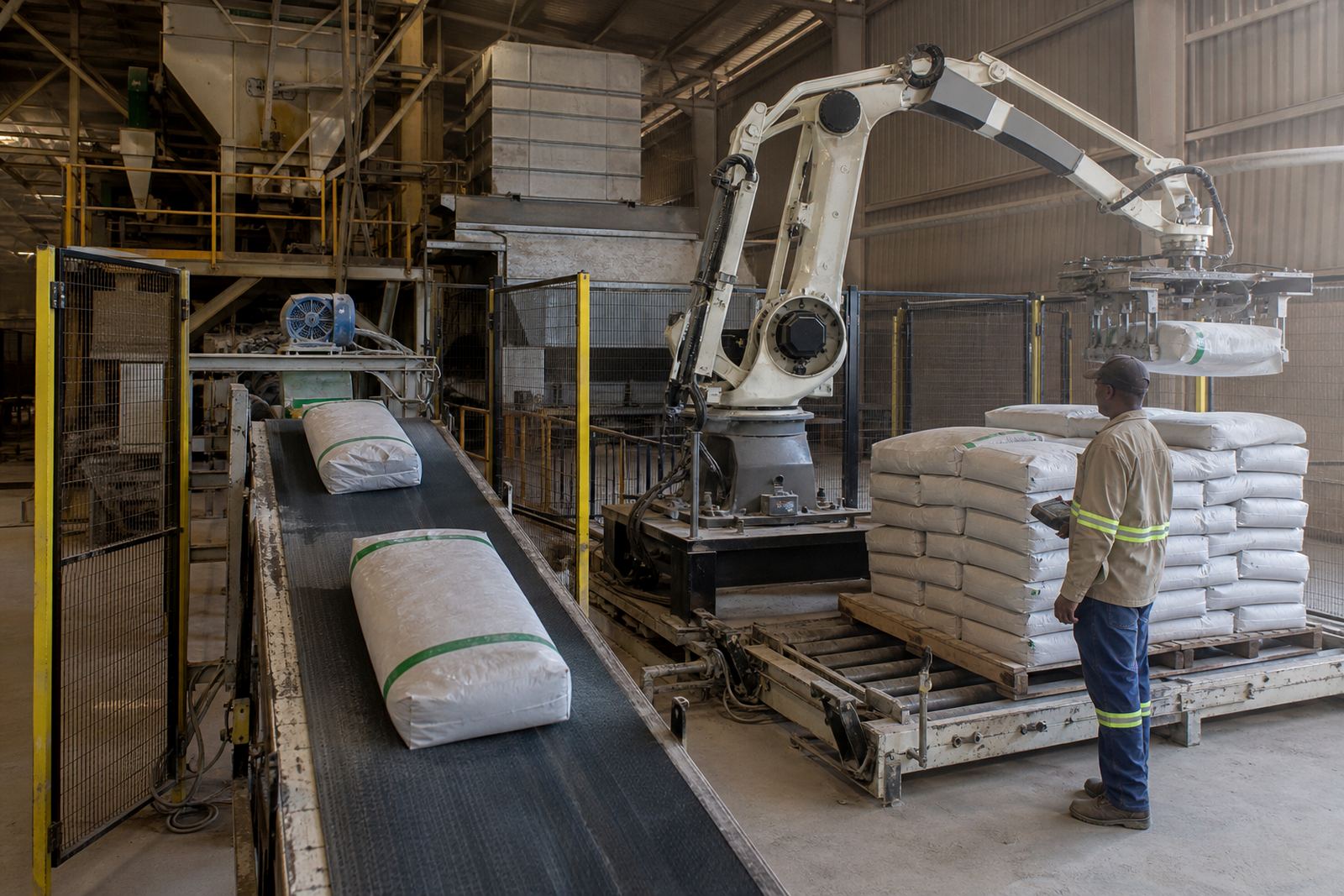
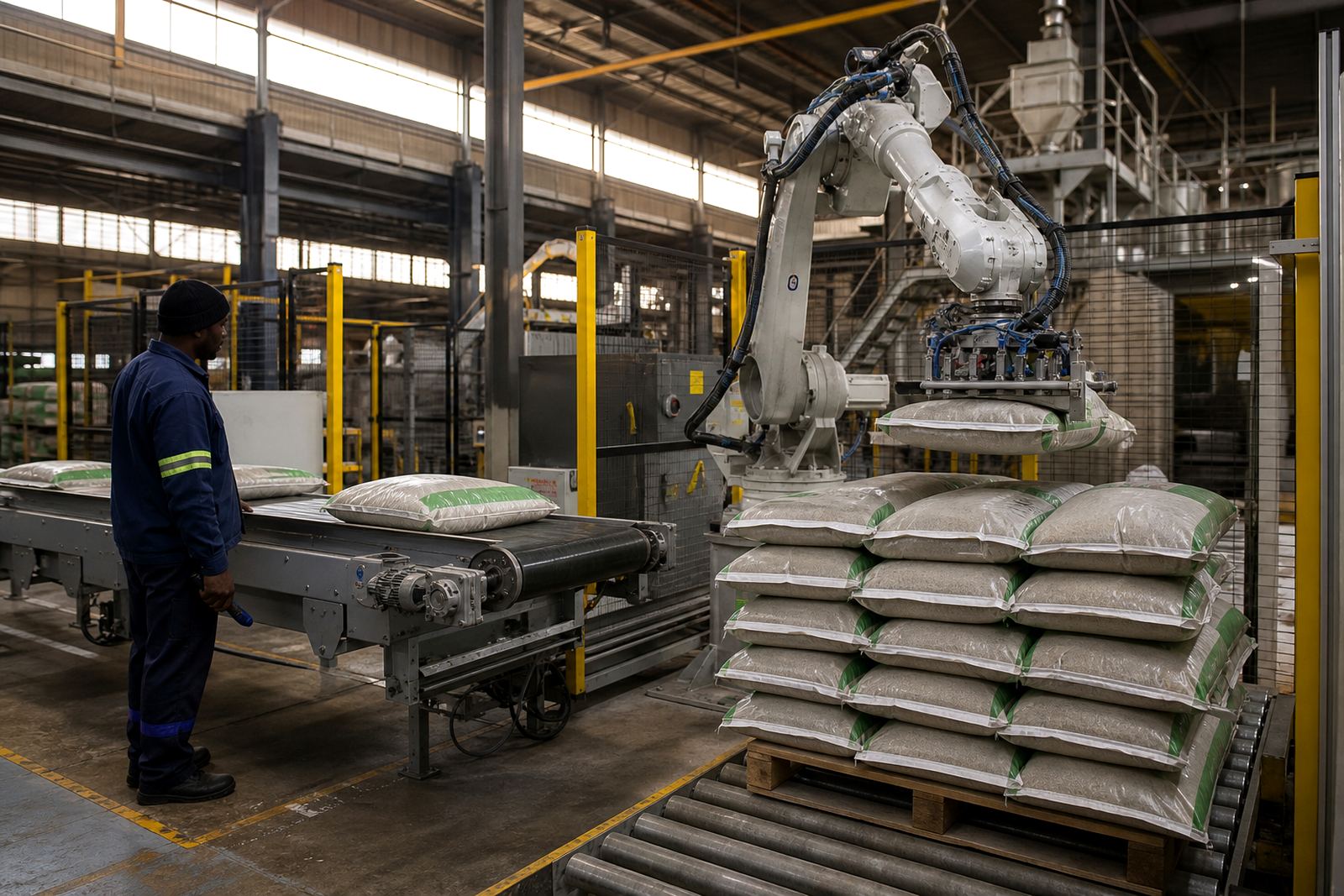
On agri input lines, the pressure point is often the end of line. Bags of fertiliser, seed, stock feed, grain additives and chemical pails may leave the filler or checkweigher at a steady rate, but the hand palletising area starts to slow down once shifts get longer or labour availability changes. In plants around Kempton Park, Pretoria, the East Rand and Midvaal, the first retrofit is often a robotic palletising cell that takes over the repetitive lift, turn and stack work.
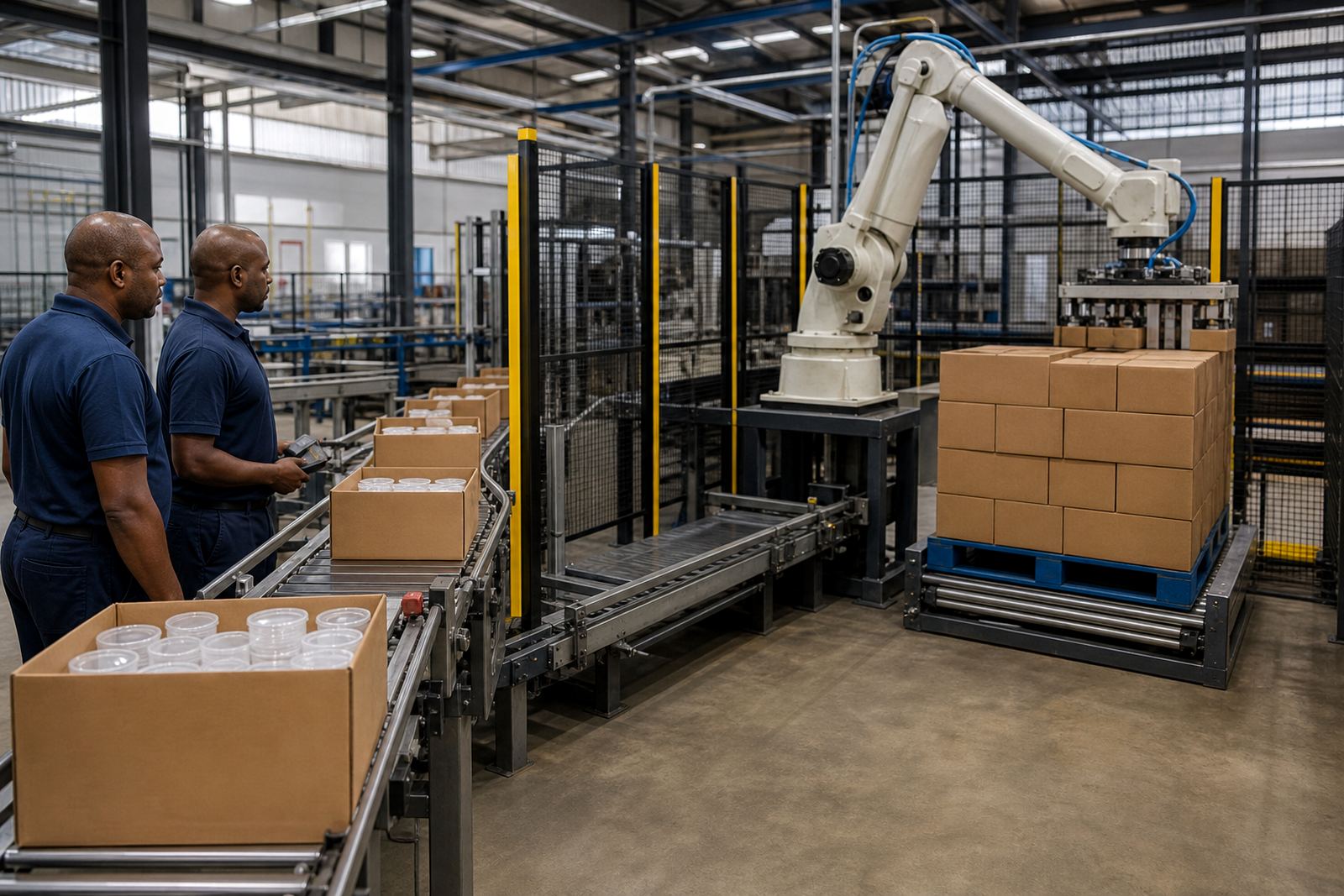
For some sites the packing side is also ready for upgrade. Carton erecting, case sealing, labelling and bag orientation can be linked into a more controlled line so the palletiser is not waiting on one awkward manual step. The right answer depends on your product mix, floor space and how the existing conveyor line is already laid out. A good site line survey will show where the line loses time, where product jams happen and where operators spend too much time correcting position by hand.
We also look at practical plant conditions.Some plants need enclosures that keep dust out of sensors and moving parts, while coastal sites in Durban or Gqeberha may need extra attention to corrosion protection and cabinet placement. No two agri input lines are exactly alike, so the retrofit must fit the process not the other way round.
Typical Equipment Set for Sacks, Cartons and Pails
An agri input line retrofit normally brings together several pieces of equipment that already need to work in sequence. The goal is not just to add a robot, but to make sure conveyors, controls, guarding and product handling all match the actual pack sizes and pallet patterns used on site.
- Infeed conveyors with side guides and transfer points suited to sacks, cartons or pails
- Bag flatteners or carton squaring stations where product shape needs to be controlled before stacking
- Robot or cobot palletising cell with a suitable end-of-arm tool for gripping, clamping or vacuum handling
- Pallet dispenser, slip sheet handling if needed, and pallet outfeed conveyor
- Safety guarding, interlocked gates and light curtains where the risk assessment calls for them
- Controls integration with existing PLCs, sensors, conveyor drives and line stops
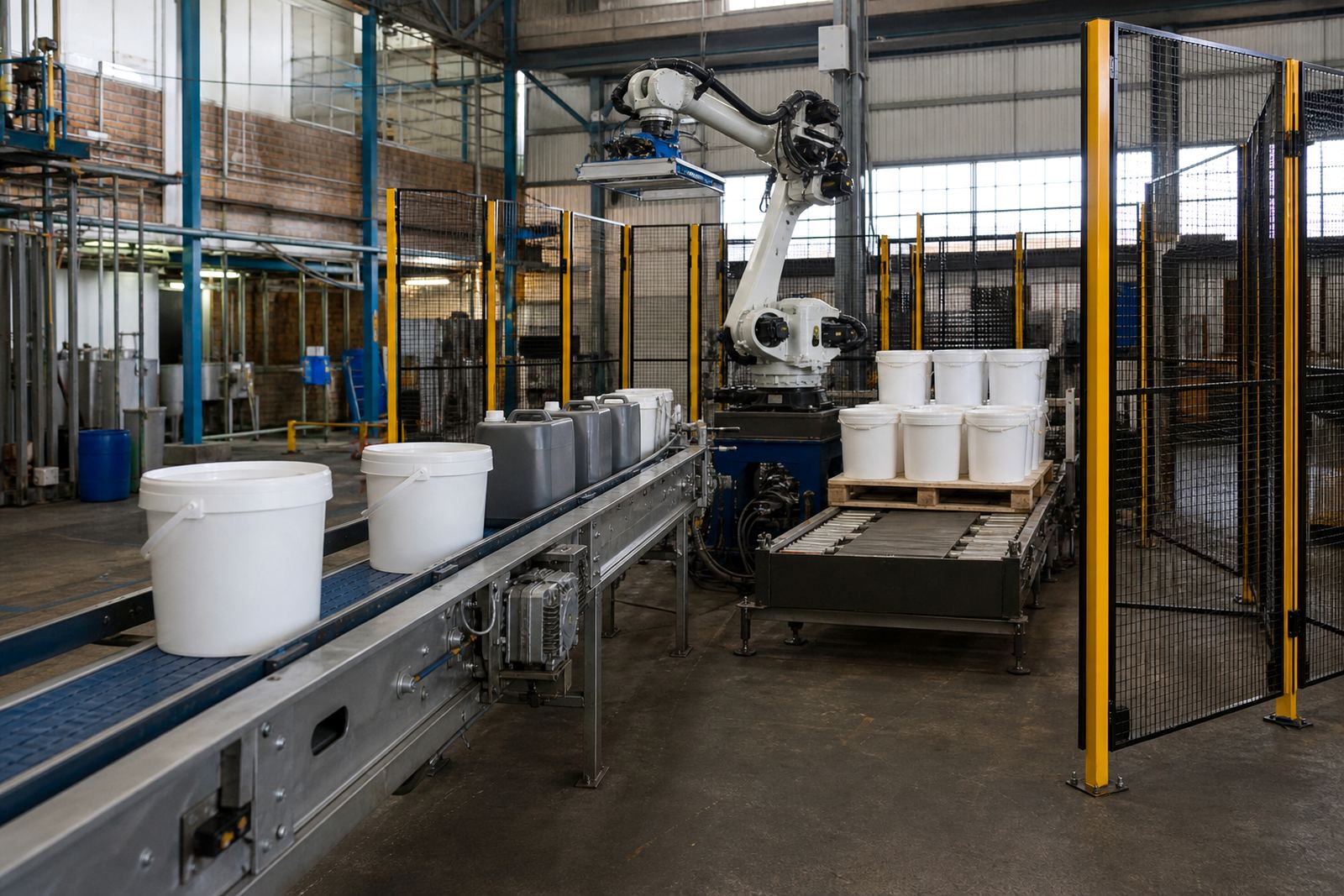
For lighter cartons or smaller pails, a cobot may suit a slower line or a mixed packing area where space is tight. For heavy sacks, a standard industrial robot is more common because the reach, cycle time and payload needs are different. The product itself decides a lot. A 10 kg carton is handled very differently from a 25 kg sack of fertiliser, and a pail with a handle needs different gripping than a plain carton top.
We also plan for spares and maintenance access from the start. If a change part is hidden behind a guard or a sensor is impossible to reach without stopping the whole line, the plant will struggle later. That is a costly mistake and it is usually avoidable with proper layout work up front.
Planning the Layout Around Existing Conveyors
Most agri input plants do not want a full rebuild. They want to keep the filler, sealer and conveyor backbone they already have, then add a robot where it brings the most value. That means measuring the actual floor area, pallet queue space, operator walkways and the path forklifts use to move finished goods. In Spartan, Kempton Park we often see line layouts that look fine on paper but need rework once pallets, safety fencing and maintenance access are all placed in the same room.
The best retrofit layout keeps product flow straight and predictable. Infeed should present the bag or carton in the same position every time. The palletiser should not have to compensate for bad transfers or badly timed stops. If the line uses mixed pack sizes, the controls should allow quick recipe changes so operators are not manually adjusting stops and guides all morning.
- Allow enough clearance for pallet changeover and forklift access
- Keep dust control and electrical cabinets in suitable positions
- Plan for future pack sizes if the product range may change
- Use clear pedestrian routes and marked maintenance access
- Check floor loading and anchor points before the cell is finalised
For coastal plants and high humidity areas, enclosure and cabinet placement matter more than many people expect. Moisture, dust and vibration can all shorten the life of sensors, cabling and connectors if the layout is rushed. A careful retrofit plan saves breakdowns later and makes cleaning simpler as well.
Safety Guarding and Risk Assessment on a Live Production Line
Every palletising retrofit needs its own risk assessment. The safety measures for a sack line are not the same as for cartons or pails, and a site with pedestrians nearby is different again. General rules apply, but the detail must be matched to the actual line, the available space and the way operators work around the equipment.
Safety guarding design usually includes fixed fencing, interlocked access doors, emergency stops, clear warning devices and safe access for maintenance. Where a cobot is used, the safe operating mode still depends on the application, payload, speed and what the arm can reach. A cobot is not automatically safe in every situation. The complete cell needs to be assessed as a system, including the end effector and the product being moved.
For agri input lines, dust and spillages can also create trip and slip risks near the pallet area. We therefore check housekeeping space, floor condition, pallet wrap handling and the location of offcuts or empty bags. Safety works best when it is practical, not overcomplicated. If operators can use the line easily and access maintenance points without bypassing guarding, compliance is easier to maintain.
Common Mistakes That Slow Agri Input Automation
One common mistake is choosing the robot first and the process later. That usually leads to a cell that can move product but cannot keep up with the upstream line or fit the pallet footprint needed in the warehouse. Another mistake is ignoring the variation in sacks, cartons and pails. If the plant handles more than one format, the end-of-arm tool and software logic need to be planned for changeovers.
Plants also run into trouble when they underestimate controls integration. The robot may be ready, but if signals from the conveyor, printer, weigh scale or stop gate are not cleanly linked the line becomes awkward to run. This is where proper controls integration matters. We look at the full sequence from product arrival to pallet departure, including fault recovery and restart after a power interruption.
- Do not squeeze the cell into a space without forklift and operator access
- Do not assume one gripping method will suit every pack type
- Do not skip operator training or maintenance handover
- Do not leave spare parts planning until after commissioning
- Do not ignore dust, moisture and washdown conditions on site
In our experience, the smoothest projects are the ones where the plant team is involved early. Operators usually know where the jams happen, which bag sizes wander on the conveyor and which shifts struggle most. That information is worth a lot during retrofit design.
Budget Ranges for South African Retrofit Projects
Retrofit budgets for agri input lines vary widely because the scope can range from a simple palletising cell to a full line integration with guarding, conveyor changes, software updates and training. For South African sites, a modest retrofit may start in the low hundreds of thousands of Rand, while a larger project with more extensive mechanical and controls work can move into the higher hundreds of thousands or beyond. The final figure depends on product weight, cycle rate, line length, pallet handling and the amount of modification needed to the existing plant.
It is also important to budget for the work around the robot, not only the robot itself. Site surveys, design, installation management, commissioning support, operator training, maintenance support and breakdown assistance all affect the total project value. If a plant needs spares planning for local conditions, that should be included early. A cheaper setup that fails every second week is not cheaper at all.
At ReAutomated, we usually recommend starting with a line survey and a clear scope review before any commercial decision is made. That gives the plant a realistic view of what can be reused, what must change and where the main risks sit. From there the project can be phased sensibly, which is often the best route for manufacturers in Johannesburg, Durban, Cape Town, Pretoria and Gqeberha who need to keep production running while upgrading in stages.