Where Animal Feed Lines Usually Start to Strain
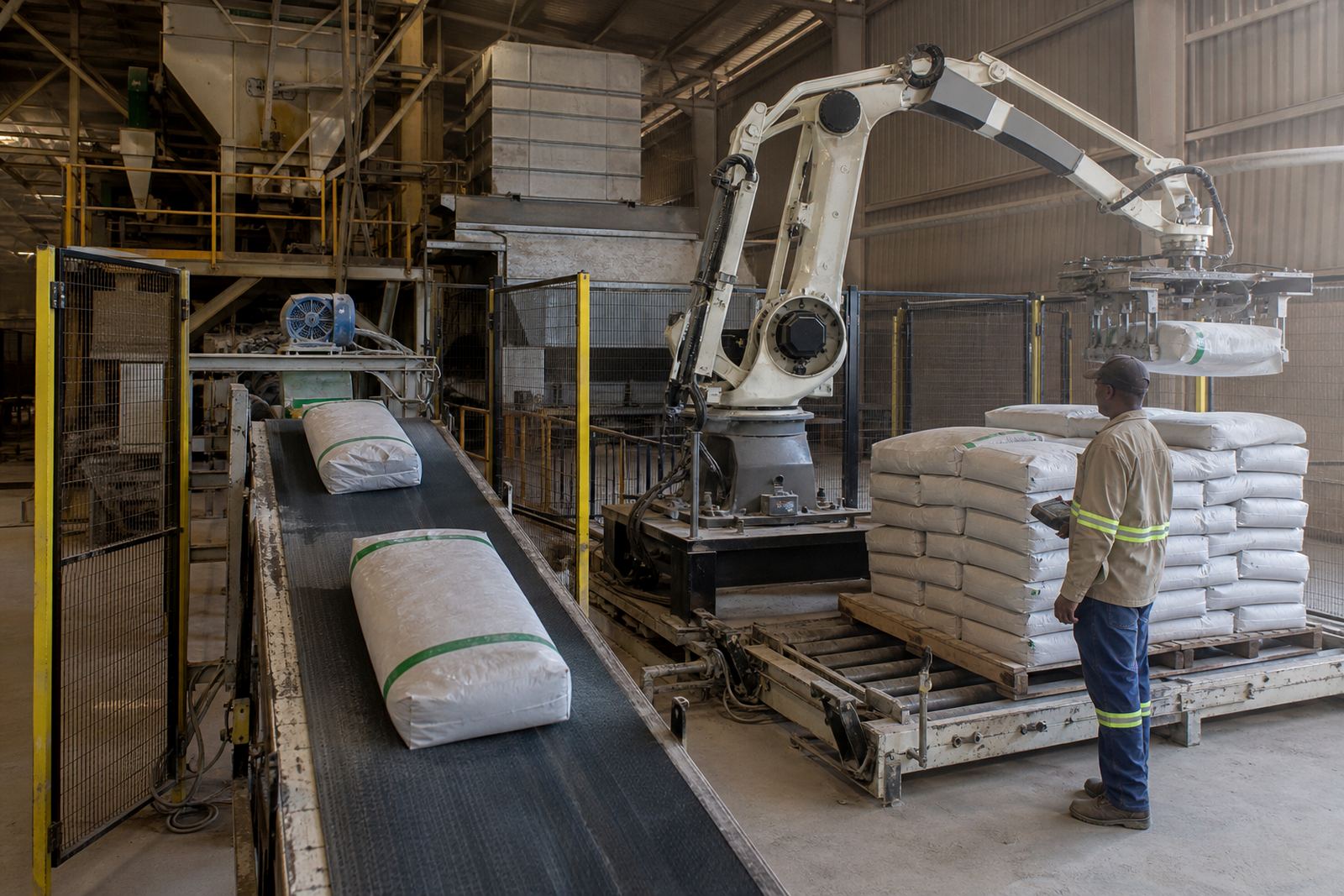
Animal feed operations often move from steady production to bottlenecks at the bagging and palletising end. The line may fill bags efficiently but then slow down where bags must be counted, squared up, stacked and wrapped. That is where repetitive handling starts to affect output, shift quality and staff fatigue, especially on 20 kg, 25 kg and 40 kg bags.
In Gauteng, the Eastern Cape and coastal cities like Durban and Cape Town, many feed plants are working inside older buildings or mixed-use industrial yards with limited floor space and varying floor levels. Retrofitting robots onto an existing line means the new system has to work with the current conveyor heights, bag transfer points, pallet positions and truck loading routes. It also has to cope with dust, vibration, power interruptions and the general reality of a busy plant that cannot shut down for long.
Typical triggers for a retrofit include manual stacking injuries, uneven pallet quality, slow end-of-line output, excessive overtime and difficulty finding enough workers for heavy line-end tasks. A proper retrofit can reduce the physical load on staff while giving production a more predictable pace.
Typical Equipment Used on Feed Bag Retrofits
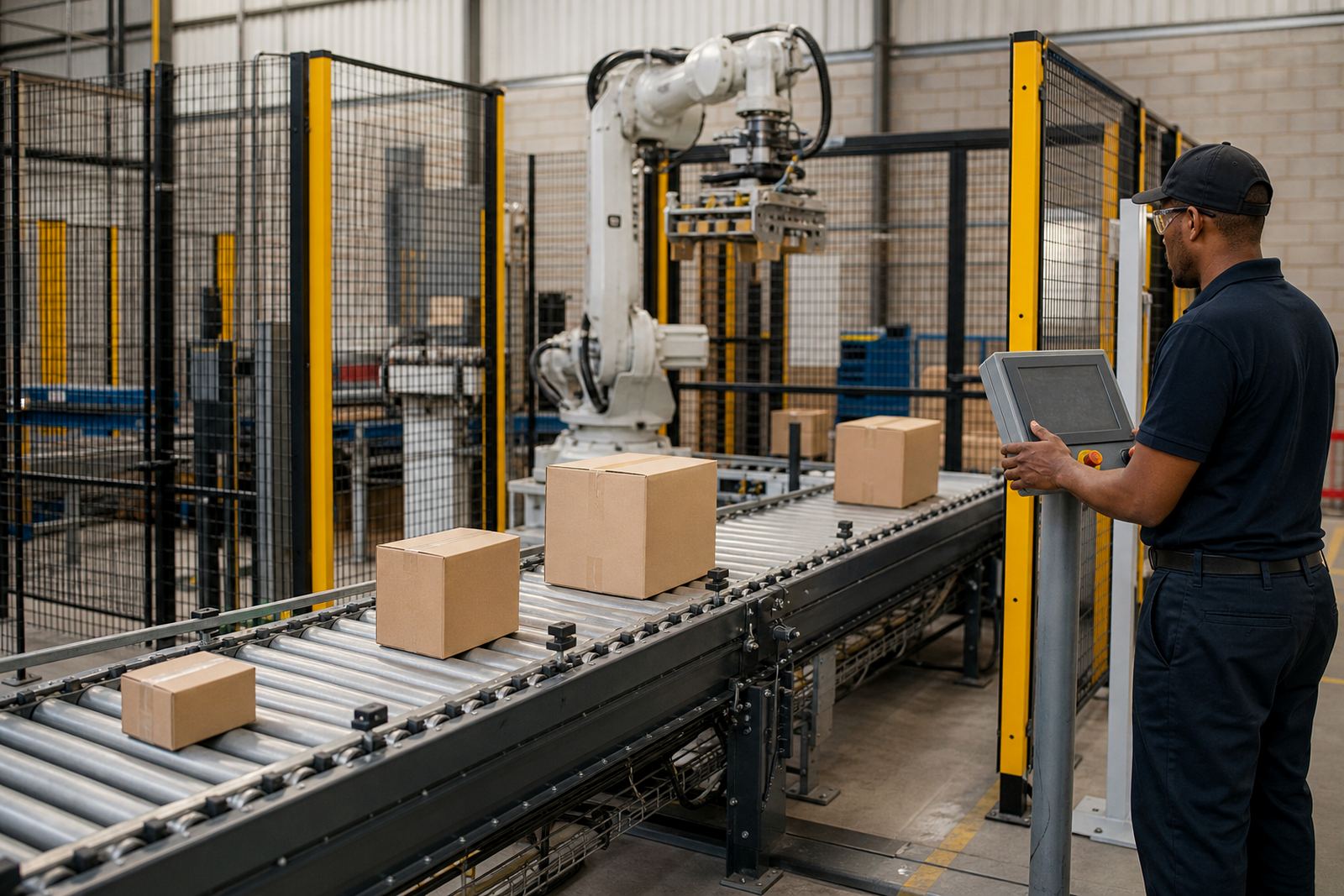
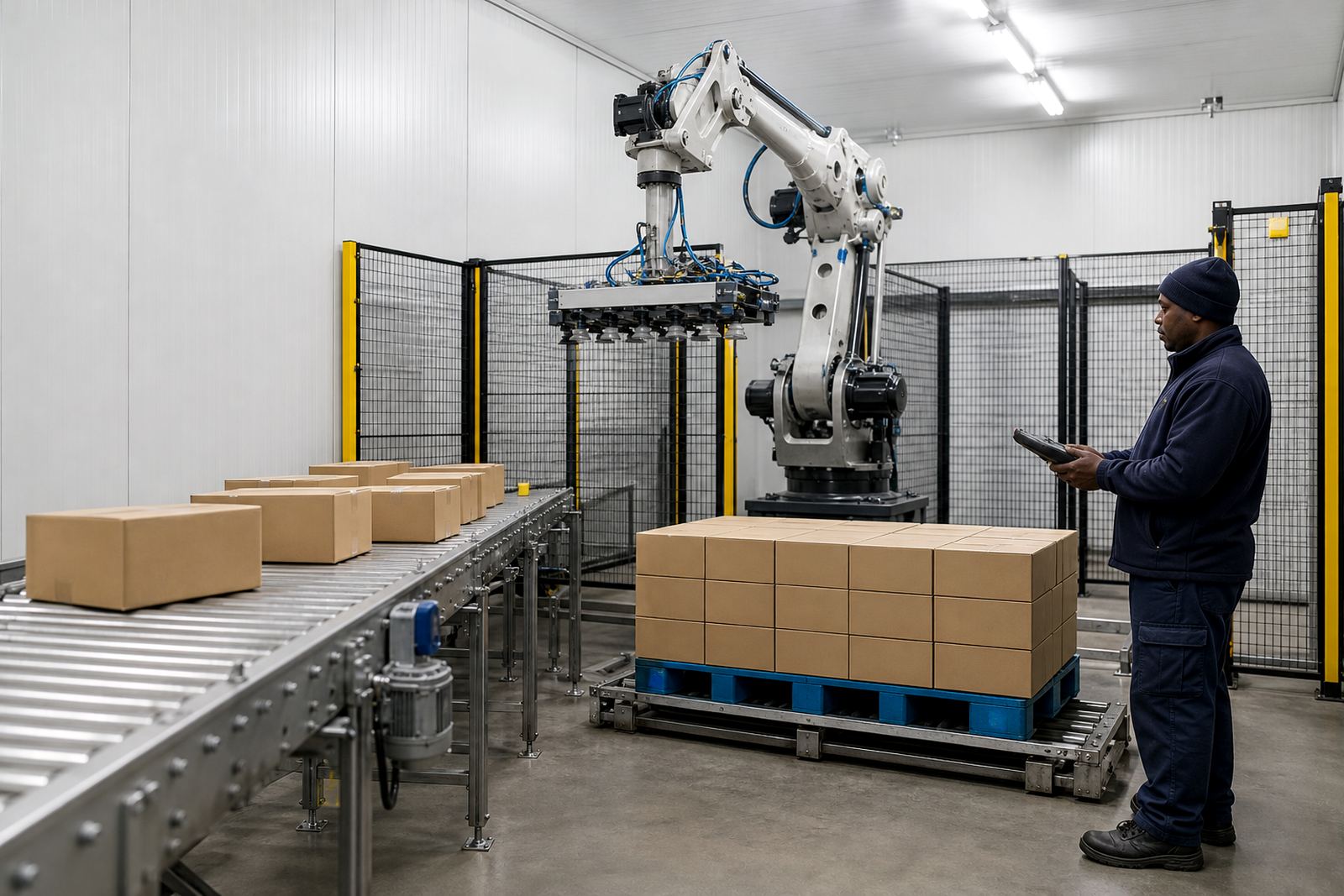
Animal feed lines do not all need the same robotic setup. Some plants need a compact palletising cell beside the bagging line, while others need a cobot-assisted station for slower throughput or a staged system with conveyors, bag turners and stretch wrapping. The choice depends on bag size, line speed, pallet pattern, available floor area and the way trucks collect finished goods.
- Existing bag conveyors and merge sections
- Pick and place handling or robotic palletising unit
- Pallet dispenser or manual pallet staging point
- Bag squaring, accumulation or alignment conveyor
- Safety guarding, light curtains or interlocked fencing
- Stretch wrapper and outbound pallet conveyor
- Control panels, sensors and stop-start integration
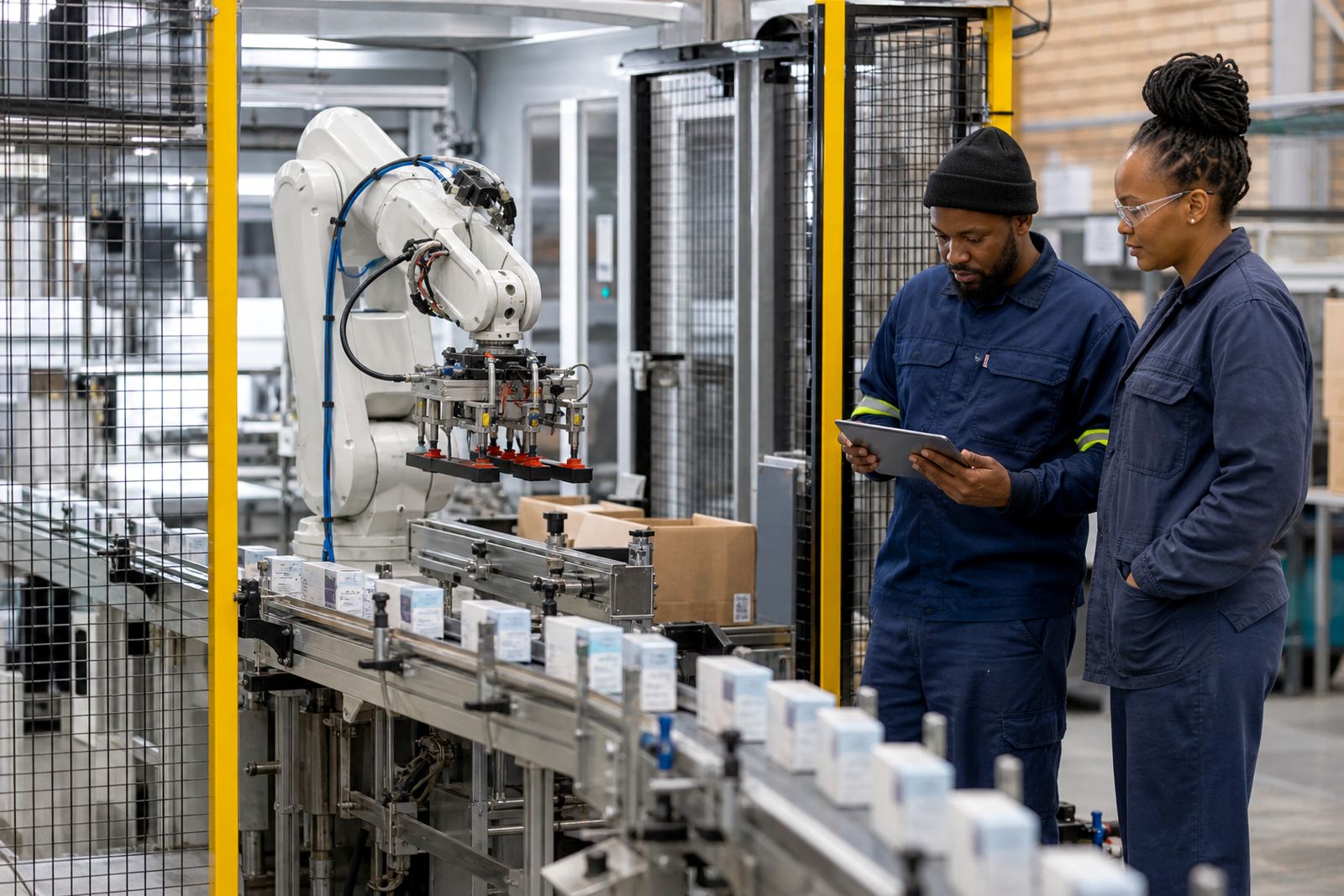
For some sites, a cobot can suit lighter duty or lower-speed lines where the team needs a simpler retrofit and easier access for changeover. For higher output feed plants, an industrial robot with proper guarding may be more suitable. The right answer depends on a site visit and a risk assessment, not a standard package.
Planning the Layout Around Existing Conveyors
A good retrofit starts with the line, not the robot. We look at where bags leave the filling machine, how they are transferred, where the pallet sits and how the finished load leaves the area. If the conveyor line is awkward, the robot will only inherit those problems. That is why layout planning matters as much as the automation hardware.
At many feed plants, the best results come from keeping the robot close to the pallet build area and giving enough space for pallet entry, exit and wrapping. In a tight Kempton Park or Midvaal building, that may mean reusing an existing conveyor run and adjusting the end position rather than trying to redesign the whole floor. On coastal sites, stainless or suitably protected components may be sensible where humidity and washdown practices are a factor.
A line that cannot be isolated safely, or a robot cell that blocks access to valves and motors, becomes a problem fast.
- Confirm bag weights and stacking patterns before final layout
- Measure ceiling height, floor flatness and turning space for forklifts
- Check where conveyors can be reused instead of replaced
- Keep controls and service access outside the main handling path
Safety Guarding and Risk Assessment Support
Any robotic palletising retrofit needs site-specific safety design. Feed operations can involve dust, moving conveyors, pallets, forklifts and staff walking through shared spaces. General safety rules apply, but each site needs its own risk assessment before installation and before production starts.
Safety guarding may include fencing, gates, interlocks, emergency stops, warning lights and controlled access points. Where a cobot is used, the cell still needs proper assessment of speed, reach, payload, bag shape and how close people work to the system. A collaborative unit is not a free pass to skip guarding or planning.
We support the process by reviewing the line condition, helping identify pinch points and planning how operators, maintenance teams and forklift drivers will move around the area. Good guarding should protect people without making bag changes and maintenance impossible. That balance is important in a plant that runs long shifts and may need quick recovery after a stoppage.
Common mistakes include leaving manual intervention points too close to the robot, ignoring pallet movement clearances and assuming one safety layout can work for every line in every town. It cannot.
Budget Ranges for Feed Line Retrofits
Budget depends on the scope. A smaller retrofit that adds robotic palletising to an existing bag conveyor with basic guarding will cost less than a full end-of-line redesign with conveyor changes, controls integration, pallet handling and wrapping. The number of bags per hour, the number of SKUs and the plant’s current condition all affect the final budget.
As a broad planning guide, many animal feed retrofits fall into these ranges:
- Basic retrofit support and layout changes: from around R350 000 to R900 000
- Mid-range robotic palletising with conveyor and controls integration: from around R900 000 to R2 500 000
- More complex multi-line or higher-speed systems: above R2 500 000, depending on scope
These are planning ranges only. A proper site line survey in Johannesburg, Durban, Cape Town, Pretoria, Gqeberha or the East Rand is needed before any firm budget can be prepared. The best value often comes from reusing sound conveyors and only replacing what actually limits performance.
How ReAutomated Supports Feed Manufacturers
ReAutomated works with manufacturers across South Africa from Spartan, Kempton Park, supporting packing and palletising line retrofits for animal feed and similar bulk-bag operations. Our team led by Sibusiso Hlongwane includes automation, controls, site supervision and service support, so the project can be managed from survey through to commissioning.
We can assist with site line surveys, retrofit design, conveyor integration, controls integration, safety guarding design, risk assessment support, installation management, commissioning support, operator training, maintenance support, breakdown assistance and spares planning. For feed plants, that usually means practical decisions about how to fit new automation into the plant you already have, not forcing the plant to fit the automation.
Clients usually start through the enquiry form on our contact page, then we arrange a discussion around the line, the bag sizes and the available space. For animal feed operations, the goal is safer end of line handling, steadier output and a palletising setup that can hold up in real plant conditions.