Why commissioning has to follow a proper sequence
A robotic retrofit may be built to fit around an existing packing line, but it still has to earn its place in production. If the sequence is rushed, small issues like sensor timing, infeed spacing, pallet position or stop-start behaviour can create bigger problems once the line is loaded with product.
For manufacturers in Kempton Park, Johannesburg, Pretoria and the coastal cities, commissioning also has to account for local conditions.A careful sequence helps the team find those issues early, before the line is expected to run day after day.
That is why commissioning is not just a final test. It is a staged process that confirms the retrofit is safe, practical and ready for real production volumes.
Stage 1: dry checks before any product is run
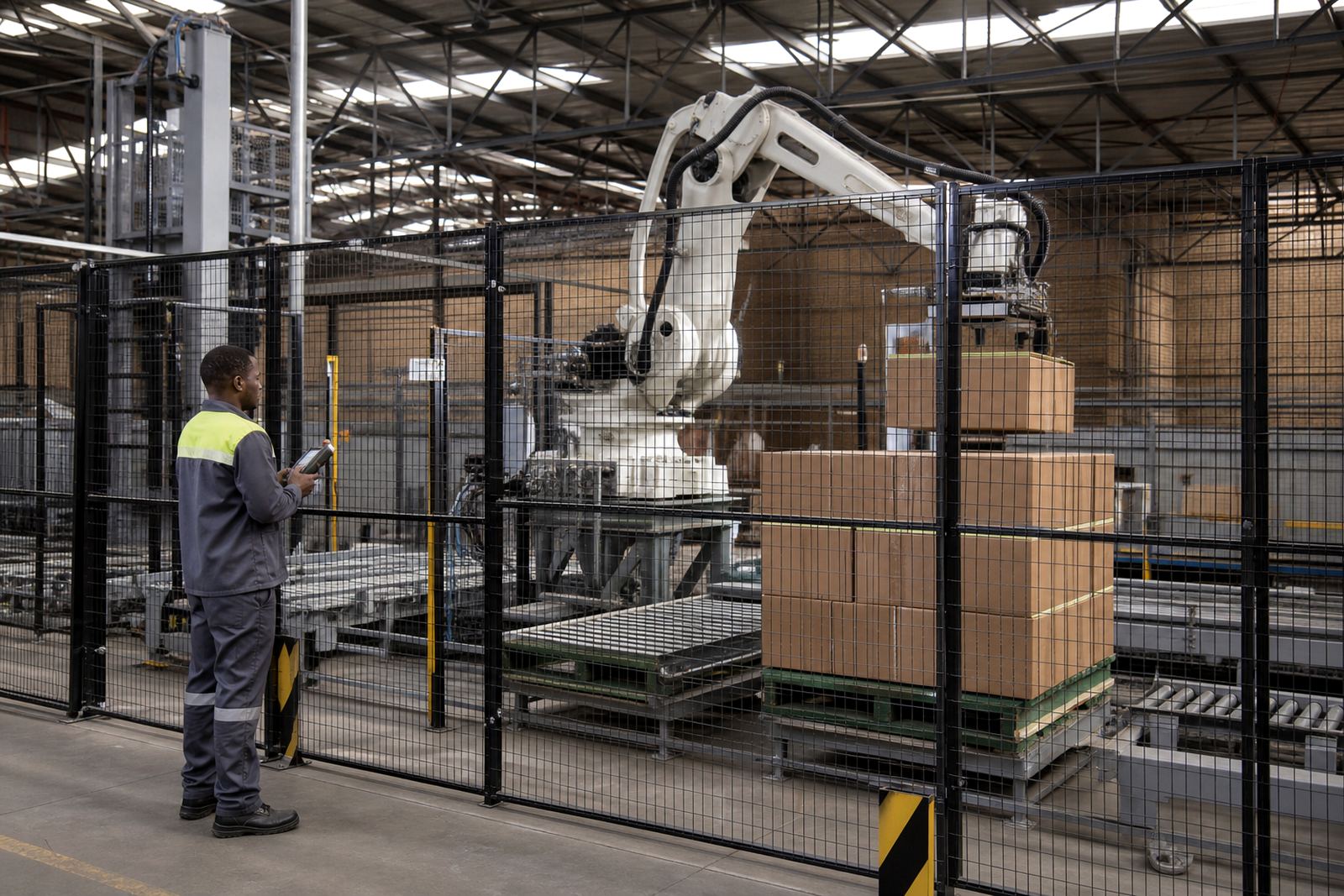
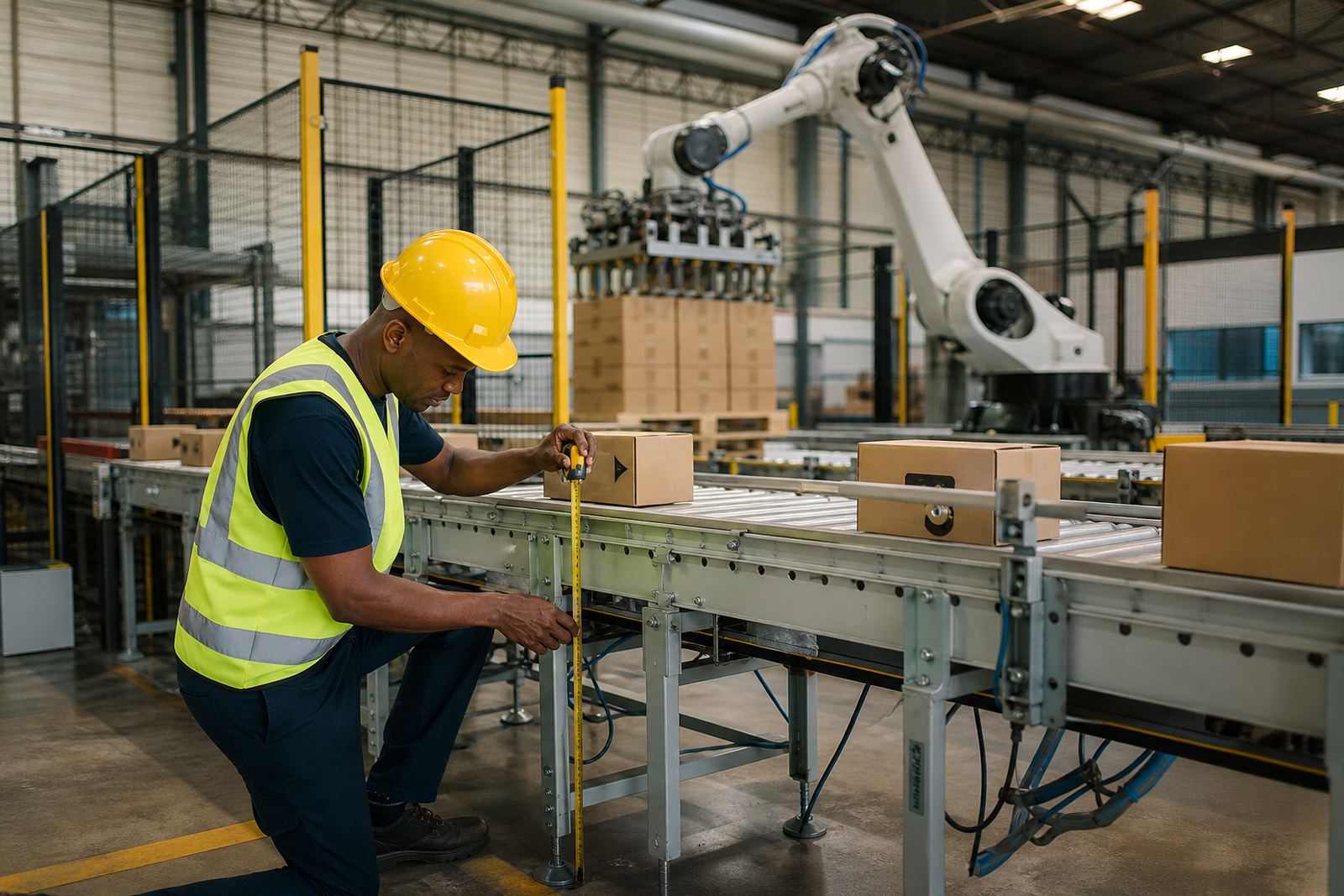
The first stage is dry testing. This is where the controls, drives, safety circuits and mechanical movement are checked without product on the conveyor or palletising station. It allows the team to verify that the robot reaches the right positions, the infeed sequence is stable and all stop functions behave as intended. A loose cable or incorrect signal is far easier to find here than after product has been introduced.
Typical dry commissioning checks include:
- Conveyor handshakes and signal timing
- Robot home positions and motion limits
- Emergency stops, light curtains and gate switches
- Interlocks between the robot and existing equipment
- Cycle counts, fault recovery and restart logic
At this stage, the line should be tested slowly and methodically. The aim is not speed, it is certainty.
Stage 2: safety guarding and risk review on the floor
Before any live trial starts, the installed guarding and access points must be reviewed on site. Every line is different, so a risk assessment has to reflect the actual layout, the available space, the walking routes and the way operators load, clear and inspect the equipment. A general drawing is not enough.
On many South African sites, there are also practical details to settle at this stage, such as where maintenance staff can isolate equipment, how pallet trucks move around the cell and whether the line needs extra warning signs or marked walkways. In some plants the challenge is a tight bay near a wall or column, in others it is a long conveyor run with multiple transfer points.
What matters is that the team agrees on safe access and safe stopping before the machine is asked to handle real product. A good commissioning process does not assume safety, it proves it.
Stage 3: product trials and line balancing
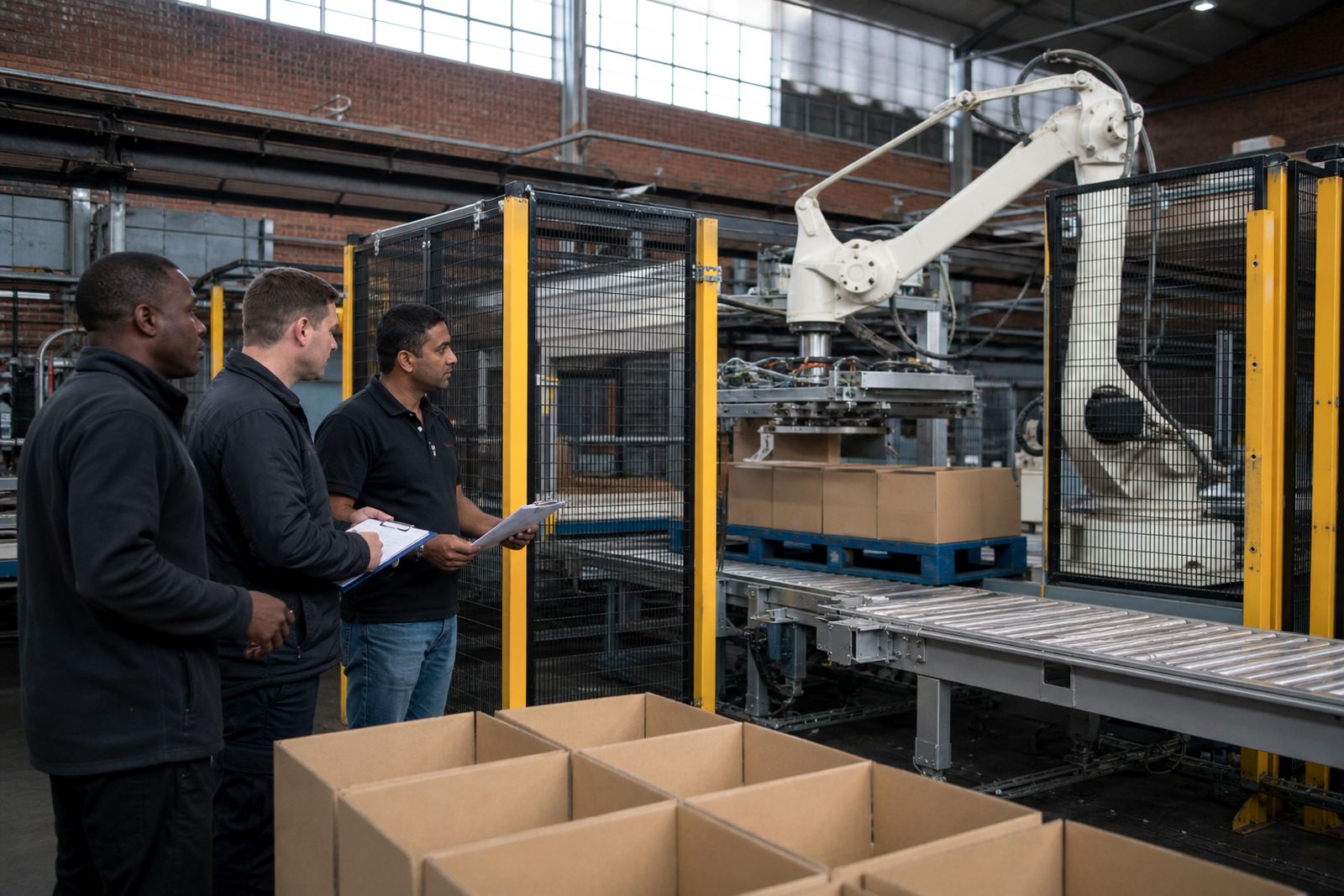
Once dry testing is complete, the line can move into product trials. This is where the retrofit begins to show how it will behave under real conditions. Boxes, bags, crates or bundles may feed differently from the test material used during setup, so the team needs to watch spacing, product stability, gripper action and the handover from conveyor to robot and back again.
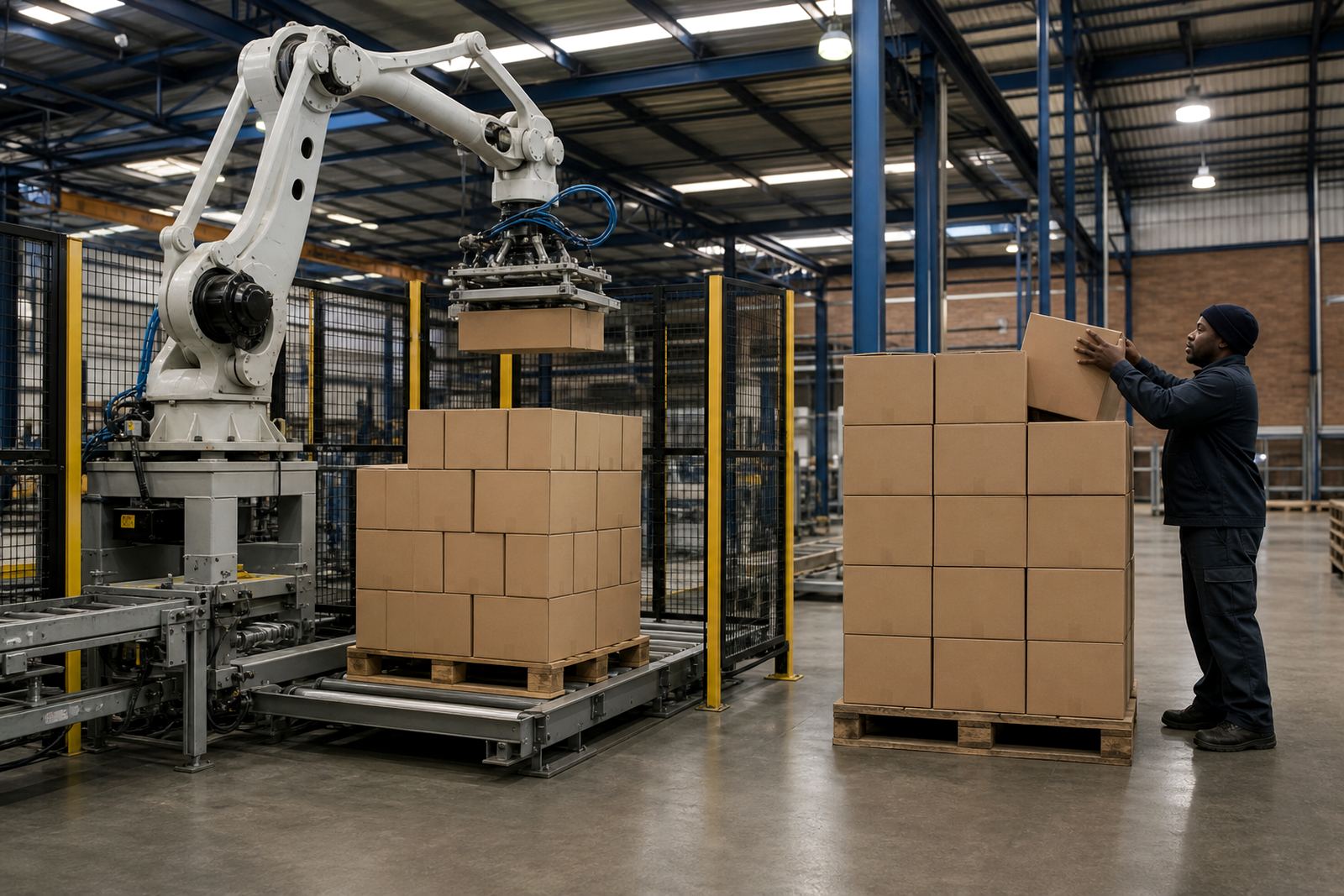
For palletising lines, product trials also reveal whether the stacking pattern holds true under mixed loads, uneven carton rigidity or variations in case size. For packing lines, the focus may shift to fill levels, sealing, drop heights and consistent flow into the next station. The first few hours of trial work often uncover small adjustments that make a major difference later on.
In a Kempton Park factory, for example, a retrofit on an existing end-of-line conveyor may run well in the morning but become less predictable after the plant warms up. That is why trial runs should include enough time to see the line under normal operating temperature, not only during the first test.
Stage 4: controls tuning and operator training
After the mechanical and product settings are stable, the controls are tuned so the line behaves the way the production team needs it to. This includes cycle timing, fault messages, jam detection, restart steps and any handover signals between the robot, conveyors and guarding system. The aim is to make the line practical for the people who will use it every shift.
Operator training should happen while the line is still fresh in everyone’s mind. The best training is hands-on and site specific, with clear attention to daily tasks and common faults. In many plants, the operator does not need to know every detail of the control system, but they do need to know how to start, stop, clear faults and recognise when to call maintenance.
- Normal start-up and shutdown sequence
- Safe clearing of minor jams and alarms
- Where to check status lights and fault prompts
- How to isolate the line for cleaning or maintenance
- Who to contact when the problem is beyond the operator level
Good training reduces rushed interventions. That alone can prevent many avoidable stoppages.
Stage 5: handover into production and early support
Production release should happen only after the line has proved that it can run consistently for the product mix agreed at commissioning. This does not mean every future scenario has been solved, but it does mean the retrofit has met the key operating needs at the time of handover. The team should leave with an agreed operating rhythm, a practical maintenance plan and clear contact points for support.
Early support is especially important in the first weeks after release. That is when real production pressures expose issues that were not obvious during testing, such as operator turn-over, shift changes, minor carton variation or unexpected stoppages during municipal power interruptions. A good support plan helps the plant recover quickly and keeps the line settled.
For manufacturers in Durban, Cape Town, Gqeberha and the East Rand, local site conditions can also influence how the line settles after release. Coastal humidity, cleaning routines and shift patterns all play a part. The final handover should reflect those realities, not only the ideal test environment.
What a practical commissioning checklist should always cover
Commissioning works best when the team follows a clear checklist and does not skip steps to save time. The checklist should reflect the actual retrofit, not a generic template. It should also be signed off by the people who know the line best, including operations, maintenance and safety.
- Dry run completed with all motions verified
- Guarding, access points and emergency stops checked
- Risk assessment reviewed for the installed layout
- Conveyor transfer and product flow tested with live product
- Controls tuned for normal operating speed
- Operators trained on daily use and basic fault recovery
- Spare parts and maintenance needs confirmed
- Production handover agreed with clear support steps
When commissioning is done properly, the line does not just switch on. It settles in, performs predictably and gives the production team confidence to keep moving.