Why the last metre of handling matters
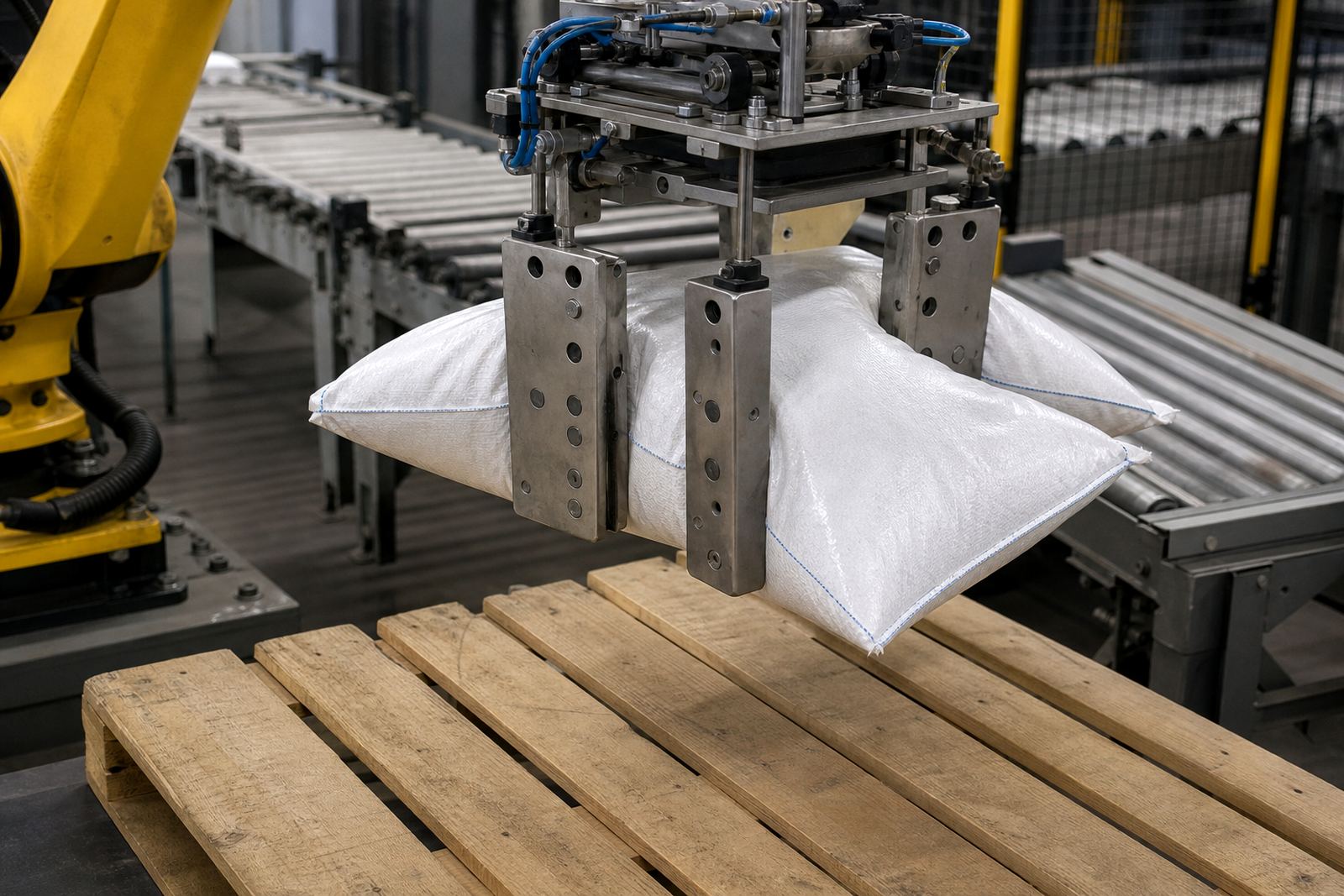
In many South African plants, packing is strong but pallet build quality still depends on tired hands, uneven shift patterns and hurried end-of-line work. That is where robotic palletising earns its keep. A well planned retrofit can take cartons, bags, crates or shrink wrapped packs from the conveyor and place them in a repeatable pattern, with the same stack height and the same layer sequence every time.
For manufacturers in Johannesburg, Durban, Cape Town, Pretoria and Gqeberha, the pressure is not only about speed.Robotic palletising does not solve every issue on its own, but it can give the packing area more discipline and far less variability.
Many businesses do not need a full line replacement. They need a retrofit that fits around existing conveyors, existing pallet positions and existing product movement. That is usually the practical route because it limits civil changes and keeps disruption manageable during installation.
What a palletising retrofit can change on an active line
A retrofit is about integrating the robot into what is already there. It may pick product from a discharge conveyor, form layers on a pallet station, or work alongside a conveyor merge and turntable arrangement. The aim is to match the pace of packing without creating a bottleneck downstream.
In practice, the main gains are usually in repeatability and handling control. A robot does not get tired, and it follows the same path and place position every cycle. That helps with square stacks, cleaner stretch wrapping and fewer topples in transit. It also makes it easier to keep track of product counts, because the pallet pattern is programmed rather than improvised.
For sites running mixed pack sizes, the retrofit can include recipe changes so operators select the correct pallet pattern for each SKU. That is useful in plants with changing orders, especially where one line serves multiple customers or export destinations.
- Consistent pallet patterns across every shift
- Less manual lifting and twisting at the end of line
- Better use of floor space around the packing area
- Cleaner handover to stretch wrapping and dispatch
- Easier adjustment when carton sizes or pack counts change
Why manual palletising becomes a strain point
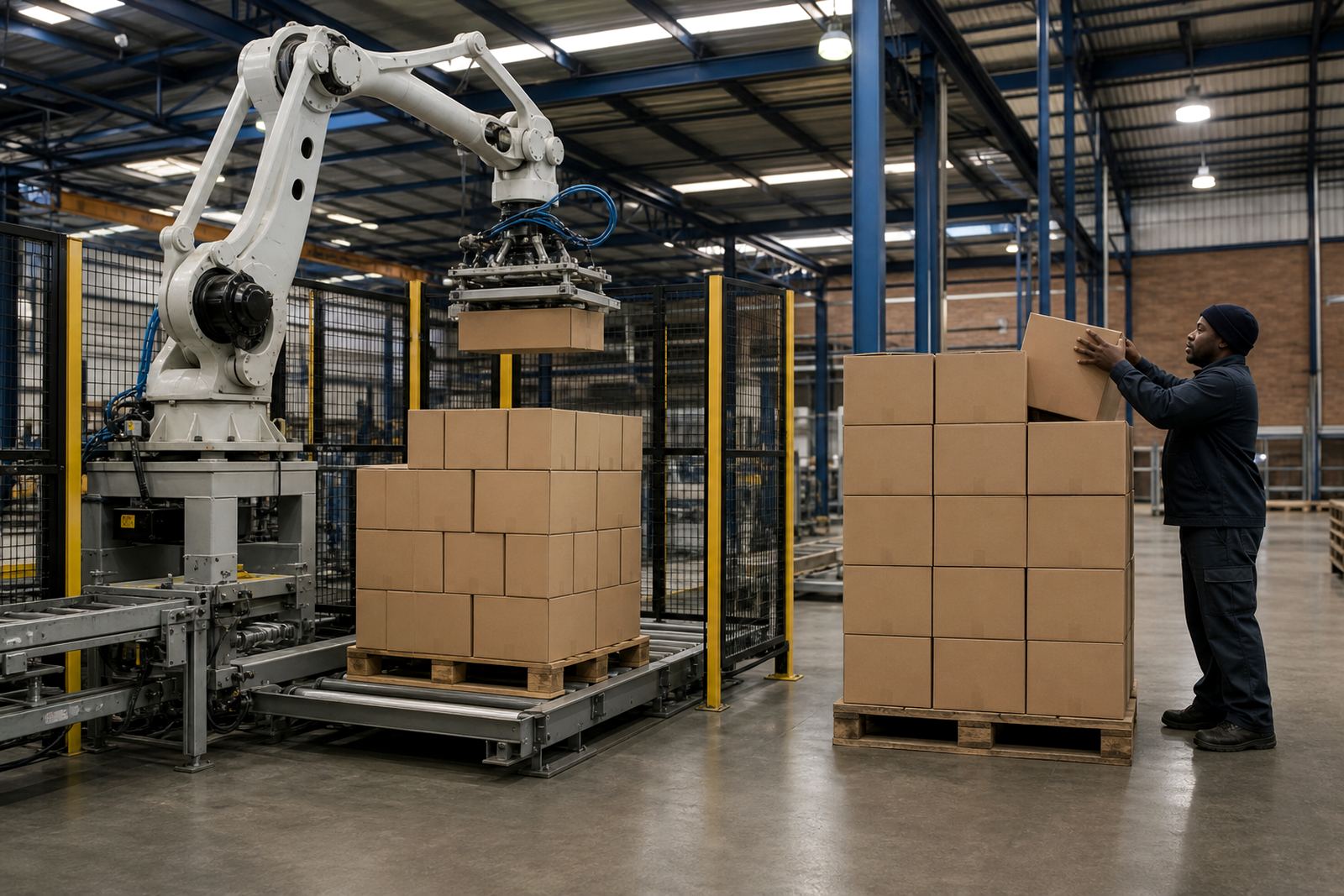
Manual palletising is physically demanding. Even when the product is not especially heavy, the repeated reach, bend, lift and twist motion builds up over a shift. That can lead to fatigue, slower output and more handling mistakes late in the day. In some plants, the problem gets worse when teams are short-staffed or when overtime becomes routine.
There is also the issue of pallet quality. A load that looks fine at the line can still shift on a rough road trip from Kempton Park to Durban or from Pretoria to Gqeberha. Good stack formation matters because goods rarely stay still for long once they leave the site. If the pallet face is uneven or the corners are weak, the risk of damage rises quickly.
Robotic palletising supports dispatch preparation by holding the pattern steady from the first layer to the last. That can reduce rework, improve wrapping consistency and make downstream handling easier for forklift drivers and warehouse staff.
- Lower physical strain for operators
- Less variation between day shift and night shift output
- Better pallet stability for local transport conditions
- Fewer damaged cartons and crushed corners
- More predictable dispatch planning
Safety guarding and risk work cannot be skipped
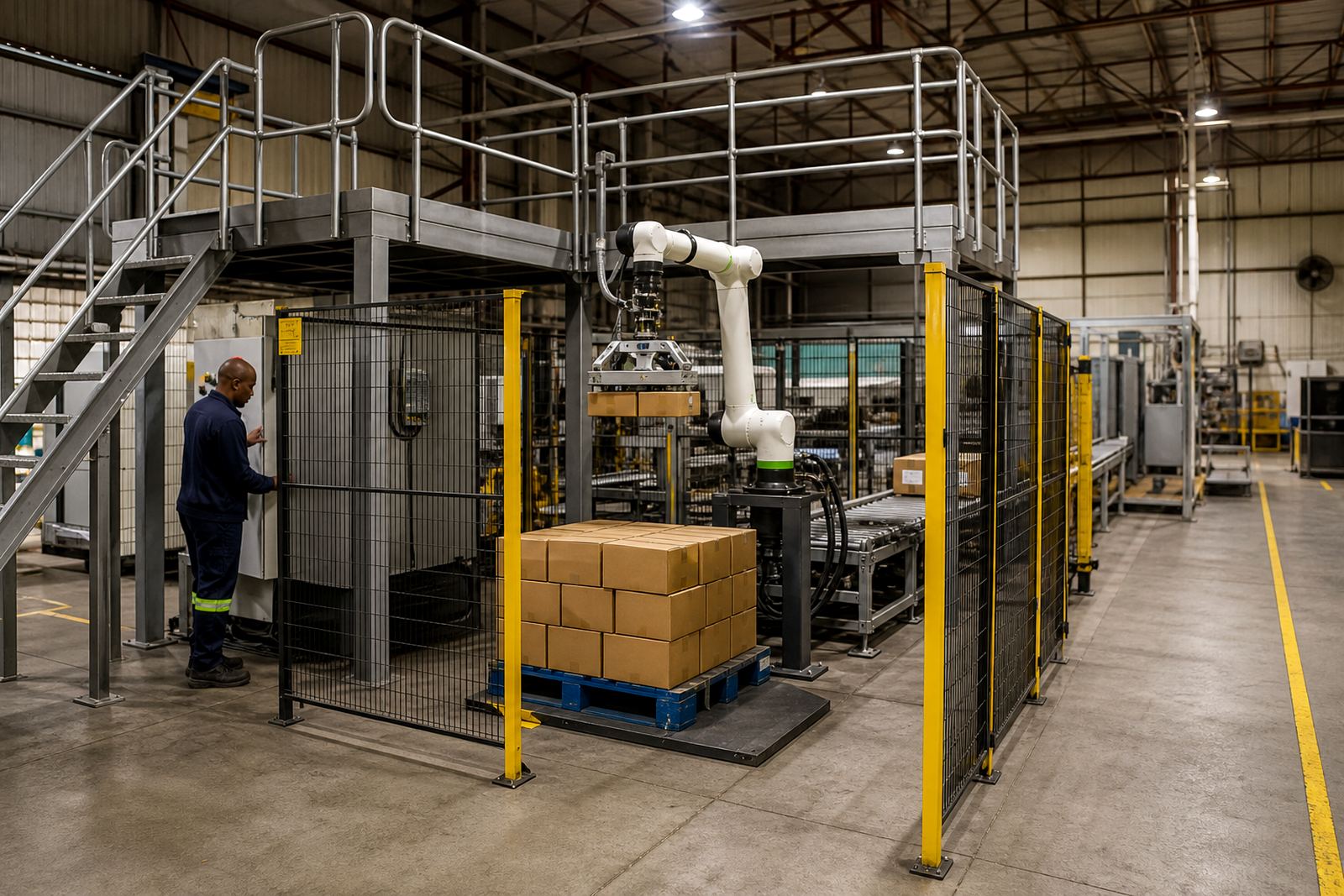
Any robotic retrofit needs proper guarding and a site-specific risk review. There is no single answer for every line because each factory has its own vehicle routes, pallet handling, service access points and operator habits. Guarding may involve fenced bays, interlocked doors, warning beacons, safety mats or scanned entry control, depending on the footprint and the duty.
It is also important to think about maintenance access and cleaning. If the line is in a coastal area such as Cape Town or Gqeberha, humidity and dust can affect components over time, so the design should allow for practical inspection and service access. In Gauteng, plants often need to manage tight footprints and shared walkways, especially where forklifts and pedestrians use the same area.
A proper retrofit plan looks beyond the robot itself. It checks conveyor interfaces, emergency stops, pallet infeed, wrap station access and how operators will clear a fault safely. This is where good engineering saves trouble later. If a guard door is awkward or a reset point is badly placed, the system becomes harder to run and harder to maintain.
How retrofits fit around existing conveyors and controls
Most factories do not start with a blank page. They already have conveyors, sensors, wrappers, label printers and a control panel that needs to keep working. The retrofit task is to link the new palletising cell to that existing setup without upsetting the rest of the line. That can involve controls integration, conveyor timing changes, product detection, pallet presence sensing and coordinated stop and start logic.
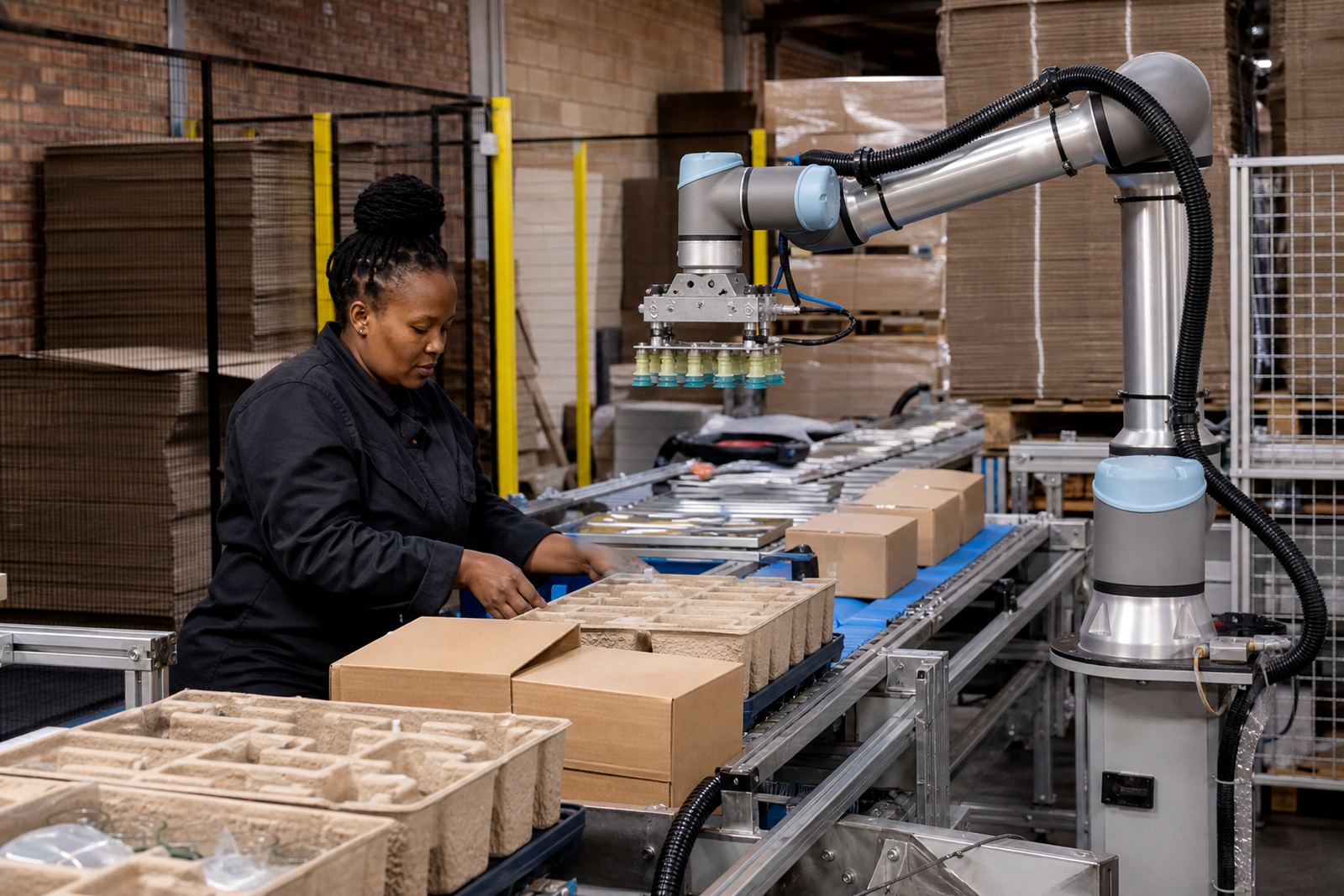
Where a cobot is suitable, it may suit lighter loads, slower cycles or smaller spaces. In other cases, a larger industrial robot may be the better fit for higher throughput or heavier cartons. The right choice depends on the product, the cycle time, the floor space and the safety case. It is not a matter of choosing the most advanced option, but the one that fits the site.
At ReAutomated, site line surveys, retrofit design and installation management are part of the process, with commissioning support and operator training once the system is in place. The goal is to make the change practical for the production team, not just technical on paper. Maintenance support, breakdown assistance and spares planning then help keep the line available after handover.
A local example from Spartan to the national market
Consider a packaging site in Spartan, Kempton Park, supplying pallets of product to customers across Gauteng and the coastal provinces. The line may already have a good conveyor run and a reliable pack-off area, but the final pallet build still depends on manual work. When orders rise, the team starts feeling the pressure and dispatch begins to slip.
A retrofit can change that without rebuilding the whole plant. The line can keep its existing conveyor path while a robotic palletising cell takes over the repetitive lift and place work. With the right layout, the pallet position, wrapping point and forklift access can be organised to suit the building rather than fight it. That matters in older industrial premises where every metre counts.
For manufacturers serving Johannesburg, Pretoria, Durban, Cape Town and Gqeberha, the real value is often steadier output. The robot does the repetitive part, the operators focus on checks and flow, and the dispatch team gets pallets that are easier to wrap, move and store. That is what makes robotic palletising worth serious consideration.
If you are comparing options, start with a line survey and a clear risk review. The best answer is usually the one that suits the product, the site and the shift pattern, not the most complicated one.