Why Access Planning Matters Before the Retrofit Starts
When a packing or palletising line is retrofitted, the main focus is often on robot placement, conveyor heights and control integration. Maintenance access should be planned at the same time, because a system that is difficult to reach becomes slower to service and harder to keep safe. If a motor, sensor or gripper can only be reached by leaning over a live conveyor, every routine job becomes a risk.
Good access planning starts with a walk-through of the existing line. That includes checking where operators stand, how far the robot arm swings, where product jams happen, and which components will need regular cleaning or adjustment. On many sites in Gauteng and along the coast, space is already tight, so the retrofit has to work around the building, the column positions and existing services. A practical layout keeps service points visible and reachable, with clear paths for cleaning and fault finding.
What Technicians Need to Reach Without Struggle
Every retrofit should identify the parts that will be serviced most often. These are usually not the biggest items, but the ones that affect daily running when they drift out of position or wear down. If access is poor, teams delay small corrections until a bigger fault appears.
- Electrical panels with enough front clearance to open doors fully and test safely.
- Limit switches, sensors and cable runs that can be inspected without removing half the guard set.
- Belts, rollers and transfer points that can be cleaned after dusty product runs or carton build-up.
- Robot tooling, air lines and vacuum units that can be changed without awkward lifting.
- Grease points and wear parts positioned at a sensible height, not hidden behind structure.
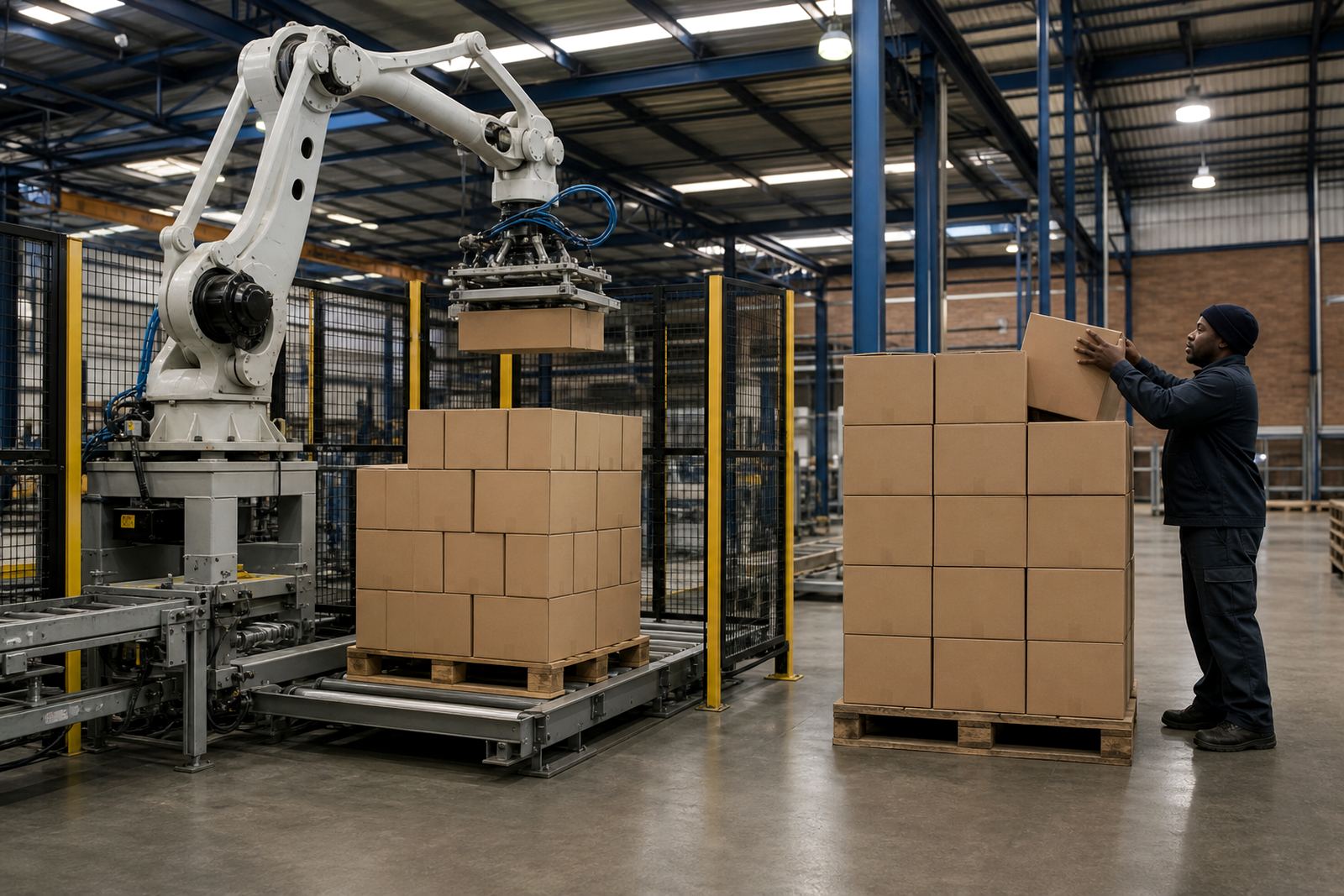
In practice, this means thinking about reach, kneeling space and the direction a technician must stand when opening a panel or replacing a part. It also means making sure parts are not trapped behind fixed structures or packed so tightly that a spanner barely fits in. Small details matter here, and a few extra centimetres can save a lot of frustration later.
Guarding That Protects People and Still Allows Service Work
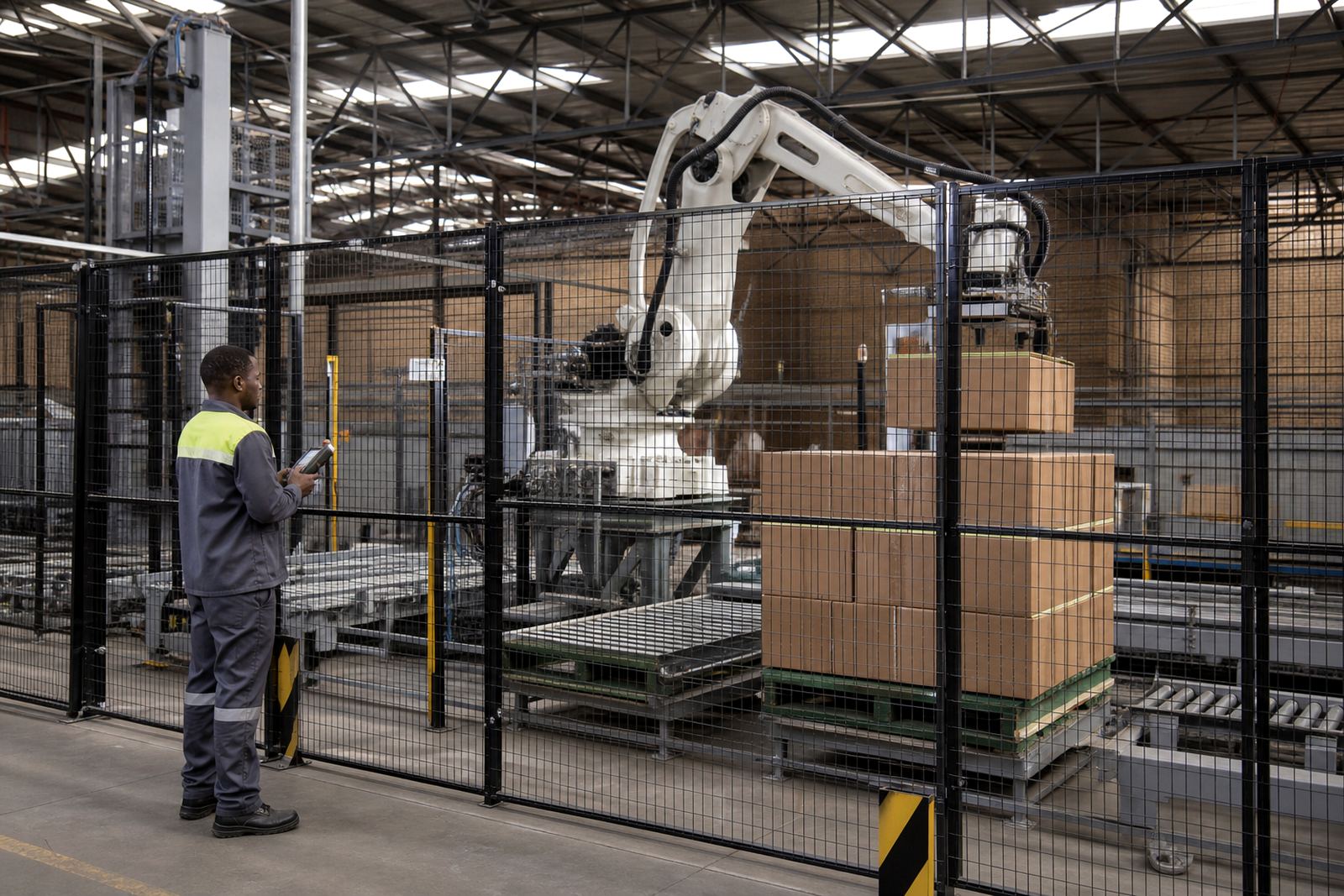
Safety guarding must protect people from moving equipment, but it should not create unnecessary obstacles during maintenance. The aim is controlled access, not constant removal of panels and gates. If a guard must be taken off regularly, it should be designed for easy refit and clear identification so nobody leaves it off by mistake.
On retrofitted packing and palletising lines, access doors, interlocked gates and removable panels should be placed where servicing is actually done. The route to the robot cell, conveyor drives and adjustment points should be logical and short. Each site needs its own risk assessment, because the right guarding arrangement in a food plant in Cape Town may not suit a distribution site in Midvaal or a heavier manufacturing line in Durban. We have seen sites where the problem was not the machine itself, but poor gate placement that forced staff to work around live areas, which is not acceptable.
- Use interlocked access where entry may be needed during planned maintenance.
- Keep emergency stops clearly visible and reachable from service positions.
- Allow safe lockout and isolation points near the area being worked on.
- Mark restricted zones and service routes with clear floor marking or physical barriers.
Planning for Real South African Site Conditions
Local conditions change how maintenance access should be handled. In Kempton Park and the East Rand, dust and vehicle movement can affect access ways and cause wear on roller tracks and doors. In coastal cities such as Durban, humidity can affect electrical enclosures, fasteners and labels, so panels need to stay serviceable and easy to reseal.
A sensible plan takes account of cleaning routines, spare part storage and the way staff actually move through the plant. If a maintenance team must pass through a narrow aisle with a trolley every time they check the line, that aisle will not stay clear for long. It is better to design access points that fit the site, rather than assuming the ideal layout will remain usable once production starts. A small misalignment in a conveyor return path can become a repeated access problem by next month.
How Access Planning Supports Better Integration with Existing Equipment
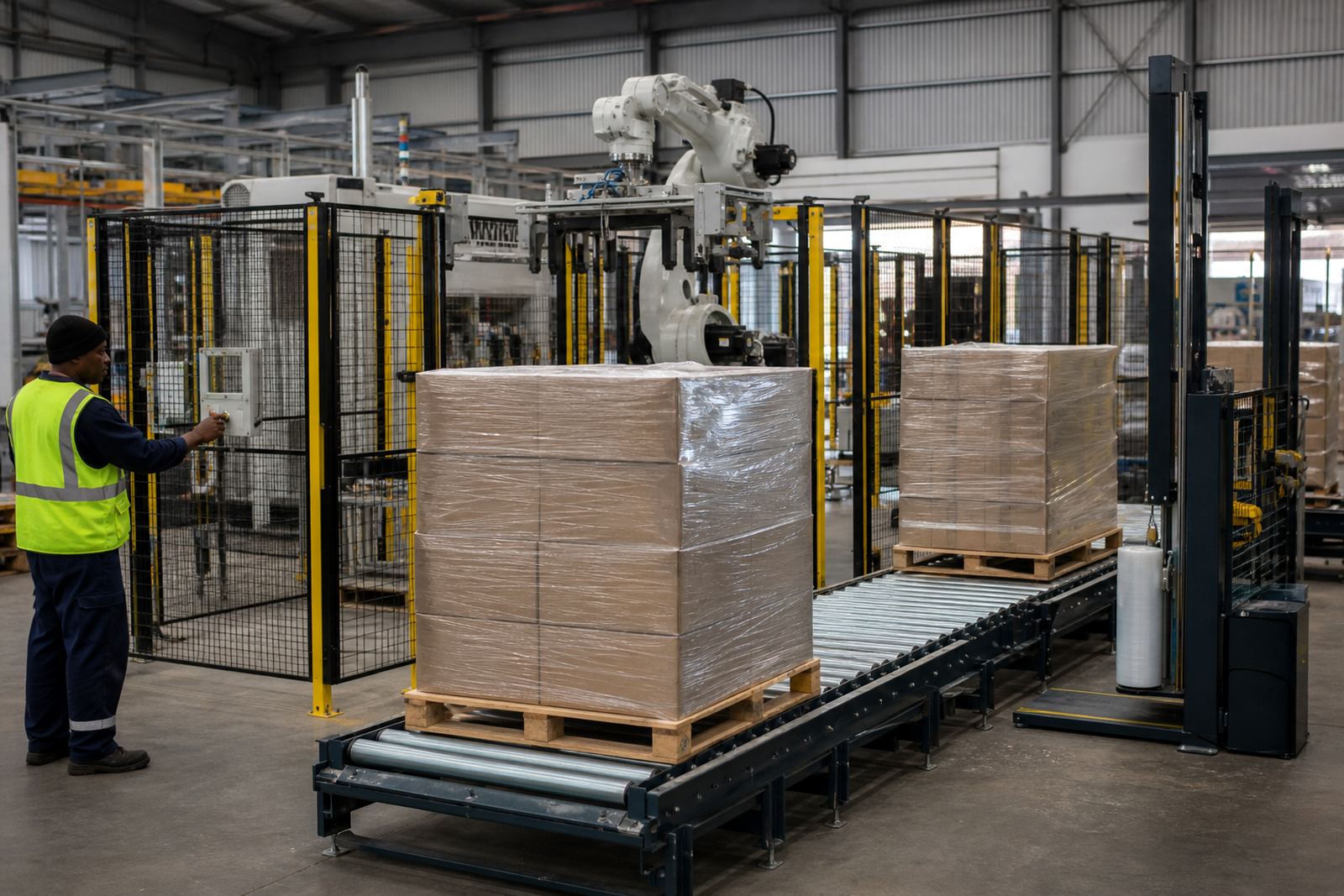
Most retrofits are installed into lines that already have conveyors, infeed tables, wrappers, printers or case handling equipment. Maintenance access has to work across the whole line, not just around the robot. If a new palletising cell blocks access to an old conveyor drive or hides a jam point behind a frame, the retrofit creates a new bottleneck.
That is why access planning should form part of the line survey and retrofit design. The team should check how panels open, where service ladders may be needed, and whether a component can be removed without lifting through a guard section. It is also useful to leave room for future changes, since production volumes, carton sizes and pallet patterns can change over time. A line that is easy to maintain today should still be practical when the next product mix arrives.
A Practical Example from a Busy Gauteng Line
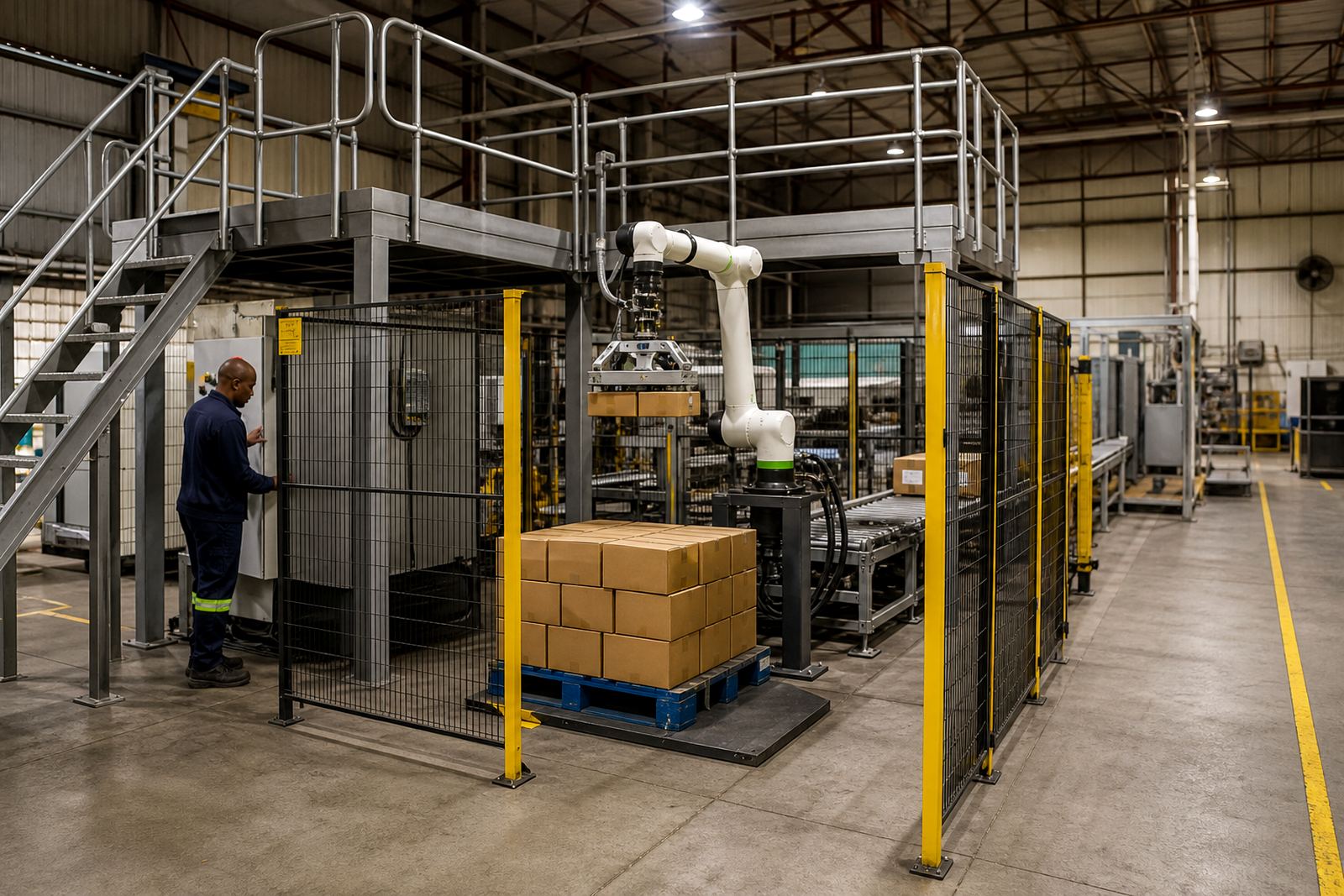
On a typical retrofit in Spartan, Kempton Park, the plant may already have a conveyor network feeding cartons into a palletising area with little spare floor space. If the maintenance team has to work around the same doorway used by forklift traffic, access becomes risky straight away. The better approach is to create a service side with clear standing room, direct access to the control panel and enough space to remove the most common wear parts without blocking the full line.
That kind of planning also helps during breakdowns. Instead of stopping the entire area while one technician searches for a panel key or tries to reach a drive at the back of a frame, the team can isolate the section, enter safely and get on with the job. Over time, that saves stress, reduces confusion and supports a cleaner working routine for operators and maintenance staff alike.
- Leave a clear maintenance path beside the cell or conveyor run.
- Keep service panels and isolation points where they can be reached quickly.
- Match access to the way the plant actually runs, not just the drawing.
- Plan for cleaning, adjustment and part replacement, not only installation day.
Maintenance Access as Part of the Retrofit Design Brief
Maintenance access should never be an afterthought. It belongs in the first discussion, together with throughput, guarding, controls and operator training. When access is planned properly, service work becomes more predictable and less disruptive, and the line is easier to support month after month.
For manufacturers in Johannesburg, Pretoria, Durban, Cape Town, Gqeberha and across South Africa, the best retrofit decisions are the ones that make everyday work simpler. That includes room to inspect, safe ways to isolate, and enough space to reach the parts that matter most. It is a practical detail, but it has a direct effect on how well the line performs.
Maintenance access planning is really about respect for the people who keep the plant running. If they can work safely and efficiently, the whole line benefits.