Why dispatch flow starts at the palletising point
Dispatch problems often show up far from the actual cause. A mixed or unstable pallet can slow down the wrapper, delay fork truck movement, create rework at the staging bay and even hold up the loading dock. In Kempton Park, where many plants are working tight shifts and shared yard space, those delays can ripple through the whole day.
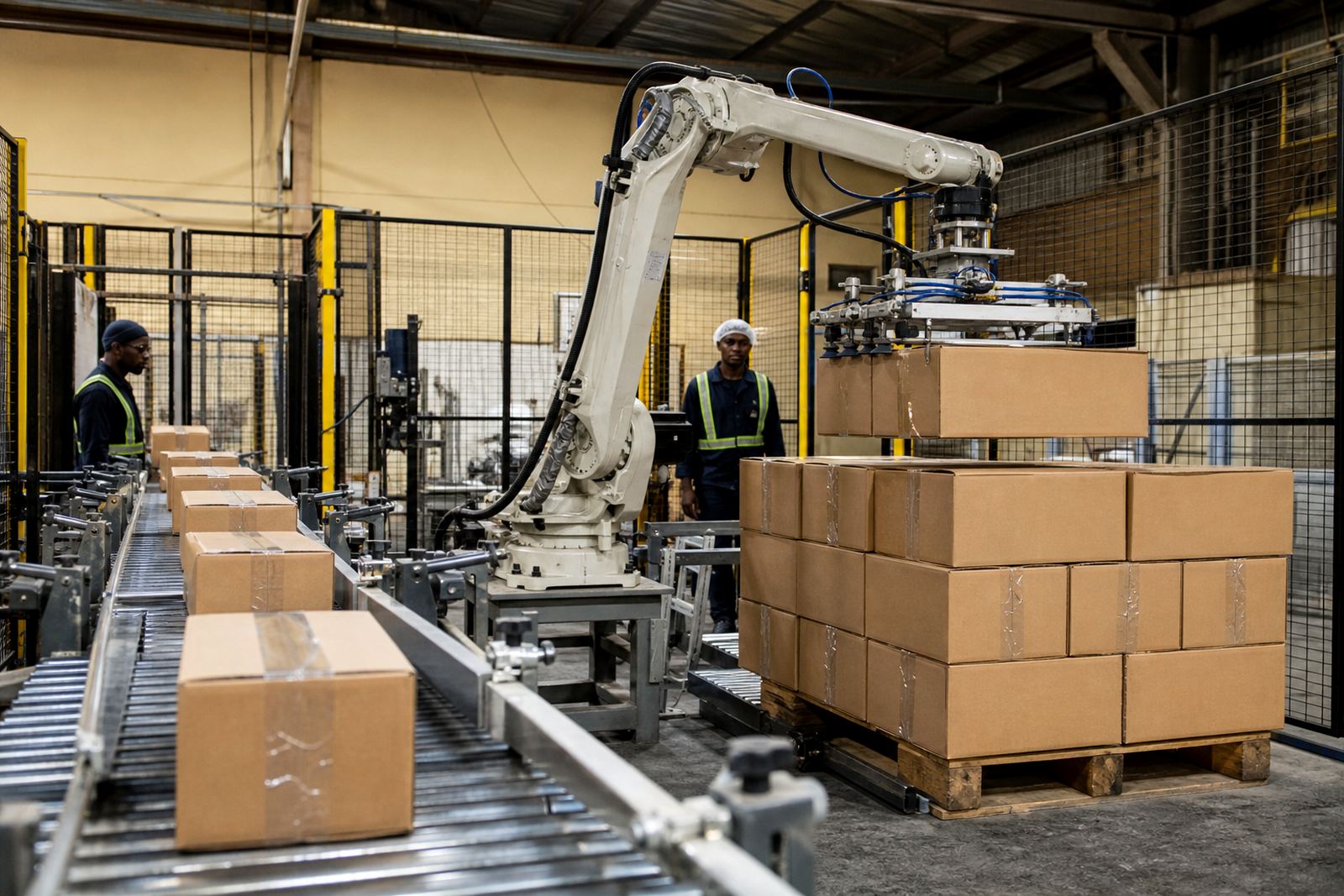
For manufacturers in Johannesburg, Pretoria, Durban, Cape Town and Gqeberha, the goal is not only faster palletising. It is cleaner movement from the end of line conveyor to wrapping, then to storage and finally onto the truck. A retrofit robot or cobot can take over repetitive stacking tasks so pallet patterns stay consistent, cartons are handled at the same height and the line keeps moving.
Good dispatch flow begins with a clear look at the existing line. Conveyor speed, carton orientation, wrapper position, fork truck access and floor space all affect how quickly a pallet can leave the packing area. If one section is cramped or the transfer point is awkward, the whole line pays for it.
What changes when a retrofit robot is added to an existing line
A retrofit approach is useful when a plant already has conveyors, stretch wrapping and a working packing area but the manual palletising step is creating bottlenecks. The robot is added to the current process rather than replacing everything. That means the design must suit the real layout, not an ideal drawing. The line may need new transfer sections, product accumulation points or a better pallet discharge path.
In practical terms, the retrofit usually focuses on these points:
- Matching robot reach and payload to the carton or bag size
- Setting up infeed and outfeed conveyors so products arrive in the right position
- Creating repeatable pallet patterns for one or more stock keeping units
- Allowing space for pallet changeover, wrapping and manual intervention if needed
- Keeping the area accessible for cleaning, maintenance and forklift movement
Not every line needs the same level of automation. A high-volume line with one carton size may suit a fixed palletising station, while a multi-product facility may need more flexible handling. The right answer depends on the site survey, the product mix and how dispatch operates during a normal shift and during peak periods.
How better pallet stability speeds up wrapping and storage
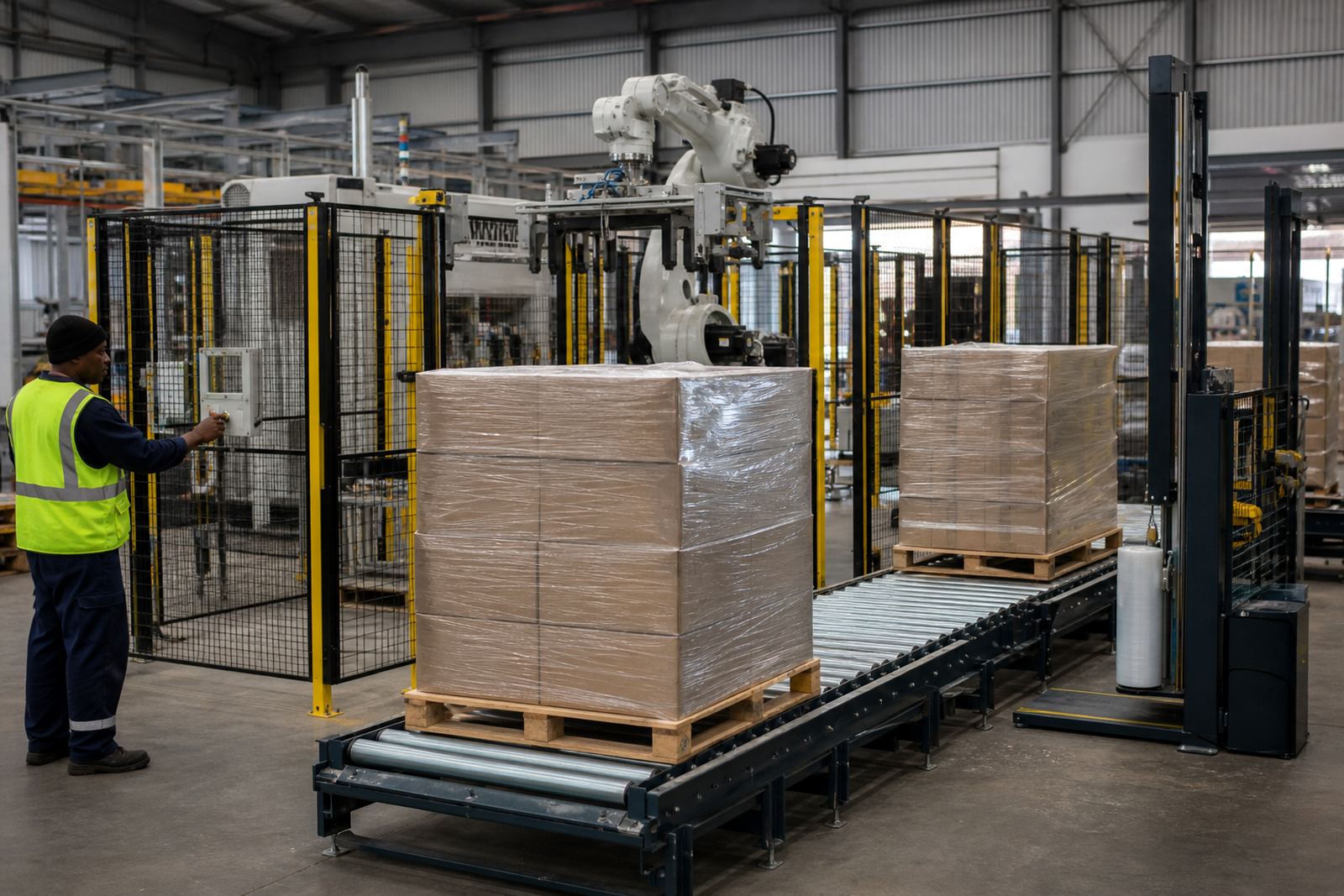
Stable pallet building helps the wrapping station work properly. If cartons are uneven, overhanging or crushed, the wrapper has to deal with a poor load and the result is often extra film use or a pallet that still shifts in transit. Better stacking gives the wrapper a uniform load so the pallet exits faster and with less handling.
Once the pallet is wrapped, storage becomes easier too. Well-formed loads are simpler to label, scan and slot into staging bays. They are less likely to lean in the racking or become damaged while waiting for collection. That matters in coastal conditions as well, especially in Durban and Gqeberha where humidity can affect packaging strength and pallet stability if the load is poorly formed.
For dispatch teams, the biggest practical benefit is predictability. The fork truck driver knows the pallet is square, the wrapper knows where the load starts and ends, and the loading bay crew can move finished goods without stopping to fix the stack. That saves minutes throughout the day and those minutes add up.
- Cleaner pallet edges reduce wrap faults
- Even layer formation lowers carton damage
- Better label visibility helps staging and traceability
- More consistent loads make truck loading quicker
Safety guarding and risk assessment are part of the flow plan
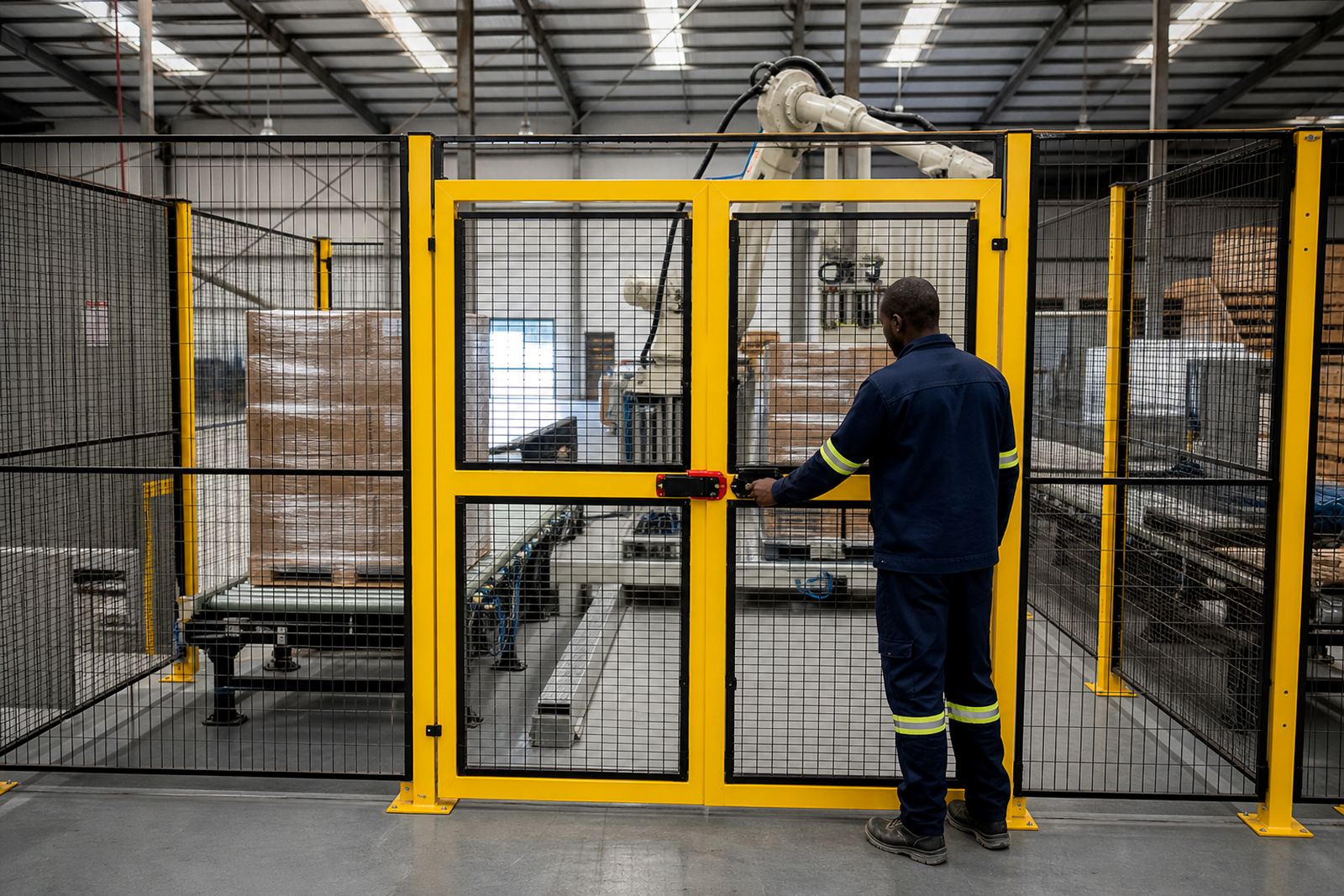
Any robot or cobot added to a packing line needs proper safety guarding and a site-specific risk assessment. This is not a box-ticking exercise. It shapes where people can stand, how pallets are changed, where access doors are placed and what happens if the line stops unexpectedly. A good layout protects operators while still allowing sensible access for cleaning, maintenance and fault-finding.
On South African sites, practical safety planning also has to consider existing building rules, walkway widths, emergency stops and how the area connects to the rest of the warehouse. If a plant already has tight movement near the dispatch door, the guarding may need to be arranged so that operators are not crossing forklift paths or reaching into active zones.
Risk assessment support should cover the full operating picture, not only the robot cell. That includes conveyors, pallet transfer, manual clearing of jams, lockout points and the effect of power interruptions.
Integration with conveyors and existing packing equipment
Most dispatch flow improvements rely on how well the robot is tied into the rest of the line. If the conveyor feeds are uneven or the cartons arrive skewed, the palletiser cannot work efficiently. Controls integration allows the line to speak to itself, so product release, accumulation and pallet position all stay in step.
That is why line surveys matter. The team needs to see how goods exit the packer, whether a reject mechanism is needed, how pallets are introduced and where the wrapper and staging area sit. On some sites, a small conveyor change solves a major problem. On others, a new control sequence or a repositioned pallet magazine is the answer. The point is to fit the retrofit around what already works and improve what does not.
For manufacturers across the East Rand, Midvaal and the major metro areas, this approach reduces disruption during installation. It also helps operators adapt faster because the line still follows familiar movement patterns. The better the integration, the less likely the dispatch area is to become a bottleneck after the retrofit goes live.
- Assess conveyor height, speed and transfer points
- Check product orientation before the robot picks it up
- Plan the pallet outfeed so wrapped loads clear the cell smoothly
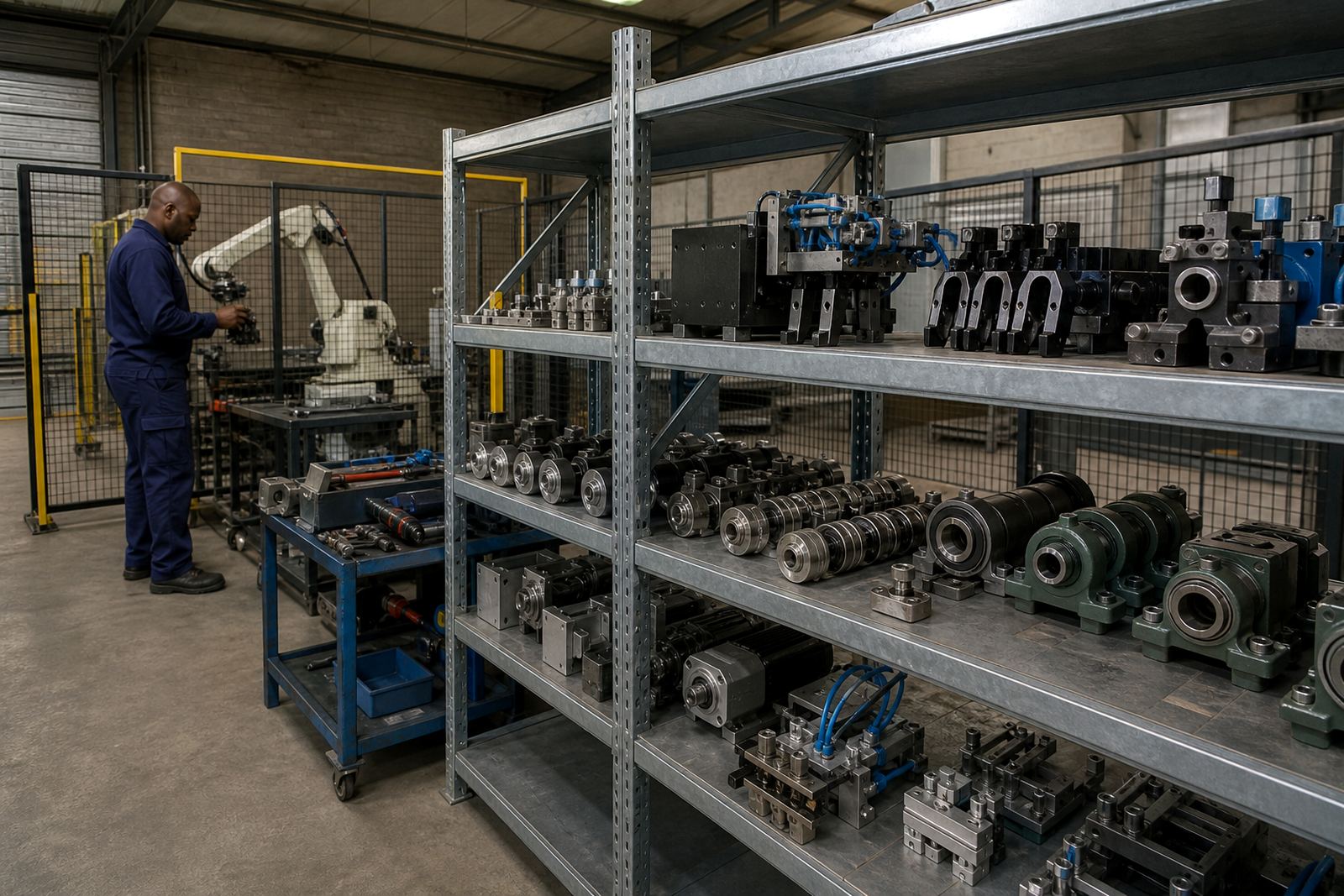
- Include spares planning for sensors, grippers and wear parts
A local example from Spartan to the rest of Gauteng and beyond
A typical case in Spartan starts with a plant that already has a decent packing line but the manual palletising station is slowing dispatch. Cartons build up during peak production, the wrapping station is waiting on staff, and the loading bay gets congested before end of shift. The issue is not the whole line, only the final handover from packing to pallet movement.
After a site line survey, the retrofit can be planned around the existing conveyor route, available floor space and the warehouse flow. A robot or cobot is then positioned to stack product consistently, with guarding and control logic set around the way the plant actually operates. Once commissioned, the pallet moves more predictably from pack line to wrap zone to dispatch, which helps the team keep the yard clear and the loading schedule under control.
That same method works for manufacturers in Johannesburg, Pretoria, Durban, Cape Town and Gqeberha, because the local challenge is often the same: too much manual handling at the end of line and not enough consistency in the way finished goods leave the plant. The answer is not more pressure on the team. It is a better flow path.
What to cover before you retrofit for dispatch flow
Before any retrofit is designed, the plant should be clear about what it wants to improve. Faster palletising is one part of it, but dispatch flow also includes storage handover, packaging quality, shift patterns and maintenance access. A short planning session can prevent costly changes later.
Useful questions to ask include:
- What product sizes and pallet patterns need to run on the line?
- Where do cartons back up now, and at what times of day?
- Is there enough room for a safe pallet change and wrapper access?
- How will the line behave during a power interruption or restart?
- What operator training will be needed for normal use and fault response?
When those points are handled early, the retrofit supports the whole dispatch operation instead of just one machine. That is where the real improvement happens.