Why an interlocked gate matters on a retrofit cell
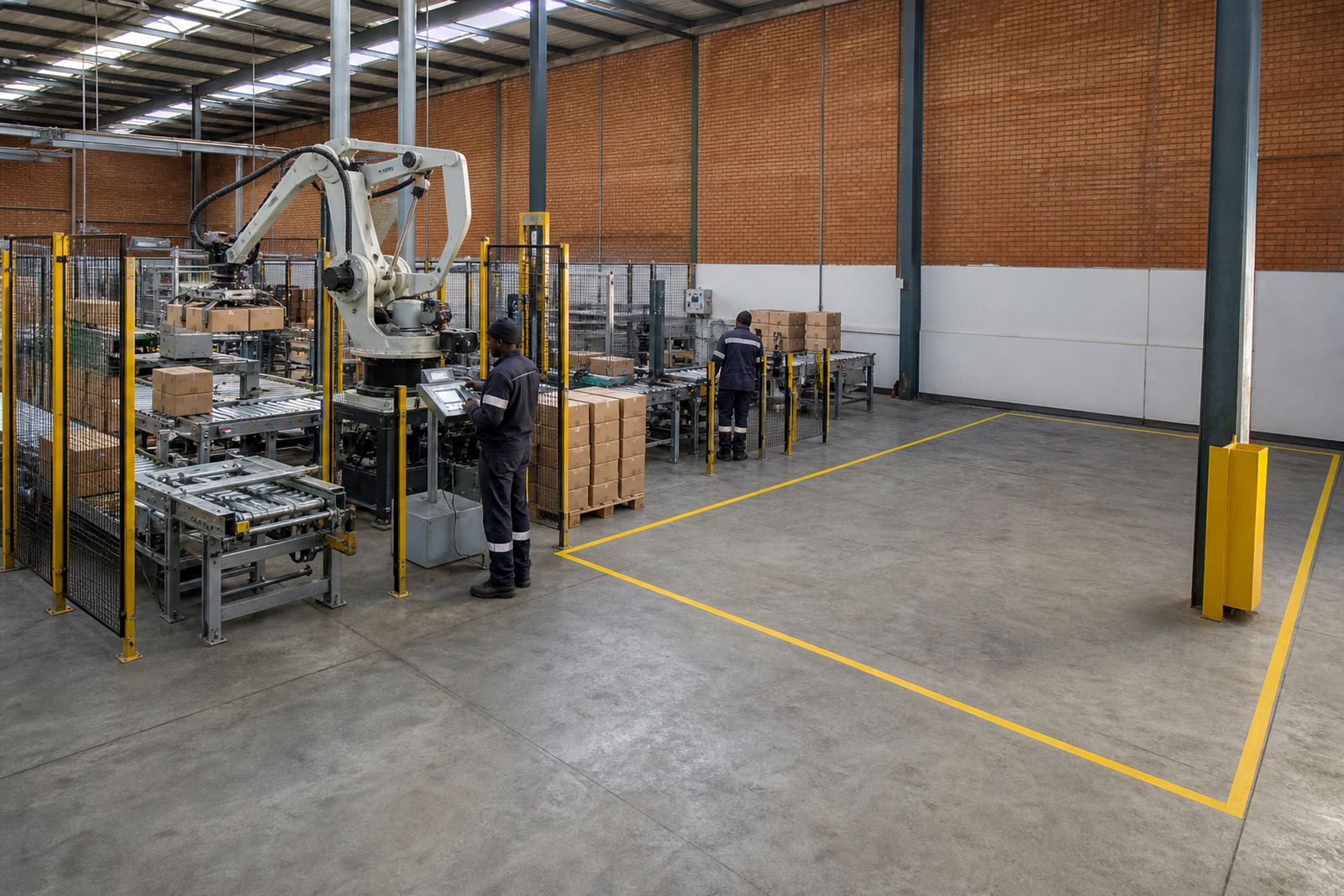
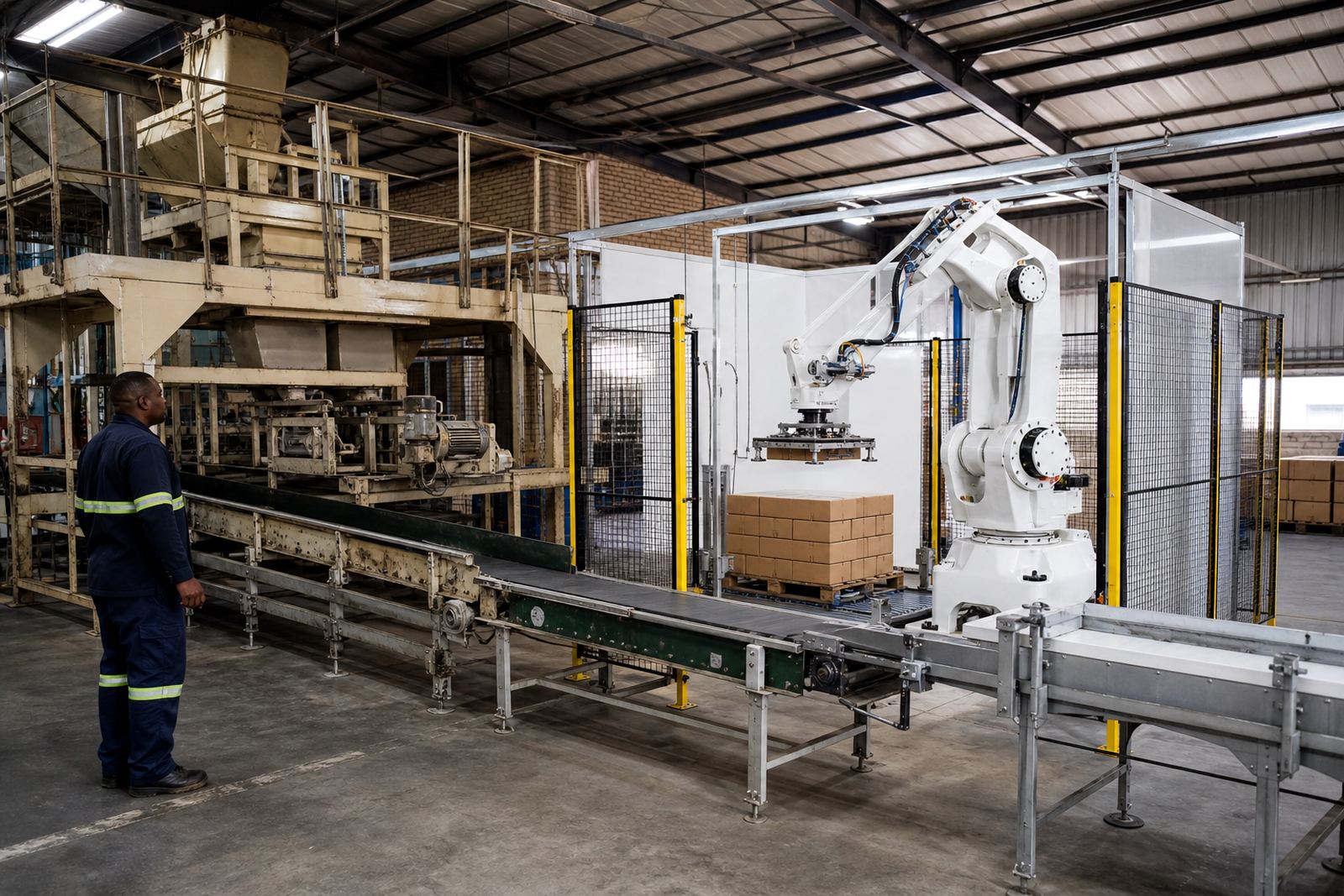
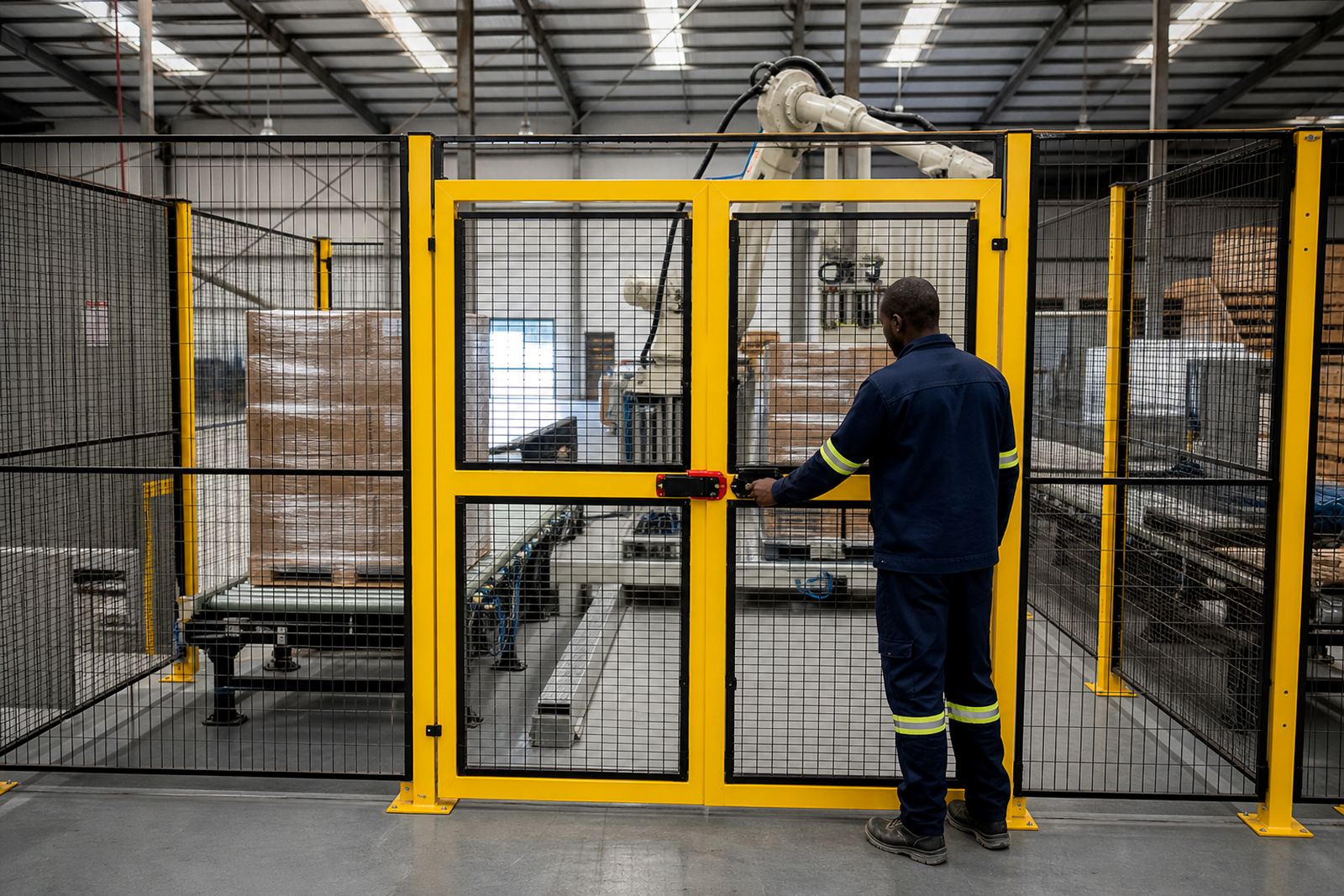
An interlocked gate is not just a door on the fence. It is a controlled access point that helps stop a person from walking into a robotic packing or palletising cell while the equipment is still in a hazardous state. On retrofit projects, this matters because the robot often has to work with existing conveyors, wrappers, infeed tables and pallet handling areas that were never laid out for a robot from day one.
In practical terms, the gate forms part of the physical boundary around the cell. When the gate is opened, the control system should react in a defined way. That may include stopping motion, removing power from relevant outputs, or triggering a safe state that allows intervention. The exact arrangement depends on the line, the hazard points and the site risk assessment. A gate alone is never enough if the rest of the cell is not designed around it.
How an interlocked gate works on a packing or palletising line
Most interlocked gates use a safety device that tells the control system whether the gate is open or closed. When closed and secured, the line can run under normal conditions. When opened, the system should inhibit restart until the gate is closed again and the correct reset sequence is followed. That basic logic sounds simple, but the details matter a great deal once conveyors, conveyors transfers and robot zones are involved.
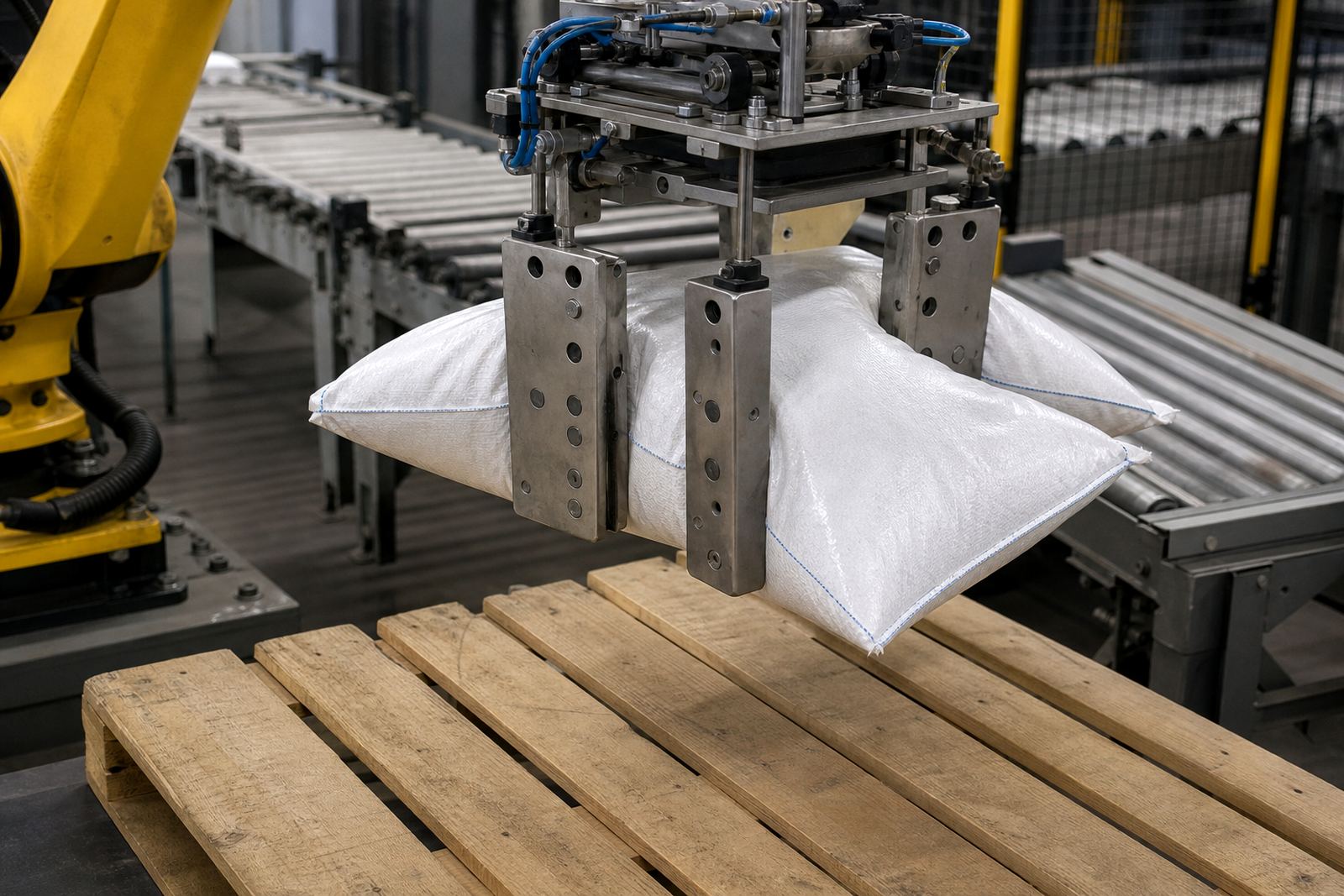
For a retrofit, the gate has to be placed where it protects the real access route, not where it is easiest to install. If operators need to reach in to clear a jam, or a maintenance fitter needs to enter to service a gripper or vacuum head, the gate position must reflect that work. The gate should also suit the local floor layout, forklift movement and any nearby pedestrian route. If the cell is beside a busy packing hall in Kempton Park or a dispatch area in Durban, the access point needs careful planning.
- Gate position should match the actual point of entry into the hazard zone.
- The opening direction, latch and swing space must suit the site layout.
- Restart should not happen automatically after the gate is closed.
- The control logic must be tested with the full line sequence, not only the robot.
What needs checking before the gate is designed
Before anyone draws a gate panel or orders materials, the line needs a proper site survey. That starts with the conveyor arrangement, the robot reach, the pallet pattern, the product size and the way staff move around the area. A robotic retrofit onto an existing packing line often has old sections of conveyor, mixed control panels and uneven guarding. The gate has to fit into all of that without creating new blind spots or awkward access points.
The next step is a risk assessment. That is not just a paper exercise.The site also needs to consider cleaning, maintenance, shift handover and fault recovery. Each site needs its own risk assessment, because a biscuit packer in Cape Town may have very different access needs to a beverage palletiser in Pretoria.
- Identify all access points for clearing jams, inspection and maintenance.
- Check if the cell needs trapped key control or local isolation points.
- Confirm whether forklifts, trolleys or pallet jacks pass near the gate.
- Allow for coastal humidity, dust, washdown or temperature swings where relevant.
Common mistakes when retrofitting interlocked gates
One of the biggest mistakes is fitting a gate that only looks compliant while the surrounding process remains difficult to control. If operators can still reach into the danger zone from another side, the gate has not solved the problem. Another common issue is poor reset logic. If the machine starts again the moment the gate closes, that can catch a person before they have stepped clear. The reset sequence must be deliberate and obvious.
Another problem is hardware placement. A gate mounted too close to a moving conveyor or pallet stack can be damaged during normal operation. A gate that opens into a narrow aisle can block movement or create a pinch point. On some older lines, there is also not enough room for a proper fence run, so the solution has to be built around the available floor space instead of forcing a standard layout.
In practice, a retrofit should also consider maintenance habits. If technicians always bypass a gate because it is awkward to use, the design is wrong and needs revision. Good guarding supports the people on site, it does not slow them down unnecessarily. That balance is important in plants where throughput matters and the team is already working under pressure.
Integration with controls, conveyors and operator procedure
An interlocked gate only works properly when it is linked into the wider control system. That means the gate status, robot enable, conveyor run permissives and fault handling need to work together. If the gate opens, the system should move into a safe condition in a predictable way. If a restart is attempted after intervention, the controls must require the correct checks before motion resumes.
Conveyors often need special attention because they can store product, keep moving after a stop command, or create hidden crush points. On a packing line, the robot might be safe while the infeed conveyor is still a risk. On a palletising line, a pallet transfer area may remain hazardous even after the robot has stopped. The gate logic should reflect those realities, not just the robot zone itself.
- Link gate status to the full cell, including conveyors and transfer points.
- Train operators on the correct reset and restart sequence.
- Label access points clearly so the entry route is obvious.
- Test the system during commissioning with actual operators and maintenance staff.
A local retrofit example from a Gauteng packing hall
Consider a manufacturer in the East Rand retrofitting a robot onto an existing end of line palletising setup. The conveyor already feeds cartons from the packing area, but the team still needs access for line clearing, pallet checks and occasional maintenance. In that case, the interlocked gate has to sit where people naturally enter, not where it is easiest to fence off. If the gate is too far from the work area, staff will take shortcuts. If it is too close, the pallet space becomes cramped and the line suffers.
A practical solution may include a properly sized gate, clear signage, local isolation where needed and a control sequence that prevents restart until the area is checked. The same approach applies in Johannesburg, Pretoria, Durban, Cape Town and Gqeberha, though the exact hardware and layout will differ from site to site. Conditions like coastal humidity in Durban or dust in certain warehouse areas can also influence the choice of materials and fittings.
The best result is simple: access is controlled, the cell remains efficient, and the people who work around it know exactly what happens when the gate is opened. That is the real value of a well planned interlocked gate on a retrofit line.
What a good retrofit partner should provide
When a business is planning a robotic packing or palletising retrofit, the gate should be part of a wider engineering scope. That includes site line surveys, retrofit design, conveyor integration, controls integration, safety guarding design, risk assessment support, installation management, commissioning support, operator training, maintenance support, breakdown assistance and spares planning. A supplier should not treat the gate as a small add on. It is one piece of the access and safety system that keeps the cell workable in day to day use.
If the design is done properly, the gate becomes easy to use, easy to understand and hard to defeat. That is what plant managers want, because safety and output should not fight each other.