Why expansion should be part of the first retrofit brief
Many packing lines in Gauteng and along the coast are retrofitted only to fix the immediate pain point, like a slow palletising end point or too much manual handling at the pack-off table. That gets production moving again, but if the layout is tight from day one, any future increase in output means new steel, new cable routes and more downtime than the business budgeted for.
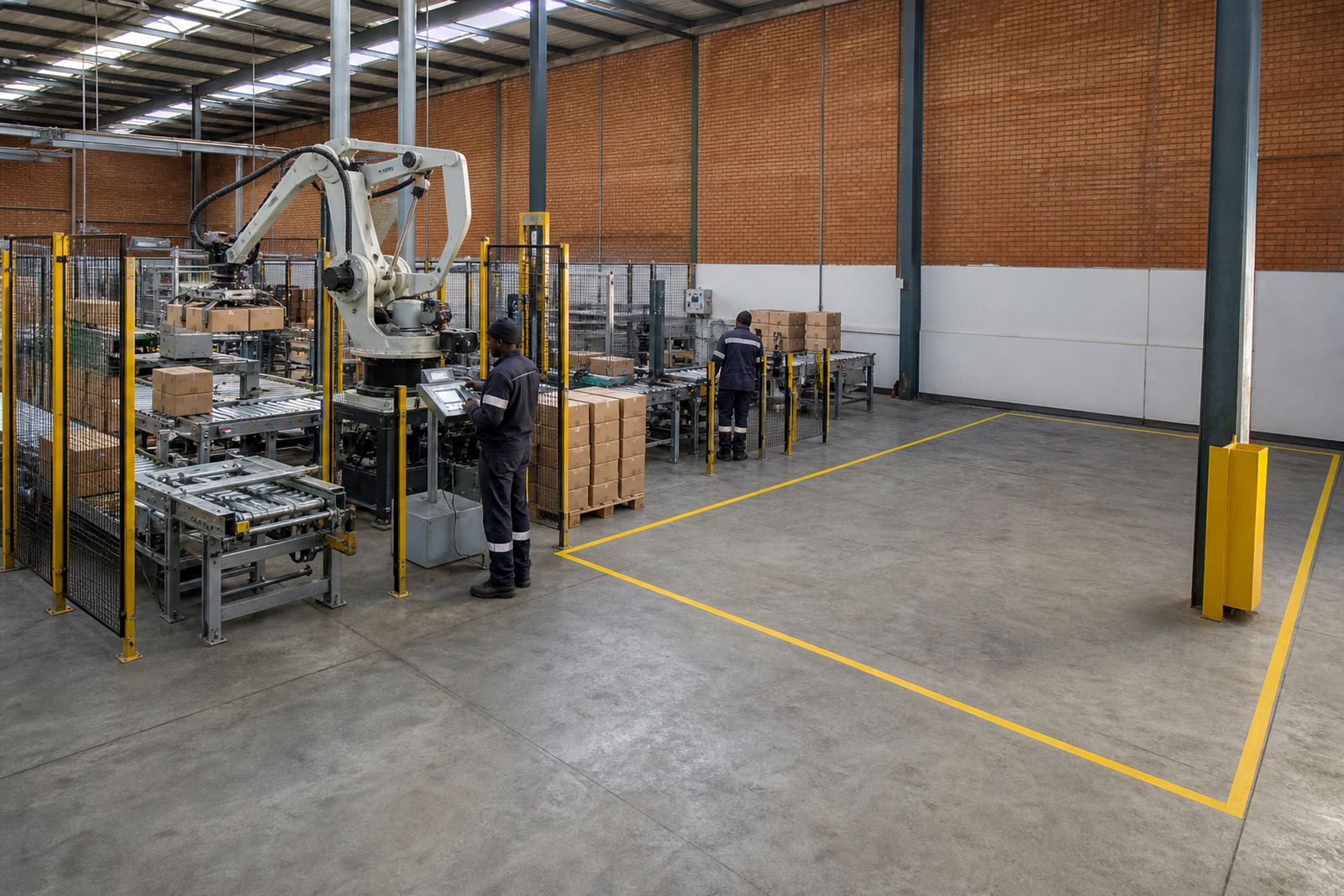
Future expansion thinking starts with the physical footprint. If a plant in Spartan or Midvaal is likely to add a second pack lane, a higher pallet stack, or a new carton size next year, the line should be laid out with that growth in mind. It is far easier to leave a clear service bay and plan for extra transfer space now than to squeeze a robot cell into a corner later.
The retrofit should support the way the site actually runs, not just the way it looks on paper.
Designing for more conveyors without rebuilding the line
Conveyor integration is one of the first places where expansion becomes expensive if it was not considered early. A line may only need one infeed and one discharge conveyor now, but a site that plans to increase volume may later need a second infeed, a merge section, a buffer lane or a pallet take-away conveyor.
When the layout leaves room for these additions, the future install can often tie into existing controls and guarding with limited disruption. It also helps to keep access clear around motors, rollers and sensor points so that maintenance staff can work safely without dismantling a full section of the line.
- Allow space for a future conveyor leg, even if it is not fitted yet.
- Reserve a cable and air route for additional devices.
- Keep access doors and inspection points clear of tight corners.
- Plan transfer heights so future additions match the current line flow.
In a Durban or Cape Town plant, corrosion risk and humidity also need to be considered. If future conveyors are likely, the base structure and mounting method should suit the site environment from the start, otherwise the next phase may cost more because of premature wear and repeated modifications.
Leaving room for extra pallet positions and product patterns
At palletising level, future expansion often means more pallet positions, a second pallet magazine, or the ability to handle a wider range of stack patterns. If the robot cell is packed too tightly, there may be no room to add a second pallet infeed or a stretch wrap interface later.
A practical approach is to set the cell with enough clearance for the robot arm to move safely through its full range, while keeping one side open for future changes. That could be a new palletiser tool, a larger product gripper, or a repositioned conveyor. If a site in Pretoria currently packs one SKU but expects a broader product mix next year, the cell should not force every future change to happen through a full rebuild.
- Leave a clear side zone for another pallet position.
- Keep enough headroom for taller stacks and top sheets if needed later.
- Allow for a wider sweep if a second end effector is added.
- Make sure the floor space can accept future guarding adjustments.
This is especially useful where pallet sizes change by customer or route. A line serving Johannesburg and Gqeberha from the same plant may need different stack heights or wrapping sequences, so the cell should be adaptable, not fixed to one narrow format.
Why end effector choice affects tomorrow’s growth
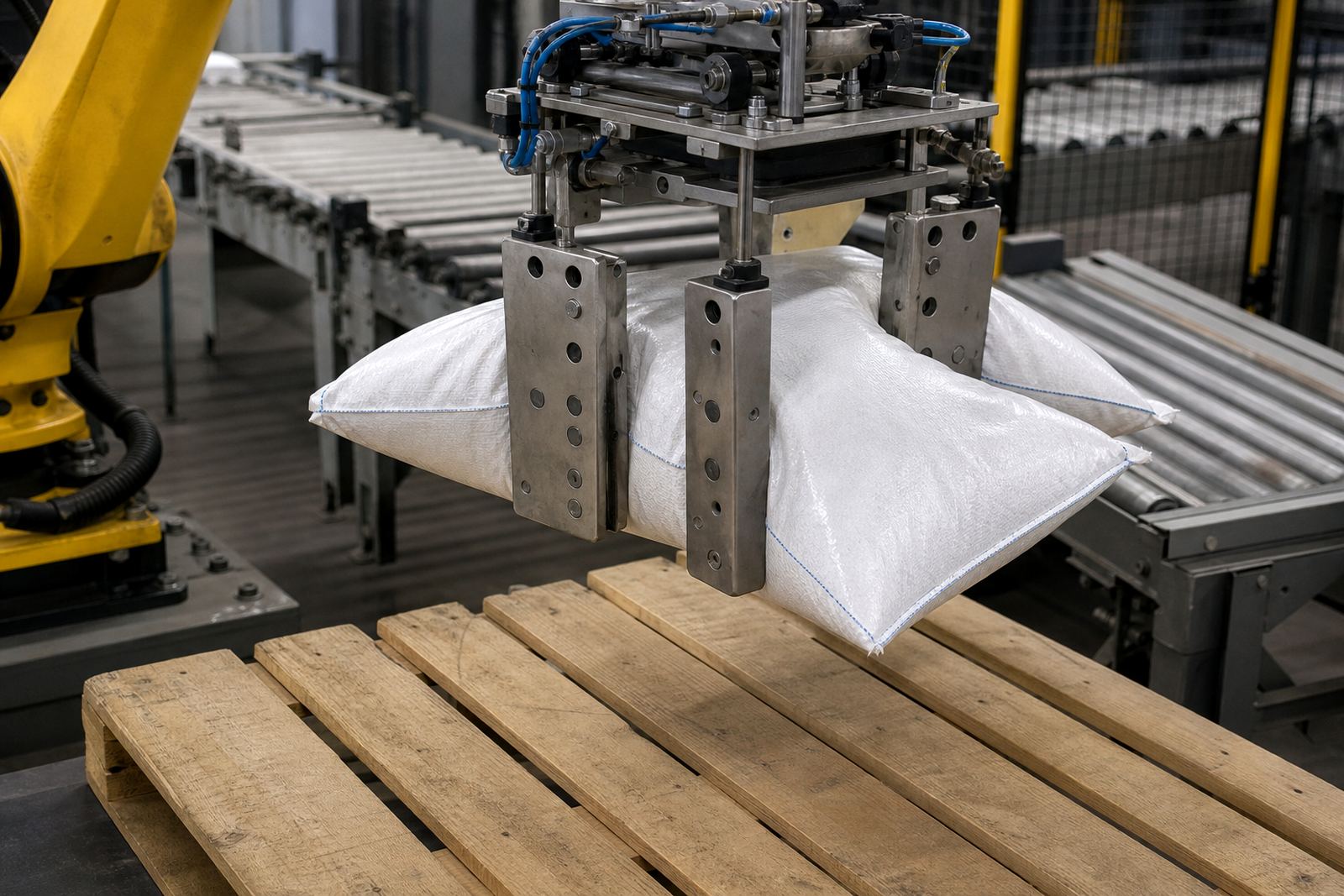
The end effector, whether it handles bags, cartons, trays or shrink-wrapped packs, is often the most overlooked part of future planning. If it is designed only for one format, any product change can force a new head, new mechanical settings, or a complete new handling method.
Where possible, the retrofit should allow for an adjustable or replaceable tool interface. That does not mean overengineering the entire line. It means making sure the mounting points, control logic and access space can support future change without major shutdowns. For a manufacturer in Kempton Park, that can be the difference between a quick weekend change and a long stop that affects dispatch on Monday morning.
It also helps to think about how operators will change over the line. A practical tool design should allow for safe cleaning, inspection and maintenance, with enough room for guards to open and close properly. If the plant handles dusty product or works near coastal humidity, regular access is not optional, it is part of keeping the line stable.
Safety guarding that can change with the line
Any future expansion plan must include safety guarding from the start. Guarding is not just a box around a robot. It needs to fit the actual movement of the machine, the walkways used by staff, and the way product flows in and out of the cell. Every site needs its own risk assessment, because no two packing lines carry the same hazards.
When new conveyors or pallet positions are added later, fixed guarding can become the main obstacle if it was not designed with expansion in mind. Modular guarding, removable access panels and planned gate positions make future upgrades easier. The point is to keep the line safe now and still make room for later changes without forcing unsafe shortcuts.
- Plan gate positions where operators will actually need access.
- Keep emergency access paths clear from the first install.
- Allow for updated interlocks if a new zone is added.
- Match guarding height and layout to the products and pallet sizes on site.
Municipal and site rules may also affect where walkways, exits and service areas can sit, especially in multi-tenant industrial parks around the East Rand. A sensible retrofit keeps those rules in mind before steel is cut, not after.
A local example from a growing Gauteng plant
Consider a packing plant in Spartan that starts with one robot palletising line serving two shifts. The business expects more output in the next 18 months and wants a future second lane, but not right away. If the first retrofit is planned properly, the line can be set with spare floor space, a clear conveyor route for a future merge, and controls that can accept another zone later.
That means the current installation still works for today’s volumes, yet the plant is not locked into a dead-end layout. When demand rises, the team can add the extra conveyor section, adjust the guarding, and commission the second lane with far less disruption. It is a much better use of capital than stripping out a cramped first build and starting again.
This is the kind of practical planning that helps manufacturers across Johannesburg, Pretoria, Durban, Cape Town and Gqeberha. It supports growth without forcing the business into a full line rebuild every time the order book changes.
What to ask before you approve a retrofit layout
Before a robot palletising or packing retrofit is signed off, the team should ask what the line may need in 12 months, not only what it needs this quarter. That is where the layout either opens up future options or closes them off. A good site survey should capture the current flow, the likely growth path, and the spaces that must stay free for later additions.
At ReAutomated, we focus on retrofit design, conveyor integration, controls integration, safety guarding design, risk assessment support and commissioning support with expansion in mind. That way the plant can start with a sensible first phase and still have room to grow when volumes, formats or pallet demands change.
- Will there be another conveyor, lane or pallet position later?
- Can the current guarding support a second phase?
- Is there enough service access for maintenance and breakdown work?
- Will the controls architecture accept future additions without a full rewrite?
Future expansion thinking is not about spending more now for the sake of it. It is about avoiding expensive limits later. A well planned retrofit gives the plant space to grow, and that often matters as much as the first gain in speed.