When clamp tooling makes more sense than suction
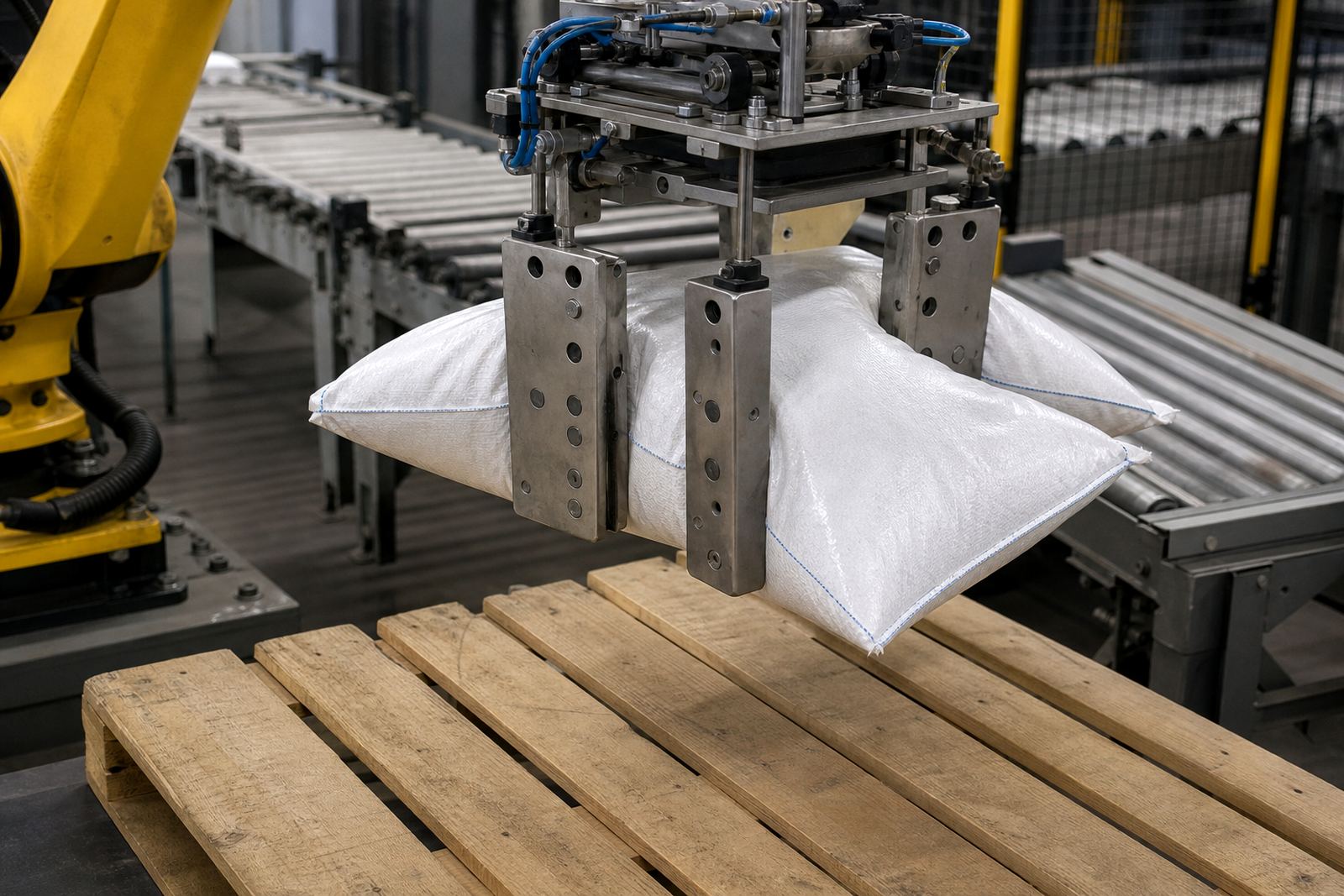
Clamp tooling is worth considering when cartons, crates, bags, punnets or wrapped packs have surfaces that are dusty, uneven, perforated or too porous for suction cups to hold properly. It is also useful where the top of the pack is soft, irregular or already occupied by labels, straps or film that should not be marked. In these cases, side grip can be more dependable than trying to lift from above.
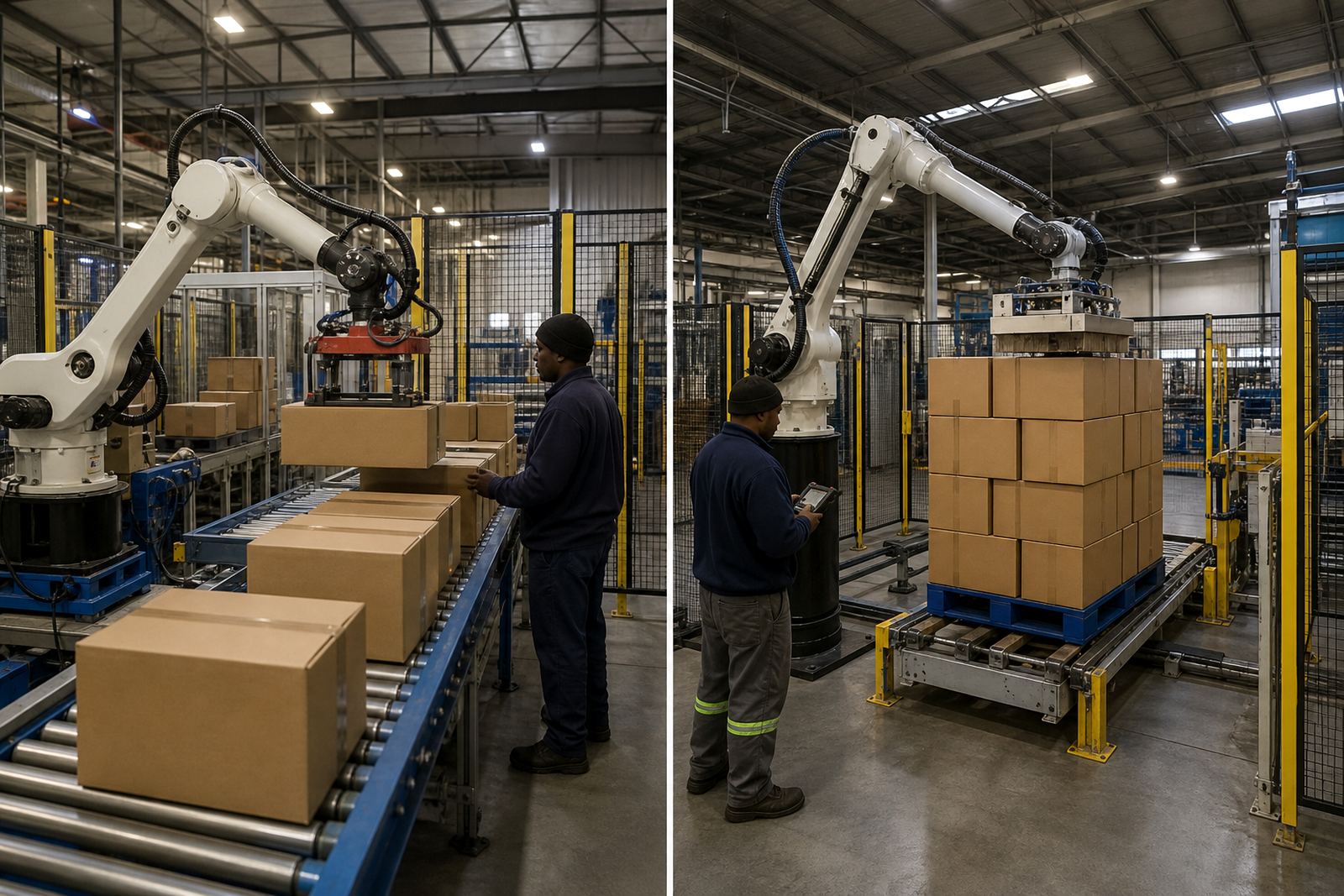
On a typical retrofitted line, a robot or cobot can take product from an infeed conveyor, clamp from the sides, then place it into a case or onto a pallet in a repeatable pattern. The main point is simple: the tooling must suit the product, the speed of the line and the space around the conveyor. If any one of those changes, the clamp design may need to change too.
For factories in Kempton Park, Johannesburg or Pretoria, clamp tooling is often chosen where there is limited room for a full vacuum head or where the packaging is not consistent enough for suction. On sites handling mixed pack sizes, a clamp can sometimes be adjusted more easily than a fully custom top-lift system.
What clamp tooling needs to hold safely
A clamp does not just squeeze harder and hope for the best. It needs the right contact area, the right closing force and the right lining material so the product stays secure without crushing or scuffing it. In many retrofits, the challenge is less about the robot and more about how the product behaves once it leaves the conveyor.
Before finalising a design, we normally look at the pack dimensions, weight, centre of gravity, surface finish and how the item arrives on the line. If the product flexes, slides or bulges, the tooling needs to account for that movement. A good clamp should grip consistently even when minor variations creep in from upstream packaging.
- Product width, height and allowable compression
- Surface type, film, carton board, woven sack or rigid container
- Target cycle time and line speed
- Available approach angle from the conveyor
- Whether the item needs to be rotated before palletising
In practice, this means clamp tooling is rarely a one-size-fits-all part. It is usually matched to a specific product family, with allowance for changeovers if the plant handles more than one format.
How clamp tooling fits into an existing line
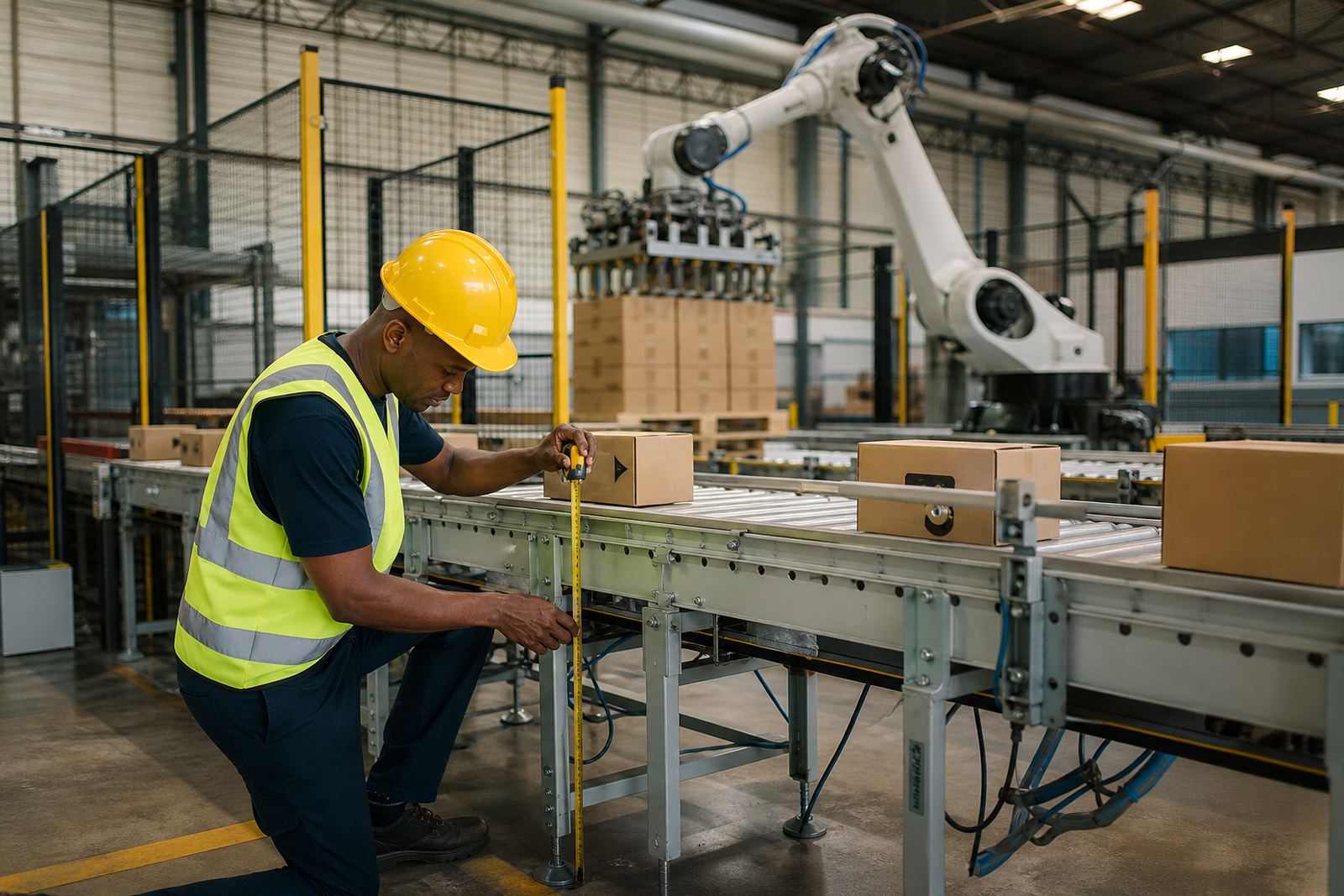
Most South African sites asking for a retrofit already have conveyors, packing stations and palletising areas in place. The key is to fit the clamp tooling into what is already there, rather than forcing the line to be rebuilt from scratch. That starts with a site line survey, then moves into layout checks, controls integration and handover planning.
The robot must meet the product at the right point on the conveyor, pick it cleanly and place it without stopping the line. That means the infeed height, guard positions, carton spacing and transfer points all matter. If a conveyor is too low or too close to a wall, the tool may need a different reach or a slimmer profile. Small differences can make a big difference in uptime, especially on older lines.
At Spartan in Kempton Park, for example, a plant may have legacy conveyors with limited floor space and a busy aisle next to the palletising cell. In that setting, clamp tooling has to work with the available footprint, the operator access route and the maintenance access for belt changes or sensor checks. It is very common for the final arrangement to depend on the real site layout, not the drawing alone.
Safety guarding and risk assessment are part of the tooling choice
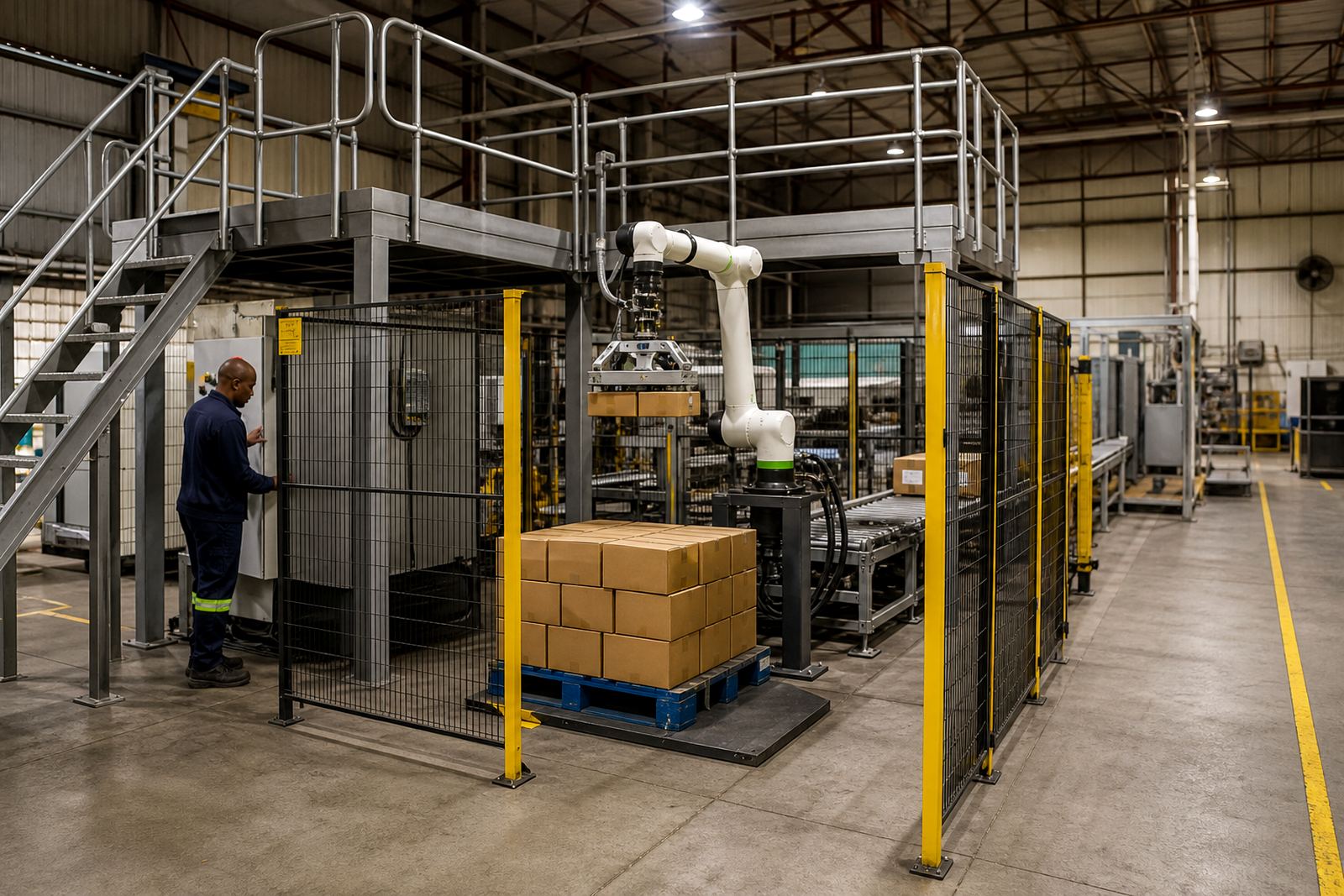
Clamp tooling should never be treated as a stand-alone component. It sits inside a handling cell, and that cell must be designed around people, machines and moving product. Guarding, access points, emergency stops and sensor placement all need to be considered together. Each site needs its own risk assessment, because the hazards on a fast palletising line are not the same as those on a slower packing line.
A proper assessment normally looks at pinch points, crushing zones, reach-in access, dropped product and the movement of forklifts or pallet trucks near the cell. If operators have to reset jams or load pallets nearby, the guarding arrangement must allow safe access without exposing anyone to the moving parts. That may mean fixed guarding, interlocked gates or a mix of both.
- Guarding must suit the actual motion envelope of the robot and tool
- Access for cleaning, setup and maintenance should be planned from the start
- Sensor and safety device positions must match the line flow
- Manual intervention points should be limited and clearly controlled
Good safety design also helps with municipal and site compliance requirements, especially where there is regular traffic, shared floorspace or tight loading areas. It is far easier to manage a retrofit properly when the safety plan is decided before installation begins.
Common product types that suit clamp tooling
Clamp tooling can be a practical answer for many products that are awkward to lift with suction. Bags are one example, especially where the surface is dusty or slightly flexible. Cartons with vents, holes or uneven flaps are another. Crates, trays and certain wrapped bundles can also work well if the contact surfaces are designed correctly.
The value comes from consistency.That can reduce manual lifting and help keep packing and palletising output more stable across the day.
- Bags with uneven or porous surfaces
- Cartons that are not suitable for top vacuum lift
- Crates or trays that need side support
- Wrapped packs where top contact is not ideal
- Mixed formats where the grip point stays predictable
Not every item is suitable, and that is why a line survey is so useful. A product that looks simple on the floor may behave very differently once it is moving at speed on a conveyor.
Retrofit choices that protect uptime after commissioning
Once the clamp tooling is in place, the real work begins with setup, operator training and support for the first weeks of running. The best retrofit is one that the team on site understands and can manage without calling for help every time a minor setting changes. Clear training on changeovers, fault checks and safe clearing of jams makes a practical difference.
It also helps to plan for spares, wear parts and service checks from the start. Clamp pads, seals, fingers and sensors wear over time, especially in dusty inland factories or humid coastal environments such as Durban and Cape Town. If the tooling is easy to inspect and parts are straightforward to replace, downtime stays lower. That is really the point.
For manufacturers in Gqeberha, the East Rand or Midvaal, a well planned clamp retrofit can support packing and palletising without disrupting the whole plant. The aim is straightforward: match the tooling to the product, integrate it into the existing line, and keep the system safe, serviceable and reliable in day to day use.