Why the Conveyor Matters Before Any Retrofit
A robot retrofit does not begin at the robot base, it begins with the line already in place. If the conveyor feeds product unevenly, transfers badly at junctions or changes height without a proper handover, the robot will spend its time correcting problems that should have been solved upstream.
On many South African sites, especially older lines in Kempton Park, Johannesburg and Durban, conveyors have been added over time as production changed. That means a retrofit must work around existing steelwork, motors, guards and control panels. The first job is to check whether the conveyor can present product consistently enough for packing or palletising. Small issues like a worn belt edge, a loose guide rail or a slight dip in the frame can cause repeated faults once the cell is running.
This is also where the practical realities of the plant matter.A line that is acceptable for manual handling may still need adjustments before it can support automated transfer with any reliability.
Speed and Spacing Need to Match the Robot Cycle
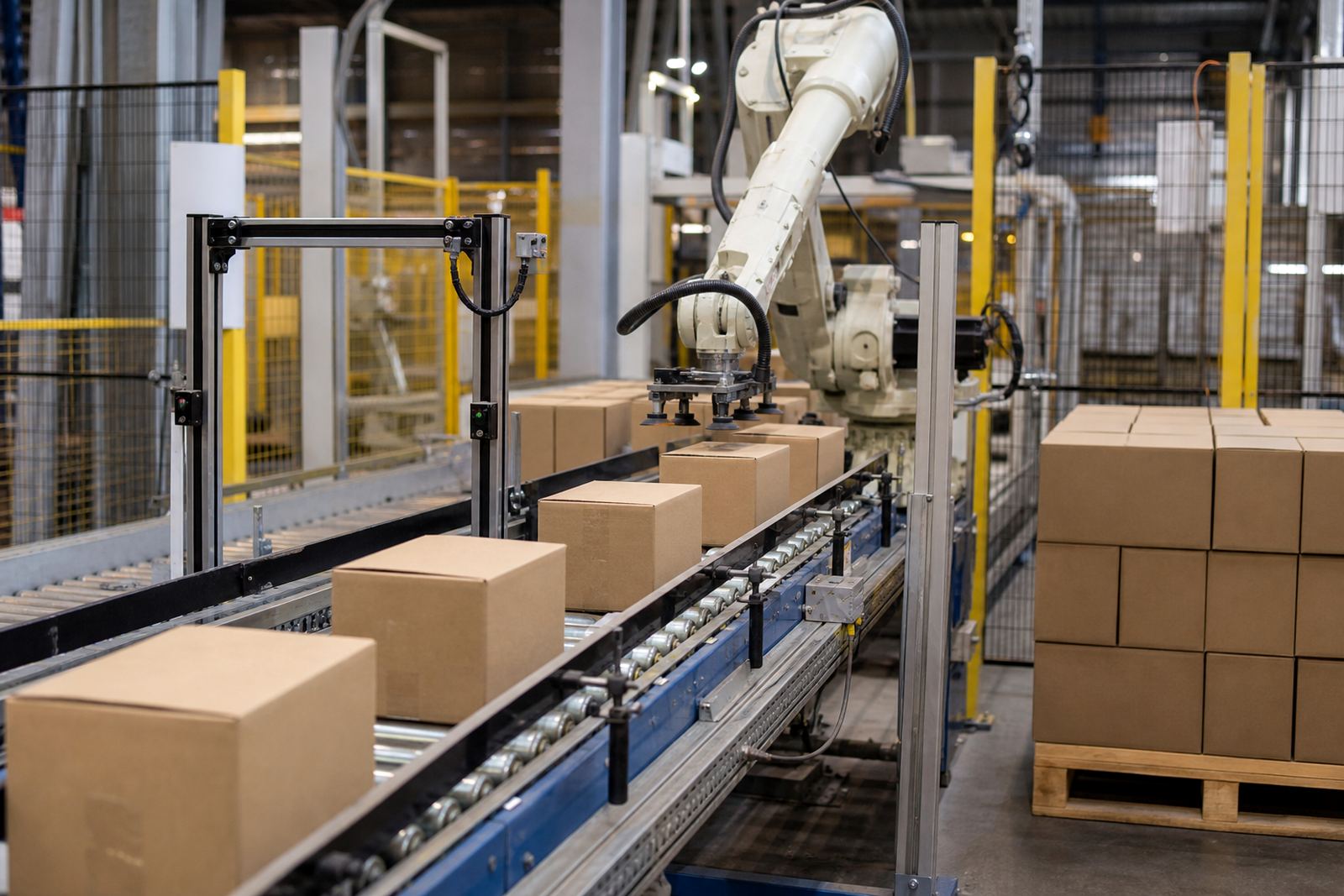
Conveyor speed is not just a mechanical setting, it is part of the robot timing. If packs arrive too fast, too close together or with irregular gaps, the robot may miss picks or need to slow the whole line. If product spacing is too wide, throughput drops and the line may be using floor space badly.
The right answer depends on the product, the pack pattern and the downstream layout. A site moving cartons on a flat belt will need different checks from a plant handling shrink-wrapped trays, bags or crates. Even a small variation in spacing can affect detection, pick timing and case presentation. That is why the conveyor speed should be tested with the real product, not only with empty runs.
- Check actual belt speed under load, not only no-load speed.
- Measure the gap between products at the point where the robot takes over.
- Confirm that sensors see each item cleanly and without false triggers.
- Allow for product slip on inclines, curves or worn belt surfaces.
Transfer Points and Height Changes Need Careful Review
Most conveyor trouble shows up at transfer points. Product that moves well on one belt can snag, tip or turn as it crosses to another belt, roller section or accumulation zone. A retrofit depends on predictable movement, so these transitions must be checked for dead spots, knocks and sudden changes in direction.
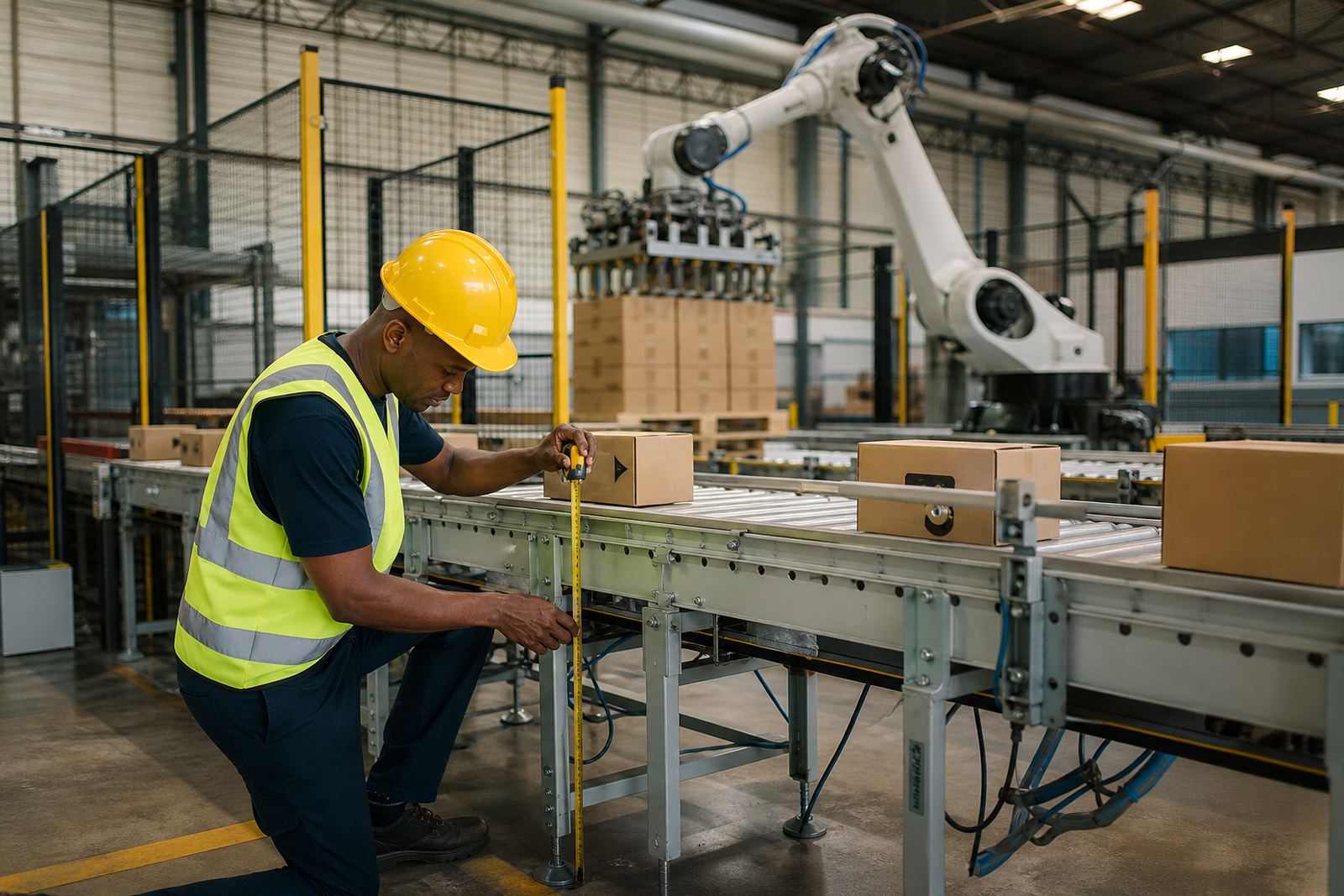
Height alignment is just as important. If the infeed height and the robot pick height do not line up properly, the system may need extra structure, ramps or a repositioned conveyor section. That affects guarding, operator access and maintenance space. In a tight plant in Midvaal or the East Rand, even 20 mm of mismatch can become a recurring issue once the cell is commissioned.
A good existing conveyor check will look at the full transfer path, not only the straight section near the robot. That includes side guides, end stops, product centring and whether the line can handle a stop-start cycle without pile-ups. If the line already struggles when operators manually intervene, the retrofit will need a stronger plan for buffering and release logic.
What a Site Line Survey Should Confirm
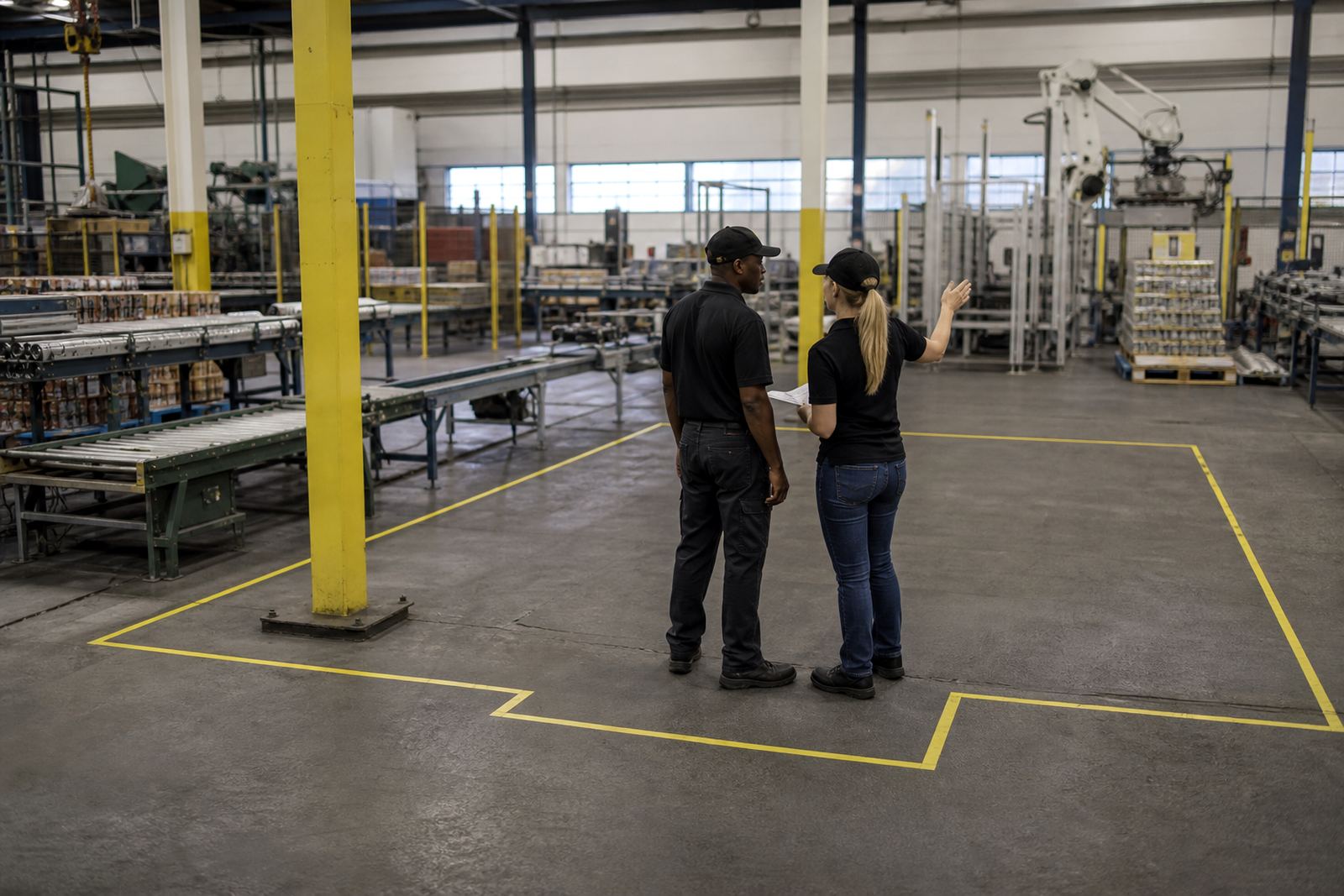
A site line survey gives the retrofit team a clear picture of what is already there and what has to change. It is not only about measuring the conveyor, it is about understanding how the whole line behaves during a normal shift. The goal is to spot constraints before steel is cut or controls are altered.
For packing and palletising retrofits, the survey should confirm the physical route, the available floor space, access for maintenance, and how the current conveyors are controlled. It should also identify any points where existing equipment may interfere with robot movement, guarding or operator access. At some sites the conveyor framework is sound but the support legs or cable routes need rearranging, and that saves time later.
- Infeed and outfeed heights, including any slope or drop.
- Available clearance for guarding, access gates and emergency stops.
- Condition of motors, belts, rollers, bearings and chain drives.
- Location of sensors, junction boxes and control cables.
- Space for pallet transfer, wrappers, label stations or accumulation.
Safety Guarding Starts With the Conveyor Layout
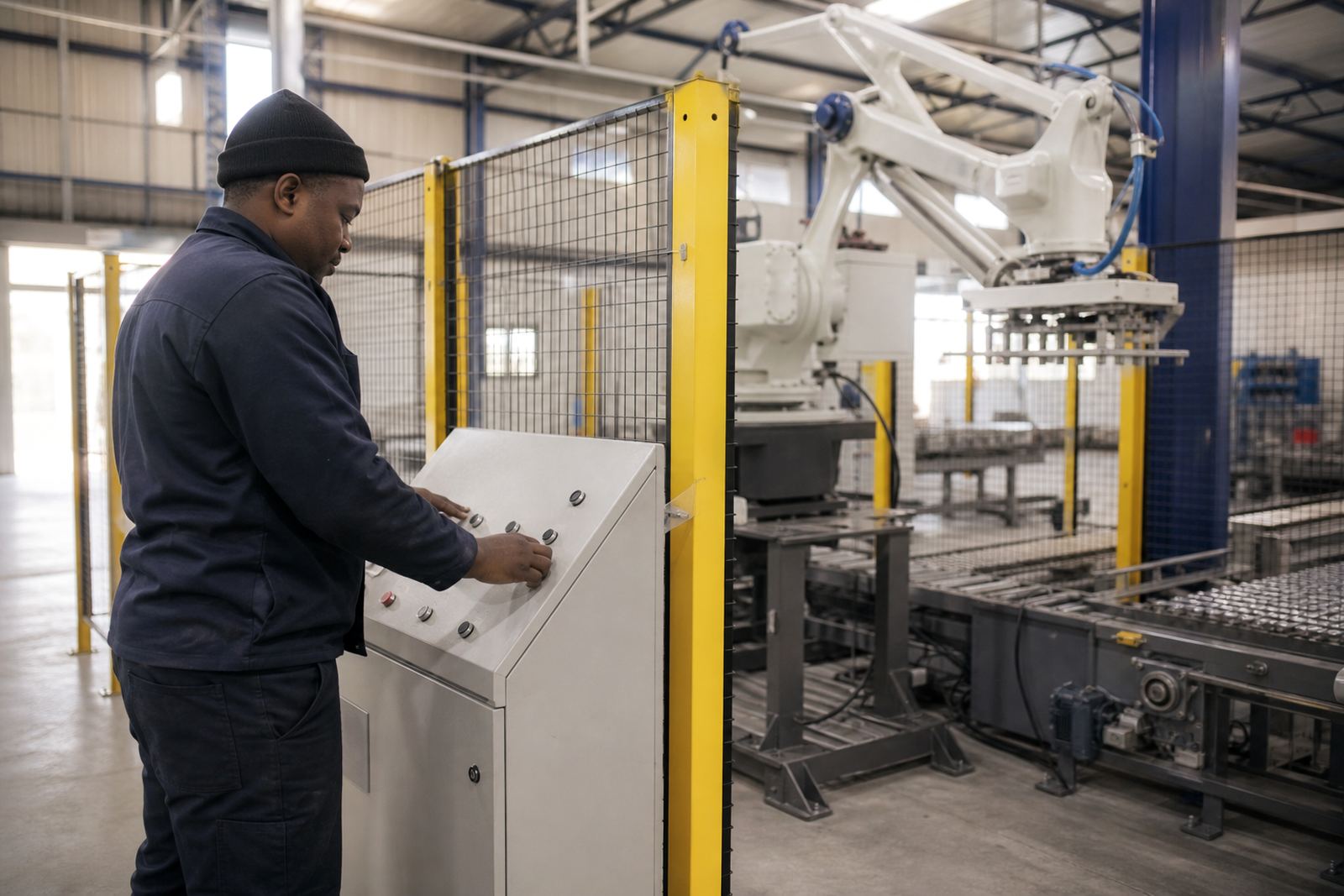
When a robot is added to an existing line, safety guarding must suit the real layout, not a drawing from years ago. The conveyor path often dictates where people can enter, where a pallet can move and where a guarding fence or light curtain is practical. That is why the conveyor check and the risk assessment should happen together.
General safety rules apply, but each site needs its own risk assessment based on the product, line speed and operator routines. A line that works in a warehouse environment may need different guarding from one in a food plant, chemical plant or heavy manufacturing area. The aim is to prevent access to moving parts, protect transfer points and keep maintenance tasks manageable. If the guarding makes it impossible to clean, inspect or reset the line, staff will find workarounds and that creates new risk.
In practice, the conveyor layout needs to support safe loading, safe stoppage and safe recovery after a fault. That includes access for lockout, clear emergency stop positions and enough room for operators to work without reaching into a running line. On busy plants, this is where a practical retrofit saves more time than fancy controls ever will.
A Local Example From a Busy Gauteng Plant
At a typical manufacturing site in Spartan, Kempton Park, the original conveyor may have been installed years before any robot retrofit was considered. The line might carry cartons from a packing area to a palletising point across a busy aisle, with a change in direction and a small height step near the end. On paper it looks manageable, but in daily use the cartons arrive with slight spacing differences and the transfer point causes an occasional twist.
Before any retrofit, the team would check belt condition, transfer guides, sensor positions and the exact height of the final delivery point. If the conveyor is feeding cartons into a palletising cell, the interface may need a short accumulation section or a timing adjustment so the robot can work without chasing product. In a plant like this, the issue is rarely one single fault, it is the combination of speed, spacing and transfer behaviour.
That is why practical retrofits focus on the line as it is, not as it was intended on the original layout drawing. When the conveyor is checked properly, the robot can do its job without constant interruptions and the plant gets a cleaner handover from manual handling to automation.
What ReAutomated Checks Before Retrofit Work Begins
For manufacturers across Johannesburg, Pretoria, Durban, Cape Town, Gqeberha and the East Rand, the right starting point is a proper existing conveyor check. ReAutomated supports site line surveys, retrofit design, conveyor integration, controls integration, safety guarding design and risk assessment support so the retrofit fits the actual line.
The aim is to reduce surprises during installation and commissioning. That means checking how the conveyor behaves under load, confirming transfer heights, planning for control changes and allowing for ongoing maintenance support after the retrofit goes live. It also means being realistic about site conditions, from limited shutdown windows to the effects of coastal humidity and power interruptions.
When a conveyor is sound, the retrofit is far easier to manage. When it is overlooked, the robot ends up compensating for basic mechanical issues. A careful check at the beginning saves time, avoids rework and gives the line a better chance of steady running from day one.