Why recipe notes matter on multi-format lines
On many South African packing lines, the same equipment may handle 12 pack cartons in the morning, 24 pack cartons after lunch, then a different pallet pattern for dispatch. If recipe notes are vague, an operator may enter the wrong dimensions, use the wrong count per layer or miss a conveyor timing setting. The result is not just wasted product, but stoppages, damaged cartons and extra manual handling.
Recipe management notes give each format a clear set of instructions. They explain what must be changed, what must stay fixed and which checks must be done before start up. That matters whether the line is in Spartan, Durban, Cape Town or a food plant in Pretoria running in humid conditions where cardboard behaviour can change through the day.
- Carton dimensions and product count per case
- Layer pattern, pallet height limit and slip sheet use
- Conveyor spacing, transfers and stop positions
- Gripper or end effector settings for the robot
- Safety checks before the first cycle
What a useful recipe note should actually record
A useful recipe note is practical, not fancy. It should be written so that a night shift supervisor and a relief operator can follow it without guessing. The best notes match the real line layout, the real product and the real sequence used on site.
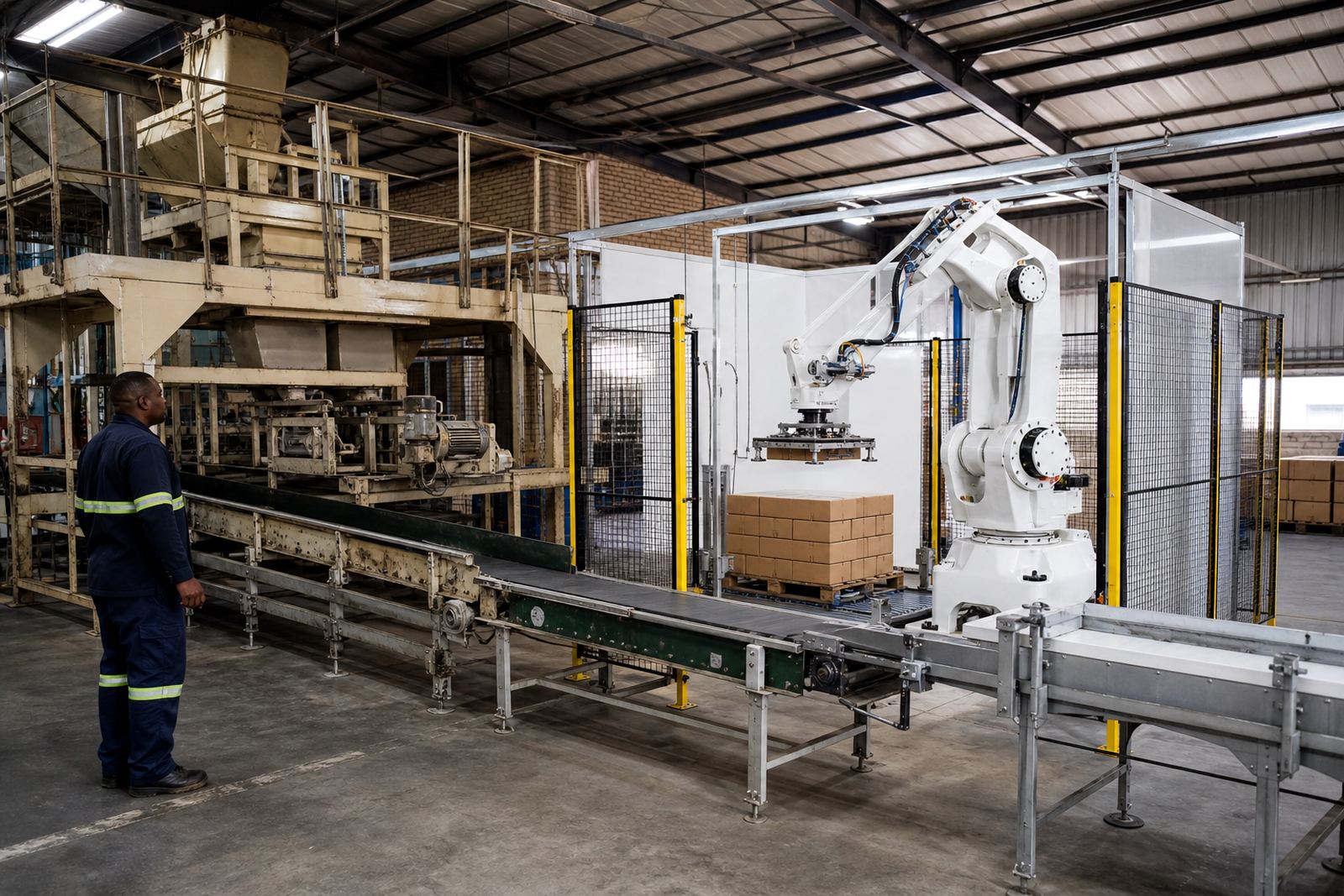
For a robotic palletising retrofit, that normally means recording pallet type, layer pattern, box orientation, interlayer sheet placement and the exact point where the conveyor hands product to the robot. If the line also includes a case packer, the notes should show how the packer output is synchronised to the palletiser so the buffer does not overfill.
- Recipe name that matches the SKU or pack format used on site
- Target units per minute or practical line rate for that format
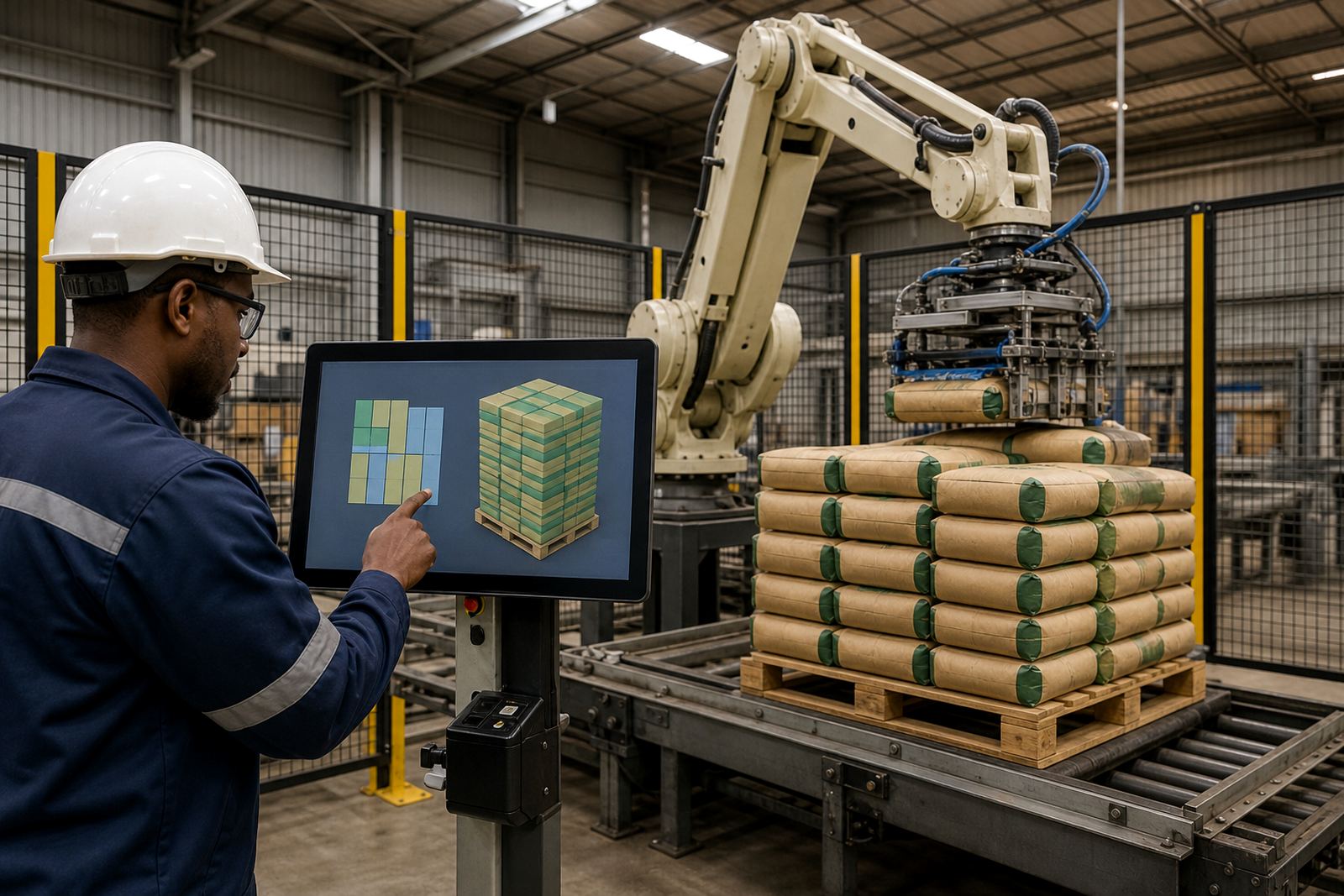
- Pallet pattern drawing or clear text layer description
- Alarm notes, including what the operator should check first
- Changeover steps and the person responsible for sign off
Small omissions can cause big delays. If one note leaves out a carton height adjustment or a gripper pressure setting, the line may still run but the pattern can drift, the stack may lean and the stop-start cycle becomes harder on the equipment.
Keeping the recipe tied to the conveyor and controls
Recipe control works best when it is linked to the controls and conveyor system, not kept as a separate paper file in a drawer. On a retrofit project, the automation team should make sure the recipe selected on screen matches the mechanical settings, timing values and safety conditions on the line.
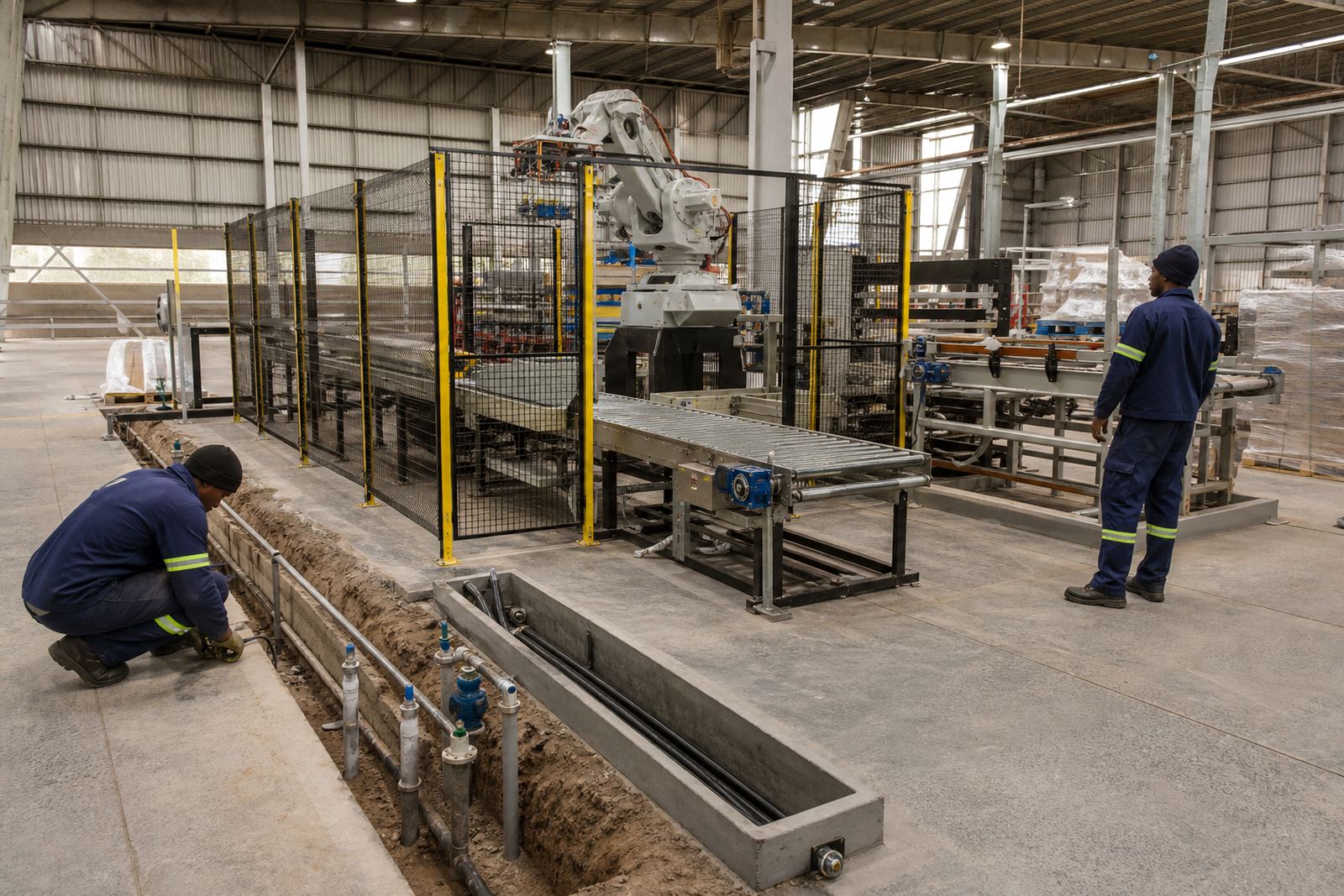
That integration is especially important where existing conveyors are being reused. Old conveyors can have mixed speeds, worn belts or delayed sensors, so the recipe notes need to reflect what the actual line can do. A carton that transfers smoothly in one recipe may tip or jam in another if the gap or stop position is not set correctly.
- Use clear recipe naming that mirrors production planning terms
- Lock critical parameters so only approved users can change them
- Store backup copies after each agreed setup change
- Test the first three cycles after a recipe load before full run
In a Kempton Park plant handling different retail packs for Johannesburg and the coastal market, this sort of control helps maintain consistency even when the line runs across multiple shifts and product families.
Safety notes belong in the recipe pack too
Recipe management is not only about output. It also supports safety by reminding the team what guarding, interlocks and access steps apply to each format. Every site needs its own risk assessment, because a cobot cell, a fully fenced palletiser and a mixed manual line all carry different hazards.
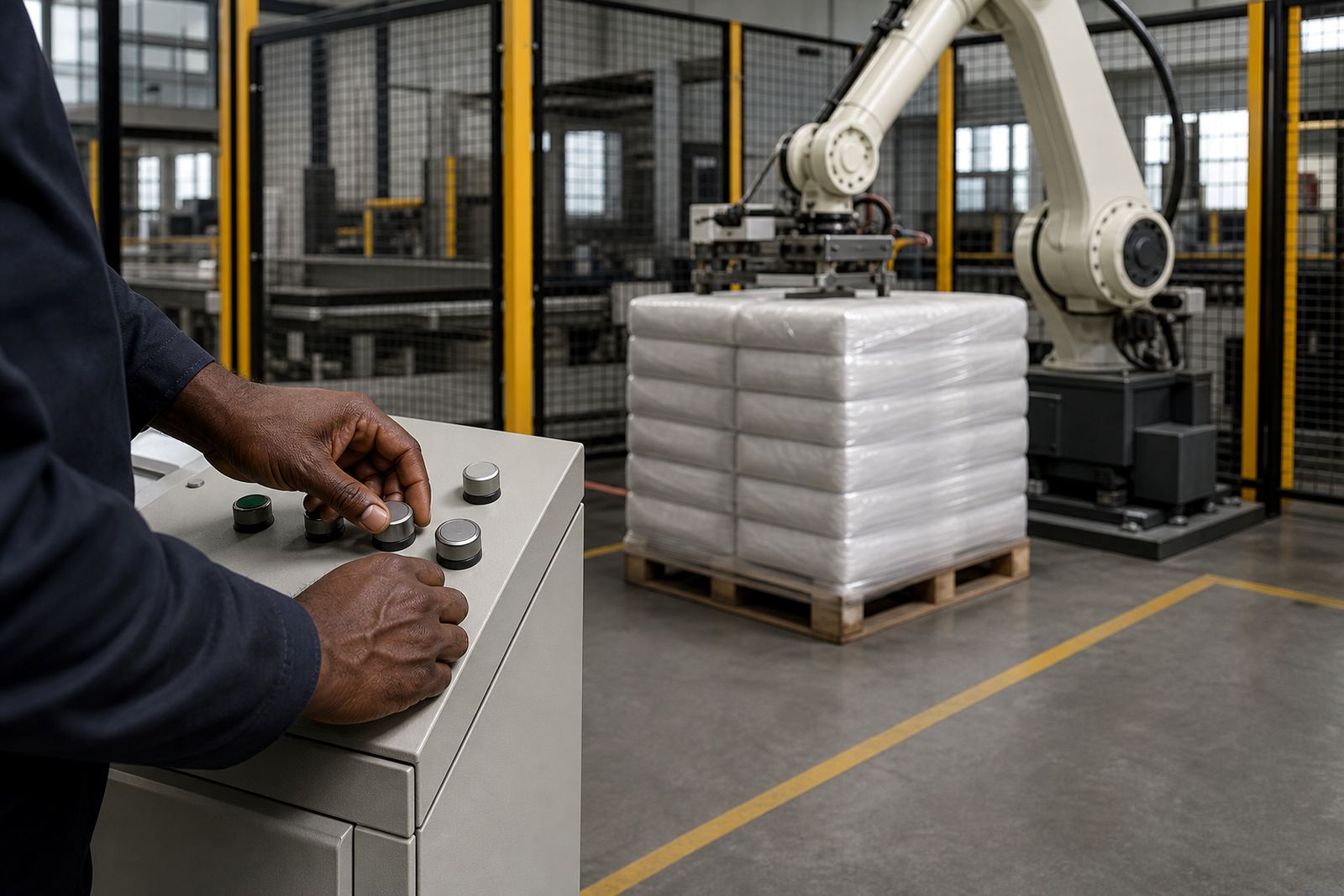
The recipe notes should identify where the guard doors must be closed, when light curtains or interlocks must be tested and whether the operator needs to clear a space before the robot starts. If the line is set up for manual intervention during setup, the notes should say exactly when the machine is safe to enter and who may authorise that entry.
- Confirm that guarding is in place before the recipe is started
- Check emergency stops and reset points during changeover
- Note any manual load areas that must be clear
- Keep the risk assessment with the current line layout and not an old revision
This is not about paperwork for its own sake. It is about reducing the chance of a person reaching into a zone that is not ready, especially during a busy shift change or after a breakdown recovery.
Changeover discipline for teams under pressure
Many production teams lose time not because the robot is slow, but because the changeover process is unclear. If the recipe notes are well written, the operator knows the exact order: stop the line, select the format, confirm the pallet pattern, check the sensors, then release the first run. That kind of discipline is valuable in plants where labour is tight and production targets are measured by the hour.
If a line stops suddenly and restarts later, the notes should show what must be rechecked before production resumes. A conveyor that was left half loaded or a stack that shifted while power was off can create faults within the first few minutes of restart.
- Use one controlled changeover sequence for all shifts
- Record any settings that often need fine tuning after power interruptions
- Keep an approved hard copy at the line for reference
- Review repeated faults and update the notes, not just the operator
Local example: one line, four pallet patterns
Consider a manufacturer in Gauteng sending mixed stock to Johannesburg depots and coastal customers in Durban and Gqeberha. The same packing line may run different carton sizes and four pallet patterns in a week. Without clear recipe notes, staff can confuse one stack pattern with another, especially if the labels look similar on screen.
With proper recipe control, the line leader can load the correct format, the palletiser places each layer as planned and the final stack stays square for wrapping and dispatch. The notes also help maintenance teams, because they can see which conveyors, sensors and grippers were used for that specific format if a fault appears later. That is the practical value of good records: fewer surprises, less rework and calmer shifts.
For a retrofit project, the best results come when recipe notes are written alongside the line survey, controls integration and operator training. Then the team is not only installing machinery, it is putting a workable method in place for daily production.
How to keep recipe notes useful after commissioning
Recipe management should not freeze on the day of commissioning. If the carton size changes, the pallet height changes or the line speed is adjusted, the notes must be updated straight away. Otherwise the document stops matching the plant and the next shift inherits old instructions.
A simple review routine works well: check the notes after any format trial, after any breakdown that affected timing and after any approved safety change. The aim is to keep one current version that the team trusts. When operators trust the recipe notes, they use them. When they use them, setup errors drop and the line becomes easier to manage.
For manufacturers across South Africa, that is often where the real saving lies. Not only in the robot itself, but in the discipline around the recipe, the conveyor and the people running the line.