Why Mixed Patterns Need More Than a Basic Palletising Cell
Mixed patterns sound simple on paper. In practice, they depend on accurate product identification, steady case presentation, correct layer building and a robot programme that matches the pallet recipe every single time. If one carton size is slightly heavier, if a divider board arrives late, or if the conveyor spacing changes at the wrong moment, the pattern can drift and the whole pallet becomes harder to wrap, move and receive at the warehouse.
For manufacturers in Johannesburg, Durban or Cape Town, mixed pattern palletising is often used where one dispatch lane must handle several case sizes or product lines in a single shift. That is common in food, beverages, household goods and building materials. A retrofit needs to fit the real line, not an ideal drawing, and that starts with a proper site line survey and a review of how the cases actually move through packing and onto the conveyor.
Recipe Control Keeps Every Layer in Order
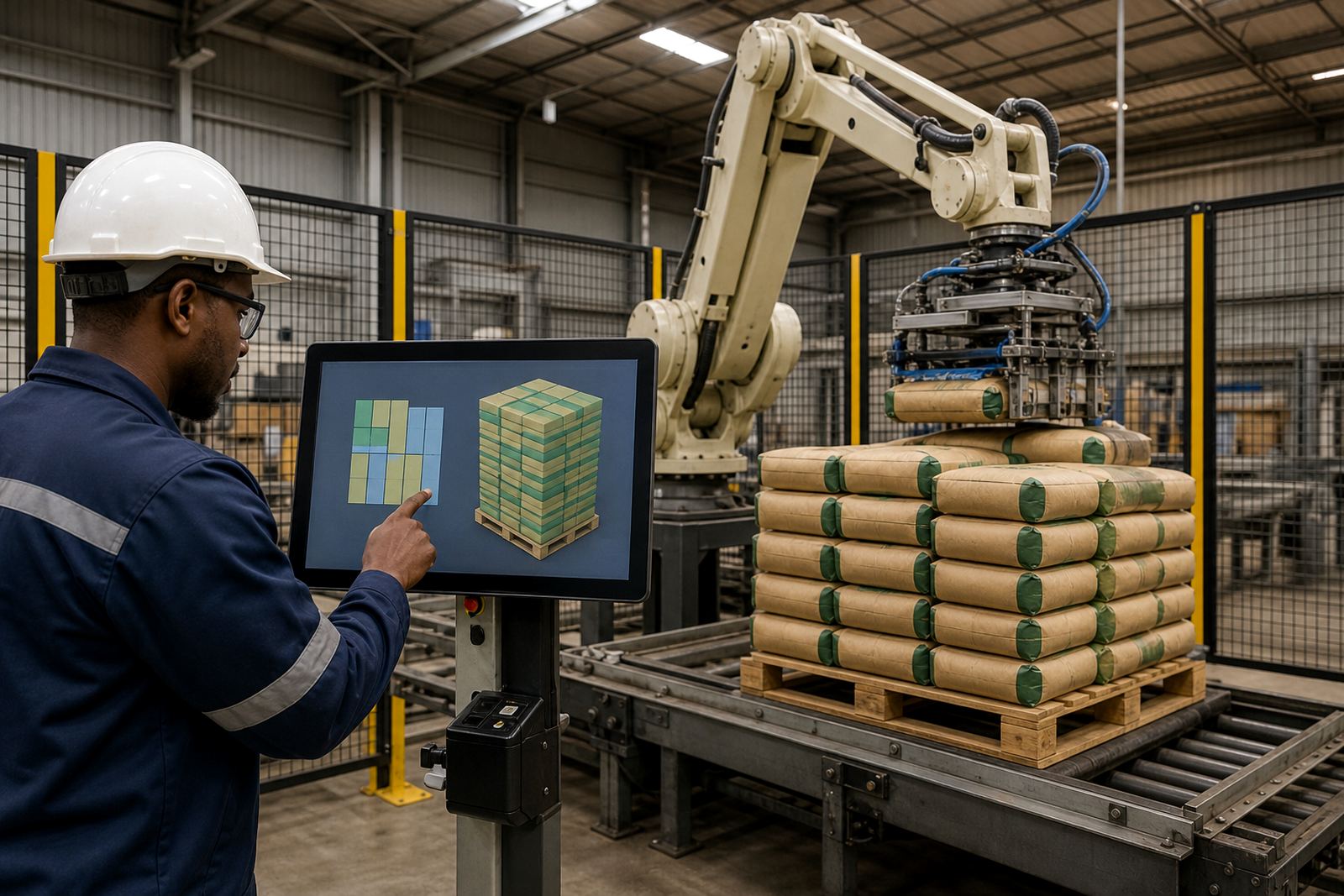
A mixed pallet pattern only works when the control system can manage each recipe without confusion. The robot or cobot must receive the right product code, layer count, rotation, slip sheet instruction and pallet type before it starts building. If the line changes from one case format to another, operators need a simple and dependable way to select the new pattern without guesswork.
Good recipe control also helps during changeovers. Instead of stopping the line for long manual adjustments, the system can call up the correct sequence and continue with minimal interruption.A neat control structure reduces operator error and helps keep the stack stable, even when shifts change hands mid run.
- Clear product codes for each case size and pallet format
- Layer logic for mixed tiers and top board placement
- Operator screens that are simple enough for shift staff to use confidently
- Interlocks that stop the wrong carton entering the pattern
Integration With Existing Conveyors Is Often the Deciding Factor
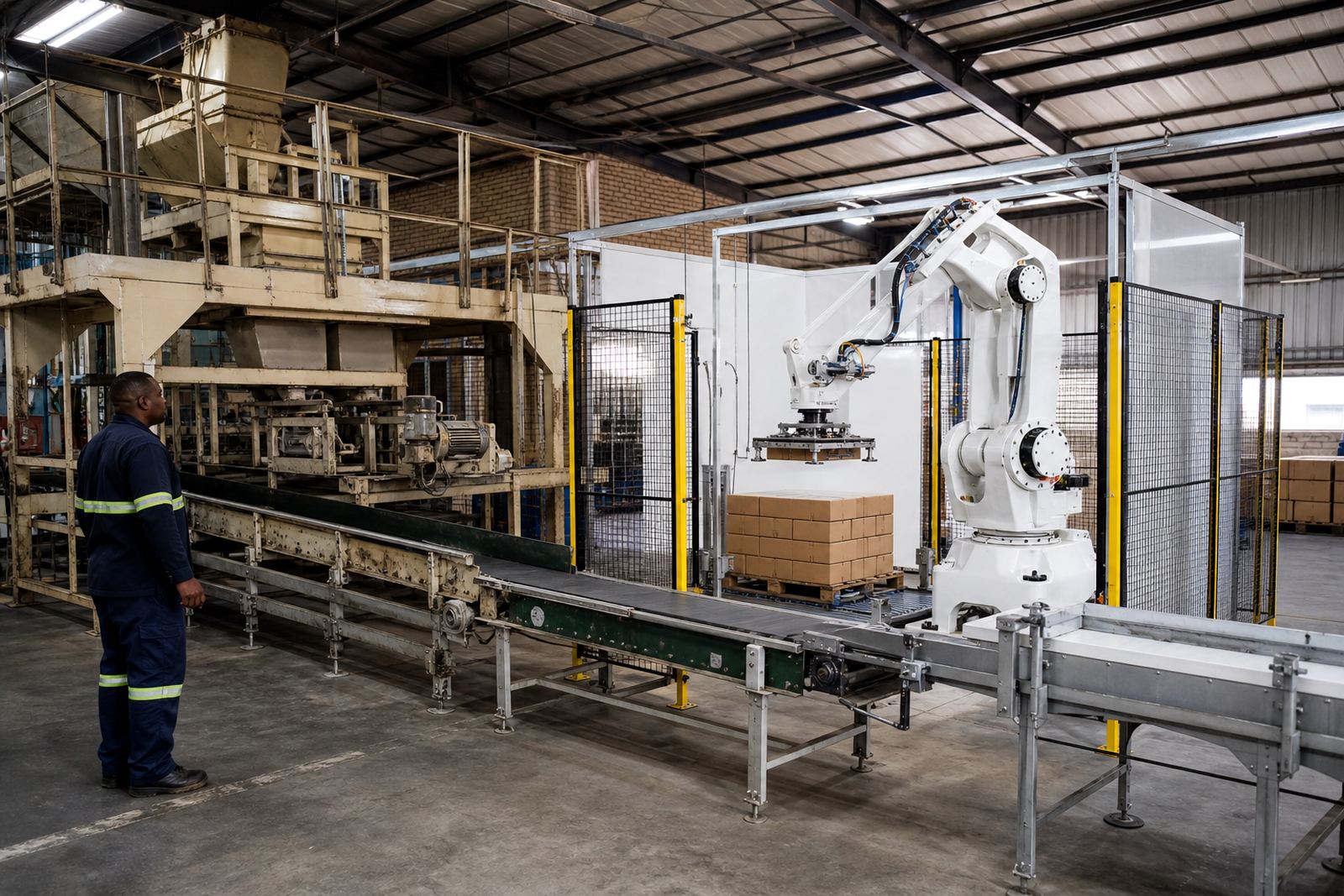
Many retrofits fail when the robot is designed in isolation and not around the conveyor system feeding it. Mixed pallet patterns usually need reliable case spacing, smooth accumulation and consistent transfer points. If the conveyor delivers cases too fast, too close together, or in the wrong orientation, the robot spends time correcting problems that should have been solved upstream.
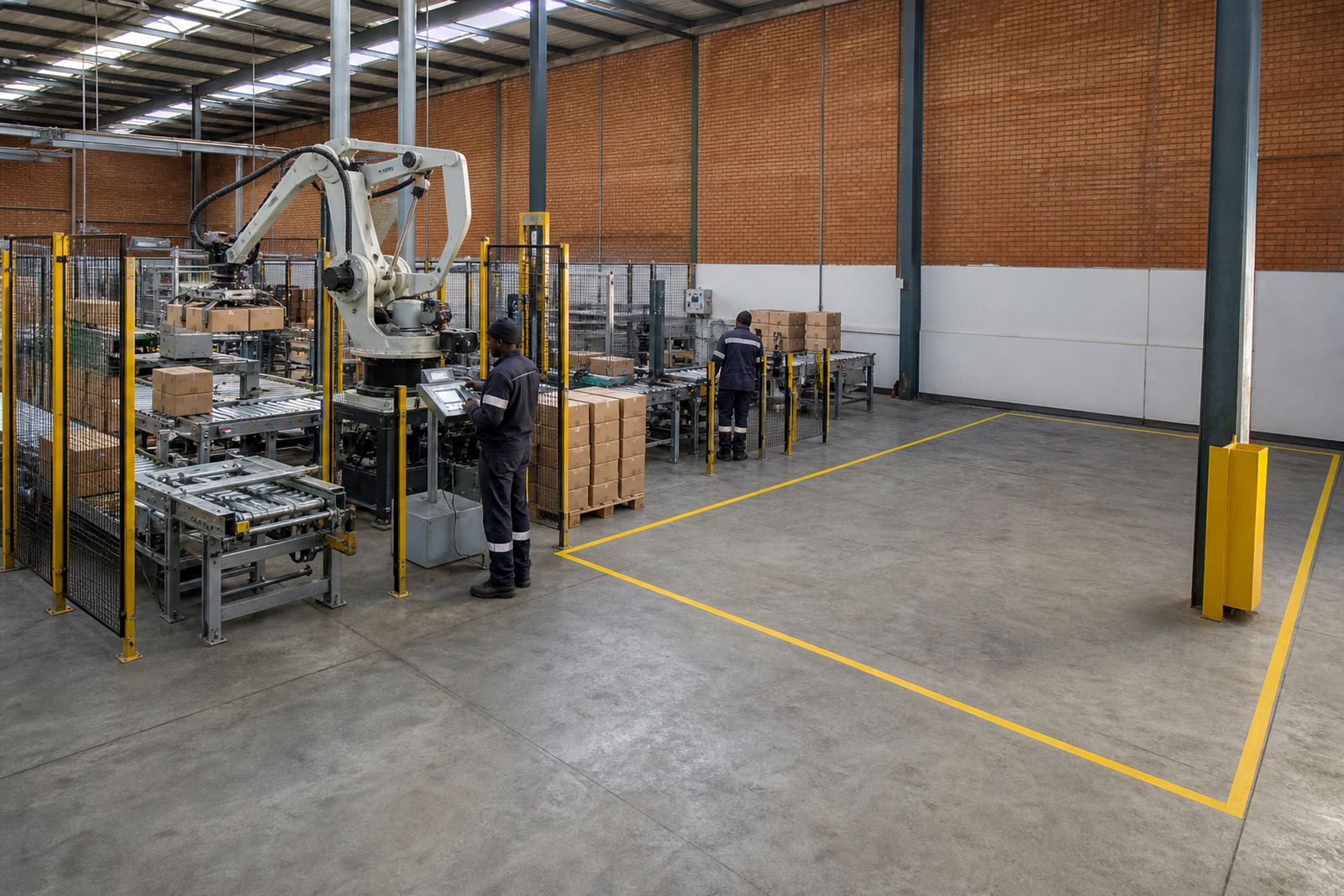
At ReAutomated, conveyor integration is approached as part of the whole line. That can include infeed timing, case stop positions, transfer sensors, diverter logic, pallet infeed and take-off points. In a Spartan, Kempton Park plant, for example, a mixed pattern retrofit may need to work around an existing pallet conveyor, a tight packing area and limited floor space near the dock. The layout must allow maintenance access too, because a line that is hard to reach becomes harder to keep running. Small detail matter here and they often decide whether the system feels dependable or frustrating.
Safety Guarding and Risk Assessment Must Match the Site
Mixed pattern cells are often used in live production areas, so safety guarding cannot be treated as an afterthought. The right layout depends on the speed of the robot, the size of the pallet, the movement of nearby conveyors and the way operators access the area for changeovers or clearing jams. General safety principles apply, but each site still needs its own risk assessment before installation and before handover.
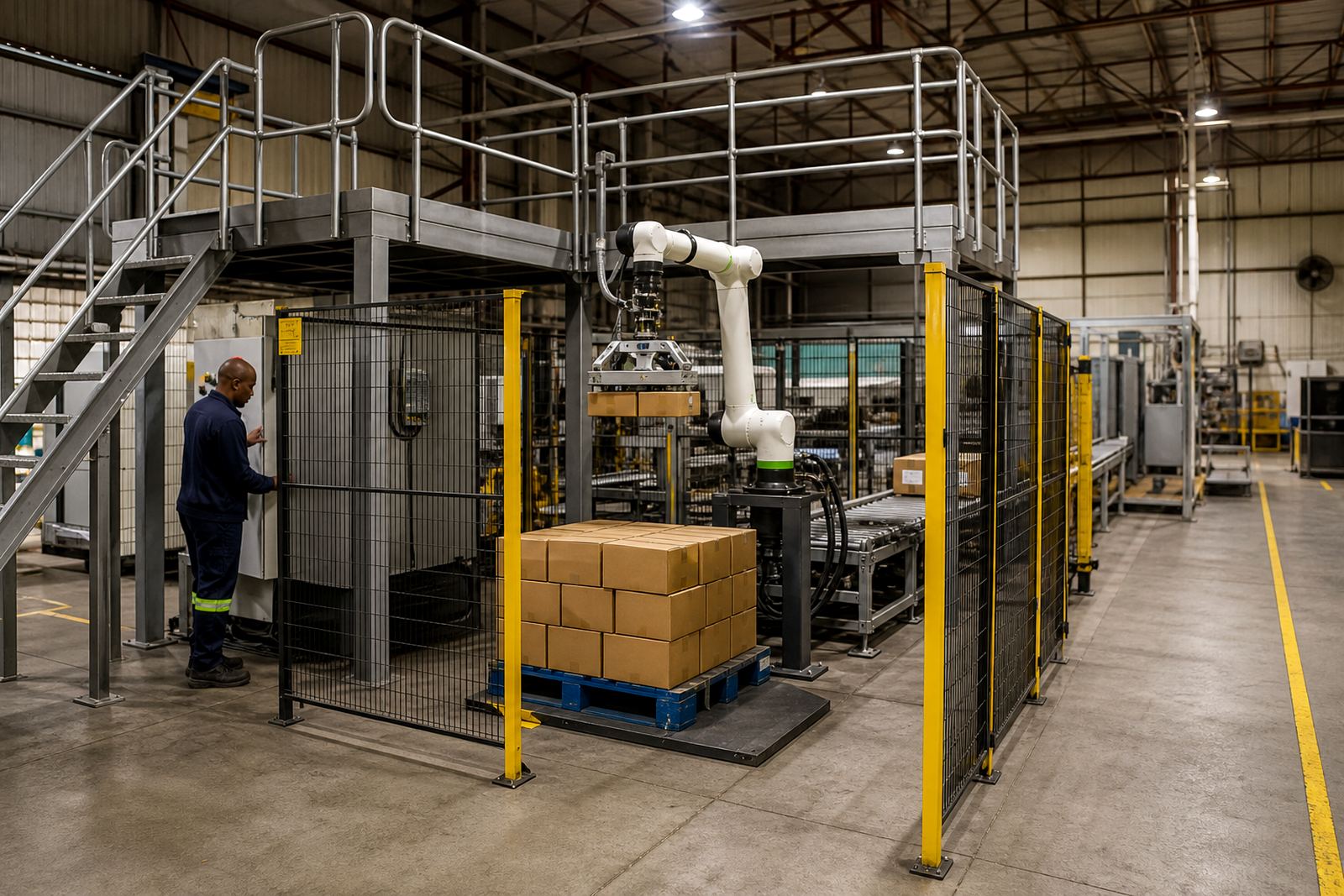
That risk assessment should consider entry points, maintenance access, trapped energy, emergency stops, visibility, and the movement of forklifts near the pallet discharge area. If the line is in a humid coastal environment like Gqeberha or Durban, guarding, sensors and control components also need to be selected and mounted with corrosion in mind. On some sites, the correct answer is a full fenced cell. On others, a cobot with monitored access and carefully designed work zones may be more suitable.
- Fixed guarding where the robot speed and reach demand full separation
- Interlocked access doors for service and jam clearing
- Warning beacons, stop circuits and clearly marked walkways
- Risk review for forklifts, pallet jacks and nearby pedestrian routes
Cobots Can Help, But Only in the Right Application
Collaborative robots are often asked to solve mixed pallet pattern challenges because they fit into tighter spaces and can be easier to introduce on an existing line. That can work well where product weight, cycle time and reach are within the safe operating envelope of the chosen machine. But a cobot is not a shortcut around proper engineering. The line still needs accurate infeed control, stable pallets and a pattern that remains repeatable under real production conditions.
In smaller operations around the East Rand or Midvaal, a cobot retrofit may suit a lower throughput line where product changeovers happen often and floor space is limited. In higher speed lines, a conventional industrial robot may be the better choice. The decision should be based on the cases, the speed, the available room and the way the warehouse wants pallets built. If the line has to handle several case formats across one shift, the robot choice must support that demand without making the cell difficult to service.
Commissioning, Training and Maintenance Keep the Pattern Honest
Once the hardware is installed, mixed pallet patterns still need careful commissioning. Each recipe must be tested with the actual cartons, actual pallets and actual line speeds. Mixed sequences are unforgiving if the team skips verification, because one missed rotation or one misread sensor can throw off the whole stack. Commissioning should confirm that the robot places each case in the right order, that the pallet remains square, and that the finished load can be wrapped and moved without shifting.
Operator training is just as important. The team on shift needs to know how to select recipes, check alarms, respond to jams and call for support when required. Maintenance planning also matters, especially where spares are not kept nearby or the plant runs after hours. A practical retrofit should include breakdown support, spare part planning and a clear handover so the site can keep producing on Monday morning, not just on the day of install. That is the real test of a mixed pattern system.
- Test each recipe at normal production speed, not only at slow speed
- Check pallet squareness and load stability before wrap
- Train operators on recipe selection and alarm response
- Keep a local spares list for sensors, grippers and service items
A Practical Example From a Gauteng Retrofit
A manufacturer in the Kempton Park and Johannesburg corridor may run multiple case sizes through one dispatch line, with limited room between packing and the warehouse door. In that setting, the challenge is often not the robot arm itself but the handoff between conveyors, the pallet feed and the control logic that tells the system which pattern to build. If the stack includes different case heights, the recipe must account for each tier so the pallet remains stable all the way to transport.
A well planned retrofit can turn that kind of mixed flow into a repeatable process. The conveyor delivers cases in the correct order, the robot builds the pattern without hesitation, and the pallet leaves the line ready for stretch wrap and dispatch. When the system is matched to the site, mixed pallet patterns stop being a daily headache and become a controlled part of production. That is the point of a retrofit done properly, with the line, the safety and the controls all working together.