When an older line is worth upgrading
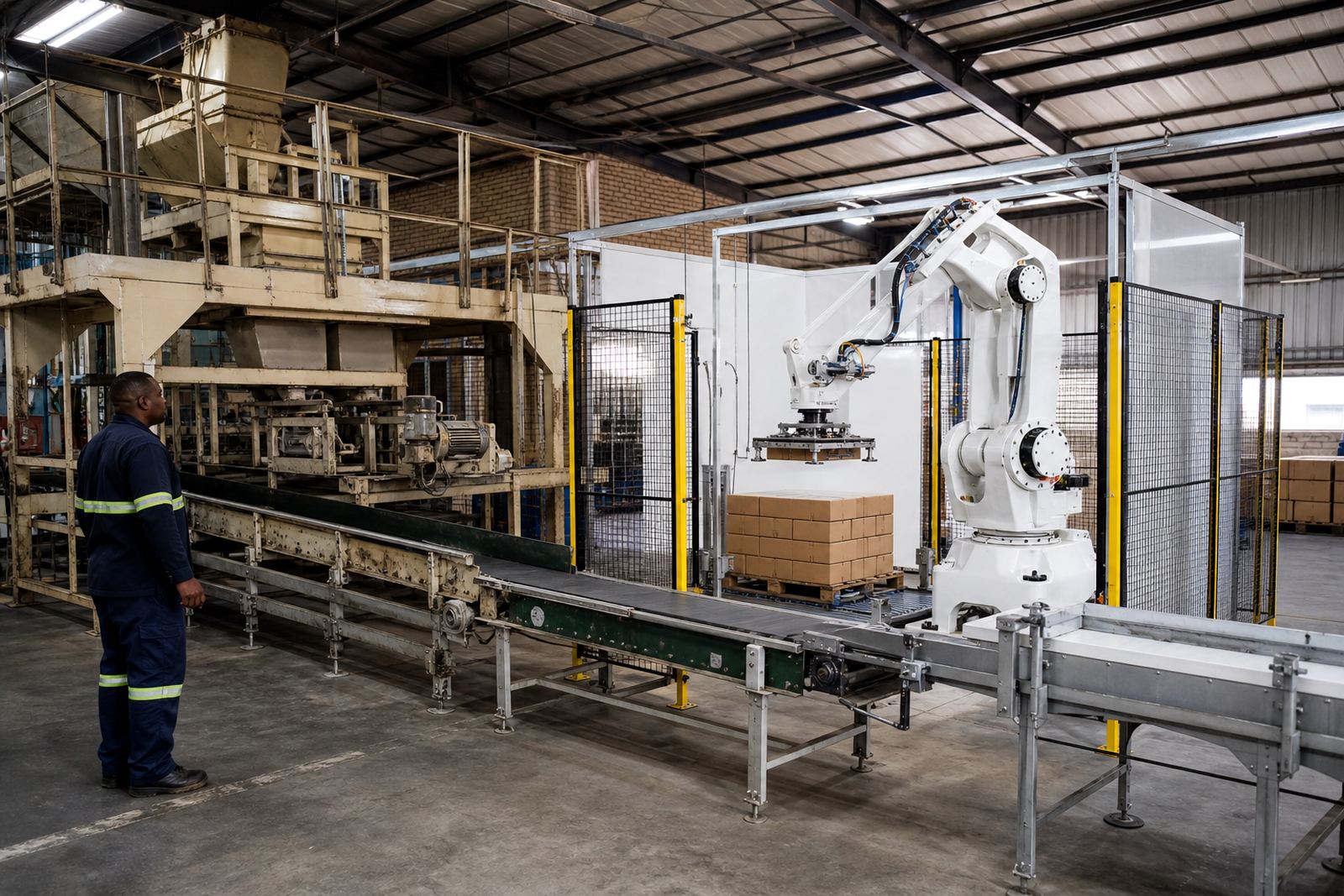
Many manufacturers in Gauteng and along the coast are running lines that still move product well, but need less manual handling and better consistency. A line does not have to be new to justify automation. If the conveyor frames are still square, the transfer points work properly and the line has enough physical space for a robot cell or cobot zone, an upgrade can be practical.
The first check is always the line condition. We look at wear on bearings, chains, belts, rollers and support steel, then assess how the line behaves under normal production loads. If cartons are tracking badly, pallets are not sitting level, or the infeed keeps jamming, those issues need attention before any retrofit is added. Otherwise the new equipment just inherits the old problems.
We also look at the product mix. A line handling one carton size all day is much easier to automate than a line that changes format every hour. That said, older lines can still be upgraded if the changeover process is clear and the controls are accessible. The real question is not how old the line is, but whether it can be adapted safely and economically.
What we check before recommending a retrofit
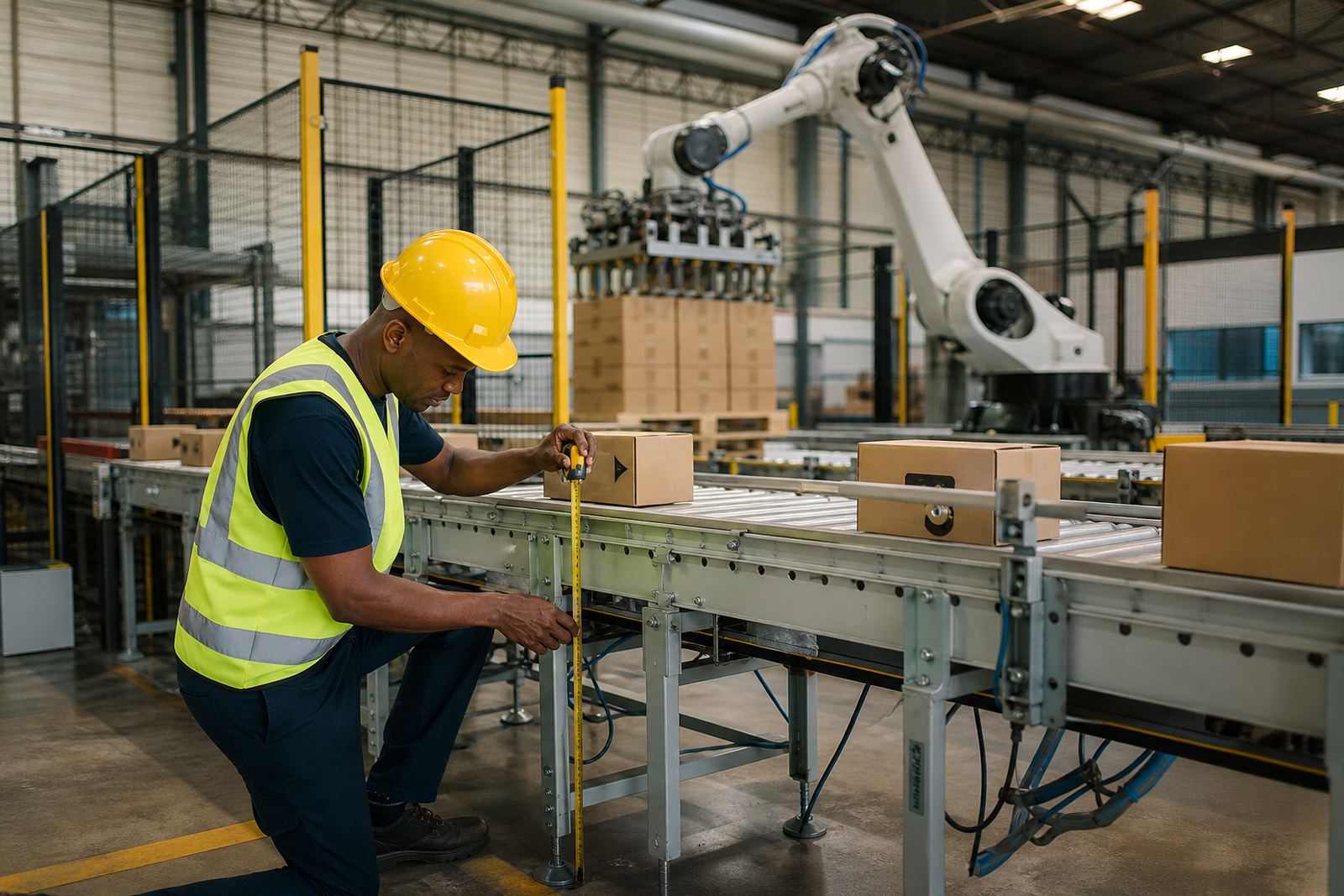
Older line upgrades start with a site survey and a proper mechanical review. In Kempton Park, where many factories work around tight service corridors and limited floor space, that practical check matters as much as the robot selection. We measure the line footprint, check access for maintenance, review the conveyor heights and confirm whether the existing structure can carry added equipment.
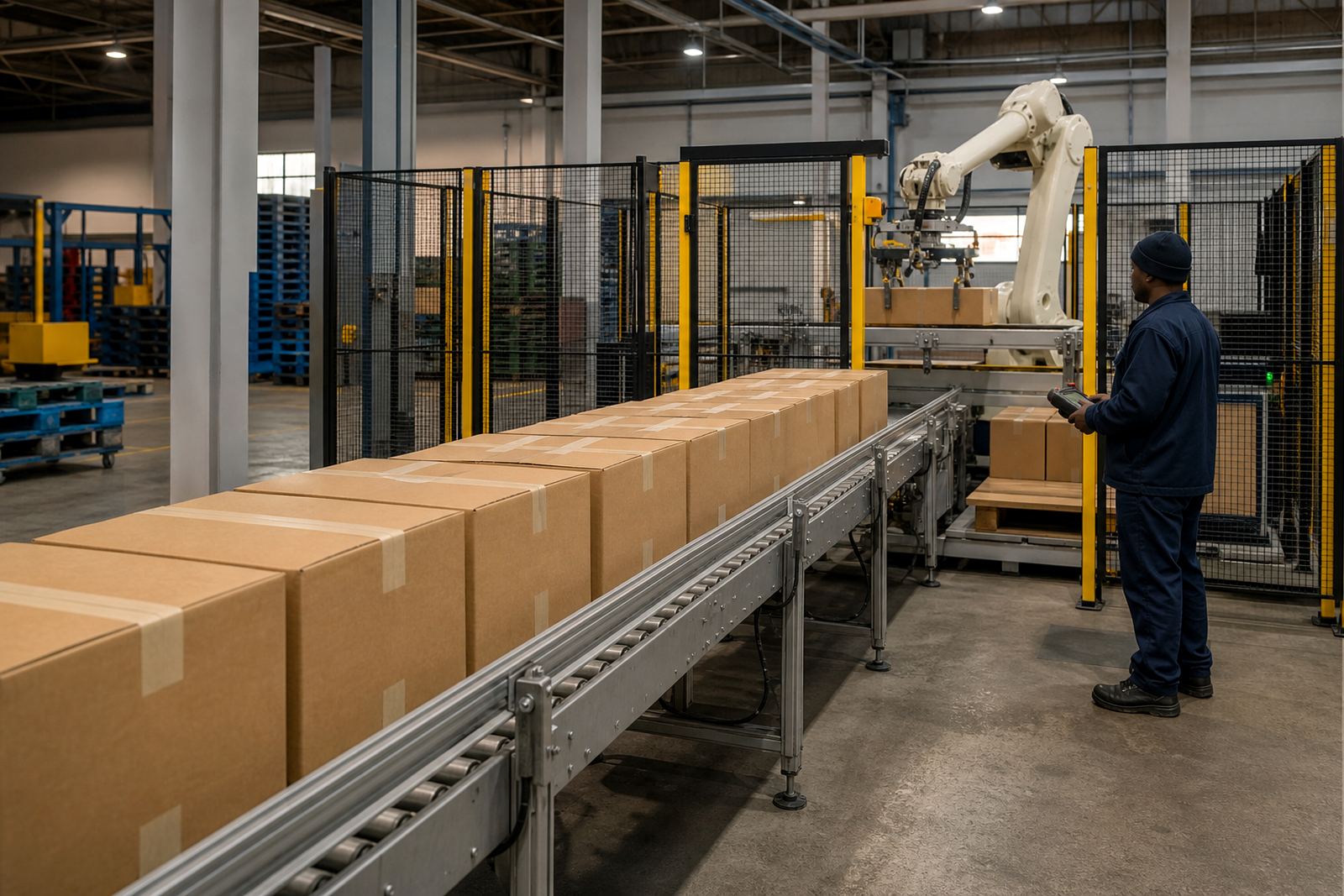
The controls side is just as important. A robot or cobot needs clean signals from the line, and the line needs a clear way to stop, restart and recover from a fault. If the existing control panel is cluttered or the field wiring is tired, the retrofit can become unreliable. We look at the stop circuits, sensors, safety devices, interlocks and the communication method between the conveyor and the new automation.
- Mechanical condition of conveyors, frames and transfer points
- Available space for robot reach, guarding and operator access
- Control panel condition, wiring age and signal integrity
- Product stability, pack pattern and pallet build requirements
- Utilities such as power quality and compressed air availability
If any of these areas are weak, they can usually be corrected during the upgrade. In some cases the best result is not a full robotic cell at the start, but a phased retrofit that tackles one part of the line first and leaves room for the next stage later.
Robotic palletising on an existing conveyor layout
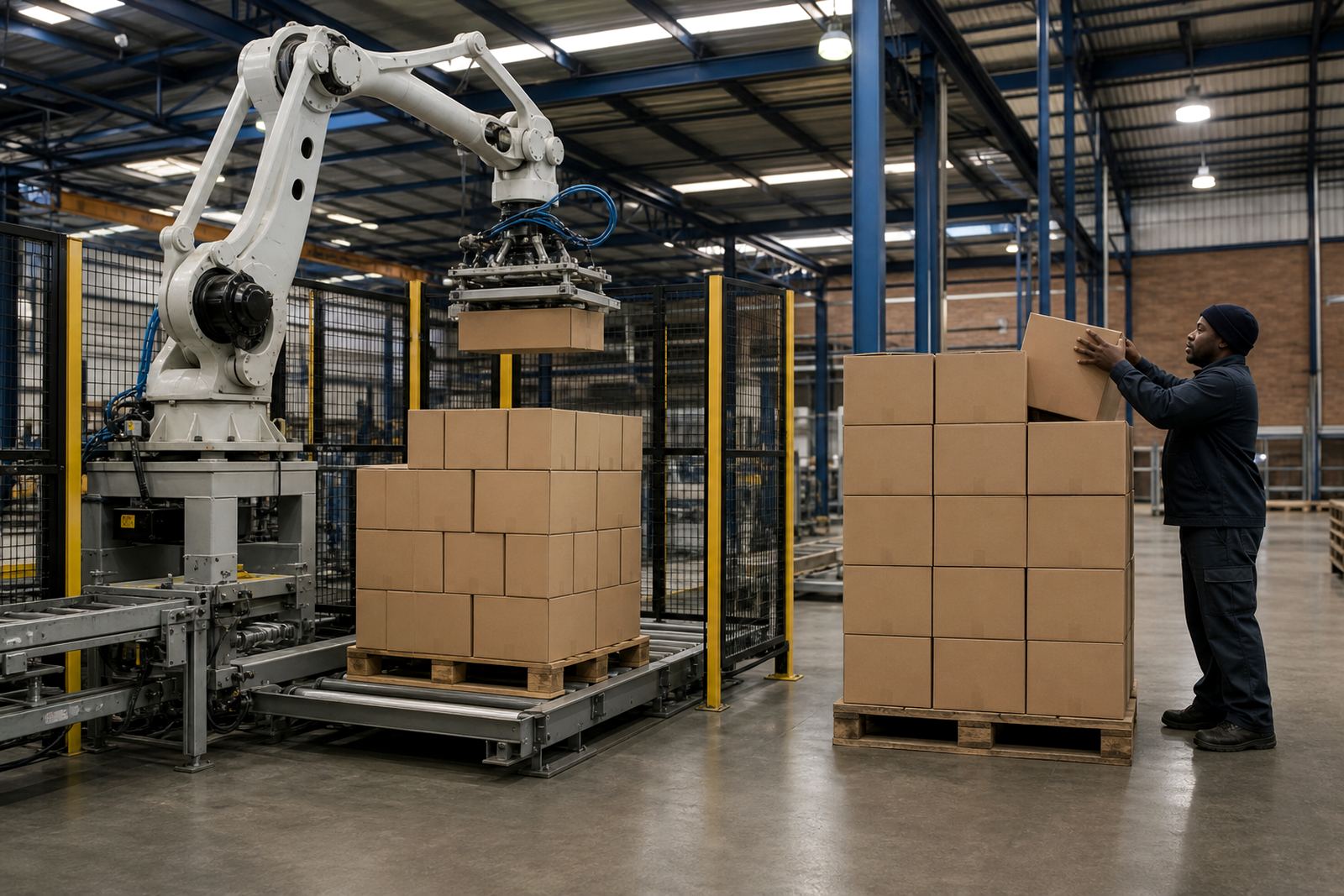
Robotic palletising is one of the most common older line upgrades because it removes heavy lifting and gives more consistent pallet builds. The robot is not installed in isolation. It has to suit the infeed conveyor speed, carton presentation, pallet type and the space available for finished goods staging. If those details are ignored, the line will struggle from day one.
For older lines, the conveyor integration is often the key job. Product has to arrive in the right orientation and at the right pitch, with enough accumulation to keep the robot fed without overloading the line. Pallet positions must be controlled properly, and the discharge area needs to allow forklift movement without creating a hazard for operators or maintenance staff.
In Durban and Cape Town, coastal humidity can affect electrical panels, sensors and some mechanical components, so enclosure placement and ventilation need attention. In inland sites, dust and temperature swings can be the bigger issue. Either way, the retrofit should suit the actual environment, not just the drawing. A neat install that fails after a month is no help to the production team.
Cobots, manual stations and mixed work cells
Not every older line needs a fully enclosed industrial robot cell. In some cases a cobot is a better fit, especially where the task is lighter, the product is changing often or the business wants a phased approach. Cobots can assist with packing, tray loading, case handling and simple palletising patterns, provided the risk assessment supports that use and the layout is properly defined.
Mixed work cells are common in smaller facilities across the East Rand and Midvaal. A line may still have manual packing, but with automated conveying, case forming support or end of line palletising added later. This is often a sensible step when production volumes are rising but the site is not ready for a full line rebuild. The aim is to reduce strain on staff and improve repeatability without forcing the whole plant into one big change.
- Manual loading can be retained where product is fragile or variable
- Cobots can support repetitive tasks with lighter payloads
- Guarding and access control still need to match the task
- Operator training remains essential, even on simpler installations
Each site needs its own risk assessment. A cobot is not automatically safe just because it is collaborative. The layout, speed, reach, tools and human interaction all need to be checked carefully.
Safety guarding and risk assessment are part of the upgrade
Older line upgrades are often limited by safety, not by mechanics. If a robot is added without proper guarding, access control and emergency stop integration, the whole project can become difficult to approve and even harder to maintain. Safety guarding design should suit the line, the traffic flow and the operator routines already in place.
We support risk assessment work by identifying the hazards that matter on site, such as pinch points, trapped energy, unexpected restarts, reach-in access and forklift movement around the pallet area. Safety measures can include fixed guarding, light curtains, interlocked gates, safe stop circuits and clear zones for manual intervention. The right solution depends on the machine layout and the task, not on a generic template.
On older lines, there is often a temptation to keep one section manual because it has always been done that way. That can be fine if the risk is controlled. But if operators are reaching across live conveyors or walking through palletising zones, the retrofit should address those habits directly. A practical upgrade makes the line easier to run and easier to keep safe, not harder.
A practical retrofit path for South African plants
For manufacturers in Johannesburg, Pretoria, Gqeberha and beyond, the best older line upgrades usually follow a simple path. Start with a survey, confirm the mechanical base, then design the retrofit around the existing conveyor route and production rhythm. From there, plan the controls integration, guarding, installation management and commissioning support in the right order.
A good example is a plant in Spartan, Kempton Park, where an older packing line was still mechanically sound but needed less manual pallet handling and better consistency at end of line. Rather than stripping out the whole system, the upgrade focused on conveyor changes, a new palletising point, safety guarding and operator training. The line kept its useful equipment and gained a better finish at the pallet area, with less strain on staff and clearer fault recovery. That is the type of result older lines can still deliver when the retrofit is matched to the site.
We also help with maintenance support, breakdown assistance and spares planning after commissioning. That matters on older lines because ageing equipment can be sensitive to poor alignment, worn parts and delayed repairs.