Why Buffering Matters Before a Robot Cell
In many packing and palletising plants, the robot is not the problem, the feed to the robot is. A filling machine pauses for changeover, a sleeve conveyor hesitates, a carton jams at a transfer point, and the whole line backs up. Buffering gives the line a controlled place to absorb those short interruptions so the robot can keep working instead of waiting.
For retrofit projects, this is especially useful where existing conveyors must stay in service. Rather than stripping out the old line and starting from scratch, a buffer section can be added to manage product flow into a robotic cell.It also gives the controls team a cleaner way to manage start-stop conditions without constant manual intervention.
How Buffer Conveyors Keep Product Flow Steady
A buffer conveyor is not just extra belt space. It is a planned section of the line that stores product in motion or at rest, depending on the design. In some plants it is used to accumulate cartons, in others it holds trays, bags, shrink-wrapped packs or crates until the robot is ready to pick. The right setup depends on product size, base stability, line speed and how the robot loads the pallet.
When we look at a retrofit, we first check where the interruptions happen. If the upstream line feeds in bursts, the buffer may need a short accumulation zone. If the robot must keep a strict pick pattern, then the buffer should present product in a predictable orientation. A good buffer also prevents pressure build-up on the infeed, which can damage packaging or cause one item to skew and block the next. Small detail, big difference.
- It can smooth short upstream pauses without stopping the robot
- It helps maintain a consistent presentation of product at the pick point
- It reduces manual pushing, re-stacking and line chasing by operators
- It gives maintenance teams a controlled point for testing and fault-finding
What We Look For During a Site Line Survey
Every buffer solution starts with a site line survey. On a live plant floor in Kempton Park, Johannesburg or Pretoria, the main questions are practical: how often does the line stop, how long do the stoppages last, and what happens upstream and downstream when they do? We also look at floor space, conveyor height, access routes, cleaning needs and how the buffer will sit with existing guarding and walkways.
In coastal areas like Durban or Gqeberha, corrosion resistance and electrical enclosure placement become part of the conversation. In Gauteng, dust and frequent forklift traffic often shape the design. No two sites are the same, so a risk assessment is needed for each one before any retrofit is installed. That assessment should consider pinch points, access for operators, emergency stops, safe clearing of jams and how people move around the cell during production and maintenance.
- Line speed and product dwell time
- Available floor space and turning clearance for pallets
- Conveyor condition, drives and existing controls architecture
- Guarding gaps, access doors and operator routes
- Cleaning routine, especially for dusty or humid environments
Integrating Buffers With Existing Conveyors and Controls
Buffering works best when it is integrated properly with the conveyors already on site. That includes speed matching, infeed sensors, motor control, start permissives and the logic that tells the robot when product is available. If these signals are not tuned together, the buffer can become a bottleneck instead of a benefit. The same is true when one conveyor runs too fast and crushes cartons at the merge point.
For retrofit work, controls integration is often the part that needs the most care. The buffer must communicate with the robot, the upstream conveyor and any reject or diversion points. Where possible, we aim for straightforward operation that the shift team can understand after a short handover. That makes maintenance easier, especially when an evening shift is running with fewer hands available.
We also plan for service access. If a drive, sensor or guide rail fails, technicians should be able to reach it without breaking down half the cell. That may sound basic, but on busy sites it saves a lot of time and avoids unnecessary production stops.
Safety Guarding Around Buffer Zones
Because buffer conveyors sit between people, machines and moving product, the guarding arrangement must be thought through carefully. A common mistake is to leave a convenient opening where operators can reach in but also where a hand can catch on a moving chain or roller. Proper guarding should protect the full buffer zone while still allowing safe access for routine cleaning and fault response.
Safety guarding design is not a one-size-fits-all exercise. The layout needs to fit the actual line, the robot reach envelope and the way the team works each day. Depending on the site, this may include fixed guarding, access interlocks, light barriers or other protective measures. The important point is that the protection is based on the specific installation and its risk assessment, not guesswork. A good buffer design should make the area safer to use, not harder.
- Separate routine operator access from maintenance access
- Keep emergency stops visible and reachable
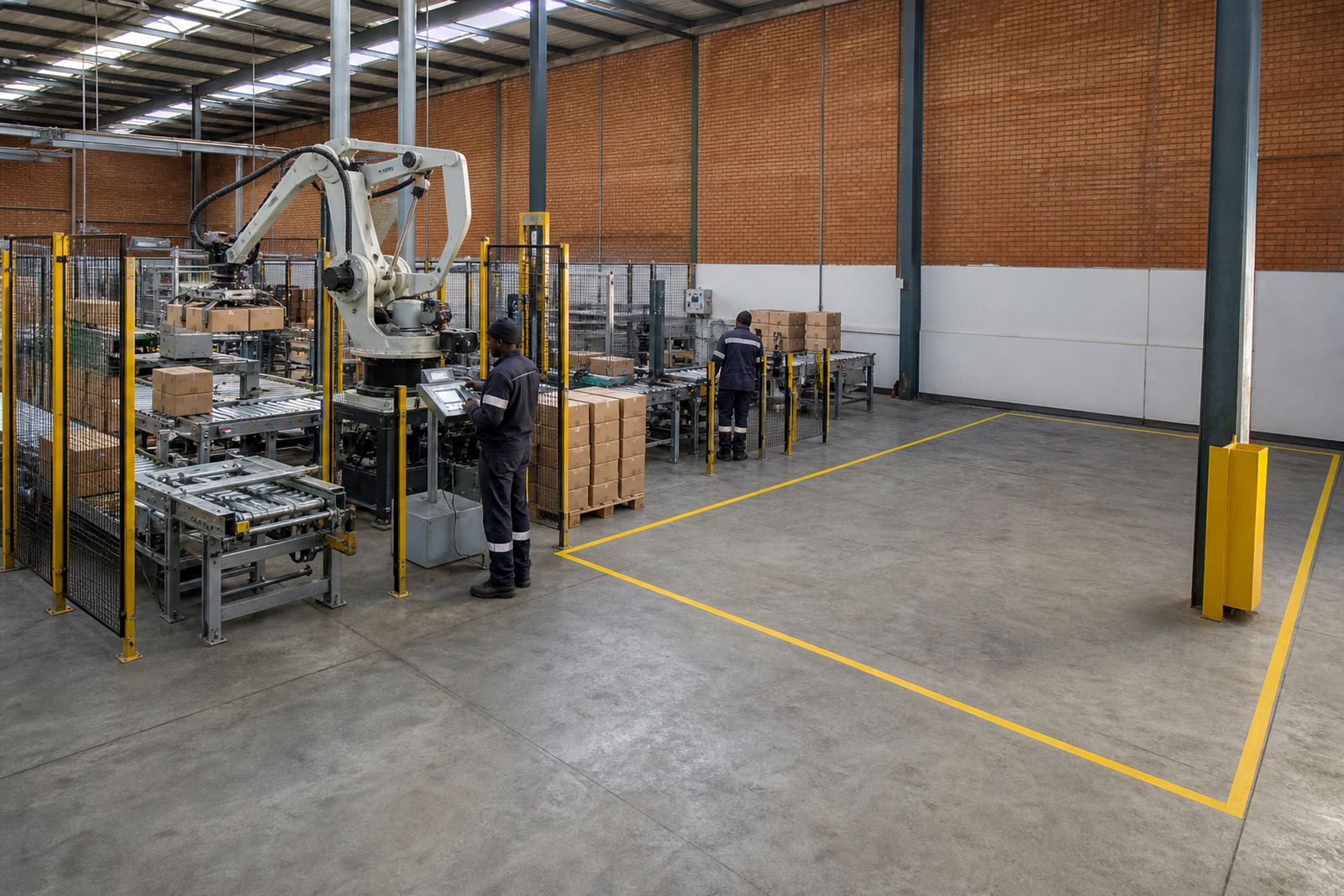
- Use clear floor marking around restricted zones
- Provide safe jam-clearing points where needed
A Local Example From an East Rand Packing Line
On an East Rand packing line, a robotic palletising cell was being starved by small stops from the upstream carton conveyor. The line would run well for ten minutes, then a brief pause at the former packing point would leave the robot waiting. Operators were stepping in more often than they should, and the palletising area was not running at the pace the client expected.
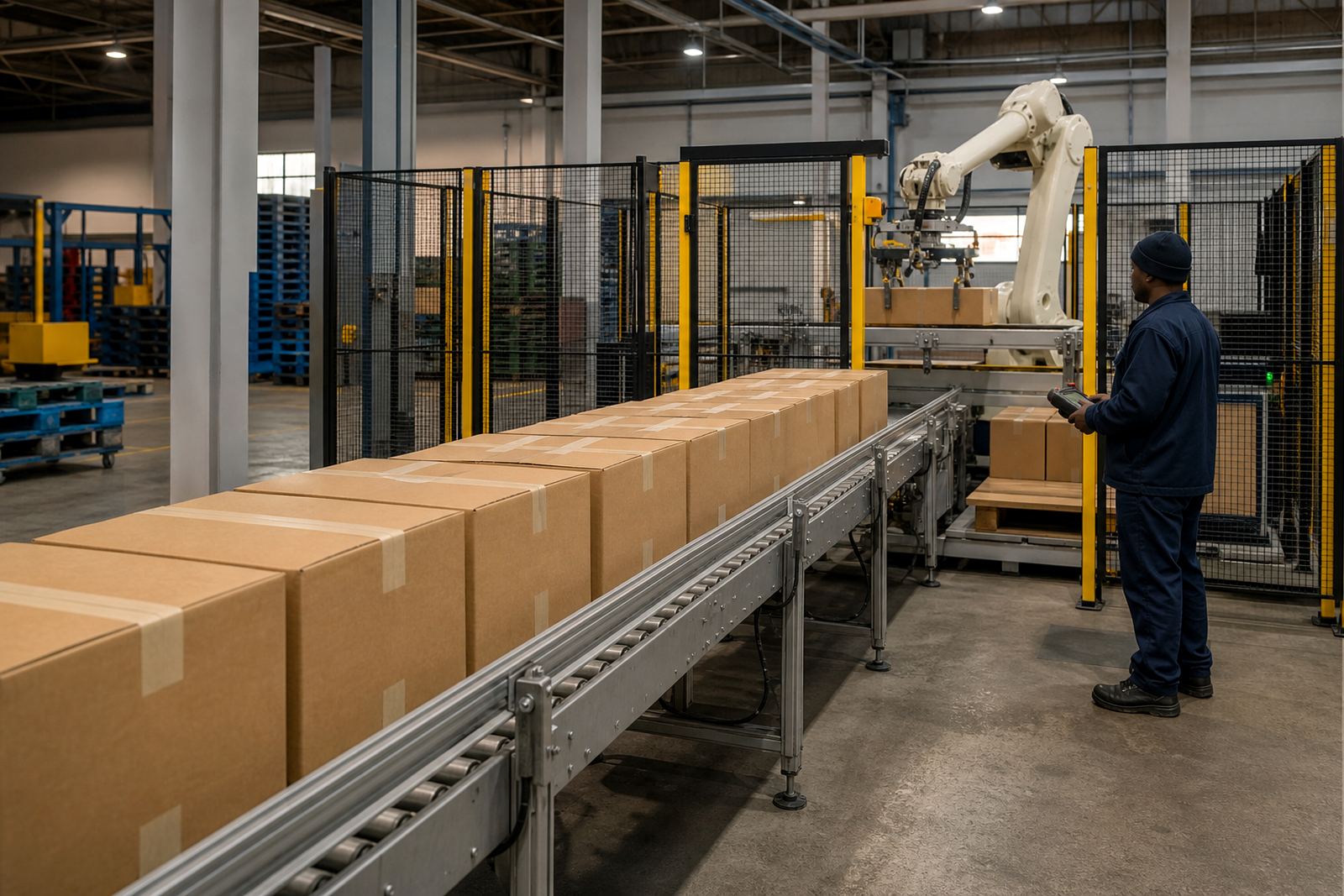
A buffer section was added between the packout conveyor and the robot infeed. The objective was not to store product for long periods, but to absorb those short pauses and feed the cell more evenly. After the retrofit, the operators had fewer manual interventions, the robot saw a more consistent product flow, and maintenance had a proper point to isolate and clear faults. It was a small change in footprint, but it made the whole line calmer and easier to run. The plant manager could see the difference by the end of the first week.
That kind of result is common where the line is already doing useful work but needs a smarter handover between machines. Buffering is often the part that brings the whole retrofit together.
Planning for Maintenance, Spares and Future Growth
Buffering should not be treated as a one-off add-on. It needs to be supportable over time. That means the design should allow for maintenance checks, spare sensor planning, belt or roller replacement and straightforward fault tracing. On a multi-shift site, even a 15 minute delay can affect despatch, so serviceability matters almost as much as throughput.
For South African manufacturers, future growth is worth considering too. If the business later adds another packing stream or increases pallet count per shift, the buffer may need to handle a different flow pattern. Building in that flexibility at the retrofit stage can save another shutdown later. We often advise clients to think about spares planning and operator training at the same time, because both affect how reliable the line will be after handover.
When the buffer, robot and conveyors are matched correctly, the line is easier to run. Fewer stoppages, safer access and steadier output follow from a system shaped around the plant you already have.