When vacuum tooling makes sense on a packing line
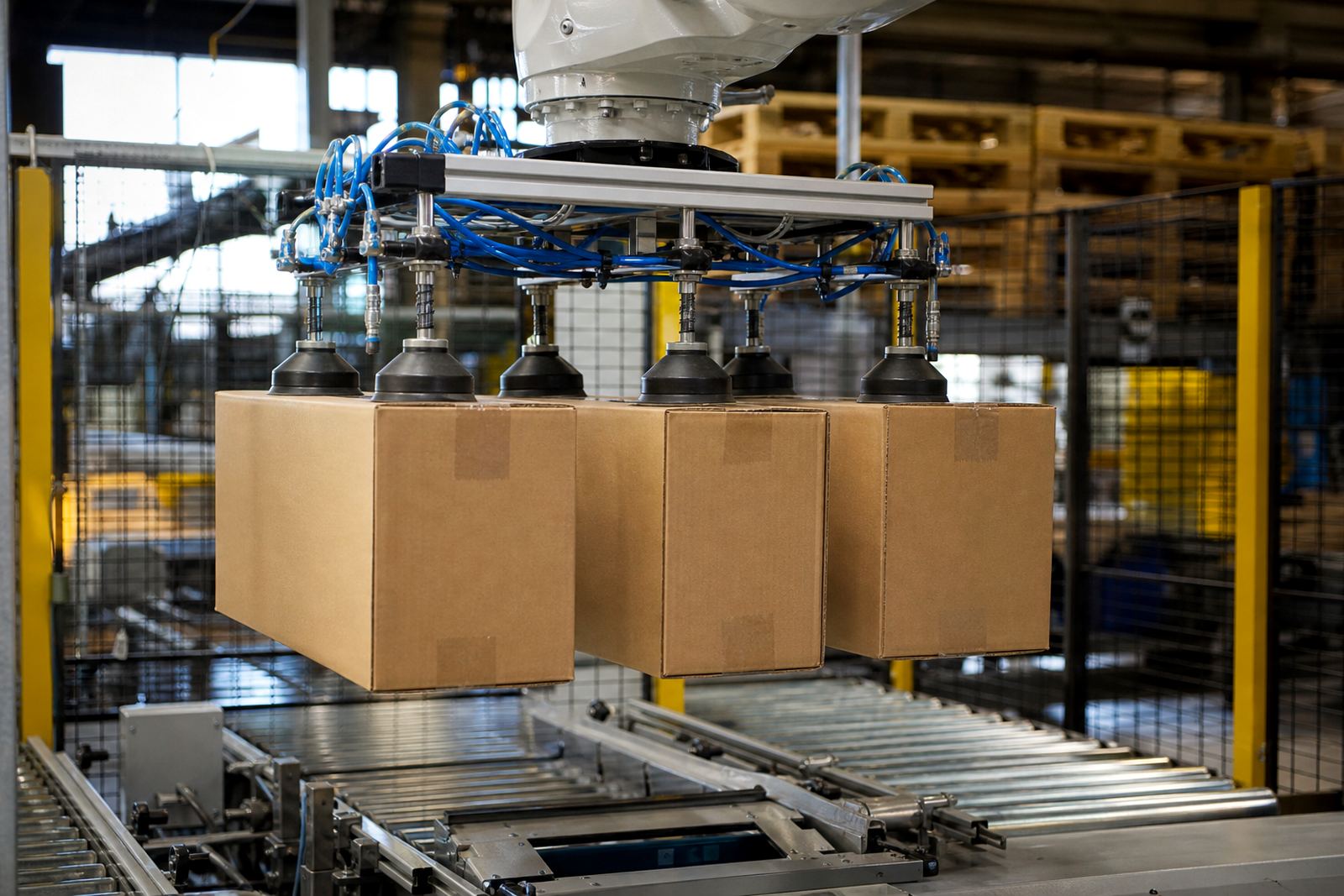
Vacuum tooling works best where the load has a fairly flat, non-porous surface such as cartons, carton trays, sleeves, board inserts and many flat packs. The idea is simple: suction cups or pads create a seal, lift the item and place it where the line needs it. For retrofits, this is often a practical choice because it can be added to existing conveyors, pick stations or case packing equipment without reworking the whole line.
In many Gauteng plants, the first question is not whether the robot can move the product, but whether the product can be held reliably. A clean carton top with predictable dimensions is usually a much better candidate than a bag, a broken-open carton or a dusty printed surface. If the load changes through the shift, the tooling needs to cope with that variation or the process becomes unstable.
For manufacturers in Kempton Park, Johannesburg and Pretoria, vacuum tooling is often considered where labour is currently placing cartons by hand at speed. It can help on end-of-line palletising, carton transfer and some packing tasks, especially where the plant wants to keep the existing conveyor route and footprint. The key is to match the suction method to the box style, weight and line speed, not just to the robot arm.
What to check before choosing vacuum tooling
Vacuum systems are not one-size-fits-all. A carton that looks simple on paper may be printed with a glossy coating, have die-cuts, or arrive with slight warp from heat and humidity. Coastal sites in Durban or Gqeberha can see more surface variation from moisture, while inland plants may deal with more dust and paper fibres. Those details matter because even a small leak can reduce grip and slow the cycle.
Before a retrofit is specified, a site survey should check the product, the conveyor height, infeed spacing, carton orientation and the time available for each pick. It should also check whether cartons are closed consistently, because a crushed flap or open seam can upset the suction pattern. On some lines, the answer is a vacuum tool with more than one suction zone so the system can still grip even if the carton position is not perfect.
- Product surface: flat, smooth or slightly textured surfaces are easier to grip
- Porosity: porous board often needs stronger vacuum or larger contact area
- Weight and size: heavier cartons may need more cups or a wider pad layout
- Line variation: damaged, warped or mixed-size loads need more careful design
- Environment: dust, humidity and temperature shifts can affect sealing and maintenance
How vacuum tooling fits into existing conveyors and controls
A retrofit is usually about working with what is already there. The vacuum tool must arrive at the right point on the conveyor, pick at the right height and place cleanly onto the next stage, whether that is a case erector, a pallet pattern or a stretch-wrap area. That means the mechanical layout, the controls and the timing all need to line up.
On an existing line, conveyor integration may need small but important changes such as product spacing, stop gates, guides or transfer timing. Controls integration is just as important, because the robot or lifting device must read the same signals as the rest of the line. If the upstream conveyor is not feeding consistently, the vacuum pick will struggle no matter how good the tool is.
A line that stops and restarts often needs recovery logic, safe restart steps and clear operator instructions. In South Africa, that is not a nice-to-have. It is part of keeping a packing line moving after interruptions without damaging product or putting staff at risk.
Safety guarding and risk assessment are part of the tool choice
Vacuum tooling is only one part of a safe retrofit. The moving robot, the tool, the conveyor and the nearby operators all create risk points that must be considered before installation. Each site needs its own risk assessment because no two packing areas are the same. A line in a food plant in Midvaal will not need the same guarding arrangement as a dry goods warehouse in Cape Town or a factory in the East Rand.
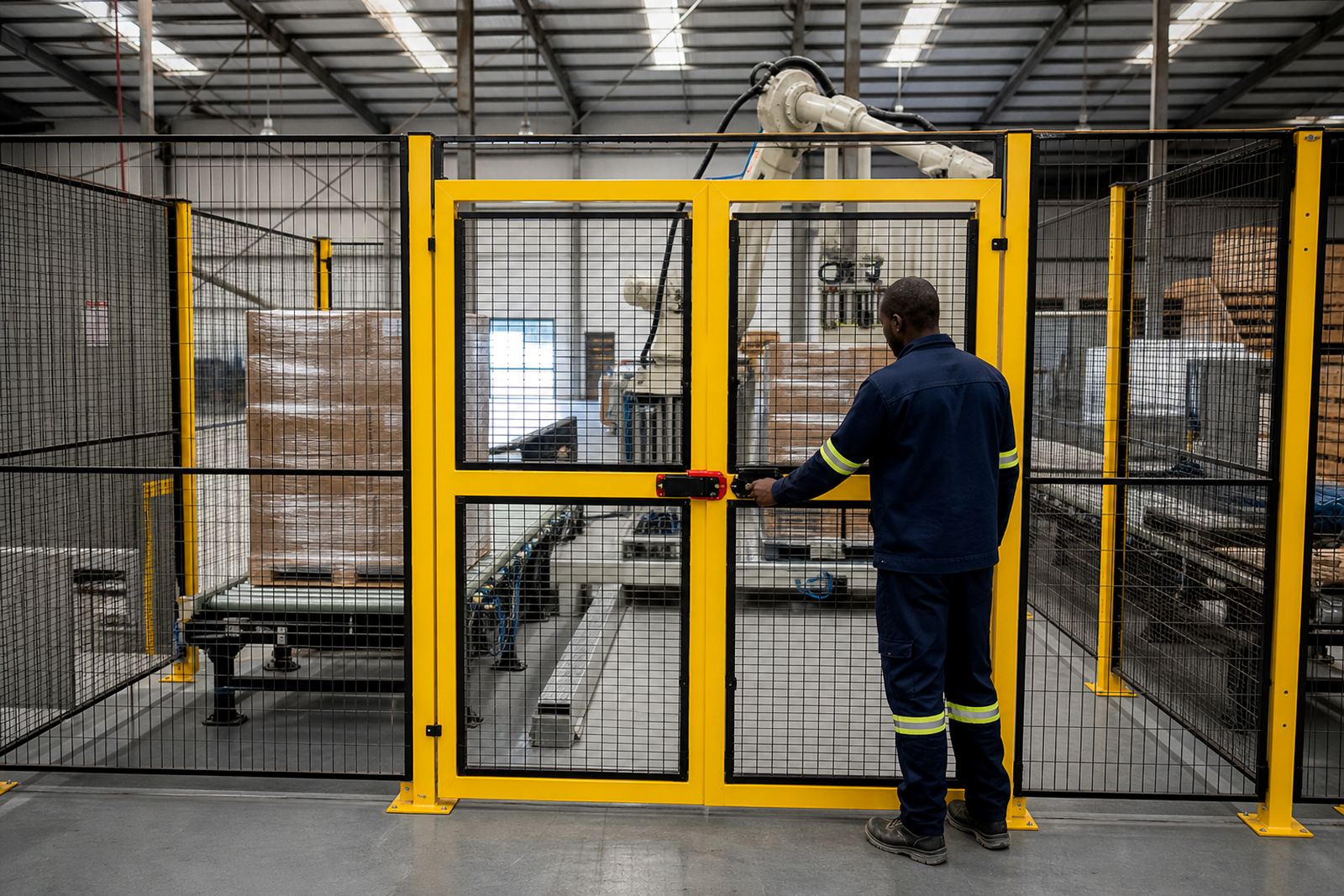
Safety guarding design usually includes fixed guarding, interlocked access doors, defined operating zones and clear emergency stops. The exact arrangement depends on the reach of the robot, the travel path, maintenance access and whether operators need to enter the cell during changeovers. Good guarding is not about boxing everything in for no reason. It is about making the task predictable for the team while still allowing proper maintenance access.
- Keep pick and place zones clearly separated from walkways
- Use interlocks where staff may need access for cleaning or changeover
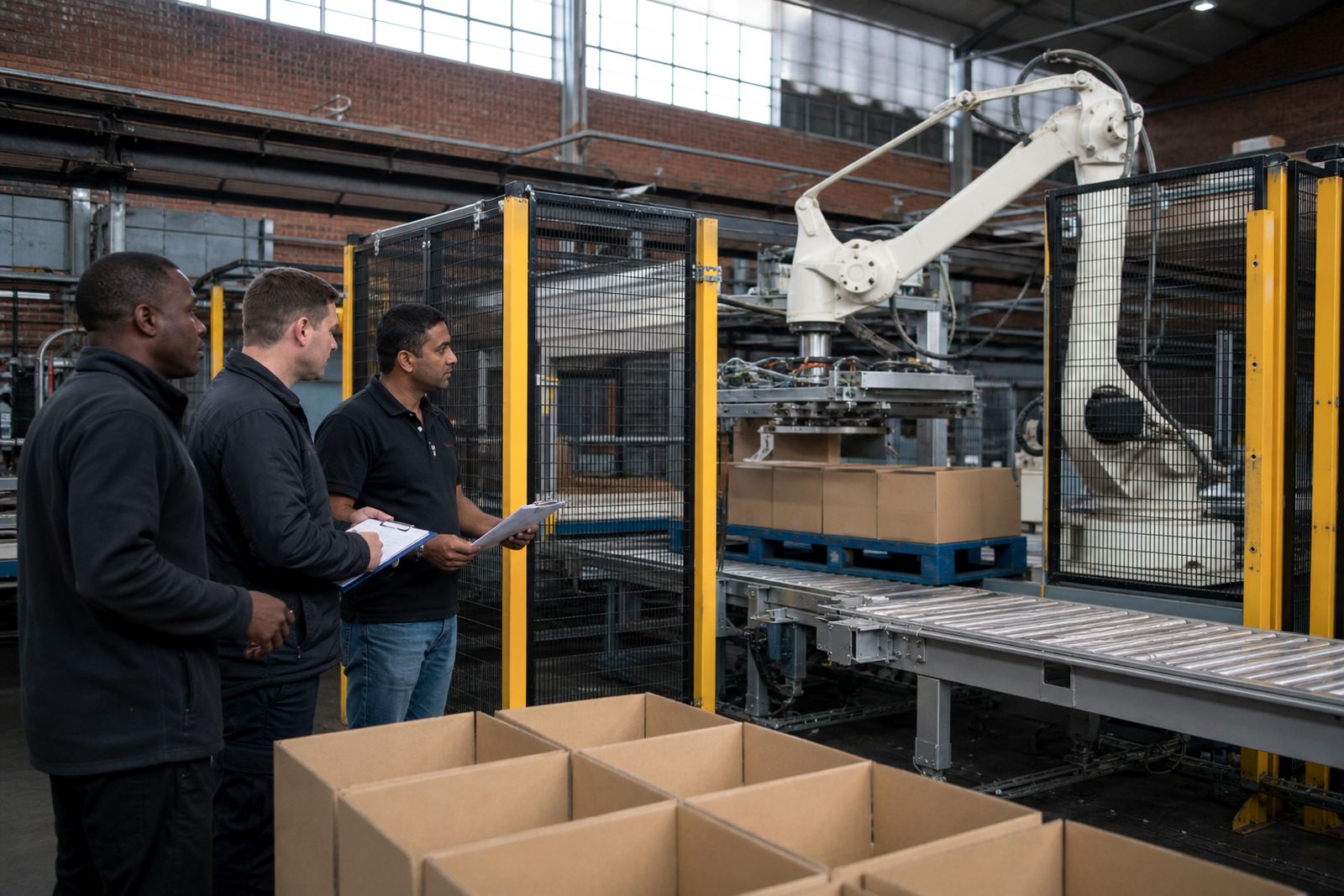
- Allow safe viewing for supervision without opening the cell
- Include clear signage and operator training for daily use
- Review restart procedures after power dips or shutdowns
A practical local example: carton palletising in Kempton Park
Consider a manufacturer in Spartan, Kempton Park sending regular cartons to palletising at the end of the line. The cartons are square, the tops are consistent and the conveyor already delivers them in a neat single file. In that kind of setting, vacuum tooling can be a sensible retrofit because the line already does much of the positioning work. The tooling simply needs to lift the carton cleanly and place it in the right pattern.
Now compare that with a line where cartons arrive with mixed print finishes, soft board and occasional crushed corners after transport from another plant. The tooling may still work, but it will need more testing, better cup selection and possibly a wider vacuum zone. That is why a site line survey matters. It shows whether the process is truly ready for vacuum handling or whether another end effector would be more dependable.
For many South African producers, the appeal is practical. The business keeps its existing conveyor route, reduces manual lifting and can often improve consistency at the end of the line without a full rebuild. The retrofit should still be planned carefully, with installation management, commissioning support and operator training built around the site’s own shifts and production targets.
Maintenance basics that keep vacuum tooling dependable
Vacuum systems are straightforward, but they do need regular attention. A blocked filter, worn seal or loose hose can cause missed picks and frustrating stoppages. In busy plants, small faults often show up first as slower cycle times or cartons that slip during transfer. That is usually the cue to inspect the tool before the problem grows.
Simple maintenance planning helps. Keep spare seals, filters and hoses where the line team can find them. Check for wear after changeovers, washdowns or cleaning shifts. If the plant is near the coast, inspect for moisture-related issues more often. If the plant runs in dusty conditions, such as certain warehouse areas in Johannesburg or Pretoria, filters may need closer monitoring. Breakdown assistance is useful, but planned maintenance and spares planning usually prevent more downtime than emergency callouts ever will.
When vacuum tooling is selected well, it is not complicated. It is simply a clean, controlled way to move cartons and flat packs with less hand contact and better repeatability. The value comes from matching the tool to the product, the conveyor and the real conditions on the floor.