Start With the Line, Not the Robot
Every retrofit begins with what is already on site. A packing line in Spartan, a palletising area in Durban or a high-speed end of line in Pretoria may all use different conveyors, control panels and utility points, so the first job is to map the existing setup properly. That means checking where power is available, how much air the plant already uses, where the network cabinet sits and how all of it ties into production.
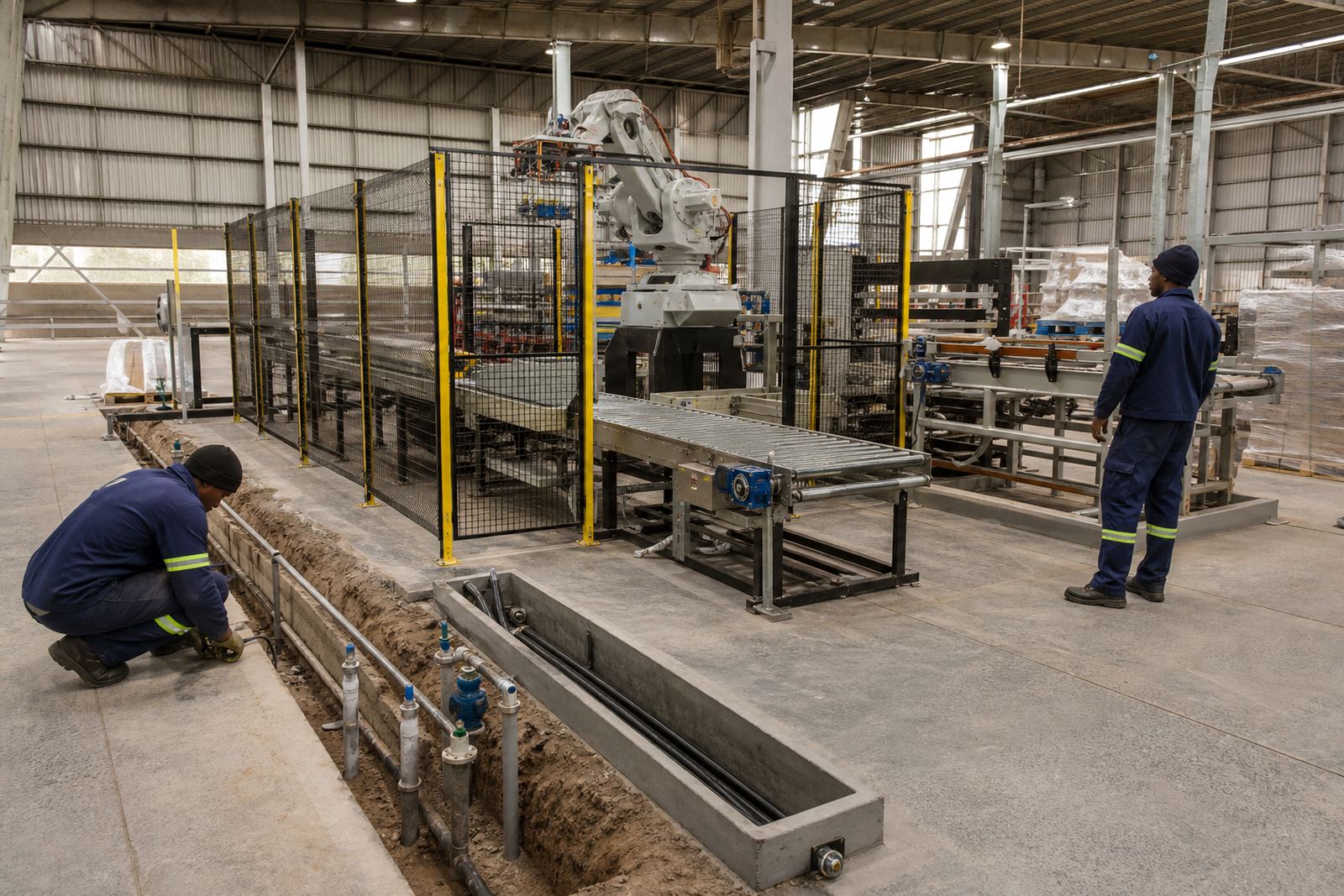
In practice, utility planning is part of the line survey. If a site already struggles with voltage dips, limited panel space or ageing cable runs, those issues must be handled before new automation is added.
A good retrofit does not force the plant to change everything at once. It fits into the existing conveyor path and utility layout where possible, then fills the gaps with the right electrical and control work. That approach helps reduce downtime and avoids surprises once installation starts.
Power Supply Checks That Save Time Later
Power is usually the first utility to review. Robotic palletising, packing and case handling systems can place different demands on a site depending on the number of motors, sensors, drives and control devices involved. The exact load must be checked against the existing supply, not guessed from a drawing that is out of date. Panels may need spare ways, better segregation or new protection devices, and cable routes may need to be made safer and easier to maintain.
For South African factories, power quality matters just as much as capacity. Sites in Johannesburg or the East Rand may deal with unstable supply from the grid, while coastal plants in Gqeberha or Cape Town can also face corrosion and moisture in switch rooms. A retrofit plan should allow for proper earthing, suitable enclosures and clear access for maintenance. If backup supply or a UPS is part of the plant standard, that also needs to be included in the review.
- Check the available supply capacity against the full line load.
- Confirm panel space, breaker sizes and cable routing before installation.
- Review earthing and bonding for safety and equipment protection.
When the electrical side is sorted early, commissioning goes faster and there are fewer last-minute changes on site.
Compressed Air for Grippers, Blow-Off and Small Tools
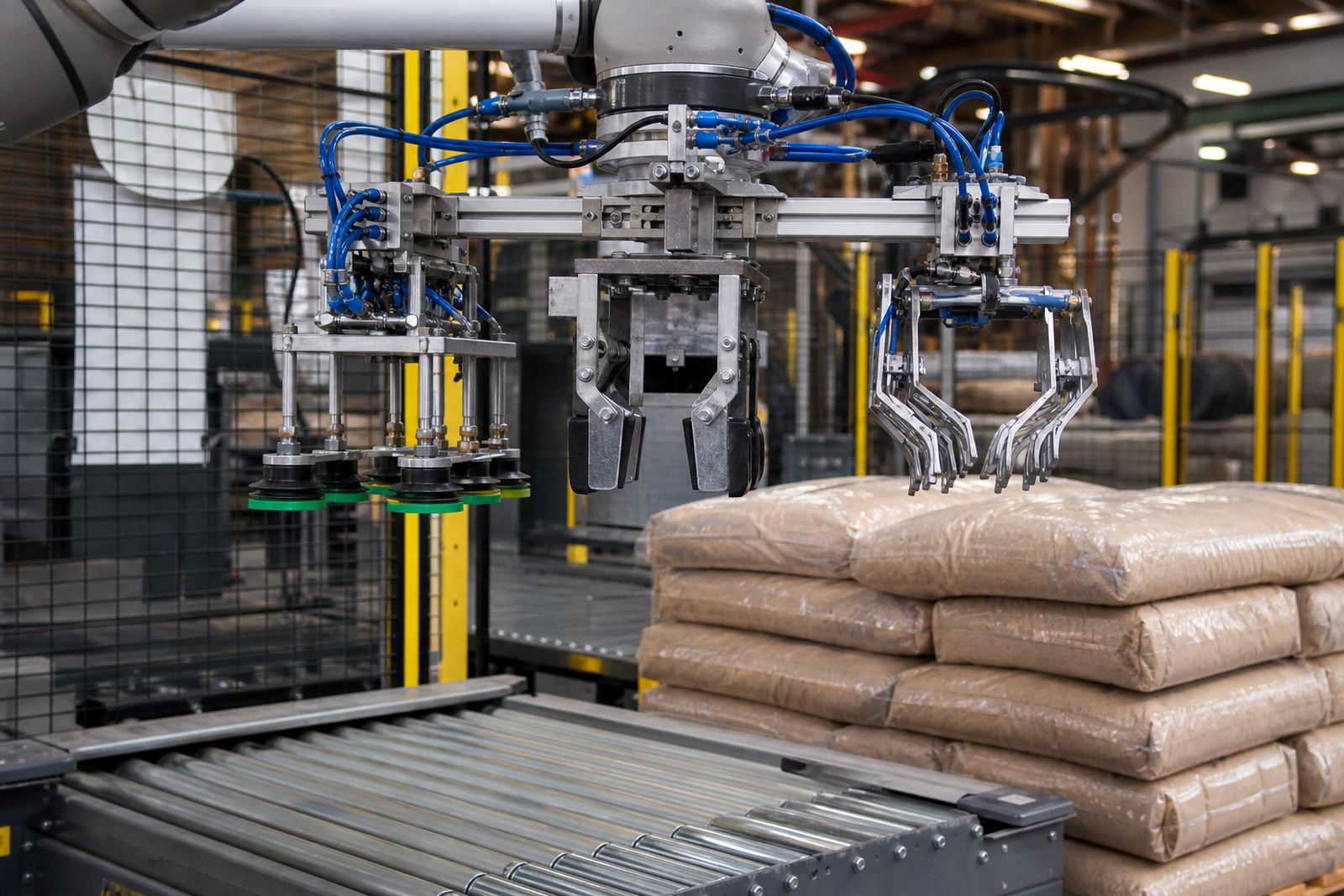
Many packing and palletising retrofits still rely on compressed air, even when the main handling task is done by a robot or cobot. Air may be needed for grippers, carton opening, vacuum units, simple actuators or blow-off points on conveyors. If the plant air system is already under pressure, adding a new automated cell without checking supply and quality can cause weak performance and nuisance faults.
The condition of the air matters too. Wet air, oil carryover and poor filtration can shorten component life and create maintenance problems, especially in humid areas such as Durban or coastal parts of the Western Cape. Pipe runs should be checked for leaks, drops in pressure and old fittings that need replacement. A retrofit should also confirm whether the existing compressor duty cycle can support the new line without causing strain on the plant air system.
Where possible, the air demand should be reduced through the right end effector and control setup. In some cases, a simpler mechanical solution is better than adding more air points. That kind of decision is best made during design, not after the equipment has already been installed and the operators are trying to keep the line moving.
Network Connections for Controls and Data
Modern retrofits need reliable network connections for controls, diagnostics and integration with the rest of the line. A palletising robot may need to exchange signals with a conveyor, carton former, label printer or supervisory system. If the network is slow, poorly labelled or already overloaded, faults become harder to trace and production support becomes slower than it should be.
Good network planning starts with the basics: where the cabinet is, how far the devices sit from it, what type of cable is needed and whether the existing switches can handle the load. Fibre may be needed for longer runs, while localised control sections can often stay simple. The aim is to keep the system stable and easy to maintain for the site team.
- Confirm which devices must communicate with the retrofit cell.
- Check cable lengths, routing and protection from damage.
- Label ports, panels and field devices clearly for maintenance teams.
- Keep control and business networks separate where required by site policy.
In busy plants, especially where multiple lines run off one control room, neat network planning reduces confusion. It also makes breakdown support easier when a fault appears at 5am and the line needs to be back before the first shift gets fully underway.
Safety Guarding and Risk Assessments Come Before Production
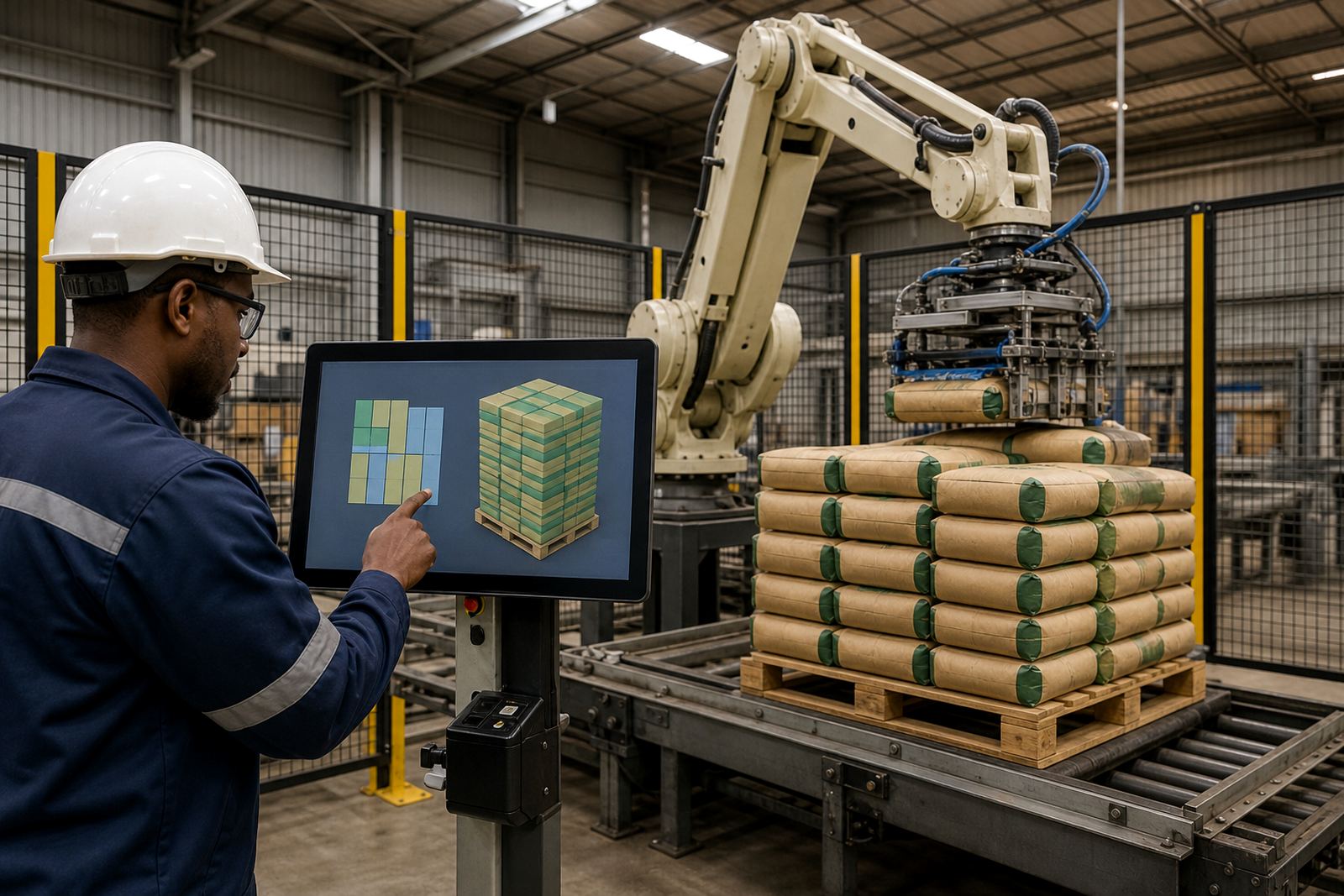
Safety guarding is never a bolt-on afterthought. Any retrofit involving a robot, cobot or automated conveyor section needs a site specific risk assessment and a guarding plan that suits the actual layout. This is especially important where people work near the line, where forklifts move past the area or where operators still need access for setting, cleaning or pallet changes.
General safety practice may include perimeter guarding, interlocked access points, light curtains, safety mats, warning beacons and clearly marked walkways, but the final arrangement depends on the site. A line in Kempton Park may have a compact footprint with tight access, while a plant in Cape Town may have more room but different traffic patterns and municipal requirements. The point is to design for the real conditions on the floor, not a theoretical layout.
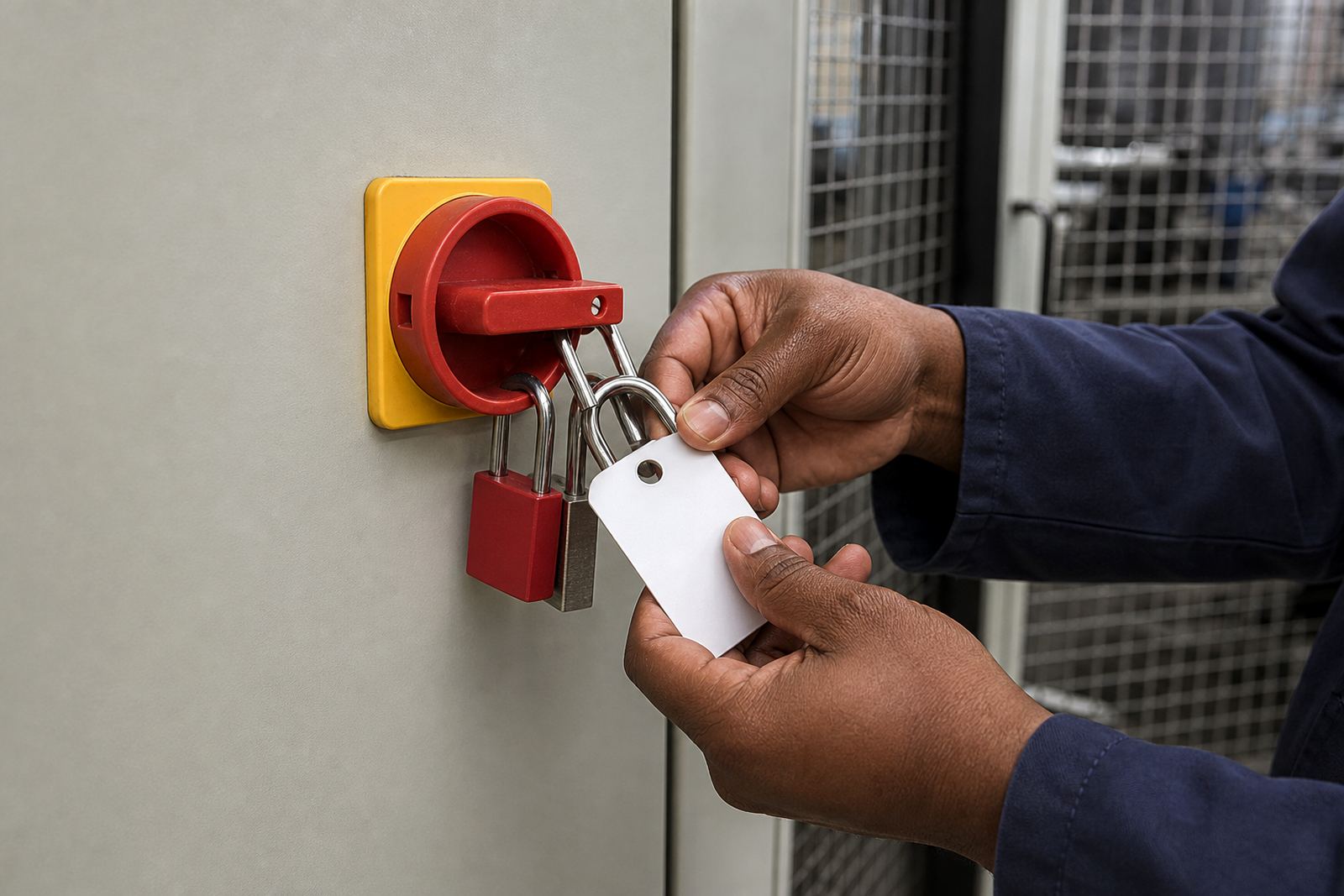
Safety review should also consider emergency stops, safe restart, energy isolation and maintenance access. Operators need to know what is safe to touch, what must stay clear and what to do if the line stops mid cycle. That training needs to happen before handover, not after the first fault call.
A Spartan Example: What Was Found Before the Retrofit
At a warehouse and packing site in Spartan, the line looked straightforward at first glance. Once the utilities were checked, the team found that the supply panel had limited spare capacity, the air line feeding the end of line equipment had a few weak points and the network cabinet was positioned farther from the palletising area than expected. None of these issues stopped the retrofit, but each one needed a plan.
By reviewing the utilities first, the installation could be phased around live production. Electrical work was scheduled to reduce downtime, air leaks were identified before the new grippers were connected and the network points were set out so the controls could be commissioned without running temporary cable everywhere. The result was a cleaner installation and fewer call-backs after startup.
This kind of preparation is what makes the difference between a line that simply has a robot added and a line that actually works better day to day.
What to Have Ready Before the Retrofit Team Arrives
Plant managers can save time by gathering the basic information before the first site meeting. It helps the survey move faster and gives everyone a clearer picture of what the utilities can support.
- Latest electrical drawings, if available.
- Details of incoming supply and main distribution boards.
- Compressed air pressures, compressor details and known leak issues.
- Network layout, cabinet locations and any site access restrictions.
- Shift patterns, shutdown windows and any municipal or landlord rules that affect works.
When these details are ready, the retrofit design can focus on practical decisions instead of guesswork. That saves time during installation and helps the plant keep production moving while the upgrade is completed.