Why Dual Line Cells Need a Different Plan
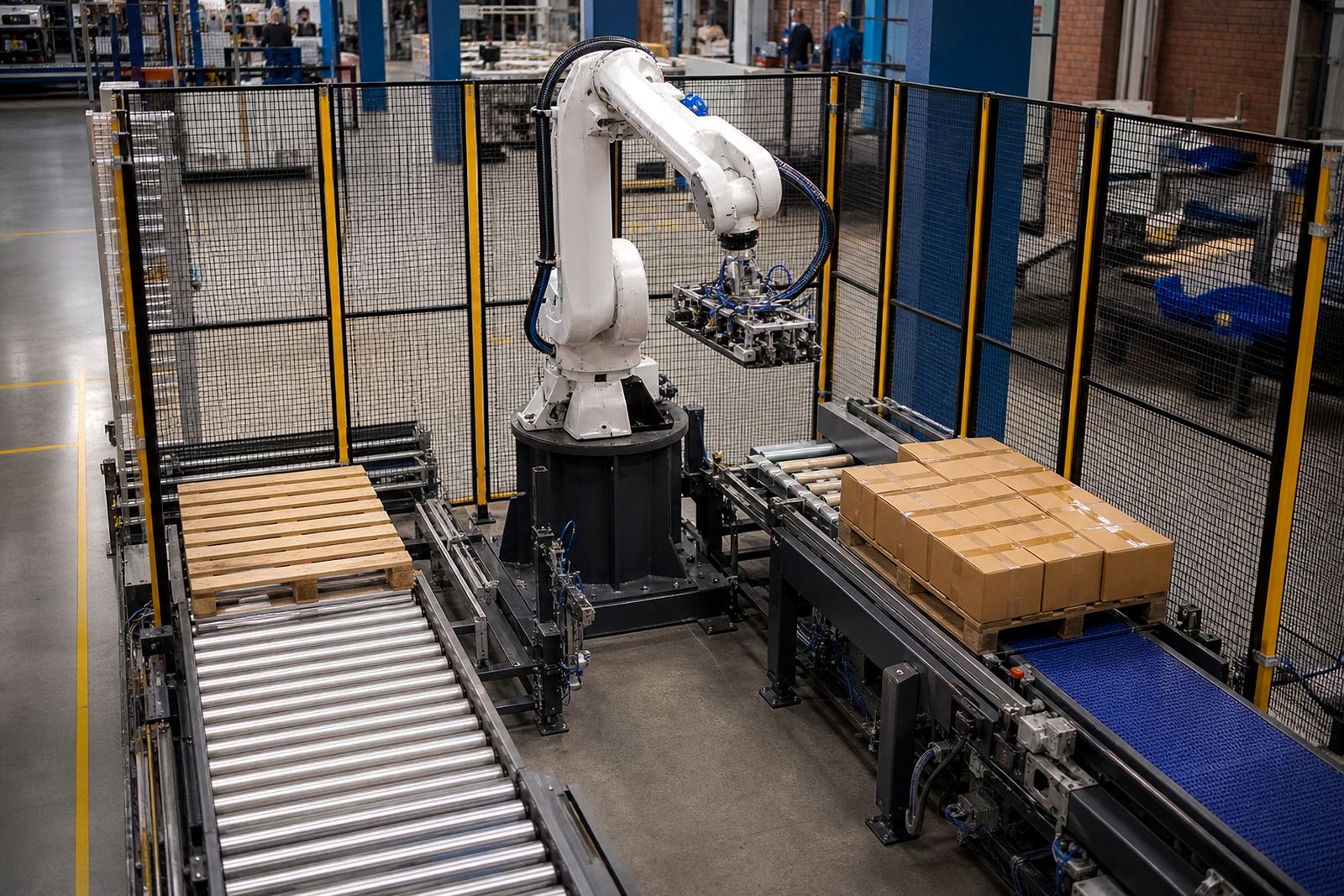
A dual line cell looks efficient on paper because two production streams share one robot, one guarding layout and one control system. In practice, the cell only works if the flow in each line has been thought through from the first pallet layer to the last stack. If one line keeps starving the robot while the other keeps flooding it, the whole arrangement becomes a bottleneck.
The first question is not where the robot will stand, but which line gets priority, how product will accumulate, and what happens when one conveyor pauses. A good retrofit plan has to deal with line balance, pallet changeovers, carton orientation and the space needed for operators to intervene safely. That is especially important in older factories where conveyors were never built for shared robotic service.
- Decide which line takes priority during peak periods.
- Plan for product accumulation so a short stop does not halt both lines.
- Allow enough access for maintenance, cleaning and manual recovery.
- Keep the layout simple enough for operators to understand under pressure.
Planning Product Prioritisation and Buffer Zones
Dual line planning starts with a simple rule: the robot can only handle one task at a time, so the upstream flow must be shaped to suit that reality. Some sites need first-in, first-out accumulation before the robot cell. Others need alternating feed logic so the two lines do not compete for the same pick window. The right answer depends on product type, case size, line speed and how often each line changes over.
We usually look at where the line can absorb a short delay without damage to product or packaging. That may mean a short accumulation conveyor, a transfer section with sensors, or a controlled stop gate before the cell. In Gauteng plants with limited floor space, that buffer can be the difference between a stable shift and constant operator intervention.
- Separate urgent product from lower priority flow where possible.
- Use accumulation where cartons can queue without crushing or shifting.
- Match sensor positions to the actual box length and transfer timing.
- Keep changeover steps practical for operators on day and night shift.
Shared Equipment Must Be Easy to Reach and Safer to Use
Shared equipment is where dual line cells often become difficult. A single robot, one set of guarding and common conveyors mean the maintenance team has to reach bearings, sensors, belts and grippers without putting people inside a live work area. Safe access needs to be built into the cell, not added later as an afterthought.
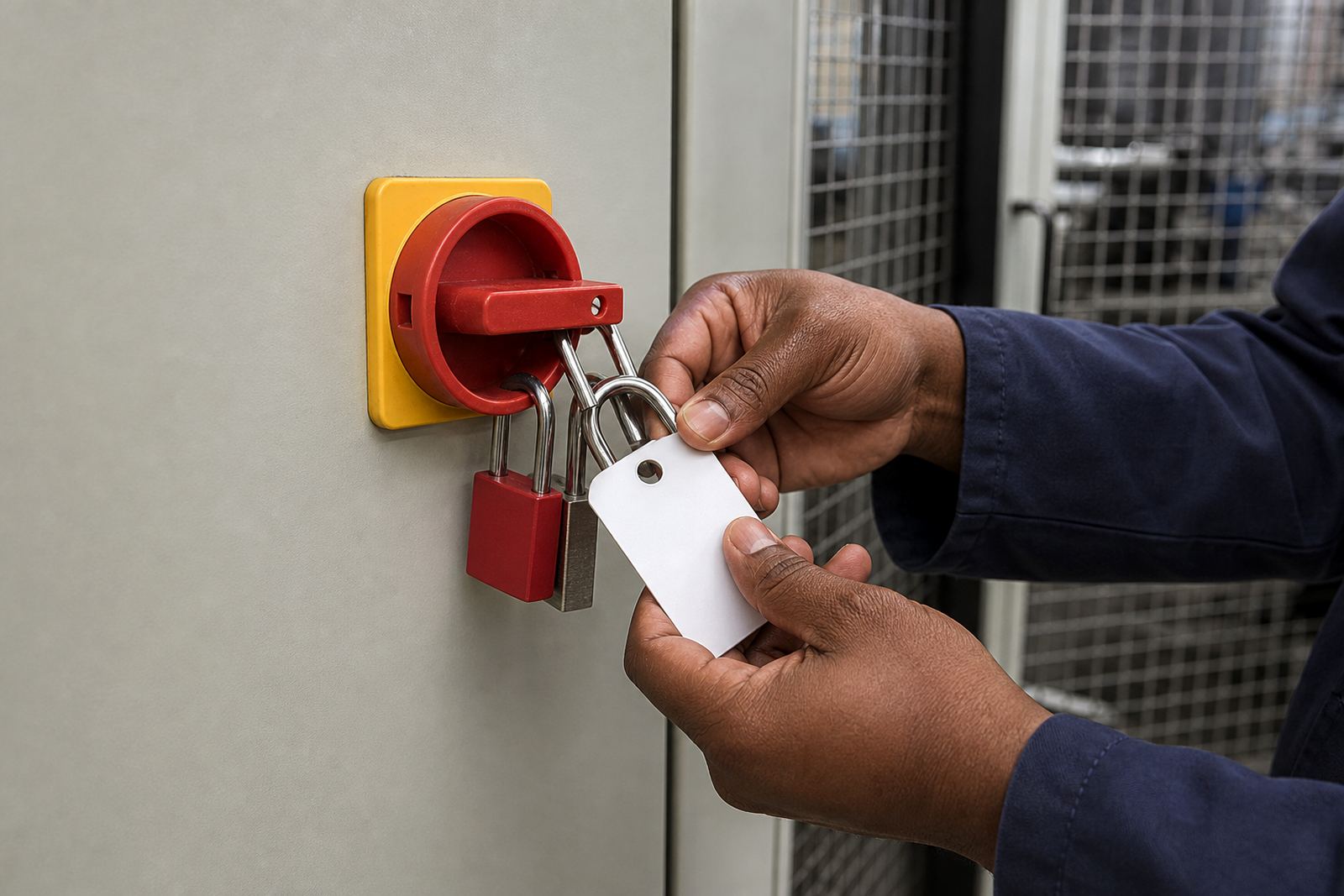
We plan walkways, gate positions and access panels around the real tasks that happen on site, including cleaning, clearing jams and replacing worn parts. On some lines, the safest approach is a guarded corridor beside the conveyors. On others, an interlocked access gate with a controlled stop sequence is more suitable. Each site needs its own risk assessment because the hazards change with the product, the speed and the building layout.
In coastal areas like Durban and Gqeberha, humidity can affect sensors, cable terminations and mild steel guarding if materials are not chosen carefully. In inland plants, dust and vibration can be the bigger issue. The layout has to suit the environment as well as the production target.
Conveyor Integration Has to Keep Both Lines in Step
A dual line cell normally depends on conveyors doing more than simply moving cases forward. They need to present product cleanly to the robot, hold queue positions, and release cartons in a predictable order. If the conveyor integration is sloppy, the robot spends too much time waiting or correcting for misaligned product, and that reduces the benefit of the retrofit.
We check transfer heights, merge points, sensor spacing and back-pressure risks before any installation starts. Where two packing lines feed one palletising cell, the transition between the lines and the robot zone must be stable enough for long runs, but flexible enough for breakdown recovery. Good controls integration also helps the operator see which line is active, which one is waiting and where a fault has started.
- Keep transfer points consistent in height and guide spacing.
- Prevent product from twisting before it reaches the pick or place point.
- Use clear status signals for both lines and the shared cell.
- Plan for quick manual recovery when a jam clears or a line resets.
Safety Guarding and Risk Assessment Are Site Specific
There is no standard guarding layout that suits every dual line cell. Safety guarding design depends on whether staff need access from one side or two, whether the robot can be serviced from outside the perimeter, and whether the pallet movement creates any pinch points. A shared cell can quickly become confusing if gates, fences and access routes are not laid out clearly.
Risk assessment support should cover all normal activities, not only the automatic cycle.In South Africa, many sites also have to consider municipal fire routes, emergency exits and how the cell affects access for forklifts and pallet jacks.
The best layouts keep the operator outside the danger zone as much as possible while still allowing practical day-to-day work. Safety should make the line easier to run, not harder. If the guarding forces bad behaviour, then the layout needs another look.
A Practical Example from an East Rand Retrofit
On an East Rand site with two packing lines feeding one palletising area, the main challenge was not robot speed. It was space. The building had limited aisle width, and the existing conveyors sat close to a wall, which meant the shared cell had to be planned around very tight access. One line produced faster but changed over less often, while the other was slower but had more frequent product swaps.
The solution was to prioritise the faster line during peak periods, add controlled accumulation on the slower line and place access gates where maintenance teams could reach the common conveyor section without crossing the active pallet zone. The result was a simpler daily routine for operators and a cleaner handover between shifts. It also meant the team could handle normal stoppages without dragging pallets or cartons through awkward spaces.
That kind of retrofit only works when the line survey, controls integration and installation management are all done together. A dual line cell is not just a machine purchase, it is a full operating change.
What a Good Dual Line Retrofit Plan Should Cover
For manufacturers in Johannesburg, Pretoria, Durban, Cape Town, Gqeberha and across the East Rand and Midvaal, dual line cells need planning that fits the actual site, not a generic drawing. The best retrofit plans make the line easier to supervise, easier to maintain and less dependent on manual workarounds.
Before installation, we look at the full picture: product flow, conveyor logic, guarding, risk assessment support, commissioning support and operator training. After go-live, maintenance support and spares planning matter just as much, because a shared cell needs good fault support when something wears or stops unexpectedly. If the plan is sound, the cell can run with less strain on the team and a more predictable output across both lines.
- Confirm line priority and accumulation strategy before layout is fixed.
- Design access for cleaning, fault finding and maintenance.
- Align controls, sensors and conveyors so both lines work in step.
- Build safety and recovery steps into the daily operating routine.