When a Small Factory Needs Automation, Not Expansion
In many South African factories, the bottleneck is not demand, it is floor space.At that point, the better move is often to automate part of the line rather than rebuild the whole plant.
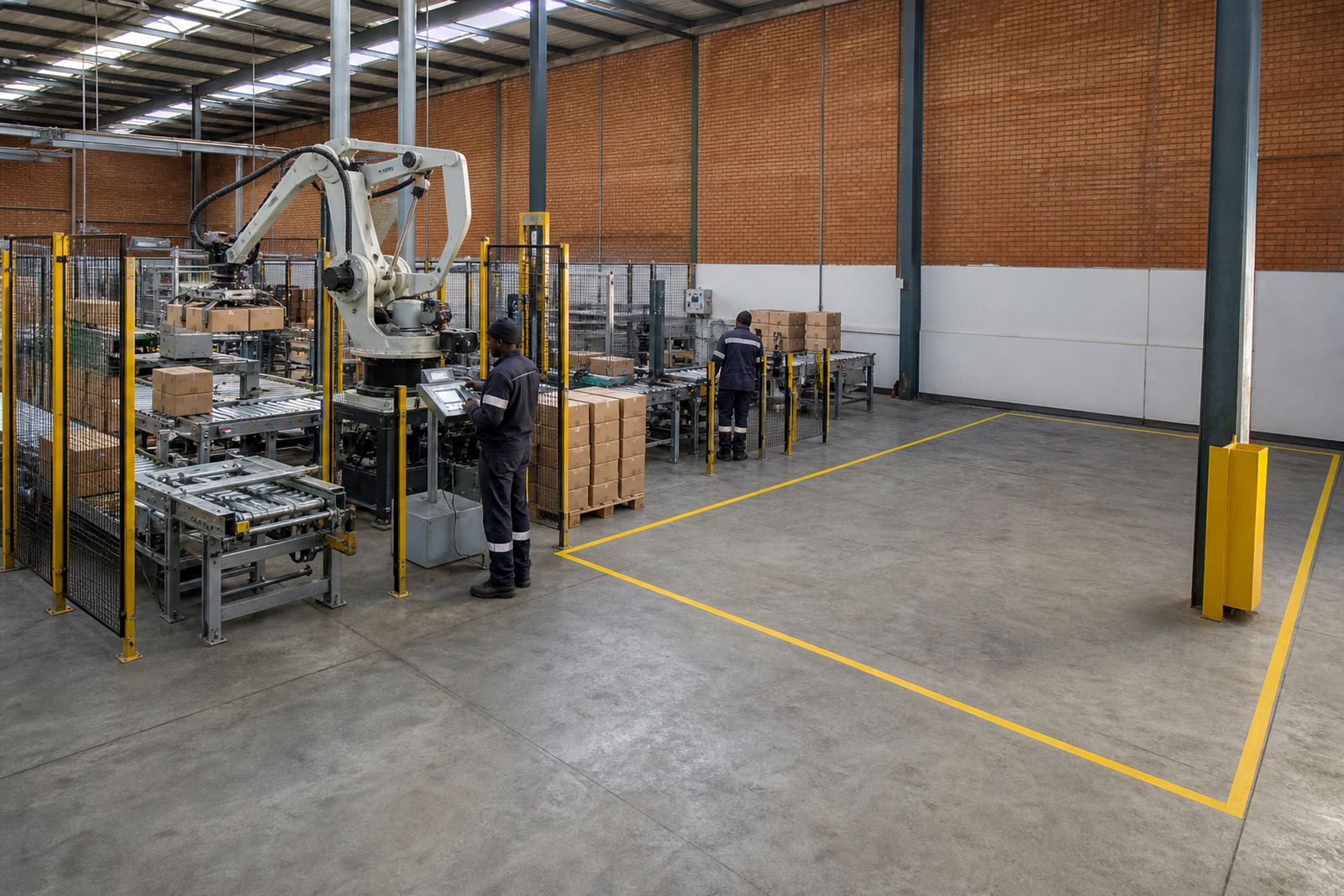
For smaller sites in Kempton Park, Midvaal, Pretoria or on the East Rand, a well planned retrofit can be the difference between steady output and daily firefighting. The key is to look at the existing conveyor layout, the speed of the pack flow, pallet patterns, operator travel paths and the amount of space available around the end of line. A compact robotic system can take over repeat tasks like case packing, tray loading or pallet stacking without forcing a full plant redesign.
ReAutomated works on robotic retrofits for packing and palletising lines, which means the focus stays on what is already on site and how to improve it. In practice, that usually means less manual lifting, fewer damaged cartons and a cleaner, more predictable line. Small factories often need this kind of practical step by step change, not a large project that ties up the whole plant for months.
Why Compact Robot Cells Suit Smaller Plants
Compact robot cells and cobot stations are useful where line space is limited and production teams must stay close to the process. A cobot may be a good fit for lower speed applications or where an operator still needs to load packs, monitor quality or change product formats. A conventional robot cell may suit higher throughput palletising where the same movement repeats all day.
The decision should be based on the actual job, not just the idea of automation. If the site handles different carton sizes, bag counts or pallet heights, the controls logic needs to allow for quick changeovers. If the factory has narrow aisles or shared forklift routes, the guarding and access points need careful planning. If the building sits in a coastal area like Durban or Gqeberha, moisture and corrosion resistance also matter when choosing panels, fixings and cable routes.
Small factories also need systems that are realistic to maintain. A compact retrofit should be designed so maintenance staff can reach sensors, service drives, clear jams and inspect guarding without dismantling half the line. That is where a proper site line survey makes a real difference.
- Use the available floor area first, before adding new structures
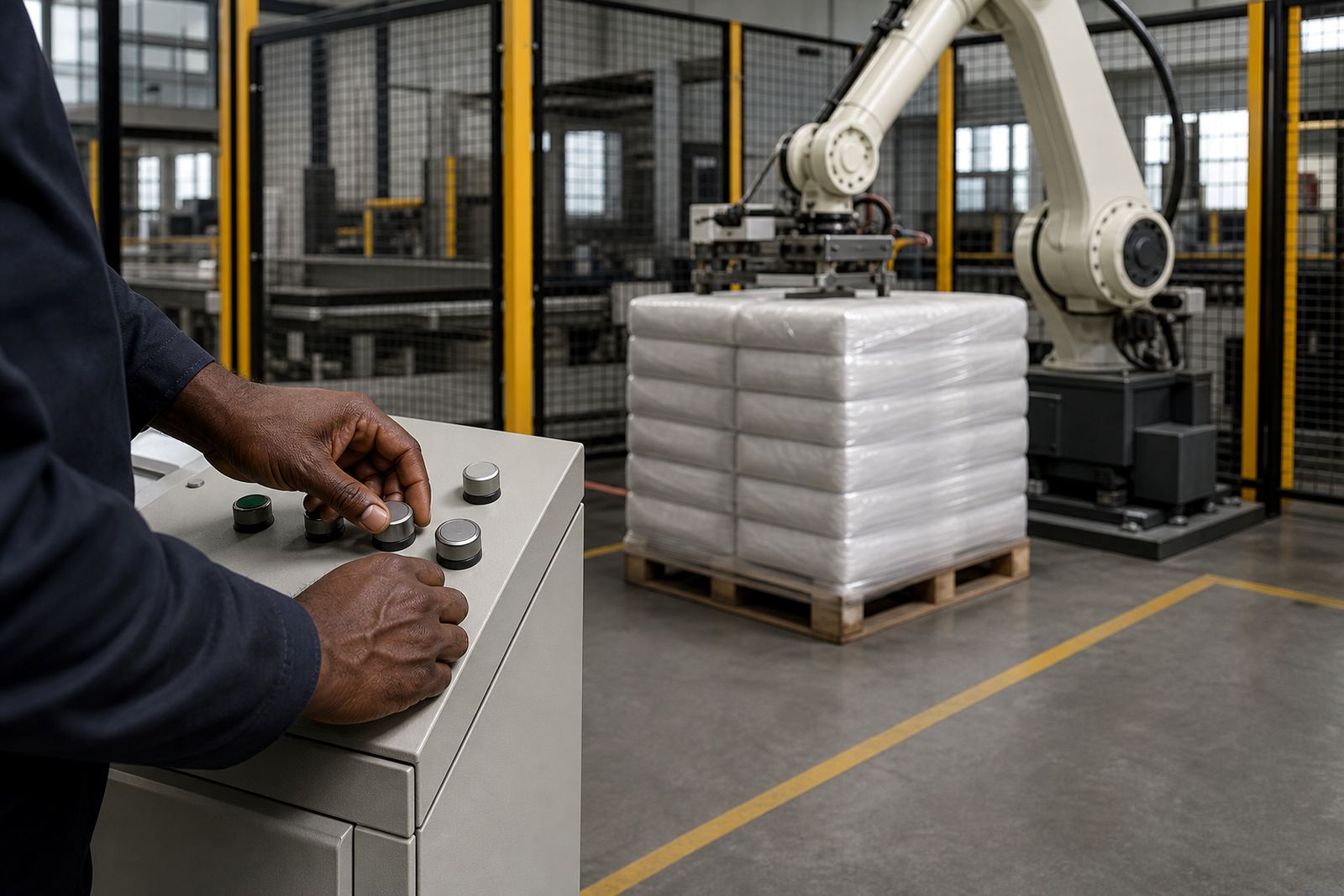
- Keep operators close enough for changeovers but away from robot movement zones
- Design for carton, bag or tray variation if the product mix changes often
- Check how cleaning, access and maintenance will work after installation
Retrofitting Around Existing Conveyors and Packing Lines
Many smaller factories already have conveyors, turntables, shrink wrappers or basic packing stations in place. The value of a retrofit is that these assets can often stay in service while the robot cell is added around them. This lowers disruption and helps the business use what it has already paid for.
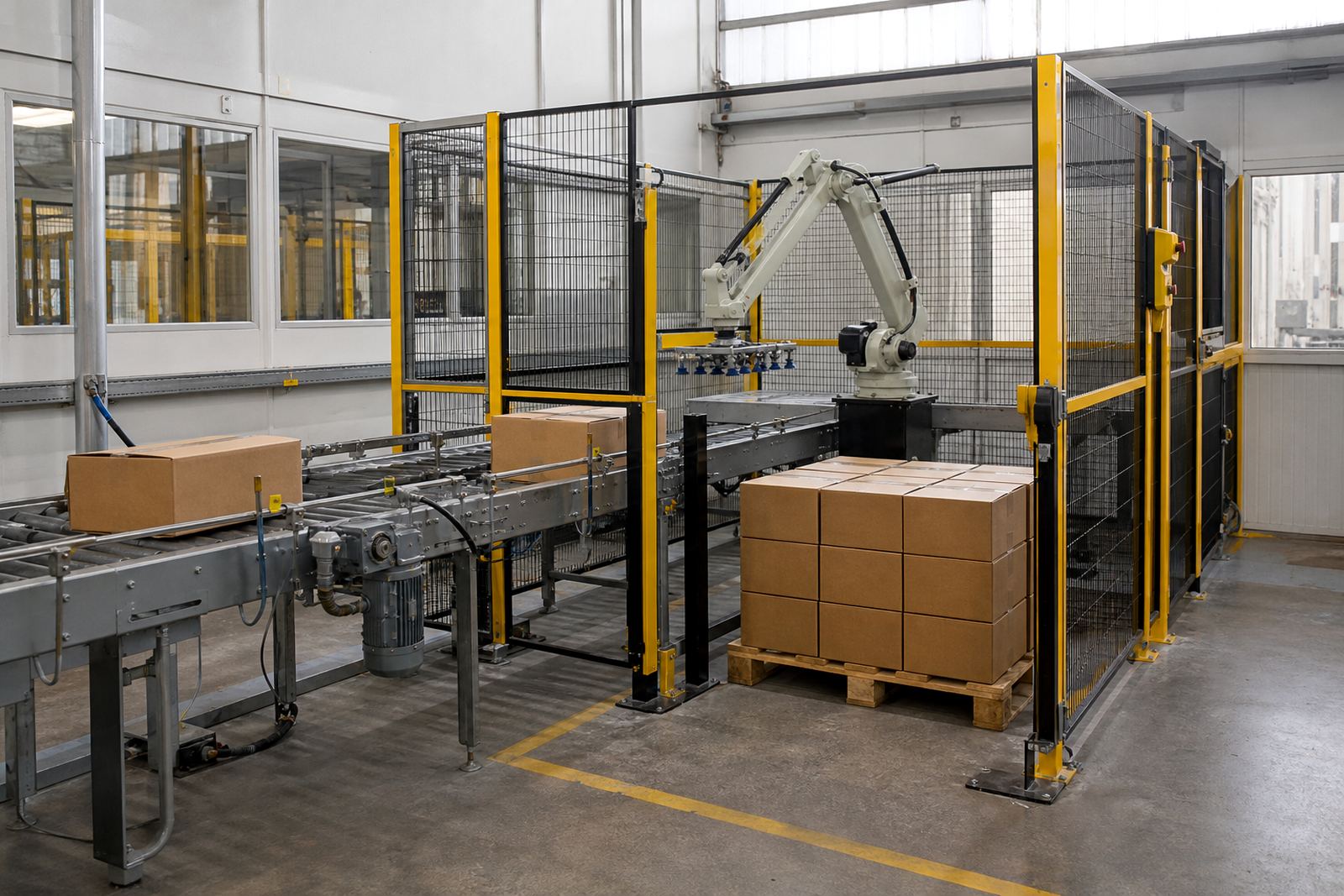
Good conveyor integration is usually one of the most important parts of the job. The infeed must present product consistently, the outfeed must clear smoothly and the timing between sensors, motors and robot movements has to be right. If the line was built in stages over time, the controls may need rationalising so that the new equipment can talk properly to the old equipment. That can include adding signals for start stop control, jam detection, emergency stops and pallet full messages.
In small factories, the practical challenge is often not the robot itself but the line around it. A conveyor that is slightly misaligned, a worn sensor, or a pallet position that shifts by a few millimetres can affect the whole cycle. For that reason, installation management and commissioning support should be planned with the same care as the mechanical work.
Safety Guarding and Risk Assessments Are Site Specific
There is no single guarding layout that suits every factory. Each site needs its own risk assessment, taking into account operator access, forklift traffic, emergency stops, maintenance routines, product type and the way people actually move around the line. In a small plant, space pressure can tempt teams to compromise on access, but that is exactly when a careful safety design matters most.
Safety guarding can include fixed fences, interlocked gates, light curtains, area scanners or a combination of these, depending on the layout and the task. The aim is to separate people from moving equipment while still allowing safe access for setup, cleaning and maintenance. If cobots are used, the application still needs to be assessed properly. A cobot is not automatically safe in every situation, especially if it handles sharp, heavy or fast moving products.
For factories in Johannesburg, Pretoria and the broader Gauteng area, we often see older lines where access routes were never designed with automation in mind. That is normal, and it can still be addressed. What matters is that the retrofit is documented properly, the hazards are reviewed and the controls are tested before handover.
- Do not assume an existing guard is enough for a new robot path
- Review operator access, forklift movement and maintenance access together
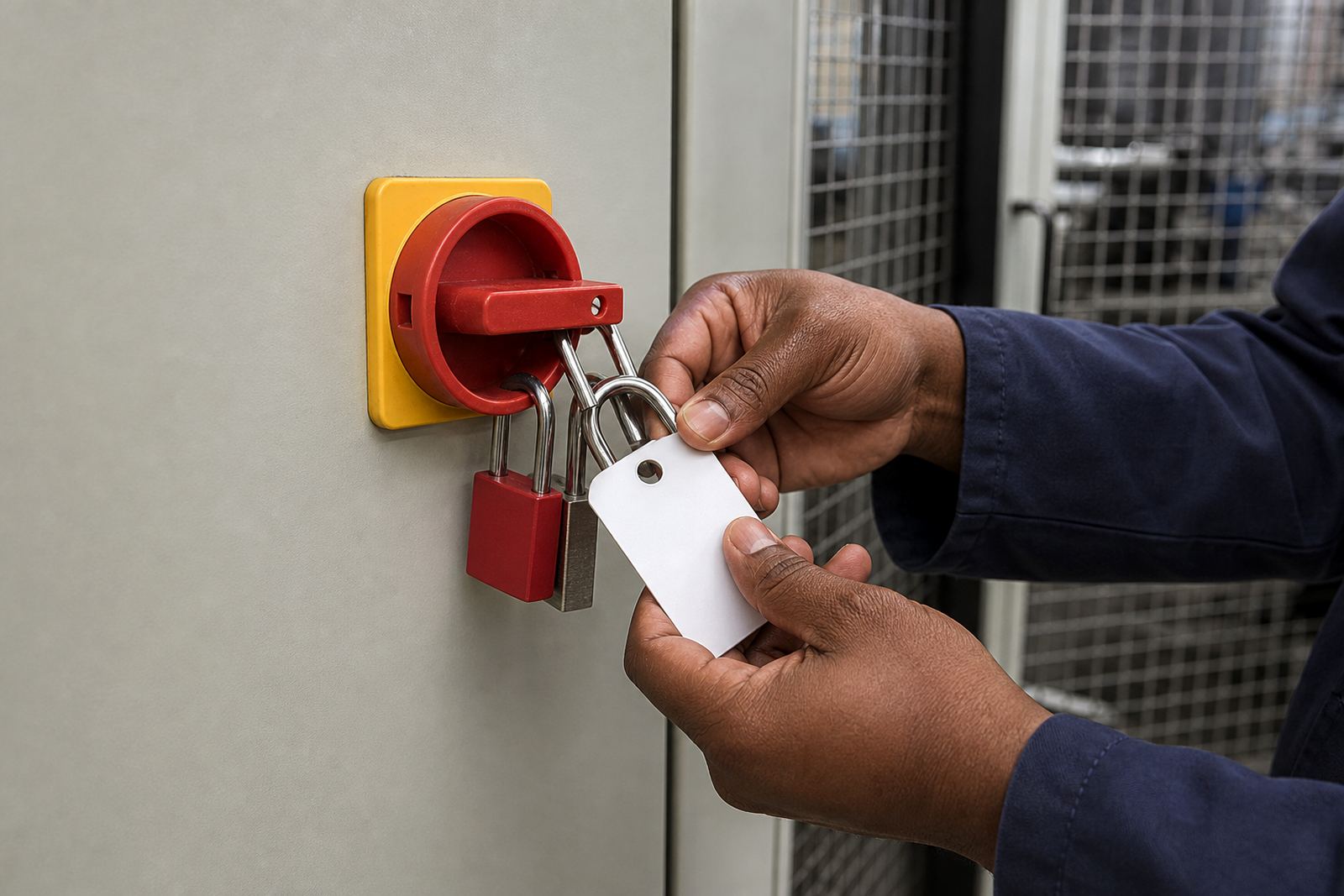
- Test emergency stops and interlocks after every major change
- Keep the final layout practical for daily cleaning and fault finding
A Practical Example from Kempton Park
At a small manufacturing site in Spartan, Kempton Park, the challenge is often a tight building, mixed production and limited staff to cover more than one shift. In a setting like that, a full line rebuild may be out of reach. A more practical approach is to add a compact palletising cell at the end of the packing line, then tie it into the existing conveyor and controls system.
That kind of retrofit can help the site reduce manual lifting at the end of line, improve consistency in pallet patterns and free operators for tasks that need more judgement.In real life, this matters as much as the robot itself.
For smaller factories, the lesson is simple: automation should fit the building, the product and the team. If the solution is too large or too complex, it becomes another problem. If it is designed around the actual site, it can be a steady improvement that the whole crew can work with.
Planning Support, Training and Ongoing Maintenance
A good retrofit is not finished when the robot starts moving. The site still needs operator training, maintenance support and a sensible spares plan. Smaller factories usually benefit from clear, simple handover documents and a maintenance schedule that fits the staff available on site. If the line is expected to run daily, then breakdown assistance and spare parts planning become part of the business case from the start.
ReAutomated’s work includes site line surveys, retrofit design, conveyor integration, controls integration, safety guarding design, risk assessment support, installation management, commissioning support, operator training, maintenance support, breakdown assistance and spares planning. That is useful for smaller sites because the same team can follow the job from the first survey through to daily operation, instead of handing it off halfway through.
For manufacturers across South Africa, from Cape Town to Durban and Gqeberha to the East Rand, the goal is the same: make the line easier to run, safer to manage and less dependent on manual handling. For a small factory, that can be the difference between staying busy and staying ahead.
Clients can reach ReAutomated through the enquiry form on the contact page to discuss a site visit and the right retrofit path for their line.