Why single line cells need more than a tight footprint
Single line cells are often chosen because the product flow is straightforward and the available floor area is limited. Even so, a compact cell still has to allow for pallet entry and exit, operator access, service work and safe movement around the equipment. If the layout is squeezed too tightly, the line may work on paper but struggle in daily production.
In a retrofit, the starting point is the current line, not an ideal drawing. We look at infeed height, product presentation, discharge direction, pallet build pattern and where an operator can safely intervene without standing inside the working envelope. That is especially important in older plants in Kempton Park, Johannesburg and Pretoria where the packing line may already be tied into existing conveyors and limited aisle space.
Map the flow before you draw the cell
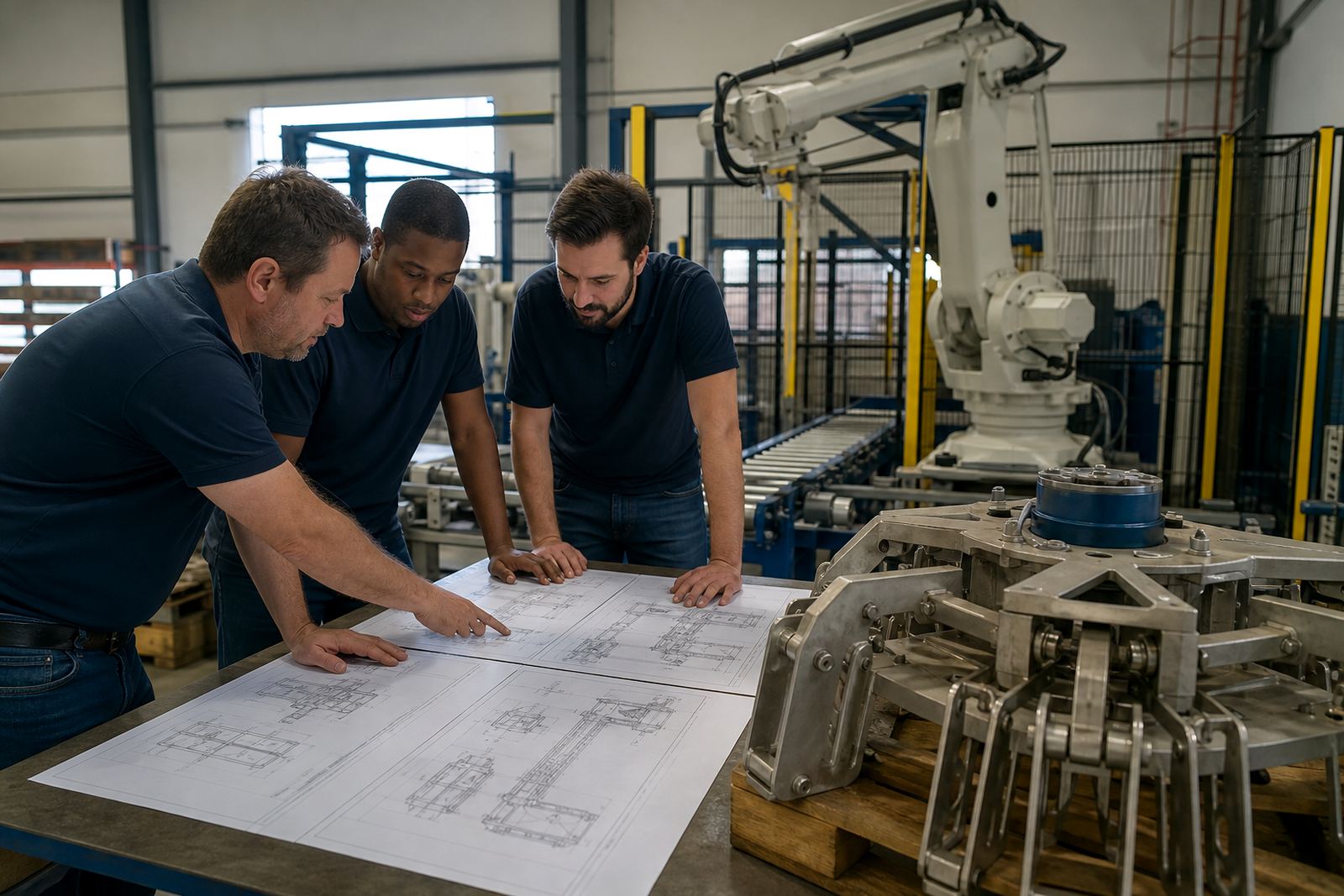
A proper line survey should trace every movement from the end of packing to the completed pallet. That includes cartons, totes, layer pads, pallets, stretch wrapping and any manual checks that still happen at the line end. When the flow is understood first, the cell can be planned to reduce crossings and avoid unnecessary turns.
- Allow a clear route for empty pallets and finished loads.
- Keep maintenance access to motors, sensors and drives open.
- Provide space for guarding doors or removable panels.
- Plan where rejected packs or rework will go.
- Leave enough room for trolleys, hand tools and inspection work.
A line that handles different carton sizes will need extra flexibility. If the product mix changes often, the cell should be set up so changeovers do not require major mechanical shifts each time. This saves time and keeps the installation practical for the production team.
Pallet access is a layout issue, not an afterthought
Pallet access is one of the most common planning oversights on a single line cell. The robot may place product accurately, but the cell still needs a sensible way to supply empty pallets and remove full ones. If this movement is awkward, the line will slow down and operators may start taking short cuts to keep production moving.
On sites with limited yard space or strict traffic routes, pallet movement should be planned with the warehouse in mind. In some factories the best solution is a direct feed from the warehouse to the line end. In others, a short staging area works better because forklifts cannot cross the production aisle freely. Each site needs its own risk assessment and traffic plan, especially where pedestrians and pallet handling equipment share the same space.
- Check forklift turning circles near the cell.
- Keep pallet stacking away from emergency exits.
- Allow space for pallet labels, inspection and load checking.
- Plan for damaged pallet removal without blocking the line.
Guarding and safety must fit the cell, not fight it
Safety guarding should support the working method, not make the cell impossible to use. A single line cell often needs fixed guarding, interlocked access gates, light curtains or other protective measures depending on the task and the line speed. The correct arrangement depends on the reach of the robot, the location of pedestrians and how often staff need access for setup or cleaning.
Risk assessment support is essential before installation starts. That process should consider the existing conveyor heights, pinch points, pallet movement, access to controls and the need for emergency stops in reachable positions.
For plants on the coast such as Durban or Gqeberha, corrosion resistance and enclosure protection also matter. Humidity and salt air can shorten the life of exposed components if the guarding and cable routing are not planned carefully.
Controls integration keeps the cell in step with the line
Single line cells work best when the robot, conveyors and upstream packing equipment speak the same language. Controls integration lets the line stop, start, buffer and release product in a controlled way instead of relying on manual signals. This is especially useful where existing conveyors were installed years apart and do not follow the same control standard.
Good integration usually includes product detection, interlocks, pallet-present confirmation, fault handling and clear operator indications. It should also be simple enough for the shift team to use without needing constant intervention from technical staff. When this is done properly, the line runs with less stopping and fewer unplanned handovers between operators.
- Confirm sensor positions before final mounting.
- Check that product gaps suit the robot cycle time.
- Test stop and restart behaviour under full line load.
- Agree on fault reset steps with the production team.
Commissioning and training make the layout work in practice
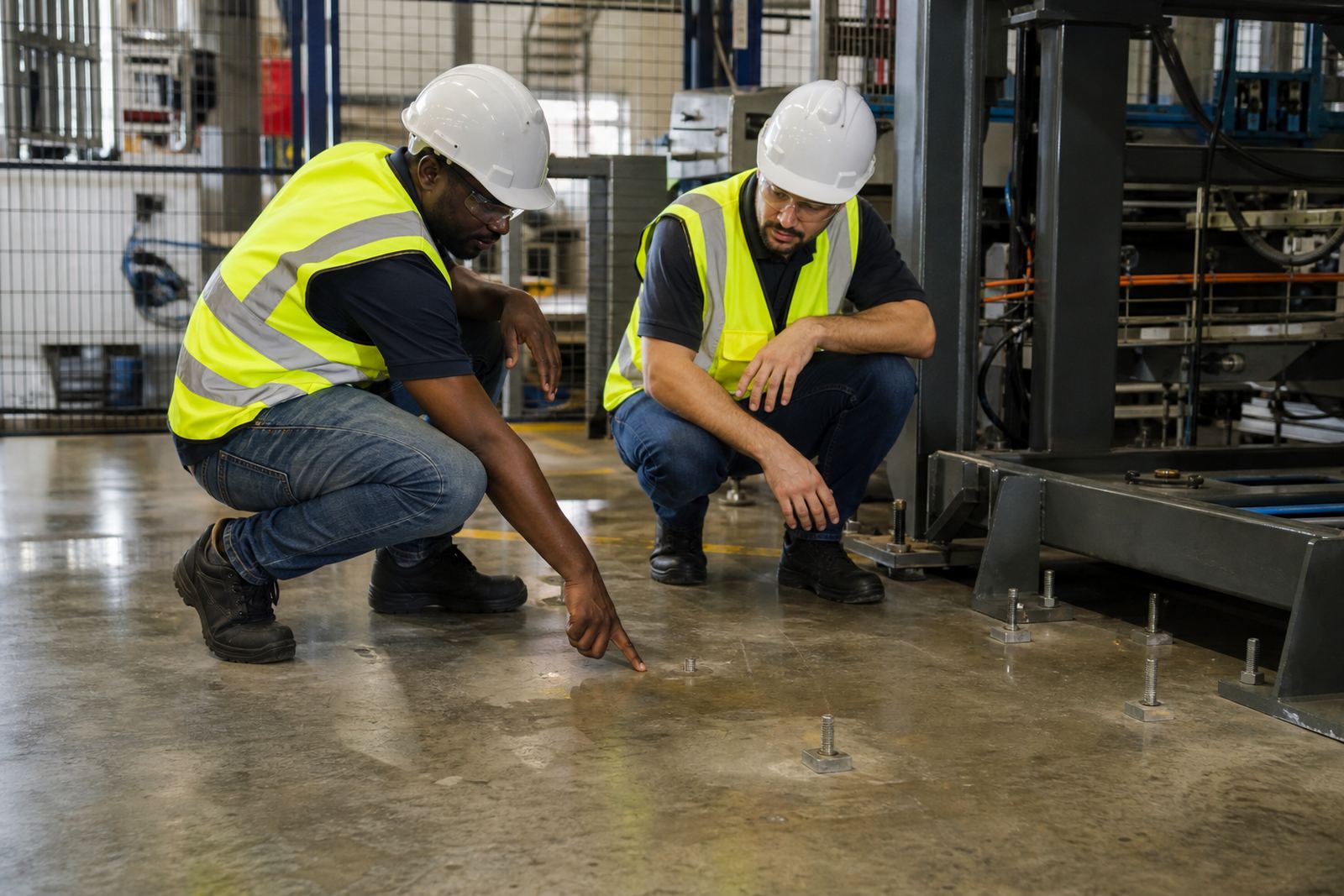
A well-planned cell still needs careful commissioning. That stage proves the layout on the floor, not only on the drawing. During commissioning, the team checks reach, clearance, pallet formation, conveyor transfer and access for normal cleaning and maintenance. Small issues like a narrow gate or a poorly placed sensor can become daily frustrations if they are not corrected early.
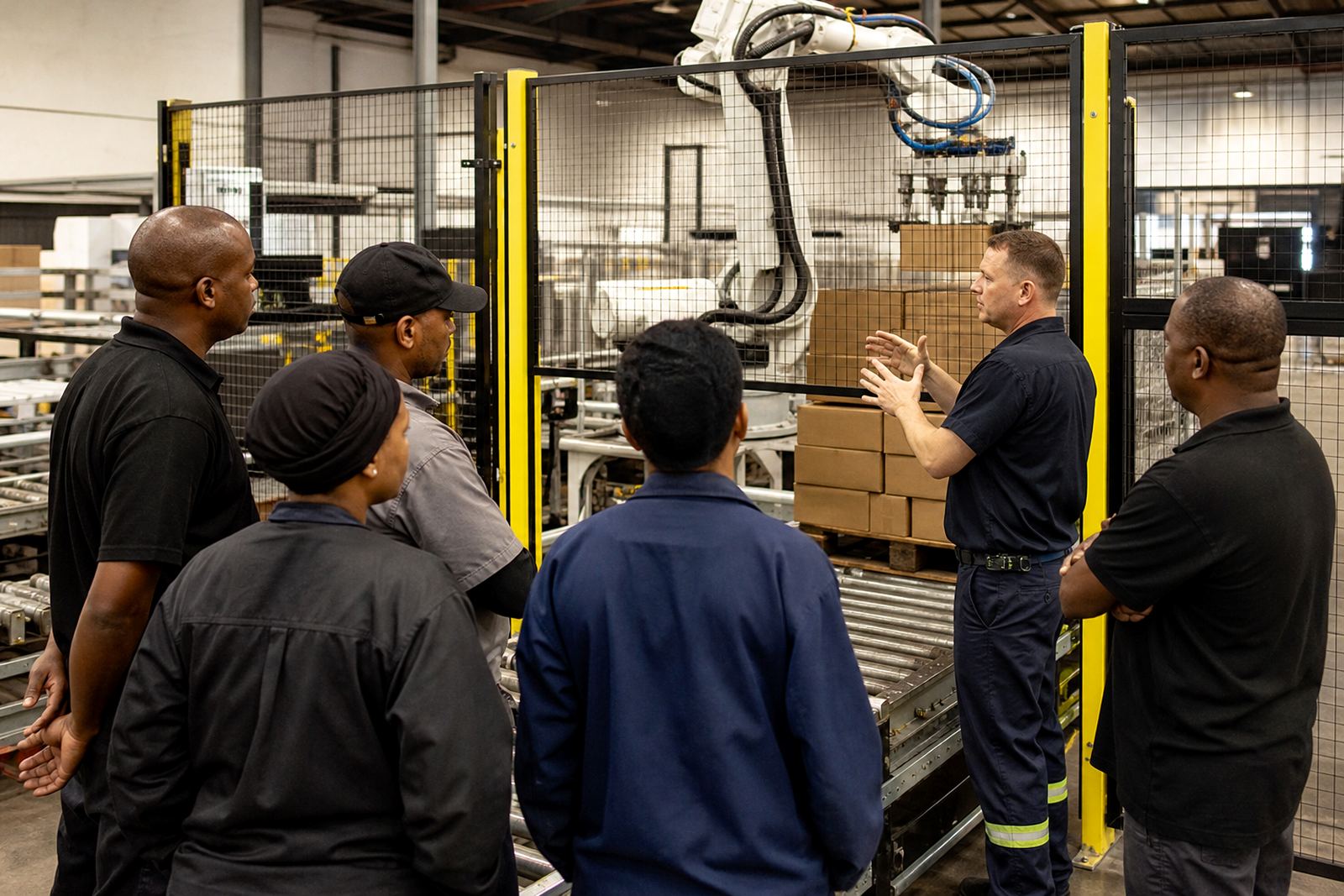
Operator training should cover the normal cycle, fault response, safe access and the limits of manual intervention. Maintenance support is equally important because a single line cell depends on keeping conveyors, end-of-arm tooling and guarding in good condition. Spare parts planning should also be part of the handover so the site is not left waiting for simple items when a breakdown happens.
For manufacturers across South Africa, from Midvaal to Cape Town, a good single line cell is one that fits the building, the team and the product mix. It should be compact but not cramped, automated but still serviceable and safe without making everyday work difficult.
A practical example from a Gauteng retrofit site
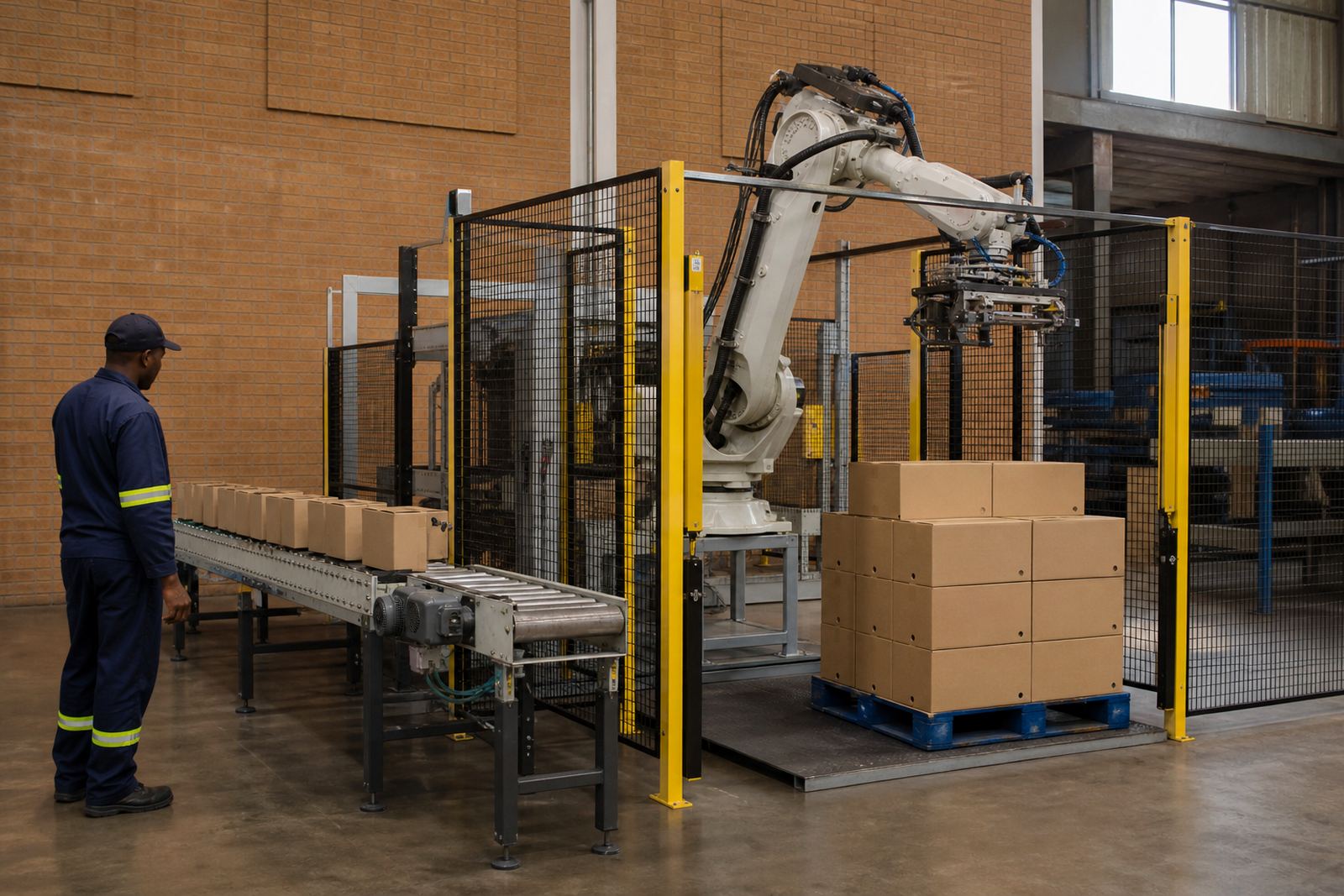
At a packing plant in Spartan, Kempton Park, a single line palletising retrofit had to fit beside an existing conveyor run and a narrow goods route. The challenge was not only the robot footprint, but where to stage empty pallets and how to keep maintenance access open on the far side of the cell. The final layout used a short pallet feed position, a clear operator path and guarding that could be opened for planned servicing without disrupting the whole area.
That sort of project shows why single line planning must be handled as a full line exercise. The robot is only one part of the system. When the conveyors, pallet access, guarding and controls are planned together, the cell becomes easier to run and easier to maintain over time.